


AI Law Firm Management: The Ultimate Survival Guide
The headline from Above the Law, "AI And The End Of The Law Firm: We May Wind Up Being Wrong?" captures the palpable tension rippling through the legal industry. For years, the specter of artificial intelligence replacing lawyers has haunted many a managing partner's sleep. This fear isn't unfounded; the rapid advancements in generative AI, exemplified by OpenAI's GPT-4 and Anthropic's Claude, have indeed challenged traditional legal workflows. Yet, a closer look reveals a far more nuanced reality: AI isn't an existential threat, but rather a powerful catalyst for transformation, particularly through integrated AI Law Firm Management solutions. The firms that are not just surviving but thriving are those embracing this shift, leveraging AI to augment human capabilities and redefine operational excellence.
Consider the initial skepticism of partners like Sarah Chen, a managing partner at LexCorp Legal, a mid-sized firm in Chicago. For years, Chen viewed AI with apprehension, seeing it as a potential dilution of the intricate, human-centric nature of legal practice. This sentiment, deeply rooted in the profession's tradition, led her firm to lag behind competitors who were quietly investing in nascent legal tech. The internal drama was palpable, as younger associates championed new tools while senior partners clung to established methods. However, witnessing the strategic advantages reaped by early adopters—firms like Allen & Overy, which famously partnered with Harvey AI to enhance their legal drafting, or even smaller, agile firms leveraging comprehensive platforms like Clio—Chen's perspective began to shift. The market was demanding efficiency, transparency, and innovative service delivery, and without AI, LexCorp Legal was losing its competitive edge.
This evolution in thinking is critical. The narrative isn't about AI replacing lawyers, but about AI empowering lawyers to be more effective, strategic, and client-focused. The real conflict lies between stagnation and innovation. Firms that choose to evolve, by strategically integrating AI into their core operations, are not only enhancing their service delivery but also securing their future relevance. This article will delve into how AI Law Firm Management is not just a trend, but the ultimate survival guide for legal practices navigating the complexities of the 21st century. Discover how to leverage these advancements to stay ahead. Learn more about HODOS 360’s AI Law Firm Management System.
The Shifting Sands of Legal Practice: Beyond Replacement Fears
The pervasive fear that AI will render lawyers obsolete is a narrative often amplified by sensational headlines, but it fundamentally misunderstands the role of legal professionals and the capabilities of current AI. As Brad Blickstein, founder of the Blickstein Group and a leading voice in legal operations, frequently emphasizes, AI excels at pattern recognition, data processing, and repetitive tasks. It does not possess the nuanced judgment, ethical reasoning, emotional intelligence, or creative problem-solving skills that are intrinsic to a successful lawyer. The conversation has shifted from replacement to augmentation, where AI tools serve as sophisticated assistants, enhancing a lawyer's capacity rather than supplanting it. This paradigm shift means that lawyers are not disappearing; their roles are evolving, demanding new skills in prompt engineering, data interpretation, and strategic oversight of AI outputs.
Indeed, data consistently supports this view. Learn more about AI Deposition Prep: The Ultimate Guide to Winning Strategies. The American Bar Association's (ABA) 2023 Technology Report indicated a significant uptake in AI usage among law firms, with a growing percentage reporting improved efficiency in tasks like legal research and document review. Firms that were early adopters, such as Orrick, Herrington & Sutcliffe, have openly shared their experiences, noting that AI tools allow their lawyers to focus on higher-value, client-centric work. This isn't about AI performing legal work autonomously; it's about AI streamlining the mundane, allowing legal experts to dedicate more time to complex legal strategy, client counseling, and courtroom advocacy. The competitive advantage now goes to the lawyers who embrace AI as a powerful tool, leaving behind those stuck in past methodologies, unable to leverage the power of data-driven insights.
From Automation to Augmentation: A New Paradigm for Lawyers
The actual impact of AI on the legal profession is best understood through its augmentative capabilities. For instance, in legal research, platforms like Casetext's CoCounsel, powered by OpenAI's GPT-4, have revolutionized how lawyers retrieve and synthesize information. Instead of hours spent sifting through databases, lawyers can now pose complex legal questions and receive synthesized answers, complete with citations, in minutes. This dramatically reduces the time spent on preliminary research, allowing lawyers to dive deeper into analysis and strategy. Similarly, in contract review, AI tools can identify anomalies, missing clauses, and compliance issues at speeds human reviewers cannot match, significantly reducing risk and improving accuracy. This enhances the lawyer's ability to provide comprehensive advice, rather than replacing their need for critical evaluation.
Moreover, AI-powered legal workflows within comprehensive AI Law Firm Management systems are transforming the entire lifecycle of a case. Learn more about Siri AI Revolution: Essential Legal Voice Assistant Strategies. From initial client intake, where AI can pre-screen potential clients and gather essential information, to the automated generation of initial pleadings and discovery requests, AI ensures consistency, reduces human error, and accelerates processes. This allows managing partners to allocate resources more strategically, knowing that routine tasks are handled efficiently. The shift is clear: AI isn't about replacing the lawyer's brain, but about extending their reach and capacity, making their legal writing and analysis more potent and their overall practice more productive. Firms relying on outdated manual processes face a significant disadvantage in this rapidly evolving landscape.
Unlocking Operational Excellence with AI Law Firm Management
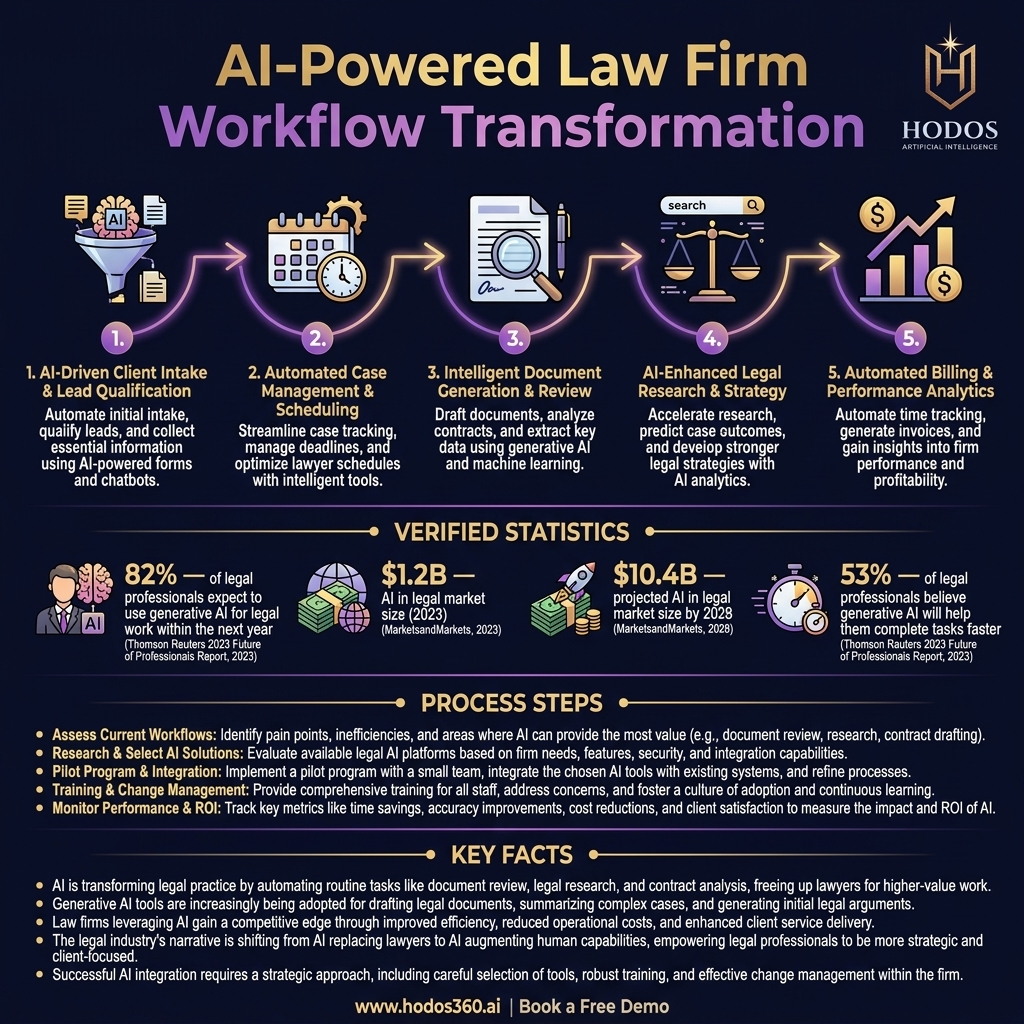
The true power of AI for law firms lies in its ability to integrate across all operational facets, creating a seamless, efficient, and data-driven practice. An AI Law Firm Management System acts as the central nervous system, orchestrating everything from client acquisition to case closure. Consider how AI transforms case management: predictive analytics can assess case outcomes based on historical data, helping lawyers develop more robust strategies and advise clients with greater certainty. Billing becomes less of a chore and more of an automated, accurate process, with AI tracking billable hours, identifying potential discrepancies, and generating invoices with unprecedented precision. This directly addresses the challenge of revenue leakage and improves cash flow, a critical thing for any firm.
Client intake, often a time-consuming bottleneck, is revolutionized by AI. Intelligent forms can collect information, qualify leads, and even suggest appropriate legal services, creating a smoother, more professional first impression. Learn more about AI Marketing: The Ultimate Strategic Guide for Law Firms. Document automation, powered by AI, moves beyond simple templates to dynamically generate complex legal documents, such as contracts, motions, and briefs, based on specific case parameters, ensuring consistency and significantly reducing drafting time and errors. Furthermore, AI-driven calendar management can optimize schedules, prevent conflicts, and send intelligent reminders, freeing up valuable administrative time. This comprehensive integration, offered by platforms like HODOS 360, empowers firms to operate at peak efficiency, turning administrative overhead into strategic advantage. According to a 2024 report by Thomson Reuters, firms adopting integrated AI solutions reported an average of 15-20% improvement in operational efficiency and a 10% reduction in administrative costs within the first year.
Strategic Imperative: Why Firms Must Embrace AI Now
The decision to embrace AI is no longer a luxury but a strategic imperative. The legal market is increasingly competitive, with clients demanding greater value, transparency, and efficiency. Firms that hesitate risk being outmaneuvered by agile competitors who are already leveraging AI to deliver superior service at a lower cost. This creates a significant human conflict: the tension between tradition and innovation. Managing partners who fail to adapt face not just stagnation, but potential obsolescence. As Casey Flaherty, Chief Strategy Officer at LexFusion, often articulates, the future of legal services belongs to those who can strategically deploy technology to enhance their offerings.
Beyond competitive pressures, AI plays a crucial role in attracting and retaining top talent. Younger lawyers, digital natives, expect modern tools and efficient workflows. Learn more about AI Marketing Revolution 2026: Autonomous Agents for Law Firms. A firm that provides cutting-edge AI support is more attractive to new associates seeking to maximize their impact and avoid tedious, repetitive tasks. Moreover, AI provides invaluable data for strategic decision-making. Instead of relying on gut instinct, managing partners can use AI-generated analytics to identify profitable practice areas, optimize resource allocation, and forecast market trends. This data-driven approach, a stark contrast to merely asking for opinions, is what will make or break a law firm in this AI revolution, ensuring robust growth and long-term sustainability. It is not enough to simply have AI tools; the key is how strategically they are integrated and utilized.
- ✓Enhanced Client Satisfaction: AI Voice Assistants offer 24/7 multilingual support, ensuring clients always feel heard and their inquiries are promptly addressed, leading to higher retention rates.
- ✓Optimized Lead Generation: AI Marketing Platforms automate social media and content generation, coupled with ROI tracking, to attract and convert more qualified leads effectively.
- ✓Streamlined Operations: AI Law Firm Management Systems automate case management, billing, and document creation, freeing lawyers to focus on complex legal analysis and client strategy.
- ✓Data-Driven Decision Making: AI analytics provide insights into firm performance, client trends, and market opportunities, enabling managing partners to make informed strategic choices.
- ✓Competitive Edge: Firms leveraging AI gain a significant advantage in efficiency and service delivery, outperforming those still relying on traditional, manual processes.
- ✓Future-Proofing Your Practice: Investing in AI ensures your firm remains agile and adaptable to evolving legal tech landscapes and client expectations, safeguarding its long-term viability.
- ✓Ethical Compliance & Risk Mitigation: Properly implemented AI tools, with human oversight, can help ensure compliance with legal standards and reduce errors in legal writing and research.
Navigating Ethical AI: Responsibility and Oversight
The rapid adoption of AI also brings critical ethical considerations that lawyers must navigate. The ABA Model Rules of Professional Conduct, particularly Rule 1.1 (Competence) and Rule 1.6 (Confidentiality), provide a framework for responsible AI use. Lawyers have an ethical duty to understand the technology they employ, ensuring its reliability and guarding against AI hallucinations or biases. This requires continuous learning and due diligence in selecting AI tools. For instance, the infamous case of a lawyer submitting AI-generated citations that proved to be non-existent highlights the absolute necessity of human oversight and verification of all AI outputs. Learn more about AI-Native Law Firms: The Ultimate Guide to Thriving in a New Era. The lawyer remains ultimately responsible for the work product, regardless of the tools used.
Firms must implement robust internal policies for AI use, including guidelines for data input, output verification, and client communication regarding AI involvement. Safeguarding client confidentiality is paramount, meaning firms must choose AI providers with strong data security protocols and ensure that client data is not inadvertently exposed or used for training public models without consent. Ethical AI in law is not about avoiding the technology, but about deploying it responsibly, with the lawyer's professional judgment always serving as the ultimate arbiter. This ensures that AI truly augments justice, rather than compromising it, and prevents the risk of relying on unverified information.
Beyond the Back Office: AI's Impact on Client Engagement and Growth
AI's transformative power extends far beyond internal operational efficiencies; it fundamentally reshapes how law firms engage with clients and drive growth. In an increasingly digital world, a strong online presence and seamless client interaction are non-negotiable. This is where AI Marketing Platforms become indispensable. Imagine an AI-powered system that analyzes market trends, generates compelling social media content, creates bespoke AI videos explaining complex legal concepts, and automates campaign scheduling—all while tracking ROI in real-time. This level of sophisticated, data-driven marketing allows firms to precisely target potential clients, nurture leads, and build brand authority more effectively than ever before. It shifts marketing from a speculative expense to a measurable, high-impact growth engine, helping firms stand out in a crowded market.
Furthermore, the client experience is dramatically enhanced by AI Voice Assistants. Learn more about AI Legaltech: The Ultimate Guide to Firm Transformation. These 24/7 virtual receptionists can answer common questions, qualify leads, book appointments directly into calendars, and even route complex calls to the appropriate human lawyer, all with multilingual support. This means no missed calls, no lost leads, and clients receiving immediate, professional attention, significantly improving initial impressions and client satisfaction. Coupled with AI-powered Web & Mobile Development, firms can build high-converting websites with responsive designs and integrated SEO optimization, ensuring they are easily discoverable and provide an intuitive user experience. These client-facing AI services complete the holistic picture, demonstrating that AI is not just about internal tools, but about creating a comprehensive ecosystem that drives both operational excellence and unprecedented growth. It's a thing that truly differentiates a modern legal practice.

Key Takeaways and Next Steps: Charting Your Firm's AI Future
The debate about AI and the end of the law firm is largely a misdirection. The reality is that AI is not ending the law firm; it is evolving it. The legal profession is at an inflection point, where embracing AI Law Firm Management is not merely an option but a strategic imperative for long-term viability and competitive advantage. Firms that leverage AI to streamline operations, enhance client engagement, and make data-driven decisions will be the ones that thrive. The future belongs to the augmented lawyer, one who skillfully combines human judgment, empathy, and ethical reasoning with the unparalleled efficiency and analytical power of artificial intelligence. This requires a proactive approach from managing partners, investing in not just the technology, but also in the training and cultural shift necessary for successful adoption.
For law firms ready to chart a course for the future, the next steps involve a careful evaluation of existing workflows and identifying areas where AI can deliver the most impact. Start with specific pain points, such as client intake bottlenecks or time-consuming document review, and explore integrated solutions. Platforms like HODOS 360 offer a comprehensive suite of AI-powered services—from AI Law Firm Management and AI Marketing Platforms to AI Voice Assistants and Web & Mobile Development—designed to provide a holistic solution for modern legal practices. The goal is not to replace the human element, but to empower it, fostering a more efficient, profitable, and client-centric legal practice. The time to act is now. Book a Free Demo with HODOS 360 to see AI in action.
Frequently Asked Questions
Will AI replace lawyers in the future?+
No, AI is not expected to replace lawyers. Instead, it will augment their capabilities by automating repetitive tasks like document review and legal research. This allows lawyers to focus on higher-value activities requiring human judgment, empathy, and strategic thinking. AI will transform roles, making lawyers more efficient and effective.
What are the primary benefits of AI Law Firm Management systems?+
AI Law Firm Management systems offer numerous benefits, including enhanced operational efficiency, streamlined client intake, automated billing, improved document accuracy, and optimized case management. They free up significant time for lawyers, reduce administrative overhead, and provide data-driven insights for strategic decision-making, ultimately boosting profitability.
How does AI improve client service in law firms?+
AI improves client service through 24/7 AI Voice Assistants for immediate support, personalized communication via AI Marketing Platforms, and faster response times in case management. It ensures clients receive prompt, efficient, and consistent service, leading to higher satisfaction and stronger client relationships.
Are there ethical concerns with using AI in legal practice?+
Yes, ethical concerns exist, primarily around competence, confidentiality, and supervision. Lawyers must ensure AI tools are reliable, verify all AI-generated outputs, and protect client data. Human oversight remains crucial to prevent errors or biases, upholding professional responsibility as outlined in ABA Model Rules like 1.1 and 1.6.
What kind of AI tools should a law firm consider adopting first?+
Law firms should prioritize AI tools that address their most significant pain points. Often, this includes AI-powered solutions for document automation, legal research, and client intake. Integrated AI Law Firm Management systems offering comprehensive features like case management and billing automation provide a strong foundation for holistic digital transformation.