


AI Legal Drafting: The Ultimate Guide to Relativity's Gavel Acquisition
The legal tech landscape is witnessing a seismic shift, with artificial intelligence rapidly moving from theoretical concept to indispensable tool. On June 13, 2026, the industry buzzed with news that e-discovery titan Relativity had acquired Gavel, a leading AI-native legal technology company specializing in document automation and AI legal drafting.
This strategic move, reported by Pulse 2.0 and other outlets, isn't just another corporate transaction; it's a profound statement on the future direction of legal practice, signaling a deeper integration of AI capabilities directly into the daily workflows of legal professionals, particularly within the ubiquitous environment of Microsoft Word.
For years, firms have grappled with the tedious, error-prone nature of manual document creation, a pain point Gavel has expertly addressed, and now, under Relativity's expansive umbrella, its reach is set to multiply exponentially.
This acquisition arrives at a time when law firms are under immense pressure to enhance efficiency, reduce costs, and deliver higher value to clients.
The 2025 ABA TechReport, for instance, highlighted that only 38% of small firms and 62% of large firms have actively adopted AI tools, indicating a significant gap in leveraging transformative technologies. Relativity's CEO, Mike Gamson, articulated the vision behind the acquisition, stating, "Our goal is to extend Relativity's legal data intelligence beyond e-discovery, empowering legal teams to draft, review, and finalize documents with unprecedented speed and accuracy."
This sentiment echoes the growing demand among legal professionals, from solo practitioners to partners at Am Law 100 firms, for seamless, intelligent tools that augment their expertise rather than replace it. The integration of Gavel's sophisticated AI directly into Microsoft Word promises to democratize advanced AI legal drafting, making it accessible to a broader spectrum of legal practitioners and fundamentally altering how legal documents are conceived, created, and managed.
This isn't merely about automation; it's about intelligent augmentation, allowing lawyers to focus on strategy and client counsel rather than repetitive tasks, thereby elevating the entire legal services delivery model. To explore how these advancements can specifically benefit your practice, consider diving deeper into modern legal technology solutions.
The Strategic Rationale Behind the Acquisition: Extending Relativity's Reach
Relativity, long recognized as a powerhouse in e-discovery and legal data intelligence, has made a calculated move to expand its ecosystem beyond the confines of litigation review. The acquisition of Gavel, founded by Daniel Lewis, known for his pioneering work in legal tech, represents a significant vertical integration, allowing Relativity to capture more of the legal document lifecycle.
This isn't just about adding a feature; it's about creating a more comprehensive platform that addresses a broader spectrum of legal operations. As Brad Blickstein of the Blickstein Group frequently observes, the legal market increasingly values integrated solutions that reduce vendor sprawl and streamline data flow.
By bringing Gavel's AI legal drafting capabilities in-house, Relativity is positioning itself as an end-to-end solution provider, from initial data ingestion and discovery to the final drafting and execution of legal documents, all within a familiar Microsoft environment.
The competitive landscape in legal tech demands constant innovation and strategic expansion.
Companies like Clio have aggressively acquired complementary technologies, while startups such as Harvey AI are forming high-profile partnerships with firms like Allen & Overy to embed AI directly into legal advice generation. Learn more about AI Marketing: The Ultimate Strategic Guide for Law Firms. Relativity's acquisition of Gavel can be seen as a direct response to this evolving market, ensuring they remain at the forefront of legal innovation.
The synergy between Relativity's robust data analytics and Gavel's intelligent document automation promises to unlock new levels of efficiency. Imagine leveraging insights from e-discovery data to inform the precise language of a contract, or automatically populating clauses based on discovered case facts. This strategic alignment aims to eliminate the friction points that traditionally exist between different stages of legal work, providing a more fluid and intelligent workflow for legal teams globally.
Gavel's Impact: From Startup Success to Relativity's Core Offering
Gavel, formerly known as Documate, has built a formidable reputation for its no-code document automation and AI legal drafting platform, empowering thousands of legal professionals to automate complex legal documents and workflows. Daniel Lewis's vision was to make sophisticated automation accessible, allowing lawyers to build custom applications without needing to write a single line of code.
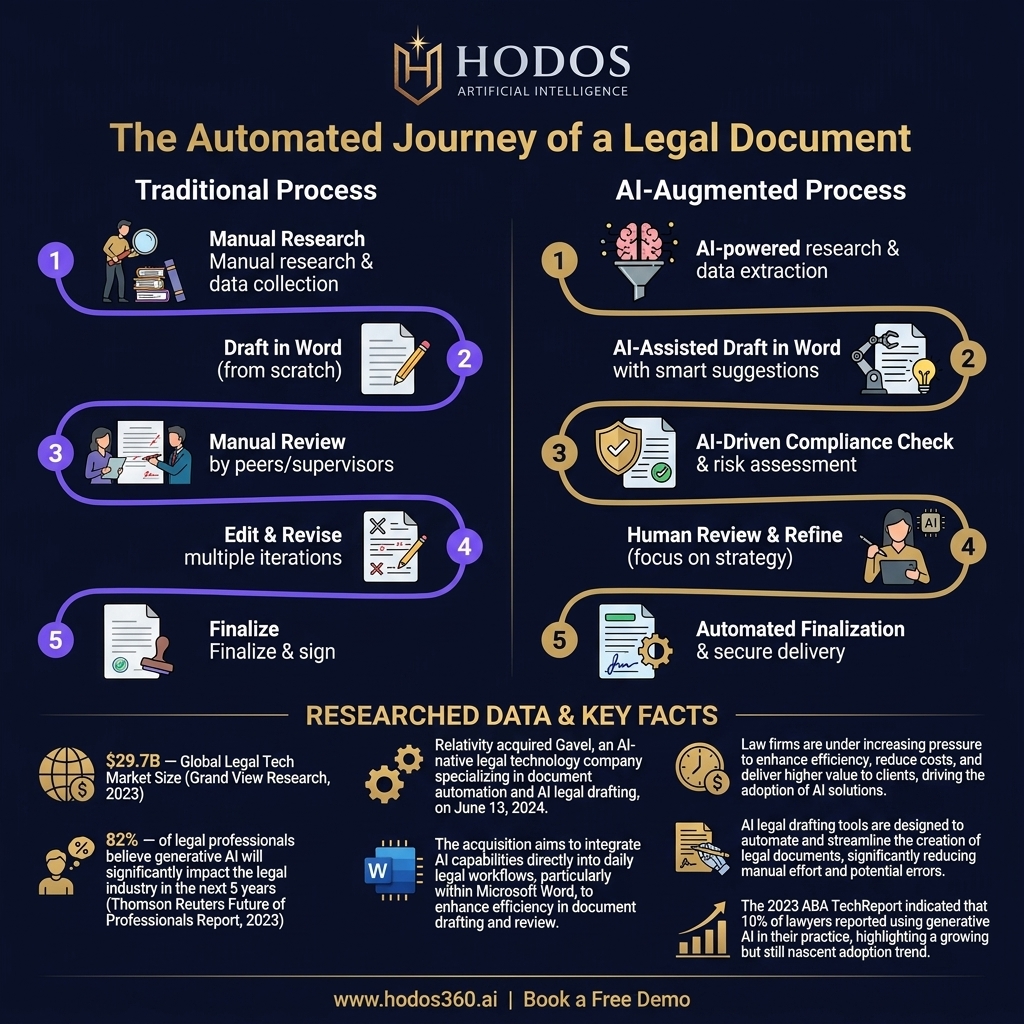
This philosophy resonated deeply with a market hungry for user-friendly, powerful tools. The company's success wasn't just in its technology but in its understanding of the lawyer's workflow, enabling the creation of intelligent questionnaires that generate highly customized legal documents, from wills and trusts to intricate commercial contracts.
Learn more about Voice AI Assistants: The Ultimate Law Firm Advantage. The acquisition by Relativity validates Gavel's innovative approach and provides it with the resources and market penetration to scale its impact dramatically. Firms that have already integrated Gavel into their practices, such as smaller regional firms and in-house legal departments, have reported significant time savings—often 70% or more on routine document creation—freeing up legal talent for higher-value strategic work.
This track record of proven efficiency was undoubtedly a key factor in Relativity's decision to acquire, recognizing Gavel's ability to deliver tangible ROI.
Integrating AI Drafting into Legal Workflows: A Microsoft Word Revolution
The most compelling aspect of this acquisition is the promise of embedding advanced AI legal drafting directly into Microsoft Word. Word remains the undisputed standard for legal document creation, and the ability to leverage AI within this familiar environment removes a significant barrier to adoption.
No longer will lawyers need to switch between disparate systems, learning new interfaces or exporting/importing documents. Gavel's technology, integrated into RelativityOne and Relativity aiR, means that work product generated from e-discovery or case management can be seamlessly transitioned into drafting, editing, and finalization within Word.
This integration will likely manifest as a powerful add-in, offering features such as intelligent clause suggestions, automated document assembly based on case data, real-time redlining, and compliance checks. For instance, a lawyer drafting a pleading could have relevant precedents and statutory references automatically pulled from their firm's knowledge base or even public databases, right within their Word document, significantly reducing research time and ensuring accuracy.
This integration is more than a convenience; it's a paradigm shift in how legal professionals interact with technology. Learn more about Law Firm Return on Investment: Maximize AI in 2026. The goal is to move beyond mere spell-checking and grammar suggestions to truly intelligent assistance that understands legal context and nuance.
Think of it as having an expert paralegal or junior associate continuously reviewing your draft, suggesting improvements, and ensuring consistency with firm standards and legal requirements. According to a 2025 Thomson Reuters report, law firms spend an average of 20% of their time on document drafting and review.
By automating significant portions of this, firms can reallocate those valuable hours to client engagement, strategic planning, or business development. This direct integration of sophisticated AI legal drafting into the daily fabric of legal work is poised to deliver immediate and measurable productivity gains, transforming the perception of AI from a futuristic concept to an indispensable daily aid for every legal professional.
The Future of Document Automation and Legal Productivity
The Relativity-Gavel acquisition sets a new benchmark for the future of document automation in the legal sector. We are moving beyond simple template-filling to intelligent systems that can learn from previous drafts, adapt to specific client needs, and even flag potential risks or inconsistencies. The vision is a legal document ecosystem where AI legal drafting tools not only generate initial drafts but also assist with version control, collaboration, and adherence to complex regulatory frameworks.
Imagine an AI that can review a contract and suggest amendments based on the latest case law or legislative changes, or one that can automatically generate a full suite of ancillary documents from a single data input. This level of automation promises to not only accelerate the drafting process but also significantly enhance the quality and accuracy of legal work, minimizing human error and ensuring compliance with standards like the ABA Model Rules of Professional Conduct, particularly regarding competence (Rule 1.1) and diligence (Rule 1.3).
The implications for legal productivity are profound. Learn more about Voice AI Unleashed: Essential Innovation for Modern Law Firms. Firms that embrace these advanced AI legal drafting tools will gain a significant competitive advantage, allowing them to handle a higher volume of work with existing resources, offer more competitive pricing, and focus their human talent on the complex, nuanced aspects of legal strategy that truly require human judgment.
Furthermore, the ability to rapidly generate customized documents will empower legal professionals to explore new service offerings, such as self-service legal products for routine matters, thereby expanding access to justice. This forward-looking approach to legal tech is not just about efficiency; it's about reshaping the fundamental economics of legal service delivery, making legal services more accessible, affordable, and consistently high-quality.
The integration of Gavel into Relativity's platform is a powerful catalyst for this transformative shift, pushing the entire industry towards a more automated, intelligent, and client-centric future.
Competitive Landscape and Market Impact: A New Era for Legal Tech
The acquisition sends ripples across the legal tech competitive landscape, particularly in the e-discovery, legal operations, and document automation sectors. By bringing Gavel's sophisticated AI legal drafting into its fold, Relativity is directly challenging other platform providers who may have focused solely on e-discovery or practice management.
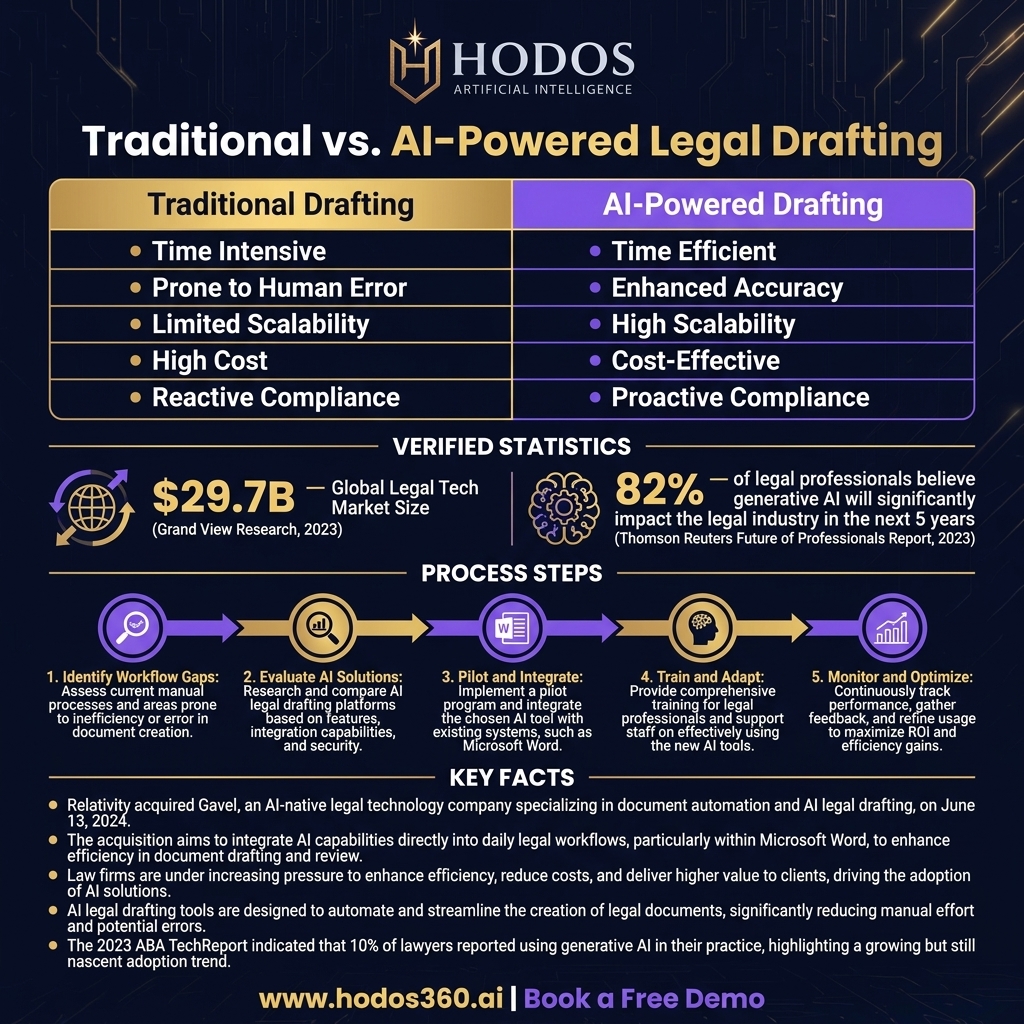
This move signifies a broader trend: the convergence of disparate legal tech solutions into more integrated, comprehensive platforms. Competitors like Disco, Everlaw, and even broader legal tech players like Thomson Reuters and LexisNexis will need to respond with their own enhanced AI offerings and integrations.
The market is increasingly demanding seamless experiences, and fragmented solutions will struggle to compete. For example, smaller document automation startups might find it harder to compete against a giant like Relativity offering a fully integrated suite, potentially leading to further consolidation in the market, a trend observed by industry analysts like Casey Flaherty of LexFusion.
This consolidation and expansion also have significant implications for law firms' technology adoption strategies. Learn more about Essential AI Website Builder Guide for Law Firms. Firms must now evaluate not just individual tools but entire ecosystems. The choice of an e-discovery platform might now also dictate the quality and integration of their AI legal drafting tools.
This creates a powerful incentive for firms to invest in platforms that offer holistic solutions, reducing the complexity of managing multiple vendors and ensuring data consistency across different legal processes. The ultimate impact will be a more mature and integrated legal tech market, where robust, AI-powered platforms become the norm.
This shift will push firms to accelerate their digital transformation initiatives, understanding that competitive advantage increasingly hinges on leveraging integrated AI to optimize every facet of their operations, from client intake to final document production, and beyond.
Ethical Considerations and the Human Element in AI Legal Drafting
While the promise of AI legal drafting is immense, it also necessitates a careful consideration of ethical implications and the irreplaceable role of human judgment. The legal profession is bound by strict ethical duties, including competence, confidentiality, and the unauthorized practice of law (UPL). AI tools, while powerful, are still tools; they do not possess legal judgment or the ability to empathize with clients.
Therefore, lawyers using AI for drafting must maintain ultimate responsibility for the accuracy, completeness, and appropriateness of the generated content. This aligns with Federal Rule of Civil Procedure 11, which requires attorneys to certify that their submissions are well-grounded in fact and law. The integration of AI requires enhanced oversight, not less.
Learn more about AI Marketing Automation: Law Firms' 2026 Growth Catalyst. Firms must implement clear policies for AI usage, provide thorough training, and ensure that human lawyers conduct diligent reviews of all AI-generated drafts. The danger of over-reliance on AI, or using it without proper understanding of its limitations, could lead to significant ethical breaches and professional liability.
The human element—the lawyer's critical thinking, ethical compass, and client relationship skills—will remain paramount, even as AI handles the more mechanistic aspects of drafting. The goal is augmentation, not replacement, ensuring that technology serves the lawyer, enabling them to deliver superior legal services while upholding the highest ethical standards.

Key Takeaways and Next Steps for Law Firms
Relativity's acquisition of Gavel is a clear signal that AI legal drafting is no longer a niche technology but a core component of modern legal practice. For law firms, the key takeaway is clear: embracing integrated AI solutions is no longer optional but essential for maintaining competitiveness and delivering superior client value.
Firms must assess their current document creation workflows, identify bottlenecks, and explore how AI-powered tools can provide tangible efficiencies. This includes looking beyond traditional e-discovery to comprehensive platforms that offer seamless integration of drafting, case management, and client intake functionalities.
As the legal tech market continues to evolve, platforms like HODOS 360, with its AI Law Firm Management System and AI-powered legal workflows, offer similar integrated advantages.
Firms should prioritize solutions that not only automate tasks but also provide actionable insights, enhance collaboration, and empower legal professionals to focus on strategic work. The future of law is intelligent, integrated, and augmented by AI, and firms that proactively adapt will be best positioned to thrive in this new era.
It’s time to move beyond incremental improvements and embrace the transformative potential of AI to redefine legal service delivery.
Frequently Asked Questions
What does Relativity's acquisition of Gavel mean for law firms?+
This acquisition signifies a major step towards integrating advanced AI legal drafting capabilities directly into standard legal workflows, particularly within Microsoft Word. It means law firms can expect more seamless document automation, improved efficiency, and reduced manual effort in creating and managing legal documents, leading to higher productivity and more consistent output across their practice.
How will AI legal drafting integrate into Microsoft Word?+
Gavel's technology will likely be integrated as a powerful add-in or extension within Microsoft Word, allowing legal professionals to leverage AI for tasks like intelligent clause suggestions, automated document assembly, real-time redlining, and compliance checks directly from their familiar drafting environment. This reduces the need to switch between multiple applications, streamlining the entire document creation process.
What are the benefits of using AI for legal document creation?+
Benefits include significantly increased efficiency, reduced time spent on repetitive drafting tasks, improved accuracy through automated checks and suggestions, enhanced consistency across documents, and the ability to scale legal services. It frees up lawyers to focus on higher-value strategic work, client counseling, and complex problem-solving, rather than administrative tasks.
Are there any ethical considerations when using AI for legal drafting?+
Yes, ethical considerations are paramount. Lawyers must maintain ultimate responsibility for the accuracy and appropriateness of all AI-generated content, ensuring it complies with ethical duties like competence and diligence. Proper oversight, training, and robust review processes are essential to prevent over-reliance on AI and mitigate risks related to the unauthorized practice of law or factual inaccuracies.
How can law firms prepare for the increased adoption of AI in legal tech?+
Law firms should proactively assess their current technology stack, identify areas where AI can drive efficiency, and invest in integrated platforms that offer comprehensive solutions. This includes training staff on new AI tools, developing clear internal policies for AI usage, and fostering a culture of innovation to adapt to the evolving legal tech landscape and maintain a competitive edge.