


Voice AI Unleashed: Essential Innovation for Modern Law Firms
The legal landscape, often perceived as resistant to rapid technological shifts, is currently undergoing a foundational transformation, spearheaded by advancements in artificial intelligence. The recent announcement by PeopleReign regarding their Summer 2026 Platform Release, featuring a self-service workflow builder and significant Voice AI innovation, serves as a powerful testament to this accelerating change.
While PeopleReign’s initial focus targets IT and HR services, its underlying technological leaps in conversational AI directly mirror capabilities now poised to redefine legal operations. This development signifies a critical inflection point, challenging law firms to move beyond traditional methodologies and embrace intelligent automation or risk falling behind.
Firms like Allen & Overy, early adopters of AI tools such as Harvey AI, have already demonstrated the competitive edge gained through strategic tech integration, highlighting a growing tension between firms clinging to legacy systems and those proactively investing in cutting-edge solutions.
This shift isn't merely about adopting new software; it's about fundamentally rethinking how legal services are delivered, managed, and perceived by clients.
The core promise of Voice AI in the legal sector is to bridge the gap between burgeoning client demands and resource constraints, offering scalability and 24/7 responsiveness that human teams alone cannot always provide. As PeopleReign CEO Dan Turchin emphasizes the power of intuitive, self-service solutions, law firms must consider how similar innovations can empower their own clients and streamline internal workflows.
From automating initial client intake and lead qualification to managing complex scheduling and providing multilingual support, Voice AI is evolving from a futuristic concept to an indispensable operational asset. This article delves into the transformative potential of Voice AI, examining its current applications, ethical considerations, and strategic pathways for law firms aiming to harness this essential innovation to enhance efficiency, elevate client experience, and secure a competitive advantage in a rapidly evolving market.
Don't miss out on these critical advancements shaping the future of legal practice.
The Dawn of Conversational AI in Legal Operations
The PeopleReign announcement, while centered on enterprise IT and HR, underscores a broader trend: the maturation of Voice AI capabilities, particularly in natural language processing (NLP) and generative AI. The ability of systems to understand, interpret, and respond to complex human speech with increasing accuracy is no longer confined to sci-fi narratives.
Leading AI researchers and entrepreneurs, from OpenAI’s Sam Altman to Anthropic’s Dario Amodei, have consistently highlighted the rapid progress in large language models (LLMs) that power these conversational interfaces. This technological leap allows Voice AI to move beyond simple commands, engaging in nuanced dialogues that are critical for legal applications.
For law firms, this means a paradigm shift from reactive, human-intensive interactions to proactive, AI-driven engagements that can handle a vast array of tasks, from initial client inquiries to complex data retrieval, all powered by sophisticated algorithms capable of learning and adapting.
The implications for legal operations are profound.
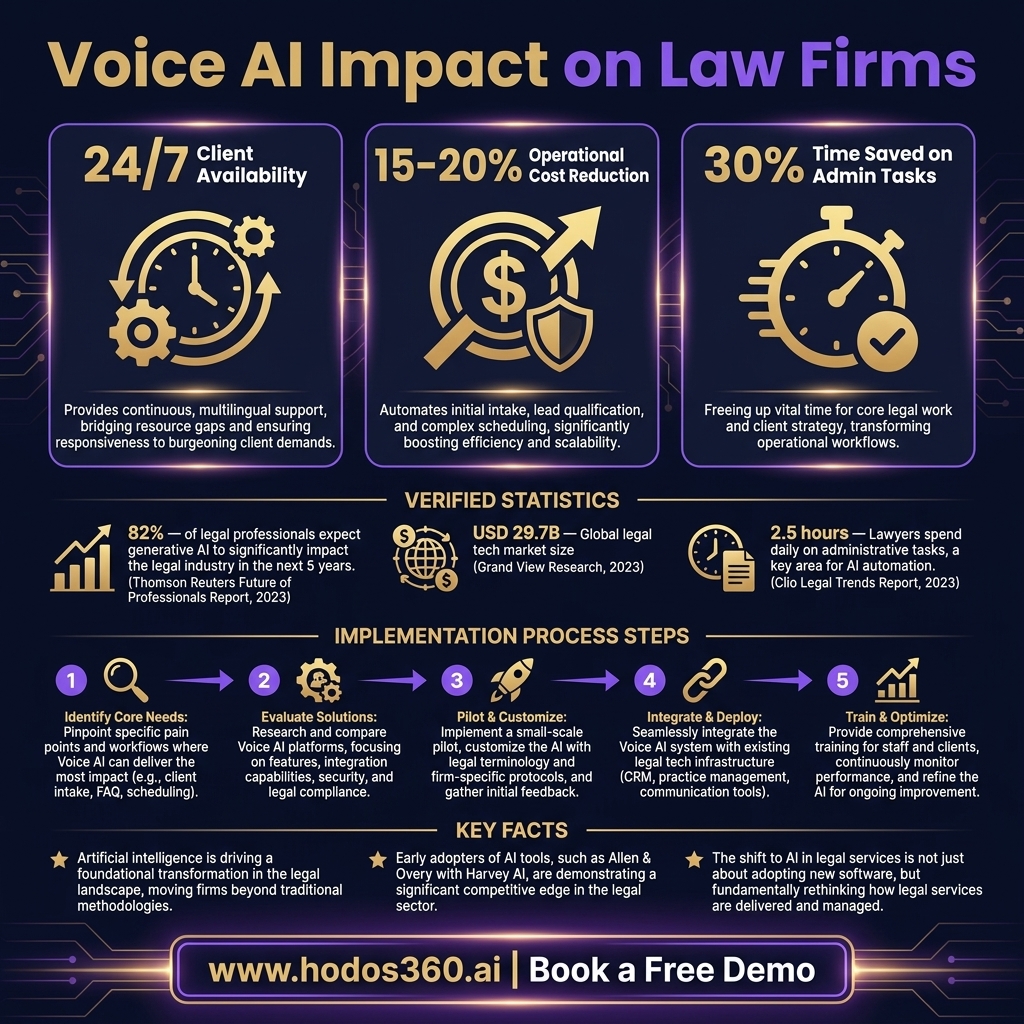
Consider the sheer volume of routine inquiries, scheduling requests, and initial information gathering that consumes valuable paralegal and administrative staff time. Learn more about AI SEO Lead Generation: Essential Strategies for Law Firms. A study by Thomson Reuters in 2023 indicated that legal professionals spend up to 30% of their day on administrative tasks, much of which involves repetitive communication.
Voice AI systems, leveraging advancements demonstrated by platforms like PeopleReign, can absorb a significant portion of this workload. By automating these interactions, law firms can reallocate human talent to higher-value, strategic legal work that truly requires human judgment and empathy. This isn't about replacing lawyers but augmenting their capabilities, allowing them to focus on the intricate legal challenges that define their profession, ultimately enhancing both job satisfaction and firm profitability.
The 'summer 2026 platform release' from PeopleReign signifies that this technology is now robust enough for widespread enterprise adoption, making its transition into specialized sectors like legal inevitable and impactful.
Transforming Client Experience with Intelligent Voice Assistants
In today’s fast-paced world, client expectations for immediate, accessible service have never been higher. The legal industry, traditionally operating on a 9-to-5 model, often struggles to meet these demands, leading to potential client dissatisfaction and missed opportunities. This is where Voice AI innovation offers a crucial competitive advantage.
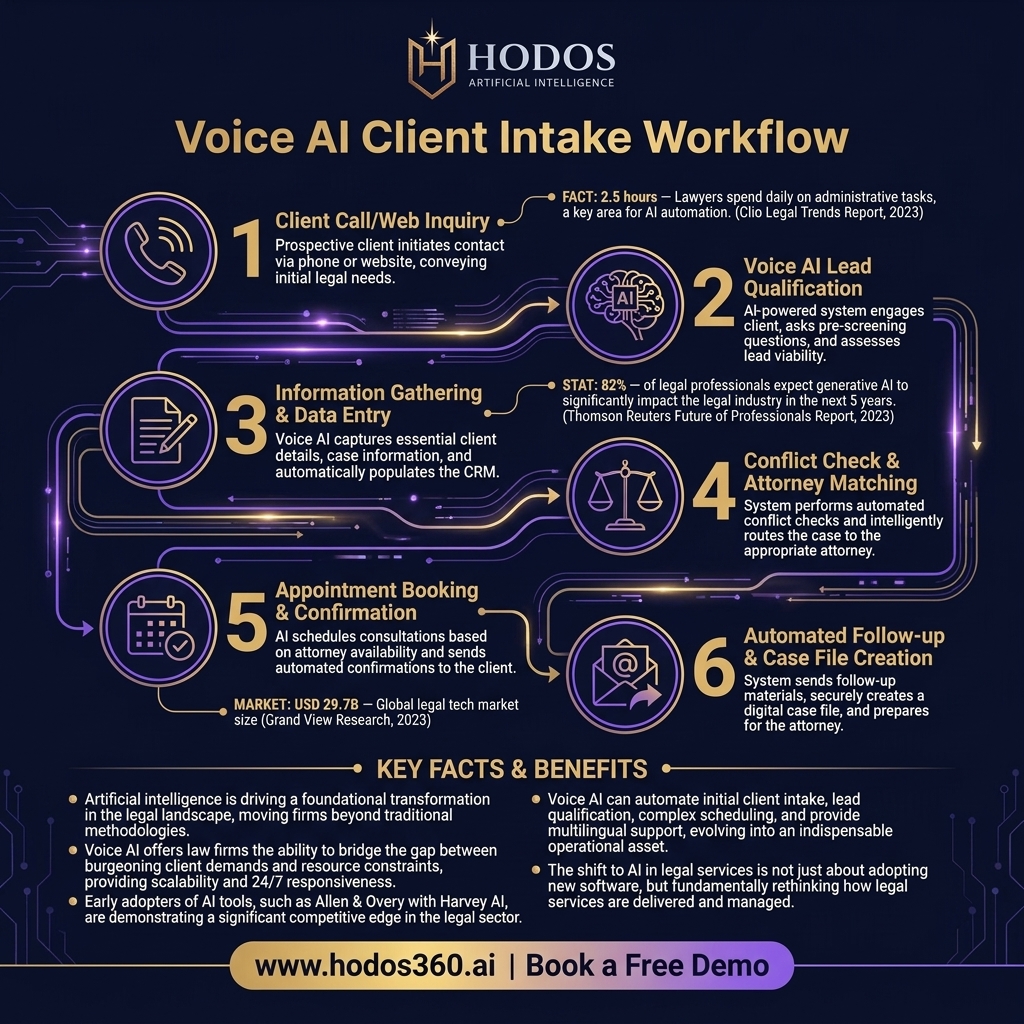
Imagine a prospective client calling your firm at 10 PM on a Sunday, facing an urgent legal issue. Instead of an answering machine or a generic voicemail, they are greeted by an intelligent Voice AI assistant capable of understanding their situation, qualifying the lead, and even scheduling an immediate consultation with the appropriate attorney for the next business day.
This 24/7 availability significantly improves client satisfaction and ensures that no potential client falls through the cracks, a common pain point highlighted in numerous ABA TechReport surveys regarding client intake.
Enhancing Responsiveness and Accessibility Beyond round-the-clock availability, Voice AI can dramatically enhance the overall client experience through personalized and multilingual support.
Learn more about AI Document Workflows: Revolutionize Your Firm in 2026 for Maximum ROI. With the globalized nature of commerce and diverse communities, law firms increasingly serve clients who prefer to communicate in languages other than English. Voice AI assistants can seamlessly handle inquiries in multiple languages, breaking down communication barriers and fostering a more inclusive and accessible legal service.
This capability not only expands a firm’s potential client base but also demonstrates a commitment to client-centric service that resonates deeply. Furthermore, these intelligent assistants can provide instant answers to frequently asked questions, guide clients through initial document submission processes, and offer status updates on cases, all without requiring human intervention, thereby reducing client anxiety and improving transparency.
This level of responsiveness cultivates trust and loyalty, distinguishing tech-forward firms from their more traditional counterparts.
Streamlining Operations: Workflow Automation and Efficiency Gains
The true power of Voice AI extends beyond client-facing interactions, profoundly impacting internal legal operations by automating tedious workflows and freeing up valuable attorney and staff time. Integrating Voice AI with existing legal practice management systems—such as case management, billing, and document automation platforms—creates a cohesive, highly efficient ecosystem.
For instance, a lawyer could dictate case notes directly into the system, which the Voice AI then transcribes, categorizes, and files, linking it to the relevant client matter and updating billing entries automatically. This eliminates manual data entry, reduces transcription errors, and ensures real-time accuracy across all firm records, a critical component for maintaining compliance with ethical obligations like ABA Model Rule 1.1 (Competence) and 1.6 (Confidentiality).
Automating Routine Tasks and Freeing Attorney Time Voice AI’s capability to automate routine administrative tasks is a game-changer for firm productivity. From scheduling court appearances and client meetings to initiating document generation based on verbal cues, the technology can significantly reduce the administrative burden that often distracts legal professionals from their core responsibilities.
Learn more about Voice Assist: Essential AI Scheduling for Law Firms. This level of automation is not merely about speed; it's about strategic reallocation of human capital. By offloading repetitive tasks to AI, attorneys and paralegals can dedicate more time to complex legal analysis, client strategy, and business development—activities that directly impact revenue and client outcomes.
The efficiency gains are measurable: McKinsey & Company’s research consistently shows that AI automation can reduce operational costs by 15-20% in professional services, translating directly into higher profit margins for law firms that embrace these innovations. The competitive landscape is increasingly defined by firms that can deliver high-quality legal services more efficiently and cost-effectively, making Voice AI an indispensable strategic asset.
Specific examples of workflow automation driven by Voice AI include:
- ✓Automated Client Intake: Voice AI guides new clients through initial questionnaires, gathers necessary information, and creates a new client file in the practice management system.
- ✓Meeting Scheduling & Reminders: Voice assistants manage complex calendars, book appointments, and send automated reminders to all parties, reducing no-shows.
- ✓Document Generation Initiation: Attorneys can verbally request the creation of standard legal documents (e.g., non-disclosure agreements, simple contracts), with AI populating templates.
- ✓Time Tracking & Billing Entry: Voice AI captures billable hours and activities in real-time as attorneys work, ensuring accurate and comprehensive billing records.
- ✓Internal Information Retrieval: Staff can verbally query the firm’s knowledge base or case files for specific precedents, statutes, or client information, receiving instant answers.
- ✓Lead Qualification & Routing: Incoming calls are screened by Voice AI to assess urgency and type of legal need, then routed to the most appropriate department or attorney.
- ✓Multilingual Communication: AI provides real-time translation for client calls, ensuring effective communication with diverse clientele without needing human interpreters.
Navigating Ethical and Regulatory Landscapes of Voice AI
While the promise of Voice AI in legal is immense, its implementation necessitates a robust understanding and adherence to the ethical and regulatory frameworks governing the legal profession. Chief among these concerns is client confidentiality, as enshrined in ABA Model Rule 1.6. Law firms must ensure that any Voice AI system used for client communication or data processing employs state-of-the-art encryption, secure data storage, and strict access controls.
The potential for data breaches or unauthorized access to sensitive client information, even if unintentional, poses significant risks to a firm's reputation and could lead to severe professional sanctions. Firms must conduct thorough due diligence on AI vendors, scrutinizing their data security protocols and compliance certifications.
Moreover, clear policies must be established regarding what types of information can be handled by AI versus what requires direct human interaction, especially concerning privileged communications.
Ensuring Compliance and Mitigating Bias Another critical ethical consideration revolves around the accuracy and potential for bias in AI systems.
Voice AI, like any AI, is trained on vast datasets, and if these datasets contain inherent biases, the AI's responses or decision-making processes could perpetuate or even amplify them. Learn more about AI Marketing Revolution 2026: Autonomous Agents for Law Firms. For example, an AI trained predominantly on data from a specific demographic might struggle to understand accents or dialects from other groups, leading to unequal service.
Ensuring fairness and preventing discrimination is paramount, aligning with fundamental legal principles and Federal Rules of Civil Procedure regarding discovery and fair trial. Law firms must actively test and audit their Voice AI systems for bias, ensuring that all clients receive equitable treatment. The evolving regulatory landscape, exemplified by initiatives like the EU AI Act, which aims to classify and regulate AI systems based on their risk levels, further underscores the need for proactive compliance.
Firms must stay abreast of these developments, ensuring their AI adoption strategies are not only innovative but also legally sound and ethically responsible, maintaining the public's trust in both technology and the legal system. The ethical use of AI is not merely a compliance issue but a cornerstone of responsible innovation.

The Future is Listening: Strategic Adoption for Law Firms
The trajectory of Voice AI in the legal sector points towards increasingly sophisticated and integrated applications. For law firms looking to maintain a competitive edge, strategic adoption is no longer optional but a necessity. Firms that embrace these innovations proactively will be better positioned to attract and retain clients, optimize operational costs, and enhance their overall service delivery.
The initial investment in Voice AI technology, though potentially significant, yields substantial long-term returns through improved efficiency, scalability, and client satisfaction. As technology leaders like Jensen Huang of NVIDIA continue to push the boundaries of AI hardware and software, the capabilities of Voice AI will only expand, offering even more nuanced and intelligent interactions.
Firms should consider a phased implementation, starting with well-defined areas like client intake or routine scheduling, and gradually expanding as confidence and expertise grow, ensuring a smooth transition.
Looking ahead, Voice AI will likely converge further with other AI modalities, creating truly intelligent legal assistants capable of multimodal communication and complex problem-solving.
Learn more about AI Studio Update: Essential Web App Creation for Law Firms. Imagine a Voice AI that can not only answer questions but also visually present relevant case law, draft preliminary legal arguments, and even participate in virtual client meetings as an intelligent assistant, capturing notes and identifying key action items.
The competitive drama in the legal tech space, with companies like Clio acquiring smaller innovators and Harvey AI partnering with global giants, signifies a robust market ripe with opportunity. Law firms that embark on this journey now, exploring platforms that offer comprehensive AI solutions including advanced Voice AI, will be best equipped to navigate the future of legal practice.
Embracing these tools is not just about staying current; it’s about shaping the future of legal service delivery. Platforms like HODOS 360, with their integrated AI Law Firm Management System and AI Voice Assistants, exemplify the comprehensive solutions available to firms ready to lead this transformation.
Frequently Asked Questions
What is Voice AI in the context of law firms?+
Voice AI for law firms refers to artificial intelligence systems capable of understanding, processing, and responding to human speech. These systems can automate tasks like client intake, schedule appointments, answer FAQs, and route calls, significantly enhancing efficiency and client service. They leverage natural language processing and machine learning to interact intelligently with clients and staff, providing 24/7 support and streamlining administrative workflows.
How can Voice AI improve client intake for law firms?+
Voice AI can revolutionize client intake by providing immediate, 24/7 responsiveness to prospective clients. It can qualify leads by asking relevant questions, gather initial information, create new client files, and even schedule consultations with the appropriate attorney, all automatically. This ensures no lead is missed, improves the initial client experience, and frees up staff time from repetitive data collection.
What ethical considerations should law firms be aware of when using Voice AI?+
Law firms must prioritize client confidentiality (ABA Model Rule 1.6) by ensuring Voice AI systems have robust data security and encryption. Accuracy of information and potential for bias in AI responses are also critical concerns, requiring regular audits and transparent policies. Firms must also comply with evolving data privacy regulations and maintain human oversight for sensitive legal advice, ensuring ethical and responsible AI deployment.
Can Voice AI integrate with existing law firm management software?+
Yes, modern Voice AI solutions are designed for seamless integration with existing legal practice management systems, including case management, billing, and document automation platforms. This integration allows Voice AI to update client files, log billable hours, schedule tasks, and retrieve information across various firm applications, creating a unified and highly efficient operational ecosystem for comprehensive law firm management.
What are the long-term benefits of adopting Voice AI for law firms?+
Long-term benefits include significantly enhanced operational efficiency, reduced administrative costs, and improved client satisfaction through 24/7 availability and personalized service. Voice AI also allows attorneys to focus on high-value legal work, fosters scalability, and provides a competitive advantage in a tech-driven market. It positions firms as innovative leaders, capable of delivering superior legal services more effectively.