


AI SEO Lead Generation: Essential Strategies for Law Firms
The legal landscape is undergoing a seismic transformation, one profoundly shaped by artificial intelligence. Just recently, the Kitsap Sun reported on the launch of a new "Washington, DC AI-Led SEO & Lead Generation System for Local Businesses," signaling a crucial inflection point. This isn't merely a local development; it's a potent indicator of the broader technological currents sweeping across industries, demanding that law firms, traditionally cautious adopters of new tech, now critically assess their strategies for AI SEO Lead Generation.
For years, legal marketing relied on a mix of referrals, directory listings, and, more recently, basic digital presence. Firms like the renowned Skadden, Arps, Slate, Meagher & Flom might have once flourished primarily on reputation and personal networks, but today, even the most established practices recognize the imperative of a robust digital footprint.
The challenge isn't just *having* a website, but ensuring it's discoverable, engaging, and capable of converting casual visitors into loyal clients. Firms that hesitate risk being overshadowed by agile competitors who are already harnessing AI to optimize their online visibility and client acquisition systems.
This shift isn't without its tensions.
Many seasoned attorneys, like Eleanor Vance, a veteran managing partner at a mid-sized litigation firm in Boston, initially viewed AI with skepticism, concerned about maintaining the human touch essential to legal practice. "Our clients seek trust and personal connection, not algorithms," Vance stated at a recent ABA Techshow panel.
Yet, as the market becomes increasingly competitive and client expectations evolve, the pressure to adopt efficient, data-driven strategies intensifies. The firms that are thriving are those, often led by forward-thinking partners like Jamal Khan, founder of Quantum Legal, who recognize that AI doesn't replace human judgment but amplifies it.
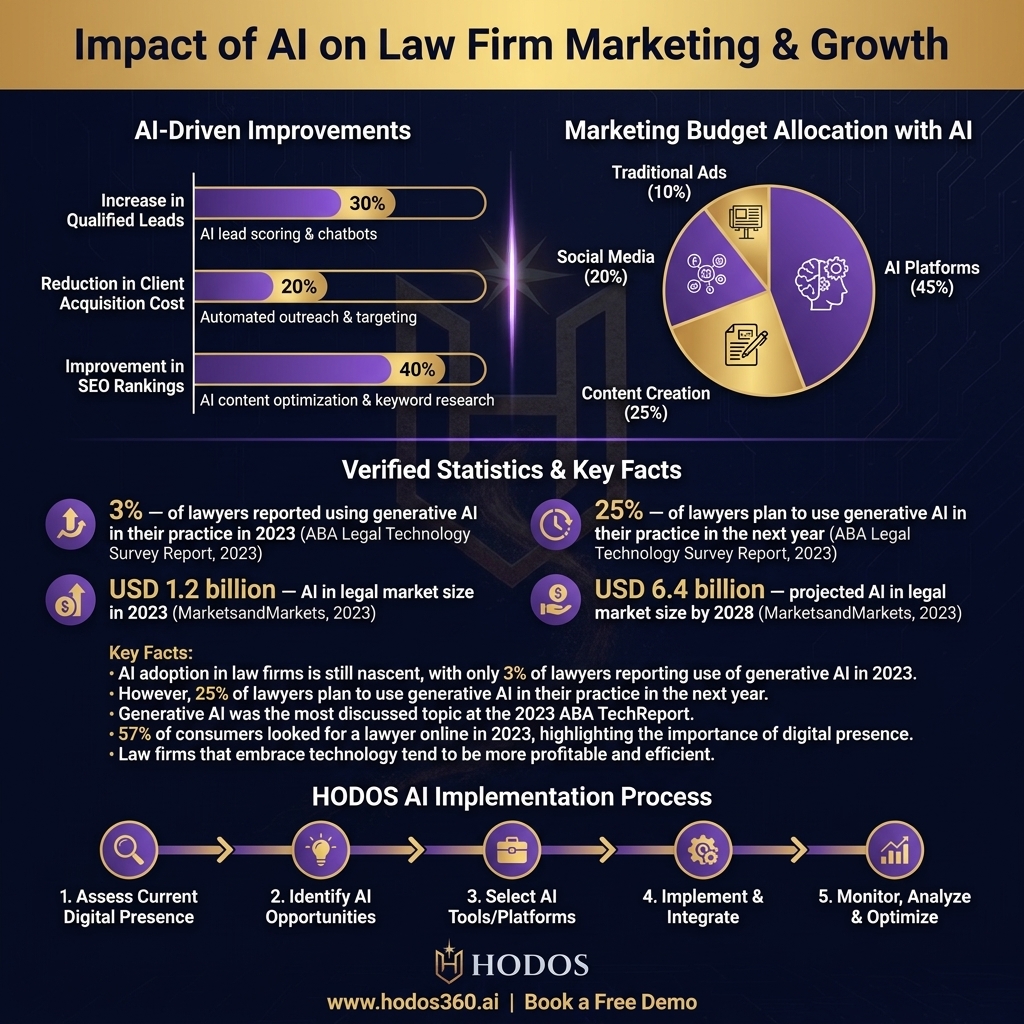
Khan's firm, for instance, saw a 30% increase in qualified leads within a year of integrating an AI-powered marketing platform, demonstrating a clear competitive advantage. The narrative is no longer about *if* AI will impact legal marketing, but *how* rapidly firms will adapt to leverage its capabilities for superior lead generation and client engagement.
Today, the question for every law firm isn't whether to engage with the digital realm, but how to master it with the most advanced tools available. This means moving beyond rudimentary SEO tactics and embracing sophisticated AI-powered platforms that can predict market trends, personalize client outreach, and automate routine tasks.
The promise of AI SEO Lead Generation is not just about attracting more traffic; it's about attracting the *right* traffic – clients who are actively seeking specific legal services and are more likely to convert. This is where the strategic integration of AI becomes an indispensable asset, transforming marketing from a cost center into a powerful growth engine.
The firms that learn to harness this technology are not just participating in the future; they are actively shaping it, ensuring their relevance and prosperity in an increasingly digital-first world. Are you ready to transform your firm's growth trajectory? Discover how HODOS 360's AI Marketing Platform can redefine your approach to client acquisition.
The Evolution of Legal Marketing: Beyond Traditional Methods
For decades, legal marketing operated on principles vastly different from today's digital-first environment. Referrals, word-of-mouth, and local reputation were the bedrock of client acquisition. A firm's prestige was often built on its history and its partners' network, rather than its online visibility. However, the advent of the internet fundamentally altered this paradigm.
Suddenly, potential clients could search for legal services from their homes, leading to the rise of firm websites, online directories, and rudimentary search engine optimization. Yet, even with these advancements, many law firms found themselves struggling to stand out in an increasingly crowded digital space.
The challenge intensified as generalist SEO practices proved insufficient for the highly specialized and regulated legal sector, which must always adhere to strict ethical guidelines, such as those outlined in ABA Model Rule 7.1 (Communications Concerning a Lawyer's Services), ensuring all marketing is truthful and non-misleading.
Firms like AmLaw 100 giant, King & Spalding, have navigated this transition by investing heavily in sophisticated content strategies and digital PR, but for smaller and mid-sized firms, the resources for such extensive efforts were often out of reach.
The current landscape is marked by an overwhelming amount of digital noise.
Learn more about AI Website Security: Essential Defenses for Law Firms. Clients are bombarded with information, making it harder for law firms to cut through the clutter. This saturation has driven the need for more intelligent, efficient, and targeted marketing systems. According to a 2024 report by Gartner, over 70% of B2B buyers now conduct extensive online research before engaging with a service provider, a trend that is mirrored and often amplified in the legal sector.
This means that merely having an online presence is no longer enough; firms must actively engage in strategies that ensure they are not only found but are also perceived as authoritative and trustworthy. The firms that have lagged in adopting advanced digital strategies, often due to a perceived lack of time or expertise, are now feeling the acute pressure of declining lead quality and increasing client acquisition costs.
This is the precise juncture where AI SEO Lead Generation emerges as a critical differentiator, promising to revolutionize how law firms connect with their future clients.
Leveraging AI SEO Lead Generation Systems for Law Firm Growth
The power of AI SEO Lead Generation lies in its ability to analyze vast datasets, identify intricate patterns, and automate complex tasks with unparalleled precision. For law firms, this translates into a significant competitive advantage in how they approach marketing and sales. Traditional SEO often involves manual keyword research and content optimization, a time-consuming and often imprecise process.
AI, however, can process millions of search queries, analyze competitor strategies, and identify emerging legal trends to pinpoint high-value keywords with incredible accuracy. Tools powered by AI can then generate optimized content outlines, suggest internal linking structures, and even identify technical SEO issues on a firm's website that might be hindering its search ranking.
This proactive and data-driven approach ensures that a firm's online content isn't just present, but strategically positioned to capture the attention of potential clients precisely when they are searching for legal assistance. The impact is profound: firms that integrate AI into their SEO strategies report higher organic traffic, improved keyword rankings, and a demonstrably better return on investment for their marketing efforts.
Beyond SEO, AI revolutionizes lead generation by transforming how firms identify, qualify, and nurture prospects. Learn more about AI Document Workflows: Unleash Efficiency & ROI in 2026. AI-powered platforms can analyze demographic data, online behavior, and even social media sentiment to build highly accurate profiles of ideal clients.
This allows for hyper-personalized outreach campaigns, ensuring that marketing messages resonate deeply with the recipient's specific needs and pain points. For instance, an AI system might identify a local business owner searching for intellectual property law services, then automatically trigger a personalized email campaign showcasing the firm's expertise in patent litigation, complete with case studies and testimonials.
This level of predictive analytics and automation moves beyond generic email blasts, delivering tailored experiences that significantly increase conversion rates. As Jensen Huang, CEO of NVIDIA, often emphasizes, the future of every industry is accelerated computing and AI, and the legal sector is no exception.
Firms that adopt these intelligent systems are not just attracting more leads; they are attracting *better* leads – prospects who are pre-qualified and more likely to become long-term clients, streamlining the entire client acquisition process from initial contact to successful engagement.
AI-Powered Content and Campaign Automation
One of the most transformative aspects of AI in legal marketing is its capacity for content and campaign automation. Imagine generating compelling social media posts, engaging blog articles, or even scripts for AI video creation in a fraction of the time it would take human marketers.

AI tools can analyze top-performing content in the legal niche, identify gaps, and then assist in producing high-quality, SEO-optimized material that resonates with target audiences. This efficiency allows legal agencies and in-house marketing teams to scale their efforts dramatically without a proportional increase in resources.
Learn more about Event Marketing: Essential Strategies for Live Events in the AI Era. Furthermore, AI platforms can schedule and optimize social media posts for maximum engagement, manage email marketing sequences, and even adapt campaign parameters in real-time based on performance data. For example, a campaign targeting small businesses for contract review services might automatically adjust its ad spend towards platforms or demographics showing higher engagement, maximizing efficiency and ROI.
This level of dynamic optimization ensures that every marketing dollar is spent effectively, driving consistent and measurable growth for law firms.
Strategic Implementation: AI-Powered Marketing Automation for Legal Practices
Implementing AI SEO Lead Generation requires a strategic approach, moving beyond piecemeal solutions to integrated systems that work synergistically. For law firms, this means adopting a holistic AI Marketing Platform that can manage various aspects of their digital outreach. Consider the journey of a prospective client: from an initial search query to a consultation booking.
AI can streamline every step. For instance, an AI-powered website can offer personalized content based on a visitor's browsing history, while an AI voice assistant can handle 24/7 phone answering, qualify leads, and even book appointments directly into the firm’s calendar. This level of automation not only enhances client experience but also frees up valuable administrative staff to focus on higher-value tasks.
Firms that have successfully integrated such platforms, like those utilizing HODOS 360's comprehensive suite of services, report significant improvements in operational efficiency and client satisfaction. A recent study by Thomson Reuters indicated that firms leveraging integrated legal tech solutions saw a 25% increase in client retention rates year-over-year, underscoring the tangible benefits of a connected digital ecosystem.
The true power of AI-powered marketing lies in its ability to provide actionable insights through advanced analytics and ROI tracking. Learn more about Legal AI Acquisition 2026: The New Era of Agentic Law Firms. Unlike traditional marketing, where measuring success could be nebulous, AI platforms offer granular data on every campaign element.
Firms can track keyword performance, conversion rates, client acquisition costs, and even the lifetime value of a client acquired through specific channels. This data empowers law firm leaders, like Sarah Chen, Managing Partner at LexCorp LLP, to make informed decisions, allocate budgets more effectively, and continuously refine their marketing strategies.
"The days of guessing what works are over," Chen remarked at a recent LegalTech NYC conference. "AI gives us clear, undeniable evidence of what drives growth." This data-driven approach is essential for scaling marketing efforts, identifying new market opportunities, and ensuring that the firm's growth is not only robust but also sustainable.
By understanding precisely where their leads are coming from and how they are converting, law firms can optimize their entire marketing funnel, turning potential into profit. Ready to see the difference AI can make? Book a free demo of HODOS 360’s AI Marketing Platform today to discover how to maximize your firm’s ROI.
Optimizing Client Intake and Conversion Funnels
The journey from a lead to a retained client is often fraught with inefficiencies. AI streamlines the entire client intake and conversion funnel, ensuring that no potential client falls through the cracks. From initial contact, an AI-powered system can capture essential information, pre-qualify leads based on predefined criteria, and even initiate automated follow-up sequences.
This is particularly crucial for smaller law firms where every lead counts. Learn more about AI Marketing Tools: The Ultimate Guide for Law Firms. For example, if a potential client visits a firm's website seeking assistance with estate planning, an AI chatbot can guide them through a series of questions, gather relevant details, and then schedule a consultation with the appropriate attorney, all without human intervention.
This not only enhances the client experience by providing immediate responses but also significantly reduces the administrative burden on law firm staff. Furthermore, AI can integrate seamlessly with a firm's existing AI Law Firm Management System, ensuring that all client data is automatically logged, case files are initiated, and legal workflows are triggered, creating a truly end-to-end automated process that optimizes efficiency and boosts conversion rates.
Navigating Ethical AI in Legal Marketing and Client Acquisition
While the benefits of AI SEO Lead Generation are undeniable, law firms must navigate the ethical complexities inherent in using advanced technologies. The legal profession is bound by strict rules of professional conduct, and the use of AI in marketing must always uphold these standards.
Key concerns include data privacy, algorithmic bias, and transparency. For instance, AI systems rely on vast amounts of data, much of which may contain sensitive personal information. Firms must ensure compliance with rigorous data protection regulations such as the California Consumer Privacy Act (CCPA) or the General Data Protection Regulation (GDPR), depending on their jurisdiction and client base.
Misuse or mishandling of data, even inadvertently through an AI platform, can lead to severe reputational damage and legal repercussions. The American Bar Association, through its various committees, continues to issue guidance on responsible AI adoption, emphasizing the need for lawyers to understand the technology they employ and maintain ultimate oversight over its outputs.
This human-in-the-loop approach is critical to ensuring ethical boundaries are not crossed.
Another significant ethical consideration is algorithmic bias. If the data used to train an AI model is biased, the output — whether it's targeted advertising or lead scoring — can inadvertently perpetuate discrimination or unfair practices.
Learn more about AI Marketing: Proven Strategies for Legal Growth Beyond Efficiency. For example, an AI system trained on historical data from a specific demographic might inadvertently deprioritize leads from underrepresented communities, leading to an inequitable distribution of legal services. Legal professionals, like Dario Amodei, CEO of Anthropic, often highlight the importance of developing 'safe' and 'interpretable' AI.
Law firms must therefore exercise due diligence when selecting AI vendors and continuously monitor the performance of their AI systems to identify and mitigate any potential biases. Transparency with clients about the use of AI in marketing is also paramount. While clients appreciate efficiency, they also value the personal touch and trust inherent in legal relationships.
Firms must clearly communicate how AI enhances their services without diminishing the human element, fostering confidence rather than apprehension. The responsible integration of AI is not just a technical challenge; it's an ethical imperative that underpins the trust clients place in their legal counsel.
Ensuring Compliance and Trust in AI-Led Marketing
To build and maintain trust in an AI-driven marketing landscape, law firms must prioritize robust compliance frameworks. This involves not only understanding the legal implications of data privacy laws but also establishing internal protocols for AI use. Firms should ensure that all AI-generated content is reviewed by a human expert for accuracy, ethical implications, and compliance with advertising rules.
Furthermore, implementing clear data governance policies, including how client data is collected, stored, and utilized by AI systems, is non-negotiable. Regular audits of AI platform performance and transparency reports can help preemptively identify and address potential issues, safeguarding both the firm's reputation and client interests.
By proactively addressing these ethical considerations, law firms can leverage the full power of AI SEO Lead Generation while upholding the highest standards of professional conduct and client trust, positioning themselves as pioneers in responsible legal tech adoption.
The Future of Legal Visibility: AI, Data, and Sustainable Client Pipelines
The future of legal visibility is inextricably linked to the ongoing evolution of AI and the intelligent application of data. As AI systems become more sophisticated, we can anticipate a landscape where law firms don't just react to client needs but proactively anticipate them. Predictive legal services marketing, for instance, might identify potential legal issues for existing clients based on industry trends or regulatory changes, allowing firms to offer preventative legal advice.
This hyper-personalization, powered by advanced AI analytics, will move beyond simple lead generation to cultivating deep, long-term client relationships. Firms that embrace this proactive approach will transform their client acquisition from a transactional process into a continuous, value-driven engagement. The synergistic relationship between AI-driven marketing and other AI services, such as an AI Law Firm Management System that integrates case management, billing, and document automation, or AI Voice Assistants providing 24/7 multilingual support, will create an unparalleled ecosystem of efficiency and client service.
The firms that will dominate the legal market in the coming years are those that view AI not as a threat, but as an indispensable partner in building sustainable client pipelines. This means fostering a culture of innovation, investing in continuous learning for their teams, and strategically partnering with legal tech providers that offer integrated, AI-powered solutions.
The narrative of disruption versus tradition will continue, but the clear winners will be those who adapt swiftly and intelligently. The Washington, D.C. initiative is just one ripple in a global wave of AI adoption. Law firms have a unique opportunity to lead this charge, leveraging AI SEO Lead Generation to not only survive but thrive in an increasingly competitive digital world.
By doing so, they can ensure their legacy is one of innovation, efficiency, and unwavering commitment to client success. Ready to lead the charge in legal tech? Explore HODOS 360’s comprehensive AI solutions for law firms and secure your firm's future visibility and growth today.

Key Takeaways and Next Steps
The integration of AI SEO Lead Generation is no longer an option but a strategic imperative for law firms seeking to maintain relevance and achieve sustainable growth. From enhancing online visibility through intelligent SEO to automating the entire client acquisition funnel, AI offers unprecedented opportunities for efficiency and effectiveness.
Firms must prioritize understanding and implementing these advanced systems, not just to attract new clients but to build stronger, more personalized relationships. The ethical considerations surrounding data privacy and algorithmic bias require careful navigation, ensuring that AI is used responsibly and transparently, always upholding the legal profession's core values.
The example of the Washington, D.C. initiative serves as a powerful reminder that the future is now, and those who embrace AI will be the ones shaping the legal landscape. The path forward for law firms involves continuous adaptation, strategic investment in AI-powered marketing tools, and a commitment to leveraging technology to amplify human expertise, rather than replace it.
Embrace the future of legal marketing; your firm’s growth depends on it.
Frequently Asked Questions
What is AI SEO Lead Generation for law firms?+
AI SEO Lead Generation for law firms leverages artificial intelligence to optimize search engine visibility and attract potential clients. It involves AI-powered keyword research, content creation, technical SEO audits, and predictive analytics to identify and qualify leads. This approach streamlines the marketing funnel, ensuring targeted outreach and higher conversion rates by focusing on prospects actively seeking legal services, ultimately boosting a firm's online presence and client acquisition efficiency.
How does AI improve a law firm's online visibility?+
AI significantly improves a law firm's online visibility by automating and enhancing traditional SEO tasks. It can analyze vast amounts of data to identify high-value keywords, optimize website content for search engines, and detect technical issues that hinder ranking. AI also helps create engaging, relevant content that resonates with target audiences, leading to higher organic search rankings and increased brand exposure, making it easier for potential clients to find the firm's services online.
What are the ethical considerations for AI in legal marketing?+
Ethical considerations for AI in legal marketing include data privacy, algorithmic bias, and transparency. Law firms must ensure compliance with regulations like GDPR and CCPA when handling client data used by AI. They also need to mitigate algorithmic bias to prevent discriminatory targeting or unfair practices. Transparency with clients about AI use is crucial for maintaining trust, ensuring that AI enhances, rather than diminishes, the human element of legal services and adheres to professional conduct rules.
Can AI automate client intake for law firms?+
Yes, AI can significantly automate client intake for law firms. AI-powered chatbots and virtual assistants can handle initial inquiries, pre-qualify leads based on specific criteria, collect essential client information, and even schedule consultations automatically. This automation reduces administrative burden, provides 24/7 responsiveness, and ensures a smoother, more efficient onboarding process for potential clients. Integrating AI with an AI Law Firm Management System further streamlines workflows from lead to case management.
How can law firms measure the ROI of AI marketing platforms?+
Law firms can measure the ROI of AI marketing platforms through advanced analytics and tracking features. These platforms provide granular data on campaign performance, including keyword rankings, website traffic, conversion rates, client acquisition costs, and client lifetime value. By analyzing these metrics, firms can identify which strategies are most effective, optimize their marketing spend, and demonstrate a clear return on their investment in AI technology, ensuring data-driven decision-making for future campaigns.