
AI Legal Partnerships: Essential for Enterprise Innovation
The legal landscape is undergoing a profound metamorphosis, driven by the relentless march of artificial intelligence. This shift is vividly encapsulated by the recent announcement of a strategic AI legal partnership between Eudia and Consilio, a move set to deliver enterprise-grade AI across the entire legal lifecycle.
This collaboration is more than just a headline; it signals a critical inflection point where integrated, intelligent systems become non-negotiable for law firms aiming to remain competitive and client-centric in the digital age. For firm owners and legal professionals, understanding the implications of such alliances is no longer optional—it's foundational to future success.
Historically, legal tech adoption has often been piecemeal, with firms integrating disparate tools that solve specific problems but rarely communicate seamlessly. However, as AI legal partnerships like Eudia and Consilio's demonstrate, the industry is now moving towards holistic, enterprise-wide solutions. This evolution is not merely about automating tasks; it's about fundamentally rethinking legal service delivery, client engagement, and operational efficiency.
Firms that proactively embrace these integrated AI ecosystems are poised to unlock unparalleled productivity gains, reduce operational costs, and elevate the quality of their legal counsel, moving beyond traditional practice models to embrace a future powered by intelligent automation and data-driven insights. The imperative is clear: adapt or be outpaced.
Strategic AI Legal Partnerships: The New Frontier of Enterprise Innovation
The legal world watched with keen interest as Eudia and Consilio unveiled their strategic AI legal partnership on May 19, 2026. This alliance, bringing together Eudia's cutting-edge AI-powered Expert Digital Twins with Consilio's vast global legal services expertise, is a testament to the growing trend of specialized tech firms collaborating with established legal service providers.
The goal, as articulated by Omar Haroun, CEO of Eudia, is to infuse every stage of the legal lifecycle with advanced AI capabilities, from discovery and document review to compliance and litigation support. This move isn't just about offering a new tool; it's about creating a new paradigm for how legal services are delivered at an enterprise scale, promising outcome-based solutions that were once aspirational.
This partnership echoes a broader industry trend where AI legal partnerships are becoming the bedrock of innovation. We've seen similar high-profile collaborations, such as Harvey AI's strategic alliance with global giant Allen & Overy, which aimed to equip its lawyers with sophisticated AI research and drafting capabilities.
These alliances signify a recognition that building proprietary, enterprise-grade AI from scratch is a monumental task, often beyond the scope of even the largest law firms. Instead, leveraging the specialized expertise of AI developers like Eudia, combined with the domain knowledge and client reach of firms like Consilio, accelerates the pace of innovation, bringing advanced solutions to market much faster than traditional R&D cycles.
The driving force behind these collaborations is multifaceted. Firstly, they address the escalating demand for efficiency and cost-effectiveness from corporate clients, who are increasingly scrutinizing legal spend. Learn more about Flowise for Law Firms: Essential Guide to Visual AI Workflows. AI's ability to automate repetitive tasks, analyze vast datasets, and predict outcomes offers a compelling value proposition.
Secondly, these partnerships enable a deeper integration of AI into complex legal workflows, moving beyond simple automation to intelligent augmentation that enhances legal reasoning and strategic decision-making. As the legal sector grapples with an explosion of data—from e-discovery volumes to regulatory changes—enterprise AI becomes an indispensable ally, ensuring firms can process, understand, and act upon information with unprecedented speed and accuracy.
Ultimately, the benefits derived from these AI legal partnerships extend far beyond mere operational improvements. They foster an environment of continuous innovation, allowing firms to develop specialized services and client solutions that were previously unimaginable. By combining technological prowess with legal acumen, these alliances are not just responding to market demands; they are actively shaping the future of legal practice, setting new benchmarks for service quality, speed, and strategic value.
Firms that engage with these ecosystems are better positioned to attract top talent, retain valuable clients, and navigate the complexities of modern legal challenges with agility and foresight.
The Eudia-Consilio Synergy: A Blueprint for Success
The Eudia-Consilio partnership exemplifies a powerful synergy. Eudia brings its proprietary AI platform, capable of creating sophisticated 'Expert Digital Twins' that can understand and process legal information with human-like precision. Consilio, on the other hand, contributes its extensive global client base, deep understanding of the practical challenges faced by in-house legal teams and law firms, and its robust service delivery infrastructure.
Learn more about AI Legal Management: The Essential Future for Law Firms. This combination allows for the development of highly tailored, outcome-based service solutions that directly address complex legal challenges, from contract lifecycle management to regulatory compliance. It's a blueprint for how specialized AI development can be scaled and applied effectively across the diverse needs of the global legal market, promising tangible improvements in speed, accuracy, and cost efficiency for Consilio's clients.
Driving Efficiency & Innovation Across the Legal Lifecycle
Integrated enterprise AI solutions are not merely tools; they are transformative platforms that streamline operations across every facet of the legal lifecycle. From the initial client intake process, where AI can automate data collection and preliminary conflict checks, to the intricate stages of litigation and contract management, AI's impact is profound.
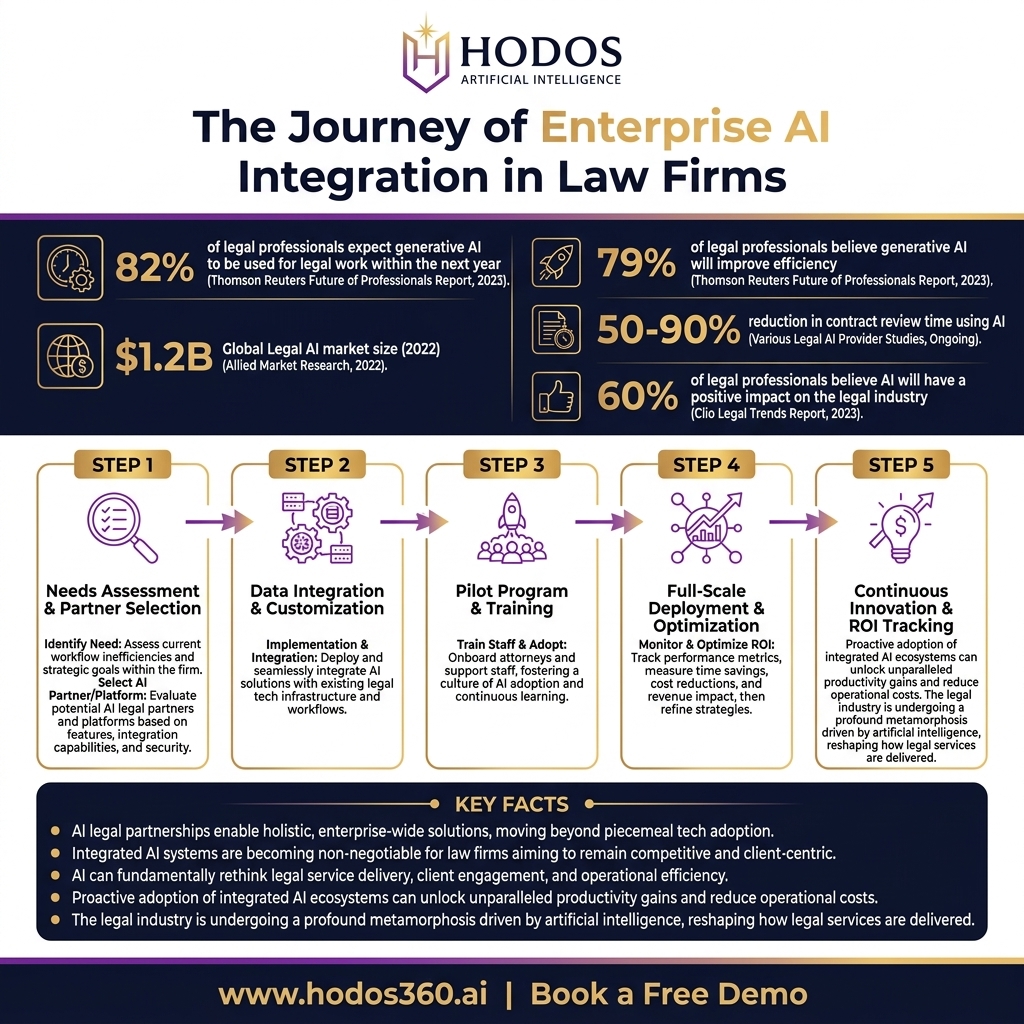
According to the ABA TechReport 2023, firms leveraging AI for tasks like document review reported an average time saving of 30-50%, drastically reducing the burden of manual effort and freeing up legal professionals for higher-value analytical and strategic work. This efficiency gain translates directly into reduced operational costs and improved profitability, a critical factor in today's competitive legal market.
Beyond just time savings, AI significantly enhances the accuracy and consistency of legal work. In areas like document automation and contract analysis, AI-powered systems can identify clauses, flag discrepancies, and ensure compliance with regulatory frameworks at a scale and speed impossible for human teams alone.
A 2024 study by Thomson Reuters Legal Executive Institute highlighted that firms employing AI for legal research could process complex inquiries up to 70% faster, while simultaneously uncovering more relevant precedents and insights. This capability not only improves the quality of legal advice but also mitigates risks associated with human error, ensuring a more robust and reliable legal service offering.
The true innovation lies in AI's ability to augment legal strategy and decision-making. By analyzing vast datasets of past cases, judicial rulings, and regulatory changes, AI can provide predictive analytics that inform litigation strategy, assess case outcomes, and identify emerging legal risks. Learn more about Voice AI Adoption: Essential for Law Firms' Future Growth.
This shift from reactive to proactive legal counsel represents a significant competitive advantage. Firms equipped with these insights can advise clients with greater foresight, negotiate more effectively, and position themselves as strategic partners rather than just service providers. The ability to anticipate legal challenges and proactively develop solutions is a hallmark of the modern, AI-enabled law firm.
Ultimately, firms that embrace AI legal partnerships and integrate these advanced solutions are not just keeping pace; they are setting the pace. They are able to attract and retain top talent who seek technologically forward-thinking environments, and they can offer superior client service characterized by speed, precision, and strategic depth.
This competitive edge is becoming increasingly vital as clients expect more for less, demanding efficiency without compromising on quality. The transition to an AI-powered future is not a distant possibility but a present imperative, with integrated solutions forming the backbone of tomorrow's successful legal enterprises.
Optimizing Legal Workflows with AI
Optimizing legal workflows through AI involves automating repetitive, rule-based tasks, allowing legal professionals to focus on complex problem-solving and client-facing activities. This includes everything from automated client intake forms and conflict checks to intelligent document generation and review. AI-powered systems can route tasks, manage deadlines, and ensure compliance with internal protocols and external regulations, significantly reducing administrative overhead.
Learn more about Ultimate AI Decision Automation: Transforming Legal Marketing. The integration of predictive analytics further enhances workflow optimization by forecasting potential bottlenecks or outcomes, enabling proactive adjustments and more efficient resource allocation, thereby streamlining every stage of legal practice.
The Enterprise AI Advantage: Scalability and Specialization
The distinction of 'enterprise-grade' AI is crucial in the legal sector. These are not merely standalone applications but robust platforms designed for scale, security, and seamless integration within complex organizational structures. For law firms, this means AI solutions that can handle massive volumes of data, support thousands of users, and maintain stringent data integrity and confidentiality standards.
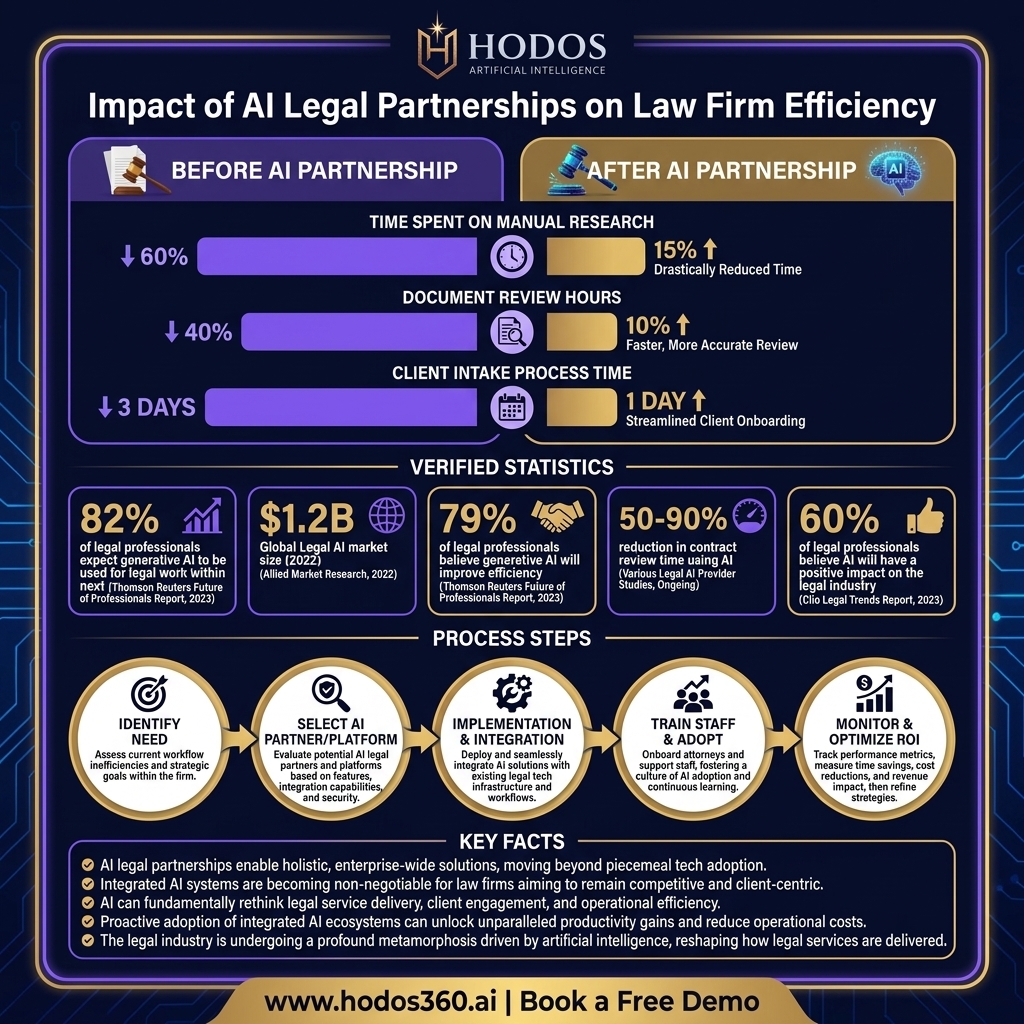
Unlike consumer-grade AI tools, enterprise AI systems are built with the intricate regulatory and ethical requirements of the legal profession in mind, ensuring compliance with data privacy laws such as GDPR and CCPA, and adhering to professional obligations outlined in rules like ABA Model Rule 1.6 (Confidentiality of Information).
One of the most compelling aspects of AI legal partnerships is the opportunity for deep specialization. Eudia's concept of 'Expert Digital Twins,' for instance, suggests the development of highly tailored AI models trained on specific legal domains—be it intellectual property, corporate law, or environmental regulations.
This level of specialization allows firms to address niche client needs with unparalleled precision and depth, providing insights that general-purpose AI tools simply cannot match. It transforms the AI from a general assistant into a highly knowledgeable, domain-specific expert, significantly enhancing the value proposition for both the firm and its clients.
Addressing the challenge of data integration is paramount for any successful enterprise AI deployment. Law firms often operate with a patchwork of legacy systems, making unified data access a significant hurdle. Learn more about Voice AI: Essential Strategies for Law Firms' Future. Strategic AI partnerships are designed to overcome this, facilitating seamless integration across disparate legal tech systems—from case management software to billing platforms and document repositories.
This interoperability ensures that AI can access and leverage all relevant data, providing a truly holistic view of cases, clients, and firm operations. Without robust data integration, even the most advanced AI remains siloed and underutilized, hindering its potential for transformative impact.
Finally, the enterprise AI advantage is underpinned by a strong focus on analytics and return on investment (ROI) tracking.
Firms can move beyond anecdotal evidence to data-driven insights, measuring the tangible benefits of AI adoption—from reduced hours on specific tasks to improved client satisfaction scores and increased win rates. This ability to quantify AI's impact is essential for justifying investments and demonstrating value to stakeholders.
Platforms that offer comprehensive dashboards and reporting functionalities empower firms to continuously optimize their AI strategies, ensuring that technology investments yield maximum strategic and financial returns in a rapidly evolving legal market.
Data Security & Ethical AI in Legal Practice
The ethical and security implications of AI in legal practice are paramount, particularly concerning client confidentiality and data integrity. Firms must ensure that any AI legal partnerships prioritize robust cybersecurity measures and adhere to strict ethical guidelines. This includes anonymization of sensitive data, secure cloud infrastructure, and transparent AI model development.
Learn more about Ethical AI in Legal Tech: An Essential Guide for Law Firms. The ABA Formal Opinion 498 (Ethical Obligations Related to Lawyers' Use of Technology) underscores the lawyer's duty of competence regarding technology, necessitating a thorough understanding of how AI tools handle data and potential biases.
Ethical AI deployment requires continuous oversight and a commitment to preventing discriminatory outcomes, ensuring that AI serves justice rather than undermining it.
Navigating Implementation Challenges and Future Outlook
While the promise of AI legal partnerships is immense, the path to successful implementation is not without its hurdles. Initial investments in technology and training can be substantial, and firms often face the challenge of change management, requiring a cultural shift among legal professionals. A recent Gartner report indicated that nearly 60% of legal departments struggle with integrating new technologies due to a lack of internal expertise or resistance to change.
Overcoming these challenges necessitates a phased implementation approach, starting with pilot programs in specific areas, and a strong emphasis on continuous education for all staff. Law firm leadership must champion AI adoption, demonstrating its benefits and addressing concerns proactively.
Developing AI literacy among legal professionals is crucial.
Discussions at LegalTech NYC 2026 highlighted the growing need for attorneys to understand not just how to use AI tools, but also their underlying mechanisms, limitations, and ethical implications. This isn't about turning lawyers into data scientists, but equipping them with the critical thinking skills to leverage AI responsibly and effectively.
Firms should invest in training programs that demystify AI, focusing on practical applications and ethical considerations, ensuring that the human element remains central to legal decision-making, with AI serving as a powerful assistant rather than a replacement.
Looking ahead, the landscape of AI legal partnerships is poised for further evolution.
We can anticipate greater consolidation among legal tech vendors, with larger players acquiring specialized AI startups to build more comprehensive, integrated platforms. The development of more sophisticated, domain-specific AI models will continue, pushing the boundaries of what AI can achieve in areas like complex litigation and regulatory compliance.
Furthermore, the enforcement of global regulations like the EU AI Act, expected to have significant extraterritorial reach, will compel legal AI developers and adopters to prioritize transparency, accountability, and human oversight in their systems.
For law firms, the strategic imperative is clear: proactive engagement with AI is no longer a luxury but a necessity for long-term viability.
Firms that hesitate risk falling behind competitors who are already reaping the benefits of enhanced efficiency, superior client service, and data-driven insights. The future of legal practice belongs to those who are willing to embrace technological innovation, forge strategic alliances, and continuously adapt to a world where AI is an indispensable partner in delivering justice and value.

Key Takeaways and Actionable Steps for Law Firms
The emergence of AI legal partnerships like Eudia and Consilio's marks a pivotal moment for the legal industry. These collaborations underscore the immense potential of integrated, enterprise-grade AI to revolutionize law firm management, drive unprecedented efficiencies, and unlock new avenues for innovation. For law firm owners and legal professionals, the key takeaway is that embracing these strategic alliances is no longer a competitive advantage, but a fundamental requirement for sustained growth and relevance.
The firms that proactively assess their needs and strategically invest in AI solutions will be best positioned to thrive in this rapidly evolving legal landscape.
To navigate this new frontier successfully, law firms should undertake several actionable steps. First, conduct a thorough audit of existing workflows to identify areas ripe for AI-driven optimization, from client intake to document automation.
Second, research and evaluate potential AI partners, prioritizing those with proven legal domain expertise and a strong commitment to data security and ethical AI. Third, foster an AI-ready culture within your firm through comprehensive training and open communication, addressing any concerns about job displacement and highlighting the augmentative power of AI.
Finally, prioritize data governance to ensure that your firm’s data is clean, secure, and ready to fuel advanced AI applications.
In this era of rapid technological advancement, HODOS 360 stands as a comprehensive partner for law firms seeking to harness the full power of AI.
From our AI Law Firm Management System, which streamlines case management and billing, to our AI Marketing Platform for enhanced client acquisition, and AI Voice Assistants for 24/7 client support, we provide the integrated solutions necessary to future-proof your practice. By leveraging platforms like HODOS 360, firms can seamlessly integrate AI across their operations, ensuring they remain at the forefront of legal innovation and client service excellence.
- ✓Case Management: AI-powered insights for optimized case strategy and resource allocation.
- ✓Document Automation: Accelerate drafting, review, and compliance with intelligent document generation.
- ✓Client Intake: Streamline onboarding with automated data collection and conflict checks.
- ✓Legal Research: Enhance research speed and accuracy with AI-driven analysis of vast legal databases.
- ✓Predictive Analytics: Gain foresight into case outcomes and litigation risks.
- ✓Billing Accuracy: Improve invoicing precision and transparency with AI-assisted time tracking.
- ✓Marketing Effectiveness: Target clients more effectively and measure ROI with AI-powered marketing tools.
Frequently Asked Questions
What is an AI legal partnership and why is it important?+
An AI legal partnership involves a collaboration between a legal service provider (like a law firm or legal solutions company) and an AI technology developer to create and implement advanced AI solutions specifically for the legal industry. It's crucial because it combines specialized AI expertise with deep legal domain knowledge, accelerating innovation, enhancing efficiency, and delivering tailored, enterprise-grade tools that are often too complex for individual firms to develop in-house.
How do AI partnerships benefit law firms specifically?+
AI legal partnerships benefit law firms by providing access to cutting-edge AI technology that can automate repetitive tasks, improve the accuracy of legal research and document review, and offer predictive insights for case strategy. This leads to significant time and cost savings, allowing attorneys to focus on high-value work. They also enhance client service, provide a competitive advantage, and ensure compliance with evolving legal and ethical standards in technology use.
What are the ethical considerations for AI in legal practice?+
Ethical considerations for AI in legal practice primarily revolve around client confidentiality, data privacy, potential biases in AI algorithms, and the duty of competence. Firms must ensure AI tools comply with data protection regulations (like GDPR) and maintain client confidentiality. They also need to understand AI's limitations and biases to prevent unfair or discriminatory outcomes, adhering to professional obligations such as ABA Model Rule 1.1 regarding technological competence.
Can small to mid-sized law firms leverage AI partnerships effectively?+
Absolutely. While large firms often lead in adopting complex AI solutions, many AI legal partnerships and platforms offer scalable solutions suitable for small to mid-sized firms. These partnerships can provide access to sophisticated tools without the prohibitive cost of in-house development. By choosing modular or subscription-based AI services, smaller firms can gain significant efficiencies in areas like document automation, client intake, and legal research, leveling the playing field with larger competitors.
What role does data play in the success of AI legal solutions?+
Data is the lifeblood of AI legal solutions. High-quality, organized, and secure data is essential for training AI models, ensuring their accuracy and relevance. The success of AI in legal practice hinges on effective data governance, including data collection, storage, security, and ethical use. Firms must prioritize clean, integrated data to maximize AI's potential for predictive analytics, intelligent automation, and informed decision-making across the legal lifecycle.