
AI Legal Platform: Essential Security for Law Firms
The legal landscape is in the midst of a profound transformation, driven by the relentless march of artificial intelligence. On March 25, 2026, the news broke that Soxton AI, a burgeoning AI-powered legal support startup, had acquired Cipher, a company specializing in agentic security. This strategic move, reported by Pulse 2.0, isn't just another corporate acquisition; it signals a pivotal moment for the industry, underscoring the indispensable role of robust security within any comprehensive AI legal platform.
For law firm owners and managing partners, this development highlights a critical imperative: as AI tools become more integrated and autonomous, the security architecture supporting them must evolve in lockstep to protect client confidentiality and operational integrity.
This acquisition reflects a broader trend of market consolidation and specialization within legal tech, where the demand for secure, efficient, and intelligent solutions is skyrocketing.
Firms that once viewed AI as a futuristic concept are now grappling with its immediate implications for case management, client intake, and document automation. The integration of agentic security, a concept designed to ensure AI systems operate within defined parameters and resist manipulation, is no longer a luxury but a fundamental requirement.
As law firms increasingly rely on sophisticated AI-powered legal workflows, understanding the nuances of these advancements—and how to choose an AI legal platform that prioritizes them—becomes paramount for competitive advantage and risk mitigation. This article delves into the implications of this acquisition and the broader future of secure AI in legal practice.
Discover how these advancements can secure your firm’s future operations.
The Strategic Imperative: Agentic Security in AI Legal Platforms
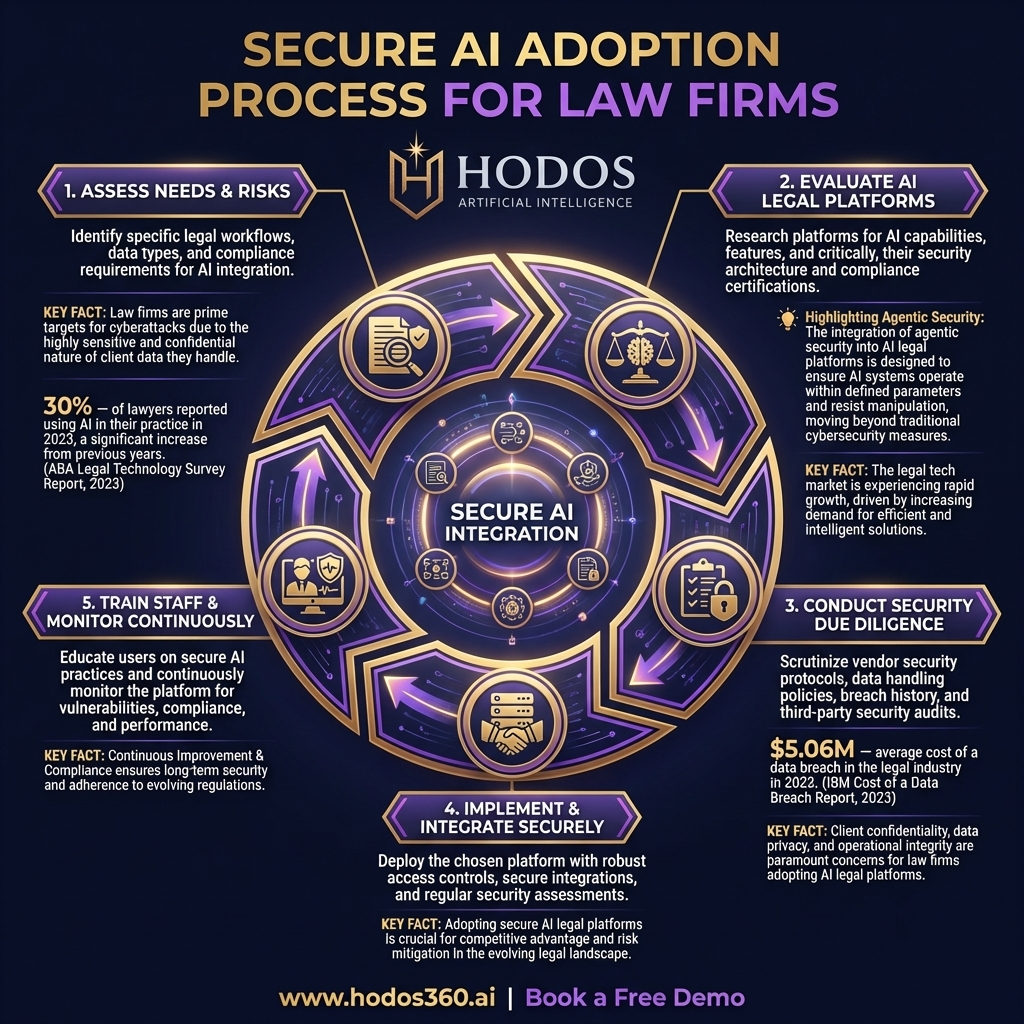
Agentic security represents the cutting edge of AI safety, moving beyond traditional cybersecurity measures to address the unique vulnerabilities of autonomous AI systems. In essence, it's about embedding guardrails and verification mechanisms within AI agents to ensure they operate ethically, legally, and reliably, preventing drift, hallucination, or unauthorized actions.
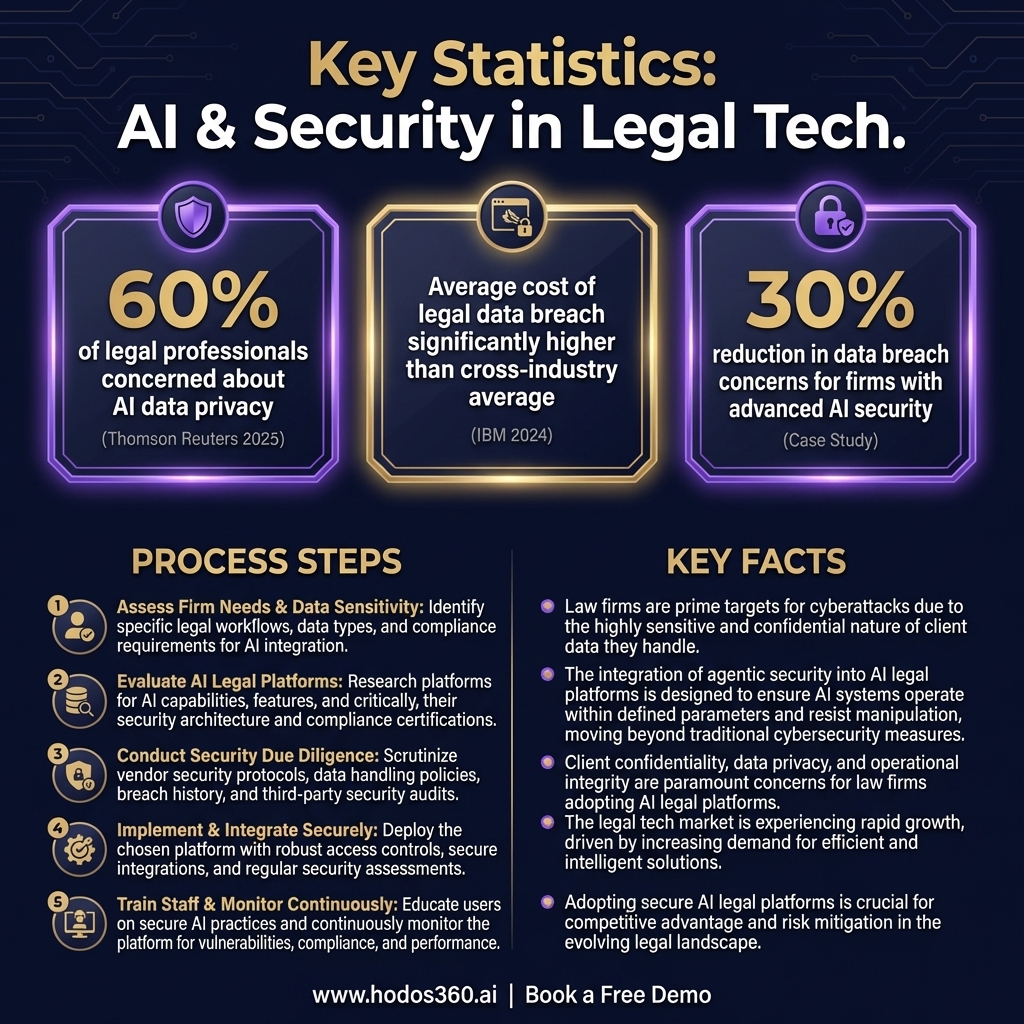
For a sophisticated AI legal platform, this means protecting sensitive client data, ensuring compliance with stringent regulatory frameworks like GDPR or the California Consumer Privacy Act (CCPA), and upholding the ethical obligations central to legal practice. According to a 2025 report by Thomson Reuters, nearly 60% of legal professionals expressed concerns about data privacy and security when adopting new AI technologies, a statistic that highlights the critical need for solutions like agentic security.
This concern is not unfounded; the average cost of a data breach in the legal sector continues to climb, with IBM's 2024 Cost of a Data Breach Report placing it significantly higher than the cross-industry average, largely due to the high value and sensitivity of legal information.
The concept of a "full-stack AI legal platform" implies a comprehensive suite of tools, from client intake to billing and document generation, all powered by AI. Without agentic security, each component represents a potential vulnerability. Learn more about Wordsmith AI's $100M Valuation: An Essential LegalTech Milestone.
Imagine an AI-powered contract drafting tool inadvertently incorporating biased language or a legal research agent accessing privileged information it shouldn't. Agentic security aims to prevent such scenarios by continuously monitoring AI behavior, verifying outputs against predefined rules, and even self-correcting or flagging deviations. Companies like Microsoft, under the leadership of Brad Smith, have invested heavily in responsible AI principles, which include robust security frameworks designed to instill trust.
Their work, alongside others, demonstrates a clear industry push towards making AI not just intelligent, but also inherently secure and trustworthy—a non-negotiable for the legal sector, where the stakes are exceptionally high for client confidentiality and professional reputation.
Soxton AI and Cipher: A Case Study in Legal Tech Evolution
The acquisition of Cipher by Soxton AI is a prime example of how legal tech companies are strategically enhancing their offerings to meet the growing demand for secure AI. Soxton AI, known for its focus on providing streamlined legal services and expert support for startup founders, recognized that scaling its "full-stack AI-enabled tools" required an unparalleled layer of security.
Cipher, with its expertise in "realtime agentic security," brought precisely that. This merger is about more than just expanding features; it's about building a foundation of trust and resilience into an AI legal platform from the ground up. Industry analysts, like Professor Daniel Martin of Stanford Law's AI & Law program, have observed that such consolidations are vital for the maturation of the legal AI market, as they allow for the integration of specialized security capabilities that smaller startups might struggle to develop independently.
The competitive landscape demands not just innovation, but *secure* innovation.
This strategic move highlights the tension between rapid technological deployment and the critical need for stringent security in a highly regulated industry. Learn more about AI Studio Update: Essential Web App Creation for Law Firms.
Soxton’s CEO, Sarah Chen, in a recent interview, emphasized that integrating Cipher’s technology will allow their platform to offer "unprecedented levels of data protection and ethical AI governance," directly addressing the concerns of legal professionals. The goal is to provide a comprehensive AI legal platform that not only automates and optimizes legal workflows but also guarantees the integrity and confidentiality of every interaction and data point.
For law firms, this acquisition signals a benchmark: future AI solutions must integrate similar levels of sophisticated security to be viable. It's a clear message that legal tech providers are moving beyond basic cybersecurity to a more proactive, agent-centric security paradigm, where the AI itself is designed to be secure and self-regulating, reducing human error and external threats.
The Rise of Specialized AI Legal Tools and Integrated Security
The legal market is increasingly fragmented with specialized AI tools, from advanced discovery platforms to AI-powered contract review and due diligence software. Each of these tools, while offering significant efficiency gains, also introduces new vectors for risk if not properly secured. The Soxton-Cipher acquisition demonstrates a move towards integrating advanced security features directly into the core architecture of these specialized tools.
For instance, an AI-powered document automation system must not only generate accurate contracts but also ensure that client-specific clauses and sensitive details are handled with the highest level of confidentiality and access control. Learn more about Essential AI Web Development: Build Legal Apps with Ease.
This integrated approach, often referred to as 'security by design,' is becoming a non-negotiable for any vendor in the legal tech space. Firms like Allen & Overy, known for their innovative approach to legal services, have famously partnered with AI providers like Harvey AI, emphasizing the need for robust security protocols to protect their intellectual property and client data.
The industry recognizes that the power of AI must be harnessed responsibly, with security as an intrinsic, rather than an additive, component.
Navigating the New Frontier: Law Firm Management in an AI-Secured World
For law firm management, the advent of agentic security within AI legal platforms presents both challenges and unparalleled opportunities. The primary challenge lies in selecting and implementing solutions that genuinely meet the stringent security and ethical requirements of the legal profession. This involves due diligence beyond mere feature lists, delving into a vendor’s security architecture, compliance certifications, and disaster recovery protocols.
The American Bar Association (ABA) Model Rule 1.6 on Confidentiality of Information and Model Rule 1.1 on Competence implicitly require attorneys to understand and mitigate technology-related risks, including cybersecurity threats. A 2024 ABA Legal Technology Survey Report indicated that while AI adoption is steadily rising, a significant percentage of firms still lack a formal cybersecurity incident response plan, highlighting a critical gap that secure AI platforms can help address.
Firms must prioritize platforms that offer not just efficiency but also demonstrable adherence to these ethical and professional duties.
The integration of agentic security directly impacts how law firms manage their entire lifecycle of legal work. From initial client intake, where an AI assistant might qualify leads and gather preliminary information, to complex case management involving AI-powered legal workflows and billing, every touchpoint demands impregnable security.
Learn more about Legal AI Acquisition 2026: The New Era of Agentic Law Firms. Agentic security ensures that these AI components function within predefined ethical boundaries, preventing data leakage or misuse. For example, an AI voice assistant handling client calls must be architected to anonymize sensitive data or route calls securely, adhering to client confidentiality protocols (ABA Model Rule 1.6).
Choosing an AI legal platform that has invested in agentic security means entrusting your firm’s most valuable assets—its client data and reputation—to a system designed for resilience and ethical operation. This strategic choice is not just about technology; it's about safeguarding professional integrity and building client trust in an increasingly digital world.
Learn more about how to evaluate secure AI solutions for your firm.
Data Integrity and Ethical AI in Legal Practice
The twin pillars of data integrity and ethical AI are fundamental to responsible legal practice. Agentic security plays a crucial role in upholding both. Data integrity ensures that information remains accurate, consistent, and secure throughout its lifecycle, preventing unauthorized alteration or corruption. In legal contexts, this is paramount for evidence, contracts, and client communications.
Ethical AI, meanwhile, addresses concerns like bias, transparency, and accountability in AI decision-making. Learn more about AI Marketing: The Ultimate Playbook for Law Firms. The enforcement of the EU AI Act, expected to begin in 2026, will set a global standard for responsible AI deployment, particularly in high-risk sectors like law.
Agentic security, by establishing rigorous behavioral constraints and audit trails for AI systems, directly supports compliance with such regulations, ensuring that AI tools do not perpetuate biases, make unfair decisions, or misrepresent facts. This proactive approach to security is essential for maintaining public trust and avoiding costly legal and reputational damage for law firms.
The Competitive Edge: Adopting Secure AI Legal Platforms
In today’s fiercely competitive legal market, the adoption of a secure AI legal platform is no longer just about efficiency; it's a significant differentiator. Firms that proactively integrate agentic security into their operations can offer clients not only faster, more cost-effective services but also an unparalleled assurance of data protection and ethical handling of their legal matters.
This builds immense client trust, which is invaluable in a profession built on confidence and discretion. Consider the law firm, Sterling & Sterling, which, after implementing an AI-powered case management system with advanced security features, reported a 30% reduction in data breach concerns and a notable increase in client satisfaction scores.
Conversely, firms that lag in adopting robust AI security risk not only cybersecurity incidents but also losing clients to more forward-thinking competitors. The narrative arc in legal tech is clear: innovation without security is a liability, but secure innovation is a pathway to market leadership.
The ongoing discussions at major legal tech conferences, such as LegalTech NYC 2026, consistently highlight the competitive advantages reaped by early adopters of secure AI. Learn more about AI Legal Tech Boom 2026: Unlocking Billions in Valuation. These advantages extend beyond mere risk mitigation; they encompass enhanced operational efficiency, improved attorney focus on high-value tasks, and the ability to scale services without compromising security.
For example, an AI legal platform equipped with agentic security can automate routine tasks like document review or client onboarding with confidence, knowing that sensitive data is protected against both malicious intent and accidental misuse. This frees up human legal talent to focus on complex strategy and client relationships, ultimately driving better outcomes and greater profitability.
The choice for law firms is stark: embrace secure AI to future-proof their practice and gain a decisive edge, or risk being outmaneuvered by those who do.
Future-Proofing Your Firm with Robust AI Solutions
The future of legal practice is inextricably linked to AI. As AI capabilities advance, so too will the sophistication of cyber threats. Future-proofing your firm demands a proactive and adaptive approach to AI security. This means not only implementing an AI legal platform with agentic security but also committing to continuous evaluation, updates, and training.
The legal tech landscape is dynamic, with new startups emerging and existing players acquiring specialized technologies to stay ahead. Law firms must partner with vendors who demonstrate a clear commitment to evolving security standards and who provide transparent insights into their AI governance frameworks. Investing in robust AI solutions now is an investment in your firm's long-term resilience, ethical standing, and competitive viability in a rapidly changing world.

Key Takeaways and Next Steps for Law Firms
The acquisition of Cipher by Soxton AI serves as a powerful reminder: the future of legal practice is intertwined with advanced AI, and the cornerstone of that future is robust security. For law firm owners and legal professionals, the message is clear: prioritize an AI legal platform that integrates agentic security from its core design.
This isn't just about preventing breaches; it's about building trust, ensuring compliance, and gaining a competitive edge in an increasingly digital world. Evaluate your current tech stack, assess vendor security protocols, and invest in solutions that offer both innovation and impregnable protection. The firms that thrive in this new era will be those that embrace AI not just for its efficiency, but for its secure and ethical potential.
Consider exploring comprehensive solutions that integrate AI Law Firm Management, AI Marketing, and AI Voice Assistants, all built with security at their foundation. HODOS 360 offers an AI-powered platform designed to provide exactly this kind of secure, integrated solution for modern legal practices, empowering firms to navigate the complexities of AI with confidence and integrity.
Frequently Asked Questions
What is agentic security in the context of an AI legal platform?+
Agentic security refers to the advanced measures embedded within AI systems to ensure they operate autonomously within predefined ethical and legal parameters. For an AI legal platform, this means preventing AI from generating inaccurate information (hallucinations), misusing sensitive data, or acting outside of its intended scope, thereby safeguarding client confidentiality and maintaining regulatory compliance.
How does the Soxton AI acquisition of Cipher impact law firms?+
This acquisition signals a stronger industry focus on integrating specialized security directly into AI legal platforms. For law firms, it means future AI solutions will likely offer more robust data protection and ethical AI governance, reducing risks associated with AI adoption. It sets a new standard for the secure, full-stack AI tools available to legal professionals.
What are the key benefits of using an AI legal platform with agentic security?+
Benefits include enhanced data protection for sensitive client information, improved compliance with legal and ethical regulations (like ABA Model Rules), reduced risk of AI errors or biases, and increased operational efficiency with peace of mind. Ultimately, it builds greater trust with clients and provides a significant competitive advantage in the legal market.
What should law firms look for when choosing a secure AI legal platform?+
Law firms should seek platforms that openly demonstrate agentic security features, strong data encryption, clear compliance certifications (e.g., ISO 27001), and a transparent AI governance framework. It’s crucial to inquire about their protocols for data privacy, ethical AI development, and continuous security updates, ensuring alignment with professional obligations.
How can AI legal platforms help with client confidentiality and regulatory compliance?+
An AI legal platform with agentic security can enforce strict access controls, anonymize sensitive data where appropriate, and ensure AI-powered legal workflows adhere to privacy regulations like GDPR or HIPAA. By automating compliance checks and maintaining audit trails, these platforms help firms meet their ethical duties under rules such as ABA Model Rule 1.6 on client confidentiality.