


AI Legal Tech: Ultimate Guide to OpenAI Astra's Impact
The legal tech landscape, often characterized by its measured evolution, just experienced a seismic shift with the launch of OpenAI's Astra for Law. Announced on September 19, 2026, this dedicated AI foundation for the legal sector has sent ripples across law firms, legal technology companies, and the broader industry, signaling a new frontier in how legal services will be delivered and managed. Unlike general-purpose AI models, Astra for Law is explicitly built to address the intricate demands of legal practice, from meticulous legal research to sophisticated document drafting and complex case workflows. This move by OpenAI, a company synonymous with groundbreaking AI legal tech like ChatGPT, underscores a strategic intent to deeply embed generative AI into the operational fabric of legal professionals worldwide. The implications are profound, sparking both excitement and apprehension among practitioners contemplating the future of their craft.
The genesis of Astra for Law can be traced back to the burgeoning demand for specialized AI solutions within the legal domain, a trend highlighted by industry giants like Thomson Reuters and LexisNexis, who have invested heavily in their own AI offerings. OpenAI's entry, however, brings the weight of its advanced large language models (LLMs) and a reputation for rapid innovation. Sam Altman, CEO of OpenAI, emphasized during the launch event that Astra for Law is not merely a tool but a foundational platform designed to empower firms to build highly customized AI applications atop their vast repositories of legal knowledge. This vision challenges existing paradigms, suggesting a future where every law firm, irrespective of size, can leverage sophisticated AI to enhance efficiency, accuracy, and client outcomes. The strategic importance of this launch cannot be overstated; it’s a clear signal that the era of generalist AI in law is giving way to highly specialized, domain-specific intelligence.
This development comes at a critical juncture, as legal professionals grapple with increasing caseloads, client expectations for efficiency, and the imperative to stay competitive. The promise of Astra for Law lies in its potential to automate mundane tasks, accelerate research, and provide insightful analytics, thereby freeing up attorneys to focus on high-value strategic work. Early reports from pilot programs, involving several Am Law 200 firms, suggest significant improvements in document review times and the initial drafting of legal memos. Yet, the introduction of such powerful technology also raises crucial questions about data security, ethical responsibilities, and the necessity for human oversight. As we delve deeper into Astra for Law's capabilities and its potential impact, this guide aims to provide law firm owners and legal professionals with an ultimate understanding of this transformative AI legal tech, preparing them for the profound changes ahead.
Unpacking Astra for Law: Capabilities and Core Technology
At its core, Astra for Law is a sophisticated AI legal tech framework, not a standalone application. It's built upon a specialized version of OpenAI's latest GPT architecture, fine-tuned with an extensive corpus of legal texts, including statutes, case law, regulations, and academic journals. This deep domain-specific training enables Astra to understand legal nuances, interpret complex precedents, and generate highly context-aware legal content with unprecedented accuracy. The platform offers several key capabilities: an advanced legal search index that goes beyond keyword matching to conceptual understanding, enabling attorneys to find relevant information faster; sophisticated document automation features for drafting contracts, briefs, and pleadings; and an AI-powered legal workflow engine that can guide users through intricate legal processes, ensuring compliance and reducing errors.
One of the most compelling features is its ability to facilitate complex legal research. Unlike traditional search engines, Astra for Law can synthesize information from multiple sources, identify conflicting precedents, and even suggest arguments based on established legal principles. This capability significantly reduces the time attorneys spend on initial research, shifting their focus from information gathering to strategic analysis. For instance, a partner at a corporate law firm in New York, Sarah Chen, recently noted, "Astra's ability to cross-reference state and federal regulations for a multi-jurisdictional compliance issue saved our team dozens of hours. It’s not just finding information; it’s understanding its implications across different legal frameworks." This highlights the immediate, tangible benefits for firms dealing with high-volume, complex legal work.
Furthermore, Astra for Law integrates seamlessly with existing legal practice management systems, allowing firms to leverage their proprietary data, client records, and internal knowledge bases. Learn more about Legal AI Technology: Your Essential Guide to Modern Law Practice. This integration is critical for creating truly bespoke AI solutions that reflect a firm's unique expertise and client relationships. The platform’s API-first design means that legal technology companies and in-house development teams can build custom applications and enhance existing workflows using Astra's underlying intelligence. This strategic approach positions OpenAI not just as a provider of tools, but as a foundational partner for the next generation of legal innovation. The ecosystem of plugins and integrations is expected to grow rapidly, making Astra a central hub for various legal operations.
The technology underpinning Astra for Law also emphasizes ethical AI development and data security, addressing some of the primary concerns within the legal community. OpenAI has implemented robust data anonymization and encryption protocols, ensuring client confidentiality and compliance with strict legal ethics, such as ABA Model Rule 1.6 (Confidentiality of Information). Additionally, the model is designed with built-in explainability features, allowing attorneys to understand the reasoning behind AI-generated outputs, fostering trust and accountability. This transparency is crucial for legal professionals who must ultimately bear responsibility for the advice and documents they provide, mitigating the 'black box' problem often associated with complex AI legal tech models.
Enhanced Legal Research and Document Automation
The cornerstone of Astra for Law's immediate value proposition for firms lies in its unparalleled ability to transform legal research and document automation. Historically, legal research has been a labor-intensive process, demanding countless hours sifting through databases. Astra's advanced search capabilities leverage natural language processing to understand the semantic intent of queries, delivering more precise and contextually relevant results than traditional keyword-based searches. Imagine asking the system, "What are the precedents for piercing the corporate veil in Delaware for environmental liability?" and receiving not just a list of cases, but an analytical summary of the prevailing legal tests, dissenting opinions, and potential counterarguments, all within seconds. This dramatically compresses the research cycle, allowing attorneys to dedicate more time to strategic thinking and client counseling.
Coupled with this, Astra's document automation features are set to redefine how legal documents are drafted. Learn more about Gemini 3.1 Flash TTS: Ultimate Voice AI for Law Firms. From initial client intake forms to complex litigation documents, the system can generate first drafts of high-quality legal prose, adhering to specific jurisdictional requirements and firm precedents. For example, a mid-sized firm specializing in real estate law could feed Astra a set of parameters for a commercial lease agreement, and the system would produce a comprehensive draft, complete with standard clauses, indemnities, and governing law provisions, ready for attorney review and customization. This capability not only boosts efficiency but also ensures consistency and reduces the potential for human error, a critical factor in maintaining legal accuracy and professional standards, aligning with ABA Model Rule 1.1 (Competence).

The Competitive Landscape: Astra vs. Specialized Legal AI
OpenAI's entry with Astra for Law intensifies the competition in the already vibrant AI legal tech market, challenging both established players and niche startups. Companies like Thomson Reuters' Westlaw Edge and LexisNexis' Lexis+ AI have long dominated the legal research space, continually enhancing their platforms with AI-driven analytics, predictive insights, and generative AI features. Startups such as Harvey AI, which famously partnered with Allen & Overy, and Casetext (acquired by Thomson Reuters), have carved out significant market share by offering specialized AI tools for contract review, litigation analytics, and legal drafting. The key distinction lies in Astra's positioning as a foundation model: it's designed to be a customizable base upon which firms and other legal technology companies can build their own applications, rather than a monolithic, off-the-shelf solution.
This 'platform-as-a-service' approach from OpenAI creates a fascinating dynamic. While existing providers offer integrated solutions, Astra offers unparalleled flexibility and the potential for deep customization, allowing firms to leverage their unique data and expertise. For instance, a firm specializing in intellectual property could train Astra on its vast patent portfolio, creating a proprietary AI assistant capable of highly specific prior art research or infringement analysis. This contrasts with the more generalized, though powerful, capabilities of existing tools. Brad Smith, Vice Chair and President of Microsoft, a significant investor in OpenAI, remarked at a recent tech summit that "the future of AI is not just about general intelligence, but about creating intelligent foundations that can be tailored to specific industries, and legal is paramount." This vision highlights a strategic pivot towards industry-specific AI solutions that can adapt and evolve with specialized knowledge bases.
The real competition, therefore, is not just feature-for-feature, but philosophical. Learn more about AI Marketing Platform: The Ultimate Guide for Law Firms. Will law firms prefer comprehensive, integrated platforms from established vendors, or will they gravitate towards the flexibility and customization offered by a foundational model like Astra? Gartner's 2026 Legal Tech Report predicted that 40% of Am Law 100 firms would explore building proprietary AI applications on open or foundational models within the next three years, indicating a strong appetite for customizable solutions. This suggests that while specialized AI tools will continue to thrive, Astra for Law could become the underlying engine for many of them, driving a new wave of innovation and collaboration within the AI legal tech ecosystem. The market is likely to see a hybrid approach, with firms integrating Astra's capabilities into their existing infrastructure.
However, the adoption of a foundational model like Astra also comes with its challenges. Integrating and customizing such a powerful technology requires significant technical expertise and investment, which might be a barrier for smaller firms. Furthermore, data governance, intellectual property concerns, and ensuring the ethical deployment of AI legal tech remain critical considerations. The legal industry has always been cautious, and rightly so, about adopting new technologies that could impact client confidentiality or professional responsibility. Therefore, while Astra presents immense opportunities, its success will ultimately depend on its ability to demonstrate reliability, security, and measurable ROI, while also empowering firms to maintain rigorous ethical standards.
Strategic Imperatives for Law Firms in the AI Era
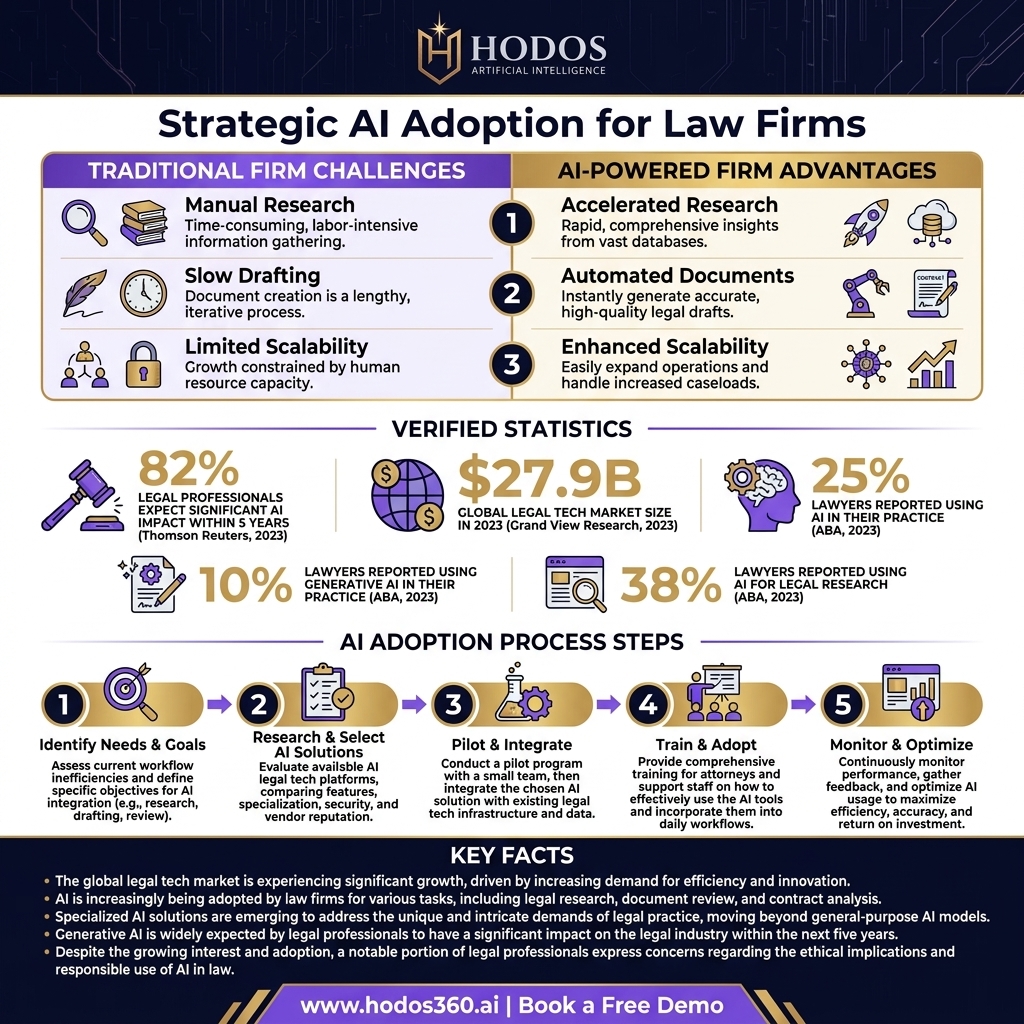
The advent of AI legal tech like Astra for Law isn't just about adopting new tools; it's about fundamentally rethinking legal strategy and operations. For law firms, the immediate imperative is to develop a clear AI adoption strategy that aligns with their business goals and client needs. This involves not only evaluating potential AI solutions but also investing in the necessary infrastructure, talent, and training to effectively leverage these technologies. Firms that embrace AI proactively will gain a significant competitive advantage, characterized by enhanced efficiency, improved client service, and the ability to handle more complex matters with greater precision. Conversely, those that resist or delay adoption risk falling behind, struggling to compete on cost, speed, and innovation.
One crucial strategic imperative is the cultivation of an 'AI-ready' workforce. This doesn't mean replacing lawyers with AI, but rather augmenting their capabilities. Attorneys need to understand how to interact with AI legal tech systems, interpret their outputs critically, and integrate them into their daily workflows. This requires continuous professional development, focusing on prompt engineering, data literacy, and ethical AI usage. As former ABA President Judy Perry Martinez emphasized at a recent legal innovation conference, "Competence in the 21st century legal profession increasingly includes technological competence." Firms should consider establishing internal AI committees or appointing AI champions to guide this cultural and operational transformation, ensuring that the human element remains central to the AI adoption process.
Another critical area is data governance and security. As firms integrate Astra for Law and similar AI platforms, they will be processing vast amounts of sensitive client data. Learn more about Marketing Automation: Powering Law Firm Growth & Efficiency in 2026. Establishing robust data privacy frameworks, complying with regulations like GDPR and CCPA, and implementing state-of-the-art cybersecurity measures are paramount. The ethical use of AI, particularly concerning bias in algorithms and the potential for misrepresentation, also demands rigorous oversight. Firms must implement clear policies for AI review, ensuring that all AI-generated content is thoroughly vetted by human attorneys before client delivery. This commitment to ethical AI not only protects clients but also reinforces the firm's reputation and adherence to professional standards.
Finally, firms must recognize that AI legal tech is not a one-time implementation but an ongoing journey of adaptation and innovation. The legal landscape is constantly evolving, and AI technology is advancing at an unprecedented pace. Therefore, successful firms will be those that foster a culture of continuous learning, experimentation, and agility. This includes regularly re-evaluating their AI strategy, exploring new integrations, and staying abreast of emerging AI capabilities. The goal is to create a dynamic legal practice that can seamlessly integrate new technologies to deliver superior client value, ensuring long-term relevance and growth in an increasingly AI-driven world.
Transforming Practice Management and Client Engagement
Beyond core legal work, Astra for Law offers significant potential to transform practice management and client engagement for firms. The integration of AI into case management, billing, and client intake processes can streamline administrative burdens, allowing attorneys to focus more on substantive legal matters. Imagine an AI-powered client intake system that not only gathers initial information but also pre-qualifies leads, identifies potential conflicts of interest, and even suggests initial legal strategies based on the client's needs. This level of automation and intelligence can dramatically improve efficiency and client satisfaction from the very first interaction. The data generated through these enhanced processes can also feed into the AI, continuously improving its performance and predictive capabilities.
Furthermore, AI can revolutionize how firms engage with clients. Learn more about AI Voice Assistant: Essential for Modern Law Firms. Predictive analytics, driven by Astra's powerful index and machine learning, can offer clients more transparent and accurate estimates for case durations and costs. AI-powered chatbots, integrated with Astra's legal knowledge base, can provide 24/7 support for routine inquiries, freeing up legal staff for more complex client communications. This enhanced responsiveness and transparency can build stronger client relationships and differentiate firms in a competitive market. The focus shifts from merely providing legal services to delivering a comprehensive, technology-enabled client experience that is both efficient and highly personalized, ensuring client loyalty and attracting new business through superior service delivery.
Navigating the Future: Ethical AI, Data Security, and Regulatory Compliance
The excitement surrounding AI legal tech like Astra for Law is tempered by critical considerations regarding ethical AI, data security, and regulatory compliance—areas where law firms bear significant responsibility. The legal profession is inherently built on trust and confidentiality, making the safeguarding of client data paramount. The integration of advanced AI systems necessitates a heightened focus on cybersecurity protocols, ensuring that sensitive information processed by Astra remains protected from breaches. Firms must conduct thorough due diligence on OpenAI's security measures and implement their own robust internal controls, regularly auditing data access and usage to prevent unauthorized disclosures, aligning with the ethical obligations outlined in ABA Model Rule 1.6 (Confidentiality of Information).
Beyond security, the ethical implications of AI in legal practice are complex. Concerns about algorithmic bias, particularly in areas like predictive justice or even document review, are legitimate. If the data used to train an AI model contains historical biases, the model may perpetuate or amplify those biases in its outputs. Law firms must implement human-in-the-loop review processes for all AI-generated content, ensuring that human judgment and ethical reasoning always supersede algorithmic suggestions. This requires attorneys to be proficient not just in using AI legal tech, but in critically evaluating its outputs for fairness, accuracy, and adherence to legal principles. The European Union's AI Act, for instance, sets a precedent for regulatory oversight, demanding transparency and accountability for high-risk AI systems, which would undoubtedly include many legal applications.
Regulatory compliance extends to the evolving landscape of AI-specific legislation. Learn more about Essential Guide: Customer Support Voice AI for Law Firms. As governments worldwide grapple with how to regulate AI, law firms must remain agile and informed. This includes understanding new data privacy laws that might emerge to specifically address AI's data processing capabilities, as well as potential changes to professional responsibility rules concerning AI use. Staying abreast of these developments is not merely a matter of compliance but a strategic necessity to avoid legal pitfalls and maintain public trust. Firms should proactively engage with bar associations, legal tech communities, and regulatory bodies to help shape responsible AI policies, ensuring that the benefits of AI legal tech are realized without compromising fundamental legal ethics.
Ultimately, the successful adoption of Astra for Law and similar AI legal tech hinges on a firm's commitment to responsible innovation. This means embracing the transformative power of AI while rigorously upholding the core values of the legal profession: client advocacy, confidentiality, competence, and justice. The path forward involves a careful balance of technological advancement and ethical stewardship, positioning firms to leverage AI not just for efficiency, but as a tool to enhance the quality and accessibility of legal services in a fair and equitable manner. The future of AI legal tech is not about replacing human lawyers, but about empowering them to reach new heights of professional excellence, provided that ethical guardrails are meticulously maintained.
- ✓Prioritize AI Education: Invest in training programs for attorneys and staff on AI tools, prompt engineering, and ethical AI use.
- ✓Develop an AI Adoption Roadmap: Create a phased strategy for integrating AI, starting with low-risk, high-impact areas like legal research or document review.
- ✓Strengthen Data Governance: Implement robust policies for data privacy, security, and ethical handling of client information in AI systems.
- ✓Foster a Culture of Innovation: Encourage experimentation and continuous learning regarding new AI capabilities and their application in legal workflows.
- ✓Establish Human-in-the-Loop Processes: Ensure all AI-generated outputs are reviewed and validated by human attorneys to maintain accuracy and ethical standards.
- ✓Monitor Regulatory Developments: Stay informed about evolving AI laws and professional responsibility guidelines to ensure ongoing compliance.
- ✓Partner with Expert Providers: Collaborate with specialized legal tech companies like HODOS 360 to leverage comprehensive AI solutions and strategic guidance.

Key Takeaways and Next Steps for AI Legal Tech Adoption
OpenAI's Astra for Law marks a pivotal moment for AI legal tech, presenting law firms with an unprecedented opportunity to redefine their operational efficiency, client service, and competitive edge. As a foundational AI model, Astra empowers firms to build highly customized solutions that leverage their unique expertise and data, moving beyond generic tools to truly bespoke applications. The strategic imperatives for firms are clear: embrace continuous learning, prioritize robust data governance, and commit to ethical AI deployment. Those that proactively integrate such advanced technology will not only streamline their workflows and enhance research capabilities but also position themselves as leaders in a rapidly evolving legal landscape, attracting top talent and discerning clients.
The future of AI legal tech is not a distant concept but an immediate reality. Law firms must critically evaluate how platforms like Astra for Law fit into their long-term growth strategies. For firms seeking a comprehensive partner to navigate this complex terrain, HODOS 360 offers an integrated suite of AI-powered legal tech services—from AI Law Firm Management Systems that streamline case management and document automation, to AI Marketing Platforms and AI Voice Assistants that enhance client engagement. By leveraging HODOS 360's holistic approach, firms can seamlessly integrate cutting-edge AI across all facets of their practice, ensuring they are not just adapting to the future, but actively shaping it, maintaining their competitive advantage and delivering exceptional value to their clients.
Frequently Asked Questions
What is OpenAI's Astra for Law?+
Astra for Law is OpenAI's specialized AI foundation model designed specifically for the legal industry. It is built upon advanced GPT architecture, fine-tuned with extensive legal data to assist law firms and legal technology companies in building custom AI applications for legal research, document automation, workflow optimization, and case management. It acts as a powerful, customizable base rather than a standalone, off-the-shelf product.
How does Astra for Law differ from general AI tools like ChatGPT?+
While built by OpenAI, Astra for Law differs significantly from general AI tools like ChatGPT by being domain-specific. It's trained on a vast corpus of legal texts, enabling it to understand and generate legal content with greater accuracy, nuance, and contextual relevance. This specialization makes it far more effective for intricate legal tasks such as statutory interpretation, precedent analysis, and drafting legally sound documents, compared to a broad-use language model.
What are the primary benefits for law firms using Astra for Law?+
Law firms can benefit from Astra for Law in several key ways: enhanced legal research capabilities, significant acceleration of document drafting and review, streamlined administrative workflows, improved client intake and engagement processes, and the ability to build highly customized AI solutions tailored to their specific practice areas and internal knowledge bases. This leads to increased efficiency, reduced operational costs, and improved client satisfaction.
What ethical considerations should law firms address when adopting Astra for Law?+
Adopting Astra for Law requires careful consideration of ethical issues, including client confidentiality and data security, algorithmic bias, and professional responsibility. Firms must implement robust data protection measures, ensure human oversight for all AI-generated content, and establish clear policies for AI use to maintain ethical standards and comply with regulations like ABA Model Rules 1.1 (Competence) and 1.6 (Confidentiality of Information), along with emerging AI-specific legislation.
How can law firms integrate Astra for Law into their existing operations?+
Law firms can integrate Astra for Law by leveraging its API-first design to connect with existing practice management systems, document management solutions, and other legal tech tools. This integration allows firms to feed their proprietary data into Astra for enhanced customization. It also requires investing in technical expertise, training staff, and developing a clear AI adoption roadmap to ensure seamless integration into daily legal workflows and strategic operations.