
AI Marketing Platform: The Ultimate Guide for Law Firms
In a competitive legal landscape, the pursuit of new clients and sustained practice growth often feels like an uphill battle. Consider the experience of Sarah Chen, a managing partner at a mid-sized litigation firm in Dallas. For years, her firm relied on traditional networking and referrals, a strategy that yielded inconsistent results and struggled to keep pace with younger, digitally native competitors. Sarah often found herself overwhelmed by the sheer volume of marketing tasks – drafting blog posts, managing social media, optimizing website content, and tracking campaign performance – all while juggling a demanding caseload. This struggle is not unique; it's a common narrative across law firms striving to maintain relevance and expand their reach in an increasingly digital world. The traditional approach, while foundational, simply isn't enough to capture the attention of today's tech-savvy clientele, who often begin their legal journey with an online search.
The advent of artificial intelligence (AI) has ushered in a new era, fundamentally reshaping how businesses, including law firms, approach marketing. The recent announcement by Munch Studio, introducing an AI Marketing Platform designed to help small businesses scale their social media presence, underscores a broader industry trend: AI is no longer a futuristic concept but a present-day imperative. While Munch Studio targets small businesses, the underlying technology and strategic advantages it offers are equally, if not more, critical for law firms. The legal sector, historically cautious about adopting new technologies, is now at a crossroads. Firms like Sarah's are realizing that leveraging an AI Marketing Platform isn't just about efficiency; it's about strategic survival and unlocking unprecedented opportunities for client acquisition and brand building. The question is no longer whether AI will impact legal marketing, but how quickly firms can adapt to harness its power.
This guide delves into how a sophisticated AI Marketing Platform can empower law firms to overcome historical marketing hurdles, streamline operations, and achieve measurable growth. From automating content creation and optimizing social media campaigns to providing deep analytics and ensuring ethical compliance, AI offers a comprehensive solution. By integrating AI into their marketing strategies, legal practices can not only enhance their digital footprint but also free up valuable attorney time, allowing them to focus on what they do best: practicing law and serving clients. The path to a more efficient, effective, and ethically sound marketing strategy for your law firm starts here. [Discover how HODOS 360's AI Marketing Platform can transform your practice today!](/contact-us)
The Evolving Landscape of Legal Marketing and AI's Ascent
For decades, legal marketing operated on a relatively predictable model: print ads, local directories, community involvement, and the invaluable power of word-of-mouth referrals. However, the internet irrevocably altered this paradigm. Today, potential clients turn to search engines, social media, and online reviews long before they ever pick up the phone. This shift has created immense pressure on law firms, many of whom lack dedicated marketing departments or the specialized expertise to navigate complex digital channels. The challenge is compounded by the sheer volume of content required to maintain a competitive online presence, from informative blog posts on recent court rulings to engaging social media updates and compelling video testimonials. Without a strategic approach, even well-established firms risk becoming invisible in a crowded digital marketplace, struggling to connect with the next generation of clients who expect instant access to information and a seamless online experience.
The news about Munch Studio's AI Marketing Platform, while focused on small businesses, highlights a universal truth: AI is democratizing sophisticated marketing tools. What was once the exclusive domain of large corporations with hefty marketing budgets is now accessible to smaller entities, including law firms. Visionaries like Sam Altman of OpenAI and Dario Amodei of Anthropic have consistently articulated the transformative potential of large language models and generative AI, which are at the heart of these platforms. These technologies are not just about automating repetitive tasks; they are about generating insights, personalizing interactions, and creating content at a scale and speed previously unimaginable. For law firms, this means the ability to produce high-quality, SEO-optimized content, manage dynamic social media campaigns, and engage with potential clients 24/7, all without significantly increasing overhead or diverting critical legal resources.
Indeed, the integration of AI into marketing is not merely a trend but a fundamental shift in operational strategy. Learn more about Essential Legal AI Access: NELLCO's Broad Impact. A 2023 report by Thomson Reuters Institute indicated that only 13% of law firms fully leverage AI in their operations, with marketing being a prime area for growth. This data suggests a significant opportunity for early adopters to gain a competitive advantage. Firms that invest in an AI Marketing Platform can automate mundane tasks such as scheduling social media posts, drafting initial content outlines, and segmenting client databases for targeted outreach. This automation frees up attorneys and legal staff to focus on higher-value activities, improving overall firm efficiency and client service quality. Moreover, AI can analyze vast datasets to identify emerging legal trends, client pain points, and effective marketing channels, ensuring that every marketing dollar spent is optimized for maximum impact and return on investment.
Beyond efficiency, AI marketing platforms enable unprecedented personalization. In an era where generic outreach is often ignored, AI can tailor messages, content, and ad placements to specific client segments based on their legal needs, demographics, and online behavior. Imagine a platform that automatically identifies individuals searching for "estate planning attorney" in a specific geographic area and then serves them highly relevant content and targeted ads, while simultaneously scheduling a consultation. This level of precision not only increases conversion rates but also builds stronger client relationships by demonstrating an understanding of their unique situations. The ability of an AI Marketing Platform to deliver such nuanced, data-driven strategies is rapidly becoming indispensable for law firms aiming for sustainable growth and a commanding digital presence.
Navigating Digital Disruption in Legal Client Acquisition
The digital disruption has fundamentally reshaped client acquisition for law firms. Firms that once relied solely on their reputation within local bar associations or traditional referral networks now face the imperative of building a robust online identity. Many smaller and mid-sized firms, such as 'Justice Advocates LLC' in Phoenix, initially struggled to translate their offline credibility into online visibility. Their website was outdated, their social media presence sporadic, and their content strategy non-existent. This led to a significant disconnect between their actual expertise and their perceived market presence. The challenge lies not just in having an online presence, but in having one that is dynamic, engaging, and optimized to capture the attention of potential clients actively seeking legal services through digital channels.
Content marketing and SEO are now non-negotiable for lawyers. Learn more about AI Marketing: The Ultimate Guide for Law Firm Growth. Studies by the ABA's Legal Technology Survey Report consistently show that prospective clients overwhelmingly use search engines to find legal information and attorneys. Without a steady stream of high-quality, relevant content – articles explaining complex legal concepts, blog posts on recent legislative changes, FAQs addressing common client concerns – a law firm’s website will languish in search engine rankings. An AI Marketing Platform excels here, assisting in identifying trending legal topics, generating initial drafts of articles, and optimizing them with relevant keywords. This ensures that when a potential client searches for a specific legal issue, the firm's content appears prominently, establishing credibility and acting as a crucial first point of contact. This strategic content deployment is vital for converting passive browsers into active leads, fundamentally transforming the client acquisition funnel.
Core Components of a Powerful AI Marketing Platform for Legal Practices
A truly effective AI Marketing Platform for legal practices is a comprehensive suite of tools designed to automate, optimize, and personalize every facet of a firm's digital outreach. It moves beyond simple scheduling tools to offer sophisticated capabilities that mimic and augment human marketing expertise. At its heart, such a platform leverages advanced algorithms and machine learning to analyze market data, predict trends, and execute strategies with precision. Think of it as having a dedicated, highly efficient marketing team working 24/7, constantly refining your firm's message and reach. The integration of various AI-powered functionalities creates a synergistic effect, where each component enhances the others, leading to a more cohesive and impactful marketing presence. This holistic approach is what differentiates a basic marketing tool from a transformative platform, offering law firms a genuine competitive edge in their quest for growth and client engagement.
One of the most impactful features is AI-powered content generation. For law firms, this means the ability to swiftly produce blog posts, articles, website copy, and even email newsletters tailored to specific practice areas or client demographics. While human oversight is always crucial for factual accuracy and tone, AI significantly reduces the initial drafting time, allowing attorneys to focus on refining the legal nuances. Simultaneously, social media automation capabilities enable firms to schedule posts across multiple platforms, engage with comments, and even identify optimal posting times for maximum reach. Consider a scenario where a firm needs to consistently post updates on evolving intellectual property laws; an AI can generate summaries, create engaging visuals, and schedule these across LinkedIn, Twitter, and Facebook, all while adhering to the firm's brand guidelines. This level of automation is critical for maintaining a vibrant and relevant online presence without consuming excessive billable hours.
Beyond text and static images, modern AI Marketing Platforms are now incorporating AI video creation. Learn more about Automate Content Creation: The Essential Guide for Law Firms. Video content has become paramount in digital marketing, with platforms like YouTube and TikTok dominating user engagement. For law firms, video can humanize their brand, explain complex legal services, and share client testimonials. AI can assist in scripting, generating voice-overs, and even creating animated explainers, making high-quality video production accessible without the need for extensive in-house expertise or expensive external agencies. This capability allows firms to tap into a highly engaging medium, reaching potential clients through dynamic storytelling. Furthermore, robust analytics and ROI tracking are embedded, providing granular insights into campaign performance, website traffic, conversion rates, and client acquisition costs. This data-driven approach allows firms to understand exactly which marketing efforts are yielding the best results, enabling continuous optimization and ensuring that marketing spend is always aligned with strategic objectives.
For instance, a firm might analyze that their LinkedIn posts on corporate law are generating significantly more qualified leads than their general Facebook updates. The AI Marketing Platform would then suggest reallocating resources, adjusting content themes, and optimizing LinkedIn engagement strategies. This iterative process of analysis and adjustment, powered by AI, ensures that marketing efforts are not only efficient but also continually improving. The ability to quickly adapt to market feedback and client behavior is a game-changer for law firms, allowing them to stay agile and responsive in a rapidly changing digital environment. By integrating these diverse components, an AI marketing platform transforms disparate marketing activities into a unified, intelligent, and highly effective growth engine for legal practices.
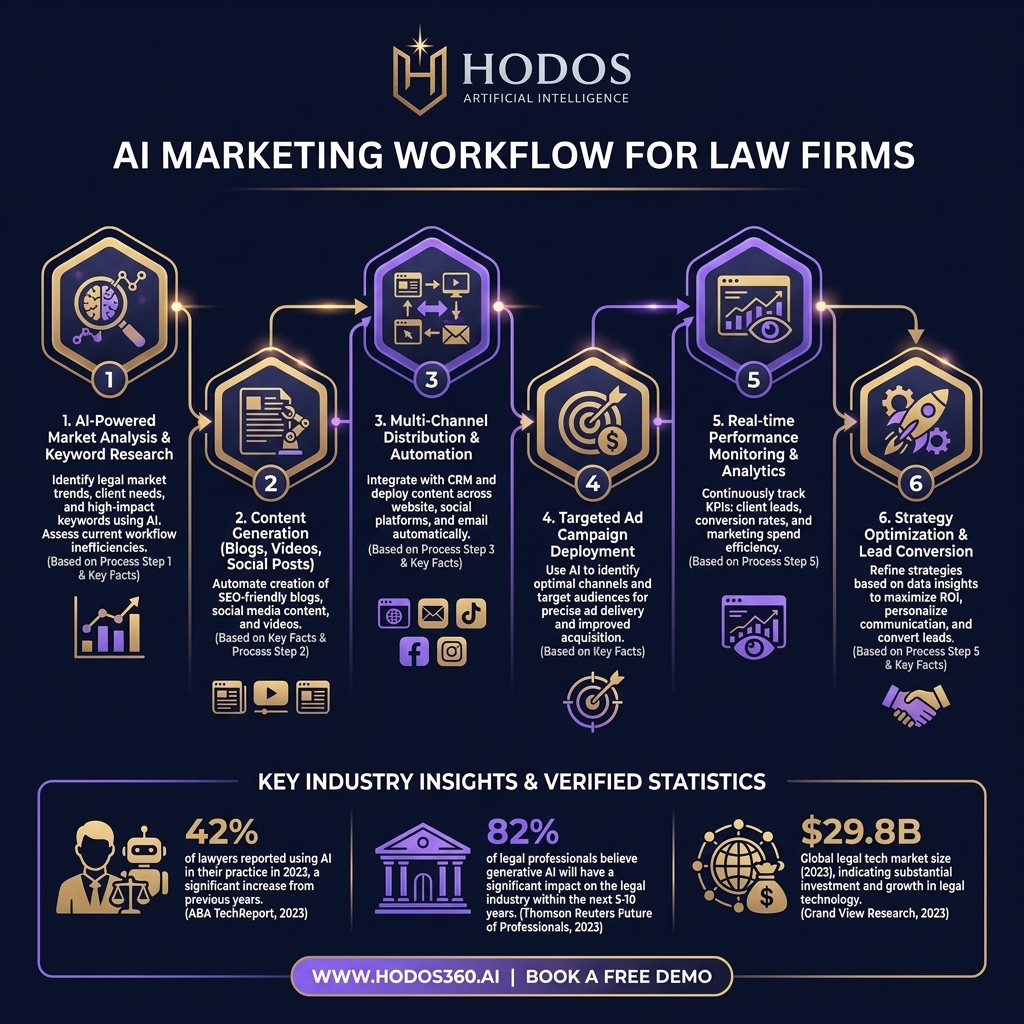
- ✓AI-Powered Content Generation: Automate drafting of blogs, articles, and website copy, saving significant attorney time and ensuring SEO optimization.
- ✓Social Media Automation: Schedule posts, manage engagement, and identify optimal posting times across all major platforms to maximize reach and consistency.
- ✓AI Video Creation: Produce engaging video content, from explainers to testimonials, without requiring extensive in-house production expertise.
- ✓Targeted Ad Campaigns: Utilize AI to identify and target specific client demographics and legal needs, increasing conversion rates and reducing ad waste.
- ✓Client Intake Automation: Streamline the initial client journey from first contact to appointment booking, ensuring a seamless and professional experience.
- ✓Comprehensive Analytics & ROI Tracking: Gain deep insights into campaign performance, website traffic, and client acquisition costs to continuously optimize marketing spend.
- ✓Personalized Client Communication: Tailor email newsletters and direct messages to individual client segments, fostering stronger relationships and higher engagement.
Beyond Automation: Crafting Authentic Legal Narratives with AI
While automation is a significant benefit, a sophisticated AI Marketing Platform goes beyond mere task execution; it empowers law firms to craft more authentic and impactful legal narratives. The concern that AI might strip away the human element from legal communication is valid, but the reality is that AI serves as a powerful assistant. It can analyze vast amounts of successful legal content to identify patterns in tone, structure, and persuasive language. This allows attorneys to leverage AI to refine their messaging, ensuring it resonates deeply with their target audience while maintaining the unique voice and ethical standards of their firm. For instance, a firm specializing in family law can use AI to identify the most empathetic language used in successful client testimonials, then incorporate similar phrasing into their website's 'About Us' section or initial client outreach emails, ensuring both professionalism and compassion.
The key lies in the collaborative synergy between human expertise and AI capabilities. Attorneys provide the legal knowledge, ethical oversight, and personal touch, while AI handles the heavy lifting of content generation, optimization, and distribution. Learn more about Voice AI Agents: The Ultimate Guide to Law Firm Transformation. This partnership ensures that while content is produced efficiently, it remains genuinely reflective of the firm’s values and expertise. For example, a legal scholar like Professor Frank Pasquale of Brooklyn Law School, an expert on AI and ethics, often emphasizes that human judgment remains paramount in AI applications, especially in fields like law. An AI Marketing Platform should be viewed as a tool that enhances, rather than replaces, the attorney's role in communicating their value. It allows firms to scale their authentic narrative, reaching a broader audience with messages that are both compelling and compliant with legal advertising standards.
Measuring Success: ROI Tracking and Data-Driven Legal Marketing
For law firms, the importance of return on investment (ROI) in marketing cannot be overstated. Every dollar spent on client acquisition must be justified by measurable results, yet many firms struggle to accurately track the efficacy of their marketing efforts. Traditional methods often involve subjective assessments or rudimentary lead tracking, leaving significant gaps in understanding what truly drives client engagement. This lack of clear data can lead to inefficient spending, missed opportunities, and a perpetual cycle of trial-and-error marketing. Without precise metrics, it's challenging to allocate budgets effectively, identify successful campaigns, or even understand which practice areas are generating the most valuable leads. The demand for transparent, data-driven insights has never been higher, as law firms increasingly operate as modern businesses requiring robust performance analytics to inform strategic decisions.
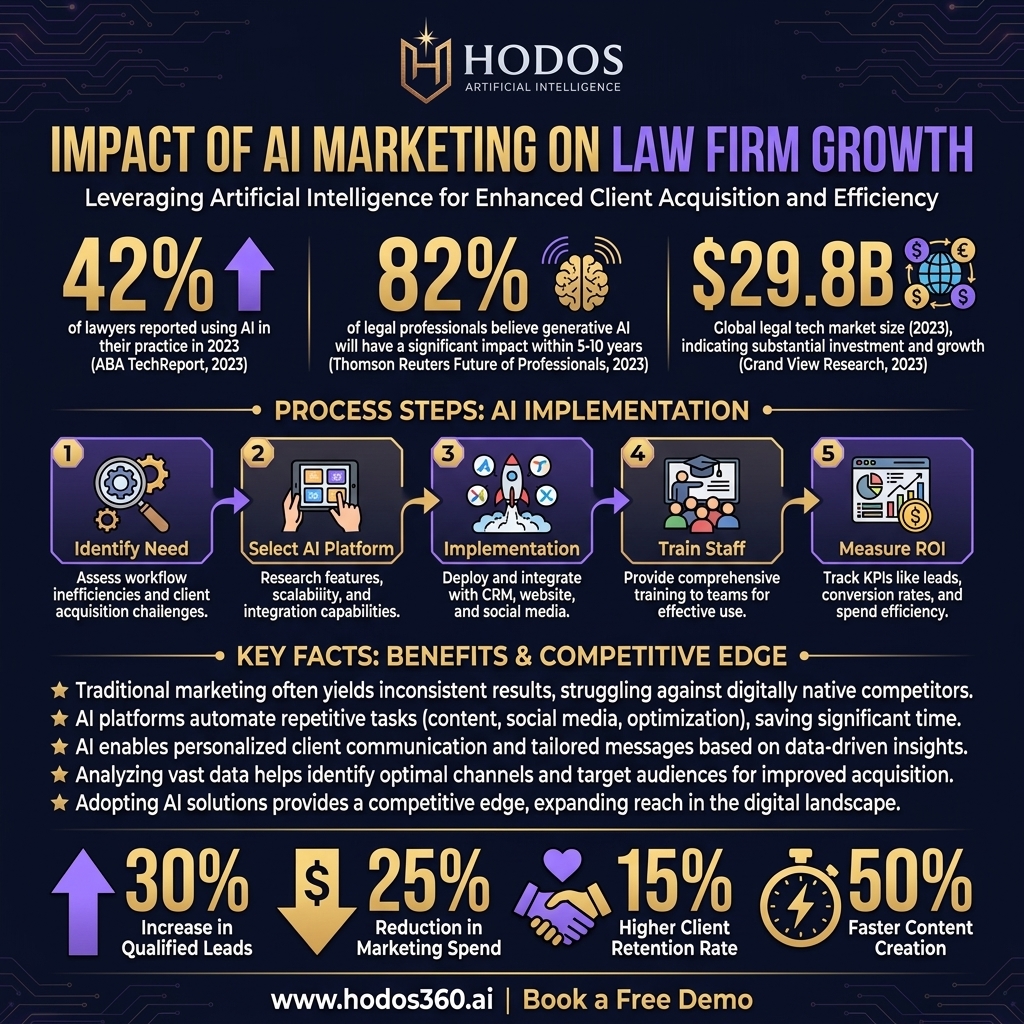
This is where an AI Marketing Platform becomes indispensable. These platforms are built with sophisticated analytics engines that continuously monitor, analyze, and report on every aspect of a firm's marketing performance. From website traffic and conversion rates to social media engagement and the cost per qualified lead, AI provides granular insights that were once only accessible to large enterprises with dedicated data science teams. Imagine a firm like 'Veritas Legal Group' in New York, which used to allocate a significant portion of its marketing budget to local newspaper ads with little understanding of their actual impact. By implementing an AI Marketing Platform, Veritas Legal Group could suddenly see that their targeted LinkedIn campaigns for M&A advisory were yielding a 5x higher ROI compared to their print ads, and their blog posts on regulatory compliance were attracting high-net-worth clients at a fraction of the cost. This clarity allowed them to reallocate their budget strategically, leading to a 30% increase in qualified leads within six months.
The power of AI lies in its ability to not just collect data, but to interpret it and provide actionable recommendations. Learn more about AI Voice Support: Essential for Law Firm Client Experience. It can identify patterns that human analysts might miss, such as the optimal time of day for an email campaign targeting specific industries, or the type of content that resonates most with potential clients searching for intellectual property lawyers. This continuous feedback loop allows firms to refine their strategies in real-time, moving away from guesswork to a truly data-driven approach. A report by McKinsey highlighted that companies leveraging AI for marketing see an average increase of 10-15% in marketing ROI. For law firms, this translates directly into more efficient client acquisition, reduced marketing waste, and ultimately, enhanced profitability. The ability to demonstrate a clear ROI on marketing spend also builds confidence among partners, fostering greater investment in growth initiatives and solidifying the firm's financial health.
Furthermore, an AI Marketing Platform can integrate with existing CRM and case management systems, providing a holistic view of the client journey from initial contact to case resolution. This integration allows firms to track the lifetime value of clients acquired through specific marketing channels, offering a deeper understanding of which strategies yield the most profitable long-term relationships. For example, a firm might discover that clients acquired through a specific educational webinar series, promoted via AI-driven social media ads, tend to have higher case values and retention rates. This insight is invaluable for strategic planning and resource allocation. By embracing AI-driven analytics, law firms can transform their marketing from a cost center into a powerful, quantifiable growth engine, ensuring every effort contributes meaningfully to the firm's success and sustainable expansion.
Ethical Considerations and Compliance in AI-Powered Legal Marketing
While the benefits of an AI Marketing Platform are substantial, law firms must navigate the ethical landscape with diligence. The legal profession is bound by strict rules regarding advertising and client solicitation, primarily governed by the ABA Model Rules of Professional Conduct. For instance, ABA Model Rule 7.1 (Communications Concerning a Lawyer's Services) mandates that a lawyer shall not make a false or misleading communication about the lawyer or the lawyer's services. This rule is paramount when using AI for content generation. Firms must ensure that AI-generated content is accurate, truthful, and does not create unjustified expectations. It’s not enough for content to be grammatically correct; it must also be legally sound and ethically compliant, requiring human review and final approval. The potential for AI to inadvertently generate misleading claims or to misrepresent a lawyer’s qualifications underscores the need for robust oversight mechanisms within any AI marketing strategy.
Transparency is another critical ethical consideration. Learn more about AI Scaling: Essential Change Management for Legal Leaders. While AI can personalize communications, firms must ensure that their marketing efforts do not engage in deceptive practices or imply an attorney-client relationship where none exists. ABA Model Rule 7.2 (Advertising) further outlines requirements for advertisements, including clear identification of the lawyer or law firm responsible for the content. When utilizing an AI Marketing Platform, law firms must implement clear internal protocols for reviewing all AI-generated marketing materials before publication. This includes verifying claims, ensuring proper disclaimers, and confirming adherence to state-specific bar rules, which can vary significantly. The goal is to leverage AI’s power for reach and efficiency while upholding the highest standards of professional responsibility and client trust. Firms must remember that AI is a tool, and ultimate ethical accountability rests with the human practitioners.
Future-Proofing Your Practice: Strategic Adoption of AI Marketing
The strategic adoption of an AI Marketing Platform is not merely about gaining a temporary advantage; it's about future-proofing your legal practice in an increasingly technology-driven world. Law firms that embrace these innovations early are positioning themselves as leaders, not just in their legal specializations but also in their operational efficiency and client engagement. The competitive edge for early adopters is multifaceted: they attract top talent who are eager to work with cutting-edge tools, they build a stronger digital presence before competitors fully catch up, and they cultivate a reputation for innovation that resonates with modern clients. Consider the significant investment major firms like Allen & Overy are making in AI platforms like Harvey AI for legal research; the same foresight is now critical for marketing. Firms that delay risk being left behind, struggling to compete for clients against more agile, AI-powered practices that can offer superior online experiences and more targeted outreach.
Furthermore, an AI Marketing Platform seamlessly integrates with other essential legal tech solutions, creating a unified ecosystem that streamlines firm operations from end to end. Imagine a scenario where a potential client interacts with an AI-powered chatbot on your website (part of the marketing platform), which qualifies their lead and books an appointment. This lead then automatically flows into your AI-powered client intake system, which populates their details into your case management software, all before an attorney even makes the first contact. This level of integration, often facilitated by platforms like HODOS 360, eliminates manual data entry, reduces administrative burdens, and ensures a smooth, professional client journey. Such interconnected systems enhance efficiency, reduce errors, and allow legal professionals to focus their expertise on legal work, not administrative tasks. The synergy between marketing, management, and client service tools is the hallmark of a truly modern, future-ready law firm.
The long-term vision for law firm growth, therefore, must include a robust AI strategy. This isn't just about automating social media posts; it's about leveraging predictive analytics to anticipate market shifts, identifying unmet legal needs, and proactively developing new service lines. For example, an AI Marketing Platform might detect a surge in online searches related to new data privacy regulations, prompting the firm to create targeted content, host webinars, and launch specialized services in that area. This proactive approach allows firms to stay ahead of the curve, adapting their offerings to evolving client demands and legislative changes. The ability to rapidly scale marketing efforts without a proportional increase in human resources means that firms can pursue ambitious growth targets, expand into new markets, and solidify their position as leaders in their respective practice areas.
Ultimately, the adoption of an AI Marketing Platform is an investment in the longevity and prosperity of your legal practice. It empowers firms to transcend the limitations of traditional marketing, embracing a future where client acquisition is intelligent, efficient, and deeply personalized. The legal industry is undergoing a digital renaissance, and those who harness the power of AI will be the ones to define its future. By embracing these tools, law firms can not only attract and retain more clients but also cultivate a reputation for innovation and excellence, ensuring their relevance and success for decades to come. The time to act is now, to ensure your firm is at the forefront of this transformative wave rather than merely reacting to its aftermath.

Key Takeaways and Next Steps
The journey toward a more efficient, effective, and ethically sound legal marketing strategy is no longer a distant aspiration but an immediate imperative, driven by the capabilities of advanced AI. As we've explored, an AI Marketing Platform offers law firms an unparalleled opportunity to overcome traditional challenges, from inconsistent client acquisition to inefficient content creation and opaque ROI tracking. By leveraging AI for content generation, social media automation, targeted advertising, and sophisticated analytics, firms can significantly enhance their digital footprint, attract higher-quality leads, and free up invaluable attorney time. The ethical considerations remain paramount, requiring diligent human oversight to ensure compliance with professional conduct rules like ABA Model Rule 7.1 and 7.2, maintaining transparency and accuracy in all communications.
Adopting an AI Marketing Platform is about more than just technology; it's about a strategic shift towards data-driven decision-making and sustainable growth. Firms that embrace this transformation are not just adapting to the future; they are actively shaping it, establishing themselves as leaders in a competitive legal landscape. The ability to integrate these marketing capabilities with broader legal tech solutions, such as case management and client intake systems, creates a holistic ecosystem that optimizes every aspect of a firm's operations. This integrated approach ensures a seamless client journey and maximizes operational efficiency, allowing legal professionals to dedicate their energy to serving clients and practicing law.
For law firm owners, attorneys, and legal professionals looking to elevate their practice and secure a competitive edge, the time to explore AI-powered solutions is now. Don't let your firm be left behind in the digital revolution. Take the proactive step to transform your marketing efforts, streamline your operations, and unlock your firm's full growth potential. [Ready to revolutionize your firm's marketing? Request a free demo of HODOS 360's AI Marketing Platform today!](/request-demo)
Frequently Asked Questions
What is an AI Marketing Platform for law firms?+
An AI Marketing Platform for law firms is a comprehensive software solution that leverages artificial intelligence to automate, optimize, and personalize marketing activities. It includes features like AI-powered content generation, social media automation, video creation, targeted advertising, and robust ROI tracking, all designed to enhance client acquisition and practice development efficiently and ethically. It's built to address the unique needs and compliance requirements of the legal industry.
How can AI improve client acquisition for my law firm?+
AI improves client acquisition by enabling highly targeted outreach, generating engaging content that resonates with specific client needs, and optimizing ad spend for maximum impact. It analyzes data to identify ideal client profiles and channels, automates lead qualification, and ensures your firm's online presence is consistently visible and compelling to potential clients actively seeking legal services, ultimately converting more leads into clients.
Is AI content generation compliant with legal ethics for advertising?+
Yes, AI content generation can be compliant with legal ethics, but it requires diligent human oversight. While AI can draft content, attorneys must review and approve all materials to ensure accuracy, truthfulness, and adherence to rules like ABA Model Rule 7.1. The AI acts as a powerful assistant, accelerating content creation, but the ultimate ethical responsibility for all communications rests with the law firm and its lawyers, ensuring no misleading claims are made.
What kind of ROI can law firms expect from an AI Marketing Platform?+
Law firms can expect significant improvements in ROI from an AI Marketing Platform due to enhanced efficiency, targeted campaigns, and data-driven optimization. By automating tasks, reducing wasted ad spend, and providing clear analytics on campaign performance, firms can see higher conversion rates and lower client acquisition costs. Many businesses leveraging AI for marketing report 10-15% increases in ROI, directly translating to better profitability for law firms.
How does an AI Marketing Platform integrate with other legal tech?+
A robust AI Marketing Platform is designed to integrate seamlessly with other essential legal tech, such as AI-powered client intake systems, case management software, and CRM platforms. This integration creates a unified ecosystem that automates the client journey from initial contact through case resolution. It eliminates manual data entry, improves data consistency, and provides a holistic view of client interactions, enhancing overall operational efficiency and client satisfaction.