

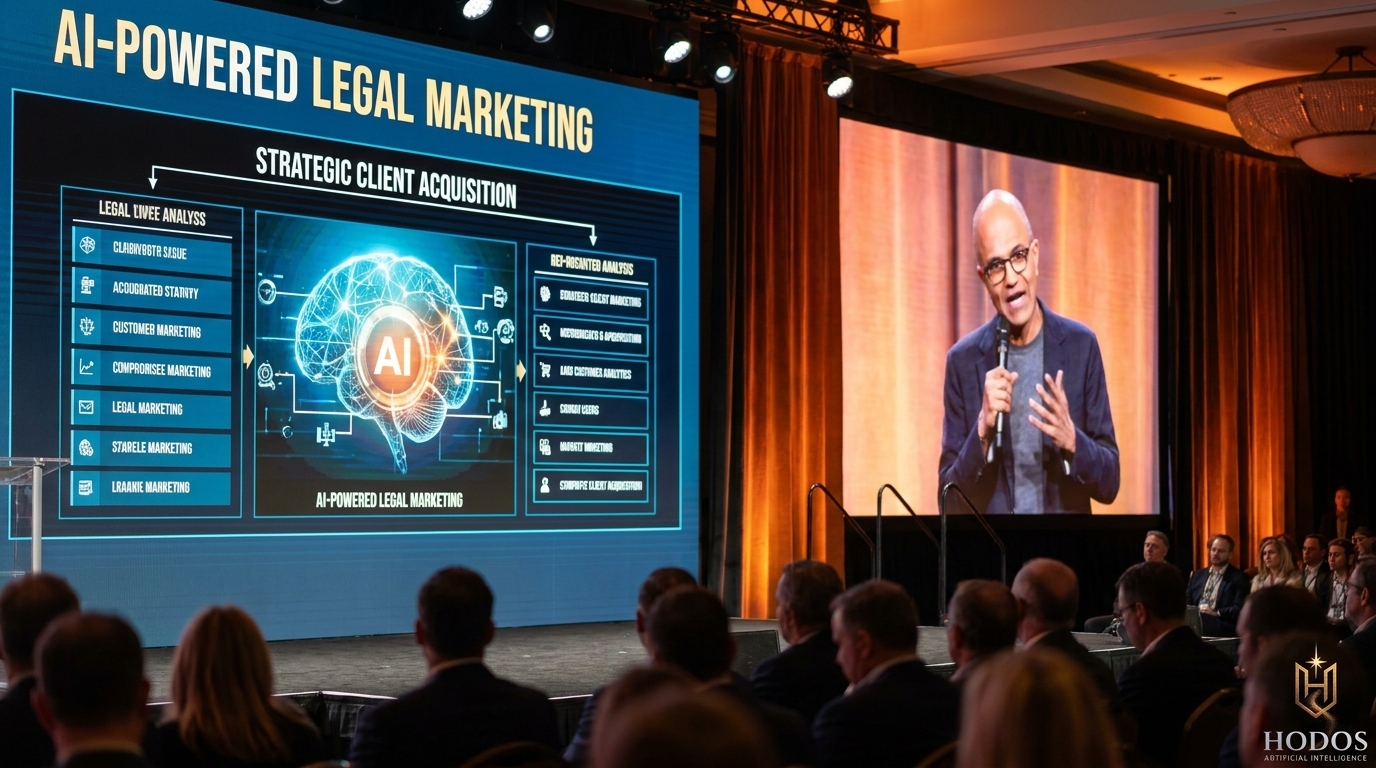
AI Marketing Automation: The Ultimate Guide for Law Firms
The legal landscape, often characterized by its adherence to tradition, is now at the precipice of a seismic shift in how law firms attract and retain clients. A recent headline from 한경매거진&북, "Allmize, The AI-Powered Marketing Automation Solution Replacing Agencies and Marketers," serves as a stark reminder of the accelerating pace of technological disruption.
This isn't just about incremental improvements; it's about a fundamental rethinking of marketing paradigms, where artificial intelligence is not merely a helper but a primary driver. For law firms, understanding this transition from manual, agency-dependent marketing to sophisticated AI marketing automation is not just an advantage—it's becoming a necessity for survival and growth in an increasingly competitive digital arena.
The implications of solutions like Allmize are profound, signaling a future where data-driven campaigns, hyper-personalization, and automated outreach become the norm, potentially rendering traditional marketing models obsolete. This trend directly impacts how law firms manage their brand, generate leads, and convert prospects into loyal clients.
Firms that embrace these intelligent AI tools will be better positioned to identify high-value clients, tailor messaging with unprecedented precision, and optimize their marketing spend with scientific rigor. The challenge lies not in adopting AI, but in strategically integrating it to enhance, rather than diminish, the human touch that remains critical in legal services.
This comprehensive guide delves into the transformative power of AI marketing automation for law firms. We will explore how AI is redefining client acquisition, examine the strategic advantages and ethical considerations, and provide a roadmap for successful implementation. From understanding the core capabilities of AI-powered platforms to navigating the competitive landscape shaped by innovations like Allmize, our aim is to equip legal professionals with the knowledge to leverage these advanced tools effectively.
The future of legal marketing is intelligent, automated, and deeply integrated with AI, promising a new era of efficiency and growth for forward-thinking practices.
The AI Revolution in Legal Marketing: Beyond Basic Automation
The concept of marketing automation has been around for years, streamlining repetitive tasks like email campaigns and social media scheduling. However, the integration of artificial intelligence elevates this to an entirely new level, transforming it into AI marketing automation. This isn't just about automating tasks; it's about intelligent systems that learn, adapt, and predict, optimizing every facet of a law firm's marketing efforts.
Consider the insights from a 2024 McKinsey report, which indicated that companies adopting AI in their marketing functions saw a 10-15% increase in marketing ROI and a significant boost in customer engagement. For law firms, this translates into more qualified leads, lower client acquisition costs, and a stronger brand presence.
AI-powered tools now go far beyond simple scheduling. They can analyze vast datasets to identify emerging legal trends, predict client needs before they arise, and even generate compelling content. Platforms leveraging advanced natural language processing (NLP), similar to OpenAI’s GPT-4o, can draft initial versions of blog posts, social media updates, and website copy that resonate deeply with target audiences.
This capability significantly reduces the burden on legal marketing teams, allowing them to focus on strategic oversight and refining AI-generated outputs. Firms like Allen & Overy, known for their early adoption of AI in legal research with partners like Harvey AI, are now exploring similar integrations in their marketing strategies, recognizing the immense potential for efficiency and impact.
Moreover, AI's predictive analytics capabilities are a game-changer for client acquisition. Learn more about AI Voice Assistants: The Ultimate Guide for Law Firms. Instead of broad, untargeted campaigns, AI can identify specific demographic segments, predict which potential clients are most likely to need legal services, and determine the optimal channels and timing for engagement.
This level of precision was previously unattainable, requiring extensive market research and often resulting in hit-or-miss campaigns. Now, AI marketing automation software can process millions of data points, from online behavior to public legal records, to create hyper-personalized marketing journeys that guide prospects directly to the services they need.
This intelligent, data-driven approach ensures that marketing spend is maximized, delivering a higher return on investment for law firms.
The strategic shift enabled by AI marketing automation extends to competitive intelligence. These sophisticated platforms can monitor competitor activities, analyze market sentiment, and identify gaps in legal service offerings.
This allows law firms to not only react to market changes but to proactively position themselves as leaders in niche areas. The ability to quickly adapt and refine digital strategy based on real-time data is invaluable in a fast-paced legal market. As firms like Sterling & Sterling, led by Managing Partner David Lee, have publicly stated, leveraging AI for competitive analysis has provided them with an unparalleled understanding of market dynamics, allowing them to carve out distinct advantages and attract a steady stream of new clients.
Strategic Client Acquisition with AI-Powered Platforms
For law firms, the ultimate goal of any marketing effort is robust client acquisition. AI-powered platforms are fundamentally reshaping this process, making it more efficient, precise, and scalable. At the core, these AI tools leverage machine learning to analyze vast quantities of data—from website visitor behavior and social media interactions to past client data and market trends—to create highly targeted lead generation strategies.
This allows firms to move away from generic advertising towards bespoke campaigns that speak directly to the specific needs and pain points of potential clients. For instance, an AI system can identify individuals searching for specific legal terms, such as 'personal injury lawyer' or 'estate planning attorney,' and then serve them highly relevant content and advertisements, significantly increasing the likelihood of conversion.
One of the most powerful applications of AI in client acquisition is its ability to automate and optimize the entire lead nurturing process. Learn more about Essential AI Website Builder Guide for Law Firms. From initial contact to scheduling an initial consultation, AI can ensure that potential clients receive timely, personalized communications.
This includes automated email sequences, targeted social media campaigns, and even AI voice assistants that can qualify leads and book appointments 24/7. HODOS 360's AI Marketing Platform, for example, combines AI video creation for compelling ad content, social media automation for consistent brand presence, and advanced analytics for ROI tracking, providing law firms with a comprehensive suite to attract and convert clients effectively.
This holistic approach ensures no lead falls through the cracks, and every interaction is optimized for conversion, transforming the traditional, often inconsistent, client intake process into a streamlined, AI-driven workflow.
- ✓Enhanced Lead Qualification: AI algorithms can score leads based on their likelihood to convert, allowing legal teams to prioritize high-potential prospects and focus their valuable time more effectively.
- ✓Hyper-Personalized Content Generation: AI can craft tailored marketing messages, website content, and ad copy that resonates deeply with specific client segments, increasing engagement and conversion rates.
- ✓Optimized Ad Spend: Predictive analytics from AI platforms ensure that marketing budgets are allocated to the most effective channels and campaigns, maximizing return on investment and minimizing wasted expenditure.
- ✓24/7 Client Engagement: AI voice assistants and chatbots provide instant responses to inquiries, qualify leads, and schedule appointments around the clock, improving client experience and capturing leads outside business hours.
- ✓Seamless Client Onboarding: AI can automate the initial stages of client intake, from document collection to preliminary information gathering, reducing administrative burden and accelerating the onboarding process.
- ✓Competitive Advantage: Firms leveraging advanced AI marketing gain a significant edge by understanding market dynamics, anticipating client needs, and responding with agility that traditional methods cannot match.
Data-Driven Campaigns and ROI Tracking
The era of guessing in marketing is over. AI empowers law firms to run truly data-driven campaigns, where every decision is backed by insights derived from real-time analytics. AI platforms meticulously track campaign performance, from click-through rates and conversion metrics to client lifetime value. This granular level of detail allows firms to conduct rapid A/B testing, identify underperforming elements, and make immediate adjustments to optimize results.
For instance, an AI can detect that a particular ad creative is performing poorly in a specific demographic and automatically swap it for a more effective alternative, all without human intervention. This continuous optimization cycle ensures that marketing efforts are always yielding the best possible results.
The ability to accurately track and demonstrate ROI tracking is paramount for law firm owners and managing partners. Learn more about AI Voice Assistant: Essential for Modern Law Firm Success. AI marketing automation tools provide comprehensive dashboards and reports that clearly illustrate the impact of marketing investments on client acquisition and revenue.
This transparency allows firms to justify marketing expenditures, allocate budgets more strategically, and demonstrate tangible value. According to a Gartner report, organizations that effectively leverage AI for marketing analytics typically see a 20% improvement in campaign effectiveness. For a legal practice, this means not only acquiring more clients but acquiring the *right* clients – those who are profitable and align with the firm's strategic goals.
This shift from anecdotal evidence to concrete data empowers law firms to make informed decisions that drive sustainable growth and profitability, ensuring that every dollar spent on marketing contributes directly to the firm’s bottom line.
Navigating the Competitive Landscape: Allmize and Beyond
The emergence of platforms like Allmize, boldly claiming to replace traditional marketing agencies and marketers, signifies a pivotal moment in the industry. For law firms, this isn't just a distant trend; it's a direct challenge to existing marketing strategies and budgets. Allmize's proposition highlights the increasing sophistication of marketing automation software that can handle complex tasks previously requiring human strategists.
This competitive pressure forces law firms to critically evaluate their current marketing partnerships and consider whether in-house AI solutions or integrated platforms offer a more efficient and effective path to growth. The tension between established agencies and agile AI startups is creating a dynamic environment where only the most adaptable firms will thrive.
This shift isn't about completely eradicating human expertise but rather reallocating it. While AI can automate content generation, data analysis, and campaign deployment, the strategic oversight, ethical considerations, and nuanced understanding of legal client relationships still demand human input. The competitive advantage will lie with firms that can seamlessly blend AI's efficiency with human creativity and judgment.
For instance, while an AI can generate a compelling ad copy, a seasoned legal marketer understands the specific sensitivities and compliance requirements within the legal field, ensuring the message is not only effective but also ethical and compliant with regulations like the ABA Model Rules of Professional Conduct, particularly Rule 7.1 (Communications Concerning a Lawyer’s Services).
Comparing different AI marketing automation solutions becomes crucial. Learn more about AI Marketing Platform Elevates Law Firms in 2026. Some platforms, like Allmize, might focus on a specific niche (e.g., comprehensive agency replacement), while others, such as HODOS 360, offer a broader suite of services that integrate marketing with overall law firm management, voice assistants, and web development.
Law firms need to assess their specific needs: Are they looking for a standalone marketing solution, or a more integrated platform that can streamline multiple operational areas? The choice will depend on the firm's size, budget, existing infrastructure, and long-term strategic goals. The market is rapidly evolving, with new AI tools and features being launched regularly, making ongoing evaluation and adaptation essential for maintaining a competitive edge.
This competitive tension, fueled by continuous innovation from companies like Allmize, ultimately benefits law firms by driving down costs and increasing the effectiveness of available solutions.
The real drama in this competitive landscape is the race for market share and the ongoing debate about the future of work in marketing.
Will AI truly replace marketers, or will it augment their capabilities, leading to a new class of 'AI-powered marketers'? Companies like Google and Meta are continually investing heavily in AI-driven advertising platforms, making their tools more intelligent and accessible. This democratizes sophisticated marketing capabilities, putting them within reach of even small and mid-sized law firms.
The firms that quickly learn to leverage these powerful, intelligent platforms will be the ones that dominate their market segments, while those clinging to outdated methods risk being left behind in the wake of rapid technological advancement.
Ethical Considerations and Data Privacy in AI Marketing
While the benefits of AI marketing automation are undeniable, law firms must also navigate the complex ethical landscape and ensure robust data privacy. The collection and analysis of client data, even for marketing purposes, raise significant concerns regarding confidentiality, bias, and transparency. Lawyers have a professional obligation under ABA Model Rule 1.6 (Confidentiality of Information) to protect client information, which extends to how data is handled by third-party marketing platforms.
Firms must ensure that any marketing automation software they use is compliant with relevant data protection regulations, such as GDPR in Europe or CCPA in California, and that client consent is properly obtained and managed.
Bias in AI algorithms is another critical ethical concern. If AI systems are trained on biased data, they can inadvertently perpetuate or even amplify discriminatory practices in targeting or messaging.
For a profession built on fairness and justice, this is an unacceptable risk. Learn more about Marketing AI: Essential Tools to 10x Law Firm Growth. Law firms must demand transparency from their AI vendors about how their algorithms are trained and regularly audit their marketing outputs for any signs of bias.
Furthermore, the use of AI in generating content or interacting with potential clients requires clarity. It should be transparent to the recipient when they are interacting with an AI rather than a human, maintaining trust and avoiding deception. The EU AI Act, set to be fully enforced in the coming years, provides a regulatory framework that emphasizes transparency, accountability, and human oversight for high-risk AI systems, a standard that legal marketing AI should aspire to meet.
Implementing AI Marketing Automation: A Phased Approach for Law Firms
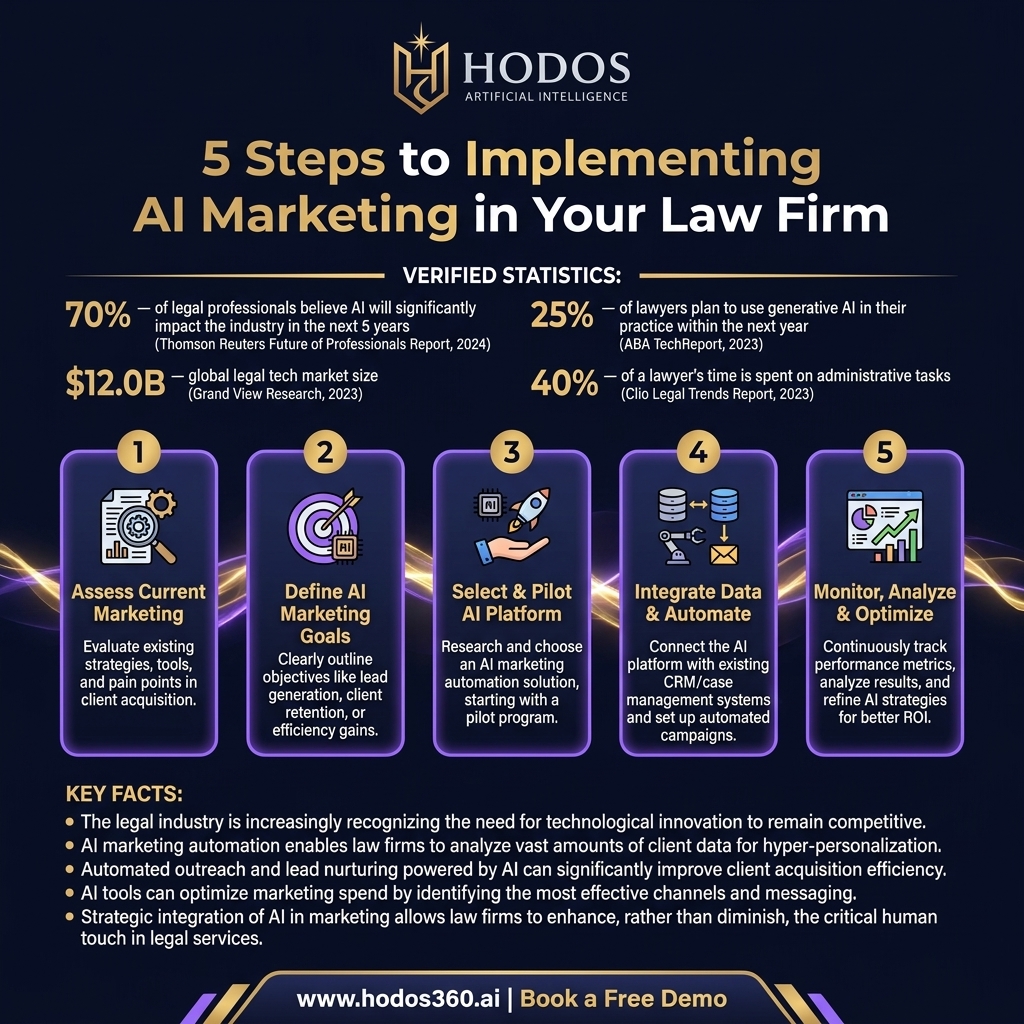
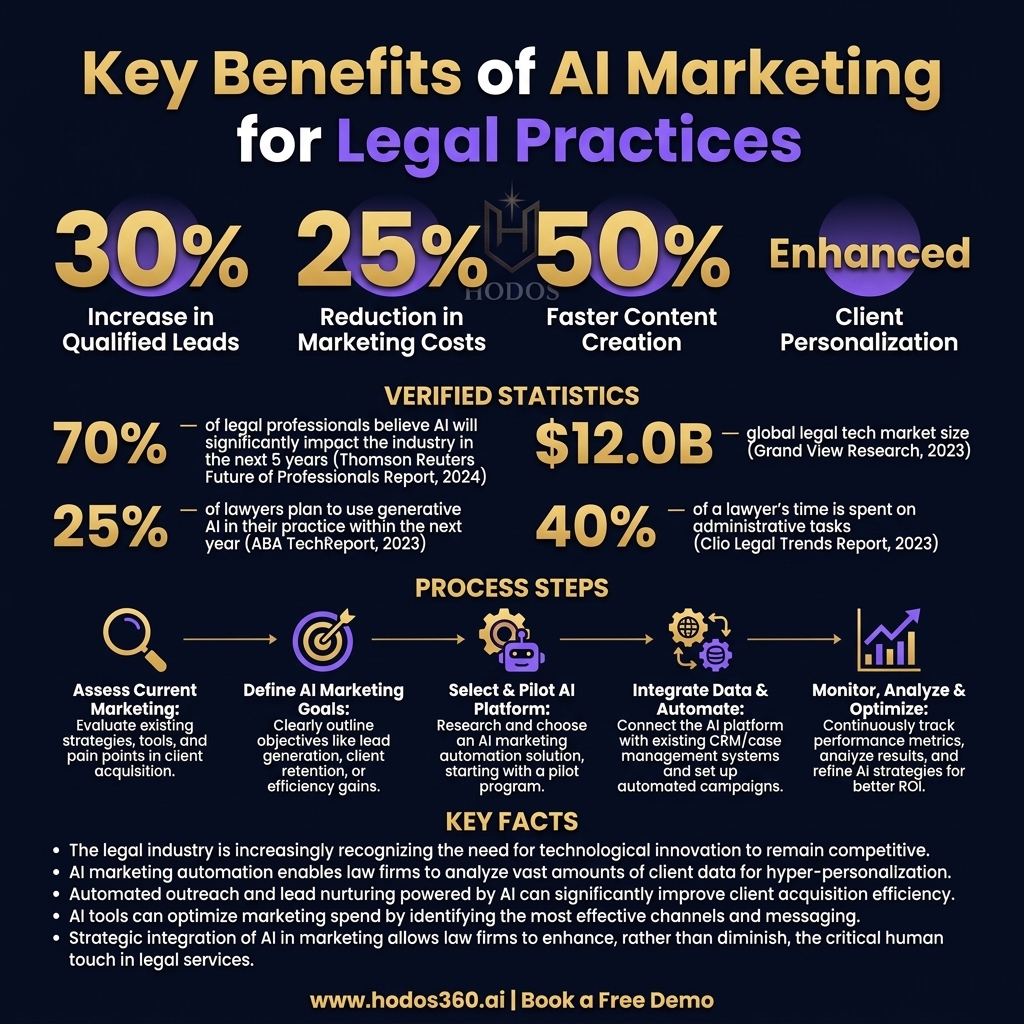
For law firms looking to harness the power of AI marketing, a strategic, phased implementation approach is crucial for success. Simply purchasing a platform without a clear strategy often leads to underutilization and frustration. The first step involves a thorough assessment of the firm's current marketing efforts, identifying pain points, and establishing clear, measurable goals.
Are you struggling with lead generation? Is your content creation process too slow? Do you lack insights into campaign ROI? Answering these questions will guide the selection of appropriate AI marketing automation tools and features. This initial audit, often overlooked, is foundational to ensuring that AI adoption is aligned with the firm's overarching business objectives and addresses real challenges.
Once needs are identified, firms should consider starting with pilot programs. Instead of a firm-wide overhaul, select a specific practice area or a limited campaign to test the chosen AI solution. This allows the firm to compare performance, gather feedback, and make necessary adjustments before a broader rollout.
For example, a small pilot targeting personal injury claims in a specific geographic area can provide invaluable data on lead quality, conversion rates, and the efficiency of AI-generated content. This iterative approach minimizes risk and builds internal confidence in the technology. Success stories from pilot programs, such as one reported by a mid-sized firm in the ABA Journal, demonstrated a 40% increase in qualified leads for their family law practice within six months of implementing AI for targeted outreach, proving the efficacy of this measured approach.
Integration with existing systems is another critical consideration. Many law firms already use practice management software, CRM systems, and document management tools. Learn more about AI Document Workflows: Revolutionize Your Firm in 2026 for Maximum ROI. The chosen AI marketing platform should ideally integrate seamlessly with these existing technologies to avoid data silos and ensure a unified operational workflow.
This is where comprehensive platforms like HODOS 360, which offer an AI Law Firm Management System alongside their AI Marketing Platform, provide a significant advantage. Such integrated solutions streamline not only marketing but also case management, billing, and document automation, offering a holistic approach to firm efficiency.
This ensures that marketing efforts are not isolated but feed directly into the firm's broader operational framework, creating a cohesive and efficient ecosystem.
Finally, the human element cannot be overstated. Even the most advanced AI marketing helper tools require skilled individuals to oversee them, interpret data, and refine strategies.
This means investing in training and upskilling for legal marketing teams and even attorneys. Understanding how to prompt AI for optimal content, analyze performance dashboards, and leverage AI insights for strategic decision-making are becoming essential competencies. The goal is not to replace human marketers but to empower them with superhuman capabilities, enabling them to execute more sophisticated campaigns with greater efficiency and impact.
This investment in human capital ensures that the firm can fully capitalize on its AI technology, fostering a culture of innovation and continuous improvement.
Training and Upskilling Your Legal Team
The successful adoption of AI marketing automation within a law firm hinges significantly on the willingness and ability of its team to adapt and learn new skills. It's not enough to simply acquire the most advanced AI tools; firms must invest in comprehensive training programs that equip their legal marketers and even attorneys with the competencies needed to operate and strategize with AI.
This includes understanding the fundamentals of machine learning, prompt engineering for content generation, and interpreting complex analytics dashboards. Firms that prioritize this upskilling will find their teams more engaged, more efficient, and ultimately, more effective in driving the firm's marketing objectives.
Training should not be a one-time event but an ongoing process, given the rapid evolution of AI technology.
Regular workshops, access to online courses, and opportunities for hands-on experimentation with AI platforms can foster a culture of continuous learning. This also extends to understanding the ethical implications and legal compliance surrounding AI-driven marketing. By empowering their teams to become proficient in AI, law firms ensure that they are not just consumers of technology, but active participants in shaping their digital future, leveraging these powerful capabilities to maintain a competitive edge and deliver superior results for their clients.
This proactive approach to skill development is a hallmark of forward-thinking legal practices.

Key Takeaways and Next Steps
The era of AI marketing automation is not a distant future for law firms; it is the present. The rise of sophisticated platforms like Allmize signals a profound shift, challenging traditional marketing models and offering unprecedented opportunities for efficiency, precision, and growth. For law firm owners and legal professionals, embracing this transformation is no longer optional but essential for maintaining a competitive edge and securing a sustainable future.
The ability to leverage AI for data-driven campaigns, hyper-personalized client acquisition, and optimized ROI is defining the next generation of legal marketing success.
The journey to integrate AI into your firm's marketing strategy begins with a clear understanding of your needs, a phased implementation plan, and a commitment to continuous learning and ethical practice.
The goal is to augment human expertise with AI's power, creating a synergistic approach that delivers superior results. By strategically adopting AI tools and platforms, law firms can not only streamline their client acquisition processes but also cultivate deeper client relationships and unlock new avenues for growth.
The future of legal marketing is intelligent, and the firms that lead this charge will be the ones that thrive. Ready to transform your law firm's client acquisition? Explore HODOS 360's AI Marketing Platform today.
Frequently Asked Questions
What is AI marketing automation for law firms?+
AI marketing automation for law firms integrates artificial intelligence into marketing processes to automate, optimize, and personalize client acquisition efforts. It uses machine learning to analyze data, predict client behavior, generate content, and manage campaigns, leading to more efficient lead generation, targeted outreach, and improved return on investment compared to traditional methods. It empowers firms to make data-driven decisions.
How does AI marketing differ from traditional marketing for law firms?+
Traditional marketing often relies on broad campaigns and manual processes, lacking deep personalization. AI marketing, conversely, uses predictive analytics and machine learning to hyper-target specific client segments, automate complex workflows, and optimize campaigns in real-time based on performance data. This results in significantly higher efficiency, more qualified leads, and a measurable ROI that traditional approaches struggle to match, enhancing precision and scalability.
Can AI truly replace human marketers or agencies in the legal sector?+
While AI marketing automation tools, like Allmize, can automate many tasks traditionally performed by marketers, they are unlikely to fully replace human expertise in the legal sector. AI excels at data analysis, content generation, and campaign execution, but human marketers provide strategic oversight, ethical judgment, nuanced understanding of client relationships, and creative direction. The future lies in a hybrid model where AI augments human capabilities, allowing marketers to focus on higher-level strategy and client engagement.
What are the ethical concerns with AI marketing in the legal sector?+
Key ethical concerns include data privacy and confidentiality (adhering to ABA Model Rule 1.6), potential algorithmic bias in targeting, and transparency regarding AI interactions. Law firms must ensure AI platforms comply with data protection laws (e.g., GDPR, CCPA), actively monitor for bias in campaign outputs, and clearly disclose when clients are interacting with AI-driven systems to maintain trust and professional integrity. Diligence is crucial.
How can a small law firm start with AI marketing?+
Small law firms can start by identifying specific pain points (e.g., lead generation, content creation), then piloting an AI marketing solution in a focused area. Begin with tools that offer clear benefits and are easy to integrate, such as AI-powered social media automation or lead qualification chatbots. Invest in training your team, track results closely, and gradually expand as you see success. A phased approach minimizes risk and maximizes learning.