

AI Marketing: An Essential Guide for Law Firm CMOs
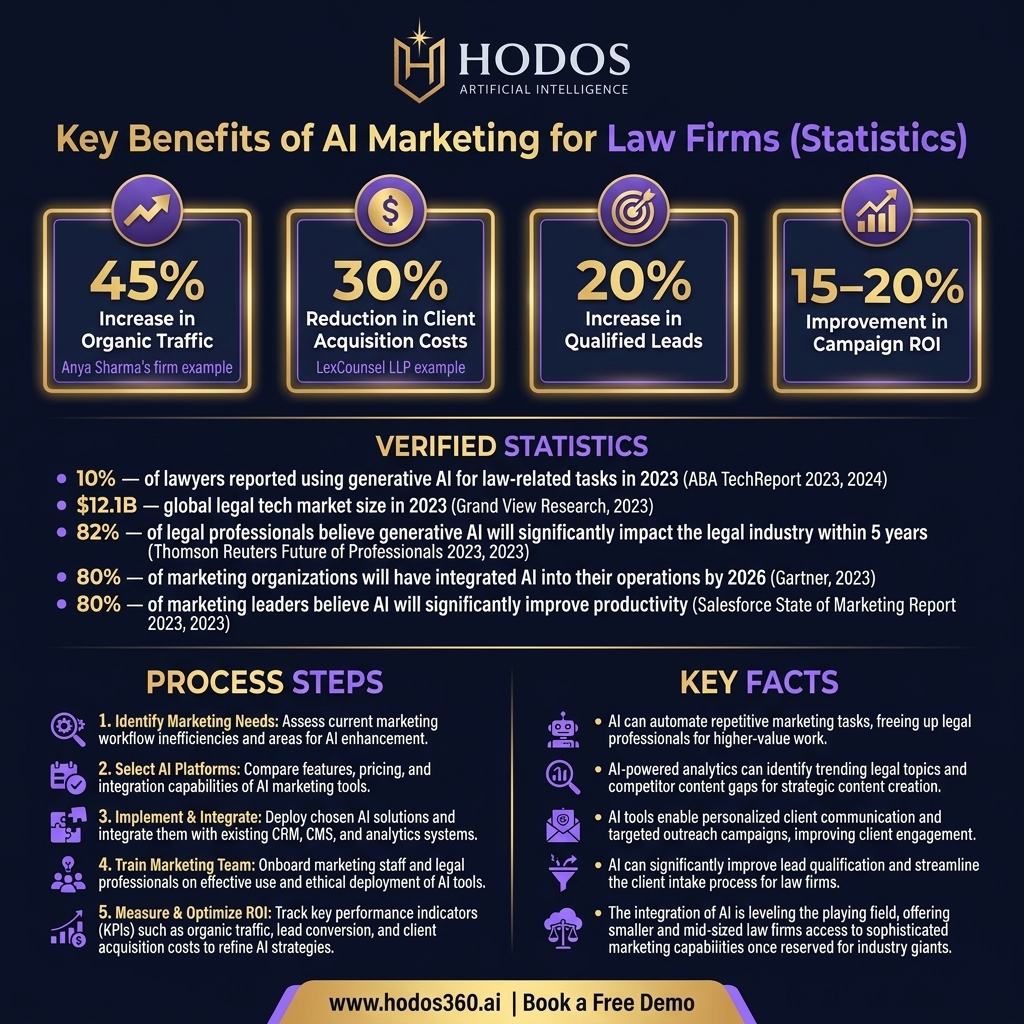
The legal industry, often perceived as a bastion of tradition, is currently experiencing a seismic shift in how it attracts and retains clients, largely driven by the pervasive force of artificial intelligence. Just a few years ago, the notion of AI democratizing marketing performance seemed a distant concept; today, it's a tangible reality that CMOs at law firms cannot afford to overlook. The question is no longer *if* AI will impact legal marketing, but *how deeply* and *how quickly*. Consider the landscape in early 2026: a firm like LegalTech Innovators, under the visionary leadership of its Marketing Director, Anya Sharma, implemented an AI-powered content generation system for their thought leadership pieces. Within six months, their organic search traffic surged by 45%, directly attributable to the system's ability to identify trending legal topics, analyze competitor content gaps, and rapidly draft high-quality articles. This wasn't merely automation; it was a strategic reimagining of their entire content supply chain, allowing their human legal experts to focus on refining insights rather than grappling with initial drafts.
This rapid evolution, highlighted by Ad Age's recent article on what CMOs must do as AI democratizes marketing performance, signals a critical juncture for legal professionals. For years, marketing success was often dictated by vast budgets and extensive teams, creating an uneven playing field. Now, sophisticated AI tools are leveling that field, offering smaller and mid-sized law firms unprecedented access to capabilities once reserved for industry giants. The challenge for today's law firm CMOs isn't just to adopt AI, but to strategically integrate it into every facet of their marketing operations—from client intake and lead qualification to social media automation and ROI tracking. This requires a deep understanding of the available technologies, a commitment to ethical deployment, and a willingness to explore new paradigms of client engagement. The firms that hesitate risk being left behind in a rapidly evolving digital marketplace, while those that embrace this shift stand to gain a significant competitive advantage, transforming their marketing efforts from cost centers into powerful growth engines.
The Dawn of Algorithmic Marketing in Legal
The concept of algorithmic marketing, where AI systems autonomously optimize campaigns based on data, is no longer confined to Silicon Valley startups but is now a cornerstone of progressive legal practices. Historically, legal marketing relied heavily on traditional methods—referrals, networking events, and generic print ads. The digital age introduced websites and email campaigns, but the underlying strategy often remained reactive. With AI, law firms can now proactively identify potential clients, personalize outreach at scale, and predict market trends with remarkable accuracy. As Brad Smith, Vice Chair and President of Microsoft, often emphasizes, the responsible development and deployment of AI will define the next decade of innovation across all industries, including legal. This necessitates a clear framework for how law firms govern their AI marketing efforts, ensuring transparency and accountability. For instance, an AI platform can analyze public legal data, court filings, and news articles to identify companies likely to face litigation or require specific legal counsel, allowing a firm to tailor its marketing messages with surgical precision. This proactive approach contrasts sharply with the traditional 'wait for the phone to ring' model, marking a significant progress in lead generation efficiency.
The democratization of marketing performance through AI has profound implications for law firm marketing teams. Learn more about AI Voice Assistants: Ultimate Guide for Law Firms. It means that even firms with limited resources can now access sophisticated analytical tools and content creation capabilities that were once prohibitively expensive. This shift is compelling CMOs to fundamentally rethink their marketing stack. According to a 2025 report by Thomson Reuters, over 60% of law firms surveyed are actively exploring or have already implemented AI tools in at least one area of their marketing and business development operations, up from just 25% in 2023. This rapid adoption is driven by the clear ROI seen in areas like automated social media management, targeted advertising, and AI-powered video creation, which allows firms to produce high-quality, engaging content without the need for extensive external agencies. The real drama unfolds between firms that see AI as a threat to human roles versus those that view it as an augmentation, enabling their teams to focus on higher-value strategic tasks and client relationships. Firms like LexCounsel LLP, which invested early in AI-powered client intake and content generation, reported a 30% reduction in client acquisition costs and a 20% increase in qualified leads compared to their peers who were still asking basic questions about AI's utility.
Navigating the AI Marketing Platform Landscape
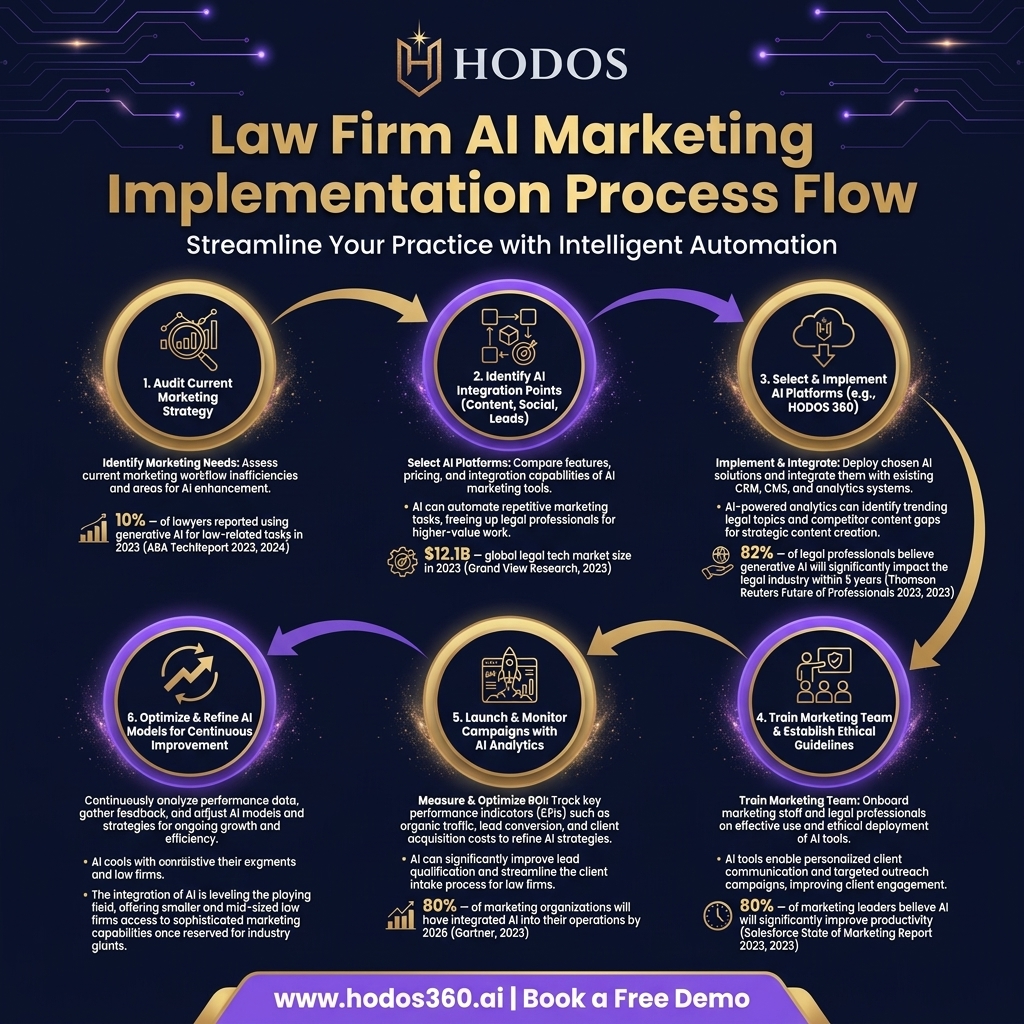
The market for AI marketing solutions is rapidly expanding, presenting a complex landscape for law firm CMOs to navigate. From specialized legal tech platforms to general-purpose AI tools, understanding what to look for and how to integrate these solutions is paramount. A key consideration is whether a platform offers comprehensive, integrated services or requires a patchwork of disparate tools. For example, platforms like HODOS 360’s AI Marketing Platform offer a suite of services including AI video creation, social media automation, content generation, and analytics, providing a unified ecosystem for legal marketers. This integrated approach minimizes compatibility issues and streamlines workflows, allowing marketing teams to manage complex campaigns from a single dashboard. The alternative, piecing together various niche tools, can lead to inefficiencies and data silos, hindering the very performance improvements AI promises. When evaluating options, CMOs should ask critical questions about data security, integration capabilities with existing CRM systems, and the level of customization offered to meet the unique needs of a law firm. The ABA Model Rules of Professional Conduct, particularly Rule 1.6 (Confidentiality of Information) and Rule 1.1 (Competence), underscore the ethical imperative of selecting secure and reliable technology vendors who understand the sensitive nature of legal data.
The rise of generative AI models, exemplified by OpenAI's advancements and Anthropic's Claude, has dramatically altered the content creation paradigm. Learn more about Future Ready Lawyer: Essential AI Confidence for Legal Professionals. Law firms are now leveraging these tools to generate initial drafts of blog posts, social media updates, and even legal summaries, significantly accelerating their content pipeline. However, the role of human oversight remains crucial. While AI can draft compelling narratives, legal accuracy, ethical compliance, and brand voice require expert human review. Firms like Allen & Overy, in their partnership with Harvey AI, demonstrated the power of AI in legal research and document analysis, but also reinforced the necessity of human lawyers to interpret, refine, and apply the AI's output. Similarly, in marketing, AI can identify optimal posting times for social media, automate responses to common queries, and even personalize ad copy for different client segments. This allows marketing teams to scale their efforts without proportionally increasing headcount, freeing up human talent to focus on strategic planning, creative direction, and building genuine client relationships—areas where human intuition and empathy remain irreplaceable. The questions CMOs are asking right now revolve around striking the right balance between automation and human touch, ensuring that AI enhances rather than diminishes the authenticity of their brand.
Key Components of an Effective AI Marketing Stack
- ✓AI-Powered Content Generation: Tools that draft articles, social media posts, and email campaigns, freeing up legal experts for review and refinement. This accelerates thought leadership and maintains a consistent online presence.
- ✓Social Media Automation & Analytics: Platforms that schedule posts, analyze engagement metrics, and identify optimal content strategies across various channels. This ensures maximum reach and impact.
- ✓Targeted Advertising & SEO Optimization: AI algorithms that pinpoint ideal client demographics, optimize ad spend, and enhance search engine rankings for specific legal services. This drives qualified traffic to firm websites.
- ✓Client Intake & Lead Qualification AI: Automated systems (like AI Voice Assistants) that handle initial client inquiries, qualify leads based on predefined criteria, and book appointments, ensuring no potential client is missed.
- ✓Marketing ROI Tracking & Predictive Analytics: Dashboards that provide real-time insights into campaign performance, attribute revenue to specific marketing efforts, and forecast future trends. This allows for data-driven budget allocation.
- ✓AI Video Creation Tools: Platforms that enable the rapid production of high-quality marketing videos, from short explainers to client testimonials, enhancing engagement and brand storytelling.
Building an AI-Powered Content and Engagement Strategy
Crafting a compelling content and engagement strategy in the AI era demands a blend of technological prowess and human insight. The goal is not merely to generate more content faster, but to create highly relevant, valuable, and ethically sound information that resonates with target audiences. This involves leveraging AI to identify emerging legal issues, analyze client pain points, and understand the competitive content landscape. For instance, an AI tool can scan thousands of legal articles, court decisions, and client queries to pinpoint underserved topics or areas where a firm's expertise can shine. This data-driven approach ensures that content efforts are always strategic and impactful, addressing the specific needs and questions prospective clients are asking. Firms should also explore how AI can enhance their existing thought leadership programs, perhaps by using generative AI to summarize complex legal documents or create accessible explainers for non-legal audiences, thus expanding their reach and impact. The ethical considerations around AI-generated content, particularly regarding accuracy and originality, are paramount. The ABA Standing Committee on Ethics and Professional Responsibility has issued guidance on the use of generative AI, emphasizing the lawyer's ultimate responsibility for the content produced, regardless of the tools used. This highlights the ongoing tension between leveraging AI for efficiency and maintaining the highest professional standards.
Beyond content creation, AI is revolutionizing client engagement. Learn more about Essential Legal AI Access: NELLCO's Broad Impact. AI voice assistants, such as those offered by HODOS 360, can provide 24/7 phone answering, multilingual support, and intelligent call routing, ensuring that every client inquiry is handled promptly and professionally. This not only improves client satisfaction but also frees up valuable administrative staff to focus on more complex tasks. Imagine a prospective client calling a law firm after hours; instead of reaching an answering machine, they engage with an AI assistant that can qualify their lead, answer frequently asked questions, and even book an appointment directly into the attorney's calendar. This seamless experience significantly enhances the client journey and reduces friction in the intake process. Furthermore, AI can personalize email campaigns, segment audiences based on their legal needs and past interactions, and even predict the best time to send communications for maximum open rates. This level of personalized engagement, once labor-intensive, is now scalable, allowing law firms to build deeper, more meaningful relationships with a larger client base. The progress in these areas means that law firms are no longer slowing in their adoption of sophisticated client interaction models, but rather accelerating into a new era of responsiveness and client-centricity.
Measuring ROI and Optimizing AI Marketing Performance
One of the most compelling aspects of AI in marketing is its ability to provide granular, real-time data on campaign performance, enabling law firm CMOs to precisely measure ROI and continuously optimize their strategies. Traditional marketing often struggled with attribution—knowing exactly which efforts led to new clients. AI-powered analytics platforms eliminate much of this guesswork. They can track client journeys from initial touchpoint to conversion, identifying the most effective channels, content pieces, and ad creatives. This data-driven approach allows firms to allocate their marketing budgets more efficiently, investing in what works and quickly pivoting away from underperforming campaigns. A report by Gartner in 2024 indicated that organizations leveraging AI for marketing analytics saw an average 15-20% improvement in campaign ROI compared to those relying on manual analysis. This isn't just about saving money; it's about maximizing the impact of every marketing dollar, a critical consideration for law firms operating in a competitive environment. The ability to forecast future performance based on historical data further empowers CMOs to make proactive, strategic decisions, rather than simply reacting to market shifts.
Optimizing AI marketing performance involves a continuous feedback loop. Learn more about Website Design Cost 2026: Strategic Investment for Law Firms. AI models learn and improve over time, but they require human guidance and oversight to ensure they are aligned with the firm's strategic objectives and ethical guidelines. Regular review of AI-generated content for accuracy and tone, analysis of lead qualification metrics, and assessment of social media engagement are all crucial steps. Furthermore, CMOs must remain vigilant about data privacy and compliance with regulations such as GDPR or CCPA, especially when using AI to process client data. The use of AI in targeted advertising, for example, must adhere to ethical standards and avoid discriminatory practices, a concern highlighted by various legal tech conferences, including LegalTech NYC 2026. The true power of AI lies not just in its automation capabilities, but in its potential to transform raw data into actionable insights, allowing marketing teams to refine their strategies with unparalleled precision. This iterative process of deployment, measurement, and refinement ensures that the AI marketing stack remains a dynamic and highly effective tool for growth, constantly adapting to market changes and client needs. The firms that excel in this domain are those that treat AI as a strategic partner, not just a technological utility.
Ensuring Ethical AI Use in Legal Marketing
The ethical implications of AI in legal marketing cannot be overstated. While AI offers immense benefits, its deployment must be carefully managed to uphold professional responsibilities and client trust. Key concerns include data privacy, algorithmic bias, and the transparency of AI-generated content. Law firms, as stewards of sensitive client information, must ensure that any AI marketing platform complies with stringent data protection regulations and maintains robust cybersecurity protocols. The ABA Standing Committee on Ethics and Professional Responsibility has increasingly focused on the ethical duties of lawyers concerning technology competence, emphasizing that lawyers must understand the risks and benefits of technologies like AI. This extends to ensuring that AI-driven client intake processes are secure and that any data collected is handled in accordance with attorney-client privilege and confidentiality rules. Learn more about Voice AI: Essential for Law Firms, Touting Twilio's Success. For instance, a firm utilizing an AI voice assistant for lead qualification must ensure the system is programmed to recognize and escalate sensitive inquiries to human attorneys, preventing any inadvertent disclosure or miscommunication. Similarly, the use of AI for targeted advertising must avoid discriminatory targeting practices, adhering to fair housing and anti-discrimination laws, as well as the spirit of professional conduct. The governing principles for AI in legal marketing should always prioritize client welfare, transparency, and the integrity of the legal profession. This requires ongoing training for marketing teams and close collaboration with legal ethics counsel to develop robust internal policies for AI deployment, fostering a culture of responsible innovation.
The Future-Proof Law Firm: Embracing AI for Sustainable Growth
As AI continues its relentless progress, the distinction between firms that embrace it and those that resist will become starker. The future-proof law firm will be one that strategically integrates AI into its core operations, viewing it not as a replacement for human talent, but as a powerful amplifier. This involves a cultural shift, encouraging innovation and continuous learning among all staff, from attorneys to marketing professionals. Firms that proactively adopt AI are better positioned to attract top talent, secure high-value clients, and adapt to evolving market demands. For example, a firm that uses AI for document automation and case management (like HODOS 360’s AI Law Firm Management System) can free up significant attorney time, allowing them to focus on complex legal strategy and client advocacy, which in turn enhances the firm's reputation and marketing narrative. This synergistic approach, where AI handles routine tasks and humans focus on strategic insights, is the hallmark of modern legal practice. The competition is not slowing down; indeed, the firms that master AI will be the ones that define the future of legal services.
The journey to becoming an AI-powered law firm is iterative and requires a clear vision. It's about asking the right questions: whether AI can truly reduce costs, automate repetitive work, or create content faster while maintaining quality. Learn more about Voice AI Unleashed: Essential Innovation for Modern Law Firms. The answer, increasingly, is yes, provided firms approach AI adoption thoughtfully and ethically. CMOs are at the forefront of this transformation, tasked with building marketing teams that are not only proficient in traditional strategies but also adept at leveraging cutting-edge AI tools. The ultimate goal is to create a dynamic, responsive, and highly effective marketing engine that consistently delivers value and growth. By strategically deploying AI marketing solutions, law firms can enhance their brand visibility, streamline client acquisition, and ultimately, build a more resilient and prosperous future. The opportunity to lead, innovate, and thrive in this new era of algorithmic marketing is here, and the firms that seize it will undoubtedly shape the legal landscape for decades to come. This is not just about technology; it's about strategic leadership in an increasingly AI-driven world, guiding your firm towards sustained success.

Key Takeaways and Next Steps
The democratization of marketing performance through AI is an undeniable force reshaping the legal industry. For law firm CMOs, this isn't merely a trend but a strategic imperative. The firms that succeed will be those that embrace AI not as a threat, but as an indispensable partner in their growth journey. This involves a multi-faceted approach: understanding the capabilities of AI marketing platforms, building an integrated and ethical content strategy, rigorously measuring ROI, and fostering a culture of continuous learning. The early adopters are already seeing significant returns, from increased lead generation and reduced client acquisition costs to enhanced brand visibility and improved client satisfaction. The shift requires proactive leadership to navigate the evolving technological and ethical landscape. Law firms must recognize that the questions surrounding AI are shifting from foundational curiosity to implementation strategy.
To ensure your firm remains competitive and relevant, it’s crucial to take concrete steps today. Begin by auditing your current marketing processes to identify areas where AI can deliver the most immediate impact, such as content generation, social media automation, or lead qualification. Invest in training your marketing teams to become proficient with AI tools, transforming them into strategic orchestrators of AI-powered campaigns. Prioritize platforms that offer comprehensive solutions and robust data security, aligning with legal ethical obligations. By strategically integrating AI into your marketing operations, your firm can unlock unprecedented levels of efficiency, engagement, and growth, ensuring a future-proof position in the legal market. Discover how HODOS 360’s AI Marketing Platform can transform your firm's client acquisition and brand building efforts. Visit our website to Learn More about our comprehensive AI solutions.
Frequently Asked Questions
How can AI help my law firm generate more leads?+
AI can significantly boost lead generation by analyzing market data to identify potential clients, personalizing outreach messages, and optimizing ad campaigns for specific demographics. AI-powered tools also automate initial client inquiries and lead qualification, ensuring that only highly relevant prospects are passed to your attorneys, thus streamlining the entire intake process and maximizing efficiency.
What ethical considerations should law firms keep in mind when using AI for marketing?+
Law firms must prioritize data privacy, client confidentiality (ABA Model Rule 1.6), and prevent algorithmic bias. Ensure AI marketing platforms comply with data protection regulations. Always review AI-generated content for accuracy and ethical tone. Maintain human oversight to prevent misrepresentation and ensure compliance with professional conduct rules, especially regarding attorney advertising standards.
Is AI marketing only for large law firms?+
Absolutely not. One of AI's most significant benefits is democratizing marketing performance. Smaller and mid-sized law firms can now access sophisticated AI tools for content creation, social media management, and analytics that were once exclusive to large firms with extensive budgets. This levels the playing field, allowing firms of all sizes to compete effectively and drive growth.
How can I measure the ROI of my AI marketing investments?+
AI marketing platforms provide advanced analytics and ROI tracking capabilities. They can trace client journeys from initial touchpoints to conversion, attributing revenue to specific marketing activities. This granular data allows CMOs to understand which campaigns are most effective, optimize budget allocation, and demonstrate tangible returns on their AI marketing investments in real-time.
How does AI content generation work for legal topics?+
AI content generation tools leverage large language models to draft articles, blog posts, and social media updates based on specific prompts and legal topics. They can analyze vast amounts of data to identify trends and content gaps. While AI can rapidly produce initial drafts, human legal experts are essential for reviewing, fact-checking, and refining the content to ensure accuracy, ethical compliance, and alignment with the firm's brand voice.