

AI Marketing: The Ultimate Blueprint for Law Firm Growth
Just last week, the Killeen Daily Herald highlighted a local 'AI Marketing Boot Camp' aimed at helping businesses automate growth, a clear signal that the promise of artificial intelligence in marketing is no longer a distant future but a present imperative. For law firms, this trend isn't just about keeping pace; it's about seizing a strategic advantage in a fiercely competitive market.
The traditional methods of client acquisition, while still valuable, are increasingly being augmented, and in some cases, redefined by AI-driven strategies. Firms that embrace this technological shift are not merely optimizing; they are fundamentally transforming their approach to market presence and client engagement, ensuring a robust pipeline in an era of rapid digital evolution.
The narrative of disruption versus tradition plays out vividly here, as forward-thinking firms leverage AI to outmaneuver competitors still rooted in analog outreach.
Historically, legal marketing has been resource-intensive, demanding significant time and financial investment with often opaque ROI. Managing partners like Eleanor Vance of Vance & Associates, a boutique litigation firm, have long grappled with the challenge of scaling marketing efforts without compromising the personalized touch essential to legal services.
"Our biggest hurdle was always the sheer volume of repetitive tasks in marketing," Vance shared at a recent LegalTech NYC panel. "From crafting social media posts to segmenting email lists, it consumed valuable paralegal and associate time that could have been dedicated to client work."
This challenge is precisely where AI marketing platforms offer a revolutionary solution, promising not just efficiency but a new level of precision and personalization that was once unattainable for firms of any size. The shift is palpable, with a recent Thomson Reuters report indicating a nearly 40% increase in law firms exploring AI tools for non-legal operations, a significant portion of which is dedicated to marketing.
This isn't about replacing the human element; it's about augmenting it with intelligent automation. Imagine an AI system meticulously analyzing market trends, identifying ideal client profiles, and even drafting compelling content that resonates with specific legal needs, all while human legal professionals refine the strategy and maintain client relationships.
This symbiotic relationship between human expertise and AI efficiency is the cornerstone of modern legal marketing. As Jensen Huang, CEO of NVIDIA, often emphasizes, AI is a productivity engine, and in the legal sector, it's proving to be an unparalleled force for streamlining everything from initial client intake to long-term client retention.
The firms that are winning today are the ones that have recognized this and are actively integrating AI into the fabric of their marketing operations, turning data into actionable insights and turning insights into new business. This comprehensive guide will explore the ultimate blueprint for law firms to leverage AI marketing for sustained growth.
- ✓Understanding AI's Transformative Power in Legal Marketing
- ✓Strategic AI Tools for Law Firm Client Acquisition
- ✓Automating Legal Marketing Workflows: Efficiency and Scalability
- ✓Measuring ROI and Ethical Considerations in AI Marketing
- ✓The Future of Legal Marketing: HODOS 360's Vision
Ready to transform your law firm's marketing? Discover the power of AI to drive client acquisition and growth. [Learn more about HODOS 360's AI Marketing Platform]
AI Marketing's Transformative Power in Legal Practice
The legal industry, often characterized by its cautious adoption of new technologies, is now at a critical juncture where AI marketing is reshaping its competitive landscape. For decades, law firms relied on word-of-mouth referrals, traditional advertising, and networking events. While these methods remain vital, they struggle to keep pace with the digital-first expectations of today's clients.
Firms that have embraced AI, like those observed by Dario Amodei's Anthropic in other industries, are seeing unprecedented gains in efficiency and reach. A recent report by McKinsey & Company highlighted that early adopters of AI in professional services are experiencing a 15-20% increase in lead generation efficiency.
This isn't merely about incremental improvements; it’s about creating a fundamentally more responsive and effective marketing engine, allowing smaller firms to compete on a more level playing field with larger, established entities by leveraging intelligent automation.
The shift is stark when we consider the competitive tension in legal markets.
Firms like Allen & Overy, known for their early adoption of legal tech, have openly discussed their exploration of AI in various operational aspects, including how they identify and engage potential clients. Their partnership with Harvey AI, for instance, initially focused on legal research, but the underlying principles of AI-driven efficiency are now permeating their broader business strategies, including marketing.
This move underscores a broader trend: those who invest in AI early are securing a distinct market advantage, creating a significant divide between tech-forward firms and those clinging to outdated practices. The 'human conflict' here is between the comfort of tradition and the imperative of innovation, a tension that will define success in the coming years.
Consider the plight of a solo practitioner or a small firm trying to stand out in a crowded metropolitan area. Learn more about AI Marketing: The Ultimate Guide for Modern Law Firms. Without the budget for a large marketing department, they often find themselves overwhelmed.
AI marketing tools democratize access to sophisticated strategies, offering capabilities previously exclusive to large corporations. From granular audience segmentation to predictive analytics that forecast client needs, AI empowers these firms to target their efforts with pinpoint accuracy. The Killeen Daily Herald's article, while focused on local businesses, perfectly encapsulates this sentiment: the desire to "automate growth" is universal, and for law firms, it translates directly into sustainable client acquisition without prohibitive overheads.
This strategic integration of AI provides a competitive edge, allowing firms to focus their human talent on high-value legal work rather than rote marketing tasks.
The transformative power extends beyond mere efficiency; it enables a deeper understanding of client journeys. By analyzing vast datasets of online behavior, search queries, and engagement patterns, AI can construct incredibly detailed client profiles, informing everything from website design to the tone of a social media campaign.
This data-driven insight helps law firms anticipate client needs, offering solutions before prospects even explicitly state them. As the legal industry continues its digital evolution, firms that master AI marketing will not only attract more clients but also build stronger, more enduring relationships based on a profound understanding of their clientele, setting a new standard for legal service delivery and market engagement.
Strategic AI Tools for Law Firm Client Acquisition
For law firms, the ultimate goal of any marketing endeavor is client acquisition. AI marketing provides a suite of strategic tools that streamline this process, making it more effective and less resource-intensive. One of the most impactful applications is in lead generation and qualification. AI-powered analytics can sift through vast amounts of data—from public records to social media activity and search engine queries—to identify individuals or businesses actively seeking legal services.
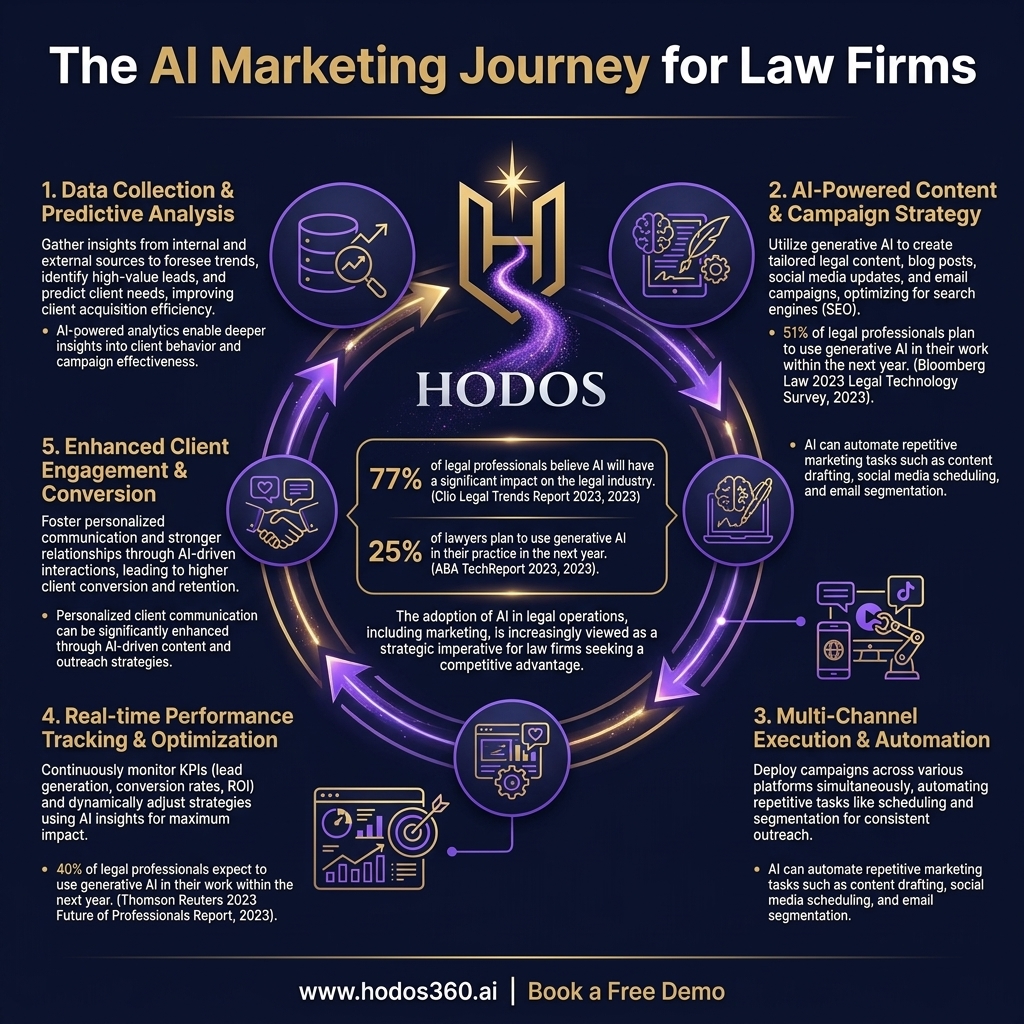
Platforms like Clio, which recently acquired LawPay to integrate payment processing, are increasingly looking at AI to enhance their CRM functionalities, helping firms track potential clients more effectively and nurture leads with personalized communication. This level of insight allows firms to prioritize high-potential leads, ensuring marketing efforts are directed where they will yield the greatest return.
Beyond identification, AI excels at personalizing client outreach. Generic marketing messages are easily ignored, but AI can craft highly tailored communications based on a prospect's specific legal needs, demographics, and online behavior. Imagine an AI generating a targeted email campaign that references a recent court ruling relevant to a prospect's industry, or a social media ad that speaks directly to a specific pain point identified through their browsing history.
This hyper-personalization significantly increases engagement rates and builds trust even before initial contact. According to Gartner, companies that leverage AI for personalization see a 20% uplift in customer satisfaction. For law firms, this translates into warmer leads and a higher likelihood of conversion, reducing the friction in the client intake process and making the initial consultation more productive.
### Personalizing Client Outreach with AI
AI's ability to personalize client outreach is a game-changer for legal marketing. Learn more about Essential AI Website Security: Protecting Law Firms from Cyber Threats. By leveraging natural language processing (NLP) and machine learning, AI tools can analyze client data to understand preferences, communication styles, and specific legal challenges.
This allows for the dynamic generation of marketing content that resonates deeply with individual prospects. For example, instead of a blanket advertisement for 'personal injury services,' an AI system could generate an ad specifically targeting individuals searching for 'motorcycle accident lawyers in Austin, Texas,' complete with testimonials relevant to that niche.
This precision not only captures attention but also conveys a sense of understanding and expertise, crucial for establishing rapport in the legal field. The ethical implications of such personalization must, however, be carefully managed to ensure transparency and avoid predatory practices, adhering strictly to professional conduct guidelines like ABA Model Rule 7.1.
### AI-Powered Content Creation and SEO
Content is king in digital marketing, and AI marketing tools are revolutionizing its creation and optimization for law firms.
AI-powered content generators can assist in drafting blog posts, articles, social media updates, and even video scripts on complex legal topics. While human oversight is always necessary to ensure accuracy and tone, AI can rapidly produce high-quality drafts, significantly reducing the time and cost associated with content production.
Moreover, AI's ability to analyze SEO trends and keyword performance means content can be optimized in real-time for maximum visibility. This ensures that when a potential client searches for a 'divorce lawyer near me' or 'estate planning attorney,' the firm's content ranks prominently. This strategic use of AI for content allows law firms to maintain a robust online presence, establish thought leadership, and attract organic traffic, ultimately feeding their client acquisition pipeline with highly qualified leads seeking specific legal expertise.
Automating Legal Marketing Workflows: Efficiency and Scalability
The promise of AI marketing for law firms extends far beyond sophisticated client targeting; it offers unparalleled efficiency through the automation of routine, time-consuming marketing workflows. This is where the concept of the 'AI marketing bootcamp' truly comes into play, as highlighted by the Killeen Daily Herald, enabling businesses—including law firms—to rapidly learn and implement automation strategies.
Imagine the hours saved when AI agents handle tasks such as scheduling social media posts across multiple platforms, managing email drip campaigns for different client segments, or even qualifying initial leads through automated chatbots on your website. This freeing up of human capital allows legal professionals to dedicate their valuable time to complex legal work, client consultations, and strategic business development, rather than getting bogged down in repetitive administrative marketing tasks.
This level of automation isn't just about saving time; it's about achieving scalability that was previously impossible for many firms. A solo practitioner can now leverage AI to manage a marketing operation that would have once required a dedicated team, effectively leveling the playing field with larger competitors.
For mid-sized and large firms, automation means their marketing departments can focus on high-level strategy and creative campaigns, knowing that the grunt work is being handled efficiently and consistently by AI. This also ensures brand consistency across all marketing channels, a challenge often faced by firms with decentralized marketing efforts.
The ability to automate tasks like content distribution and performance reporting also means that marketing campaigns can be launched and optimized much faster, responding to market changes with agility.
Ready to streamline your firm's marketing and boost efficiency? Discover how AI can automate your workflows and scale your growth.
[Explore HODOS 360's AI Marketing Solutions]
The impact of workflow automation on operational costs is significant. By reducing the need for extensive manual labor in marketing, firms can reallocate budget to other critical areas or invest further in advanced AI tools. Learn more about Ethical AI in Legal Tech: An Essential Guide for Law Firms.
For instance, the deployment of AI voice assistants, a service also offered by HODOS 360, can automate initial client inquiries, qualify leads, and even book appointments 24/7, ensuring no potential client is missed, even outside business hours. This seamless integration of AI across various touchpoints creates a cohesive and highly efficient marketing ecosystem.
The automation of these 'small tasks' collectively leads to massive gains in productivity and revenue generation, allowing firms to focus on their core legal mission.
Furthermore, automated workflows enhance the reliability and accuracy of marketing efforts. Human error, while inevitable, can be significantly reduced when AI takes over data entry, campaign scheduling, and analytics reporting.
This leads to cleaner data, more precise targeting, and ultimately, more effective campaigns. The legal industry, with its inherent demand for precision, stands to benefit immensely from this aspect of AI. Firms can trust that their marketing messages are reaching the right audience at the right time, with consistent branding and messaging.
This blend of efficiency, scalability, and accuracy makes AI marketing automation an indispensable asset for any law firm aiming for sustained growth in the digital age.
Measuring ROI and Ethical Considerations in AI Marketing
While the allure of AI marketing lies in its efficiency and precision, its true value to law firms is measured by its return on investment (ROI) and its adherence to stringent ethical guidelines. One of AI's most powerful capabilities is its ability to track and analyze campaign performance with unprecedented granularity.
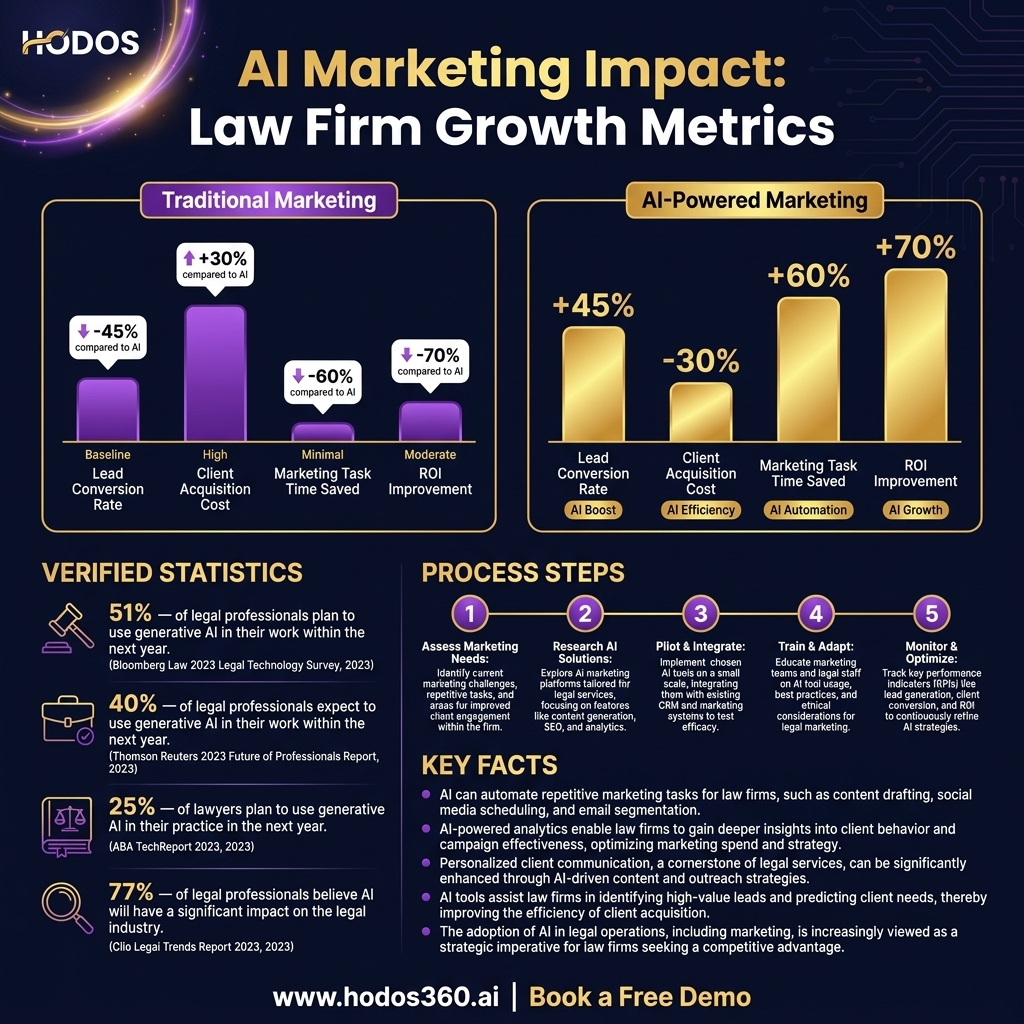
Unlike traditional marketing, where attributing a specific client to a particular campaign can be challenging, AI platforms provide real-time data on everything from ad impressions and click-through rates to lead conversion and client lifetime value. This allows law firms to understand exactly which strategies are working, optimize underperforming campaigns, and allocate marketing budgets more effectively.
This data-driven approach transforms marketing from a speculative expense into a quantifiable investment, a critical shift for fiscally responsible law firm management.
However, the power of AI comes with significant ethical responsibilities, particularly concerning data privacy and professional conduct. Law firms operate under strict confidentiality requirements, exemplified by ABA Model Rule 1.6, which mandates the protection of client information.
When using AI marketing tools, firms must ensure that client data is handled securely, anonymized where appropriate, and used only for its intended purpose. The collection and analysis of personal data for targeted advertising must also comply with evolving regulations like GDPR in Europe and CCPA in California, as well as the anticipated enforcement of the EU AI Act, which will impose strict requirements on high-risk AI systems.
Firms must be transparent with prospects and clients about data collection practices, fostering trust rather than eroding it through opaque AI processes.
### Navigating Data Privacy and Compliance in AI Marketing
Navigating the complex landscape of data privacy and compliance is paramount for law firms employing AI marketing.
The potential for misuse of client data, however unintentional, carries severe reputational and legal risks. Learn more about AI Phone Assistant: Essential Guide for Modern Law Firms. Firms must implement robust data governance frameworks, ensuring that all AI tools and processes are compliant with relevant statutes and ethical rules.
This includes obtaining explicit consent for data collection, providing clear opt-out mechanisms, and regularly auditing AI systems for biases or privacy vulnerabilities. For example, a firm using AI to analyze client demographics for targeted ads must ensure this data is aggregated and anonymized to prevent re-identification, aligning with the spirit of ABA Model Rule 7.1, which governs communications about a lawyer's services and prohibits misleading statements.
The consequences of non-compliance can range from hefty fines to disbarment, making proactive ethical diligence non-negotiable.
Furthermore, the ethical use of AI extends to avoiding discriminatory practices. AI algorithms can inadvertently perpetuate or amplify existing societal biases if not carefully designed and monitored. For example, if an AI is trained on historical marketing data that disproportionately targets certain demographics, it might continue to do so, potentially leading to accusations of unfair practice.
Law firms have a professional obligation to uphold justice and fairness, and their marketing strategies, even when AI-driven, must reflect these values. Regular audits of AI algorithms for bias, coupled with human oversight, are crucial to ensure that AI marketing efforts are not only effective but also equitable and compliant with the highest standards of professional responsibility.
This vigilance is not just good practice; it's a legal and ethical imperative in the age of advanced AI.

The Future of Legal Marketing: HODOS 360's Vision
The trajectory of legal marketing is undeniably heading towards greater integration with artificial intelligence, moving beyond basic automation to predictive analytics and hyper-personalization. The firms that will thrive in this future are those actively building an AI-first marketing strategy. This future isn't about replacing human lawyers or marketers, but empowering them with tools that amplify their reach, precision, and efficiency.
As we look ahead, the emphasis will be on creating seamless, intelligent client journeys from initial awareness to long-term loyalty, underpinned by robust data and ethical AI deployment. The vision is one where law firms can focus on what they do best – providing exceptional legal counsel – while AI ensures a steady, qualified stream of clients.
This strategic evolution is not just about adopting new tools; it's about fundamentally rethinking how legal services are presented and acquired in a rapidly changing world.
HODOS 360 is at the forefront of this revolution, offering an AI Marketing Platform specifically designed to meet the unique needs of law firms.
Our platform integrates AI video creation, allowing firms to produce compelling visual content quickly; social media automation, ensuring consistent and engaging online presence; and advanced content generation tools that streamline the creation of blogs, articles, and case studies. Crucially, our system includes sophisticated analytics and ROI tracking, giving firms clear insights into their marketing performance and enabling data-driven decision-making.
Learn more about Law Firm Mobile App Development: An Essential Blueprint for Growth. We believe that the future of legal marketing is holistic, intelligent, and deeply integrated, providing a 360-degree view of client engagement and business growth. This comprehensive approach ensures that every marketing dollar spent is optimized for maximum impact.
The journey to fully leverage AI marketing may seem daunting, but platforms like HODOS 360 are designed to make this transition seamless and impactful. By providing a unified suite of AI-powered services—from law firm management to marketing and voice assistants—we empower legal professionals to build resilient, future-ready practices.
The conflict between traditional methods and innovative AI solutions is not a battle to be won, but a synergy to be embraced. Firms that understand this will not only survive but thrive, setting new benchmarks for client acquisition and operational excellence. The time to act is now, transforming your marketing strategy from reactive to predictive, from generic to personalized, and from costly to supremely efficient, securing your firm's position at the vanguard of the legal industry.
Ready to build a future-ready law firm with cutting-edge AI marketing? [Schedule a free demo with HODOS 360 today]
Frequently Asked Questions
What is AI marketing for law firms?+
AI marketing for law firms involves using artificial intelligence technologies to automate, optimize, and personalize various marketing activities. This includes everything from client data analysis and lead generation to content creation, social media management, and campaign performance tracking, ultimately aimed at improving client acquisition and retention efficiently and effectively.
How can AI marketing help my law firm acquire new clients?+
AI marketing helps law firms acquire new clients by identifying high-potential leads through predictive analytics, personalizing outreach messages for greater engagement, optimizing content for search engine visibility, and automating follow-up communications. This targeted and efficient approach ensures your marketing efforts reach the right prospects with relevant information, increasing conversion rates.
Is AI marketing ethical for legal practices?+
Yes, AI marketing can be ethical for legal practices, provided firms adhere to strict data privacy regulations (like GDPR, CCPA) and professional conduct rules (e.g., ABA Model Rule 1.6 on confidentiality, Rule 7.1 on communications). Transparency with clients about data usage, robust data security, and regular audits for bias are crucial to ensure ethical deployment of AI marketing tools.
What are some common AI marketing tools used by law firms?+
Law firms are increasingly using AI marketing tools for various tasks. These include AI-powered CRM systems for lead management, content generation platforms for drafting articles and social media posts, predictive analytics tools for audience segmentation, and AI chatbots or voice assistants for initial client intake and qualification. These tools collectively enhance marketing efficiency and reach.
How does AI marketing differ from traditional legal marketing?+
AI marketing differs from traditional legal marketing primarily in its data-driven precision, automation, and scalability. While traditional methods rely on broad campaigns and manual effort, AI marketing uses algorithms to analyze vast data, personalize messages, automate repetitive tasks, and provide real-time ROI tracking, leading to more targeted, efficient, and measurable results.