

AI Receptionist Disclosure: Essential Legal Compliance for Law Firms
The legal industry, often perceived as a bastion of tradition, is currently experiencing an unprecedented technological shift, with artificial intelligence leading the charge. A recent headline from Tech Times, announcing AI receptionist startup Pie's successful $19.5 million funding round, underscores the massive investor confidence in voice AI solutions for professional services.
This significant capital injection not only validates the market's appetite for advanced automated client interaction but also signals a rapidly expanding frontier for law firms seeking to optimize their operations. As firms like O’Melveny & Myers partner with AI platforms for complex legal research or boutique practices leverage AI for streamlining client intake, the widespread adoption of AI-powered assistants is no longer a distant future, but a present reality reshaping how legal services are delivered and managed.
However, this rapid technological advancement brings with it a burgeoning regulatory landscape, specifically concerning the transparency of AI interactions. The same Tech Times article, titled "AI Receptionist Startup Pie Gets $19.5M: State Laws May Require Bot Disclosure," highlights a critical emerging challenge: the increasing legal imperative for AI receptionist disclosure.
As more law firms integrate sophisticated voice AI systems to handle initial client inquiries, schedule appointments, and provide basic information, the question of whether a client is interacting with a human or a machine becomes central to both ethical practice and legal compliance. This tension between innovation and accountability creates a complex environment that legal professionals must meticulously navigate to avoid potential legal repercussions and uphold client trust.
This blog post aims to provide a comprehensive guide for law firms on understanding and complying with bot disclosure laws. We will delve into the specific state-level regulations emerging across the U.S., explore the ethical considerations inherent in AI-driven client communication, and offer practical, actionable strategies for operationalizing compliance within your firm.
From the initial proposed budget discussions in state legislatures to the daily interactions with prospective clients, the journey towards responsible AI adoption requires diligence and foresight. Ignoring these evolving legal requirements is not an option; proactive engagement is essential for any law firm looking to harness the power of AI while safeguarding its reputation and adhering to its professional obligations.
- ✓The Rising Tide of AI Receptionists in Legal: Innovation Meets Regulation
- ✓Navigating the Legal Labyrinth: State Bot Disclosure Laws and Their Impact
- ✓Ethical AI in Client Communication: Building Trust in a Digital Era
- ✓Operationalizing Compliance: Practical Steps for Law Firms
- ✓The Future of Legal Client Engagement: Balancing Innovation and Responsibility
- ✓Key Takeaways and Next Steps
The Rising Tide of AI Receptionists in Legal: Innovation Meets Regulation
The legal sector is witnessing a dramatic surge in the adoption of AI voice assistants, driven by the promise of enhanced efficiency, cost reduction, and superior client service. Law firms, constantly seeking an edge in a competitive market, are increasingly turning to artificial intelligence to handle administrative tasks that traditionally consumed valuable human hours.
From managing overflow calls during peak times to qualifying leads 24/7, these AI-powered systems are transforming the front office. The $19.5 million funding round for Pie AI, a startup specializing in AI receptionists, is a testament to this burgeoning market. As venture capital pours into legal tech, firms that embrace these tools can gain a significant competitive advantage, offering round-the-clock availability and consistent, professional client interactions, which were once the exclusive domain of large, well-staffed operations.
This rapid technological embrace, however, is not without its complexities. While the benefits of AI in legal workflows are undeniable—think of the precision in document automation or the speed in legal research—the human element remains paramount in client relations. The integration of AI voice assistants means that the first point of contact for many potential clients is now an algorithmic entity.
This shift raises fundamental questions about transparency and consumer protection, prompting legislators to consider and enact bot disclosure laws. The tension lies between a firm's desire to innovate and the public's right to know if they are interacting with a human or a machine, particularly in sensitive legal contexts where trust is foundational.
Learn more about AI to Create a Website: The Ultimate Guide for Law Firms. This dynamic creates a fertile ground for both innovation and regulatory scrutiny, a challenge that requires careful navigation.
Indeed, the market for conversational AI in legal is projected to grow substantially, with some industry analysts predicting double-digit annual growth rates over the next five years.
Law firms are leveraging these tools not just for reception duties but for more sophisticated tasks like initial client intake interviews, basic FAQ responses, and appointment setting, freeing up paralegals and attorneys for higher-value work. This strategic deployment is a clear indicator of AI's transformative potential.
However, the very success of these platforms, epitomized by funding rounds like Pie AI's, accelerates the need for clear guidelines. As AI becomes more sophisticated, distinguishing it from human interaction becomes increasingly difficult, making explicit AI receptionist disclosure not just a legal requirement but an ethical imperative.
The growing sophistication of artificial intelligence means that an AI voice assistant can mimic human conversation with remarkable accuracy, sometimes making it nearly impossible for a caller to discern the difference. This technological prowess, while impressive, fuels the legislative push for transparency. For law firms, this means that merely implementing an AI solution is insufficient; they must also ensure that their use aligns with evolving legal and ethical standards.
The challenge is to integrate these powerful tools in a way that maximizes efficiency without compromising the fundamental principles of client communication and trust, a balance that is becoming increasingly required in the digital age.
Navigating the Legal Labyrinth: State Bot Disclosure Laws and Their Impact
The legal framework surrounding AI receptionist disclosure is rapidly evolving, with state laws taking the lead in establishing precedents for how automated interactions must be handled. California's Assembly Bill 2905, enacted in 2018, stands out as a pioneering piece of legislation. It explicitly mandates that any person or entity using a bot to communicate with a person in California must disclose that the person is interacting with an automated system.
This law, which applies to commercial and political interactions, sets a crucial benchmark for transparency and consumer protection. While initially focused on broader bot usage, its principles are increasingly being applied to AI voice assistants in professional services, including legal, setting a precedent that other state laws are beginning to emulate or expand upon.
Law firms operating across state lines must therefore be acutely aware of these varying regional requirements.
Beyond California, other states are either considering or have already implemented similar statutes. For instance, Washington and Nevada have also introduced legislation concerning bot disclosure, often with nuances regarding the scope of application and the nature of the disclosure.
These laws typically aim to prevent consumer deception and ensure that individuals can make informed decisions about their interactions, particularly when sensitive personal information or legal advice might be involved. The rationale is clear: when a client believes they are speaking to a human attorney or paralegal, their expectations regarding confidentiality, professional judgment, and accountability are significantly different than when they know they are engaging with a machine.
Learn more about Essential AI Web Development: Harvard's Free Courses for Law Firms. The implications for law firms are profound, necessitating a thorough review of their AI voice assistants and client communication protocols to ensure full compliance with these diverse and dynamic legal mandates.
Failure to comply with bot disclosure laws can lead to significant penalties, including fines, civil litigation, and reputational damage—all of which can be particularly detrimental to a law firm's standing.
The potential for a class-action lawsuit alleging deceptive practices, even if unintentional, looms large for firms that do not proactively address these regulations. For example, if a firm's AI voice assistant engages in lead qualification without proper disclosure and a potential client feels misled, the firm could face legal challenges under consumer protection statutes or even claims of professional misconduct.
This makes understanding the letter and spirit of these laws not just a matter of good practice, but a critical risk management strategy for any legal entity deploying artificial intelligence in client-facing roles.
The trend of legislative action is only expected to accelerate. As AI voice assistants become more ubiquitous and sophisticated, the push for greater transparency will intensify.
Legal professionals should anticipate that what is currently a patchwork of state laws may eventually evolve into more standardized federal guidelines, or at least a broader consensus across states. Staying abreast of legislative developments, such as new proposed budget allocations for regulatory enforcement or debates on special education for AI ethics, is therefore paramount.
Firms that invest in robust compliance frameworks now will be better positioned to adapt to future changes, ensuring their innovative use of AI remains both legally sound and ethically responsible.
Key Provisions of Emerging State Laws
While specific requirements vary by jurisdiction, most bot disclosure laws share common provisions. The most fundamental is the mandate for clear and conspicuous disclosure at the outset of the interaction. This often means a verbal statement, such as "You are speaking with an artificial intelligence assistant," delivered early in the conversation.
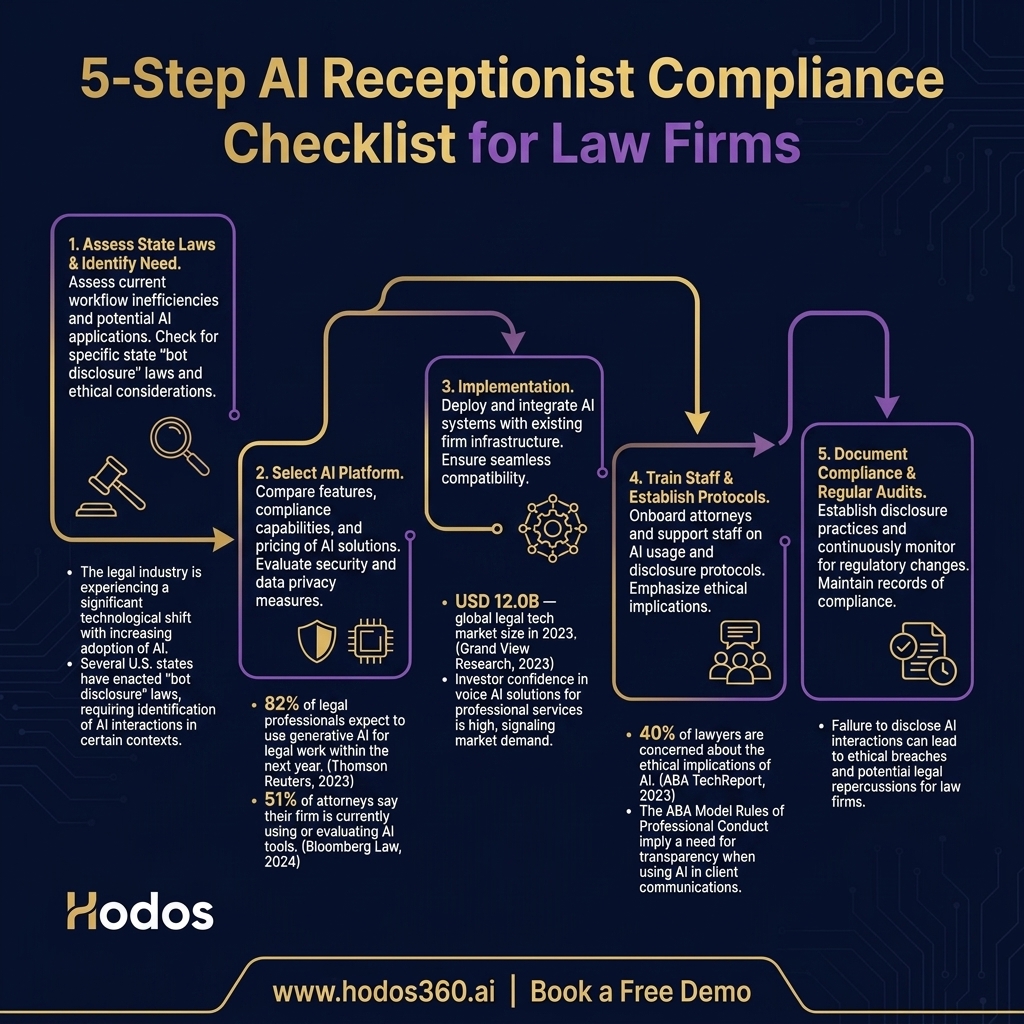
Some laws also specify that the disclosure must be easily understandable and not buried in terms of service or obscure menus. For law firms, this translates into carefully crafted scripts for their AI voice assistants that prioritize transparency. Additionally, many statutes include provisions for allowing the user to opt out of the AI interaction and speak with a human agent, underscoring the importance of providing an alternative pathway.
Moreover, these laws often stipulate that the disclosure should be made in the same language as the primary interaction, ensuring accessibility for diverse client bases. Learn more about Legal AI Revolution: Unlocking 2026 Firm Growth with HODOS. The legal definitions of what constitutes a 'bot' can also vary, requiring firms to consult legal counsel to determine if their specific AI voice assistants fall under the regulatory umbrella.
Penalties for non-compliance can range from monetary fines, which can quickly accumulate, to injunctions preventing the firm from using the non-compliant AI system. For example, a violation in California could incur a fine per instance, making widespread non-compliance a significant financial risk. Understanding these intricate details and ensuring that all required elements are in place is vital for maintaining legal integrity and avoiding costly legal challenges.
Ethical AI in Client Communication: Building Trust in a Digital Era
Beyond the letter of the law, the ethical dimension of AI receptionist disclosure is equally, if not more, critical for law firms. The attorney-client relationship is built on a foundation of trust, confidentiality, and open communication. Introducing an artificial intelligence into this sensitive dynamic without proper transparency can erode that trust, even if no specific law is violated.
The American Bar Association (ABA) Model Rules of Professional Conduct, particularly Rule 1.4 on Communication, emphasize the lawyer's duty to keep clients reasonably informed about the status of their matter and to explain a matter to the extent reasonably necessary to permit the client to make informed decisions.
While AI isn't explicitly mentioned, the spirit of this rule strongly suggests that clients should be aware of who or what they are communicating with, especially concerning a matter where their legal rights are at stake.
Consider the perspective of a potential client calling a law firm in distress, seeking urgent legal advice.
If they believe they are speaking to a human and later discover it was an AI voice assistant, their sense of betrayal could be profound. This lack of transparency can damage the firm's reputation, lead to negative reviews, and ultimately deter future clients. As AI voice assistants become more sophisticated, mimicking human empathy and conversational nuances, the ethical stakes only rise.
The challenge for law firms is to leverage the undeniable efficiencies of AI while safeguarding the human-centric nature of legal practice. This means not just making the required disclosure, but doing so in a way that is reassuring and transparent, fostering trust rather than suspicion.
Leading legal ethicists, such as Professor Deborah Rhode from Stanford Law School, have consistently highlighted the importance of maintaining professional integrity amidst technological advancements. Learn more about AI Website Builder: The Ultimate Guide for Law Firms. She argues that while technology can enhance access to justice, it must not undermine the core ethical duties lawyers owe their clients.
This perspective reinforces that ethical AI in client communication is not merely about avoiding fines but about preserving the fundamental values of the legal profession. Firms that proactively embrace transparent AI practices will distinguish themselves as leaders, demonstrating a commitment to both innovation and client welfare, a crucial differentiator in today's competitive legal market.
Moreover, the concept of informed consent extends to how clients interact with technology. Just as a client must consent to representation, they should be informed about the nature of their interactions with a firm's systems. This extends beyond initial contact; if an AI voice assistant is used for follow-up questions or status updates, ongoing transparency is equally important.
Firms must cultivate a culture where AI receptionist disclosure is seen as an opportunity to build trust, rather than a mere regulatory hurdle. By being upfront and clear, firms can educate clients about the benefits of AI-driven efficiency while reassuring them that human oversight and ethical considerations remain at the forefront of their operations.
This holistic approach ensures that artificial intelligence serves to strengthen, not weaken, the attorney-client bond.
Training and Transparency: Essential for Ethical AI
Achieving ethical AI in client communication requires a dual focus on robust training for both the AI system and the firm's human staff, coupled with unwavering transparency. For the AI itself, this means developing and deploying models specifically trained on legal-specific language and ethical guidelines, ensuring that disclosures are clear, concise, and delivered at the appropriate junctures.
The AI should be programmed to recognize when a conversation crosses into areas requiring human intervention, such as complex legal advice or highly sensitive personal matters, and to seamlessly escalate the call to a human attorney or paralegal. This intelligent routing is crucial for maintaining both ethical standards and operational efficiency, ensuring that the AI voice assistant acts as a helpful gatekeeper rather than a barrier.
Furthermore, law firm staff must be thoroughly trained on the capabilities and limitations of their AI voice assistants, as well as the firm's specific AI receptionist disclosure protocols. This includes understanding when and how the AI will disclose its identity, how to explain the AI's role to clients, and how to handle situations where a client expresses discomfort with AI interaction.
Learn more about Essential AI for Client Relationships: Future-Proofing Law Firms. Transparency also extends to the firm's website and marketing materials. A clear statement about the use of artificial intelligence in client interactions can preempt concerns and build trust from the outset. By embracing these principles, firms can ensure that their use of AI is not only legally compliant but also ethically sound, reinforcing their commitment to client welfare and professional integrity.
Operationalizing Compliance: Practical Steps for Law Firms
For law firms, moving from understanding bot disclosure laws to actively implementing compliance measures is a critical step. The first practical step involves conducting a comprehensive audit of all existing and planned AI voice assistants and other client-facing artificial intelligence tools. This audit should identify which systems interact with clients, what information they collect, and whether their current operational protocols align with both state laws and ethical best practices.
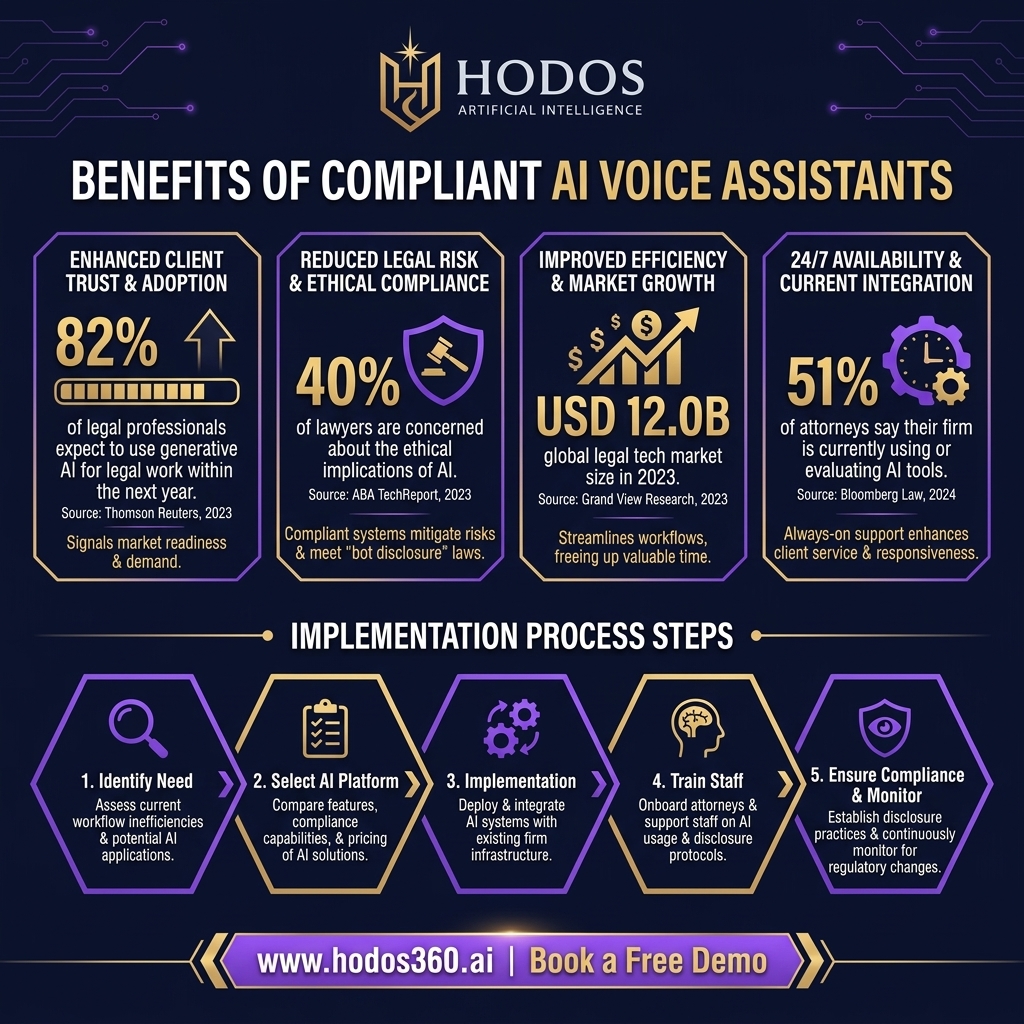
Firms must meticulously review their AI's scripts, prompts, and default responses to ensure that explicit AI receptionist disclosure is made at the earliest appropriate point in any interaction. This proactive assessment helps identify potential compliance gaps before they become legal liabilities.
Next, firms must develop and implement clear, consistent disclosure protocols.
This means more than just a pre-recorded message; it involves integrating disclosure into the very design of the AI interaction. For example, the AI voice assistant should be programmed to introduce itself as an AI at the beginning of every call or chat. This disclosure should be unambiguous, easily understood, and given in a prominent manner.
Firms should also establish clear escalation paths, ensuring that clients always have the option to speak with a human engineer or legal professional if they prefer. Documentation of these protocols and their implementation is also crucial for demonstrating due diligence in the event of a regulatory inquiry or legal challenge.
Training is paramount for both human staff and the artificial intelligence system itself. Learn more about Law Firm Mobile App Development: An Essential Blueprint for Growth. For human employees, this includes educating receptionists, paralegals, and attorneys on the firm's AI receptionist disclosure policy, the legal rationale behind it, and how to respond to client questions or concerns about AI interaction.
For the AI, continuous training and refinement are essential to ensure it accurately identifies when disclosure is necessary and delivers it effectively. This iterative process allows the AI to adapt to new legal nuances and client feedback, ensuring ongoing compliance. Firms should also integrate these compliance checks into their regular operational reviews, treating AI receptionist disclosure as an ongoing responsibility rather than a one-time setup.
Finally, firms should leverage legal technology platforms that are designed with compliance in mind. Platforms like HODOS 360, with its robust AI Voice Assistants service, offer features that facilitate AI receptionist disclosure and ethical client engagement. These systems can be configured with customizable disclosure prompts, intelligent call routing, and detailed analytics to track interactions and ensure adherence to regulations.
By partnering with providers who understand the unique legal and ethical landscape of AI, law firms can confidently deploy AI voice assistants for lead qualification, appointment booking, and 24/7 client support, knowing their technology is not only efficient but also fully compliant with evolving state laws.
This strategic approach ensures that the power of artificial intelligence is harnessed responsibly, making the firm's services more accessible and trustworthy.
Leveraging AI Voice Assistants for Compliant Growth
The goal isn't to shy away from AI, but to embrace it intelligently and compliantly. AI Voice Assistants offer immense potential for growth, allowing law firms to expand their reach and improve client service without scaling human staff at the same rate. By implementing clear AI receptionist disclosure and robust compliance protocols, firms can market their 24/7 availability and efficient lead qualification processes with confidence.
Clients appreciate transparency, and a firm that clearly states its use of AI, while emphasizing the benefits and human oversight, can actually build greater trust. This positions the firm as forward-thinking and committed to ethical innovation, making it more attractive to tech-savvy clients and those who value efficiency.
Furthermore, compliant AI voice assistants free up valuable human resources, allowing attorneys and paralegals to focus on complex legal work rather than routine inquiries. This not only improves internal efficiency but also enhances job satisfaction for legal professionals. When integrated into a broader AI Law Firm Management System, such as HODOS 360's offerings, these voice assistants become a seamless part of a comprehensive ecosystem that includes AI-powered legal workflows, AI-powered website building, and AI Marketing Platforms.
This holistic approach ensures that every aspect of the firm's operations, from initial client contact to case resolution, is optimized for both efficiency and ethical compliance, making the firm truly future-ready. The benefits are clearly available for those who implement them correctly.
The Future of Legal Client Engagement: Balancing Innovation and Responsibility
The journey of AI receptionist disclosure is emblematic of the broader challenges and opportunities facing the legal industry in the age of artificial intelligence. The $19.5 million investment in Pie AI highlights the undeniable momentum behind voice AI, but the accompanying regulatory discussions underscore the critical importance of responsible innovation.
Law firms that proactively address bot disclosure laws and integrate ethical considerations into their AI strategies will not only mitigate legal risks but also strengthen their client relationships and enhance their professional standing. The future of legal client engagement is not about choosing between human interaction and AI efficiency, but about intelligently combining both to deliver superior, trustworthy legal services.
As state laws continue to evolve and the sophistication of AI voice assistants grows, ongoing vigilance and adaptability will be required. Firms must stay informed about legislative changes, engage in continuous staff training, and regularly audit their AI systems for compliance. The goal is to create a seamless, transparent client experience where the power of artificial intelligence is leveraged to enhance accessibility and responsiveness, while always upholding the ethical duties and trust that are foundational to the legal profession.
By embracing this balanced approach, law firms can confidently navigate the digital frontier, ensuring that innovation serves justice and strengthens the attorney-client bond.

Key Takeaways and Next Steps
The rise of AI voice assistants in legal practice presents an exciting, yet complex, landscape. The recent funding success of Pie AI underscores the market's enthusiasm, but simultaneously highlights the urgent need for AI receptionist disclosure and adherence to evolving bot disclosure laws. For law firms, this means a proactive approach to compliance is no longer optional but essential.
Firms must audit their current AI usage, implement clear disclosure protocols, and provide continuous training for both their AI systems and human staff. By integrating ethical AI principles into every aspect of client communication, firms can build stronger trust, mitigate legal risks, and harness the full potential of artificial intelligence to drive growth and efficiency.
Don't let regulatory uncertainty hinder your firm's progress. Partner with HODOS 360 to navigate the future of legal tech responsibly. Book a free demo today.
Frequently Asked Questions
What are AI receptionist disclosure laws?+
AI receptionist disclosure laws are state-specific regulations that mandate businesses, including law firms, to inform clients when they are interacting with an artificial intelligence system rather than a human. These laws aim to ensure transparency and prevent deception, particularly in professional contexts where client trust and informed consent are paramount. California's AB 2905 is a prominent example, requiring clear disclosure at the outset of any bot interaction.
Why are these bot disclosure laws important for law firms?+
For law firms, these laws are crucial for several reasons: legal compliance, ethical practice, and maintaining client trust. Non-compliance can lead to significant fines, civil litigation, and reputational damage. Ethically, clients expect transparency, especially in sensitive legal matters. Disclosing AI interactions upholds professional responsibility and ensures clients make informed decisions about who or what they are communicating with, fostering a stronger attorney-client relationship.
Which states currently have AI bot disclosure laws?+
California's AB 2905 is a leading example, requiring disclosure for commercial and political bots. Other states like Washington and Nevada have also enacted or are considering similar legislation. The legal landscape is dynamic, with more states likely to introduce such laws as AI adoption grows. Law firms operating across different jurisdictions must stay updated on the specific requirements in each state where they serve clients.
How can law firms ensure compliance with AI receptionist disclosure?+
Law firms can ensure compliance by conducting an AI audit of all client-facing systems, implementing clear and conspicuous disclosure protocols (e.g., verbal statements at the start of interactions), and training both AI systems and human staff. Providing an easy option for clients to speak with a human agent is also essential. Documenting these procedures and regularly reviewing them helps maintain ongoing adherence to evolving regulations.
What are the ethical considerations for using AI voice assistants in client communication?+
Ethical considerations extend beyond legal compliance to maintaining client trust and professional integrity. The ABA Model Rule 1.4 emphasizes clear communication; deceiving clients about interacting with AI can erode this trust. Firms must ensure AI systems are used to enhance, not undermine, the human element of legal service. Transparency, the ability to escalate to a human, and respecting client preferences are key to ethical AI deployment.