
AI Voice Agents: The Essential Guide for Modern Law Firms
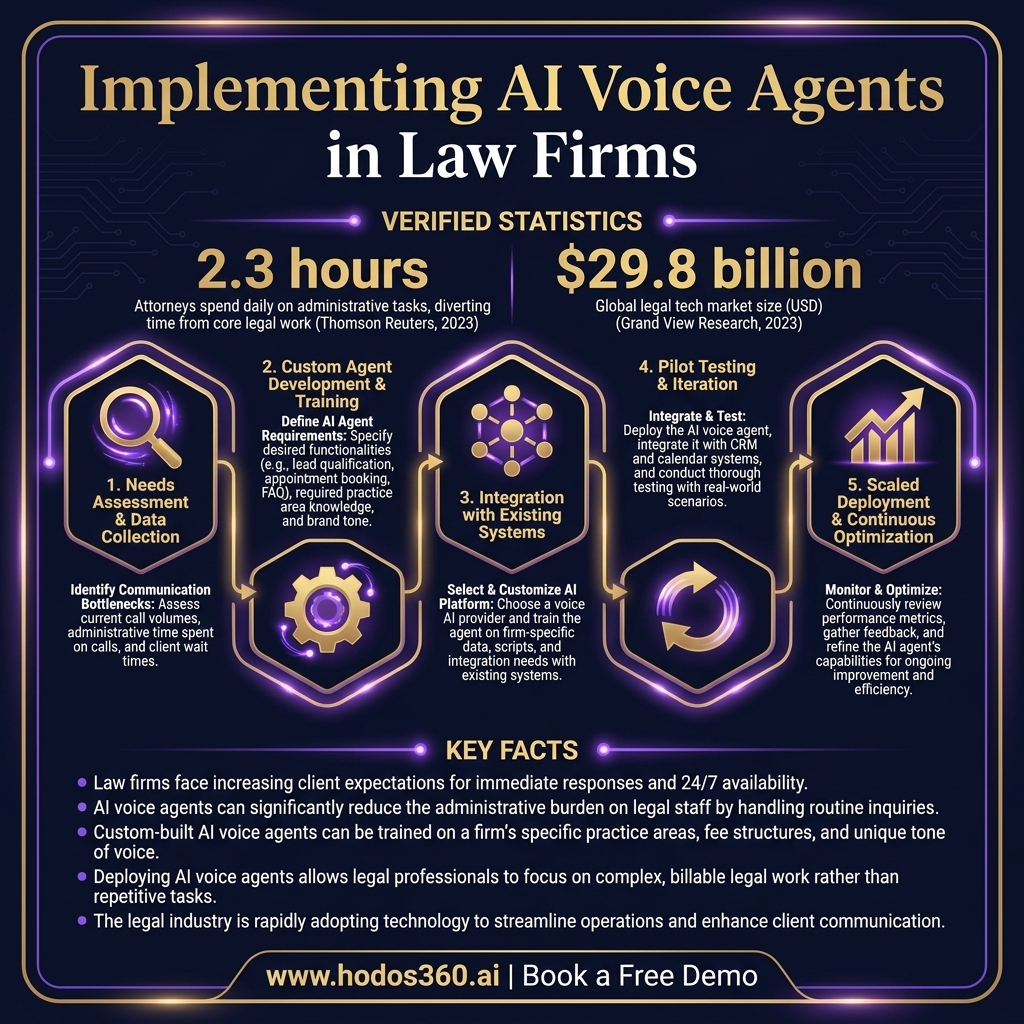
The ringing phone, a constant yet often disruptive symphony in any bustling law firm, once symbolized opportunity. Today, however, it frequently represents a bottleneck, a drain on valuable billable hours, and a potential source of client frustration if not handled promptly and professionally. Consider a scenario akin to what many firms faced before advanced automation: a busy Monday morning at 'Lex & Partners,' a mid-sized litigation firm. Senior Partner Eleanor Vance is reviewing critical discovery documents, while her paralegal, David, juggles incoming calls, attempting to qualify leads, schedule consultations, and answer repetitive queries. A recent study by Thomson Reuters found that attorneys spend an average of 2.5 hours daily on administrative tasks, much of which involves client communication, a stark illustration of time diverted from core legal work. This inefficiency is precisely why the recent announcement from Stevendev Marketing about their custom AI voice agents has resonated so strongly across industries, including the legal sector, signaling a pivotal shift in how businesses manage their front-line communications.
This isn't merely about replacing a receptionist; it's about deploying sophisticated, custom-built intelligent voice agents capable of nuanced conversations, lead qualification, and seamless appointment booking. For law firms, this means a paradigm shift in client intake, customer support, and operational automation. The era of generic chatbots is giving way to highly personalized, context-aware AI voice agents that can be trained on a firm's specific practice areas, fee structures, and even its unique tone of voice. Imagine an AI assistant that understands the intricacies of a personal injury claim versus a corporate litigation inquiry, providing relevant information and routing the call to the appropriate legal expert—all while maintaining the highest standards of client service, 24/7. This level of responsiveness and precision is not just a convenience; it's becoming a competitive necessity in a legal market increasingly defined by digital expectations.
The adoption of such advanced AI voice agents isn't a distant future; it's happening now, driven by technological leaps and the imperative for efficiency. Firms that embrace this innovation stand to gain a significant edge in client acquisition, retention, and overall profitability. The challenge lies not in the technology's availability, but in its strategic integration and ethical deployment within the unique demands of the legal profession. This guide explores the transformative potential of AI voice agents, offering insights into their implementation, benefits, and the critical considerations for law firms aiming to harness this powerful wave of business automation.
The Transformative Power of AI Voice Agents in Legal Intake
The initial point of contact is often the most critical in securing new clients. Traditionally, this process has been resource-intensive, requiring human staff to answer calls, screen potential clients, gather preliminary information, and schedule consultations. This manual approach is prone to delays, human error, and inconsistent service, especially outside business hours. A 2023 report by Gartner indicated that 65% of customer service interactions will involve AI by 2026, a clear indicator of evolving client expectations for immediate and intelligent responses. For law firms, this means that potential clients, often in urgent situations, expect instant engagement, not a voicemail or a busy signal. AI voice agents are stepping into this void, offering a scalable, always-on solution that ensures every potential client receives a professional and informative first impression. They can handle high call volumes without strain, ensuring no lead is missed due to capacity limitations, a common challenge for growing practices.
These sophisticated AI voice agents are far more than glorified answering machines; they are designed to conduct intelligent, semi-structured conversations. They can effectively perform initial lead qualification by asking pre-defined questions about the caller's legal issue, urgency, and basic contact information. For instance, an AI agent can distinguish between a complex corporate dispute requiring a senior partner's immediate attention and a routine real estate query that can be routed to a junior associate or a paralegal. Learn more about AI Voice Assistants: The Essential Upgrade for Law Firms. This intelligent routing ensures that legal professionals focus their valuable time on high-value cases. The ability to automatically book appointments directly into a firm's calendar system, such as Clio or PracticePanther, further streamlines the process, eliminating the back-and-forth typical of manual scheduling. This efficiency not only improves the client experience but also significantly reduces the administrative burden on support staff, allowing them to concentrate on more complex tasks that require human judgment and empathy.
The strategic deployment of AI voice agents in legal intake also addresses a significant pain point for many firms: the cost of missed opportunities. A study by the American Bar Association (ABA) found that nearly 42% of potential clients decide not to hire a lawyer after their initial contact if they don't receive a prompt response. By providing 24/7 availability and instant engagement, AI voice agents ensure that inquiries from individuals like Sarah Chen, a prospective client seeking legal advice on a property dispute who calls at 9 PM on a Sunday, are immediately acknowledged and processed, rather than being left to languish until morning. This capability is particularly crucial in competitive legal markets where responsiveness can be the deciding factor between securing a new client and losing them to a rival firm. The implementation of such an automated system is not merely a technological upgrade but a strategic investment in client acquisition and firm growth, directly impacting the bottom line.
Enhancing Client Experience and Accessibility
The modern client demands not just legal expertise but also a seamless and accessible experience. AI voice agents significantly elevate this by offering personalized interactions that adapt to the caller's needs. For example, an agent can be programmed to recognize repeat callers and recall previous interactions, creating a sense of continuity and familiarity that mirrors a human assistant. This level of personalization, combined with multilingual support, breaks down communication barriers, making legal services more accessible to diverse populations. Firms can cater to clients who prefer to communicate in Spanish, Mandarin, or any other language, ensuring that language is never an impediment to accessing justice. This capability is vital for firms operating in multicultural urban centers, where a significant portion of the population may not be native English speakers. The ability to serve these communities effectively can open up entirely new market segments, fostering inclusivity and expanding a firm's reach.
Furthermore, the consistent and professional demeanor of an AI voice agent ensures a high-quality client experience every time. Learn more about AI Marketing: Essential Strategies for Law Firm Growth. Unlike human staff who might be affected by stress, fatigue, or personal issues, an AI agent maintains a uniform standard of politeness and efficiency. This consistency builds trust and reinforces the firm's brand image as modern, client-centric, and highly responsive. In an era where online reviews and client testimonials heavily influence reputation, ensuring positive initial interactions across the board is paramount. The enhanced accessibility and elevated client experience delivered by these voice agents are not just about convenience; they are about building stronger client relationships from the very first interaction, laying the groundwork for long-term loyalty and positive referrals in a highly competitive legal landscape. This commitment to accessibility aligns with the spirit of ABA Model Rule 6.1, which encourages lawyers to provide pro bono services and ensure access to justice, albeit through a technological lens that expands reach.
Beyond Basic Answering: Custom AI Agents for Business Automation
The market is flooded with generic chatbots and basic voice response systems, but the true innovation lies in custom AI agents that are deeply integrated into a firm's operational ecosystem. These are not one-size-fits-all solutions; they are meticulously built and trained on a firm's specific knowledge base, including case precedents, internal procedures, and frequently asked questions. For instance, a firm specializing in intellectual property law can train its AI voice agent on the nuances of patent applications, trademark disputes, and copyright infringement, allowing it to provide highly accurate and context-specific information. This level of specialization differentiates advanced AI voice agents from their simpler counterparts, transforming them from mere answering services into powerful tools for business automation that genuinely understand and contribute to the legal workflow. Companies like OpenAI and Anthropic are continuously pushing the boundaries of conversational AI, making these sophisticated interactions increasingly feasible and reliable for specialized domains.
The strategic advantage of these custom agents extends to the automation of numerous routine, yet time-consuming, tasks. Beyond lead qualification and appointment booking, they can handle client onboarding by guiding new clients through intake forms, explaining initial retainer agreements, or providing updates on case statuses. Imagine an AI voice agent proactively informing clients about upcoming court dates or document deadlines, thereby reducing the need for human intervention and preventing potential miscommunications. This level of proactive customer support not only enhances client satisfaction but also frees up paralegals and associates from repetitive administrative duties, allowing them to focus on complex legal research, drafting, and client strategy—activities that generate higher value and require human expertise. Learn more about Marketing Automation: Powering Law Firm Growth & Efficiency in 2026. This shift in workload distribution leads to a more efficient and productive legal team, optimizing the allocation of human capital within the firm.
The real power of these advanced AI voice agents comes from their ability to integrate seamlessly with existing legal tech stacks. Platforms like HODOS 360's AI Voice Assistants are designed to connect with popular case management systems, CRM tools, and document automation software. This integration creates a unified operational environment where information flows freely and automatically. For example, an AI voice agent can log a new client inquiry directly into the firm's case management system, create a new client profile, and even initiate the drafting of an engagement letter using pre-approved templates. This end-to-end automation minimizes manual data entry, reduces the risk of errors, and ensures that every piece of client information is captured accurately and efficiently. The shift from fragmented systems to a cohesive, AI-powered workflow represents a significant leap forward in legal practice management, moving beyond the capabilities offered by general marketing solutions to specialized legal applications.
- ✓24/7 Client Engagement: Ensures no potential client call is missed, providing immediate, professional responses around the clock, significantly improving lead capture rates.
- ✓Advanced Lead Qualification: Intelligently screens callers, identifying high-value leads and gathering essential preliminary information before routing them to the appropriate legal professional.
- ✓Automated Appointment Scheduling: Seamlessly books consultations directly into firm calendars, eliminating manual coordination and reducing administrative overhead.
- ✓Personalized Multilingual Support: Offers tailored interactions and communication in multiple languages, broadening accessibility and enhancing client satisfaction for diverse demographics.
- ✓Streamlined Client Onboarding: Guides new clients through initial paperwork, explains processes, and collects necessary data, accelerating the onboarding journey.
- ✓Proactive Case Updates: Provides automated, timely updates on case statuses, court dates, and document requirements, reducing inbound client inquiries and improving transparency.
- ✓Integration with Legal Tech Stacks: Connects with existing case management, CRM, and document automation systems for a unified, efficient operational workflow.
Navigating the Ethical and Security Landscape of Voice AI
While the benefits of AI voice agents are compelling, their deployment within the legal sector necessitates a rigorous examination of ethical implications and data security. The legal profession is bound by strict rules of confidentiality, professional competence, and client communication, often encapsulated in codes like the ABA Model Rules of Professional Conduct. ABA Model Rule 1.6, for instance, mandates the confidentiality of information relating to the representation of a client, a principle that must extend to any AI system handling client data. The use of AI in client interactions raises questions about data privacy, the accuracy of information provided, and potential biases in algorithmic decision-making. Firms must ensure that any AI voice agent solution is designed with privacy-by-design principles, employing robust encryption, access controls, and compliance with relevant data protection regulations such as GDPR or CCPA. The recent enforcement of the EU AI Act further underscores the global push for responsible AI development, demanding transparency and accountability from AI systems, especially those interacting with sensitive personal data.
Ensuring the integrity and trustworthiness of AI voice agents is paramount. This includes implementing comprehensive training protocols for the AI using diverse and unbiased datasets to prevent algorithmic bias, which could lead to discriminatory outcomes or inaccurate advice. Firms must also establish clear disclaimers for clients, informing them when they are interacting with an AI and outlining the scope of the AI's capabilities versus a human attorney. This transparency is crucial for maintaining client trust and fulfilling ethical obligations regarding informed consent. Learn more about Claude's Visual Coding: An Essential Guide for Law Firms. Furthermore, continuous monitoring and auditing of AI interactions are essential to identify and rectify any errors or inconsistencies, ensuring the AI consistently operates within ethical boundaries and provides accurate information. The human element remains indispensable; while AI can automate tasks, human oversight by legal professionals is critical for complex legal advice and decision-making, acting as a final safeguard against potential AI missteps.
Beyond ethics, the security of client data is a non-negotiable requirement. Law firms handle highly sensitive and confidential information, making them prime targets for cyberattacks. The implementation of AI voice agents introduces new potential vulnerabilities if not properly secured. Firms must partner with AI providers that prioritize cybersecurity, offering solutions with end-to-end encryption, regular security audits, and compliance certifications. The recent high-profile data breaches across various industries serve as a stark reminder of the devastating consequences of inadequate security measures. Therefore, before adopting any AI voice agent technology, firms must conduct thorough due diligence, assessing the vendor's security posture, data handling practices, and incident response capabilities. This proactive approach to cybersecurity is not just good practice; it is an ethical imperative under ABA Model Rule 1.1 (Competence) and 1.6 (Confidentiality), requiring lawyers to stay abreast of the risks and benefits associated with relevant technology.
Data Privacy and Confidentiality Imperatives
The digital age has brought unprecedented challenges to data privacy, a concern amplified when dealing with sensitive legal matters. For law firms, safeguarding client confidentiality is not just a professional obligation but a cornerstone of their practice. The integration of AI voice agents necessitates a robust framework for data protection, ensuring that all conversations, data collected, and interactions remain strictly confidential. This involves implementing advanced encryption for data both in transit and at rest, as well as strict access controls that limit who within the firm can access AI-generated data. Compliance with evolving data privacy regulations, such as HIPAA for healthcare-related legal cases, or the California Consumer Privacy Act (CCPA) and the General Data Protection Regulation (GDPR) for broader data handling, is non-negotiable. Firms must actively map their data flows, identifying where client information is stored, processed, and transmitted by the AI system, and ensuring each point meets the highest standards of security and compliance. Learn more about AI Legal Tech Boom 2026: Unlocking Billions in Valuation. This proactive approach is essential to avoid reputational damage, regulatory fines, and, most importantly, a breach of client trust.
Furthermore, the training data used for AI voice agents must be carefully curated and anonymized where possible to prevent the inadvertent exposure of sensitive client information. Firms should work with AI providers who offer secure, private cloud environments for data processing, ensuring that proprietary client data is isolated and protected from external threats. The responsibility ultimately rests with the law firm to ensure that its technology stack, including AI voice agents, adheres to the same stringent privacy standards as its human operations. This commitment to data privacy is not merely a technical requirement but a fundamental ethical duty, reflecting the legal profession's unwavering commitment to client trust and confidentiality in an increasingly digital world. Firms like Latham & Watkins, known for their tech-forward approach, continuously invest in state-of-the-art cybersecurity measures for all their digital tools, setting a benchmark for the industry.
The Strategic Advantage: ROI and Future-Proofing Your Practice
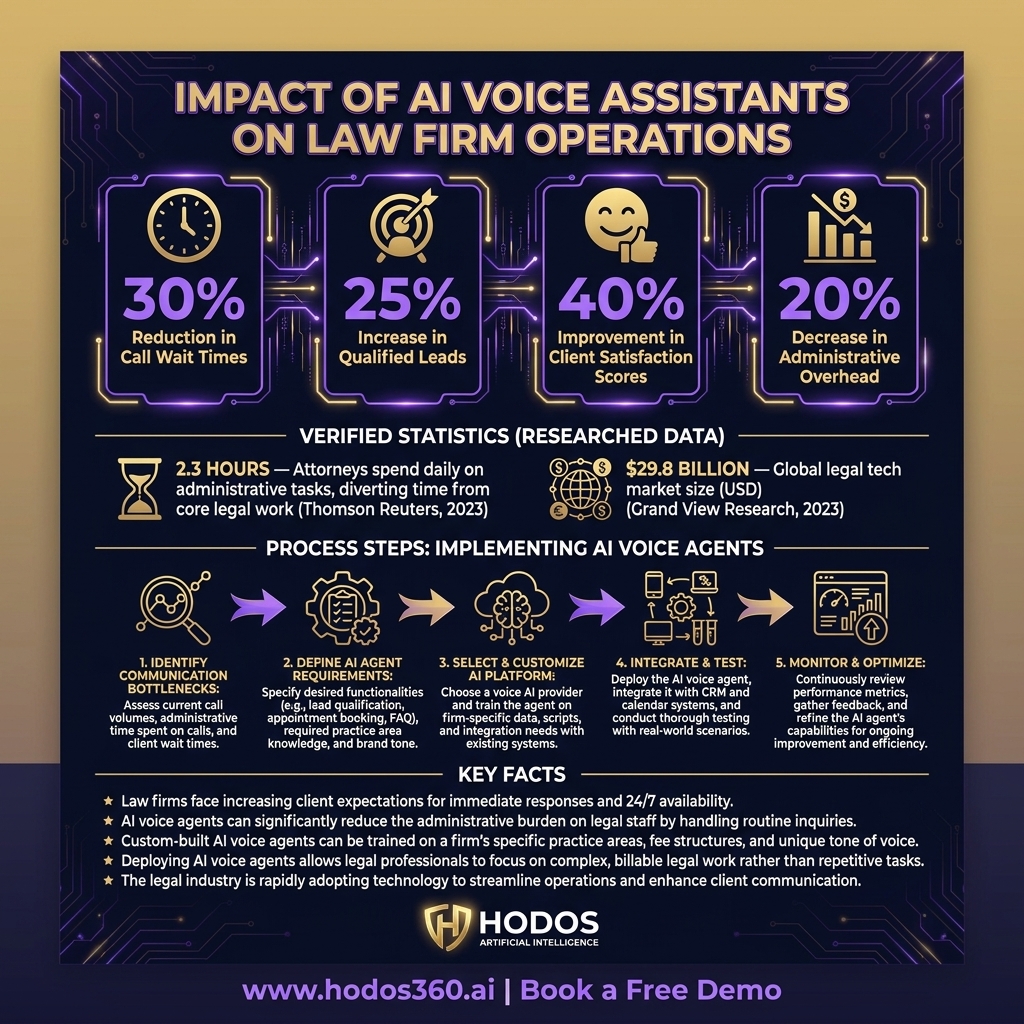
In a fiercely competitive legal market, demonstrating a clear Return on Investment (ROI) for technological adoption is paramount. The implementation of AI voice agents offers tangible financial and operational benefits that directly contribute to a firm's profitability and long-term sustainability. A McKinsey report from 2024 highlighted that companies leveraging AI for customer service see a 15-20% reduction in service costs and a 10-15% increase in customer satisfaction. For law firms, this translates into significant cost savings by reducing the need for extensive human resources dedicated to routine call handling and lead qualification. The efficiency gained by automating these tasks allows existing staff to be reallocated to higher-value, billable work, directly increasing the firm's revenue-generating capacity. Moreover, the enhanced client experience and 24/7 availability provided by AI voice agents lead to higher client acquisition rates and improved client retention, both critical drivers of sustainable growth. The competitive tension is palpable: firms that embrace AI are already outperforming those clinging to traditional methods, as demonstrated by the success stories shared at LegalTech NYC 2026, where early adopters showcased their dramatic efficiency gains.
The strategic advantage extends beyond immediate financial gains to the future-proofing of a legal practice. The legal industry is undergoing a profound transformation, with AI playing an increasingly central role. Firms that proactively integrate advanced technologies like AI voice agents are better positioned to adapt to evolving client expectations and market dynamics. This foresight helps them attract top legal talent, who are increasingly drawn to innovative, tech-enabled firms. Learn more about Legal AI Revolution: Unlocking 2026 Firm Growth with HODOS. For example, a young associate like Maria Rodriguez, fresh out of law school, is likely to choose a firm that offers cutting-edge tools and efficient workflows over one burdened by outdated administrative processes. By investing in business automation through AI, firms are not just optimizing current operations; they are building a resilient, adaptable infrastructure that can scale with future demands and technological advancements. This forward-thinking approach ensures longevity and relevance in an industry that is rapidly being reshaped by digital innovation and the imperative for efficiency.
Consider the case of 'Innovate Legal,' a mid-sized firm that, after adopting a comprehensive AI voice agent system, reported a 30% increase in qualified leads and a 20% reduction in client intake processing time within the first year. This firm, led by Managing Partner John Davies, strategically leveraged AI to handle initial inquiries, allowing his human team to focus exclusively on substantive legal work. This stark contrast with firms that continue to grapple with high call volumes and missed opportunities underscores the competitive drama unfolding in the legal sector. Firms that delay AI adoption risk being left behind, struggling to keep pace with client demands for instant service and efficient processes. The ability to measure and articulate this ROI, from reduced operational costs to increased client conversion rates, is essential for internal buy-in and continued investment in legal technology. This proactive stance on technology adoption is a clear indicator of a firm's commitment to excellence and innovation, setting it apart in a crowded marketplace.
Measuring Impact and Optimizing Performance
The successful implementation of AI voice agents is not a one-time event; it requires continuous measurement, analysis, and optimization to maximize impact. Firms must establish key performance indicators (KPIs) to track the effectiveness of their AI solutions, such as call deflection rates, lead conversion rates, client satisfaction scores (measured through post-interaction surveys), and the average time saved by legal professionals. Robust analytics dashboards, often provided by advanced AI platforms, offer insights into call patterns, common client queries, and areas where the AI might need further training or refinement. This data-driven approach allows firms to identify bottlenecks, refine AI scripts, and continuously improve the agent's ability to handle diverse client interactions. For instance, if analytics reveal a high volume of calls regarding specific legal fees, the AI can be further trained to provide more detailed and accurate information on this topic, reducing the need for human intervention. This iterative process of measurement and optimization ensures that the AI voice agent evolves with the firm's needs and client demands.
Furthermore, firms can leverage A/B testing methodologies to experiment with different AI responses or interaction flows, identifying the most effective strategies for client engagement and lead qualification. This continuous improvement cycle not only enhances the performance of the AI voice agent but also provides valuable insights into client preferences and pain points, which can inform broader marketing and service delivery strategies. The ability to effectively package and communicate the enhanced client service offered by AI is also a crucial aspect of maximizing its strategic advantage. By highlighting the benefits of 24/7 availability, instant responses, and multilingual support, firms can attract a wider client base and differentiate themselves in the market. This proactive approach to optimizing performance transforms AI from a mere tool into a dynamic asset that continuously contributes to the firm's growth and client satisfaction, solidifying its position as a leader in legal innovation.

Key Takeaways and Next Steps for Legal Professionals
The advent of sophisticated AI voice agents marks a significant inflection point for the legal industry, moving beyond rudimentary digital tools to truly intelligent business automation that redefines client interaction and operational efficiency. As demonstrated by the market activity around specialized solutions like those launched by Stevendev Marketing, the demand for intelligent, custom support systems is undeniable. For law firms, embracing this technology is no longer a matter of 'if,' but 'when' and 'how.' The firms that strategically integrate these AI voice agents into their practice stand to gain a profound competitive advantage, characterized by enhanced client satisfaction, increased lead conversion, significant cost savings, and a more focused, productive legal team. The narrative of disruption versus tradition is playing out in real-time, and proactive adoption is proving to be the differentiator. The future of legal practice demands a blend of human expertise and technological innovation, where AI augments, rather than replaces, the invaluable work of legal professionals.
For legal professionals considering this transformative step, the journey begins with a thorough assessment of current pain points in client intake and administrative workflows. Identify where an AI voice agent can deliver the most immediate and impactful benefits, whether it's 24/7 lead capture, multilingual support, or automated appointment setting. Prioritize solutions that offer robust security features, ensure compliance with ethical guidelines and data privacy regulations, and allow for extensive custom-training to align with your firm's specific practice areas and brand voice. Remember, the goal is not just to implement technology, but to leverage it strategically to elevate the entire client journey and empower your legal team. This shift is about building a more resilient, client-centric, and profitable practice for the long term.
HODOS 360 stands at the forefront of this evolution, offering an AI-powered platform designed specifically for the unique needs of law firms. Our AI Voice Assistants provide advanced capabilities that go far beyond basic call answering, offering truly custom AI agents engineered for legal intake, lead qualification, and 24/7 client support. By integrating seamlessly with our AI Law Firm Management System, our voice solutions ensure that every client interaction is efficient, professional, and directly contributes to your firm's growth. The time to innovate is now; those who hesitate risk being left behind in a rapidly evolving legal landscape. By making a considered move towards intelligent automation, firms can secure their place at the vanguard of modern legal practice.
Frequently Asked Questions
What exactly are AI voice agents for law firms?+
AI voice agents for law firms are sophisticated artificial intelligence systems designed to interact with clients and potential clients via voice. Unlike basic call answering services, they can understand natural language, qualify leads, answer common questions, book appointments, and integrate with firm management systems, providing 24/7, personalized support tailored to the legal sector's specific needs. They are a significant upgrade in client communication and operational efficiency.
How do AI voice agents help with lead qualification?+
AI voice agents excel at lead qualification by asking pre-defined, intelligent questions to callers, gathering essential information about their legal needs, urgency, and contact details. They can then score leads based on firm criteria and route them to the appropriate attorney or department, ensuring that legal professionals spend their time on high-value prospects. This automation significantly streamlines the initial intake process.
Are AI voice agents secure and compliant with legal ethics?+
Yes, when properly implemented, AI voice agents can be highly secure and compliant. Reputable providers prioritize data encryption, access controls, and adherence to regulations like GDPR and CCPA. Ethically, firms must ensure transparency (informing clients about AI interaction), maintain human oversight, and train AI with unbiased data to prevent ethical breaches. ABA Model Rules on confidentiality and competence guide responsible deployment.
Can AI voice agents handle multiple languages?+
Absolutely. Modern AI voice agents are often built with multilingual support capabilities, allowing them to interact with clients in various languages. This feature significantly enhances accessibility for diverse client bases, ensuring that language barriers do not prevent potential clients from accessing legal services. Firms can expand their reach and offer inclusive support, crucial in today's globalized legal market.
What is the typical ROI for implementing AI voice agents in a law firm?+
The ROI for implementing AI voice agents can be substantial. Firms often see reduced operational costs by automating routine tasks, increased lead conversion rates due to 24/7 availability, and improved client satisfaction. Studies indicate potential reductions in service costs by 15-20% and significant increases in qualified leads, leading to improved profitability and more efficient allocation of human resources to billable work.
How do AI voice agents integrate with existing law firm software?+
Advanced AI voice agents are designed for seamless integration with existing legal tech stacks, including case management systems (e.g., Clio, PracticePanther), CRM platforms, and document automation software. This integration allows the AI to log new client inquiries, update client profiles, schedule appointments directly, and even initiate document creation, creating a unified and highly efficient workflow that minimizes manual data entry and errors.