

Essential AI Web Development: DXP Strategy for Law Firms
For years, many law firms approached their digital presence with a 'set it and forget it' mentality, relying on static websites that served more as online brochures than dynamic engagement platforms. This traditional approach, while once sufficient, has become a significant liability in an increasingly competitive and digitally-native market.
The chasm between firms with cutting-edge digital strategies and those clinging to outdated methods is widening, creating a palpable tension within the legal sector. Firms like Wilson Sonsini Goodrich & Rosati, known for their tech-forward approach, have long understood the imperative of a robust online presence, while many mid-sized and smaller firms grapple with the complexities of digital transformation.
The challenge isn't just about having a website; it's about crafting an immersive, responsive, and intelligent digital experience that anticipates client needs and drives engagement—a challenge that new advancements in AI and Digital Experience Platforms (DXP) are uniquely positioned to address.
A groundbreaking development recently reported by Newswire.com highlights this paradigm shift: Oshyn's launch of its MCP Server, which brings no-cost DXP strategy tools directly to AI assistants. This isn't just another software update; it's a fundamental change in how digital strategy is conceived and executed.
Imagine a future where your firm’s AI assistant, instead of merely scheduling appointments, can tap into a vast repository of DXP best practices, analyze your website’s performance, and suggest real-time optimizations for client acquisition and retention. This innovation, spearheaded by companies like Oshyn, whose CEO, Diego M. Learn more about AI SEO Lead Generation: Essential Strategies for Law Firms.
Rebosio, has consistently advocated for more accessible digital transformation tools, democratizes sophisticated digital experience management, making it available to firms that might not have the resources for a dedicated DXP team. It signals a future where an integrated approach to AI web development and DXP is not just an advantage, but a necessity, particularly for law firms navigating complex client journeys and regulatory landscapes.
The implications for law firms are profound. This convergence of AI and DXP strategy tools promises to bridge the gap between aspirational digital goals and actionable implementation. It means moving beyond basic SEO and content marketing to a holistic, data-driven approach where every client touchpoint, from initial search to case resolution, is optimized for maximum impact.
Learn more about Local SEO: Essential Strategies for Law Firm Web Development. As the legal industry continues its rapid embrace of technology, evidenced by the significant investments in legal tech startups like Harvey AI (backed by Sequoia Capital and integrated by firms like Allen & Overy), the ability to leverage intelligent DXP for AI web development will differentiate market leaders from those left behind.
This article will delve into how these advancements are reshaping the digital frontier for law firms, offering a comprehensive guide to understanding and implementing a future-proof DXP strategy powered by AI.
The Dawn of Agentic DXP: A Paradigm Shift for Digital Presence
The concept of Digital Experience Platforms (DXP) has been evolving for over a decade, moving from simple Content Management Systems (CMS) to integrated suites that manage customer journeys across multiple touchpoints. However, the introduction of 'agentic' capabilities, as highlighted by Oshyn’s MCP Server, marks a significant leap.
Agentic AI refers to systems that can autonomously understand goals, plan actions, execute them, and learn from the outcomes, often without constant human intervention. When these capabilities are integrated with DXP tools, they transform digital strategy from a reactive process into a proactive, self-optimizing engine.
This shift is critical for law firms where client acquisition often begins with a specific legal query online, requiring instant, relevant, and personalized responses. Learn more about AI Voice Platform: Essential for Modern Legal Operations. Historically, firms would rely on web developers and marketing teams to manually analyze data and implement changes.
Now, an AI assistant, leveraging DXP strategy tools, can analyze user behavior, identify friction points in the client intake process, and even suggest A/B tests for landing pages, all in real-time. This level of automation and intelligence dramatically reduces the time and resources traditionally required to maintain a competitive online presence.
This new era of DXP, often referred to as 'DXP 3.0' by industry analysts like Gartner, goes beyond merely aggregating tools. It focuses on intelligent orchestration and personalization at scale. For a law firm, this means an AI-powered website that can dynamically adjust its content and calls-to-action based on a visitor's geographic location, search history, or even implied legal need.
For example, a visitor searching for 'divorce lawyer California' might immediately see localized content, relevant attorney profiles, and a direct booking option, while another searching for 'corporate litigation firm NYC' receives an entirely different, tailored experience. Learn more about OpenAI Codex: Essential Guide to Faster Legal Web Development.
This level of customization, previously only accessible to large enterprises with massive budgets, is now becoming democratized through platforms that integrate AI assistants with DXP strategy tools. The competitive edge lies in not just having a digital presence, but in having one that is intelligently responsive and constantly learning, mimicking the intuitive interaction clients expect in a world shaped by platforms like Netflix and Amazon.
The pressure is on for law firms to adopt these digital experience platform innovations or risk being outmaneuvered by more agile competitors.
The strategic implications extend to internal operations as well. Consider the efficiency gains in document automation, client intake, and case management when an AI assistant, informed by DXP insights, can pre-populate forms, route inquiries to the correct department, and even suggest relevant legal precedents based on client interactions.
This holistic approach to digital strategy, where marketing, client service, and operational efficiency are seamlessly integrated, is what the new wave of DXP offers. Companies like Adobe, Salesforce, and Sitecore have been leading the DXP market, but the integration of no-cost strategy tools directly into AI assistants, as Oshyn launches with its MCP server, changes the accessibility landscape entirely.
Learn more about AI Lead Generation: The Ultimate Guide to Smarter Law Firm Growth. It pushes firms to rethink their entire digital ecosystem, moving away from fragmented tools towards a unified, intelligent platform. This isn't just about a better website; it's about a smarter, more efficient, and ultimately more profitable law firm.
The narrative of disruption vs. tradition is particularly acute here. Law firms that have historically resisted significant tech investments often find themselves at a disadvantage, losing potential clients to firms with more sophisticated AI web development and client engagement capabilities. The real drama unfolds in the market, where firms embracing these tools are seeing demonstrably higher client conversion rates and operational efficiencies.
Learn more about AI Marketing: The Ultimate Guide for Law Firms. According to a 2024 report by the Thomson Reuters Institute, law firms that have adopted advanced AI tools for client-facing operations reported a 15% increase in new client acquisition compared to those relying on traditional methods.
This data underscores the critical need for law firms to not only understand DXP but to actively integrate AI-powered strategy into their core digital operations. The future of client acquisition and retention in the legal sector is inextricably linked to the intelligent orchestration of digital experiences, making proactive engagement with these advancements non-negotiable.
From Static Sites to Dynamic Digital Experiences: Law Firm Evolution
The journey of law firm websites has been a slow but steady evolution. From rudimentary online listings in the early internet days to brochure-ware sites of the 2000s, and then to content-rich blogs and SEO-optimized platforms in the 2010s, each phase aimed to better serve a digitally-savvy clientele.
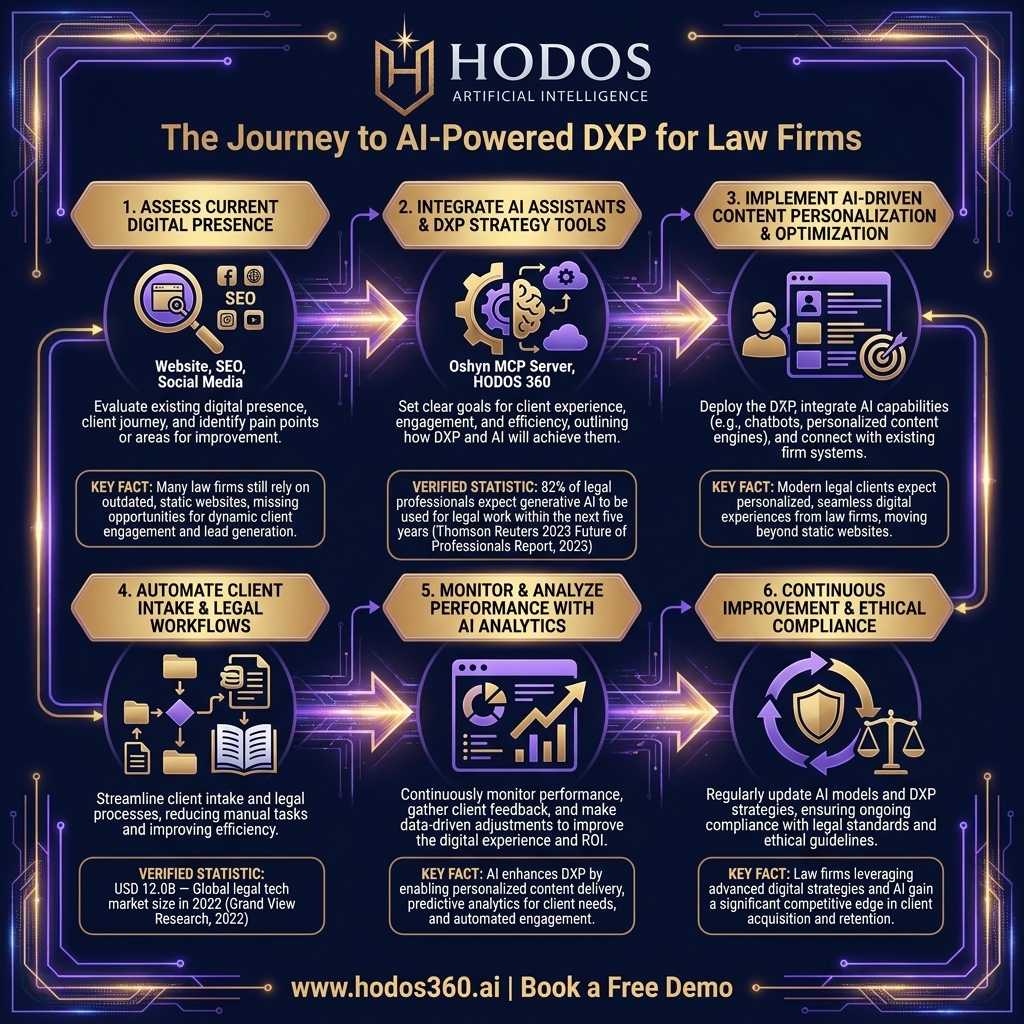
However, the current shift towards dynamic, AI-powered digital experience platform capabilities represents a quantum leap rather than a gradual progression. Law firms are no longer just publishing content; they are orchestrating personalized journeys for each prospective client. This involves not only responsive design and intuitive navigation but also predictive analytics, real-time personalization, and seamless integration with client relationship management (CRM) systems.
The goal is to create a digital environment that feels bespoke, anticipates questions, and guides users effortlessly towards their legal solutions. This sophisticated approach directly addresses the increasingly high expectations of modern clients who are accustomed to hyper-personalized experiences across all digital touchpoints in their daily lives.
Consider the case of a prominent intellectual property firm, 'Innovate Legal,' which partnered with a leading AI web development platform to overhaul its digital presence. Prior to the overhaul, Innovate Legal's website, while professional, offered a generic experience. Post-implementation of an AI-driven DXP, their website now uses machine learning to analyze visitor behavior, identifying patterns that indicate interest in specific patent law areas or trademark disputes.
The site then dynamically surfaces relevant attorney bios, case studies, and thought leadership articles, often before the visitor even searches for them. This proactive personalization has led to a significant increase in qualified leads and a reduction in bounce rates. John Chen, the managing partner at Innovate Legal, noted at LegalTech NYC 2026, "Our previous website was a static billboard; now it's a living, breathing concierge.
The shift has been transformative for our client engagement and, frankly, our bottom line." This anecdote underscores the profound impact of moving beyond mere online presence to a genuinely interactive and intelligent digital experience.
This transformation isn't without its challenges, particularly regarding data privacy and ethical considerations. The American Bar Association's Model Rule 7.1, concerning communications about a lawyer's services, and various state bar ethics opinions on targeted advertising, require careful consideration when implementing highly personalized AI web development strategies.
Firms must ensure their DXP solutions are not only powerful but also compliant, maintaining transparency about data usage and respecting client privacy. This tension between leveraging cutting-edge technology for competitive advantage and adhering to stringent ethical guidelines creates a complex landscape for law firms. However, the market demands innovation, and firms that can skillfully navigate this balance, often through robust internal compliance protocols and partnerships with ethical AI providers, will emerge as leaders.
The investment in a sophisticated DXP strategy must therefore include a strong commitment to ethical AI deployment and data governance, ensuring that personalization never compromises trust.
The shift from static to dynamic also encompasses mobile responsiveness and multi-channel integration. In an era where a significant portion of legal inquiries originate from mobile devices, a DXP ensures that the client experience is seamless across smartphones, tablets, and desktops. Furthermore, it integrates with social media platforms, email marketing, and even AI voice assistants to provide a consistent brand message and client journey.
This holistic approach, often facilitated by a centralized server or a suite of integrated tools, ensures that a law firm's digital footprint is cohesive and impactful across all mediums. The days of treating a website, social media, and email as disparate entities are over. The modern client expects a unified experience, and DXP, especially when augmented by AI, is the architecture that makes this possible, driving higher engagement and conversion rates, as evidenced by a recent McKinsey report indicating that companies with strong DXP capabilities see up to a 10-15% increase in customer lifetime value.
Key Components of a Modern Law Firm DXP
- ✓Content Management System (CMS): A robust, flexible platform for creating, publishing, and managing all digital content, integrated with AI for content generation and optimization.
- ✓Customer Relationship Management (CRM): Seamless integration to track client interactions, manage leads, and personalize communication, often enhanced by AI for predictive analytics.
- ✓Marketing Automation: Tools for email campaigns, social media scheduling, and targeted advertising, with AI automating segmentation and campaign optimization.
- ✓Analytics & Personalization: Advanced data analytics to understand user behavior, enabling real-time content delivery and tailored experiences for each visitor.
- ✓Search Engine Optimization (SEO) Tools: AI-powered SEO for keyword research, content optimization, and technical SEO, ensuring high visibility in search results.
- ✓Mobile & Multi-Channel Delivery: Ensuring consistent and optimized experiences across all devices and digital touchpoints, from web to mobile apps and voice assistants.
- ✓AI Integration: Core to the modern DXP, providing intelligent automation, personalization, and strategic insights across all components, as demonstrated by the Oshyn launches of its MCP server.
Harnessing AI Assistants for Optimized Web & Mobile Development
The integration of AI assistants into the web and mobile development lifecycle is perhaps the most revolutionary aspect of the new DXP landscape. These aren't just chatbots; they are sophisticated algorithms capable of complex reasoning, data analysis, and even creative tasks. For law firms, this means that the entire process of building, maintaining, and optimizing their digital presence can be significantly augmented, if not partially automated.
Imagine an AI assistant that, upon receiving a legal press releases about a new court ruling, can automatically draft a blog post, update relevant sections of the website, and even suggest new landing page content to capture related inquiries. This level of 'agentic development' reduces the burden on marketing teams and web developers, allowing them to focus on higher-level strategic initiatives rather than repetitive tasks.
The efficiency gains are substantial, freeing up valuable resources that can be redirected towards core legal work. The promise of bringing these advanced tools directly to AI assistants is the ability to scale digital efforts without proportionally scaling human resources, a critical advantage for growth-oriented law firms.
Furthermore, AI assistants excel at continuous optimization. Traditional web development often involves periodic audits and updates, which can be slow and reactive. An AI assistant, integrated with DXP strategy tools, can monitor website performance 24/7, identifying broken links, slow loading pages, or underperforming content in real-time.
It can then suggest or even implement fixes automatically. For instance, if a specific legal service page is experiencing high bounce rates, the AI might suggest rephrasing the call-to-action, adding a video explanation, or even dynamically adjusting the layout based on A/B test data. This constant, intelligent refinement ensures that a law firm's digital assets are always performing at their peak, maximizing lead generation and client conversion.
This continuous feedback loop is a hallmark of truly intelligent digital development, moving beyond mere presence to perpetual optimization. This capability is especially vital in the legal sector, where market trends and client needs can shift rapidly, requiring agile and responsive digital strategies.
The role of AI voice assistants, a service HODOS 360 excels at, also plays a crucial part in this integrated DXP ecosystem. Beyond answering calls and booking appointments, these AI voice assistants can feed valuable conversational data back into the DXP, informing content strategy and website design.
If a high volume of callers are asking about 'estate planning for small business owners,' the DXP can prioritize new content on that topic, create specific landing pages, and ensure relevant attorneys are prominently featured. This synergistic relationship between voice AI, AI web development, and DXP creates a truly omni-channel client experience, where every interaction, regardless of the medium, contributes to a richer understanding of client needs and a more effective digital strategy.
This level of data-driven insight empowers law firms to make informed decisions about their digital investments, ensuring that their online efforts are directly aligned with client demand and business objectives. The future of legal marketing is not just about being found, but about being intuitively helpful and consistently present wherever clients seek legal guidance.
This advanced capability is a direct response to the increasing complexity of online user journeys. Clients today might start their search on Google, read an article on a law firm's blog, watch a video on social media, and then call an AI voice assistant, all before deciding to formally engage.
A DXP with integrated AI ensures that this entire journey is tracked, understood, and optimized. It creates a unified client profile, allowing the firm to deliver consistent messaging and personalized interactions at every touchpoint. This is the essence of modern enterprise-level digital strategy, now accessible to a broader range of law firms through innovations like Oshyn's no-cost MCP server.
The ability to leverage AI for everything from content generation to SEO optimization and personalized client experiences is no longer a luxury but a strategic imperative for any law firm aiming for sustained growth and market leadership in the digital age. This integrated approach fundamentally transforms how law firms can compete for attention and trust online.
AI-Powered Website Building: A Game Changer
The traditional website building process can be time-consuming and expensive, often involving multiple iterations between designers, developers, and marketing teams. AI-powered website building, a core offering of HODOS 360's Web & Mobile Development service, streamlines this significantly. Instead of starting from scratch, AI tools can generate initial website designs, content layouts, and even code snippets based on a firm's practice areas, target audience, and brand guidelines.
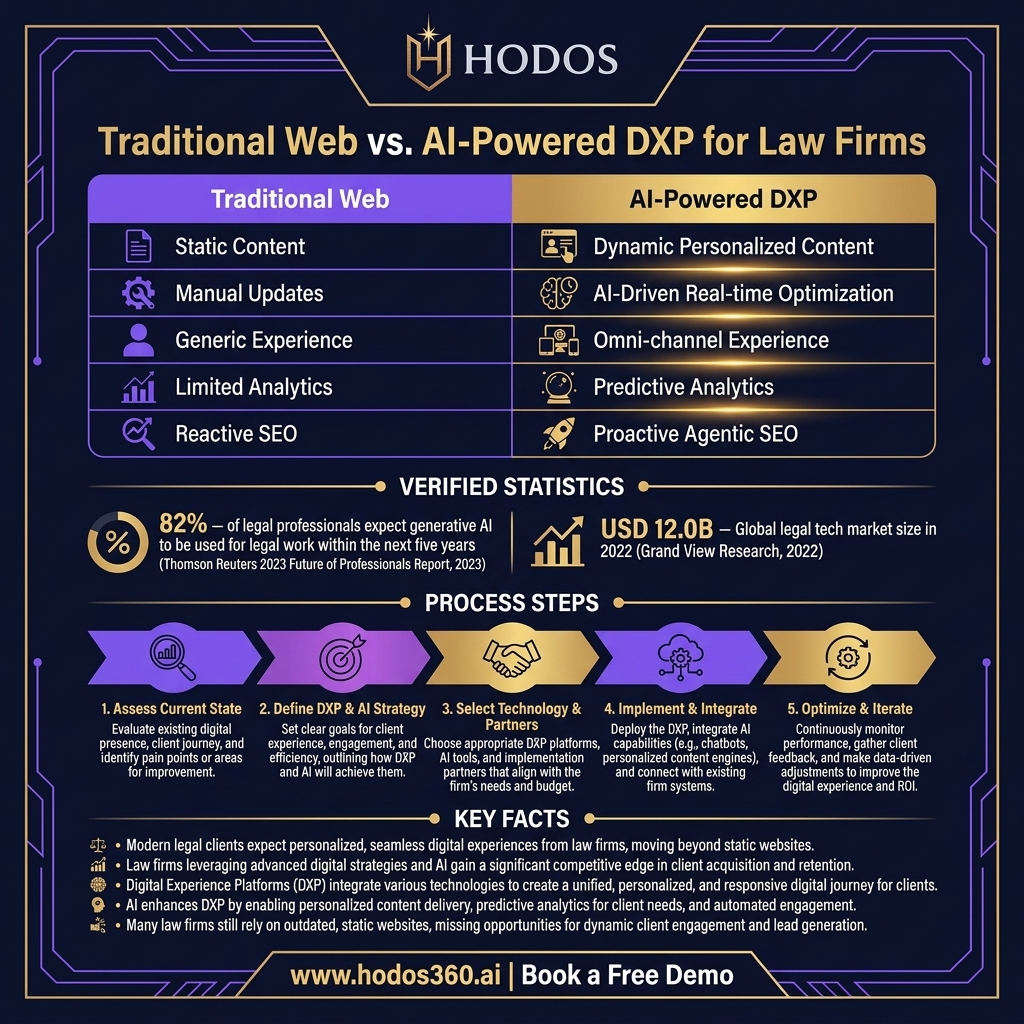
This accelerates the development cycle, allowing firms to launch new sites or update existing ones with unprecedented speed. Furthermore, AI can continuously monitor user engagement and suggest design modifications to improve conversion rates, turning a website into a constantly optimizing asset. This rapid iteration and intelligent optimization represent a fundamental shift from static design principles to dynamic, performance-driven AI web development.
Strategic Imperatives: Navigating the Future of Legal Tech & DXP
The rapid advancement in AI and DXP technologies presents both immense opportunities and significant challenges for law firms. The primary imperative is to move beyond mere awareness of these tools to strategic adoption. Firms must develop a clear DXP strategy that aligns with their overall business objectives, client acquisition goals, and ethical obligations.
This involves a comprehensive audit of their existing digital infrastructure, identifying gaps, and prioritizing investments in technologies that offer the greatest return on investment. The market is currently experiencing a fierce competition between legacy tech providers and nimble AI startups, creating a dynamic environment where strategic choices can make or break a firm's long-term digital viability.
Firms that embrace a proactive, experimental approach, akin to the ethos of Silicon Valley startups, are likely to gain a significant competitive advantage over those that adopt a wait-and-see posture. This is the core conflict: innovation vs. inertia, played out on the digital battlefield of client acquisition.
One of the most critical aspects of navigating this future is selecting the right partners and platforms. With the proliferation of AI tools and DXP servers, firms must carefully evaluate vendors based on their legal industry expertise, security protocols, and commitment to ethical AI development.
The integration capabilities of any new platform with existing legal tech suites—such as case management systems or billing software—are also paramount to ensure a cohesive and efficient digital ecosystem. Firms should look for solutions that offer robust analytics, customizable workflows, and scalable architectures to support future growth.
This often means engaging with providers who understand the unique regulatory and client confidentiality requirements of the legal sector, ensuring that technological advancement never comes at the expense of professional responsibility. A thoughtful vendor selection process, focusing on long-term partnership rather than short-term fixes, is a strategic imperative for successful DXP implementation.
Furthermore, investing in human capital development is as crucial as investing in technology. Lawyers and legal marketing professionals need to be upskilled in understanding and leveraging AI and DXP capabilities. This includes training on data analytics, AI ethics, and the strategic application of these tools to client acquisition and retention.
The best technology in the world is only as effective as the people wielding it. Law firms like Reed Smith and Clifford Chance have already begun implementing comprehensive AI training programs for their attorneys and staff, recognizing that human expertise, augmented by AI, is the ultimate competitive differentiator.
This commitment to continuous learning fosters a culture of innovation, enabling firms to adapt quickly to new technological advancements and maintain their leadership position in a rapidly evolving digital landscape. The synergy between human intelligence and artificial intelligence is where the true power of DXP lies.
The future of legal marketing and client engagement is undeniably digital and AI-driven. Firms that proactively develop a sophisticated DXP strategy, integrate AI assistants into their web development processes, and commit to continuous learning will be best positioned to thrive. The Oshyn launches of its MCP server and similar innovations are not just incremental improvements; they are foundational shifts that redefine what's possible for law firms online.
As we look ahead, the firms that embrace these strategic imperatives—investing in technology, choosing the right partners, and developing their human talent—will not only survive but will lead the charge in shaping the future of legal service delivery, creating unparalleled experiences for their clients and securing their place at the forefront of the legal profession.
This proactive approach ensures that a firm's digital presence becomes a powerful asset, consistently bringing in new opportunities and strengthening client relationships.

Key Takeaways: Crafting a Future-Ready Digital Footprint
The legal industry stands at a pivotal juncture, where the integration of AI with Digital Experience Platforms is no longer a futuristic concept but a present-day reality. The launch of Oshyn's MCP Server underscores a critical trend: the democratization of advanced DXP strategy tools, making sophisticated digital management accessible to more law firms.
This enables AI web development to become more intelligent, personalized, and efficient, ensuring law firms can build and maintain a dynamic online presence that truly resonates with prospective clients. The shift from static websites to agentic, learning digital experiences is crucial for competitive advantage, driving both client acquisition and operational efficiency.
Firms must embrace this evolution, not just to keep pace, but to lead in a rapidly changing legal landscape.
To navigate this transformation successfully, law firms must prioritize a holistic digital strategy that integrates AI across all client touchpoints, from initial web search to ongoing client communication. This involves careful selection of AI-powered platforms, adherence to ethical guidelines (e.g., ABA Formal Opinion 498 on Lawyer Advertising), and continuous investment in both technology and talent.
By leveraging innovative solutions that unify web development, marketing, and client engagement, firms can create a future-ready digital footprint. Platforms like HODOS 360, with its comprehensive suite of AI-powered services including Web & Mobile Development, AI Marketing, and AI Voice Assistants, offer law firms the integrated tools necessary to harness these advancements and build a truly intelligent, high-converting digital presence.
Frequently Asked Questions
What is a Digital Experience Platform (DXP) for law firms?+
A DXP is an integrated suite of technologies that provides a cohesive, personalized, and intelligent digital experience across all client touchpoints. For law firms, it transforms static websites into dynamic, AI-driven platforms that manage client intake, personalize content, automate marketing, and optimize the entire client journey from initial inquiry to case resolution.
How do AI assistants enhance DXP strategy for legal marketing?+
AI assistants, by directly accessing DXP strategy tools, can autonomously analyze website performance, identify client pain points, suggest content optimizations, and even automate marketing campaigns. This proactive, data-driven approach allows law firms to personalize client experiences at scale, improve lead qualification, and streamline their digital marketing efforts significantly.
What are the ethical considerations for law firms using AI in web development?+
Law firms must adhere to ethical guidelines like ABA Model Rule 7.1 concerning lawyer advertising and client communication. This requires transparency in AI usage, ensuring data privacy, avoiding misleading information, and maintaining professional responsibility. Ethical AI deployment is paramount to build and maintain client trust while leveraging advanced AI web development tools.
Can AI-powered web development improve client acquisition for law firms?+
Yes, significantly. AI-powered web development enables hyper-personalization, delivering relevant content and calls-to-action based on individual client needs and behaviors. This targeted approach, combined with continuous optimization driven by AI analytics, leads to higher engagement, better lead qualification, and ultimately, increased client acquisition rates for law firms.
What is 'agentic DXP' and why is it important for law firms?+
Agentic DXP refers to platforms where AI systems can autonomously understand goals, plan actions, execute them, and learn from outcomes without constant human oversight. For law firms, this means a self-optimizing digital presence that can adapt to client needs in real-time, automate complex tasks, and deliver a consistently superior digital experience, enhancing efficiency and competitiveness.