


Local SEO: Essential Strategies for Law Firm Web Development
The digital frontier has reshaped how legal professionals connect with clients, transforming a once-traditional landscape into a dynamic arena where online visibility dictates success. Just last week, *The Malone Telegram* highlighted the critical role of local SEO, AI automations, and sophisticated web design for small businesses in Pinellas County, a sentiment that resonates deeply within the legal sector.
Consider the journey of 'Coastal Legal Group,' a fictional yet archetypal family law practice in St. Petersburg. For years, their client base relied almost exclusively on word-of-mouth referrals, a reliable but slow-growth model. However, as younger generations became decision-makers and the internet solidified its role as the primary research tool, Coastal Legal Group found itself struggling to capture new leads.
Their outdated website was practically invisible in local search results, and manual processes consumed valuable time that could have been spent serving clients.
This narrative of digital stagnation versus growth is playing out across countless law firms, emphasizing a stark reality: without a robust online presence tailored to local search intent, firms risk being left behind.
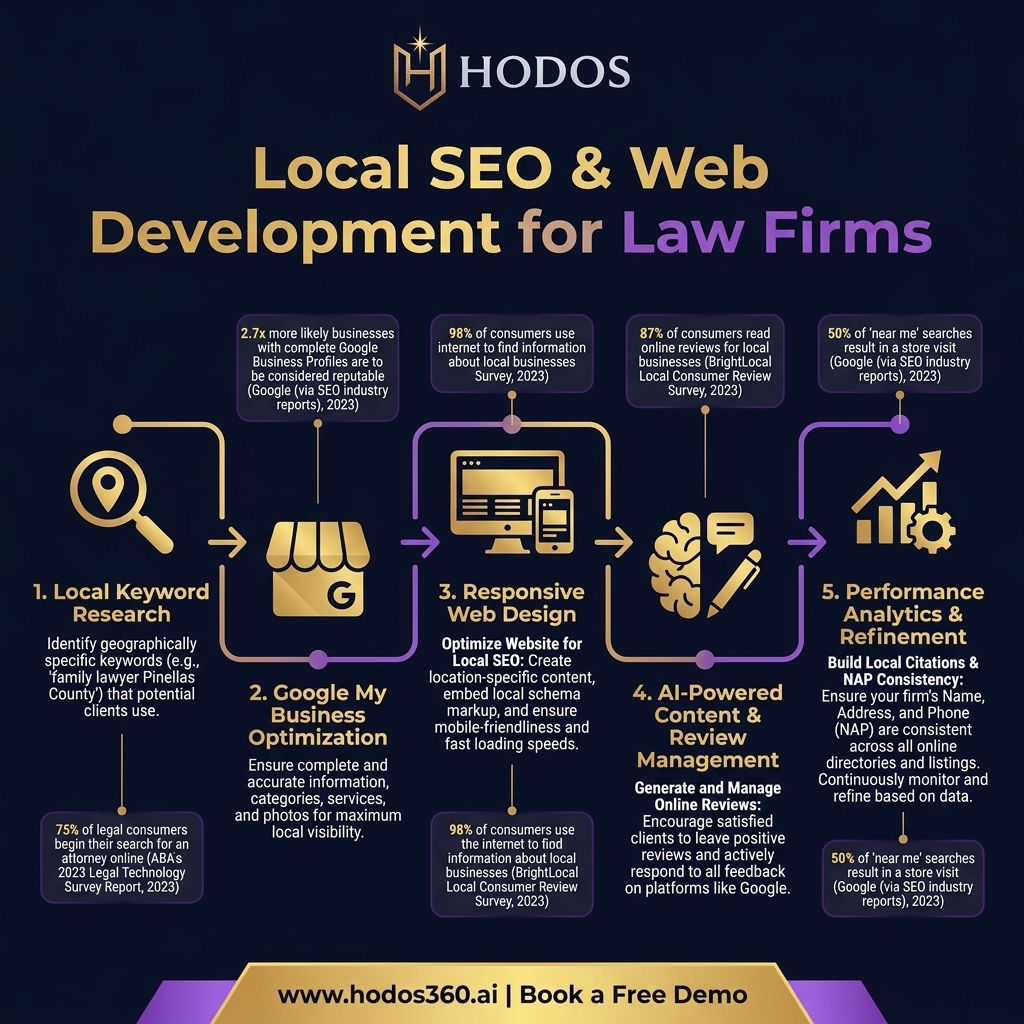
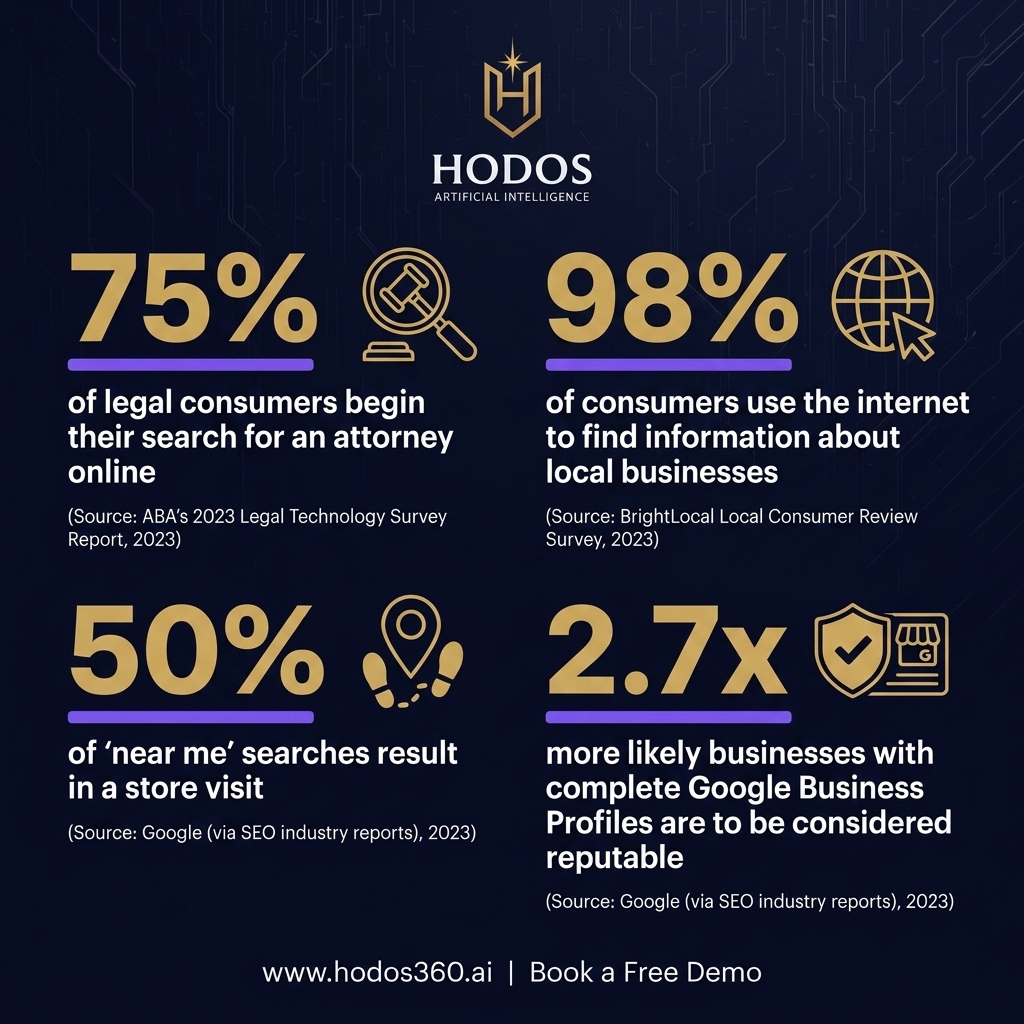
Recent data from the ABA's 2023 Legal Technology Survey Report indicates that nearly 75% of legal consumers begin their search for an attorney online, with a significant portion of those searches being geographically specific. This means that a firm's ability to appear prominently in local search results for terms like "family lawyer Pinellas County" or "estate planning attorney St. Petersburg" directly impacts its bottom line.
The competition isn't just within the courtroom; it's fierce on the search engine results page (SERP), where visibility translates directly into client acquisition opportunities. Firms that embrace cutting-edge strategies, including AI-powered web development and local SEO, are not just surviving; they are thriving and expanding their reach.
Leading figures in legal tech, like Jack Newton, CEO of Clio, have consistently championed the integration of technology to empower legal professionals. Newton often emphasizes that the future of legal practice is intertwined with its digital accessibility and efficiency. This perspective is particularly pertinent for local law firms, where the personal touch must be amplified by digital prowess.
The challenge for many firms is not merely recognizing the need for digital transformation but understanding how to implement it effectively without diverting excessive resources from core legal work. This is where strategic investment in targeted local SEO, intelligent AI automation tools, and professional web design becomes not just beneficial, but an essential competitive advantage, enabling firms to connect with their community and build a sustainable pipeline of clients.
Discover how to transform your firm's digital footprint and secure its future in the local market.
The Imperative of Local SEO for Law Firms in a Digital Age
In an era where nearly every client journey begins with a search query, the significance of local SEO for law firms cannot be overstated. For attorneys in areas like Pinellas County, establishing a dominant local search presence is the bedrock of sustainable client acquisition. Consider the specific search behavior of potential clients: they are not just looking for 'a lawyer,' but often 'a divorce lawyer near me' or 'personal injury attorney Clearwater FL.'
Google's algorithm, particularly its local pack feature, prioritizes businesses that are geographically relevant, have strong online reviews, and possess consistent business information across the web. A 2023 study by BrightLocal revealed that 98% of consumers use the internet to find local businesses, and 87% of those searches are specifically for local information.
This data underscores that if your law firm isn't appearing in the top local search results, you're effectively invisible to the vast majority of your potential client base.
The strategic optimization of a Google My Business (GMB) profile is arguably the most critical component of a robust local SEO strategy.
An optimized GMB listing acts as a digital storefront, providing essential information like address, phone number, hours, services offered, and client reviews directly on the SERP. Firms that regularly update their GMB profile with fresh posts, respond to reviews promptly, and ensure accurate information are significantly more likely to rank higher in local searches.
For instance, a firm like 'Gulf Coast Legal Services' in Pinellas Park, if it meticulously maintains its GMB profile, will consistently outperform a competitor with a dormant or incomplete listing, even if both offer similar services. This attention to detail extends beyond GMB to local citation building, ensuring your firm's Name, Address, and Phone number (NAP) are consistent across directories like Yelp, Avvo, and the local bar association website.
Learn more about AI Call Assistant: The Ultimate Legal Firm Transformation. Inconsistencies can confuse search engines, diminishing your local search authority.
Beyond technical optimization, local SEO for law firms also hinges on creating geographically relevant content. This means producing blog posts, practice area pages, and case studies that speak directly to the legal concerns of the local community.
For example, an article titled "Understanding Florida's Homestead Exemption in Pinellas County" will resonate far more strongly with local residents than a generic piece on property law. This hyper-local content strategy demonstrates expertise and relevance to both potential clients and search engines. Furthermore, cultivating positive client reviews and testimonials is paramount.
According to a Thomson Reuters Institute report, peer reviews and online testimonials are among the most trusted sources of information for individuals seeking legal counsel. Proactively requesting reviews from satisfied clients and thoughtfully responding to all feedback, positive or negative, builds trust and signals to Google that your firm is a reputable and client-focused entity within the local community.
Ignoring this aspect is akin to neglecting the most powerful form of modern word-of-mouth marketing.
Leveraging AI Automations for Enhanced Digital Presence and Efficiency
The integration of artificial intelligence (AI) has moved beyond abstract discussions, becoming a practical reality for law firms seeking to streamline their digital marketing efforts and enhance their local SEO. AI automations offer a powerful suite of tools that can manage repetitive tasks, analyze vast datasets, and generate content, freeing up legal professionals to focus on their core competencies.
For instance, AI-powered tools can monitor local search rankings, track competitor activity, and identify emerging keyword trends specific to a geographic area like Pinellas County. This level of granular data analysis, which would be prohibitively time-consuming for human teams, allows firms to quickly adapt their strategies and capitalize on new opportunities.
Firms like 'Bayfront Law Group' can leverage AI to identify which local legal queries are trending, then use that insight to inform their content creation and ad targeting, ensuring their marketing spend is optimized for maximum local impact.
One of the most significant benefits of AI automation in local SEO is its ability to revolutionize content generation and social media management.
AI-driven platforms can assist in drafting localized blog posts, website copy, and social media updates that are both SEO-friendly and engaging for a local audience. For example, an AI tool could analyze local news and legal precedents to suggest topics for blog posts relevant to Pinellas County residents, then generate initial drafts that an attorney can review and refine.
This significantly reduces the time and resources required for content creation, ensuring a consistent flow of fresh, relevant material that boosts local search rankings. Beyond content, AI can automate social media scheduling, analyze engagement metrics, and even suggest optimal posting times, ensuring that a firm's local community outreach is both consistent and impactful.
Learn more about Strategic AI Tools Adoption: Essential Guide for Law Firms. This allows firms to maintain a vibrant online presence without constant manual oversight.
Furthermore, AI automations are transforming reputation management, a critical aspect of local SEO. Platforms can monitor online reviews across various sites, alert firms to new feedback, and even suggest personalized responses.
This ensures that firms can engage with clients promptly, address concerns effectively, and amplify positive testimonials, all of which contribute to a stronger online reputation and improved local search rankings. The ability of AI to analyze sentiment in reviews also provides invaluable insights into client satisfaction and areas for service improvement.
Imagine a system flagging a recurring complaint about response times; this data, provided by AI, allows a firm to proactively address operational inefficiencies. This proactive approach to reputation management, driven by AI, not only bolsters a firm's image but also signals to search engines that it is an active, responsive, and client-focused business.
The strategic deployment of such AI tools, like those offered within HODOS 360's AI Marketing Platform, offers a distinct competitive edge, allowing firms to scale their digital efforts efficiently and effectively.
AI-Powered Content Generation and Social Media Strategies for Local Reach
The synergy between AI and content strategy is particularly potent for law firms aiming for local market dominance. AI tools can analyze vast quantities of local search data, identifying the specific legal questions and concerns prevalent in a community. This allows firms to create highly targeted content that directly addresses client needs.
For instance, if an AI analysis reveals a surge in searches for 'probate attorney St. Petersburg cost,' a firm can then generate a comprehensive blog post or FAQ section addressing this precise query. Learn more about Scaling Legal AI: Essential Strategies to Prevent Tool Sprawl.
This not only attracts relevant traffic but also positions the firm as a knowledgeable resource. Moreover, AI can tailor content for various platforms, from short, engaging social media snippets to detailed, authoritative blog articles, ensuring consistency in messaging while adapting to platform-specific requirements. This means a single legal concept can be repurposed efficiently across a firm's digital ecosystem, maximizing its reach and impact within the local community.
The efficiency gained allows for a higher volume of quality content, which search engines favor.
Crafting High-Converting Web Design for Legal Practices
A beautifully designed website is more than just an aesthetic asset; for a law firm, it's a critical client acquisition tool. In the context of local SEO, web design plays an integral role in converting local searchers into actual clients. A modern, responsive, and intuitive website signals professionalism and trustworthiness, qualities paramount in the legal profession.
Conversely, an outdated, slow, or non-mobile-friendly site can deter potential clients instantly, regardless of how high a firm ranks in local search results. According to Google's own Core Web Vitals, page experience metrics directly influence search rankings, especially on mobile devices. A website that loads slowly, is difficult to navigate on a smartphone, or has intrusive pop-ups will suffer in search visibility and, more importantly, will frustrate users, leading to high bounce rates and lost opportunities.
Law firms, therefore, must invest in web design that prioritizes user experience (UX) and technical performance to capture and retain the attention of local clients.
Responsive design is no longer an optional feature but a fundamental requirement. With over 60% of legal service searches originating from mobile devices, a law firm's website must flawlessly adapt to any screen size, from desktops to tablets and smartphones.
A seamless mobile experience ensures that potential clients can easily access information, read attorney bios, and contact the firm regardless of their device. Beyond responsiveness, intuitive navigation and clear calls to action (CTAs) are crucial for conversion. Learn more about AI-Powered Web Development: Essential SaaS Optimization for Law Firms.
A potential client visiting a firm's website should be able to quickly find the information they need and understand the next steps to take, whether it's scheduling a consultation, calling the office, or filling out an intake form. Prominently placed and strategically worded CTAs, such as "Schedule Your Free Consultation" or "Get Local Legal Advice," guide the user journey and increase the likelihood of conversion.
Without a clear path, even the most interested local searcher might become disoriented and leave.
Furthermore, the content architecture and visual hierarchy of a law firm's website must be designed with both SEO and client conversion in mind. Each practice area page should be optimized for specific local keywords, providing comprehensive information while being easy to read.
High-quality, professional imagery and attorney headshots build credibility and humanize the firm, fostering trust before the first interaction. For example, a law firm specializing in real estate law in Pinellas County should feature a dedicated page detailing local zoning laws, property transfer procedures unique to Florida, and success stories involving local clients.
This level of detail, combined with a clean, professional layout, not only satisfies search engine requirements for relevance but also reassures potential clients that they are dealing with experts who understand their specific local needs. A well-designed site acts as a 24/7 marketing asset, continuously working to attract and convert local leads.
SEO Optimization and User Experience: A Symbiotic Relationship in Web Design
The success of local SEO is intrinsically linked to the quality of a law firm's web design and user experience. Google's algorithms increasingly prioritize websites that offer a superior user experience, understanding that a positive interaction keeps users on a site longer and reduces bounce rates.
This means that factors like fast loading times, easy navigation, clear content, and mobile-friendliness are not just good for users; they are powerful SEO signals. When a website is designed with UX at its core, it naturally becomes more SEO-friendly. Learn more about Law Firm Return on Investment: Maximize AI in 2026.
For example, logical site structure and internal linking, which are fundamental to good UX, also help search engines crawl and index content more effectively. Similarly, high-quality, readable content that addresses user intent, a hallmark of good UX, is precisely what search engines seek to deliver to their users.
This symbiotic relationship ensures that efforts invested in creating a user-centric web design simultaneously bolster a firm's local search rankings, creating a virtuous cycle of visibility and client engagement.
Implementing a Holistic Digital Strategy for Local Dominance
Achieving true local dominance for a law firm requires more than just isolated tactics; it demands a holistic digital strategy that seamlessly integrates local SEO, AI automations, and superior web design. The competitive landscape, particularly in thriving legal markets like Pinellas County, necessitates a cohesive approach where each component reinforces the others.
Imagine a firm, 'Evergreen Legal Partners,' which serves clients across St. Petersburg, Clearwater, and Largo. Instead of merely having a website, they deploy an integrated strategy: their AI-powered marketing platform identifies specific local legal needs, their web development team crafts optimized landing pages for each service area, and their local SEO efforts ensure these pages rank highly for relevant geographic searches.
This comprehensive approach ensures that every touchpoint a potential client has with the firm—from initial search to website visit—is optimized for conversion. Without this integration, even a technically perfect website might fail to attract leads if it lacks local SEO visibility, or strong local SEO might fall flat if the website experience is poor.
The strategic implementation of such a holistic plan involves several key pillars. Firstly, continuous local keyword research, often augmented by AI, to understand the evolving needs of the community. Secondly, proactive management of online reputation, leveraging AI tools to monitor and respond to reviews across all platforms.
Thirdly, the consistent creation of high-quality, localized content that establishes the firm as an authority in its specific practice areas within the local context. Fourthly, ensuring that the firm's website is not only visually appealing but also technically sound, mobile-responsive, and optimized for speed and user experience.
Finally, a robust analytics framework must be in place to track performance, measure ROI, and inform ongoing adjustments. This iterative process of analysis, implementation, and refinement is crucial for sustained growth in a dynamic digital environment. The goal is not just to appear in local searches but to convert those searchers into loyal clients, building long-term relationships.
This integrated approach aligns with modern legal ethics, particularly ABA Model Rule 7.1 concerning communications about a lawyer's services. Learn more about AI Marketing: The Ultimate Blueprint for Law Firm Growth. Firms must ensure their digital marketing and web presence are not misleading and accurately convey their qualifications and services.
A holistic strategy, built on transparency and value, inherently supports ethical compliance while driving business growth. By focusing on providing genuinely helpful information and a seamless user experience, firms not only attract clients but also uphold the professional standards of the legal community. This commitment to ethical and effective digital outreach differentiates leading firms in competitive markets.
It's about building a digital foundation that is both compliant and client-centric, ensuring that the firm's online persona accurately reflects its professional integrity and commitment to service. This strategic alignment of ethics, technology, and marketing is the hallmark of forward-thinking legal practices poised for success.
Measuring the success of a holistic digital strategy involves a meticulous focus on key performance indicators (KPIs). Beyond simple website traffic, firms must analyze metrics such as local search ranking positions, click-through rates from local pack results, conversion rates from website visitors to leads, and the cost per acquisition of new clients through digital channels.
Tools like Google Analytics and specialized legal marketing dashboards provide invaluable insights into these KPIs, allowing firms to understand which strategies are yielding the best results and where adjustments are needed. For example, if a firm sees high traffic to a specific practice area page but low conversion rates, it might indicate a need to refine the call to action or improve the clarity of the content on that page.
Conversely, if local SEO efforts are driving significant phone calls, it validates the investment in local optimization. This data-driven approach, often facilitated by AI analytics, enables firms to make informed decisions, ensuring their digital marketing budget is allocated effectively and their strategies are continuously optimized for maximum ROI.
Without rigorous measurement, even the most sophisticated digital efforts can become inefficient, highlighting the critical role of data in modern legal marketing.

Key Takeaways and Next Steps for Law Firms
The digital landscape offers unprecedented opportunities for law firms to connect with clients, but it also presents significant challenges. As highlighted by the local focus of *The Malone Telegram* and the broader trends in legal tech, embracing local SEO, AI automations, and sophisticated web development is no longer a luxury but a strategic imperative.
Firms that prioritize these areas are better positioned to capture local market share, build strong online reputations, and sustain long-term growth. The journey from traditional marketing to a digitally dominant presence requires thoughtful planning, strategic investment, and a commitment to continuous adaptation. The future of legal practice is undeniably digital, and the firms that lead this charge will be those that master these interconnected disciplines.
For law firms looking to navigate this complex environment, the path forward involves a clear assessment of current digital assets, identification of gaps, and strategic implementation of integrated solutions. This includes optimizing your Google My Business profile, creating highly localized and valuable content, ensuring your website is a high-converting, mobile-friendly platform, and leveraging AI to automate and refine your marketing efforts.
The goal is to build a seamless digital ecosystem that not only attracts potential clients but also provides them with an exceptional experience from the very first search. Platforms like HODOS 360 offer comprehensive solutions, from AI-powered website building and responsive design to advanced SEO optimization, designed specifically to empower law firms in this competitive digital age.
Taking these decisive steps now will ensure your firm remains visible, relevant, and thriving in your local community.
- ✓Prioritize Google My Business (GMB) Optimization: Ensure your GMB profile is complete, accurate, and actively managed with regular updates, photos, and prompt responses to reviews. This is the cornerstone of local search visibility.
- ✓Invest in Responsive Web Design: Your website must offer a flawless user experience across all devices, especially mobile, to meet Google's Core Web Vitals and client expectations. A slow or clunky mobile site will deter potential clients.
- ✓Develop Hyper-Local Content: Create blog posts, articles, and practice area pages that directly address the specific legal concerns and keywords relevant to your local community (e.g., Pinellas County, St. Petersburg).
- ✓Leverage AI for Automation and Insights: Utilize AI tools for tasks like content drafting, social media scheduling, review monitoring, and data analysis to enhance efficiency and make data-driven marketing decisions.
- ✓Cultivate Online Reviews and Reputation: Actively encourage satisfied clients to leave reviews and respond thoughtfully to all feedback to build trust and improve your local search ranking signals.
- ✓Implement a Holistic Digital Strategy: Integrate local SEO, AI, and web design into a cohesive plan, ensuring each component works synergistically to attract, engage, and convert local leads effectively.
Frequently Asked Questions
Why is local SEO particularly important for law firms?+
Local SEO is crucial for law firms because most legal clients search for attorneys in their immediate geographic area. Appearing in local search results and the Google local pack directly impacts visibility to potential clients who are ready to engage legal services nearby. It helps firms capture location-specific queries, converting local interest into tangible leads by connecting with the community where they practice.
How can AI automations assist with a law firm's local SEO?+
AI automations streamline local SEO by assisting with content generation for localized topics, managing online reviews, updating business listings consistently across platforms, and analyzing local search trends to identify new opportunities. These tools free up valuable attorney time, ensuring a firm's digital presence is continuously optimized, responsive, and relevant to the local market without constant manual intervention.
What are the key elements of a high-converting law firm website?+
A high-converting law firm website is characterized by responsive design for mobile-friendliness, intuitive navigation, clear calls to action, fast loading speeds, professional imagery, and compelling, localized content. It must provide a seamless user experience that builds trust and guides potential clients effortlessly toward contacting the firm for a consultation, reflecting the firm's professionalism and expertise.
How often should a law firm update its Google My Business profile?+
A law firm should update its Google My Business (GMB) profile regularly, ideally weekly or bi-weekly. This includes posting updates about firm news, recent cases, community involvement, or legal insights. Promptly responding to all new reviews and ensuring business hours and service offerings are always accurate are also critical. Consistent activity signals to Google that the listing is active and authoritative.
What role do client reviews play in local SEO for legal practices?+
Client reviews are paramount for local SEO in legal practices. Positive reviews build trust and credibility, acting as powerful social proof for potential clients. Google's algorithm also heavily factors review quantity, quality, and responsiveness into local search rankings. Actively soliciting and thoughtfully responding to reviews demonstrates client focus and significantly boosts a firm's online reputation and visibility.