AI Marketing: Ultimate Growth for Law Firms
The legal landscape is in constant flux, but few shifts have been as profound or as rapid as the integration of artificial intelligence into core business operations. Recently, the legal tech world buzzed with news of Brrandom, an AI-native marketing technology company, significantly expanding its AI marketing practice, as reported by ContentGrip. This move isn't an isolated incident; it's a clear signal of a broader industry trend where AI marketing is transitioning from a futuristic concept to an immediate necessity. For law firms, this expansion underscores a critical reality: the firms that embrace AI to enhance their client outreach and brand visibility will be the ones that thrive in an increasingly competitive market.
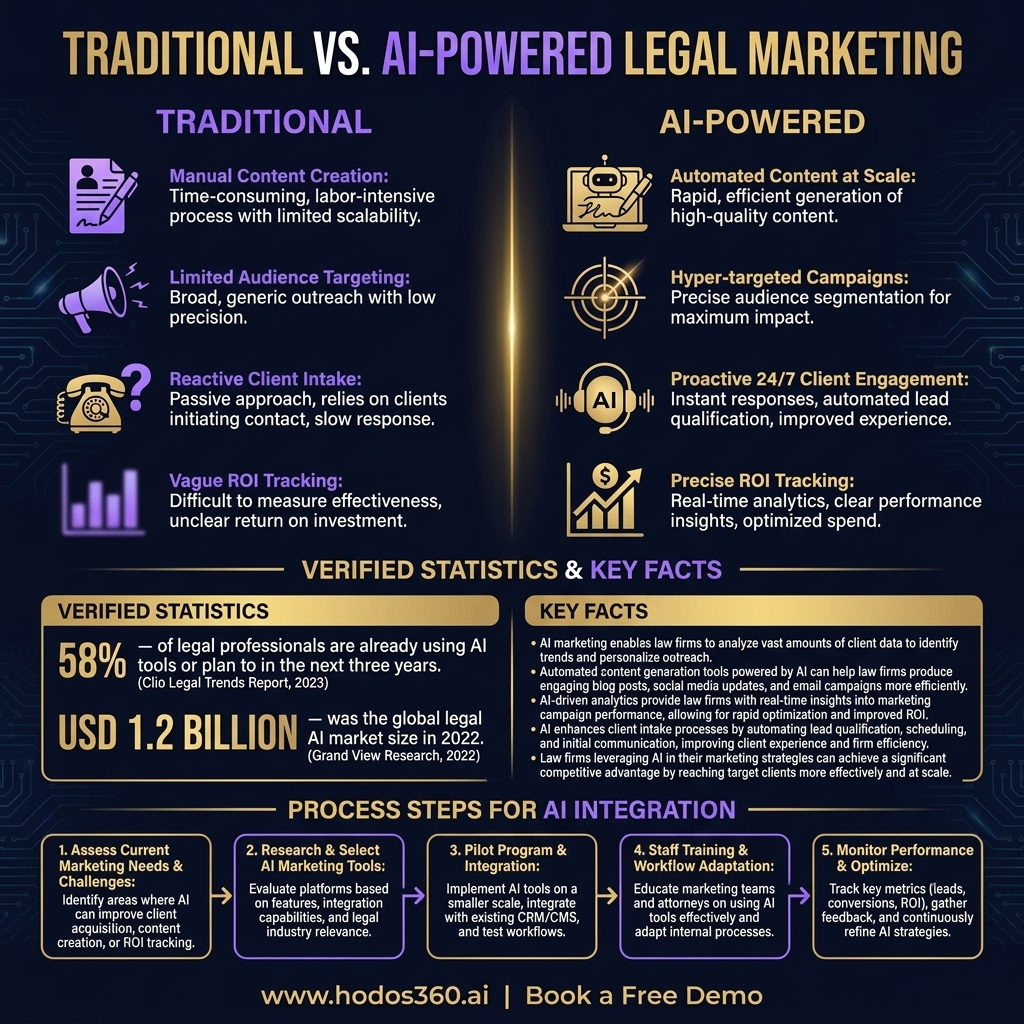
Traditional legal marketing strategies, once sufficient, are now struggling to keep pace with the digital demands of modern clients. The days of relying solely on word-of-mouth or static advertising are rapidly receding, replaced by a dynamic environment where data-driven insights and hyper-personalized communication reign supreme. Attorneys like Sarah Chen, a managing partner at a mid-sized corporate law firm in New York, recently shared her firm’s initial skepticism, stating, “We saw AI as a tool for document review, not client acquisition. But the sheer volume of digital content and the need for precision targeting forced our hand. The firms that hesitated are now playing catch-up.” This sentiment echoes across the industry, highlighting a significant tension between long-held practices and the disruptive potential of AI.
This article delves into how AI marketing is revolutionizing every facet of a law firm's external presence, from generating engaging content to optimizing client intake and tracking real-time ROI. We'll explore the strategic imperative for legal professionals to adopt these advanced tools, drawing on real-world examples and expert insights. The goal isn't just to keep up, but to strategically leverage AI to achieve unparalleled growth and establish a leading presence in the digital age. The future of legal marketing isn't just about being present online; it’s about being intelligently, proactively, and effectively present, powered by AI.
The New Frontier: Why AI Marketing is No Longer Optional for Legal Practices
The legal industry's historically cautious approach to technology has often meant a slower adoption rate compared to other sectors. However, the current wave of AI innovation, spearheaded by companies like OpenAI with its GPT models and Anthropic with Claude, has created tools too powerful to ignore. Leading AI marketing platforms now offer sophisticated capabilities that transcend simple automation, enabling law firms to engage potential clients with unprecedented efficiency and personalization. According to a 2024 report by Thomson Reuters, over 60% of law firms surveyed indicated plans to increase their investment in legal technology, with a significant portion earmarked for client acquisition and marketing tools. This data points to a clear realization among legal professionals that the competitive advantage now lies in intelligent digital engagement.
The shift is driven by client expectations. Modern clients, whether individuals seeking personal legal counsel or corporations requiring complex advisory, begin their search online. They expect immediate, relevant information and seamless digital interactions. This demand has created a fertile ground for AI marketing tools that can analyze vast datasets to identify ideal client profiles, predict legal needs, and tailor communication strategies. For instance, imagine a specialized personal injury firm in Texas. Learn more about AI Legal Assistant 2026: Revolutionizing Law Firm Efficiency. Instead of broad advertising, AI can pinpoint individuals who have recently searched for specific accident types, live within a certain geographic radius, and show indicators of needing legal representation, then deliver highly targeted content directly to them. This precision not only maximizes marketing spend but also builds trust by addressing specific, immediate needs.
Moreover, the competitive landscape is intensifying. As Brrandom expands its AI marketing practice, it signals to all industries, including legal, that sophisticated digital outreach is becoming the standard. Firms that cling to outdated methods risk becoming invisible. Consider the insights from Jensen Huang, CEO of NVIDIA, who consistently emphasizes the transformative power of AI across all industries. His vision, applied to legal, means that firms not harnessing AI for their marketing efforts are essentially operating with one hand tied behind their back. The ability to generate compelling content at scale, optimize for search engines, and manage complex campaigns is no longer a luxury but a fundamental requirement for sustained growth and market leadership.
Navigating the Ethical Landscape of AI in Legal Advertising
While the benefits of AI marketing are clear, law firms must navigate the ethical considerations inherent in its application. The American Bar Association (ABA) Model Rules of Professional Conduct, particularly Rule 7.1 (Communications Concerning a Lawyer's Services), mandates that all attorney advertising must not be false or misleading. This principle extends directly to AI-generated content and advertising campaigns. Law firms must ensure that any content produced by AI is thoroughly reviewed for accuracy, avoids unsubstantiated claims, and clearly states the nature of legal services. The firm also bears the ultimate responsibility for maintaining client confidentiality and data privacy, especially when AI tools process client information. Learn more about AI Marketing: The Ultimate Guide for Law Firms to Dominate Digital. Competence, as outlined in ABA Model Rule 1.1, also requires lawyers to keep abreast of changes in the law and its practice, including the benefits and risks associated with relevant technology. This necessitates a proactive approach to understanding AI's capabilities and limitations, ensuring that its use aligns with professional obligations and client best interests. The key is human oversight: AI is a tool, not a substitute for professional judgment and ethical responsibility.
AI-Powered Content Generation and SEO for Unrivaled Visibility
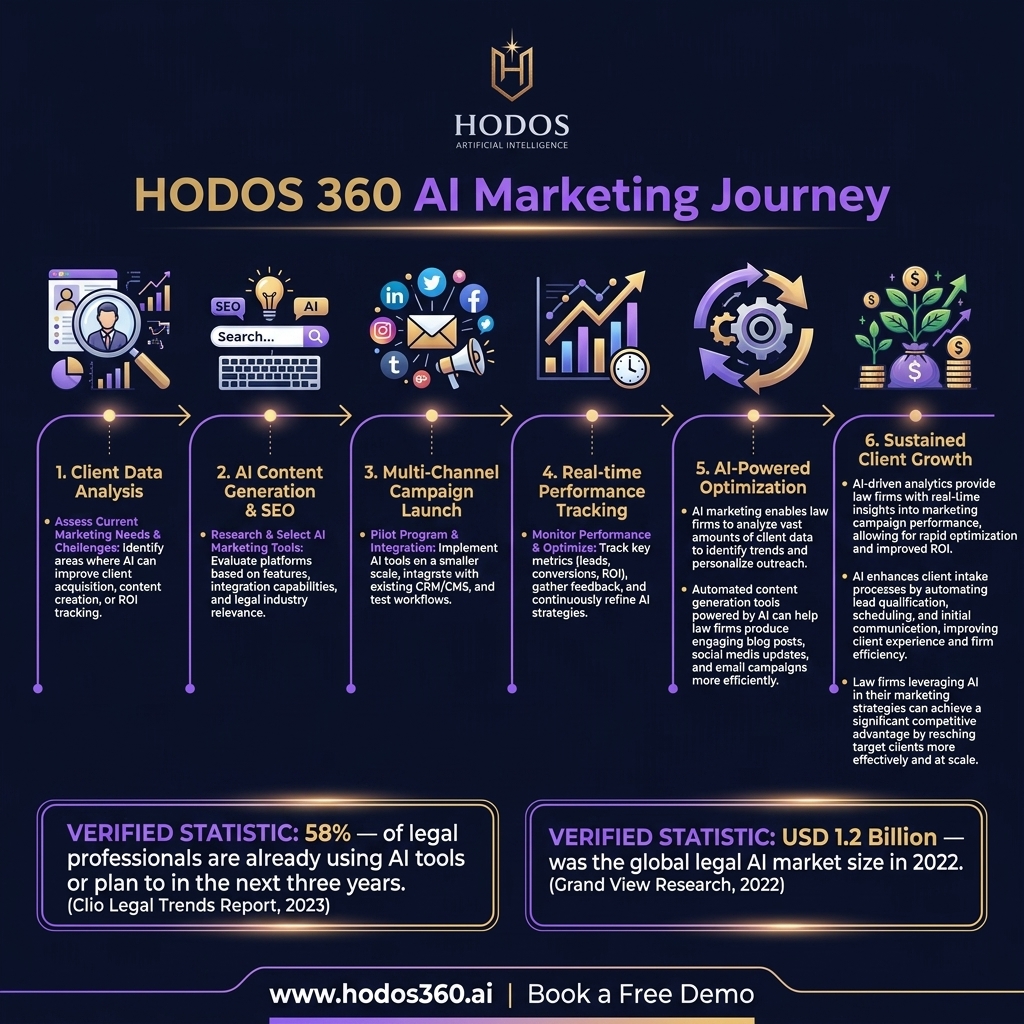
In the digital realm, content is king, and for law firms, high-quality, relevant content is the cornerstone of effective legal marketing. Yet, the demands of maintaining an active blog, producing timely articles, and managing a robust social media presence can be overwhelming for busy legal professionals. This is where AI marketing platforms excel, transforming the way firms approach content generation and search engine optimization (SEO). AI tools can analyze trending legal topics, identify keywords with high search volume, and even draft initial versions of blog posts, case summaries, or social media updates. This doesn't replace the lawyer's expertise but frees up valuable time, allowing them to focus on legal work while AI handles the heavy lifting of content ideation and creation. For instance, a firm specializing in intellectual property law can leverage AI to quickly generate articles on recent patent rulings or copyright changes, ensuring their online presence is always current and authoritative.
Beyond mere generation, AI significantly enhances a firm's SEO strategy. Traditional SEO involves painstaking keyword research, competitor analysis, and technical optimization. AI marketing tools automate much of this, identifying optimal keywords, analyzing competitor content, and suggesting structural improvements to website pages to improve search engine rankings. This means a law firm can more effectively target potential clients searching for specific legal services, ensuring their website appears prominently in search results. Learn more about AI Litigation: Essential Guide for Navigating Pro Se AI Use. Consider how a small real estate law firm in Florida might struggle to compete with larger entities for visibility. With AI-powered SEO, they can identify niche long-tail keywords related to Florida property law and generate optimized content that specifically answers those queries, drawing in highly qualified leads they might otherwise miss. This precision in targeting is a game-changer for firms looking to expand their reach without an exorbitant marketing budget.
The impact extends to social media automation and content distribution. AI can schedule posts, tailor messages for different platforms, and even identify optimal posting times to maximize engagement. This holistic approach to content generation and distribution ensures that a law firm's message reaches the right audience, at the right time, through the right channels. The result is not just increased visibility, but a stronger, more consistent brand presence that resonates with potential clients. Firms that harness these capabilities are not just publishing content; they are deploying a strategic digital ecosystem designed for maximum impact and client attraction. This comprehensive approach is essential for any legal practice aiming for sustained growth in today's digital-first world.
- ✓Automated Content Creation: Generate blog posts, articles, and social media updates efficiently, saving valuable attorney time.
- ✓Enhanced SEO Performance: AI identifies high-value keywords and optimizes website content for top search engine rankings.
- ✓Personalized Client Engagement: Deliver tailored content that addresses specific client needs, building trust and relevance.
- ✓Multi-Channel Distribution: Automate content scheduling and optimization across various digital platforms.
- ✓Competitive Analysis: AI provides insights into competitor strategies, helping firms refine their own legal marketing approach.
- ✓Brand Authority Building: Consistently publish expert content, positioning the firm as a thought leader in its practice areas.
From Data to Decisions: Optimizing Campaigns with AI Analytics
The true power of AI marketing lies not just in content creation but in its ability to analyze vast amounts of data to provide actionable insights. For law firms, understanding the return on investment (ROI) of marketing efforts has historically been challenging. AI platforms, however, offer sophisticated analytics and ROI tracking capabilities that provide unprecedented clarity. They can monitor campaign performance in real-time, identifying which channels are most effective, which content pieces resonate best with target audiences, and where marketing spend can be optimized. Learn more about AI Voice Assistants: The Essential Tool for Legal Context. This granular level of detail allows firms to make data-driven decisions, shifting resources to where they will yield the greatest impact. For example, if an AI analysis reveals that LinkedIn campaigns targeting corporate clients are generating significantly more qualified leads than general legal news articles, the firm can reallocate its budget accordingly, maximizing efficiency and improving overall client acquisition metrics. This intelligent, adaptive approach is crucial for optimizing campaigns and ensuring every marketing dollar contributes directly to firm growth.
Revolutionizing Client Acquisition: AI Voice Assistants and Personalized Outreach
The initial point of contact with a potential client is often the most critical. In the fast-paced legal world, missing a call or delaying a response can mean losing a valuable lead. This is where AI Voice Assistants are revolutionizing client acquisition for law firms. These intelligent systems offer 24/7 phone answering, ensuring no potential client inquiry goes unanswered, regardless of business hours. Beyond simply answering, AI Voice Assistants can perform sophisticated lead qualification, asking pertinent questions to determine the nature of the inquiry, the urgency, and whether the case aligns with the firm's practice areas. This pre-screening saves attorneys and paralegals countless hours, allowing them to focus on genuinely qualified leads. Consider a scenario where a high-profile M&A firm receives inquiries from around the globe; an AI Voice Assistant can handle multilingual support, routing calls to the appropriate specialist, ensuring a smooth and professional experience from the first interaction.
Furthermore, AI marketing extends to personalized outreach and appointment booking. Once a lead is qualified, the AI can seamlessly book appointments directly into the firm’s calendar, send automated reminders, and even provide initial information about the firm's services. Learn more about Legal AI Workflows: Essential Shifts Beyond Microsoft Word for Firms. This level of automation and personalization creates a highly efficient client intake process, reducing friction and enhancing the client experience from the outset. Dario Amodei, CEO of Anthropic, often speaks about the power of conversational AI to transform user interactions; in the legal context, this translates to a more accessible and responsive firm. A potential client calling late at night with an urgent family law query can receive immediate, empathetic, and informative assistance, feeling heard and valued, rather than encountering an answering machine.
This proactive and intelligent client engagement is a stark contrast to traditional methods where leads might fall through the cracks due to staffing limitations or after-hours inquiries. By ensuring every lead is captured, qualified, and nurtured, AI marketing tools significantly boost a law firm's client acquisition rates. The ability to handle a high volume of inquiries without compromising on quality or personalization positions firms using these technologies at a distinct advantage. This integrated approach, combining 24/7 availability with smart qualification and seamless booking, fundamentally transforms the client journey, making it more efficient for the firm and more satisfying for the client. The ultimate goal is to convert more inquiries into retained clients, and AI Voice Assistants are proving to be indispensable in achieving this.
Crafting Digital Excellence: AI-Powered Web & Mobile Development
A law firm's website and mobile presence are its digital storefront, often the first impression a potential client has. In an age where user experience dictates engagement, an outdated or non-responsive website can be a significant liability. AI marketing extends its influence into web and mobile development, enabling firms to create sophisticated, high-converting digital platforms with unprecedented speed and efficiency. AI-powered website builders can analyze industry trends, user behavior data, and even competitor sites to suggest optimal layouts, content structures, and design elements. This ensures the website is not only aesthetically pleasing but also strategically designed for client conversion. Furthermore, AI ensures responsive design, meaning the site functions flawlessly across all devices—desktops, tablets, and smartphones—a critical factor for today's mobile-first users. Learn more about Legal AI: The Ultimate Guide to Claude's Expanding Tools. This attention to detail is essential for a firm's digital strategy.
Beyond aesthetics and responsiveness, AI plays a crucial role in SEO optimization directly within the web development process. It can automatically embed relevant keywords, optimize image tags, and improve site loading speeds – all critical factors for higher search engine rankings. Firms can leverage AI-powered tools to conduct A/B testing on different page layouts or calls to action, identifying which elements drive the most client engagement and lead generation. The result is not just a visually appealing website, but a high-performing digital asset that actively contributes to client acquisition and firm growth. This integrated approach ensures that a law firm's online presence is not just a brochure but a dynamic, intelligent platform designed to attract and convert prospective clients effectively.

The Future is Now: Embracing AI for Sustainable Law Firm Growth
The competitive pressures in the legal industry are undeniable, and the rapid advancements in AI technology present both a challenge and an unparalleled opportunity. Law firms that proactively integrate AI marketing into their strategic framework are not just adapting; they are actively shaping the future of their practices. From the nuanced art of content creation and SEO to the critical first impression made by an AI Voice Assistant, every aspect of client engagement is being redefined. Firms like Allen & Overy, known for their early adoption of legal tech, demonstrate a clear understanding that innovation is key to maintaining a competitive edge. Their partnerships with AI companies like Harvey AI underscore the industry's move towards leveraging advanced technology for operational efficiency and client service excellence.
The narrative of disruption versus tradition often frames the debate around AI, but for law firms, the choice is increasingly clear: embrace intelligent tools or risk being outmaneuvered. The benefits extend beyond mere efficiency; they encompass a deeper understanding of client needs, the ability to scale marketing efforts without proportional increases in human resources, and the capacity to build a robust, resilient digital presence. The AI marketing tools available today are more sophisticated and accessible than ever before, offering solutions for firms of all sizes. Platforms like HODOS 360 provide a comprehensive suite of AI-powered services, including an AI Marketing Platform, AI Voice Assistants, and Web & Mobile Development, specifically designed to empower law firms to navigate this new landscape successfully. This integrated approach ensures that firms can leverage the full spectrum of AI capabilities, from initial lead generation to ongoing client relationship management.
Ultimately, the firms that will lead the legal industry in the next decade will be those that view AI not as a threat, but as a strategic partner in their growth journey. This means fostering a culture of innovation, investing in the right technologies, and continuously refining their digital strategy. The future of legal practice is one where technology and human expertise converge to deliver superior client outcomes and sustainable firm prosperity. By strategically adopting AI, law firms can not only survive but truly thrive, securing their place as leaders in a rapidly evolving world. The time to act is now, transforming potential challenges into tangible opportunities for unparalleled growth and market influence.
Frequently Asked Questions
Is AI marketing ethical for law firms?+
Yes, AI marketing can be ethical if implemented with careful oversight. Firms must ensure AI-generated content adheres to ABA Model Rule 7.1 regarding truthful advertising and avoid misleading claims. Human review is crucial for accuracy and compliance. Additionally, client data privacy must be paramount, aligning with professional responsibility standards.
How can small firms afford AI marketing tools?+
Many AI marketing platforms, including HODOS 360, offer scalable solutions with tiered pricing, making them accessible even for smaller firms. The efficiency gains and improved ROI often justify the investment, as AI can reduce the need for extensive manual marketing efforts and significantly boost client acquisition at a lower cost per lead.
What's the ROI of AI marketing for law firms?+
The ROI of AI marketing can be substantial. Firms typically see improved lead generation, higher client conversion rates, reduced marketing costs, and increased brand visibility. AI's ability to hyper-target audiences and optimize campaigns in real-time ensures that marketing spend is maximized, leading to a measurable positive impact on firm revenue and growth.
Will AI replace legal marketers or attorneys?+
AI is designed to augment, not replace, legal marketers and attorneys. It automates repetitive tasks like content drafting, data analysis, and initial client interactions, freeing human professionals to focus on strategic thinking, complex legal work, and empathetic client relationships. AI enhances capabilities, making human roles more impactful.
How long does it take to see results from AI marketing?+
Results from AI marketing can vary, but many firms begin to see improvements in weeks to a few months. Initial gains often include increased website traffic, higher engagement rates, and more qualified leads. Comprehensive ROI, however, typically develops over 3-6 months as AI algorithms learn and campaigns are progressively optimized for peak performance.