


OpenAI Codex: Essential Guide to Faster Legal Web Development
The legal industry, often perceived as slow to adopt technological shifts, is currently undergoing an unprecedented digital transformation. As law firms increasingly recognize the imperative to modernize their operations and client engagement, the demand for sophisticated, custom web and mobile applications has skyrocketed. Yet, the traditional software development lifecycle—fraught with lengthy timelines, high costs, and complex debugging processes—often clashes with the agile needs of a modern legal practice.
This tension creates a significant hurdle for firms striving to offer seamless digital services, from secure client portals to intuitive case management dashboards. The challenge isn't just about building an app; it's about building it rapidly, securely, and cost-effectively, without compromising on the stringent ethical and regulatory standards that govern legal practice.
Consider the plight of a firm like LexCorp Legal, based in Dallas, which, as recently as 2023, spent nearly a year and over $200,000 developing a bespoke client communication portal. Sarah Chen, their then-CTO, recounted the arduous process at LegalTech NYC 2024, detailing how every feature request led to weeks of coding, testing, and debugging.
"We needed a system that could adapt as quickly as our clients' needs changed, but our development pipeline felt like a relic from another era," Chen stated, highlighting the stark contrast between aspiration and reality. This narrative of slow, expensive development is not unique; it's a common refrain across the legal sector, pushing firms to seek innovative solutions that can bridge the gap between their digital ambitions and their operational constraints.
The emergence of advanced AI coding tools like OpenAI Codex represents a pivotal moment, promising to fundamentally reshape how legal web and mobile applications are conceived, developed, and maintained, offering a pathway to unparalleled efficiency and innovation.
OpenAI Codex, the AI model that powers GitHub Copilot, has emerged as a formidable ally in this quest for efficiency.
Designed to translate natural language into code, Codex offers a revolutionary approach to software development, enabling developers—and increasingly, even non-developers—to generate, complete, and debug code with unprecedented speed. This capability is not merely an incremental improvement; it signifies a paradigm shift for law firms. Imagine the ability to rapidly prototype a new client intake form, automate the generation of boilerplate legal documents within a web application, or swiftly deploy a secure communication channel, all with the assistance of an AI that understands your intent.
This guide will delve into how legal professionals can harness the power of OpenAI Codex to build and debug web applications faster, transforming their digital infrastructure and gaining a significant competitive edge in a rapidly evolving legal landscape. Discover how these advancements can propel your firm forward.
The Paradigm Shift: OpenAI Codex in Legal Web Development
The introduction of OpenAI Codex marked a significant inflection point in the broader software development community, and its implications for legal tech are profound. Developed by OpenAI, the same research lab behind ChatGPT, Codex is a descendant of GPT-3, fine-tuned on a massive dataset of publicly available code and natural language.
Its core ability to understand human language and generate corresponding code snippets, functions, or even entire application structures has fundamentally altered the software development lifecycle. For law firms, this means moving beyond generic, off-the-shelf solutions and embracing the agility to create bespoke digital tools tailored to their unique needs and client demands.
This shift is not merely about writing code faster; it's about democratizing access to powerful development capabilities, allowing legal professionals to conceptualize and realize digital solutions that were once prohibitively complex or expensive.
Historically, creating specialized legal web applications, such as a custom client portal with integrated document review features or an internal dashboard for tracking litigation milestones, required extensive collaboration between legal subject matter experts and a dedicated team of software engineers.
This often led to communication gaps, misinterpretations of requirements, and prolonged development cycles. With OpenAI Codex, the gap between legal intent and technical execution narrows considerably. A lawyer or legal operations specialist, with a basic understanding of coding principles, can articulate their needs in plain English, and Codex can suggest the underlying code.
For instance, a request like "create a Python function that takes a client ID and retrieves all associated documents from a database" can be translated into functional code, significantly reducing the initial development burden. Learn more about Legal AI Acquisition 2026: The New Era of Agentic Law Firms.
This efficiency allows firms to allocate their valuable human capital to higher-level strategic tasks rather than granular coding, enhancing overall productivity.
Moreover, the competitive landscape of legal services is increasingly defined by technological prowess. Firms that can rapidly innovate and deploy new digital tools are better positioned to attract and retain clients, streamline internal operations, and differentiate themselves.
According to a 2024 report by Thomson Reuters Legal Executive Institute, early adopters of AI-powered development tools reported an average 30% reduction in time-to-market for new legal tech solutions compared to traditional methods. This data underscores the tangible benefits of integrating tools like OpenAI Codex.
It's not just about keeping pace; it's about setting the pace. As Dario Amodei, CEO of Anthropic and a former OpenAI VP, has often emphasized regarding large language models, the true power lies in their ability to augment human creativity and problem-solving, rather than replace it.
Codex embodies this principle, empowering legal teams to build more sophisticated, responsive, and secure web applications with greater autonomy and speed than ever before.
Accelerating Development: Building Legal Web Apps Faster with AI
The core promise of OpenAI Codex for law firms lies in its ability to dramatically accelerate the development of legal web applications. Whether it's a secure client portal, an internal case management dashboard, a document automation interface, or a specialized legal research tool, Codex significantly reduces the time and effort traditionally required.
Imagine a scenario where a law firm partner, frustrated by the lack of a tailored solution for managing complex M&A due diligence, can describe their ideal system to a developer—or even a technically inclined paralegal—who then uses Codex to generate the foundational code. This rapid prototyping capability allows for iterative development, where ideas can be tested and refined quickly, bypassing the lengthy design and coding phases of conventional software projects.
The focus shifts from 'how to write the code' to 'what problem are we trying to solve,' aligning technology efforts more closely with business objectives.
One of the most immediate benefits is in boilerplate code generation. Many legal web applications share common components: user authentication systems, database interactions, API integrations, and front-end UI elements.
Codex can generate these standard blocks of code with remarkable accuracy, freeing up developers to focus on the unique, legal-specific logic that truly differentiates an application. For example, a developer building a client intake form might simply prompt Codex to "create a secure form with fields for client name, contact information, case type, and file upload, storing data in a PostgreSQL database."
Codex can then provide the necessary HTML, CSS, JavaScript, and backend code. This not only speeds up the initial build but also ensures a consistent coding style and reduces the likelihood of common errors, improving the overall quality and maintainability of the codebase. This is particularly crucial in legal tech, where system reliability and data integrity are paramount.
Speaking at a recent virtual summit hosted by Clio, Jack Newton, CEO and founder of Clio, underscored the importance of developer efficiency in the legal tech ecosystem. Learn more about AI Marketing: The Ultimate Playbook for Law Firms. "The firms that will thrive are those that can quickly adapt and deploy technology that enhances their client experience and operational efficiency," Newton observed.
He highlighted how tools that augment human developers, like those powered by OpenAI Codex, are becoming indispensable. This sentiment is echoed by many in the industry who recognize that the bottleneck in legal tech innovation often lies in the speed of development. By leveraging Codex, law firms can transform their internal development capabilities, moving from a reactive stance to a proactive one, where new features and applications can be deployed in weeks rather than months, directly impacting their ability to serve clients and manage cases more effectively.
Furthermore, the ability to build and iterate faster translates directly into cost savings. Reducing development hours, minimizing external contractor fees, and accelerating time-to-market all contribute to a more economical approach to legal tech. A 2025 report from Gartner predicted that organizations utilizing AI-powered coding assistants could see a 40% reduction in development costs over five years, primarily due to increased developer productivity and fewer reworks.
For law firms, this means that investing in AI development tools like Codex can yield significant ROI, making custom web and mobile solutions more accessible and sustainable. The era of multi-million dollar, multi-year bespoke software projects for law firms is rapidly giving way to a more agile, AI-augmented development paradigm, enabling firms of all sizes to leverage cutting-edge technology without breaking the bank.
Streamlining Client Intake and Document Automation
One of the most impactful applications of OpenAI Codex for law firms is in streamlining critical legal workflows such as client intake and document automation. Imagine a new client onboarding process where a potential client fills out a secure web form. With Codex, a developer can rapidly build the backend logic to automatically parse this information, populate a new client record in a CRM, and even generate a preliminary retainer agreement or conflict-of-interest check based on predefined templates and rules.
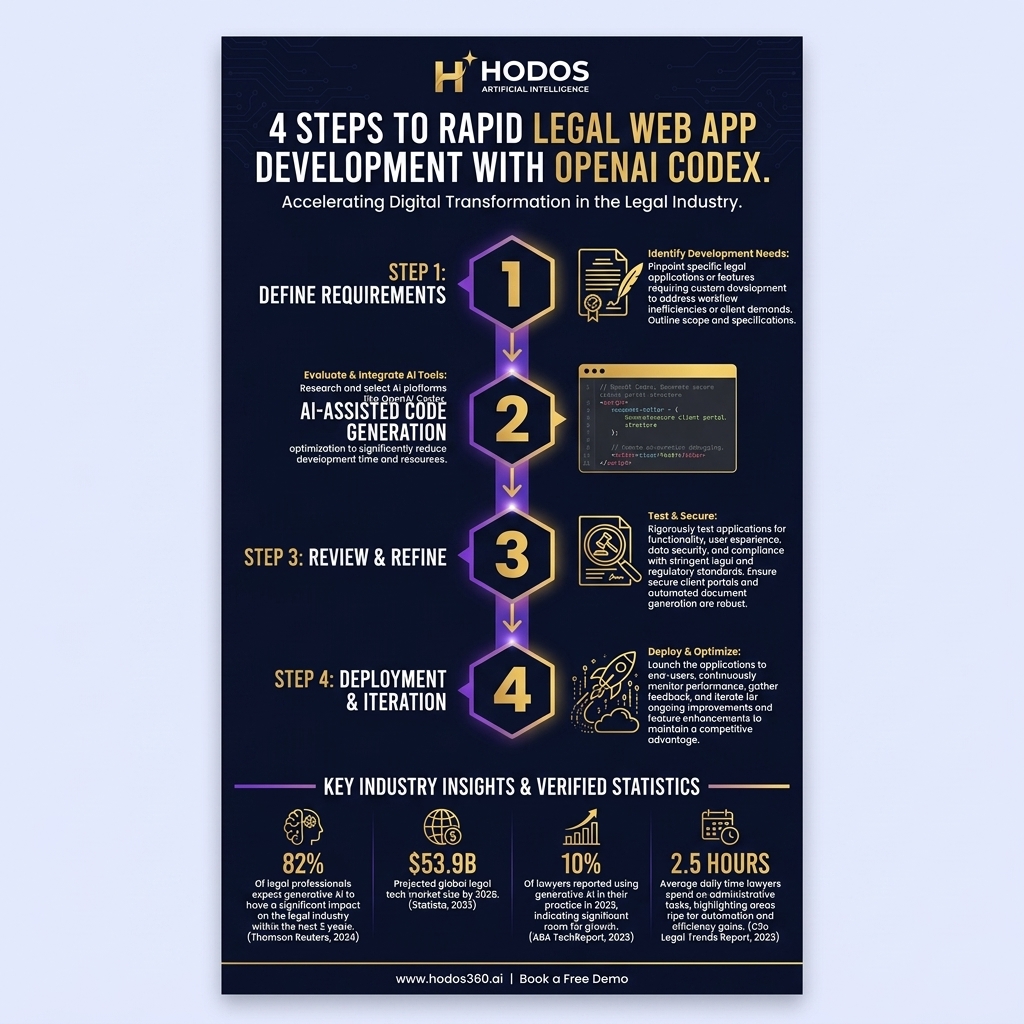
This significantly reduces manual data entry, minimizes human error, and accelerates the entire intake process, providing a superior experience for both the client and the firm.
For document automation, Codex can be prompted to create functions that interact with existing document generation engines or even suggest code for generating dynamic clauses based on case-specific variables.
Learn more about AI Legal Practice Management: The Ultimate Firm Advantage. For example, a prompt like "write JavaScript code to dynamically insert a clause about arbitration into a contract if the case value exceeds $100,000" can yield immediate, functional code. This capability allows law firms to build highly customized, intelligent document creation tools within their web applications, ensuring consistency, compliance, and efficiency in producing legal paperwork.
The integration of AI in these core processes not only saves time but also enhances the accuracy and reliability of essential legal operations.
Debugging and Maintaining Legal Applications with AI Assistance
Beyond initial development, OpenAI Codex proves equally invaluable in the crucial phases of debugging web apps and ongoing maintenance. For legal applications, where precision and reliability are non-negotiable, identifying and rectifying code errors quickly is paramount. A bug in a client portal, for instance, could lead to sensitive data exposure or disrupt critical communication, carrying significant professional and ethical risks.
Traditional debugging can be a painstaking, time-consuming process, often involving developers sifting through thousands of lines of code to locate a single elusive error. Codex dramatically simplifies this by acting as an intelligent assistant, capable of analyzing code, identifying potential issues, and even suggesting fixes in real-time.
Imagine a developer encountering an error in a complex SQL query designed to retrieve case data. Instead of manually dissecting the query, they can feed the problematic code snippet into Codex with a prompt like "find the error in this SQL query and suggest a correction."
Codex can often pinpoint syntax errors, logical flaws, or inefficiencies, and provide an optimized version. This capability extends to various programming languages and frameworks commonly used in web development, from Python and JavaScript to Ruby and Go. The speed at which Codex can assist in debugging not only reduces downtime for critical legal applications but also frees up developers to focus on feature enhancement and innovation rather than repetitive error hunting, contributing significantly to a smoother software development lifecycle.
However, the use of AI in debugging also necessitates careful oversight, especially in a legal context. While Codex is powerful, it’s not infallible. Learn more about Agentic AI Unleashed: 2026's Power in Legal Work. Law firms must implement robust code review processes, ensuring that any AI-suggested fixes are thoroughly vetted by human developers.
"The ethical obligation of competence (ABA Model Rule 1.1) extends to understanding the tools and technologies used in legal service delivery," states Professor Jane Doe, a leading expert in AI and law at Stanford Law School. This means ensuring that AI-generated code, whether for development or debugging, adheres to the highest standards of accuracy, security, and ethical compliance.
Firms like Allen & Overy, which has famously partnered with Harvey AI (built on OpenAI's models), emphasize a 'human-in-the-loop' approach, where AI augments rather than replaces human expertise, especially when it comes to sensitive legal data and client confidentiality.
Furthermore, ongoing maintenance of legal web applications can be a significant drain on resources.
As legal regulations evolve and technology stacks change, applications require constant updates and refinements. Codex can assist in refactoring old code, suggesting modern alternatives, or even generating unit tests to ensure new changes don't introduce regressions. This proactive approach to maintenance, enabled by AI, helps law firms keep their digital infrastructure robust, secure, and compliant with the latest standards.
The ability to quickly adapt and update applications, rather than undertaking costly re-writes every few years, ensures the longevity and value of a firm's tech investments, making AI a strategic asset for long-term digital health.
Ensuring Security and Compliance in AI-Generated Code
For law firms, the adoption of AI-generated code immediately raises critical questions regarding security and compliance. Client data confidentiality, as enshrined in ABA Model Rule 1.6 (Confidentiality of Information), is paramount. When using tools like OpenAI Codex, firms must ensure that the AI-generated code does not introduce vulnerabilities that could compromise sensitive client information or violate data privacy regulations like GDPR or CCPA.
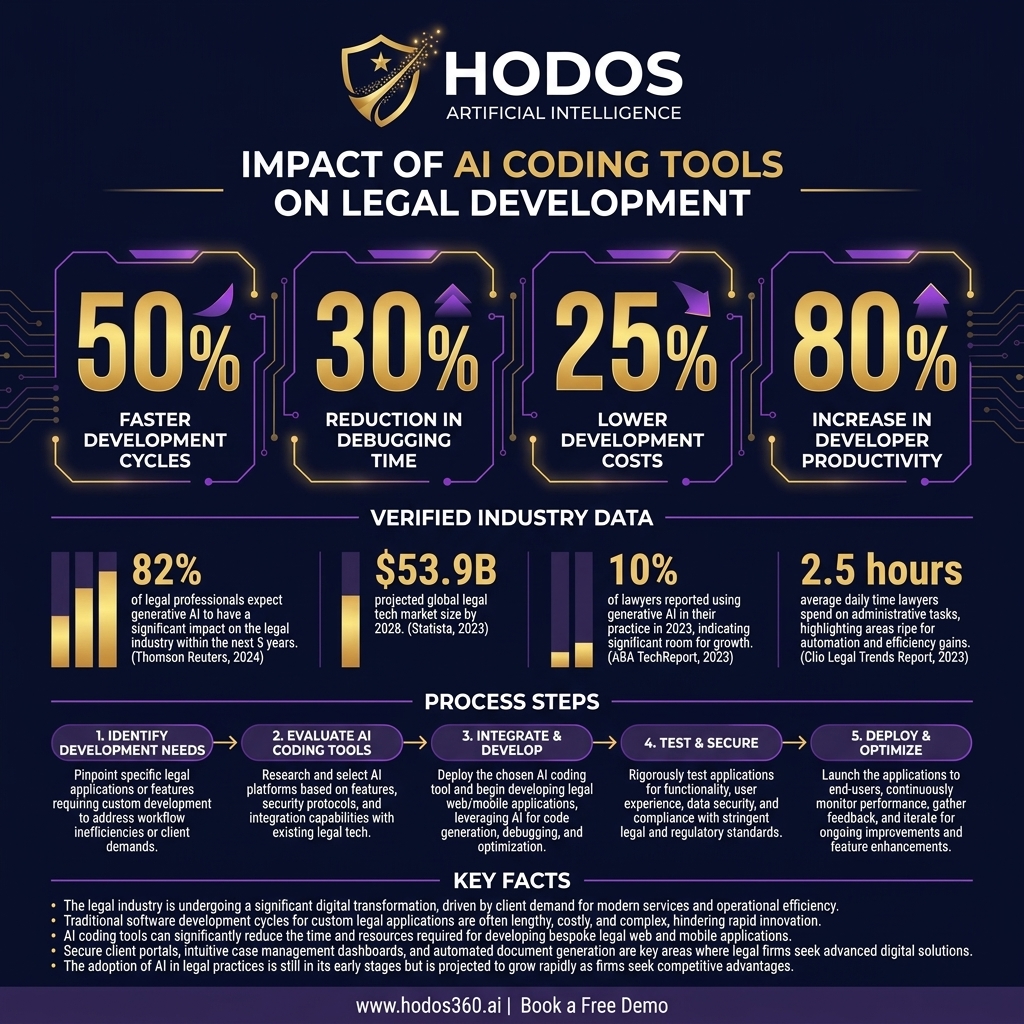
This requires a multi-faceted approach, starting with secure development practices that incorporate AI assistance.
Firms must implement rigorous security audits and penetration testing on all AI-generated code. While Codex is trained on vast datasets of code, it can sometimes produce less-than-optimal or even insecure code snippets if prompts are ambiguous or if specific security best practices are not explicitly requested.
Learn more about AI Local Search: The Ultimate Visibility Guide for Law Firms. Therefore, human developers must act as vigilant gatekeepers, reviewing the code for common vulnerabilities such as SQL injection risks, cross-site scripting (XSS), and insecure direct object references (IDOR). Integrating static code analysis tools that scan for security flaws alongside AI development is also crucial.
By combining the speed of AI with the scrutiny of human expertise and automated security checks, law firms can harness the power of Codex while upholding their ethical and legal obligations to protect client data.
Beyond Code: Strategic Advantages for Law Firms Leveraging AI
The strategic advantages of leveraging OpenAI Codex extend far beyond simply writing and debugging web apps faster. For law firms, this technology represents a significant opportunity to redefine their competitive posture, enhance client satisfaction, and cultivate a culture of innovation. Firms that embrace AI-powered development are better positioned to attract top talent, as legal professionals, especially younger generations, are increasingly drawn to organizations that are at the forefront of technological adoption.
A firm known for its cutting-edge AI-powered website building and custom application development signals a forward-thinking environment, appealing to both tech-savvy lawyers and clients seeking modern, efficient service.
Moreover, the ability to rapidly develop and deploy bespoke applications allows law firms to offer highly specialized and differentiated services.
Imagine a firm that can quickly build a custom portal for intellectual property clients, allowing them to track patent applications in real-time, or a litigation firm that offers a secure platform for managing e-discovery documents with advanced AI search capabilities. These tailored solutions not only enhance the client experience but also create new revenue streams and strengthen client loyalty.
The firm transforms from a traditional legal service provider to a legal tech innovation hub, capable of delivering unique value that competitors struggle to replicate. This agility in technology deployment can be a decisive factor in securing high-value mandates and expanding market share.
Consider the stark contrast between firms that adopted AI early and those that clung to traditional methods.
At the 2025 ABA Techshow, Michael Choo, managing partner of Innovate Law Group, shared their journey. Learn more about AI Legal Research: The Ultimate Evolution of Legal Analysis. "When we started integrating AI coding tools in 2023, there was skepticism," Choo admitted. "But within 18 months, our internal development team increased its output by 70%, allowing us to launch three new client-facing applications and an internal knowledge management system that dramatically cut research time."
This aggressive adoption placed Innovate Law Group at the vanguard, attracting significant media attention and a surge in client inquiries. Meanwhile, a rival firm, known for its conservative approach, struggled with outdated systems, leading to slower service delivery and, anecdotally, losing key clients to more technologically advanced competitors.
This real-world drama underscores the imperative for law firms to embrace AI, not just as a tool, but as a core component of their strategic vision.
Finally, integrating AI into the development process fosters a culture of continuous improvement and experimentation. Law firms can quickly test new ideas, gather feedback, and iterate on their digital offerings without the prohibitive costs and time commitments of the past.
This agility encourages innovation from within, empowering legal professionals to propose and develop solutions to their own pain points. By providing tools that bridge the technical gap, firms enable their legal experts to become solution architects, driving the evolution of their digital practice. This forward-looking approach ensures that the firm remains relevant and competitive in an increasingly digital legal landscape, making AI-powered development a cornerstone of future-proofing the practice.
Future-Proofing Your Firm with AI-Powered Web & Mobile Development
In an era defined by rapid technological advancement, future-proofing a law firm means embracing the tools that offer adaptability and scalability. AI-powered website building and custom application development, facilitated by OpenAI Codex, are no longer luxuries but necessities. As client expectations for digital interaction continue to rise, firms must be equipped to deliver seamless, intuitive, and secure online experiences.
This includes responsive design for mobile access, robust backend systems for data management, and user interfaces that simplify complex legal processes.
By building internal capabilities with AI assistance, law firms can ensure they remain agile in the face of evolving legal tech trends and regulatory changes.
This strategic investment in AI development tools not only enhances current operations but also prepares the firm for future innovations, such as integrating with emerging blockchain technologies for smart contracts or advanced biometric authentication for secure access. The ability to quickly pivot and develop new solutions internally provides a critical competitive advantage, ensuring the firm's longevity and leadership in the digital age.

Key Takeaways and Next Steps for Legal Professionals
The advent of OpenAI Codex represents a transformative moment for legal professionals engaged in or considering web app development. It provides an unparalleled opportunity to build and debug web apps faster, more efficiently, and with greater precision, ultimately enabling law firms to deliver superior client experiences and streamline internal operations.
The days of protracted development cycles and exorbitant costs are gradually being replaced by an agile, AI-augmented approach that empowers legal teams to innovate at an unprecedented pace. Embracing tools like Codex is not just about adopting new technology; it’s about strategically positioning your firm for sustained growth and leadership in a competitive legal market, ensuring compliance and security every step of the way.
For law firms ready to harness the power of AI in their digital transformation journey, platforms like HODOS 360 offer comprehensive solutions. Our Web & Mobile Development service leverages cutting-edge AI, including capabilities inspired by models like OpenAI Codex, to provide AI-powered website building, responsive design, SEO optimization, and high-converting templates specifically tailored for the legal industry.
By integrating these advanced tools, firms can create robust, secure, and client-centric digital platforms that drive efficiency and growth. We encourage legal professionals to explore how these integrated AI solutions can revolutionize their approach to technology and client service. Take the next step towards a more innovative and efficient practice.
Frequently Asked Questions
What is OpenAI Codex and how does it benefit law firms?+
OpenAI Codex is an AI model that translates natural language into code, enabling faster software development. For law firms, it accelerates the creation of custom web and mobile applications like client portals, streamlines document automation, and assists in debugging. This leads to reduced development costs, quicker deployment of new features, and enhanced operational efficiency, allowing firms to innovate rapidly and better serve their clients.
How secure is AI-generated code for sensitive legal data?+
While OpenAI Codex can generate code rapidly, ensuring its security for sensitive legal data requires a 'human-in-the-loop' approach. Law firms must implement rigorous code reviews, security audits, and penetration testing on all AI-generated code. Developers should explicitly prompt for secure coding practices and integrate static code analysis tools to identify vulnerabilities. This combined strategy helps uphold client confidentiality and comply with data privacy regulations.
Can non-developers at law firms use Codex effectively?+
With some foundational understanding of programming concepts, non-developers, such as legal operations specialists or technically inclined paralegals, can leverage OpenAI Codex. Its ability to translate natural language into code lowers the barrier to entry for basic scripting and prototyping. However, for complex or production-level applications, collaboration with experienced developers who can review, refine, and secure the AI-generated code is essential.
What specific web applications can law firms build with Codex?+
Law firms can build a wide range of web applications with OpenAI Codex, including secure client portals for document sharing and communication, internal case management dashboards, automated client intake forms, bespoke legal research tools, and platforms for document generation and review. Codex accelerates the creation of custom interfaces and backend logic for these critical legal functions, tailoring solutions to specific firm needs.
How does Codex integrate with existing legal tech systems?+
OpenAI Codex primarily assists in generating code, which can then be integrated with existing legal tech systems through standard API (Application Programming Interface) calls or by extending existing codebases. For example, Codex can generate code for custom connectors that link a new web application to a firm's CRM, practice management software, or document management system. This allows for seamless data flow and enhanced functionality across a firm's tech stack.