


AI Web Search API: Ultimate Legal Research Guide
The legal landscape is undergoing a profound transformation, driven by an accelerating wave of artificial intelligence innovations. Once considered the exclusive domain of large tech companies, cutting-edge AI is now democratizing, making sophisticated tools accessible to industries like legal services. A recent announcement from Cloudflare, a global leader in internet infrastructure, underscores this shift: the introduction of a Web Search API via their AI Gateway. This development is not merely an incremental upgrade; it represents a fundamental rethinking of how data is accessed, filtered, and utilized, holding immense implications for law firms striving for efficiency, accuracy, and a competitive edge in an increasingly data-intensive world. Firms ignoring this evolution risk falling behind, as early adopters begin to redefine industry benchmarks.
This new AI Web Search API promises to integrate seamlessly into existing digital infrastructures, offering a powerful conduit to real-time, context-aware information. For law firms, this means moving beyond traditional, often cumbersome, legal research methods. Imagine an attorney instantly querying vast databases, court records, and regulatory documents, not just for keywords, but for nuanced legal principles, precedents, and factual patterns, with AI interpreting the intent behind the query. This level of semantic understanding and data synthesis, powered by models like OpenAI's GPT-4 or Anthropic's Claude, which Cloudflare's gateway can facilitate, will dramatically reduce research time and enhance the quality of legal analysis. The competitive tension here is palpable: firms that harness this capability will gain an undeniable advantage in case preparation, client advice, and strategic planning, while those clinging to older paradigms will struggle to keep pace with the velocity of information.
Indeed, the integration of such advanced capabilities into a law firm's digital ecosystem is precisely where platforms like HODOS 360 become indispensable. Our Web & Mobile Development service, for example, is designed to build AI-powered websites that can fully leverage innovations like Cloudflare's AI Gateway. This ensures that a firm's online presence is not just a static brochure but a dynamic, intelligent portal for both internal operations and client engagement. As Matthew Prince, CEO of Cloudflare, has often emphasized regarding the future of internet infrastructure, the goal is to make powerful tools accessible and secure. This philosophy aligns perfectly with the needs of law firms today: robust, secure, and intelligently integrated digital solutions that streamline operations, from client intake to document automation, ultimately enhancing client service and firm profitability. The journey towards this intelligent legal future begins with understanding and adopting these foundational technologies.
The Dawn of AI-Powered Web Search for Legal Professionals
The legal profession has always been information-intensive, with success often hinging on the ability to find, analyze, and synthesize vast quantities of data. Historically, this meant painstaking hours poring over law books, case reporters, and legislative databases. The advent of digital legal research platforms like Westlaw and LexisNexis marked a significant evolution, but even these systems, while powerful, often rely on keyword matching and Boolean logic, demanding precise query formulation from the user. Cloudflare's new AI Web Search API via its AI Gateway signifies a paradigm shift, moving beyond mere information retrieval to intelligent information synthesis. This is a direct response to the increasing complexity of legal data and the need for more intuitive, context-aware search capabilities.
This innovation is built upon the foundational work of AI pioneers and companies that have pushed the boundaries of large language models (LLMs). Figures like Sam Altman of OpenAI and Dario Amodei of Anthropic have led the charge in developing models that understand natural language with unprecedented accuracy. Cloudflare's AI Gateway acts as a crucial intermediary, allowing firms to securely integrate these powerful LLMs with external data sources, including the entire web, without exposing sensitive client information or proprietary research. This secure integration is critical for law firms, addressing long-standing concerns about data privacy and ethical AI use. Learn more about Essential AI Search for Law Firms: Beyond Hosting Limits. The tension between leveraging powerful public AI models and maintaining strict confidentiality has been a significant barrier, and Cloudflare's solution offers a pathway to bridge this gap.
Consider the practical implications: instead of searching for specific statutes, an attorney could ask, "What are the precedents for patent infringement in the pharmaceutical industry involving biologics approved in the last five years in the Federal Circuit?" The AI Web Search API, leveraging models channeled through the AI Gateway, could then intelligently scour legal databases, recent court filings, and even relevant scientific literature, presenting not just documents, but synthesized answers, key cases, and dissenting opinions. This capability directly addresses the findings of a 2023 Thomson Reuters report, which indicated that attorneys spend up to 30% of their time on research, much of which could be automated or significantly accelerated by advanced AI tools. The ability to quickly identify relevant information and summarize complex legal arguments will free up attorneys to focus on higher-value tasks, such as strategic thinking, client counseling, and courtroom advocacy.
The competitive landscape is already reacting to such advancements. While established legal tech players are integrating AI, the rapid pace of innovation from infrastructure providers like Cloudflare, and AI developers like OpenAI, creates a dynamic environment. Firms that proactively adopt and integrate these foundational technologies into their digital infrastructure, particularly their client-facing and internal research systems, will be better positioned. This isn't just about efficiency; it's about gaining a deeper, more comprehensive understanding of legal issues faster than competitors, potentially influencing case outcomes and client satisfaction. The shift is from reactive information gathering to proactive, intelligent insights, fundamentally altering the competitive dynamics of legal practice.
Enhanced Legal Research and Data Intelligence
The traditional approach to legal research, while foundational, is increasingly challenged by the sheer volume and velocity of information. The AI Web Search API transforms this challenge into an opportunity for unparalleled data intelligence. By providing a unified interface to query both public web data and private, curated legal databases, it allows for a holistic view that was previously unattainable. For instance, a firm dealing with a complex corporate merger might need to analyze not only SEC filings and antitrust regulations but also public sentiment, industry news, and competitor announcements – all in real-time. This API facilitates that comprehensive sweep, identifying subtle connections and emerging risks that human researchers might miss under time pressure. The ability to synthesize insights from diverse data sources offers a significant advantage in due diligence and strategic advisory roles.
Moreover, the AI Gateway's ability to provide secure, controlled access to large language models (LLMs) means that firms can leverage the cutting-edge capabilities of these models without compromising data security or client confidentiality. Learn more about AI Litigation: The Ultimate Platform for Modern Law Firms. This addresses a major concern highlighted by the American Bar Association (ABA) in its discussions on ethical AI use in legal practice, particularly regarding client data protection under ABA Model Rule 1.6 (Confidentiality of Information). Firms can now conduct highly sophisticated analyses, such as predictive analytics on litigation outcomes or identifying obscure legal precedents, all within a secure environment. This level of data intelligence empowers attorneys to provide more informed, proactive, and strategic advice to their clients, moving beyond reactive problem-solving to anticipatory guidance. The implications for firms specializing in areas like intellectual property, where exhaustive and precise search is paramount, are particularly transformative.
Building a Smarter Digital Presence: AI & Your Law Firm Website
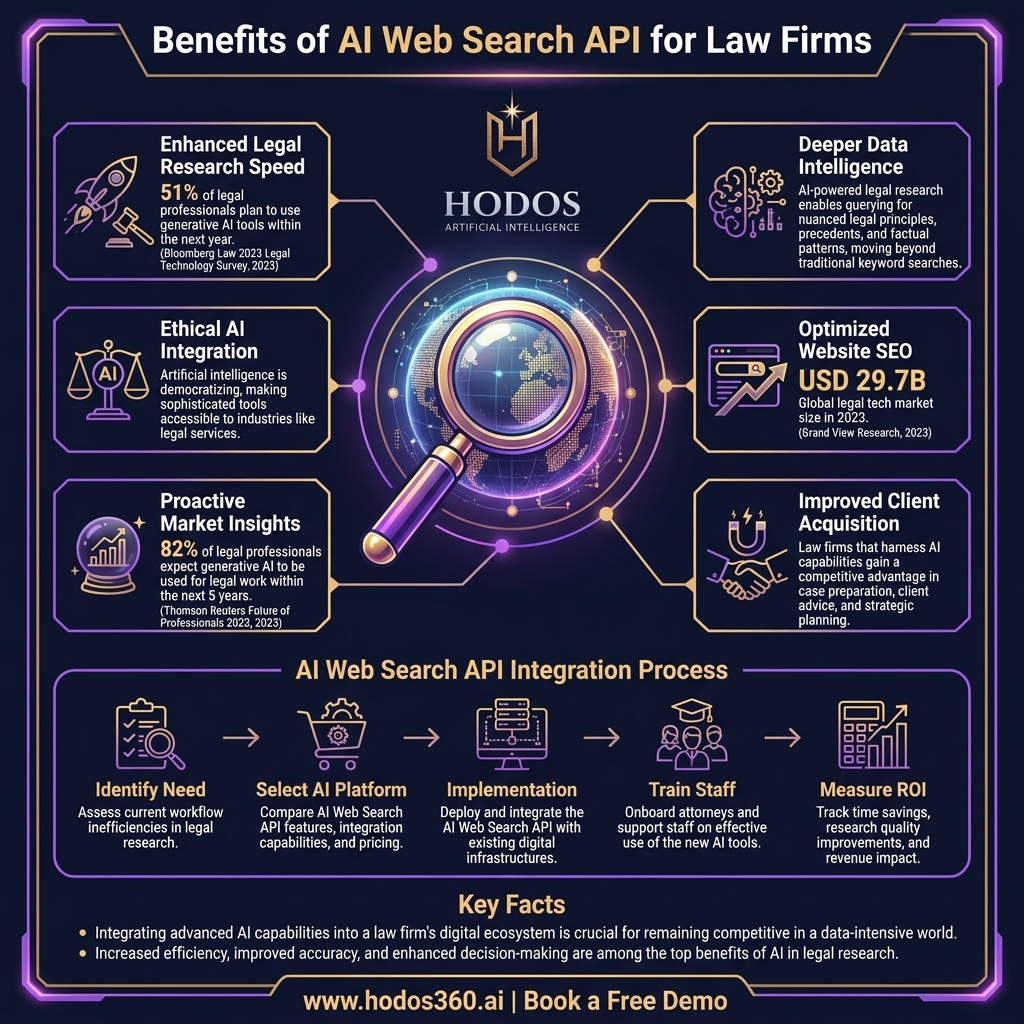
Beyond research, the integration of an AI Web Search API extends profoundly to a law firm's digital presence. In today's competitive market, a firm's website is its virtual storefront, its primary client acquisition tool, and often, the first point of contact. An AI-powered website, built with capabilities to leverage such APIs, can offer an entirely new level of user experience and lead generation. Imagine potential clients visiting a firm's site and being able to interact with an AI-powered assistant that can answer initial legal queries, qualify leads based on specific needs, and even book appointments directly, all informed by the firm's specialized knowledge base and the broader legal context accessed via the API. This moves beyond static FAQs to dynamic, intelligent engagement, significantly enhancing the client intake process.
This approach directly impacts client acquisition and engagement. A 2024 Gartner report on digital customer experience noted that businesses leveraging AI for personalized interactions saw a 20% increase in customer satisfaction and lead conversion rates. For law firms, this translates into a more efficient funnel, reducing the burden on administrative staff for initial inquiries and ensuring that attorneys engage with pre-qualified leads. Furthermore, the AI can continuously learn from user interactions, refining its responses and improving the website's ability to serve potential clients. This creates a feedback loop that constantly optimizes the digital experience, making the firm's website a highly effective, 24/7 lead generation and client service tool. The competitive drama here is clear: firms with intelligent, responsive websites will attract and convert more clients than those with outdated, static online presences.
The underlying technology for such an intelligent website needs to be robust and adaptable. Learn more about Gemini AI: The Ultimate Guide for Law Firms. This is where HODOS 360's Web & Mobile Development service shines, specializing in creating AI-powered websites that are responsive, SEO-optimized, and built with high-converting templates designed specifically for the legal sector. By integrating capabilities to utilize advanced APIs like Cloudflare's, we ensure that a firm's digital platform is not just aesthetically pleasing but functionally superior, capable of dynamic content generation, personalized user experiences, and sophisticated data analysis. This holistic approach ensures that every aspect of the firm's online presence works synergistically to achieve business objectives, from enhancing visibility to streamlining client intake.
Moreover, the insights gained from the AI Web Search API can fuel a firm's broader digital marketing efforts. AI can analyze trending legal topics, common client pain points, and competitor strategies by effectively monitoring the web and legal news. This data intelligence allows firms to generate highly relevant content – blog posts, articles, videos – that directly addresses client needs and ranks higher in search engine results. This proactive content strategy, supported by real-time data, ensures that the firm remains visible and authoritative in its niche, attracting organic traffic and establishing thought leadership. For instance, if the API identifies a surge in inquiries about new data privacy regulations, the firm can rapidly deploy educational content, positioning itself as an expert, thereby driving lead generation and solidifying its market position. This strategic use of AI for content and SEO is a game-changer for digital marketing in law.
Optimizing SEO and Content for Visibility
The interplay between the AI Web Search API and SEO is particularly potent. By providing deep insights into search trends, user intent, and competitive content strategies, the API becomes a powerful tool for optimizing a firm's online visibility. Traditional SEO relies on keyword research and content creation, but AI elevates this by identifying nuanced semantic relationships and predicting emerging search patterns. For example, the API can detect shifts in how potential clients phrase legal questions or identify underserved content areas within a specific legal niche. This allows firms to create highly targeted, authoritative content that directly answers user queries, leading to higher rankings and increased organic traffic. Learn more about Voice AI: Essential Guide to Transforming Legal Operations. This data-driven approach ensures that marketing efforts are not based on guesswork but on actionable intelligence, maximizing ROI.
Furthermore, the ability to rapidly generate and update content based on these real-time insights is a significant competitive advantage. As discussed at LegalTech NYC 2026, firms that can dynamically adapt their digital content to evolving legal landscapes and client needs will dominate search results. The AI Web Search API helps identify these opportunities, and AI-powered content generation tools can then assist in drafting relevant articles, FAQs, and case summaries, ensuring the firm's website is always fresh, relevant, and authoritative. This proactive content strategy is crucial for maintaining a strong digital presence and consistently attracting new clients, turning the firm's website into a dynamic, intelligent hub for legal information and services.
Competitive Edge: Data-Driven Strategies for Growth
In a legal market increasingly defined by rapid technological adoption, a firm's ability to leverage data for strategic advantage is paramount. The AI Web Search API is not just a research tool; it's a strategic intelligence asset. By integrating this API, firms can gain unparalleled insights into market trends, competitor activities, and emerging legal challenges. Imagine a firm using the API to track the litigation patterns of a major corporate client's rivals, identify new regulatory shifts before they become mainstream news, or even predict shifts in judicial philosophy. This level of foresight, derived from real-time, AI-processed web data, empowers firms to make more informed decisions about practice area expansion, talent acquisition, and client targeting. The competitive drama intensifies as firms with superior data intelligence outmaneuver those relying on slower, less comprehensive methods.
For example, a boutique litigation firm could use the API to monitor specific court dockets and news feeds related to a particular industry, identifying potential class-action lawsuits or regulatory enforcement actions before they are widely reported. This proactive intelligence allows the firm to reach out to affected businesses with timely, relevant advice, positioning themselves as industry leaders. This is a stark contrast to firms that react only after an event has become public, often missing the window for early intervention. The difference in approach can mean the difference between winning and losing a significant client, or even shaping the narrative around an emerging legal issue. According to a recent report by the ABA's Legal Technology Resource Center, firms utilizing advanced analytics tools reported an average of 15% higher revenue growth compared to their peers.
Furthermore, the AI Web Search API can inform a firm's pricing strategies and resource allocation. Learn more about AI Marketing Platform Law Firm Growth. By analyzing market demand for specific legal services, competitor pricing structures, and the perceived value of different legal specialties, the AI can provide data-backed recommendations. This moves firms away from arbitrary billing practices towards a more strategic, value-based approach. For instance, if the API identifies a high demand for legal services related to compliance with new data privacy legislation, and a relative scarcity of specialized firms, it could suggest a premium pricing model. This kind of dynamic market analysis, enabled by AI, allows firms to optimize their business models for maximum profitability and efficiency, ensuring that resources are deployed where they will generate the greatest return.
This strategic advantage extends to internal operations as well. The insights gleaned from the AI Web Search API can be used to optimize internal workflows, such as identifying bottlenecks in document review or streamlining discovery processes. By understanding how information is accessed and utilized across the firm, AI can suggest improvements that reduce operational costs and increase attorney productivity. This holistic application of data intelligence, from client-facing services to back-office efficiency, creates a compounding effect that significantly enhances a firm's overall competitiveness. Firms like Allen & Overy, in their partnership with Harvey AI, exemplify this commitment to leveraging AI at every level of their operations, setting a benchmark for the industry.
Navigating the Future: Ethical AI and Legal Innovation
As law firms embrace advanced AI tools like the AI Web Search API, navigating the ethical landscape becomes paramount. The legal profession is bound by stringent rules of professional conduct, and AI's integration must align with these principles. Key considerations include the duty of competence (ABA Model Rule 1.1), ensuring attorneys understand the limitations and capabilities of AI tools; the duty of confidentiality (ABA Model Rule 1.6), safeguarding client data when using AI services; and the duty to supervise (ABA Model Rule 5.1/5.3), ensuring non-lawyer assistants and technological tools are used ethically. Cloudflare's AI Gateway, by providing a secure and controlled environment for interacting with LLMs, helps mitigate some of these risks, allowing firms to maintain data privacy and control over the AI's output, thereby addressing concerns about data leakage or unintended disclosure.
The broader regulatory environment is also evolving rapidly, with initiatives like the EU AI Act setting precedents for the responsible development and deployment of AI. Law firms, as both users and advisors on AI, have a critical role to play in shaping these discussions. By actively engaging with AI innovation, understanding its technical underpinnings, and contributing to best practices, firms can not only protect their clients but also position themselves as thought leaders in this nascent field. This involves internal policies, robust training for attorneys and staff, and careful vetting of AI vendors. The legal community's cautious but progressive adoption of AI will ultimately define the standards for its ethical use across all industries.
The future of legal practice is one where human expertise is augmented, not replaced, by intelligent technology. Learn more about AI Marketing Stack: Essential Tools for Law Firm Growth. The AI Web Search API exemplifies this synergy, empowering legal professionals with unprecedented access to information and analytical capabilities, allowing them to focus on the strategic, empathetic, and uniquely human aspects of law. This shift is creating new opportunities for innovation, from specialized AI-driven legal services to entirely new business models. Firms that embrace this innovation with a forward-looking, ethically grounded approach will not only thrive but will also help shape a more efficient, equitable, and accessible legal system for all. The narrative arc here is one of evolution, where tradition meets technology to forge a stronger future.
Ultimately, the ability to rapidly adapt and integrate these groundbreaking technologies will distinguish leading law firms. The journey involves not just acquiring new tools but fundamentally rethinking workflows, client engagement, and strategic planning. HODOS 360 stands as a partner in this evolution, providing the Web & Mobile Development solutions necessary to build the intelligent, secure, and high-performing digital infrastructure that modern law firms demand. From custom AI-powered websites that leverage the latest APIs to robust internal systems, our platform is designed to ensure your firm remains at the forefront of legal innovation.

Key Takeaways and Next Steps for Law Firms
The introduction of the AI Web Search API via Cloudflare's AI Gateway marks a significant milestone in legal technology. For law firms, this isn't just a technical update; it's a strategic imperative that promises to redefine efficiency, enhance client service, and sharpen competitive advantage. The ability to harness AI for deep, contextual web search and integrate it securely into a firm's digital ecosystem offers a powerful pathway to smarter legal research, optimized online presence, and data-driven growth strategies. Firms that proactively engage with these innovations will find themselves better equipped to navigate the complexities of modern legal practice, attracting and serving clients with unprecedented effectiveness. The future of legal innovation hinges on embracing these intelligent tools, while always adhering to the highest ethical standards and professional responsibilities.
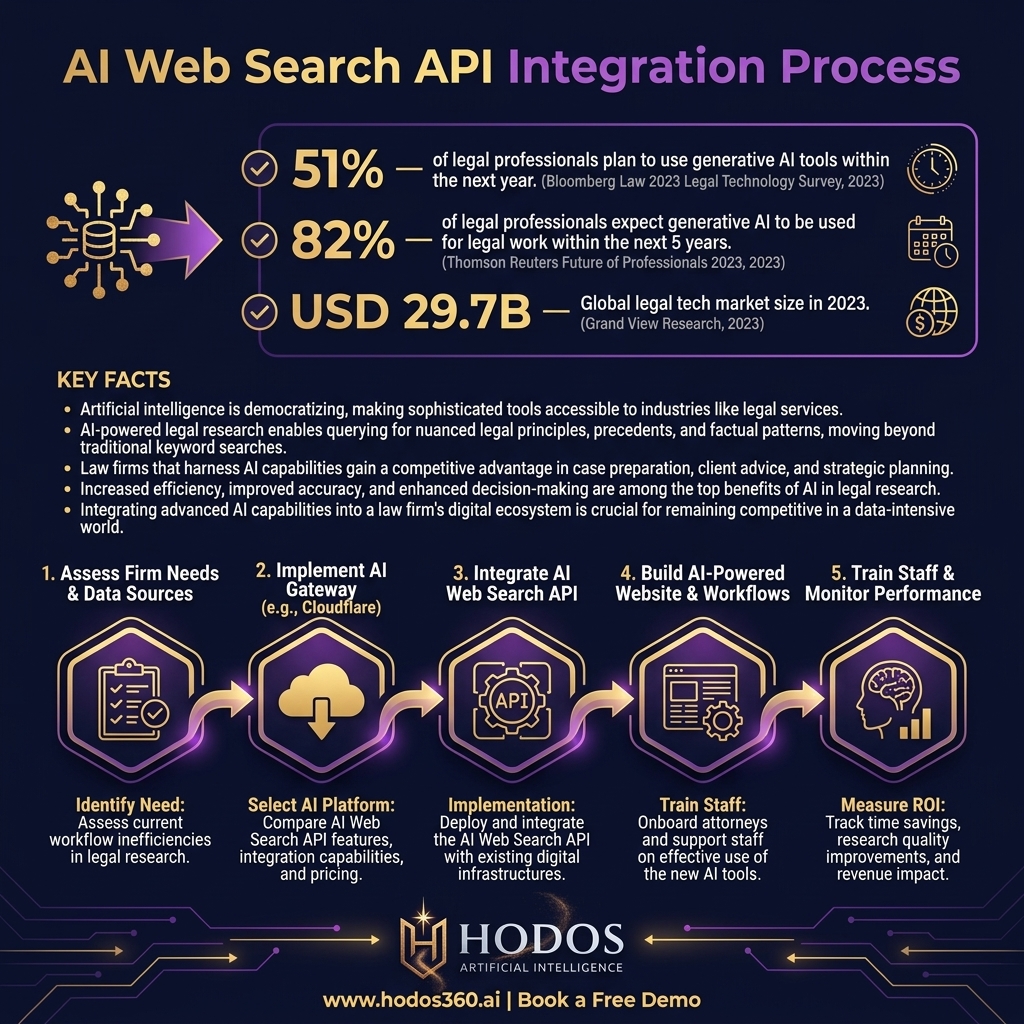
The actionable next steps for any forward-thinking law firm involve evaluating current digital infrastructure, identifying areas where AI-powered search and data intelligence can create the most impact, and partnering with technology providers capable of delivering secure, integrated solutions. This means investing in AI-powered website building that can leverage advanced APIs, streamlining AI-powered legal workflows, and continuously training staff on the ethical and effective use of these new tools. By taking these steps, law firms can ensure they are not merely observers of the AI revolution but active participants, shaping a more intelligent and efficient future for legal services. The time to act is now, to ensure your firm is not just keeping pace, but leading the charge.
Frequently Asked Questions
What is the AI Web Search API, and how does it benefit law firms?+
The AI Web Search API, particularly via Cloudflare's AI Gateway, provides secure, intelligent access to web data using advanced AI models. For law firms, it significantly enhances legal research by enabling natural language queries, synthesizing complex information, and identifying nuanced precedents faster than traditional methods. This boosts efficiency, improves the accuracy of legal analysis, and frees attorneys for higher-value tasks, offering a critical competitive advantage in legal strategy and client advice.
How does this AI innovation impact a law firm's website and client acquisition?+
Integrating the AI Web Search API into a firm's website transforms it into a dynamic, intelligent client engagement platform. It enables AI-powered assistants to answer initial queries, qualify leads, and book appointments 24/7. This improves client intake efficiency, provides personalized user experiences, and optimizes SEO by informing content strategies based on real-time search trends, ultimately driving higher conversion rates and stronger client acquisition.
What are the ethical considerations for law firms using AI Web Search APIs?+
Ethical considerations include maintaining client confidentiality (ABA Model Rule 1.6), ensuring attorney competence in using AI tools (ABA Model Rule 1.1), and responsibly supervising AI's output. Cloudflare's AI Gateway helps by providing a secure environment, but firms must establish internal policies, provide training, and vet vendors to ensure compliance with professional conduct rules and evolving AI regulations like the EU AI Act.
Can AI Web Search API help with competitive intelligence and market analysis?+
Absolutely. The AI Web Search API acts as a powerful strategic intelligence tool. It allows firms to monitor market trends, track competitor litigation patterns, identify emerging regulatory shifts, and analyze public sentiment in real-time. This foresight enables proactive decision-making regarding practice area expansion, client targeting, and pricing strategies, providing a significant data-driven competitive edge in a rapidly evolving legal market.
How can law firms integrate this technology into their existing operations?+
Integration involves partnering with legal tech providers specializing in AI-powered digital infrastructure. Firms should focus on building AI-powered websites capable of leveraging such APIs, streamlining AI-powered legal workflows for case management and document automation, and implementing robust training programs. Solutions like HODOS 360's Web & Mobile Development are designed to facilitate this seamless integration, ensuring firms can harness these innovations securely and effectively.