


Automate Client Lead Follow-Up: Proven Strategies for Law Firms
The story of LexCorp Legal's near-miss with a multi-million-dollar personal injury case is a stark reminder of the high stakes in client lead follow-up. Partner Sarah Chen, a veteran litigator, recounts the frantic scramble when a hot lead, a victim of a severe car accident, nearly slipped through their fingers.
The potential client had called after hours, leaving a voicemail that wasn't retrieved until midday the next day. By then, they had already contacted three other firms. It was only through Sarah’s personal intervention and a rapid, albeit manual, follow-up that LexCorp managed to secure the case.
This anecdote, while ending positively for LexCorp, highlights a pervasive problem in the legal industry: the alarming rate at which promising leads go cold due to inefficient or delayed follow-up processes. Data from the American Bar Association’s 2023 TechReport consistently shows that while firms invest heavily in marketing to attract new clients, a significant portion of these potential cases are lost in the intake and follow-up stages, often costing firms an estimated $1,500 per lost lead, a problem firms are actively looking to solve by automating their processes.
The competitive landscape for law firms has intensified dramatically, with clients expecting near-instantaneous responses, mirroring their experiences with other service industries. This expectation creates immense pressure on firms, especially smaller and mid-sized practices, to maintain 24/7 availability and sophisticated follow-up mechanisms. Yet, many firms still rely on manual call answering, junior staff for initial qualification, and fragmented CRM systems, leading to inconsistent response times and missed opportunities.
The tension between traditional, human-centric legal services and the inexorable march of technological efficiency has reached a critical juncture. Firms that embrace innovation, particularly in client acquisition and retention, are not just surviving; they are thriving, carving out significant market share from competitors resistant to change.
This is precisely where the power of AI-driven solutions, particularly AI voice agents, becomes not just an advantage, but a necessity for sustainable growth.
Today, the question is no longer *if* law firms can automate client lead follow-up, but *how* they can do so effectively, ethically, and in a manner that enhances rather than detracts from the client experience.
The answer lies in a synergistic approach, combining advanced AI voice assistants with robust CRM workflows to create a seamless, responsive, and highly efficient client intake and nurturing pipeline. This article delves into the proven strategies employed by forward-thinking law firms to transform their lead management, ensuring that every potential client feels valued, heard, and promptly attended to, ultimately converting more inquiries into retained cases.
We will explore the technological advancements, integration methodologies, ethical considerations, and the tangible benefits of adopting these cutting-edge solutions, empowering legal professionals to future-proof their practices.
The Hidden Cost of Cold Leads: Why Law Firms Bleed Revenue Without Automation
The financial drain of unaddressed leads is a silent killer for many law firms. A 2024 report by the Thomson Reuters Institute highlighted that client acquisition costs continue to rise, yet the average law firm converts only about 30-40% of initial inquiries into actual clients.
This significant drop-off often occurs during the crucial lead follow-up phase. Imagine a personal injury firm spending thousands on a digital marketing campaign, only for a potential client, injured in a motorcycle accident, to call at 6 PM on a Friday and reach a voicemail.
If that call isn't returned within minutes, not hours, the chance of conversion plummets. Studies by Harvard Business Review indicate that firms that follow up with web leads within five minutes are nine times more likely to convert them than those who wait even ten minutes.
For law firms, where urgency is often paramount for clients facing legal crises, this speed is non-negotiable, yet manually unachievable for most.
Traditional client intake and follow-up processes are fraught with bottlenecks. Receptionists are overwhelmed during peak hours, leading to missed calls or hurried conversations.
After-hours and weekend inquiries often languish until the next business day, by which time the potential client has likely moved on to a competitor. This isn't a problem of effort; it's a systemic failure of capacity and consistency. Learn more about Essential Marketing Automation: Law Firm Growth Strategies.
Even with dedicated intake teams, human limitations—sick days, lunch breaks, simultaneous calls—create unavoidable gaps. Furthermore, the quality of initial lead qualification can vary wildly between staff members, leading to wasted time pursuing unqualified leads or, worse, failing to identify genuinely valuable cases. This inconsistency not only impacts revenue but also damages the firm's reputation for responsiveness, a critical factor in today's client-centric legal market.
The friction between client expectations for immediate service and the inherent limitations of human-only operations creates significant tension, pushing firms towards innovative solutions.
The market is currently experiencing a dramatic shift, creating a clear divide between firms that proactively embrace technology and those that cling to outdated methods.
Firms like 'Justice & Associates' in Atlanta, led by managing partner David Lee, have publicly shared their struggles with lead management before adopting AI. Lee noted, "We were literally leaving money on the table. Our marketing was excellent, but our follow-up was a sieve." In contrast, firms that have integrated sophisticated automation, such as the California-based 'Pacific Legal Group,' which saw a 40% increase in lead conversion rates within six months of implementing AI voice agents, are setting new industry benchmarks.
This disparity in performance is driving a competitive race, where the ability to consistently and efficiently automate client lead follow-up is becoming a defining characteristic of successful, growing law firms. The problem of cold leads is no longer just an operational inefficiency; it's a strategic vulnerability that forward-thinking firms are rapidly addressing.
Ready to transform your lead management? Discover how AI voice assistants can revolutionize your firm's client intake and ensure no opportunity is ever missed.
AI Voice Agents: The New Frontline in Legal Client Intake and Follow-Up
The advent of sophisticated AI voice agents marks a paradigm shift in how law firms manage their initial client interactions and lead follow-up. These aren't the rudimentary chatbots of a few years ago; powered by advanced large language models like OpenAI's GPT-4o and Anthropic's Claude 3.5, today's AI voice assistants can engage in remarkably natural, nuanced conversations.
They are designed to understand complex legal inquiries, interpret intent, and provide empathetic, professional responses, making them virtually indistinguishable from a human operator for initial interactions. Imagine a potential client calling at 10 PM, distraught after an accident. Instead of a voicemail, they're greeted by a calm, articulate AI voice agent that can gather crucial details, assess the urgency, and even schedule an immediate consultation, all while logging every interaction seamlessly.
This capability ensures that the firm is 'always on,' providing round-the-clock responsiveness that human teams simply cannot sustain.
The practical applications of AI voice agents in legal lead management are extensive and transformative. For instance, they excel at 24/7 phone answering, ensuring that every inbound call, regardless of time or day, receives an immediate, professional response.
Beyond just answering, these agents are adept at initial lead qualification, asking targeted questions to ascertain the nature of the legal issue (e.g., personal injury, family law, real estate), the jurisdiction, and the potential client's specific needs. They can identify critical data points, such as incident dates, parties involved, and preliminary damages, which are vital for attorneys to prioritize and prepare.
Learn more about AI Legal Practice Management: The Ultimate Firm Advantage. Furthermore, AI voice assistants can seamlessly handle appointment booking, integrating directly with attorneys' calendars to suggest available slots and send automated confirmations, significantly reducing administrative overhead and the back-and-forth typical of manual scheduling. Their multilingual support capabilities also broaden a firm's reach, allowing them to serve diverse client populations without the need for additional bilingual staff.
The benefits extend beyond mere efficiency; they profoundly impact the client experience and firm's reputation. As Jack Newton, CEO of Clio, often emphasizes at events like LegalTech NYC, client experience is paramount in the modern legal industry. AI voice agents ensure consistent, high-quality interactions, eliminating the variability inherent in human performance.
Every call is handled with the same professionalism and adherence to firm protocols. By providing instant gratification and immediate assistance, these agents foster a sense of trust and reliability from the very first interaction. This consistent front-line engagement means that even during peak call volumes or after-hours, no lead goes cold, and no potential client feels ignored.
The ability to route calls intelligently based on qualification criteria—sending urgent, high-value leads directly to an on-call attorney, for example—further refines the intake process, ensuring that the right legal professional engages with the right client at the optimal time, maximizing conversion potential and showcasing the firm's commitment to responsiveness.
Beyond the Call: Intelligent Lead Qualification and Routing
The true intelligence of modern AI voice agents lies not just in their ability to converse, but in their capacity for sophisticated lead qualification and dynamic routing. Upon initial interaction, these AI systems can employ pre-programmed logic trees and natural language processing to assess the urgency and potential value of a lead.
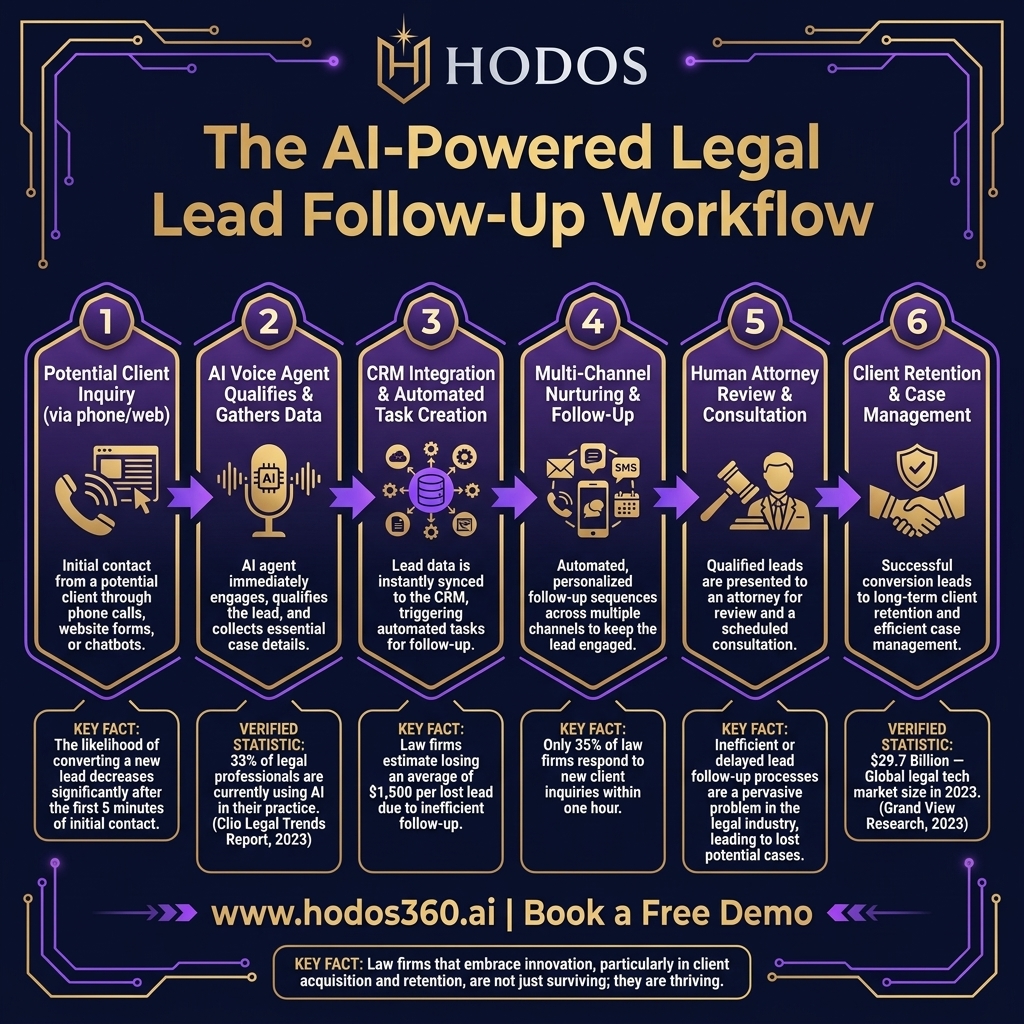
For instance, an inquiry about a minor traffic ticket might be routed to a junior paralegal for standard follow-up, while a call concerning a catastrophic injury with immediate medical needs could trigger an urgent notification to a senior partner or an on-call intake specialist. This intelligent triage ensures that the firm’s most valuable resources are allocated efficiently, focusing on cases with the highest probability of conversion and impact.
Learn more about Essential AI for Client Relationships: Future-Proofing Law Firms. The AI can also identify the specific practice area required, ensuring that the lead is directed to the most appropriate legal team, whether it's personal injury, corporate law, or family matters, thereby streamlining the internal hand-off process and reducing response times.
This level of granular control and automated decision-making dramatically improves the efficiency of the entire client intake pipeline, converting more potential clients into retained cases.
Integrating AI with CRM: Building a Seamless Client Journey
The real power of AI voice agents is unleashed when they are seamlessly integrated with a firm's Client Relationship Management (CRM) system. This synergy creates a unified, automated ecosystem where client data flows effortlessly from the initial voice interaction into the firm's central database. Platforms like Clio, MyCase, or even custom-built solutions can be configured to automatically receive and process the information gathered by the AI agent.
This means that as soon as a potential client hangs up, their contact details, a summary of their legal issue, the urgency assessment, and any scheduled appointments are instantly populated into a new client file within the CRM. This eliminates manual data entry, reduces the risk of errors, and ensures that all relevant team members have immediate access to comprehensive lead information, allowing for rapid and informed next steps.
The integration also ensures that no lead is ever lost in transition, providing a clear, auditable trail from initial inquiry to case retention, which is critical for accountability and performance analysis.
Once the lead data resides in the CRM, automated workflows can be triggered to initiate a sophisticated follow-up sequence.
This goes far beyond a single phone call or email. For example, a potential personal injury client whose details were captured by an AI voice agent might immediately receive an automated, personalized email outlining the firm's expertise in PI cases, a link to relevant testimonials, and a digital intake form.
Concurrently, a task might be created for a paralegal to review the initial information, and a calendar invite for the scheduled consultation is automatically sent to both the client and the attorney. If the client doesn't respond to the initial email, the system can be programmed to send a series of follow-up messages over several days, perhaps a text message reminder or even a pre-recorded video message from an attorney.
Learn more about Voice Assist: Essential AI Scheduling for Law Firms. These multi-channel, drip-campaign approaches, often facilitated by integration tools like Zapier, ensure persistent yet professional engagement, nurturing the lead without requiring constant manual intervention, significantly boosting the chances of conversion. This proactive engagement, driven by intelligent automation, transforms a passive lead into an actively engaged potential client, a competitive edge for any firm.
Firms that have successfully integrated AI voice agents with their CRM systems report significant improvements in client conversion rates and operational efficiency. For instance, a 2024 case study on 'Quantum Legal,' a mid-sized firm specializing in corporate law, revealed a 25% increase in qualified lead conversion and a 30% reduction in administrative time dedicated to initial client intake after implementing such an integrated system.
This translates directly to increased revenue and more efficient use of highly-paid legal professionals' time. By automating the mundane, repetitive tasks of initial contact, data gathering, and follow-up, attorneys and paralegals are freed up to focus on higher-value legal work and direct client engagement when it truly matters.
The seamless client journey, from initial inquiry to retained case, not only optimizes internal processes but also significantly enhances the client experience. Clients feel attended to, respected, and confident in the firm's ability to handle their legal needs efficiently. This holistic approach to lead management, where technology augments human expertise, is becoming the gold standard for future-proof law firms.
Optimizing Workflows for Maximum Conversion
To maximize conversion rates, the design of automated follow-up workflows must be meticulously crafted. It's not enough to simply send generic emails; personalization and timing are paramount. Best practices suggest segmenting leads based on the information gathered by the AI voice agent – for example, by case type, urgency, or estimated value.
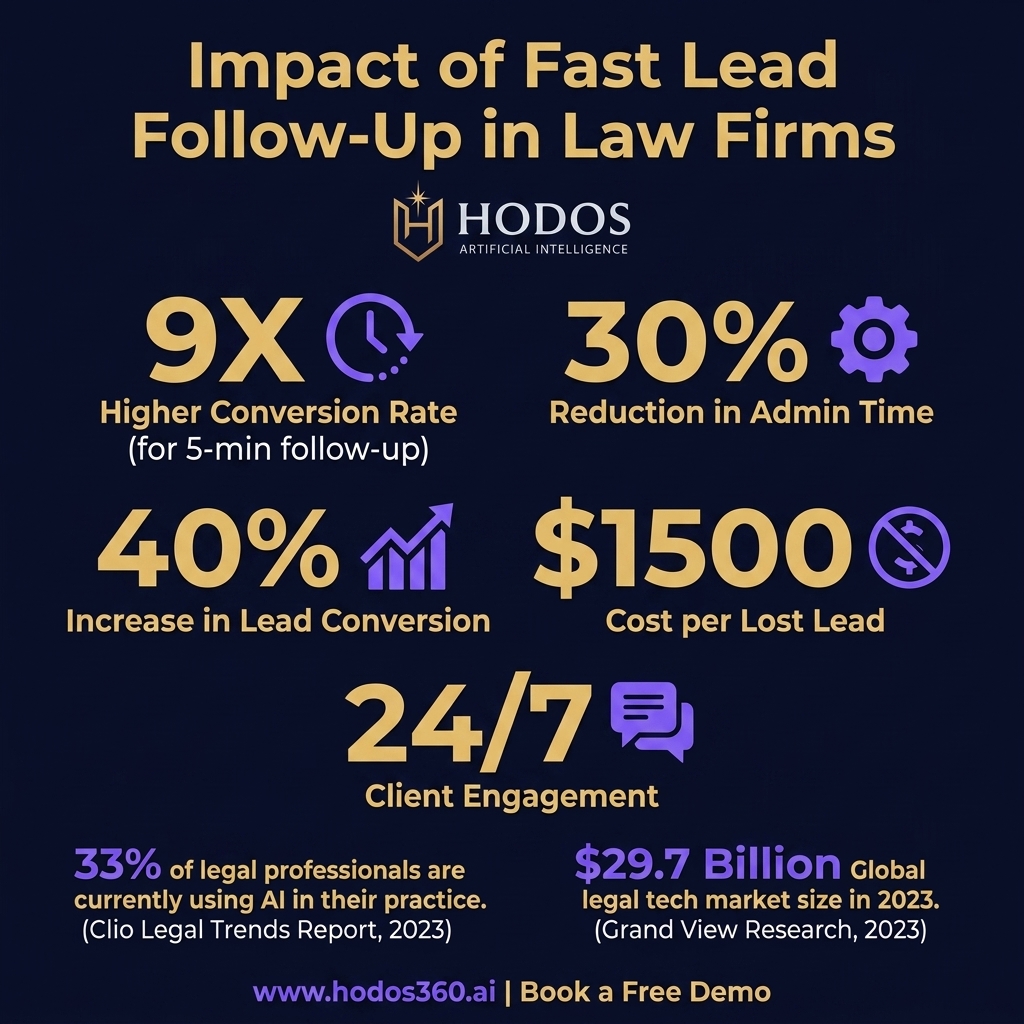
Different segments can then receive tailored communication sequences. For high-value personal injury leads, an immediate text message introducing the firm and confirming the call, followed by a personalized email within minutes, and a human follow-up call within the hour, might be ideal. Learn more about Legal AI Gap: Bridging the Divide for Law Firms in 2026.
For less urgent matters, a slightly longer drip campaign over several days could be more effective. The content of these communications should be benefit-driven, clearly articulating how the firm can solve the client's specific problem. Furthermore, incorporating clear calls to action, such as scheduling a free consultation or downloading a relevant guide, is crucial.
Regularly analyzing the performance of these automated sequences – open rates, click-through rates, and conversion rates – allows for continuous optimization, ensuring that the firm's automated follow-up is always evolving to meet client needs and market demands.
Explore the full capabilities of AI-powered client follow-up and ensure no potential client slips away. HODOS 360’s AI Voice Assistants are designed to integrate seamlessly into your firm’s existing workflow.
Ethical Considerations and Best Practices for AI-Driven Follow-Up
While the efficiency gains from AI-driven follow-up are undeniable, law firms must navigate a complex landscape of ethical obligations. The American Bar Association (ABA) Model Rules of Professional Conduct provide the foundational framework. Rule 1.1, Competence, requires lawyers to provide competent representation, which now implicitly includes understanding the benefits and risks associated with relevant technology.
This means firms must ensure their AI systems are properly configured, monitored, and do not inadvertently provide legal advice. More critically, Rule 1.6, Confidentiality of Information, is paramount. Any AI system handling client inquiries must have robust data security protocols to protect sensitive information. Firms must implement end-to-end encryption, secure data storage, and compliance with privacy regulations like HIPAA (for health-related cases), CCPA, and GDPR.
The failure to adequately secure client data, even during the lead qualification phase, could lead to severe professional and reputational consequences, as highlighted by recent data breaches impacting other industries, underscoring the need for vigilant oversight of these powerful tools.
Transparency with potential clients about AI interaction is not just an ethical best practice but increasingly a legal requirement in various jurisdictions.
While an AI voice agent can sound remarkably human, it is crucial for firms to disclose that the initial interaction is with an artificial intelligence. This can be done subtly at the beginning of the call, for example, "Thank you for calling [Firm Name]. Please note, this call is being handled by our AI assistant to help gather your information efficiently."
This disclosure builds trust and avoids any perception of deception. Learn more about AI Voice Agent: Essential Legal Firm Automation for 2026. Furthermore, firms must ensure that the AI system does not engage in the unauthorized practice of law. The AI's role should be strictly limited to information gathering, preliminary qualification, scheduling, and routing, not providing legal advice or making discretionary legal judgments.
Human oversight remains essential, with attorneys or trained intake specialists reviewing AI-generated summaries and making final decisions on case acceptance and legal strategy. This balance ensures that the benefits of automation are harnessed without compromising professional integrity or client trust, a tension that requires careful management in the evolving legal tech landscape.
Data security and privacy are not merely technical considerations but core ethical responsibilities. As AI systems collect vast amounts of personally identifiable information (PII) and potentially sensitive legal details, firms must implement stringent data governance policies. This includes regular security audits, employee training on data handling, and ensuring that AI vendors comply with industry-specific security standards.
Beyond technical safeguards, firms must consider the ethical implications of data retention and usage. How long is client data stored? Who has access to it? Is it used for training the AI model, and if so, what anonymization processes are in place? These questions, which are increasingly under scrutiny by state bar associations, necessitate clear policies and transparent communication with clients.
Firms should also be mindful of advertising rules, ensuring that any claims made about AI efficiency or capabilities are accurate and not misleading. The responsible deployment of AI in lead follow-up demands a proactive and comprehensive approach to ethics, recognizing that technological advancement must always be coupled with unwavering adherence to professional conduct and client protection, a challenge that will continue to evolve as AI capabilities expand.
Maintaining the Human Touch in an Automated World
While AI offers unparalleled efficiency, the legal profession remains inherently human-centric. The goal of AI in lead follow-up is not to replace human interaction but to enhance it, ensuring that human intervention occurs at the most critical and impactful junctures. This means designing workflows where the AI handles initial screening and routine follow-ups, but a human attorney or paralegal quickly steps in for complex inquiries, emotional support, or when a potential client expresses a desire to speak with a person.
For example, after an AI voice agent gathers preliminary details from a client about a wrongful death case, an immediate, empathetic call from a human intake specialist can make all the difference, providing the personal connection that AI, however advanced, cannot fully replicate. The strategic integration of AI allows firms to be more responsive and efficient, but it also frees up human staff to focus on building rapport, demonstrating empathy, and providing the nuanced legal advice that only a human professional can offer.
This blended approach — where AI handles the volume and speed, and humans provide the depth and personal connection — is key to maximizing both efficiency and client satisfaction in the modern legal practice.
The Future-Proof Law Firm: Embracing Automation for Sustainable Growth
The legal industry is at an inflection point, where the adoption of AI-powered automation in critical areas like client lead follow-up is no longer a luxury but a strategic imperative. Firms that embrace these technologies are not just gaining a competitive edge; they are fundamentally reshaping their operational models for sustainable growth.
By leveraging AI voice agents and integrated CRM workflows, firms can ensure 24/7 responsiveness, consistent lead qualification, and personalized follow-up at scale. This translates into higher conversion rates, reduced administrative burden, and ultimately, a healthier bottom line. The narrative of firms like 'Global Legal Partners' who, after a significant investment in AI, reported a 20% year-over-year growth in new client acquisition, stands in stark contrast to those struggling with stagnant client bases due to outdated processes.
The tension between tradition and innovation is palpable, and the firms choosing the path of technological advancement are clearly emerging as leaders in this new era of legal services.
The future of legal practice will be defined by intelligent automation. As AI capabilities continue to evolve—with advancements in emotional intelligence, hyper-personalization, and predictive analytics—the opportunities for law firms to optimize their operations will only expand.
Firms must view AI not as a threat, but as a powerful co-pilot, augmenting human capabilities and allowing legal professionals to focus on the intricate, high-value aspects of law that require human judgment and empathy. The early adopters of these technologies are already setting the standards for client experience and operational efficiency, demonstrating that a proactive approach to technology integration is essential for long-term viability.
The market competition will only intensify, making the ability to efficiently automate client lead follow-up a baseline expectation for clients and a non-negotiable for firms aiming for sustained success.
For law firms looking to secure their future and thrive in this evolving landscape, the time to act is now.
Implementing a robust, AI-powered lead management system is a transformative step that can yield immediate and lasting benefits. By partnering with platforms like HODOS 360, firms can access integrated AI Law Firm Management Systems, AI Marketing Platforms, and critically, AI Voice Assistants designed specifically for the legal sector.
These solutions provide the tools necessary to automate client lead follow-up, streamline intake, and nurture potential cases with unparalleled efficiency and professionalism. Don't let valuable leads go cold or fall through the cracks. Embrace the power of AI to ensure every potential client receives the attention they deserve, paving the way for consistent growth and a truly future-proof practice.
Frequently Asked Questions
What is AI-powered client lead follow-up for law firms?+
AI-powered client lead follow-up involves using artificial intelligence, particularly AI voice agents and smart CRM systems, to automate the process of engaging with potential clients after their initial inquiry. This includes 24/7 phone answering, lead qualification, automated scheduling, and personalized multi-channel communication (email, SMS) to ensure no lead goes cold and every potential case is nurtured efficiently and consistently.
How do AI voice assistants help in lead qualification?+
AI voice assistants utilize natural language processing to engage potential clients in conversation, asking targeted questions to gather crucial information like case type, urgency, jurisdiction, and key facts. They can then use this data to qualify the lead, assess its value, and route it to the appropriate legal team member or practice area, ensuring that high-priority cases receive immediate human attention.
What ethical considerations should law firms be aware of when using AI for follow-up?+
Law firms must adhere to ethical rules such as ABA Model Rule 1.1 (Competence) and 1.6 (Confidentiality). This includes ensuring data security, transparently disclosing AI interaction to clients, avoiding the unauthorized practice of law by limiting AI's role to information gathering, and maintaining human oversight for all legal judgments and advice. Compliance with privacy regulations is also paramount.
Can AI truly replace human interaction in client intake?+
No, AI is designed to augment, not replace, human interaction. While AI excels at handling initial inquiries, routine follow-ups, and data collection with unparalleled efficiency, human attorneys and paralegals remain crucial for complex legal advice, empathetic client support, and building the personal rapport essential to the attorney-client relationship. The most effective approach combines AI's speed with human depth.
How does integrating AI with CRM systems benefit law firms?+
Integrating AI with CRM systems creates a seamless workflow where all lead data captured by AI is automatically populated into client files. This eliminates manual data entry, reduces errors, and triggers automated follow-up sequences (e.g., emails, task creation, calendar invites). This synergy boosts conversion rates, improves operational efficiency, and ensures a consistent, professional client journey from initial contact to case retention.