


EU AI Act: Essential Guide for Law Firms' Digital Future
In a world increasingly shaped by artificial intelligence, the legal sector stands at a pivotal crossroads. On July 10, 2026, the European Union's Artificial Intelligence Act, commonly known as the EU AI Act, has moved closer to full implementation, sending ripples across industries globally. This landmark legal framework, the first comprehensive AI regulation of its kind, promises to standardize how AI systems are developed, deployed, and used, with profound implications for law firms, particularly in their web & mobile development and overall digital future. Ursula von der Leyen, President of the European Commission, has consistently championed a human-centric approach to AI, emphasizing trust and ethical considerations, a vision now enshrined in this powerful legislation.
The tension between rapid technological innovation and the imperative for robust governance has never been more apparent. While some legal tech pioneers, such as Noah Waisberg, co-founder of Kira Systems (acquired by Litera), have long advocated for responsible AI adoption, the EU AI Act transforms these discussions into concrete legal obligations. Law firms, especially those leveraging AI for client intake, document automation, or predictive analytics via their digital platforms, must now critically assess their technological stack. The choice is clear: adapt proactively to this shaping of Europe's digital future, or risk falling behind in a competitive landscape where compliance becomes a key differentiator.
This new era demands a strategic re-evaluation of how legal services are delivered through digital channels. For law firms, this means not just understanding the letter of the law, but integrating its spirit into every facet of their online presence—from responsive website design to secure mobile applications that incorporate AI ethically and transparently. The EU AI Act is not merely a European concern; its extraterritorial reach means that any firm interacting with European clients or processing data within the Union will need to align their artificial intelligence systems with its stringent requirements. This comprehensive guide explores how law firms can navigate this complex terrain, turning regulatory challenges into opportunities for innovation and enhanced client trust.
Navigating the EU AI Act's Risk-Based Framework
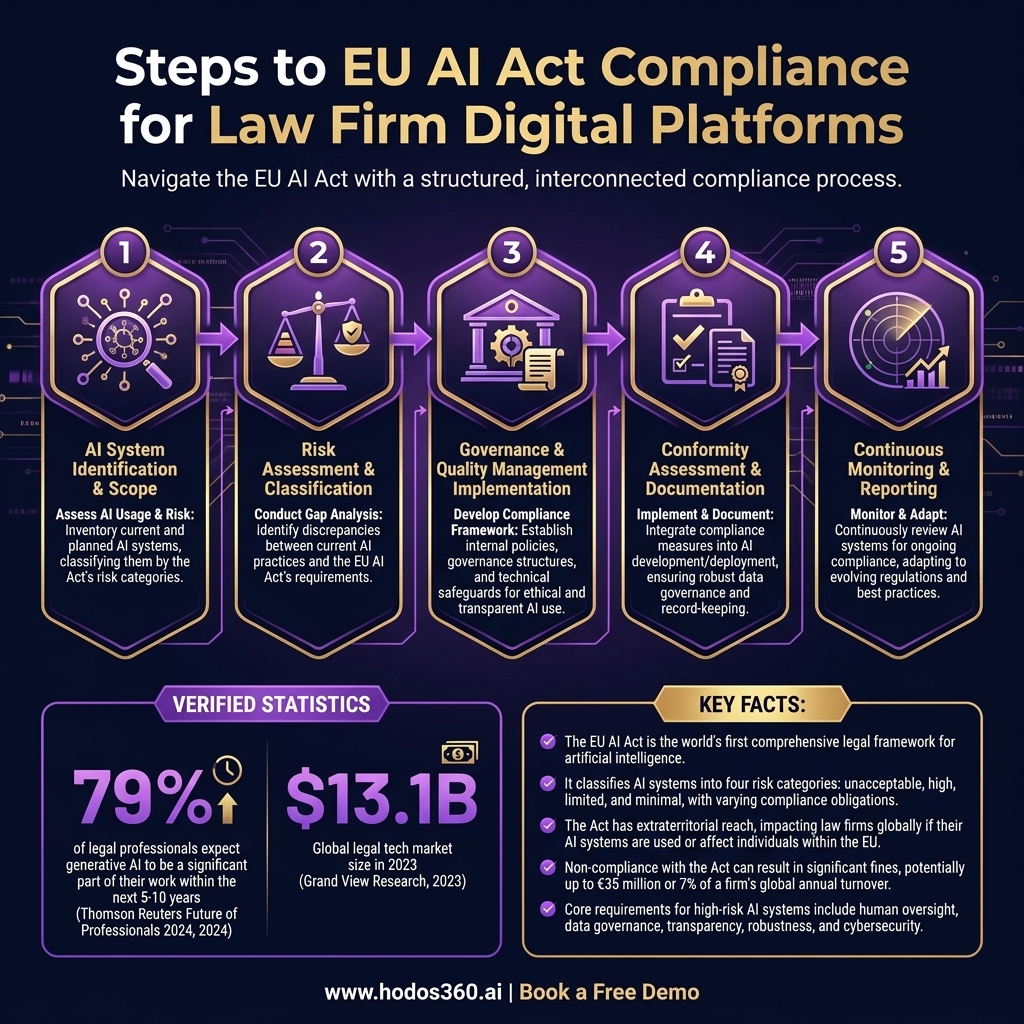
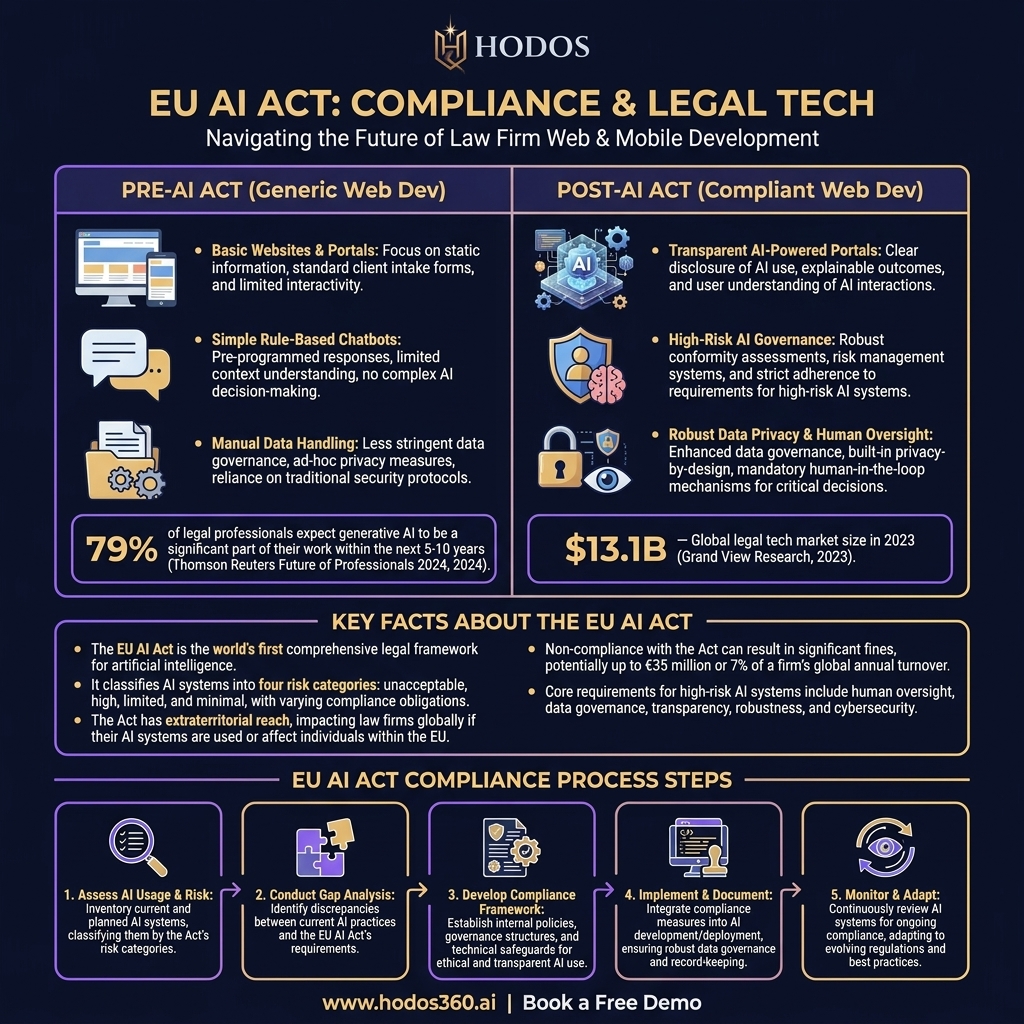
The cornerstone of the EU AI Act is its innovative, risk-based approach to AI governance. Unlike broad, principles-based guidelines, the Act categorizes AI systems into four distinct risk levels: unacceptable, high, limited, and minimal. Systems deemed 'unacceptable risk,' such as those employing social scoring or manipulative subliminal techniques, are outright banned. This clear delineation provides a critical legal framework for law firms to evaluate their existing and prospective AI tools. For instance, an AI system used for basic website chatbots offering general information would likely fall under 'minimal risk,' requiring only transparency obligations, while an AI assisting in judicial decision-making or legal research for case strategy could easily be classified as 'high-risk,' triggering far more rigorous compliance duties.
The implications of this classification are profound. Learn more about Legal AI Coordination: An Essential Shift for Law Firms. High-risk AI systems, which are most relevant to advanced legal tech innovation, face stringent requirements including conformity assessments before market placement, robust risk management systems, human oversight, data governance, cybersecurity measures, and comprehensive documentation. This prescriptive nature means that firms cannot simply 'plug and play' AI solutions; they must engage in a thorough due diligence process, ensuring that any AI integrated into their digital future adheres to these strict standards. As Brad Smith, President of Microsoft, has often reiterated, trust in AI hinges on accountability and transparency, principles the EU AI Act seeks to embed into the technological fabric.
Defining High-Risk AI Systems for Legal Applications
For law firms, understanding what constitutes a 'high-risk' AI system is paramount. The Act's Annex III specifically lists areas that include AI systems intended to be used for the administration of justice and democratic processes, which directly impacts legal applications. This could encompass AI tools used in e-discovery, predictive analytics for litigation outcomes, automated legal research platforms that generate advice, or even sophisticated client intake systems that make recommendations based on case complexity. Each of these applications, if it carries a significant risk of harm to fundamental rights, will be subject to the most rigorous compliance obligations.
Consider a scenario where a law firm develops an AI-powered website building component that uses machine learning to assess potential clients' cases and recommend legal strategies. Learn more about AI Agents: Essential Guide for Law Firms to Master Marketing. If this system influences access to justice or makes critical determinations, it falls under 'high-risk.' This means the firm must implement a quality management system, conduct regular risk assessments, ensure human oversight mechanisms are in place, maintain detailed technical documentation, and guarantee data quality and cybersecurity. The emphasis on data governance is particularly critical, as poor data quality can lead to biased outcomes, undermining the fairness and accuracy essential to legal practice. Firms must ensure their digital approach to AI integrates these safeguards from the outset.
Impact on Web & Mobile Development for Law Firms
The EU AI Act directly influences how law firms design, develop, and deploy their web and mobile applications, particularly those incorporating artificial intelligence. A firm's website is often the first point of contact for prospective clients, and increasingly, these sites feature AI-driven chatbots, automated client intake forms, and portals for document exchange. Each of these elements, if powered by AI, must now be scrutinized through the lens of the Act. For example, a chatbot that merely answers general FAQs might be low-risk, but one that collects sensitive client data, assesses legal needs, or provides preliminary legal guidance could be high-risk, necessitating strict adherence to transparency and data governance requirements.
Law firms must ensure that their web & mobile development practices integrate compliance by design. This means building systems that are inherently transparent about their AI components, providing clear information to users about how AI is being used, and offering mechanisms for human intervention or clarification. Learn more about AI Voice Calls: Ultimate Efficiency for Law Firms. Companies like Clio and MyCase, prominent in legal practice management software, are continuously evolving their web-based platforms. Their integrations with AI tools, such as those for automating billing or managing case files, would need careful review to ensure they meet the EU AI Act's standards, especially for their European user base. The Act mandates that technical documentation, logging capabilities, and human oversight measures are built into these systems, making responsible development a non-negotiable.
Client Data, Privacy, and Ethical AI in Digital Platforms
The interplay between the EU AI Act and existing data privacy regulations like GDPR is critical. Law firms handle highly sensitive client information, and any AI system integrated into their digital platforms must ensure the utmost protection. The Act reinforces GDPR principles by requiring high-risk AI systems to be trained on datasets that are relevant, representative, free of errors, and complete, minimizing bias and discriminatory outcomes. This directly impacts the development of AI-powered client intake forms or legal research tools accessible via a firm's website or mobile app.
Ensuring ethical AI in web & mobile development means implementing robust data governance policies, conducting regular data protection impact assessments (DPIAs) specific to AI systems, and providing clear consent mechanisms for data collection and processing. A 2024 report by Gartner highlighted that 60% of organizations struggle with AI ethics and governance, underscoring the challenge. Learn more about AI for Small Law Firms: The Essential Hub for Growth. Law firms must prioritize transparency, explaining to clients how their data is used by AI, the potential risks, and their rights to human oversight. This commitment to ethical artificial intelligence not only ensures compliance but also builds trust, a cornerstone of the attorney-client relationship. HODOS 360’s Web & Mobile Development services are designed to help firms build AI-powered digital platforms that are compliant by design, anticipating these regulatory demands.
Opportunities for Innovation and Digital Transformation
While the EU AI Act introduces new compliance burdens, it also catalyses significant opportunities for innovation and digital transformation within the legal sector. Firms that proactively embed ethical AI and compliance into their digital strategy will emerge as leaders, differentiating themselves in a crowded market. The Act provides a clear roadmap for developing trustworthy AI, fostering an environment where responsible innovation can thrive. Rather than viewing regulation as a hindrance, forward-thinking firms can leverage it to refine their AI offerings, ensuring they are not only cutting-edge but also ethically sound and legally defensible.
Consider the competitive advantage gained by firms that can confidently market their AI-powered services as 'EU AI Act compliant.' This stamp of approval can be a powerful draw for clients, particularly international ones, who are increasingly concerned about data privacy and ethical technology use. Learn more about Flowise for Law Firms: Essential Guide to Visual AI Workflows. Legal tech startups specializing in AI governance and compliance solutions are already emerging, creating new partnerships and avenues for firms to navigate this landscape. For instance, companies like Harvey AI, known for its legal research capabilities, will undoubtedly continue to evolve their offerings to align with global regulatory standards, including the EU AI Act, showcasing how innovation can be spurred by a robust legal framework.
- ✓Enhanced Client Intake with Compliant AI: Develop AI-powered forms and chatbots that transparently collect data, adhere to privacy norms, and clearly inform clients about AI's role, streamlining the onboarding process while ensuring full compliance with the EU AI Act.
- ✓Secure Document Automation Portals: Create web portals that leverage AI for document generation and review, incorporating robust data governance, version control, and audit trails as mandated for high-risk AI systems, ensuring confidentiality and accuracy.
- ✓Transparent AI-Powered Legal Research Tools: Integrate AI research assistants into firm intranets or client portals, designed with explainability features, allowing users to understand how AI reached its conclusions and providing mechanisms for human oversight.
- ✓Ethical Chatbots for 24/7 Support: Deploy AI voice assistants or chatbots on websites and mobile apps that offer multilingual support and basic lead qualification, ensuring they are designed to avoid bias and provide accurate, non-discriminatory information.
- ✓Personalized & Compliant Client Experiences: Utilize AI to tailor content and service offerings on digital platforms, while strictly adhering to data protection laws and the Act's requirements for transparency regarding profiling or automated decision-making.
- ✓Robust Data Governance in Web Applications: Implement comprehensive data management systems for all AI components within web and mobile applications, ensuring data quality, security, and traceability, crucial for demonstrating compliance during audits.
Ensuring Compliance: Practical Steps for Legal Professionals
For law firms grappling with the EU AI Act, a proactive and structured approach is essential. The first step involves conducting a comprehensive inventory of all AI systems currently in use or planned for integration, particularly those affecting client interactions and legal processes via digital platforms. Each identified AI system must then undergo a thorough risk assessment to determine its classification under the Act. This assessment should go beyond mere technical evaluation, considering the potential impact on fundamental rights, ethical implications, and the specific context of its use within the legal practice. The American Bar Association (ABA) Model Rules of Professional Conduct, particularly Rule 1.1 (Competence) and 1.6 (Confidentiality of Information), implicitly demand that lawyers understand and competently apply technology, making AI Act compliance an ethical imperative.
Following risk classification, firms must implement appropriate compliance measures. Learn more about Legal Website Builder: Essential Strategies for Law Firm Digital Growth. For high-risk AI systems, this means developing and maintaining a robust quality management system, ensuring human oversight, establishing clear data governance protocols, and maintaining detailed technical documentation throughout the AI system's lifecycle. This documentation is crucial for demonstrating compliance to regulators and for internal auditing. Furthermore, firms must provide clear and comprehensive information to users about the AI system's capabilities and limitations, fostering transparency and trust. This is especially vital for client-facing applications where informed consent and understanding are paramount.
Leveraging AI for Due Diligence and Risk Management
Ironically, AI itself can be a powerful tool in achieving EU AI Act compliance. Firms can leverage specialized AI governance platforms to identify, categorize, and monitor their AI systems for adherence to the Act's requirements. These tools can automate aspects of risk assessment, track documentation, and help manage the lifecycle of AI models, ensuring ongoing compliance. For instance, AI-powered compliance software can scan a firm's digital assets for AI components, flag potential high-risk uses, and even assist in generating the required technical documentation. This 'AI for AI compliance' approach streamlines what would otherwise be a labor-intensive manual process.
Moreover, AI can enhance a firm's internal due diligence processes, particularly when evaluating third-party AI vendors or integrating new legal tech solutions. By using AI to analyze vendor contracts, audit data provenance, and assess the ethical safeguards of external AI tools, firms can mitigate risks before they materialize. This proactive stance, enabled by intelligent systems, transforms compliance from a reactive burden into a strategic advantage, reinforcing the firm's commitment to responsible innovation and securing its digital future against potential liabilities.
The Future of AI Governance and Legal Tech Integration
The EU AI Act is more than just a regional regulation; it is a global benchmark shaping the conversation around artificial intelligence governance. Its comprehensive approach is likely to influence policy decisions in other major jurisdictions, including the United States, which is currently navigating its own executive orders and legislative proposals concerning AI. This global convergence towards responsible AI means that law firms, regardless of their primary operating region, will increasingly need to consider international AI standards. The ongoing debate between the EU's prescriptive, risk-based model and the more principles-based, pro-innovation stance seen in some other regions highlights the dynamic tension in AI governance, but the trend towards stronger oversight is undeniable.
For legal tech providers and law firms, this signifies a future where AI integration is inseparable from robust ethical and compliance frameworks. Companies like Thomson Reuters and LexisNexis, global leaders in legal intelligence, are already adapting their vast platforms to align with evolving international regulation, offering new tools for compliance and ethical AI. The firms that embrace this paradigm shift—prioritizing transparency, accountability, and human oversight in their AI-powered digital platforms—will not only meet regulatory demands but also gain a significant competitive edge, attracting clients who value trust and ethical practice.
Ultimately, the EU AI Act represents a crucial step in ensuring that artificial intelligence serves humanity's best interests. For law firms, this means fostering a culture where technological advancement is balanced with ethical responsibility. By strategically integrating AI into their web & mobile development and operational workflows, and by partnering with platforms like HODOS 360, firms can build a resilient, compliant, and innovative digital future, ready to navigate the complexities of global AI governance.

Key Takeaways and Next Steps
The EU AI Act marks a watershed moment for the legal industry, demanding a strategic pivot towards compliant and ethical artificial intelligence integration. For law firms, this is not merely a regulatory hurdle but an opportunity to solidify trust, enhance their digital future, and drive responsible innovation. Proactive engagement with the Act's risk-based legal framework is paramount, particularly for AI systems embedded in web & mobile development and client-facing applications.
Firms must conduct thorough AI audits, classify their AI systems, and implement robust governance measures, including human oversight and data quality protocols. Embracing this new era of AI regulation will position firms as leaders, ready to meet the evolving demands of clients and the global digital landscape. By taking decisive action now, legal professionals can ensure their approach to AI is both cutting-edge and ethically sound, shaping a trustworthy and prosperous digital future.
Frequently Asked Questions
What is the EU AI Act?+
The EU AI Act is the European Union's pioneering legal framework regulating artificial intelligence. It introduces a risk-based approach, categorizing AI systems into four levels (unacceptable, high, limited, minimal) with varying compliance obligations. Its primary goal is to ensure AI systems are trustworthy, human-centric, and respect fundamental rights, shaping Europe's digital future with ethical intelligence.
How does the EU AI Act affect law firm websites and mobile apps?+
The EU AI Act impacts law firm websites and mobile apps that incorporate artificial intelligence, such as AI-powered chatbots, client intake forms, or legal research tools. Depending on their risk classification, these digital platforms may require conformity assessments, robust data governance, human oversight, and transparent user information. Compliance ensures the firm's digital approach aligns with the new regulation.
What constitutes a 'high-risk' AI system in legal tech?+
In legal tech, a 'high-risk' AI system under the EU AI Act includes those used in the administration of justice, for legal research impacting case outcomes, or for client intake that makes critical decisions, if they pose a significant risk to fundamental rights. Such systems require stringent compliance, including risk management, data quality, and human oversight, to ensure the legal framework is respected.
Can AI tools assist law firms in achieving AI Act compliance?+
Yes, AI tools can paradoxically assist law firms in achieving EU AI Act compliance. Specialized AI governance platforms can help identify and categorize AI systems, automate risk assessments, manage documentation, and monitor ongoing adherence to the regulation. This 'AI for AI compliance' approach streamlines the process, transforming what could be a burden into an opportunity for innovation and efficient risk management.
What immediate steps should law firms take regarding the EU AI Act?+
Law firms should immediately conduct an inventory of all AI systems, perform a risk assessment for each under the EU AI Act's legal framework, and implement a robust compliance strategy for high-risk systems. This includes establishing human oversight, ensuring data quality, maintaining detailed documentation, and prioritizing transparent communication with clients about AI use in their digital platforms. Proactive approach is key for their digital future.