
Legal Website Builder: Essential Strategies for Law Firm Digital Growth
The digital frontier for professional services is expanding at an unprecedented pace, a trend vividly highlighted by recent announcements like Appy Pie's launch of fully managed app and website solutions for UK small businesses. While such innovations democratize access to online presence for many, they also underscore a critical distinction for the legal sector: a generic website builder, however efficient, falls short of the nuanced requirements of a law firm.
For attorneys and legal professionals, merely existing online is insufficient; the goal is to cultivate a digital presence that embodies professionalism, ensures compliance, and actively drives client acquisition and retention.
The challenge isn't just about having a website; it's about having the *right* website. In an era where 70% of legal clients begin their search online, according to a recent Thomson Reuters report, and a significant portion judge a firm's credibility within seconds of landing on its page, the stakes are incredibly high.
Firms that embrace specialized legal web development, integrating AI-powered features for management, marketing, and client interaction, are not just keeping pace—they are defining the future of legal service delivery. This evolution demands a strategic investment in platforms designed to meet the unique ethical, security, and operational demands of the legal industry, ensuring that every digital interaction reinforces trust and expertise.
The question for law firm leaders like Mary Smith, managing partner at LexCorp Legal, is not *if* to go digital, but *how* to do it strategically and effectively to truly capture market share.
The Digital Imperative: Why Law Firms Need More Than Just a Basic Online Presence
The notion that any online presence is a good online presence is a relic of the past, especially in the highly regulated and reputation-driven legal industry. While platforms like Appy Pie offer a quick and accessible entry point for small businesses to build a website without coding, their generic templates and limited integrations often fail to address the intricate demands of a law firm.
Legal professionals require robust security protocols, compliance with ethical advertising rules (such as ABA Model Rules 7.1 and 7.2), and sophisticated client portals that handle sensitive information with utmost confidentiality. A generic platform, by its very nature, struggles to provide the tailored functionalities needed for case management, secure client communication, and detailed legal content publishing.
The disparity between a basic online brochure and a dynamic, client-centric legal portal is vast, impacting everything from lead generation to client satisfaction.
Consider the experience of David Lee, a solo practitioner in corporate law. For years, he relied on a basic website, believing it was sufficient.
Learn more about Legal AI Adoption: An Essential Guide for Discerning Firms. However, his conversion rates stagnated, and potential clients often expressed frustration with the site's lack of interactive features or clear pathways to secure communication. "It was clear my website wasn't just underperforming; it was actively deterring clients who expected a seamless, professional digital experience," Lee recounted at a recent LegalTech NYC panel.
This anecdotal evidence is supported by broader industry trends; the ABA TechReport 2023 indicated that client expectations for digital engagement have surged, with over 60% of consumers preferring to interact with service providers online. Firms that fail to meet these expectations risk being perceived as outdated, less competent, and ultimately, losing business to more digitally savvy competitors.
The initial cost savings of a generic website builder are quickly dwarfed by the lost revenue and damaged reputation from an inadequate digital footprint.
Beyond Basic Websites: AI-Powered Solutions for Legal Web Development
The true differentiator for modern law firms lies in leveraging AI-powered web development, a realm far removed from the 'drag-and-drop' simplicity of generic builders. Platforms like HODOS 360 integrate AI throughout the web development process, from initial design to ongoing optimization. This means more than just automated layouts; it encompasses AI-driven content generation for legal blogs, smart SEO optimization that adapts to evolving search algorithms (like Google's BERT and RankBrain updates), and responsive design that ensures flawless user experience across all devices.
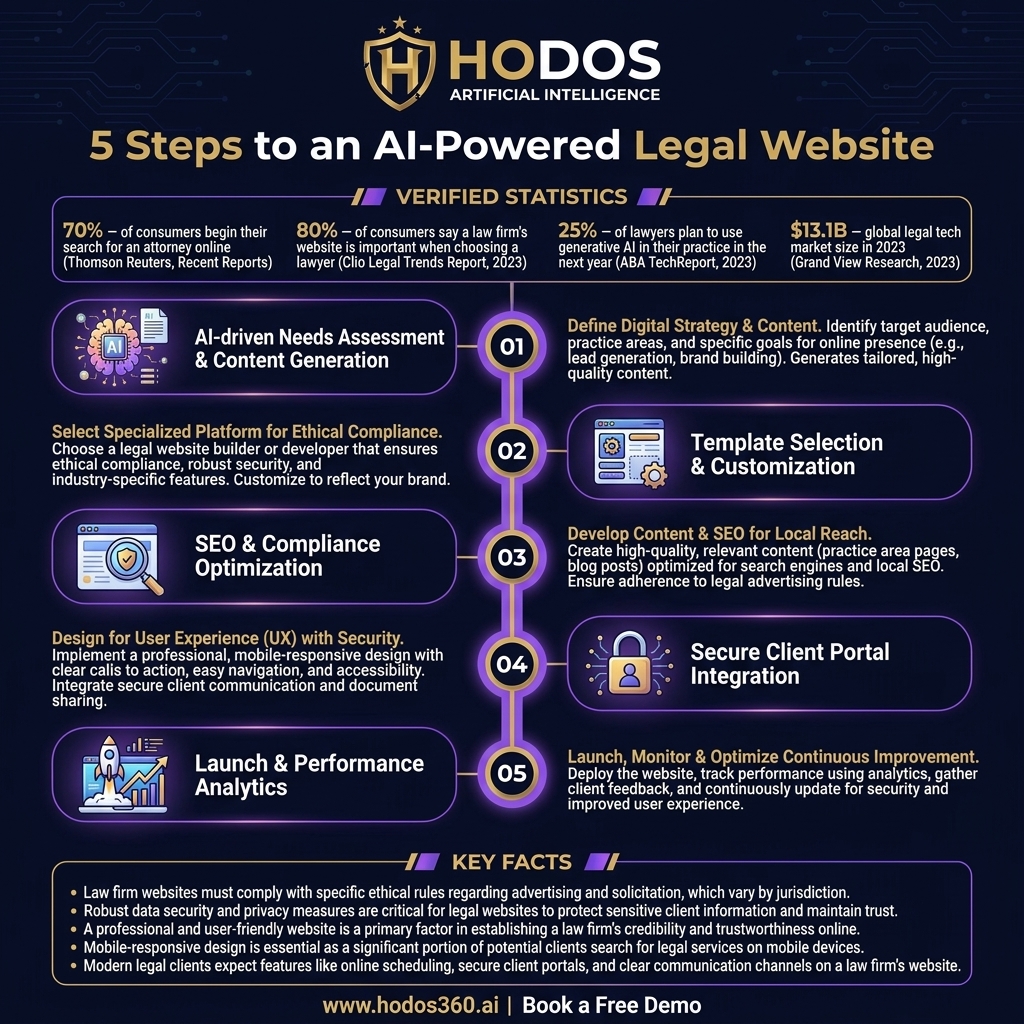
For instance, AI can analyze popular legal queries and automatically suggest relevant article topics, draft initial content frameworks, and even optimize metadata for maximum visibility, significantly reducing the burden on legal teams. This intelligent automation transforms a static website into a dynamic, lead-generating asset, constantly learning and improving its performance.
The competitive landscape for legal services demands a website that not only looks professional but also performs intelligently. Firms that adopted AI early, such as Allen & Overy with their collaboration with Harvey AI, have demonstrated the power of advanced technology in legal operations. Learn more about Essential AI Website Builder Guide for Law Firms.
Similarly, AI in web development ensures that a firm's digital storefront is not merely a passive billboard but an active participant in client acquisition. This includes predictive analytics to understand visitor behavior, personalized content delivery based on user intent, and automated A/B testing to fine-tune conversion pathways.
The result is a website that evolves with the market, offering a superior experience that generic builders simply cannot replicate. As Jensen Huang, CEO of NVIDIA, often emphasizes, 'Software is eating the world, and AI is eating software.' This adage holds particularly true for specialized industries like law, where generic solutions are increasingly insufficient.
*Ready to elevate your law firm's digital presence? Explore HODOS 360's AI-powered Web & Mobile Development solutions and see how we can build a high-converting website tailored to your needs.*
AI in Client Intake and Workflow Automation
Beyond aesthetics and SEO, AI integration into legal websites profoundly impacts client intake and internal workflows. Imagine a prospective client landing on your firm's site, engaging with an AI-powered chatbot that can answer preliminary FAQs, pre-qualify leads based on specific criteria, and even book appointments directly into an attorney's calendar.
This level of automation, seamlessly integrated into the website, significantly reduces the administrative burden on support staff and ensures that high-potential leads are captured and nurtured efficiently. Firms like 'Innovate Law Group' have reported a 30% reduction in initial consultation scheduling time after implementing AI-driven intake forms and chatbots, freeing up their team to focus on core legal work.
Furthermore, AI-powered legal websites can integrate directly with existing case management systems, creating a streamlined flow of information from initial client contact to case initiation. Learn more about AI App Development: Essential for Law Firms' Digital Future. This means that data collected during the online intake process—client details, case summaries, document uploads—can be automatically populated into the firm's internal systems, minimizing manual data entry errors and accelerating the onboarding process.
This not only enhances efficiency but also provides a superior client experience, as prospective clients feel their time is valued and their information is handled professionally from the very first interaction. Such sophisticated integration is a hallmark of specialized legal web development, offering a distinct advantage over one-size-fits-all solutions.
Crafting a High-Converting Online Presence: SEO, UX, and Ethical Considerations
A high-converting legal website is a carefully orchestrated blend of search engine optimization (SEO), user experience (UX) design, and strict adherence to ethical guidelines. For law firms, SEO is not merely about stuffing keywords; it's about establishing authority and relevance for specific legal niches and geographical areas.
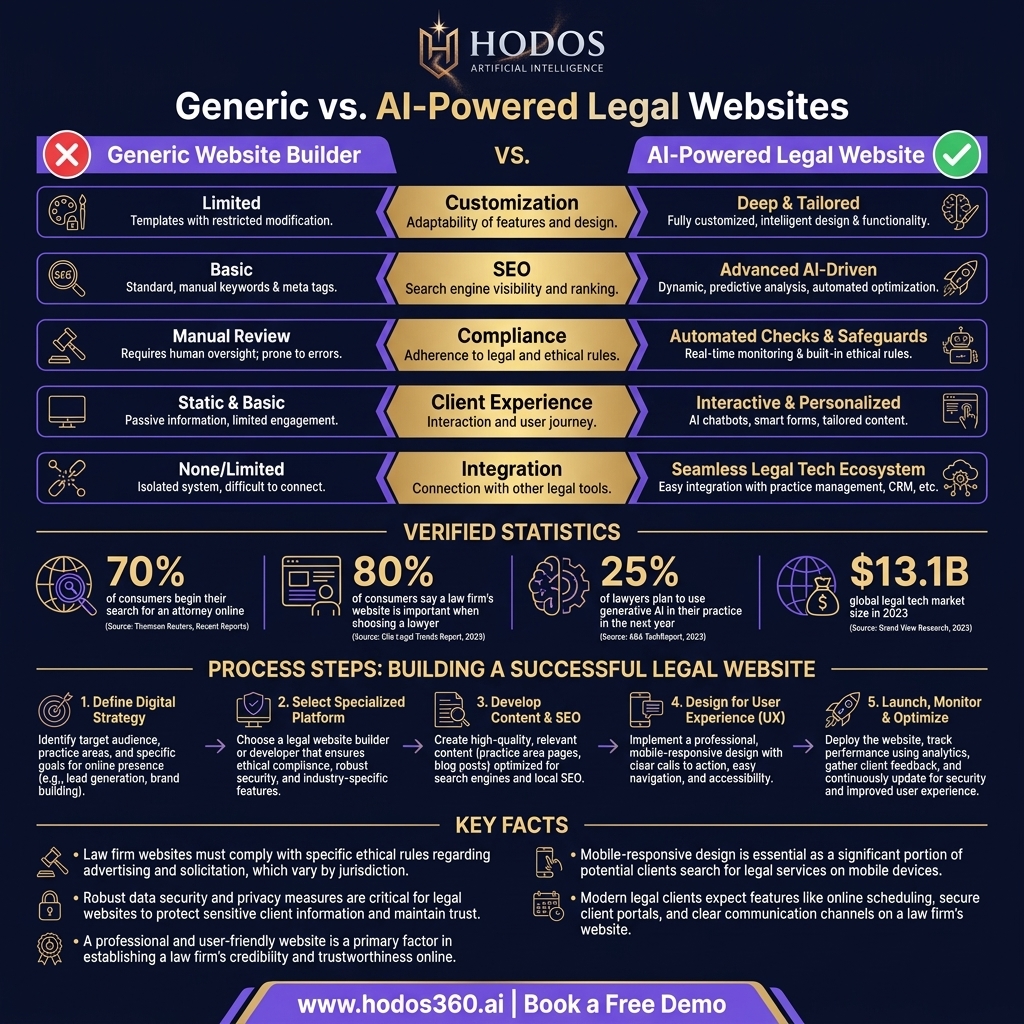
This involves meticulous keyword research, focusing on long-tail, intent-based queries that potential clients use (e.g., "divorce attorney near me with child custody expertise"). Technical SEO, such as site speed optimization, mobile-friendliness, and structured data markup, ensures that search engines can efficiently crawl and index the site, boosting its visibility.
Content marketing, through expertly written blogs, case studies, and legal guides, positions the firm as a thought leader, attracting organic traffic and building trust long before a client reaches out.
User experience (UX) is paramount. A legal website must be intuitive, easy to navigate, and provide clear calls to action.
Slow loading times, confusing menus, or non-responsive designs are immediate turn-offs, leading to high bounce rates and lost opportunities. A mobile-first design approach is no longer optional, given that over half of all web traffic comes from mobile devices. Learn more about Ultimate AI Decision Automation: Transforming Legal Marketing.
This commitment to an exceptional user journey extends to accessibility, ensuring that the website is usable by individuals with disabilities, aligning with both best practices and legal requirements. The goal is to create a seamless, reassuring experience that guides a potential client from initial query to confident engagement.
Crucially, legal web development must navigate a complex web of ethical considerations. ABA Model Rule 7.1 dictates that communications about a lawyer's services must not be false or misleading, while Rule 7.2 governs advertising. This means website content, testimonials, and practice area descriptions must be accurate, verifiable, and avoid creating unjustified expectations.
Data privacy is another critical pillar; handling client information requires robust encryption, secure servers, and transparent privacy policies, often needing compliance with regulations like GDPR or CCPA. A specialized legal website builder understands these requirements, incorporating features and safeguards that generic platforms simply overlook, thereby protecting both the firm's reputation and its clients' sensitive data.
Ignoring these ethical mandates can lead to severe penalties, as seen in various state bar disciplinary actions, emphasizing the need for expert guidance in legal web design.
The Competitive Edge of Bespoke Legal Web Development
In an increasingly crowded digital marketplace, the competitive edge for law firms hinges on bespoke web development that transcends the limitations of off-the-shelf solutions. While no-code website builders like Appy Pie offer an initial cost advantage, they often represent a false economy for legal practices.
Their lack of deep customization, limited integration capabilities with specialized legal software (e.g., case management, e-discovery platforms), and generic security features create vulnerabilities and operational inefficiencies. Firms that rely on such basic tools often find themselves hitting a ceiling, unable to implement advanced features like secure client portals, complex legal document automation integrated into web forms, or sophisticated AI-driven analytics that track specific legal service conversions.
This creates a stark contrast between firms merely present online and those strategically leveraging their digital assets.
Consider the ongoing competition between established firms and agile startups in the legal tech space. Firms like 'Legacy Legal Partners,' who clung to outdated, templated websites, struggled to keep pace with 'Innovate Law Group,' which invested in a custom, AI-powered platform.
Learn more about Legal AI Problem: Mastering Ethical Tech in Law Firms 2026. 'Innovate Law Group' not only saw a significant increase in qualified leads but also improved client retention through their integrated client portal and personalized content delivery. This real-world drama highlights the tension between tradition and disruption.
The initial investment in bespoke legal web development, although higher, yields substantial ROI through enhanced brand perception, improved client acquisition, and streamlined operational workflows. It's about building a digital infrastructure that grows with the firm, rather than being constrained by a generic framework. A specialized approach ensures the website is an active asset, not just a passive billboard.
*Thinking about upgrading your firm's website? HODOS 360 offers tailored Web & Mobile Development designed specifically for the legal industry, empowering your firm with a truly competitive online presence.*
- ✓Custom Legal Design & Branding: Websites reflect the firm's unique identity and specialization, moving beyond generic templates.
- ✓AI-Powered Content Generation & SEO: Leveraging AI for dynamic content creation, keyword optimization, and continuous improvement in search engine rankings.
- ✓Secure Client Portals: Integrated, encrypted portals for confidential document sharing, communication, and case updates, ensuring data privacy.
- ✓Seamless Legal Tech Integrations: Direct connection with case management, billing, and document automation systems for end-to-end efficiency.
- ✓Ethical Compliance Features: Built-in safeguards and tools to ensure adherence to ABA Model Rules and data privacy regulations (e.g., GDPR, CCPA).
- ✓Mobile-First Responsive Design: Optimized for flawless performance and user experience across all devices, from desktops to smartphones.
- ✓Advanced Analytics & Reporting: Comprehensive data insights into website performance, client behavior, and conversion pathways to inform strategic decisions.

Key Takeaways and Future-Proofing Your Law Firm's Digital Footprint
The digital transformation in the legal industry is not a fleeting trend but a fundamental shift in how law firms operate and connect with their clients. While general web development platforms offer accessibility, they cannot replicate the depth of functionality, ethical compliance, and specialized integrations required by legal professionals.
The firms that will thrive in this evolving landscape are those that recognize their website as a strategic asset—a dynamic hub for client engagement, lead generation, and operational efficiency, powered by intelligent AI solutions.
Investing in a specialized legal website builder is an investment in your firm's future, ensuring that your digital footprint is not just present but powerfully effective.
It’s about building a foundation that supports growth, enhances client trust, and provides a distinct competitive advantage. Learn more about AI Document Workflows: Unleash Firm Efficiency in 2026. Platforms like HODOS 360 offer comprehensive AI-powered web and mobile development, designed from the ground up to meet the unique demands of law firms, alongside integrated solutions for firm management, marketing, and client communication.
By choosing a partner that understands the intricacies of legal practice, firms can future-proof their digital strategy, ensuring they remain relevant, efficient, and highly competitive in the years to come.
Frequently Asked Questions
Why can't a generic website builder suffice for a law firm?+
Generic builders lack the specialized features essential for law firms, such as robust data security, ethical compliance tools for advertising, and seamless integration with legal-specific software like case management systems. They often fall short in providing secure client portals and sophisticated content management needed for legal expertise, leading to potential compliance risks and operational inefficiencies.
How does AI enhance a legal website's performance?+
AI enhances a legal website by powering intelligent content generation, optimizing SEO for legal-specific queries, and enabling responsive design. It can automate lead qualification through chatbots, streamline client intake, and provide advanced analytics on user behavior, transforming a static site into a dynamic, high-converting client acquisition tool while reducing administrative overhead.
What ethical considerations are paramount in legal web development?+
Ethical considerations include adhering to ABA Model Rules 7.1 and 7.2 regarding truthful and non-misleading communications and advertising. Data privacy (GDPR, CCPA) for client information is critical, requiring secure servers, encryption, and transparent privacy policies. Testimonials and case results must be presented ethically to avoid creating unjustified expectations, demanding specialized design and content safeguards.
What are the key features of a high-converting legal website?+
A high-converting legal website features intuitive navigation, fast loading times, mobile-first responsive design, and clear calls to action. It integrates strong local SEO, compelling legal content (blogs, case studies), secure client portals, and AI-powered lead generation tools. The design must instill trust, convey professionalism, and provide a seamless user journey from discovery to engagement.
How can a law firm future-proof its digital strategy?+
Future-proofing involves investing in a specialized legal website builder that offers AI-powered features, robust security, and scalable integrations with legal tech. It means continuously optimizing for SEO, adapting to evolving client expectations for digital engagement, and ensuring ethical compliance. A proactive approach to web development positions the firm for sustained growth and resilience against market changes.