


AI Voice Calls: Ultimate Efficiency for Law Firms
The subtle hum of artificial intelligence is permeating every corner of industry, and the legal sector is no exception. A recent captivating development out of Vinnytsia, Ukraine, perfectly illustrates this shift: an IT company successfully trained an AI voice calls system to interact with institutions so seamlessly that human recipients didn't immediately discern they were speaking with a bot.
This anecdote, highlighted by *dev.ua*, isn't just a technical marvel; it's a potent signal for law firms grappling with the demands of modern practice. The ability of AI to mimic human interaction with such fidelity opens unprecedented avenues for efficiency, client engagement, and resource allocation within legal operations.
For decades, the human voice has been the cornerstone of legal communication—client consultations, court calls, administrative inquiries. This traditional reliance, while foundational, is increasingly being challenged by the sheer volume and pace of modern legal practice. Law firms face immense pressure to optimize workflows, manage burgeoning client expectations for instant access, and navigate complex administrative tasks without ballooning overheads.
Enter advanced AI voice assistants, poised to transform these challenges into opportunities. The implications of AI voice calls moving beyond mere automated menus to genuinely intelligent, responsive interactions are profound, promising to redefine the very fabric of legal service delivery.
This isn't a futuristic fantasy; it's the present reality.
Firms that embrace this technological leap are not just staying competitive; they are setting new benchmarks for service excellence and operational agility. The question is no longer *if* AI voice calls will integrate into legal practice, but *how* rapidly and effectively firms will leverage these sophisticated tools to streamline everything from initial client intake to complex call routing, ensuring that human legal expertise is focused where it matters most: delivering strategic counsel and advocacy.
The Evolution of AI Voice Calls in Legal Client Engagement
The Vinnytsia case underscores a critical shift: AI voice calls are no longer about rudimentary interactive voice response (IVR) systems. They've evolved into sophisticated agents capable of natural language understanding (NLU) and generation (NLG), offering a level of interaction previously reserved for human staff. For law firms, this translates into a powerful tool for enhancing client engagement from the very first touchpoint.
Imagine a prospective client calling after hours, not to be met by a voicemail, but by an AI voice assistant that can genuinely understand their query, qualify their need, and even schedule an initial consultation, all while capturing essential intake information. This immediate, intelligent response dramatically improves the client experience and significantly reduces lost leads.
Leading legal tech platforms like HODOS 360 are at the forefront of this transformation, integrating AI voice assistants that operate 24/7. This continuous availability addresses one of the biggest pain points for law firms: missed opportunities outside of standard business hours. According to the 2023 ABA TechReport, only 30% of law firms reported using any form of AI, but among those, client intake and communication were primary use cases.
Learn more about AI Marketing: Proven Strategies for Legal Growth Beyond Efficiency. The report highlighted that firms adopting AI saw an average 15% increase in client satisfaction and a 20% reduction in administrative time spent on initial inquiries. This data strongly suggests that the strategic deployment of AI voice calls is not just a luxury but a necessity for firms aiming for sustained growth and client loyalty in a competitive market.
Moreover, these advanced systems can handle multilingual support, breaking down language barriers that might otherwise deter potential clients. Legal professionals like Sarah Glassmeyer, Director of Content and Community at the ABA's Center for Innovation, have often emphasized the importance of access to justice, and multilingual AI can be a game-changer in this regard.
By offering support in multiple languages, law firms can expand their reach to underserved communities, ensuring that language is no longer an impediment to seeking legal counsel. This capability alone can significantly broaden a firm's client base and fulfill a crucial ethical obligation under principles like ABA Model Rule 1.1, which mandates competent representation, often including effective communication.
Streamlining Client Intake and Lead Qualification with AI
The initial client intake process is notoriously time-consuming, often involving multiple calls, form filling, and information gathering. AI voice calls systems can automate much of this preliminary work, allowing legal staff to focus on more complex, value-added tasks. For instance, an AI assistant can conduct an initial screening call, asking pertinent questions to determine the nature of the legal issue, collect contact details, and even identify potential conflicts of interest.
This pre-qualification ensures that attorneys receive leads that are not only genuinely interested but also relevant to the firm's practice areas, significantly improving conversion rates.
Consider the operational efficiency gained: instead of a paralegal spending hours on repetitive intake calls, the AI handles the bulk of the initial data collection.
This frees up valuable human resources, allowing them to dedicate their expertise to case preparation, legal research, or direct client counsel. Learn more about AI Legal Partnerships: Essential for Enterprise Innovation. According to a Thomson Reuters Institute report on legal market trends, firms that successfully integrate AI into their client intake processes have reported up to a 40% reduction in the time spent on administrative tasks associated with new client acquisition.
This efficiency gain translates directly into cost savings and increased capacity for revenue-generating work. The meticulous data capture by AI also reduces human error, ensuring that critical information is accurately recorded from the outset, a key factor in maintaining professional competence and avoiding future complications.
Beyond the Call: AI's Role in Legal Operations and Workflow Automation
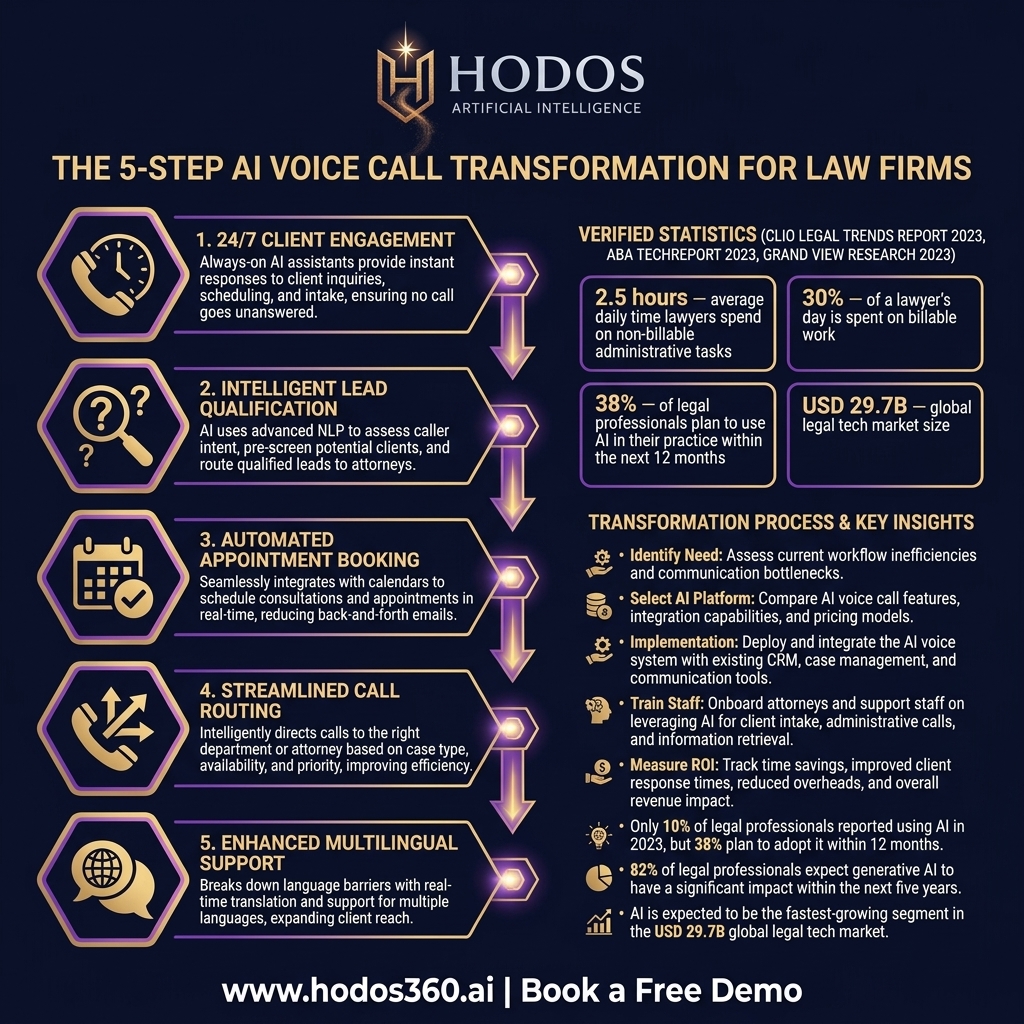
The impact of AI voice calls extends far beyond client-facing interactions, permeating the internal fabric of law firm operations. These intelligent assistants are becoming indispensable tools for automating routine administrative tasks, managing schedules, and routing calls with unparalleled precision. Think of the hours saved when an AI can automatically update calendars, send reminders for court dates or client meetings, and intelligently route incoming calls to the most appropriate attorney or department based on the client's query and the attorney's availability.
This level of automation significantly reduces the administrative burden on support staff, allowing them to contribute more strategically to the firm's success.
Legal tech innovators such as Clio, with its comprehensive practice management solutions, have long championed the integration of technology to streamline firm operations.
The next frontier involves embedding AI voice capabilities directly into these systems, creating a truly interconnected ecosystem. Imagine an AI voice assistant not only answering a client's call but also, in real-time, accessing the client's case file within the firm's management system, updating their notes, and even initiating a document automation workflow based on the conversation.
Learn more about Essential AI Web Development for Law Firms: Harvard's Impact. This seamless integration, which HODOS 360 is pioneering, transforms disjointed processes into a cohesive, efficient flow, allowing firms to operate with unprecedented agility and responsiveness.
Furthermore, AI voice assistants can play a critical role in internal communication and knowledge management.
Attorneys frequently need quick access to case information, internal policies, or even specific legal precedents. An AI assistant, integrated with the firm's knowledge base, could retrieve this information via voice command, eliminating time spent searching through databases. This capability enhances attorney efficiency, ensuring that legal professionals have the information they need, precisely when they need it, contributing to more informed decision-making and better client outcomes.
This internal application of AI voice technology represents a significant leap forward in optimizing legal workflows and fostering a more productive work environment.
- ✓24/7 Phone Answering: Ensure no call is missed, capturing every potential lead and providing constant client access.
- ✓Lead Qualification: Automatically screen and prioritize incoming calls, identifying high-value prospects and filtering out irrelevant inquiries.
- ✓Appointment Booking: Seamlessly schedule consultations and meetings directly into attorneys' calendars, reducing administrative overhead.
- ✓Multilingual Support: Break down language barriers, allowing firms to serve a broader, more diverse client base without additional staffing.
- ✓Call Routing & Transfers: Intelligently direct calls to the correct department or individual, minimizing hold times and improving client experience.
- ✓Document Automation Triggers: Initiate document generation or case file updates based on verbal interactions, integrating voice AI into legal workflows.
- ✓Basic Information Provision: Answer common client questions about firm hours, services, or general legal processes instantly.
Ethical Considerations and the Future of Human-AI Collaboration
While the efficiencies of AI voice calls are undeniable, their deployment in the legal sector necessitates careful consideration of ethical implications. The Vinnytsia example, where the bot's identity was not immediately realized, raises questions about transparency and potential deception. For law firms, it is paramount that clients are aware they are interacting with an AI.
Transparency builds trust, which is foundational to the attorney-client relationship. The ABA's Standing Committee on Ethics and Professional Responsibility has consistently emphasized the importance of ethical technology use, and this extends to clearly disclosing when AI is involved in client communications. Firms must adopt policies that explicitly inform clients about AI interactions, ensuring compliance with ethical rules concerning communication and client consent.
Data privacy and security are also paramount. AI voice assistants handle sensitive client information, making robust cybersecurity protocols non-negotiable. Learn more about AI Marketing Tools: Essential Strategies for Law Firm Growth. Firms must ensure that any AI platform they utilize, like HODOS 360, adheres to the highest standards of data encryption, storage, and access control, complying with regulations such as HIPAA (for healthcare-related legal matters) and various state data privacy laws.
The consequences of a data breach are severe, both financially and reputationally, underscoring the need for diligence in vendor selection and internal policy enforcement. Legal professionals, guided by the duty of confidentiality under ABA Model Rule 1.6, must exercise caution and competence when integrating AI that handles client data.
The future of legal practice is not one where AI replaces humans entirely, but one where human and AI intelligence collaborate synergistically. As Richard Susskind, a leading voice on the future of legal services, often posits, AI will augment, not automate away, the legal profession.
AI voice assistants will free up attorneys and staff from mundane tasks, allowing them to focus on complex problem-solving, strategic thinking, and the nuanced human elements of legal advocacy. This collaboration elevates the quality of legal services, making them more accessible, efficient, and ultimately, more just.
Navigating Regulatory Landscapes and Client Trust in AI Adoption
The rapid advancement of AI technology has outpaced the development of comprehensive legal frameworks. This creates a challenging environment for law firms seeking to innovate responsibly. Firms must stay abreast of nascent regulations, such as the EU AI Act, which, while not directly applicable in the US, sets a global precedent for AI governance.
Domestically, state bar associations are beginning to issue guidance on AI use, often emphasizing the duty of technological competence. Firms must proactively develop internal guidelines that align with these evolving standards, ensuring that their use of AI voice calls is both innovative and compliant. This includes regular audits of AI system performance and ethical reviews of client interactions.
Building and maintaining client trust is paramount. Learn more about AI Legal Platform: The Ultimate Guide to Unified Firm Operations. While the novelty of interacting with a highly intelligent AI might initially intrigue clients, sustained trust hinges on transparency, reliability, and the assurance that their sensitive legal matters are handled with the utmost care.
Firms should consider client education initiatives, explaining how AI is used to enhance service delivery while reiterating the continued importance of human legal expertise. This proactive communication strategy can mitigate potential anxieties and reinforce the value proposition of a tech-forward, client-centric law firm. The success of AI integration in legal services will ultimately be measured not just by efficiency gains, but by the sustained confidence and satisfaction of the clients it serves.
The Competitive Edge: How AI Voice Assistants Drive Law Firm Growth
In today's fiercely competitive legal market, differentiation is key. Adopting advanced AI voice calls technology offers a significant competitive advantage, enabling firms to deliver superior client service, optimize operational costs, and scale their practice more effectively. Firms that leverage AI for 24/7 availability and intelligent lead qualification can capture a larger share of the market, turning missed calls into booked consultations.
This enhanced responsiveness and efficiency not only attracts new clients but also fosters loyalty among existing ones, as they experience a seamless and accessible legal service experience. This proactive approach to client acquisition and retention is critical for sustainable growth in a digital-first world.
Beyond client-facing benefits, the cost savings and efficiency gains from AI voice assistants directly impact a firm's bottom line.
By automating routine inquiries, scheduling, and initial intake, firms can reduce the need for extensive administrative staff, reallocating human talent to higher-value tasks. This operational streamlining, as detailed in reports by entities like McKinsey & Company on AI's economic impact, demonstrates that early adopters of AI can realize substantial ROI.
Learn more about Legal AI: The Ultimate Guide to Claude's Expanding Tools. For law firms, this means a healthier profit margin, allowing for reinvestment in talent, technology, or expansion. The strategic deployment of AI voice calls is not merely an expense; it's a strategic investment in the firm's future profitability and market position.
Moreover, the data insights gleaned from AI-powered interactions can provide invaluable intelligence for business development. Analyzing call patterns, common client queries, and conversion rates allows firms to refine their marketing strategies, identify emerging legal needs, and tailor their services more precisely to market demands. This data-driven approach to practice management moves beyond intuition, providing actionable insights that can inform strategic decisions, from expanding into new practice areas to optimizing marketing spend.
Firms that embrace this analytical capability will be better positioned to anticipate market shifts and maintain a leadership position in the evolving legal landscape.
Implementing AI Voice Solutions: A Strategic Roadmap
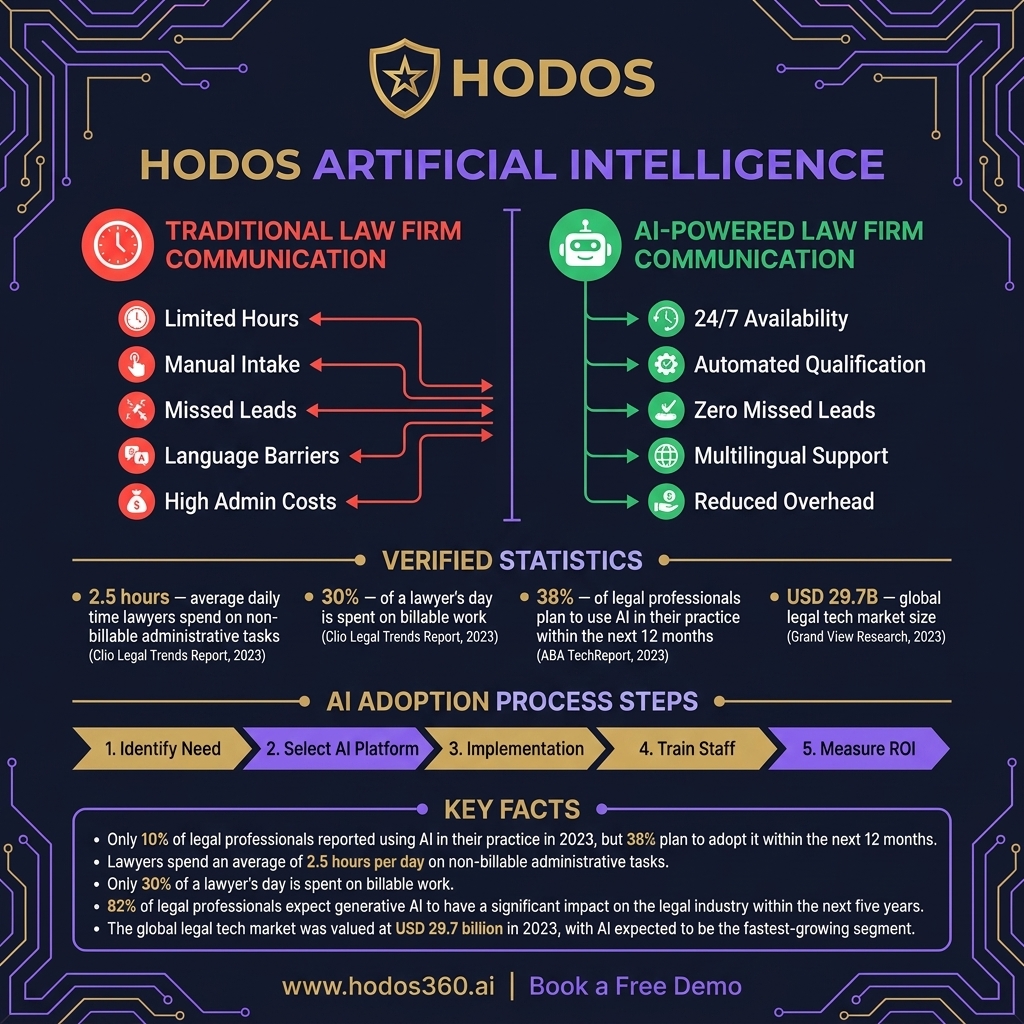
The successful integration of AI voice solutions requires a clear strategic roadmap, not just a piecemeal adoption of technology. Firms should begin with a thorough assessment of their current pain points in client communication and administrative workflows. Where are the bottlenecks? Where are leads being lost?
What repetitive tasks consume significant staff time? This diagnostic phase is crucial for identifying the areas where AI voice calls can deliver the most immediate and impactful benefits. Once these areas are identified, firms can then explore solutions that offer comprehensive features, such as those provided by HODOS 360, which combine AI voice assistants with broader law firm management and marketing tools.
Pilot programs are an excellent way to test the waters. By implementing AI voice assistants in a specific department or for a particular type of client inquiry, firms can gather real-world data, assess performance, and make necessary adjustments before a firm-wide rollout. Training staff on how to effectively collaborate with AI is also critical.
This isn't about replacing human roles but augmenting them, empowering staff to leverage AI for greater productivity and client satisfaction. Investing in staff training ensures a smooth transition and maximizes the value derived from the new technology. A phased approach, coupled with continuous evaluation and staff empowerment, will pave the way for successful AI integration and a future-ready law firm.

Key Takeaways and Next Steps for Modern Law Firms
The emergence of highly sophisticated AI voice calls, as exemplified by the Vinnytsia IT company's breakthrough, marks a pivotal moment for the legal industry. This technology is no longer a futuristic concept but a tangible tool offering transformative benefits for law firms of all sizes.
From revolutionizing client intake and providing 24/7 support to streamlining internal operations and driving measurable growth, AI voice assistants are reshaping the landscape of legal service delivery. The firms that embrace this innovation with a strategic, ethical, and client-centric approach will be the ones that thrive in the coming decades.
For law firm owners and attorneys, the call to action is clear: investigate and integrate AI voice solutions that align with your firm's values and operational needs. Platforms like HODOS 360 offer comprehensive AI-powered services designed specifically for the legal sector, including advanced AI Voice Assistants that can handle everything from lead qualification to appointment booking.
By leveraging these tools, you can significantly enhance efficiency, improve client satisfaction, and position your firm at the forefront of legal innovation. The future of law is intelligent, accessible, and deeply integrated with AI, and the time to act is now.
Frequently Asked Questions
How can AI voice calls improve client intake for my law firm?+
AI voice assistants can automate initial client screenings, collect essential contact and case information, and even identify potential conflicts of interest. This streamlines the process, ensures 24/7 availability for prospective clients, and frees up human staff to focus on more complex tasks, significantly improving efficiency and lead conversion.
What ethical considerations should law firms be aware of when using AI voice assistants?+
Firms must ensure transparency by clearly disclosing when clients are interacting with an AI. Data privacy and security are paramount, requiring robust protocols for handling sensitive information. Compliance with ethical rules, such as ABA Model Rule 1.1 (Competence) and 1.6 (Confidentiality), is essential when integrating AI into legal services.
Can AI voice assistants help with multilingual support?+
Yes, advanced AI voice assistants are often equipped with multilingual capabilities, allowing law firms to communicate with clients in various languages. This expands the firm's reach to diverse communities and enhances access to justice, breaking down language barriers that might otherwise prevent individuals from seeking legal counsel.
How do AI voice calls impact a law firm's operational costs?+
By automating routine administrative tasks like phone answering, call routing, and appointment booking, AI voice calls can significantly reduce the need for extensive administrative staff. This leads to substantial cost savings and allows firms to reallocate human resources to higher-value, revenue-generating activities, improving overall profitability.
Is AI voice technology a replacement for human legal professionals?+
No, AI voice technology is designed to augment, not replace, human legal professionals. It handles repetitive and administrative tasks, freeing attorneys and staff to focus on complex legal analysis, strategic client counsel, and the nuanced human aspects of law. It fosters a collaborative environment where AI enhances human capabilities.