


Gemini AI for Law Firms: An Essential Strategic Guide
The legal industry stands at a critical juncture, continuously reshaped by technological advancements. A recent headline from The Business Standard, "Google expands Gemini AI platform for law firms, lawyers," underscores a profound shift that demands the immediate attention of every legal professional. This isn't just another tech update; it represents Google's strategic move to embed its powerful Gemini AI directly into the operational fabric of legal practices, promising to revolutionize everything from case management to client interactions. For years, the legal sector, often characterized by its cautious approach to innovation, has watched from the sidelines as other industries embraced artificial intelligence. However, with giants like Google now explicitly targeting law firms, the adoption of sophisticated AI is no longer a futuristic concept but an imperative for competitive survival. This move follows a broader trend where leading firms, such as Allen & Overy, have already demonstrated the transformative power of AI through partnerships with legal AI startups like Harvey AI, proving that early adopters are poised to gain significant advantages in efficiency, accuracy, and client satisfaction. The tension between maintaining traditional legal rigor and embracing disruptive technology defines the current landscape. Firms that strategically integrate these new Gemini AI for law firms capabilities will not only streamline their operations but also redefine their value proposition to clients. Conversely, those that hesitate risk falling behind in a rapidly evolving market. This comprehensive guide will dissect the implications of Google's expansion, offering a strategic roadmap for law firms to navigate and leverage these potent AI tools effectively. From understanding the core functionalities of Gemini Enterprise for Legal to addressing critical ethical considerations, we aim to provide actionable insights for a future-proof practice. Ready to explore the future of legal tech? Learn more about HODOS 360's AI solutions for law firms.
The Unfolding Landscape of Google's Gemini Enterprise for Legal
Google's official launch of Gemini Enterprise for Legal marks a significant inflection point, moving beyond general-purpose AI to offer a platform specifically built for the nuanced demands of the legal sector. This expansion, spearheaded by Google CEO Sundar Pichai's vision for AI-first products, integrates Gemini's multimodal capabilities directly with Google Workspace and promises seamless integration with various third-party legal software. Unlike a generic AI chatbot, Gemini Enterprise for Legal focuses on deploying specialized "AI agents" designed to handle complex legal tasks such as contract review, legal research, and initial draft generation for legal documents. Learn more about AI Voice Assistant: Apple's Essential Siri Reboot Unpacked. These agents are trained on vast legal datasets, aiming to provide more accurate and contextually relevant outputs than previously available general models. The platform's emphasis on security and data privacy, crucial for legal professionals, positions it as a robust solution for firms handling sensitive client information.
The competitive landscape for AI legal workflows is intensifying, with Google's entry challenging established players and emerging startups alike. While Microsoft's Copilot for Legal, leveraging OpenAI's GPT models, has made inroads by integrating with Microsoft 365, Google's Gemini offers a distinct advantage through its multimodal architecture, allowing it to process and analyze not just text, but also images, audio, and video—a critical feature for tasks like reviewing deposition footage or analyzing visual evidence. Specialized platforms like Casetext's CoCounsel and Thomson Reuters' suite of AI tools have demonstrated the power of focused legal AI, but Google's broad ecosystem and computational power bring a new scale to the market. Learn more about AI Marketing: The Essential KPI for Law Firm Growth. This intense competition ultimately benefits law firms, pushing developers to create more sophisticated, user-friendly, and secure AI solutions that cater directly to their needs, especially in areas like legal operations transformation.
The practical impact on daily legal operations cannot be overstated. According to the American Bar Association's 2023 TechReport, lawyers spend an average of 40% of their time on administrative tasks, including document review, client intake, and billing. Gemini Enterprise for Legal aims to drastically reduce this non-billable time. Imagine an AI agent that can review a 500-page contract in minutes, identifying key clauses, potential risks, and deviations from standard templates, or an agent that can summarize complex case law relevant to a specific legal argument. Learn more about OpenAI Codex: Essential Guide to Faster Legal Web Development. This shift allows attorneys to reallocate their focus from tedious, repetitive tasks to high-value strategic thinking, client counseling, and courtroom advocacy. The platform's ability to automate initial drafts of legal documents, from demand letters to internal memos, frees up significant attorney bandwidth, potentially leading to higher billable hours and improved firm profitability, driving the larger practice management AI movement.
However, the adoption of such powerful Google Enterprise AI tools also presents a unique set of challenges. Data privacy remains paramount, requiring Google to ensure its platform meets stringent legal and regulatory compliance standards. Ethical considerations, particularly around the potential for AI "hallucinations" or biases in training data, necessitate rigorous oversight by human lawyers. Learn more about Essential AI Legal Solutions: Freshfields' Gemini Integration. Moreover, the integration process itself can be complex, requiring firms to invest in training their staff and adapting their existing workflows. Despite these hurdles, the sheer potential for efficiency gains and enhanced legal service delivery makes Gemini Enterprise for Legal an undeniable force that law firms must understand and strategically engage with to remain competitive and relevant in the evolving legal landscape.
Beyond Basic Search: Gemini's Advanced Capabilities for Legal Professionals
Gemini's true differentiator lies in its multimodal architecture, which allows it to process and understand information across text, code, images, audio, and video simultaneously. For legal professionals, this capability opens up a new realm of possibilities far exceeding traditional text-based search. Consider a complex personal injury case where a lawyer needs to analyze not only written medical reports but also surveillance footage, client interviews (audio), and expert witness depositions (video). Gemini AI can potentially ingest all these diverse data types, cross-reference them, and provide a comprehensive summary of facts, inconsistencies, and potential legal arguments. Learn more about Voice AI Assistant: The Ultimate Guide for Law Firms. This holistic approach to evidence review dramatically reduces the manual effort and time required, improving the accuracy and depth of case preparation. Firms like Linklaters have already been exploring similar multimodal AI applications for due diligence in M&A transactions, demonstrating the real-world utility of such advanced processing.
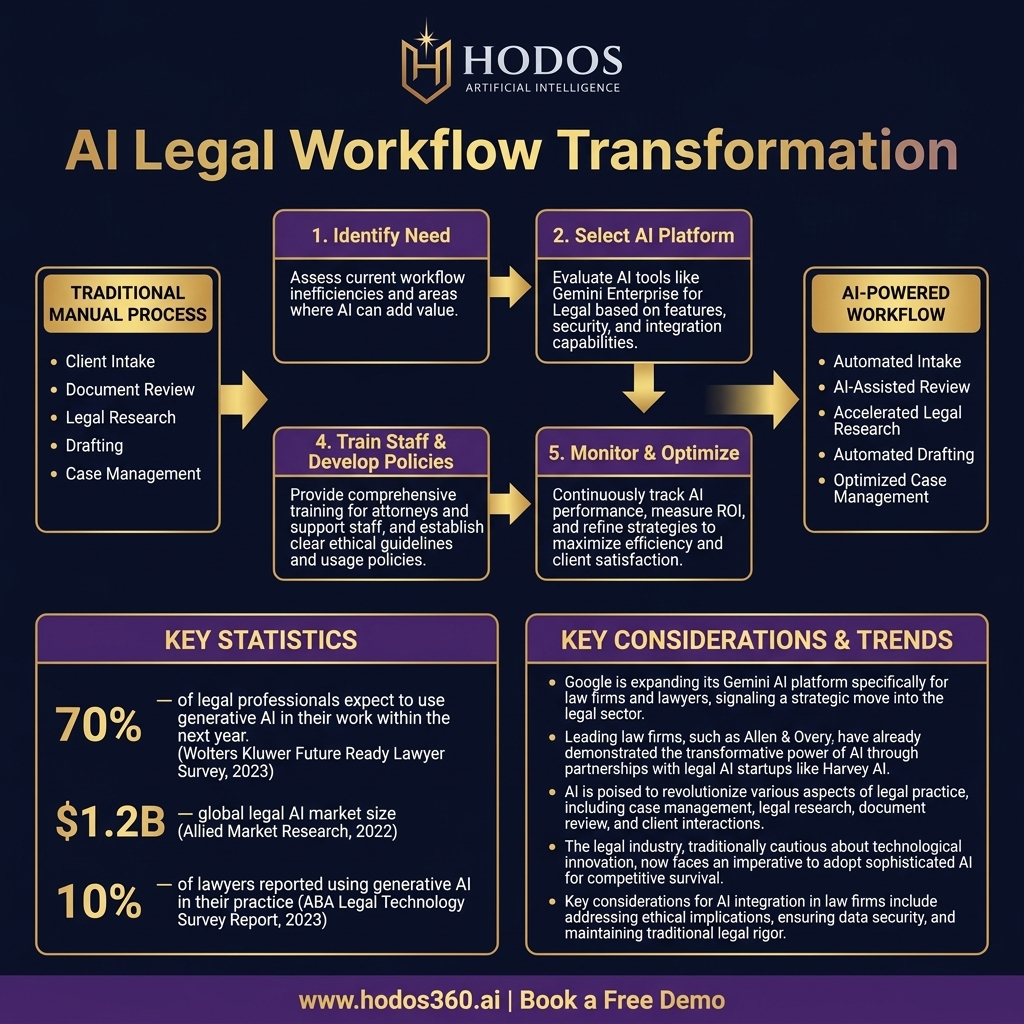
Furthermore, the personalization and customization offered by Gemini's AI agents mean that legal professionals can tailor the platform to their specific practice areas or firm needs. An IP firm, for instance, could train an AI agent for lawyers to identify patent infringements by analyzing product designs (images) and technical specifications (text), while a criminal defense firm might configure an agent to analyze police bodycam footage (video/audio) alongside incident reports. These specialized agents go beyond generic legal research, becoming virtual experts in niche domains, learning from a firm's proprietary data and precedents. Learn more about Ultimate AI Marketing Strategy for Law Firms: Essential Insights. This level of customization ensures that the AI isn't just a general tool but an integral, intelligent assistant that understands the unique context and demands of a specific legal practice, enhancing specialized document review AI capabilities and generating hyper-relevant insights for complex legal challenges.
Integrating AI into Core Law Firm Management Systems
The true power of Google's Gemini AI for law firms emerges when it's seamlessly integrated into existing law firm management systems. While Gemini offers robust standalone capabilities, its synergy with comprehensive platforms designed for legal operations amplifies its impact exponentially. Imagine a scenario where a new client inquiry comes in through your website; an AI agent, powered by Gemini, can initiate the client intake automation process, collecting initial information, performing conflict checks, and even drafting a preliminary engagement letter—all before a human attorney reviews the case. This level of integration transforms disparate tasks into a fluid, automated workflow, dramatically reducing administrative overhead and ensuring a consistent, professional client experience from the very first touchpoint. Firms that embrace this integrated approach are seeing significant improvements in their operational efficiency and client satisfaction metrics.
Beyond intake, the applications extend to every facet of practice management AI. Document automation, for example, moves beyond simple templates. With Gemini, firms can leverage AI to generate first drafts of complex briefs, motions, or even entire contracts, drawing upon vast legal databases and the firm's own precedents. This significantly reduces the time spent on drafting and allows attorneys to focus on refining legal arguments and strategic content. Billing accuracy and efficiency are also enhanced; AI can analyze attorney activity logs, identify billable tasks, and even categorize expenses, ensuring transparent and precise invoicing. Calendar management, often a logistical nightmare for busy attorneys, can be optimized by AI-powered scheduling assistants that factor in court dates, client meetings, and internal deadlines, minimizing conflicts and maximizing productivity. These are the kinds of AI legal workflows that sophisticated platforms like HODOS 360 are built to orchestrate, providing a unified ecosystem for growth and efficiency.
The success of AI integration, however, hinges on the quality and structure of a firm's data. AI models, including Gemini, are only as effective as the data they are trained on. Firms must invest in organizing their internal documents, client histories, and case precedents into accessible, digital formats. This often involves migrating legacy data, standardizing document naming conventions, and implementing robust data governance policies. Companies like Clio, through strategic acquisitions in the legal tech space, continually emphasize the importance of data centralization for effective practice management. A firm with well-structured data can leverage AI to identify trends in litigation outcomes, predict case durations, or even suggest optimal settlement strategies, turning raw information into actionable intelligence. Without a solid data foundation, even the most advanced Gemini AI for law firms will struggle to deliver its full potential.
Moreover, the integration of AI tools like Google Gemini into a comprehensive AI Law Firm Management System fosters a culture of continuous improvement. As AI handles more routine and time-consuming tasks, legal professionals are freed to focus on higher-value work, client relationships, and professional development. This shift not only improves job satisfaction for attorneys but also enhances the overall quality of legal services delivered. For instance, a mid-sized firm specializing in real estate law reported a 30% reduction in client intake time and a 20% increase in billable hours per attorney within six months of implementing an AI-driven management system. This transformation isn't just about efficiency; it's about redefining the very nature of legal practice, making it more strategic, responsive, and ultimately, more profitable. The synergy between Google's powerful AI and dedicated legal tech platforms creates an ecosystem where innovation thrives.
Navigating Ethical Considerations and Data Security in AI Adoption
The widespread adoption of Gemini AI for law firms brings with it a critical responsibility to navigate complex ethical considerations and ensure robust data security. The legal profession, bound by stringent rules of professional conduct, must approach AI integration with vigilance. Concerns around AI bias, for instance, are significant; if an AI model is trained on historical data reflecting societal biases, it could perpetuate or even amplify those biases in its legal analysis or predictions. This raises serious questions about fairness and equity, directly impacting a lawyer's duty of competence and zealous representation. Furthermore, the phenomenon of AI "hallucination," where models generate factually incorrect or nonsensical information, poses a direct threat to the accuracy and reliability of legal advice. Lawyers must adhere to ABA Model Rule 1.1 (Competence) by understanding the limitations of AI tools and verifying their outputs.
Client confidentiality, a cornerstone of legal practice, is another paramount concern. When integrating AI platforms, firms must ensure that client data remains protected from unauthorized access, breaches, or misuse. Google, with its enterprise-level security protocols, offers a strong foundation, but the ultimate responsibility rests with the law firm to implement secure practices, including data anonymization where appropriate, stringent access controls, and regular security audits. The potential for data leakage or unauthorized data processing, even accidentally, could lead to severe reputational damage, regulatory penalties, and violations of ABA Model Rule 1.6 (Confidentiality of Information). Microsoft President Brad Smith has often emphasized the need for responsible AI development, highlighting that technology providers and users share the burden of ethical implementation. This shared responsibility underscores the need for clear internal policies and continuous training for all legal professionals interacting with AI systems.
The regulatory landscape for AI is rapidly evolving, adding another layer of complexity. The European Union's AI Act, for example, sets a global precedent for regulating AI systems based on their risk level, imposing strict requirements for high-risk applications, which could include certain legal AI tools. Similar legislative efforts are underway in various jurisdictions, meaning law firms must stay abreast of these developments to ensure compliance. Firms must establish robust governance frameworks for their AI usage, including explicit guidelines for data input, output verification, and human oversight. This proactive approach not only mitigates legal risks but also builds client trust, assuring them that their sensitive information and legal matters are handled with the utmost care and ethical consideration, even when leveraging advanced AI agents for lawyers.
Ultimately, the ethical integration of AI in legal practice requires a balanced approach: embracing the transformative potential while rigorously safeguarding professional duties. It's not about blindly trusting the technology, but about employing it as an intelligent assistant under the vigilant supervision of human expertise. This means fostering a culture of critical evaluation, continuous learning, and transparency within the firm. As AI technologies become more sophisticated, the ethical framework governing their use will need to evolve in tandem, requiring ongoing dialogue within the legal community, perhaps at forums like LegalTech NYC, to establish best practices and respond to emerging challenges. Only through such diligence can law firms truly harness the power of legal tech innovation without compromising their core professional values.
The Human Element: Lawyers as Architects, Not Just Users, of AI
The rise of Gemini AI for law firms signals a profound shift in the role of legal professionals. Far from being replaced by machines, lawyers are evolving into architects and strategists of AI. Their expertise will be crucial in designing, training, and overseeing AI systems to ensure they align with legal principles and client needs. This involves understanding how to effectively "prompt" AI models, frame complex legal questions in a way that yields accurate results, and critically evaluate the AI's output for accuracy, bias, and completeness. The skill of "prompt engineering" is becoming as vital as legal research, transforming lawyers from mere users of technology into active collaborators and shapers of its application in the legal domain. This paradigm shift requires a new skillset, emphasizing analytical reasoning, ethical judgment, and technological literacy.
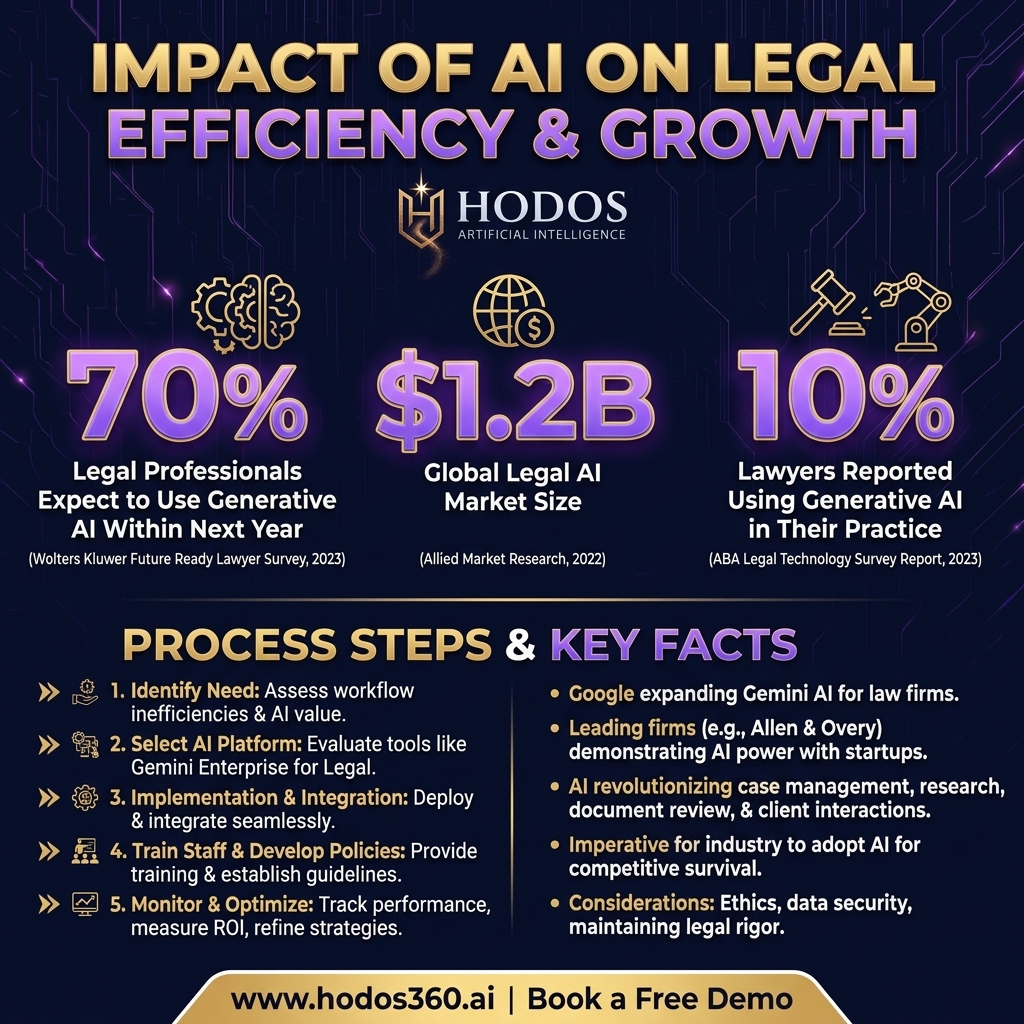
Continuous upskilling and professional development are therefore non-negotiable for legal professionals. Bar associations and legal education providers are increasingly offering courses on AI in law, data privacy, and ethical tech use. Firms must invest in training programs that equip their attorneys and staff with these new competencies. The goal is not to turn lawyers into coders, but to empower them to understand the capabilities and limitations of AI, enabling them to leverage these tools effectively and responsibly. As Sam Altman, CEO of OpenAI, frequently articulates, the future involves humans working in concert with powerful AI, augmenting human intelligence rather than supplanting it. This collaborative model ensures that the nuanced judgment, empathy, and strategic thinking inherent to legal practice remain at the forefront, while AI handles the heavy lifting of data processing and repetitive tasks, thereby enhancing overall legal operations transformation.
The Competitive Edge: Firms That Embrace AI vs. Those That Lag
The chasm between law firms embracing Gemini AI for law firms and those that lag is widening into a competitive canyon. Data from a 2024 McKinsey report on the future of professional services projects that firms leveraging AI could see a 20-30% increase in productivity and profitability within five years, while those that resist could experience significant market share erosion. This isn't merely about incremental improvements; it's about a fundamental restructuring of the legal market. Clients, increasingly tech-savvy themselves, are beginning to expect their legal counsel to utilize advanced tools for efficiency and cost-effectiveness. A firm that can offer faster document review, more precise legal research, and more predictable billing through AI integration will naturally attract and retain a more demanding client base, driving the broader legal tech innovation wave. The early adopters are already demonstrating a clear advantage in securing high-value mandates and expanding their service offerings.
The impact on cost savings and profitability is profound. By automating routine tasks, AI legal workflows reduce the need for extensive manual labor, lowering overheads and allowing firms to offer more competitive rates without sacrificing quality. This efficiency can translate directly into higher profit margins or enable firms to take on a greater volume of work. For instance, a firm using AI for initial discovery and document review can dramatically cut down on the hours traditionally spent by junior associates, freeing them for more complex, billable work. Moreover, the enhanced accuracy and speed provided by AI can lead to better legal outcomes, further solidifying a firm's reputation and attracting new business. The investment in Google Enterprise AI tools and integrated systems like HODOS 360 is not just an expense; it's a strategic investment in future profitability and market leadership.
Beyond financial metrics, AI adoption also plays a crucial role in talent attraction and retention. Younger generations of lawyers entering the profession are digital natives who expect to work with cutting-edge technology. Firms that offer a modern, AI-integrated work environment are more appealing to top legal talent, who seek opportunities to engage with innovative tools and focus on intellectually stimulating work rather than mundane tasks. Conversely, firms clinging to outdated manual processes risk being perceived as stagnant and less desirable employers. The narrative of "disruption vs. tradition" is playing out in real-time, with firms like Latham & Watkins and Clifford Chance actively investing in AI capabilities, signaling to the market and prospective hires their commitment to the future of legal practice. This forward-thinking approach creates a virtuous cycle, attracting talent that further drives innovation within the firm, solidifying its practice management AI capabilities.
The competitive landscape is also shaped by funding rounds and acquisitions in the legal tech space. Startups like Harvey AI and Casetext have secured significant funding, highlighting investor confidence in AI's transformative potential for legal. Major players like Thomson Reuters and LexisNexis are continuously acquiring and developing AI-powered tools, creating an arms race for superior AI agents for lawyers. Law firms that choose to remain on the sidelines risk not only losing market share but also becoming obsolete in a profession increasingly defined by technological prowess. The choice is clear: embrace the strategic opportunities presented by Gemini AI for law firms and integrate it wisely, or contend with the escalating challenges of an industry that is rapidly leaving the analog past behind. Explore how HODOS 360’s AI-powered solutions can empower your firm to stay ahead in this transformative era.
- ✓Develop a Clear AI Strategy: Define specific goals for AI integration, whether it's enhancing research, automating document review, or streamlining client intake. A targeted approach yields better results.
- ✓Invest in Secure, Scalable Platforms: Prioritize AI solutions that offer robust data security, compliance features, and the ability to grow with your firm's needs, like Google's enterprise offerings.
- ✓Prioritize Ethical Guidelines and Training: Establish internal policies for AI use, focusing on data privacy, bias detection, and human oversight. Provide continuous training for all legal staff.
- ✓Start with High-Impact, Low-Risk Areas: Begin AI implementation in areas where the benefits are clear and the risks are manageable, such as initial document review or administrative task automation.
- ✓Foster a Culture of Innovation: Encourage experimentation and open dialogue about AI's potential and challenges. Support your team in learning and adapting to new technologies.
- ✓Continuously Evaluate and Refine AI Tools: Regularly assess the performance of your AI systems, gather feedback from users, and make adjustments to optimize their effectiveness and integration.
- ✓Leverage Integrated Solutions: Seek out platforms that offer comprehensive AI-powered services across firm management, marketing, and client communication, creating a cohesive technological ecosystem.

Key Takeaways and Next Steps for Your Firm
Google's expansion of its Gemini AI platform for law firms is not merely a technological upgrade; it's a clarion call for strategic adaptation within the legal profession. As we've explored, the intelligent integration of Gemini AI for law firms promises unprecedented advancements in efficiency, accuracy, and competitive positioning. From automating routine tasks to providing advanced insights for complex legal challenges, AI is poised to redefine the capabilities of legal practice. The imperative for law firms is no longer whether to adopt AI, but how to do so ethically, securely, and strategically to maximize its benefits while mitigating risks. The firms that thoughtfully embrace this transformation, investing in both technology and the upskilling of their human talent, will be the ones that thrive in the coming decades.
The journey toward an AI-powered future begins with a clear vision and actionable steps. Start by assessing your firm's specific needs and identifying high-impact areas where AI can deliver immediate value. Prioritize robust data governance, ethical considerations, and continuous professional development. Platforms like HODOS 360 are purpose-built to complement these advancements, offering an AI Law Firm Management System that integrates case management, document automation, and AI-powered workflows, ensuring your firm is equipped with comprehensive solutions. The adage holds true: AI won't replace lawyers, but lawyers who leverage AI will undoubtedly replace those who don't. The time to act is now, to ensure your firm is at the forefront of this legal tech revolution. Ready to harness the power of AI for your legal practice? Book a free demo with HODOS 360 today.
Frequently Asked Questions
What specifically is Google's Gemini Enterprise for Legal?+
Google's Gemini Enterprise for Legal is an AI platform specifically designed for law firms and corporate legal departments. It leverages Gemini's multimodal capabilities (text, code, images, audio, video) and deploys specialized AI agents to automate and enhance tasks like contract review, legal research, document drafting, and case management, integrating seamlessly with Google Workspace and other legal software platforms.
How can AI agents benefit my law firm's daily operations?+
AI agents can significantly boost efficiency by automating repetitive and time-consuming tasks. For instance, they can perform rapid document review, summarize complex legal texts, generate initial drafts of legal documents, streamline client intake processes, and assist with legal research, freeing up attorneys to focus on higher-value strategic work, client counseling, and complex problem-solving, improving overall productivity and profitability.
What are the primary ethical concerns when adopting AI in legal practice?+
Key ethical concerns include AI 'hallucinations' (generating inaccurate information), potential biases in AI training data leading to unfair outcomes, and safeguarding client confidentiality and data security. Law firms must ensure compliance with professional conduct rules like ABA Model Rules on Competence and Confidentiality, implement robust data governance, and maintain human oversight to verify AI outputs and mitigate risks.
How does Google's Gemini compare to other legal AI platforms?+
Google's Gemini differentiates itself with its multimodal architecture, allowing it to process diverse data types beyond text. While competitors like Microsoft Copilot for Legal and specialized platforms like Casetext's CoCounsel offer strong AI capabilities, Gemini's broad ecosystem integration and advanced processing of various media types provide a comprehensive approach to legal intelligence, enhancing tasks like video deposition analysis and visual evidence review.
What steps should law firms take to integrate Gemini AI effectively?+
Effective integration requires a strategic approach. Firms should define clear AI goals, invest in secure and scalable platforms, prioritize ethical guidelines and continuous staff training, and start with high-impact, low-risk applications like document automation. Fostering a culture of innovation and leveraging integrated solutions like comprehensive AI law firm management systems are crucial for maximizing benefits and ensuring long-term success.