

Gradio Mastery: Essential Guide to AI Web App Development
The legal industry, often characterized by its adherence to tradition, is undergoing a profound transformation driven by artificial intelligence. For years, deploying sophisticated AI solutions required extensive development teams and significant capital, placing them out of reach for many small to mid-sized law firms. However, a new wave of open-source tools is democratizing AI development, enabling legal professionals to rapidly prototype and deploy custom applications.
One such tool, Gradio, has emerged as a game-changer, allowing even those with limited coding experience to build and share interactive AI web apps in a matter of hours, not months. This shift is not merely about efficiency; it's about empowering firms to innovate at the speed of client demand, creating bespoke solutions that address unique legal challenges.
Consider the case of 'LexiBot,' a client intake AI assistant developed by a boutique intellectual property firm, IPInnovate. Led by managing partner Anya Sharma, the firm found itself overwhelmed by initial client consultations that often didn't align with their specialized services. Sharma, inspired by discussions at LegalTech NYC 2026 about accessible AI development, tasked her firm's tech-savvy associate, David Chen, with finding a rapid prototyping solution.
Chen, leveraging his knowledge of python and an understanding of machine learning models, discovered Gradio. Within a week, he had built a functional prototype of LexiBot—an interactive web interface that asked initial qualifying questions, analyzed responses using a pre-trained language model, and routed potential clients to the appropriate specialist or politely declined if the case wasn't a fit.
This rapid deployment, documented in a recent 'AI News Today' feature, significantly reduced wasted attorney hours and improved client satisfaction, demonstrating the tangible benefits of agile AI development in the legal sector. This anecdote highlights a growing trend: the shift from relying solely on off-the-shelf solutions to empowering internal teams to create tailored application interfaces that directly address operational bottlenecks.
The Rise of Rapid AI Prototyping in Legal Tech
The legal sector's embrace of AI has historically been cautious, often limited to large-scale, vendor-driven solutions for e-discovery or contract analysis. However, the accelerating pace of technological change, particularly in machine learning and large language models, demands a more agile approach. Firms can no longer afford to wait years for custom software development cycles.
The ability to quickly build and iterate on AI application prototypes is becoming a critical competitive differentiator. According to a 2024 Thomson Reuters report, 68% of law firms surveyed indicated a strong desire for more customizable AI tools, but only 15% felt they had the internal capabilities to develop them.
This gap is precisely where platforms like Gradio shine, offering a powerful library that allows legal professionals and their tech teams to bridge the chasm between an innovative idea and a deployable interactive solution.
This paradigm shift is evident in the strategies of leading legal tech innovators.
Learn more about Proven Strategy: AI-Built Websites Can Convert for Law Firms. Consider the approach taken by Harvey AI, which, after securing significant funding and partnering with firms like Allen & Overy, has demonstrated the power of specialized AI. While Harvey focuses on complex legal reasoning, the underlying principle of rapid development and deployment of tailored AI is universal.
For smaller firms, or even departments within larger ones, Gradio provides a similar agility at a much lower barrier to entry. It enables a 'try fast, fail fast, learn faster' methodology, crucial in an evolving field where the best models and interfaces are still being discovered.
This iterative process, often discussed at conferences like 'Legal Innovators Online,' allows firms to test hypotheses about AI's utility in specific legal contexts without committing vast resources, fostering a culture of experimentation and continuous improvement.
Beyond Traditional Web Development: The Gradio Advantage
Traditional web development for specialized AI applications typically involves intricate front-end and back-end coding, database management, and deployment infrastructure. This complexity often deters law firms from pursuing custom AI tools, pushing them towards generic, less tailored solutions. Gradio simplifies this by providing a high-level python library that automatically generates a user interface for virtually any machine learning model or data science function.
This means that an attorney or a legal operations specialist, with a basic understanding of Python, can wrap an existing AI script—perhaps one for analyzing contract clauses or predicting case outcomes—into a shareable web app in minutes. The ease of use is a significant factor, as demonstrated by the burgeoning community around Gradio documentation and Gradio GitHub repositories, where developers and non-developers alike share innovative applications.
The impact on legal workflows is profound. Imagine a paralegal needing to quickly summarize depositions. Learn more about AI Website Builder: Essential Strategies for Law Firm Growth. Instead of manually reviewing hundreds of pages, they could upload the text to a custom Gradio app powered by a summarization AI model.
Or consider a firm specializing in immigration law, needing to quickly assess the eligibility of clients based on complex criteria. A Gradio application could provide an interactive form that guides clients through questions, processing their input with an AI model to offer preliminary insights. This immediate feedback loop not only enhances efficiency but also elevates the client experience, transforming complex legal processes into accessible, user-friendly interfaces.
The ability to rapidly create and deploy such tools empowers firms to move beyond static websites, offering dynamic, AI-powered services.
Strategic Advantages for Law Firms: Speed, Customization, and Client Engagement
The strategic advantages for law firms adopting rapid AI development tools like Gradio are manifold. First and foremost is speed to market. In an industry where innovation cycles are shortening, the ability to create and deploy specialized AI applications quickly provides a significant competitive edge.
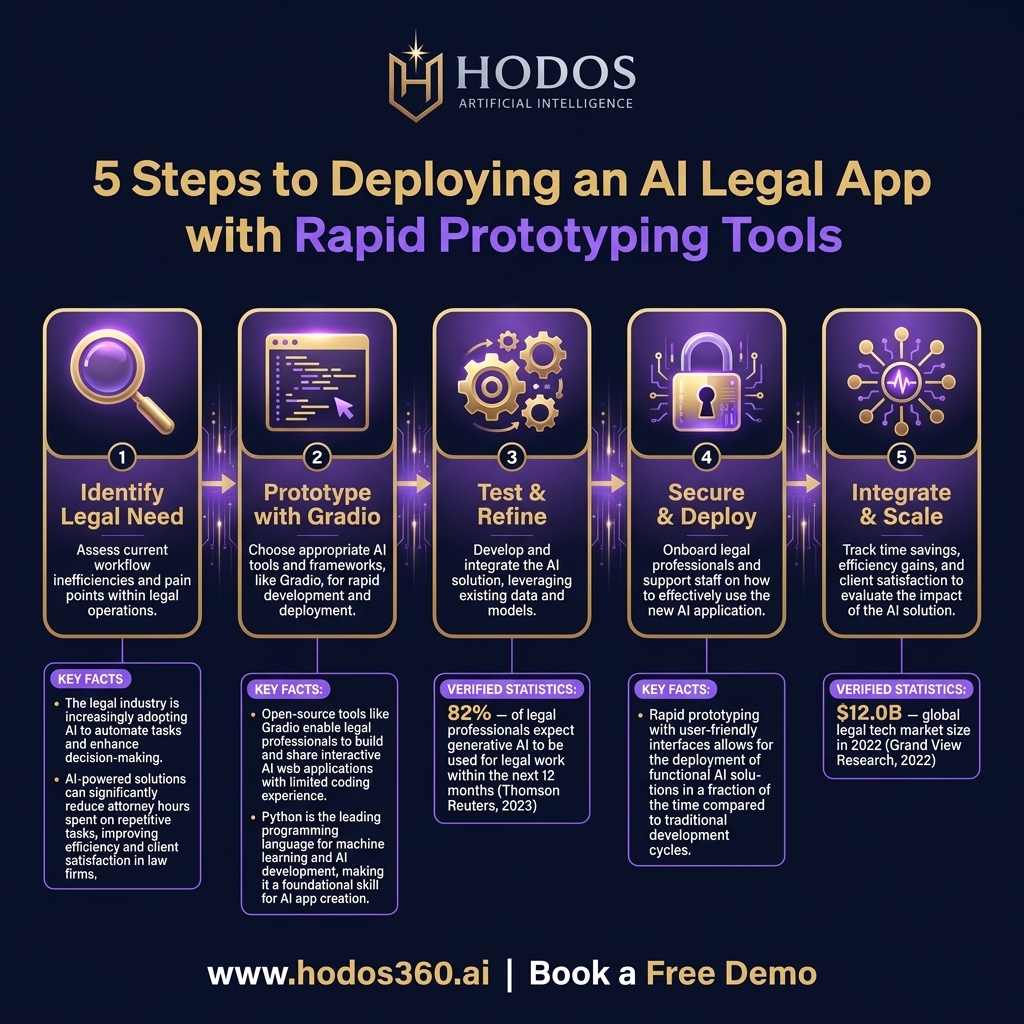
Firms can respond to emerging client needs or internal operational challenges with bespoke solutions faster than ever before. This agility allows them to test new service offerings, refine internal processes, and gather feedback in real-time, accelerating their digital transformation journey. For instance, a firm could develop a custom Gradio app for client intake that integrates with their existing CRM, allowing for a seamless and highly personalized onboarding experience.
Secondly, customization is paramount. Learn more about AI Marketing: The Ultimate Guide for Law Firms. While off-the-shelf legal tech solutions offer broad functionality, they often lack the granular specificity required for niche legal practices or unique firm workflows. With Gradio, firms can tailor AI models and their interfaces to perfectly match their specific requirements, whether it's a specialized document classification tool for environmental law or an AI assistant for drafting initial responses in family law cases.
This level of customization ensures that the AI application truly augments human expertise, rather than forcing attorneys to adapt to a generic system. This bespoke approach fosters greater adoption among legal professionals, as the tools are designed specifically for their needs, enhancing both efficiency and job satisfaction.
This also extends to sharing these custom models internally, fostering a culture of innovation.
- ✓Rapid Prototyping: Build and test AI web apps in hours or days, not weeks or months, accelerating innovation cycles.
- ✓Enhanced Client Engagement: Develop interactive application interfaces for client self-service, improving satisfaction and accessibility.
- ✓Tailored Solutions: Customize AI models for specific legal domains, ensuring precise alignment with firm needs and workflows.
- ✓Democratized AI Development: Empower non-developers or legal tech specialists with python skills to create AI tools.
- ✓Cost Efficiency: Reduce reliance on expensive external development teams for niche AI application projects.
- ✓Internal Knowledge Sharing: Easily share internal AI tools and models across the firm, fostering collaboration and efficiency.
- ✓Data-Driven Insights: Integrate analytics into custom Gradio apps to track usage and refine AI models over time.
Navigating the Ethical and Practical Landscape of AI App Development
While the promise of rapid AI application development is immense, law firms must navigate a complex ethical and practical landscape. The ease with which tools like Gradio allow for the building of interactive interfaces means that firms must be acutely aware of their responsibilities regarding data privacy, security, and algorithmic bias.
The American Bar Association's Model Rule 1.6 on Confidentiality of Information requires lawyers to make reasonable efforts to prevent the inadvertent or unauthorized disclosure of, or unauthorized access to, client information. This extends to any AI web app developed or utilized by the firm. Firms must ensure that any machine learning model processing client data is secure, encrypted, and compliant with relevant regulations like GDPR or CCPA.
This often means carefully selecting where the app is deployed and how data is handled, even when using an open-source library like Gradio.
Furthermore, the ethical implications of AI bias are particularly salient in the legal context. AI models, trained on historical data, can inadvertently perpetuate or amplify existing societal biases, leading to unfair or discriminatory outcomes.
Learn more about AI Legal Research: The Ultimate Evolution of Legal Analysis. Firms using AI applications for tasks such as predictive analytics for sentencing or even client intake must rigorously test their models for bias and implement safeguards to mitigate it. Justice Elena Kagan, in a recent address at Georgetown Law, emphasized the judiciary's increasing concern over the transparency and fairness of AI in legal processes, underscoring the legal community's collective responsibility.
This necessitates not just technical proficiency in python or Gradio, but also a deep understanding of legal ethics and principles of justice. Regular audits, transparent documentation of AI decision-making processes, and human oversight are not optional; they are foundational to responsible AI deployment in law.
This is a topic frequently discussed in 'AI News Today' and at legal tech ethics panels.
Security and Compliance in Rapid AI Development
The very agility that makes Gradio powerful also necessitates a robust approach to security and compliance. When a firm uses Gradio to build an application that processes sensitive client data, it must consider the full lifecycle of that data. This includes secure data input, processing within the AI model, and data storage.
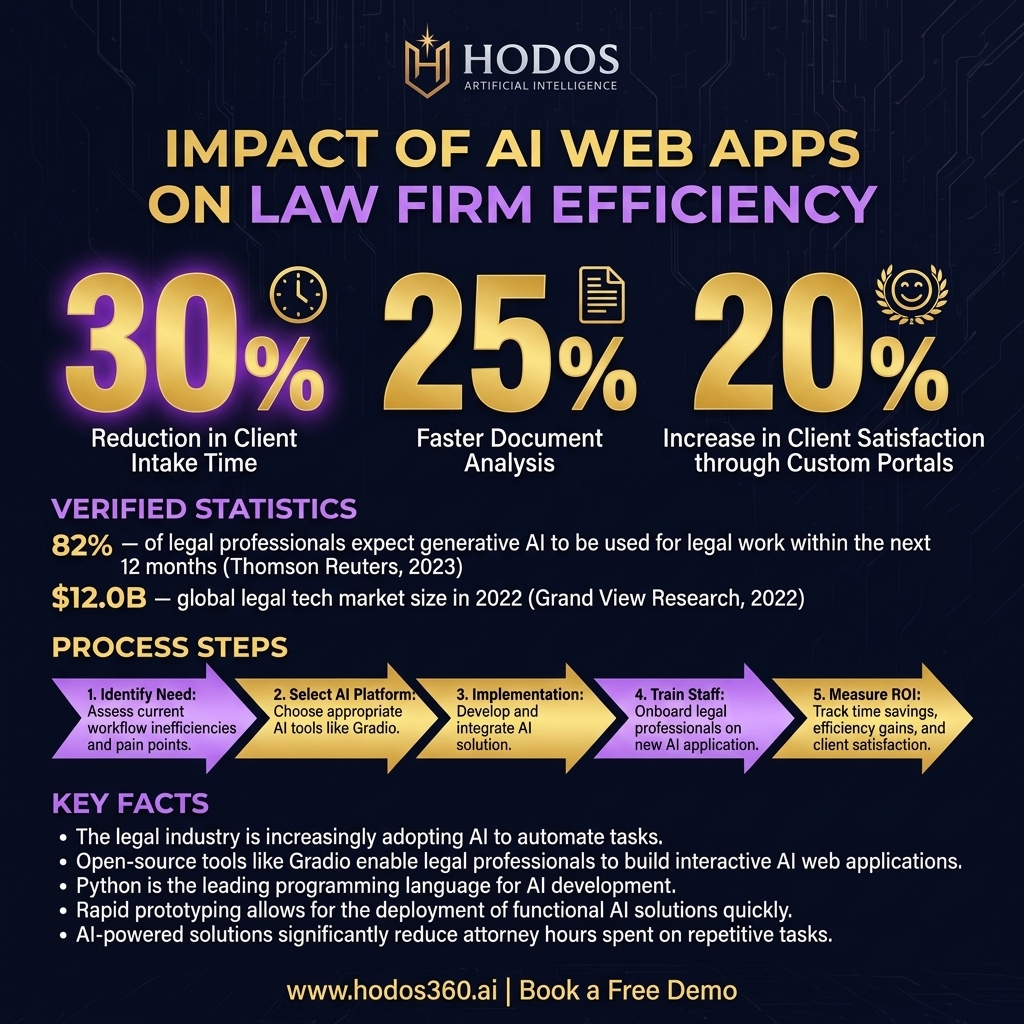
Simply creating a functional interface is not enough; firms must ensure the underlying infrastructure meets stringent security standards. For example, deploying a Gradio app on a public cloud without proper access controls or data encryption would be a significant breach risk. The Federal Rules of Civil Procedure, particularly regarding e-discovery, imply a duty to preserve and secure electronically stored information (ESI), a principle that extends to data processed by AI applications.
Learn more about Essential Harvard AI & Web Development Courses for Law Firms. Firms should also consult their state bar's ethics opinions on cloud computing and AI, many of which provide specific guidance on data handling and vendor due diligence.
This is where a comprehensive Web & Mobile Development strategy, integrated with broader IT governance, becomes critical.
While Gradio provides the tools to create the interface, firms need secure deployment environments, robust authentication mechanisms, and ongoing monitoring. This could involve containerizing Gradio apps for deployment, implementing multi-factor authentication for access, and regularly patching underlying python libraries and operating systems. The goal is to leverage the speed of Gradio for prototyping and internal tools, while ensuring that any client-facing or sensitive application is built and deployed with the same rigorous security protocols as any enterprise-grade software.
This balance between innovation and security is a constant challenge, but one that firms must master to responsibly harness the power of AI.
Integrating AI Web Apps into a Comprehensive Legal Tech Ecosystem
For law firms, the adoption of tools like Gradio is not an isolated event but a component of a larger, integrated legal tech strategy. A custom AI web app, whether for internal document analysis or client lead qualification, performs best when it seamlessly integrates with other firm systems.
This means connecting the Gradio application with existing case management software, CRM platforms, and document management systems. The true power of AI in law lies not just in individual smart tools, but in how these tools communicate and create a cohesive, intelligent workflow. Consider a scenario where a Gradio-powered client intake form not only qualifies leads but also automatically creates a new client file in the firm's case management system and schedules an appointment via an AI voice assistant.
This level of integration transforms disparate tools into a unified, highly efficient ecosystem. Firms that embrace this holistic view, leveraging their Web & Mobile Development capabilities to build custom integration layers, will realize the full potential of AI.
This integrated approach is precisely what platforms like HODOS 360 aim to facilitate.
Learn more about AI Website Builders: The Ultimate Guide for Law Firms. While Gradio excels at rapid UI generation for machine learning models, HODOS 360 provides the comprehensive framework—from AI Law Firm Management to AI Marketing and AI Voice Assistants—that allows firms to deploy and manage these custom AI applications within a secure, scalable environment.
For instance, a firm might use Gradio to quickly build an internal AI app for contract clause extraction. This application could then be seamlessly integrated into HODOS 360's Document Automation workflow, ensuring the extracted data flows directly into client documents. This synergy allows firms to leverage best-of-breed open-source tools for specific needs while maintaining a centralized, secure, and compliant operational backbone.
The key is to view AI app development not as a standalone project, but as an integral part of enhancing every facet of a law firm's operations, from client acquisition to case resolution, ensuring that every interactive interface serves a strategic purpose.
The Future of Legal Practice: Agility and Customization
The future of legal practice is one defined by agility, customization, and continuous innovation, driven by accessible AI tools. Firms that embrace platforms like Gradio to create bespoke AI applications will be better positioned to meet the evolving demands of clients and the complexities of modern law.
This means fostering an environment where legal professionals are encouraged to experiment with AI, to identify pain points that can be solved with custom interactive models, and to actively participate in the development process. The narrative around AI in law is shifting from fear of replacement to excitement about augmentation, where technology empowers lawyers to focus on higher-value, strategic work.
This evolution is not about replacing human judgment but enhancing it, providing attorneys with powerful tools to make more informed decisions, deliver services more efficiently, and offer clients unparalleled value. The ability to rapidly build and iterate on these tools, and to share them effectively, is paramount.
As the legal landscape continues to evolve, the distinction between tech-forward firms and traditional practices will become starker. Those leveraging accessible development libraries like Gradio for machine learning application prototyping will be able to adapt faster, secure new clients through innovative service offerings, and operate with greater efficiency.
This isn't just about staying competitive; it's about redefining what legal services can be in the 21st century. The journey involves not just adopting new technologies, but cultivating a mindset of continuous innovation and digital literacy across the firm. The insights from Gradio documentation and community examples show a clear path forward for firms ready to take control of their AI destiny, moving beyond passive consumption to active creation of legal tech solutions.
The time for firms to explore their own Web & Mobile Development capabilities, augmented by tools like Gradio, is now.

Key Takeaways and Next Steps
The emergence of user-friendly tools like Gradio represents a significant inflection point for law firms. It democratizes the ability to build and share powerful AI web apps, moving custom legal tech development from the exclusive domain of large enterprises to accessible innovation for firms of all sizes.
The ability to rapidly prototype interactive application interfaces for machine learning models provides unparalleled opportunities for streamlining operations, enhancing client engagement, and creating truly bespoke legal solutions. From automating client intake to developing specialized document analysis tools, the applications are limited only by imagination and ethical considerations.
Firms must proactively explore these capabilities, understanding that strategic investment in their Web & Mobile Development capacity, even through simplified platforms, is crucial for future competitiveness. The legal tech landscape is evolving rapidly, and staying at the forefront requires embracing agility and customization.
For law firms looking to harness this power, the next steps involve exploring the potential of rapid AI development within their own operations.
This might mean tasking a tech-savvy associate with exploring Gradio documentation and building a simple internal tool, or partnering with a platform like HODOS 360 that offers comprehensive Web & Mobile Development services, including the integration of custom AI solutions. The goal is to identify specific pain points that can be addressed by a tailored AI application, rather than waiting for generic solutions.
By embracing tools that allow for the quick creation of interfaces for python-based models, firms can not only improve efficiency but also differentiate themselves in a crowded market. The future of legal innovation is in the hands of those who are willing to create it, rather than just consume it.
Start small, iterate quickly, and watch your firm transform.
Frequently Asked Questions
What is Gradio and how can it benefit my law firm?+
Gradio is an open-source Python library that allows you to quickly build and share interactive web interfaces for machine learning models or any Python function. For law firms, it means you can rapidly prototype custom AI applications for tasks like client intake, document classification, or case prediction, without extensive web development expertise, leading to faster innovation and tailored solutions.
Do I need to be an expert coder to use Gradio for legal tech?+
While a basic understanding of Python is helpful, Gradio is designed for ease of use. It abstracts away much of the complex web development, allowing you to focus on the AI model or logic. Many legal tech specialists or even tech-curious attorneys can learn to build simple, yet effective, AI web apps with Gradio, leveraging existing scripts or APIs.
What kind of AI applications can law firms build with Gradio?+
Law firms can build a wide range of AI applications. Examples include interactive client qualification forms, simple document summarizers, tools for categorizing legal documents, interfaces for contract clause extraction, or even internal dashboards for visualizing case data with AI-powered insights. The flexibility of Gradio allows for diverse custom solutions.
What are the ethical considerations when developing AI apps for a law firm?+
Ethical considerations are paramount. Firms must ensure data privacy and security (ABA Model Rule 1.6), rigorously test for and mitigate algorithmic bias, and maintain transparency in AI decision-making. Human oversight for critical legal tasks is essential. Compliance with data protection regulations (e.g., GDPR, CCPA) and state bar ethics opinions is also crucial for responsible AI deployment.
How does Gradio integrate with existing law firm management systems?+
Gradio creates standalone web applications that can be integrated into existing systems through APIs or by embedding the interface. While Gradio handles the UI, firms would typically use their Web & Mobile Development capabilities or platforms like HODOS 360 to build connectors that ensure seamless data flow between the custom Gradio app, case management, CRM, and other firm software, creating a cohesive ecosystem.