


Voice AI: Essential Comeback of Phone Calls for Law Firms
In the bustling digital landscape of September 2026, where every interaction is increasingly mediated by screens and instant messages, the humble phone call is making a powerful resurgence, particularly within the legal sector. This unexpected comeback isn't driven by nostalgia but by sophisticated Voice AI that transforms traditional telephony into an intelligent, efficient client engagement channel. As ecommercenews.com.au recently highlighted, "Voice AI is bringing the phone call back to business," a truth resonating deeply within law firms struggling to balance client demands with finite human resources.
Consider Sarah Chen, managing partner at LexBridge Legal, a mid-sized firm navigating the complexities of modern litigation and client acquisition. For years, LexBridge grappled with a common dilemma: missed calls after hours, inconsistent lead qualification, and a significant portion of paralegal time dedicated to routine inquiries. The firm's growth was bottlenecked by its inability to scale client communication effectively without incurring prohibitive costs. Sarah often felt her team was constantly playing catch-up, leading to potential client attrition and attorney burnout.
The advent of advanced AI voice assistants offers a compelling solution, moving far beyond basic interactive voice response (IVR) systems. These new platforms, powered by large language models (LLMs) from innovators like OpenAI and enhanced by AI voice cloning technologies from companies such as ElevenLabs, can understand nuance, respond contextually, and even convey empathy. For law firms, this means a 24/7 virtual receptionist capable of everything from initial lead qualification to scheduling appointments and answering frequently asked questions, fundamentally redefining client service and operational paradigms. Law firms that embrace this technology are finding themselves at the forefront of efficiency and client satisfaction. Ready to transform your law firm's client communication? Discover how HODOS 360's AI Voice Assistants can help your practice thrive.
The Resurgence of the Phone Call in the Legal Sector
For decades, law firms relied on the phone as their primary client touchpoint. However, the rise of email and instant messaging led many to believe its prominence was waning. The current wave of AI news today indicates a significant shift, demonstrating that the phone call, when augmented by Voice AI, offers an unparalleled blend of immediacy and personalized interaction that digital text communications often lack. This isn't merely about answering calls; it's about intelligent engagement.
According to the 2025 ABA TechReport, client expectations for immediate responses have surged, with over 70% of clients expecting a reply within an hour, even outside business hours. Learn more about AI Legal Website Optimization: Essential Guide for Law Firms. Traditional firms often struggle to meet this demand without overworking staff or hiring expensive 24/7 receptionists. The strategic implementation of AI voice assistants addresses this gap, ensuring that every inbound call is handled promptly and professionally, regardless of the time or day. This capability is critical for retaining potential clients who might otherwise turn to more responsive competitors, fundamentally enhancing customer service in a legal context.
Streamlining Client Intake and Qualification
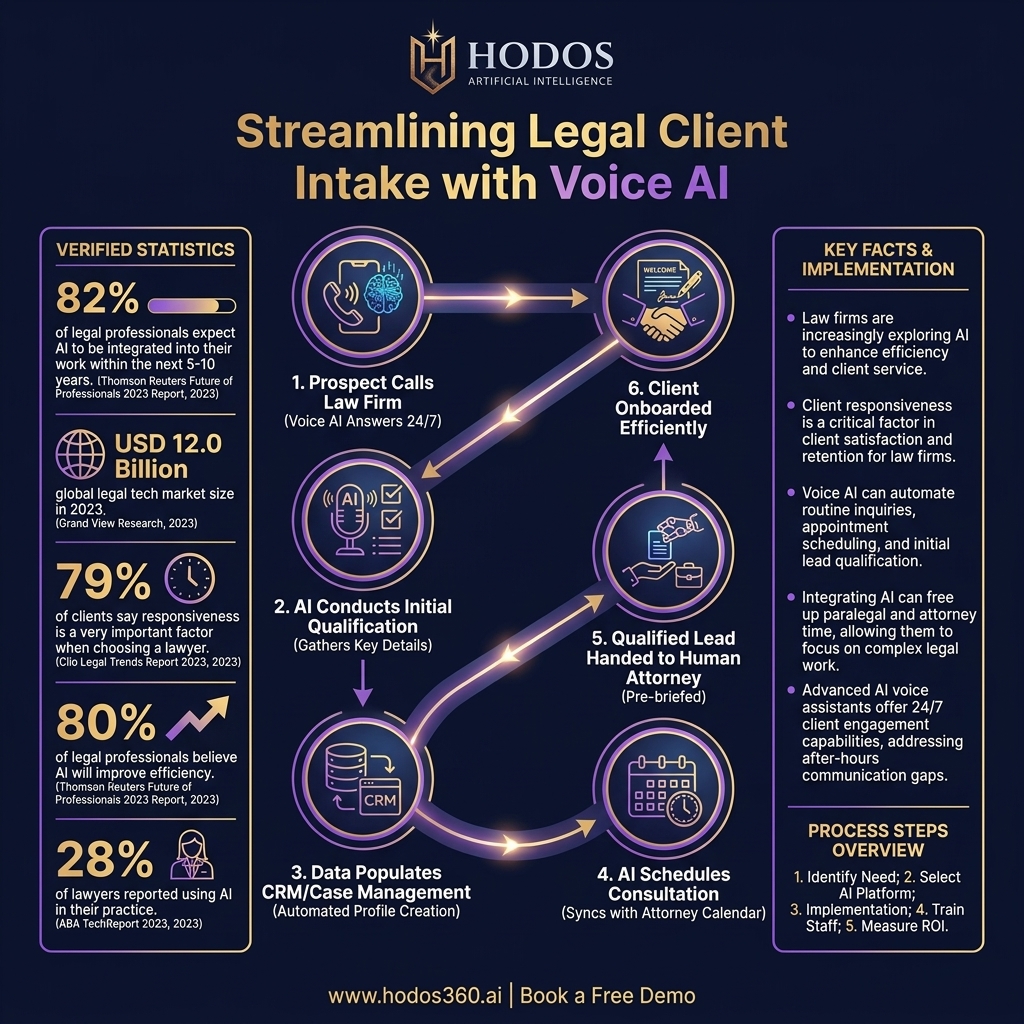
One of the most significant pain points for law firms is the client intake process. It's often time-consuming, requires significant human intervention, and can be inconsistent. Voice AI systems are revolutionizing this by acting as the first point of contact, conducting initial lead qualification by asking structured questions, gathering essential case details, and even explaining fee structures. This not only saves valuable attorney and paralegal time but also ensures that only genuinely qualified leads are passed on to human staff.
For instance, a prospective client calling about a personal injury claim can be guided through a series of questions by an AI assistant, collecting information on the date of incident, type of injury, and parties involved. Learn more about AI Website Audit: Essential Tools for Law Firm Growth. This data can then be automatically populated into the firm's AI Law Firm Management System, creating a preliminary client profile before a human ever intervenes. This streamlined approach minimizes administrative burden and significantly accelerates the onboarding process, allowing legal professionals to focus on high-value legal work.
Beyond Basic Answering: Advanced AI Voice Agents for Law Firms
The capabilities of modern AI voice assistants extend far beyond simple call routing. These are not merely automated answering machines; they are sophisticated AI agents capable of complex interactions. Powered by cutting-edge LLMs, they can engage in natural, flowing conversations, understand legal jargon, and even detect emotional cues in a caller's voice. This allows them to provide a level of interaction previously only possible with human agents, making them indispensable for modern legal workflows.
Consider the case of "Converse Legal," a burgeoning law firm that adopted an advanced Voice AI platform. Their AI voice assistants now handle over 60% of inbound calls, from initial inquiries to scheduling follow-up consultations. Learn more about Voice AI Landscape: Essential Strategies for Law Firms. "Before, our receptionists were swamped, and potential clients would hang up if they couldn't get through immediately," states David Miller, managing partner at Converse Legal. "Now, our AI voice agents manage the initial screening, freeing up our human staff to focus on complex client needs and case strategy. It's been a game-changer for our operational efficiency." This kind of automation allows firms to scale without proportionally increasing their overhead, a critical advantage in a competitive market.
Enhancing Attorney-Client Relationships
While some critics raise concerns about AI diminishing the "human touch," the reality is that Voice AI often enhances attorney-client relationships by improving accessibility and responsiveness. Clients appreciate being able to get immediate answers to simple questions or schedule appointments at their convenience, even if it's with an AI. This consistent availability builds trust and demonstrates a firm's commitment to client needs.
Furthermore, by offloading routine inquiries, attorneys and paralegals have more time to dedicate to substantive client interactions. Imagine a scenario where a client calls late at night with a question about their case status. Learn more about AI Websites: Essential Digital Growth for Law Firms. Instead of leaving a voicemail and waiting hours for a callback, an AI voice assistant can securely access relevant, pre-approved information from the firm's AI Law Firm Management System and provide an immediate, accurate update. This proactive communication significantly boosts client satisfaction and reinforces the firm's professional image.
The Operational Impact of Voice AI on Legal Workflows
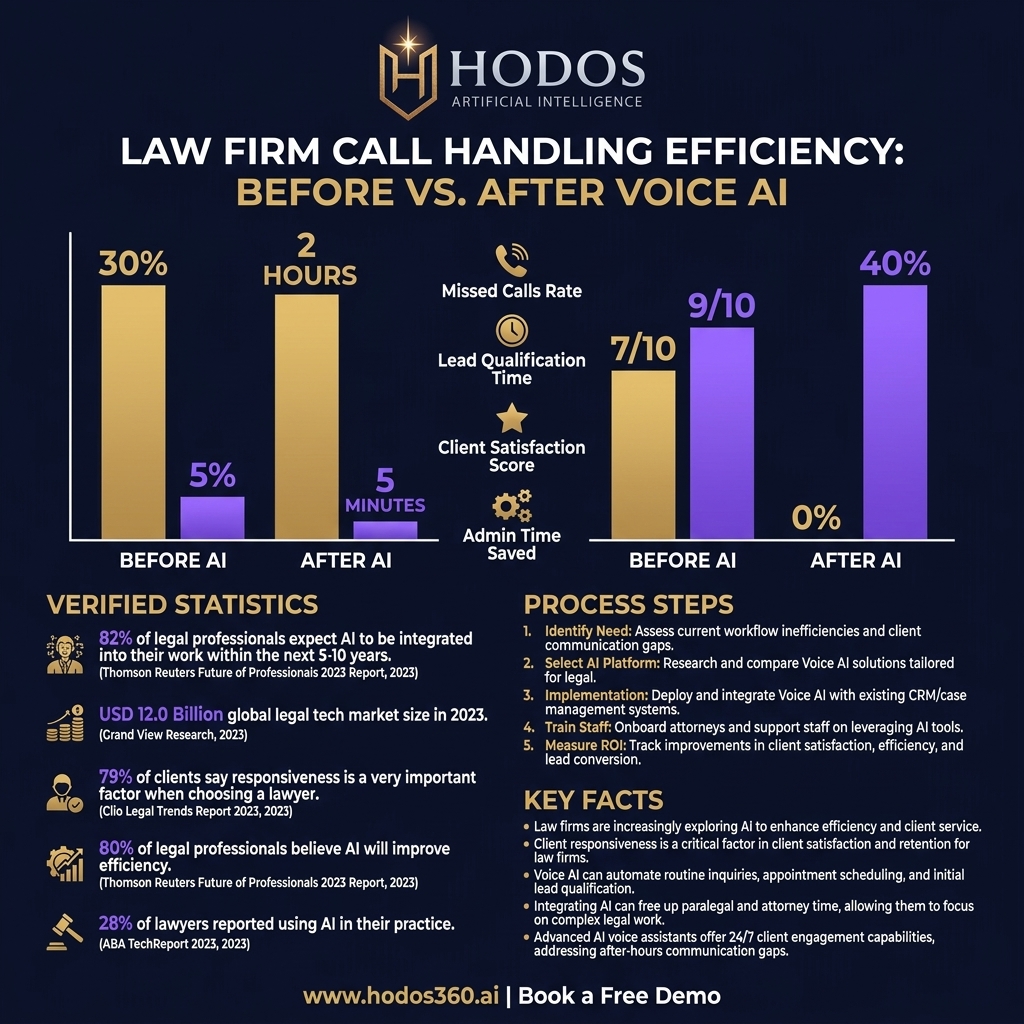
Voice AI integration profoundly impacts virtually every aspect of a law firm's legal workflows, from front-office operations to back-end data management. The efficiency gains are not merely incremental; they are transformative. Firms are witnessing reduced wait times, fewer abandoned calls, and a significant decrease in the administrative burden on human staff, allowing for a strategic reallocation of resources.
For example, HODOS 360's AI Voice Assistants integrate seamlessly with other services like document automation and AI-powered legal workflows. This means an AI voice assistant can not only book an appointment but also trigger the automatic generation of an intake form, send a confirmation email, and update the attorney's calendar. Learn more about Voice AI: Essential for Law Firms, Touting Twilio's Success. This level of interconnected automation minimizes manual errors and ensures consistency across all client interactions. The benefits extend to better data collection, improved compliance, and a more organized approach to case management, all contributing to a stronger, more agile legal platform.
Navigating Data Privacy and Professional Responsibility
While the benefits of Voice AI are clear, law firms must carefully navigate the ethical and regulatory landscape. Data privacy, client confidentiality, and the duty of competence are paramount. Firms implementing AI voice assistants must ensure these systems comply with regulations like HIPAA (for health-related information) and adhere strictly to professional guidelines, such as the ABA Model Rules of Professional Conduct, Rule 1.6 (Confidentiality of Information). Robust encryption, secure data storage, and transparent disclosure to clients about AI interaction are non-negotiable.
Leading legal tech providers are building these safeguards into their AI platforms. Learn more about AI Marketing: Essential Strategies for Law Firm Growth. For instance, advanced AI voice agents are designed with secure protocols to prevent unauthorized data access and are programmed to avoid providing legal advice, instead guiding callers to appropriate human counsel. This careful balancing act ensures that firms can leverage the power of AI without compromising their ethical obligations or client trust, reinforcing the need for responsible AI news today and ethical development.
Maximizing Client Engagement with Smart Voice Technology
The true power of Voice AI lies in its capacity to transform client engagement from a passive interaction into a proactive, value-driven experience. Beyond simply answering questions, these intelligent AI assistants can personalize interactions based on caller history, anticipate needs, and even proactively reach out for follow-ups, bolstering the firm's reputation for attentiveness and innovation. This level of personalized customer service is a significant differentiator in today's competitive legal market.
Imagine an AI voice agent remembering a client's previous inquiry, greeting them by name, and immediately routing them to the relevant department or attorney with all their context readily available. This seamless experience not only delights clients but also significantly improves internal efficiency. Firms can also leverage AI marketing platform features to integrate voice assistant data with SEO optimization for law firms and content generation strategies, creating a cohesive and highly effective client acquisition and retention ecosystem.
- ✓24/7 Availability: Ensure no call goes unanswered, capturing every potential lead and serving existing clients round-the-clock.
- ✓Intelligent Lead Qualification: Automatically screen and qualify callers, routing high-value leads directly to attorneys, saving valuable time.
- ✓Automated Appointment Booking: Seamlessly schedule consultations directly into attorney calendars, reducing administrative overhead.
- ✓Multilingual Support: Cater to a diverse client base with AI voice assistants capable of conversing in multiple languages.
- ✓Reduced Administrative Burden: Free up paralegals and support staff from repetitive tasks, allowing them to focus on substantive legal work.
- ✓Enhanced Client Satisfaction: Provide immediate, consistent, and personalized responses, building trust and improving the client experience.

Key Takeaways and Next Steps
The re-emergence of the phone call, powered by sophisticated Voice AI, is not just a trend but a fundamental shift in how law firms operate and engage with clients. Firms like LexBridge Legal, initially hesitant, are now realizing the profound benefits of AI voice assistants in enhancing operational efficiency, improving client intake, and elevating overall customer service. The competitive landscape demands innovation, and ignoring the capabilities of this technology is no longer an option for forward-thinking businesses.
For law firms ready to embrace this transformative legal tech, the path forward involves careful evaluation and strategic implementation. Begin by assessing your current communication bottlenecks and identifying areas where Voice AI can provide the most immediate impact. Explore integrated AI platforms that offer comprehensive solutions, from AI voice agents to full-suite practice management. The future of client engagement is conversational, intelligent, and always on. Book a free demo with HODOS 360 to see our AI Voice Assistants in action and revolutionize your firm's client communication.
Frequently Asked Questions
What specifically can AI voice assistants do for my law firm?+
AI voice assistants for law firms can provide 24/7 phone answering, perform initial lead qualification, book appointments directly into calendars, answer common client questions (e.g., office hours, payment methods), offer multilingual support, and route calls intelligently to the right department or attorney. They significantly reduce administrative burden and ensure no potential client is missed, enhancing overall responsiveness and client satisfaction.
How do AI voice assistants handle sensitive client information?+
Reputable AI voice assistant platforms designed for legal use prioritize data security and confidentiality. They employ robust encryption for all communications and data storage, adhering to legal and ethical standards like ABA Model Rule 1.6. They are typically integrated with secure practice management systems, allowing information retrieval and updates only within pre-approved, secure parameters, ensuring client data remains protected.
Will AI voice assistants replace my human receptionists or legal staff?+
The primary goal of AI voice assistants is to augment, not replace, human staff. They handle repetitive, high-volume tasks, freeing up receptionists and paralegals to focus on more complex, high-value client interactions and legal work. This reallocation of resources optimizes human talent, reduces burnout, and allows the firm to scale more effectively without necessarily increasing headcount, leading to a more efficient and productive team.
What is the implementation process for an AI voice assistant?+
Implementing an AI voice assistant typically involves several steps: initial consultation to define your firm's specific needs, integration with your existing practice management and CRM systems, customization of scripts and responses to align with your firm's brand and legal areas, thorough testing, and staff training. Providers like HODOS 360 offer comprehensive support throughout this process to ensure a smooth transition and optimal performance.
How do AI voice assistants improve client satisfaction?+
AI voice assistants significantly improve client satisfaction by offering immediate 24/7 availability, ensuring clients always reach a helpful contact, not a voicemail. They provide consistent, accurate information and streamline processes like appointment booking, reducing client frustration. By handling routine inquiries efficiently, they allow human staff to dedicate more focused attention to complex client needs, fostering stronger, more trusting relationships.