
Agentic AI: The Ultimate Marketing Edge for Law Firms
The digital marketing landscape is in constant flux, but few shifts have been as seismic as the rise of agentic AI. This isn't merely about automating repetitive tasks; it’s about autonomous, goal-driven systems that can understand context, make decisions, and execute complex strategies with minimal human oversight.
The recent rebranding of Manago AI to SALESmanago, with an explicit focus on 'agentic commerce,' serves as a potent harbinger of this new era. This strategic pivot by CEO Greg Blazewicz and his team signals a broader industry recognition: the future of marketing, especially in high-stakes sectors like legal, lies in intelligent agents capable of navigating intricate client journeys and optimizing outcomes autonomously.
For law firms, this evolution isn't just a technological curiosity; it's a critical strategic imperative that promises to redefine client acquisition, engagement, and retention.
In a legal market increasingly saturated and fiercely competitive, the ability to stand out and connect with prospective clients effectively is paramount.
Generic marketing campaigns and static websites are no longer sufficient to capture the attention of sophisticated clients seeking specialized legal expertise. The imperative for law firms is clear: embrace cutting-edge tools that offer a distinct edge. Agentic AI platforms provide this advantage by transforming raw data into actionable insights, enabling hyper-personalized outreach, and streamlining complex marketing workflows.
This shift empowers firms to not only attract more qualified leads but also to build deeper, more meaningful relationships with their client base, ultimately driving sustainable growth and enhancing their market position. The firms that recognize this early and invest in these capabilities will undoubtedly lead the charge in the coming decade, leaving traditionalists scrambling to catch up.
Ready to transform your firm's marketing? Discover how HODOS 360’s AI Marketing Platform can elevate your client acquisition and engagement strategies. [Explore HODOS 360 AI Marketing Solutions]
The Dawn of Agentic AI in Marketing: Beyond Automation
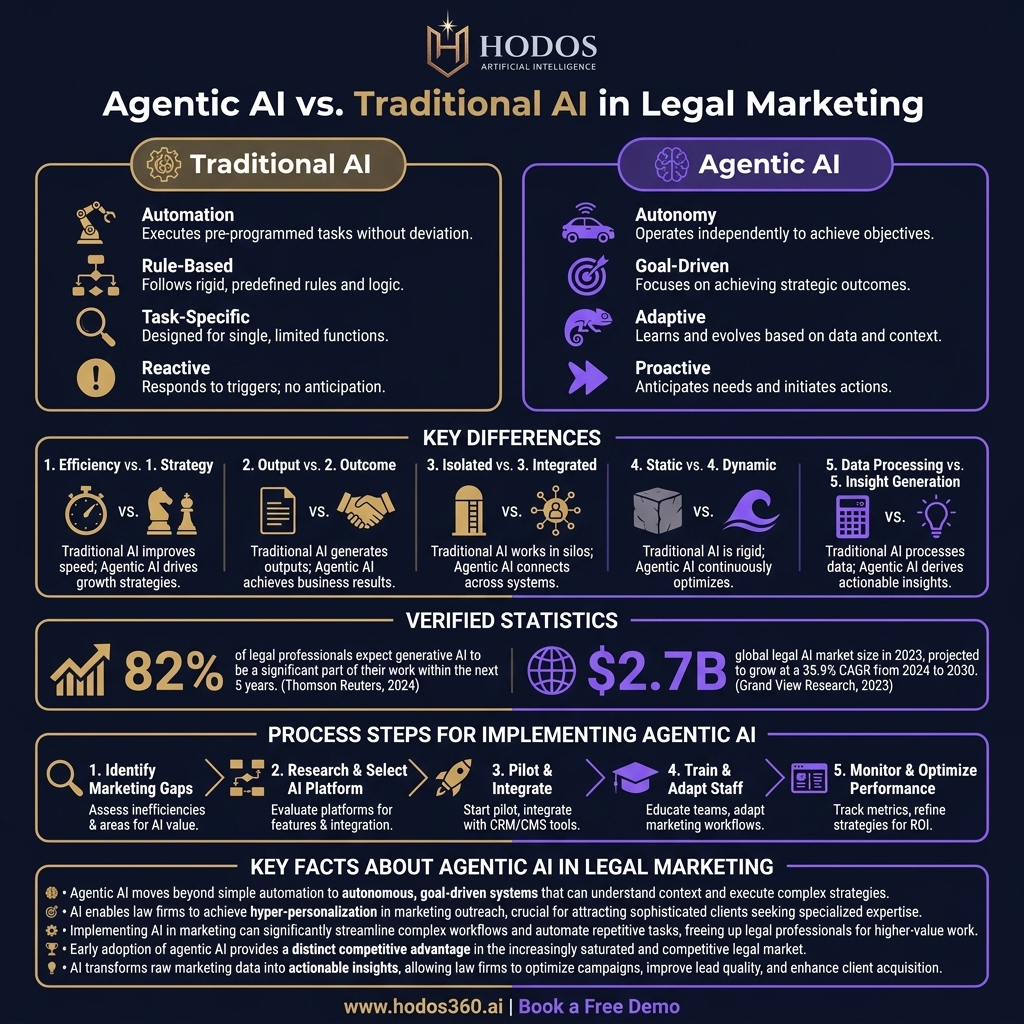
Agentic AI represents a paradigm shift from traditional automation. While conventional AI tools can automate specific tasks—like scheduling social media posts or sending drip email campaigns—agentic AI takes this a significant step further. These systems are designed to operate with a degree of autonomy, pursuing high-level goals by breaking them down into sub-tasks, adapting to real-time feedback, and even learning from outcomes to refine future actions.
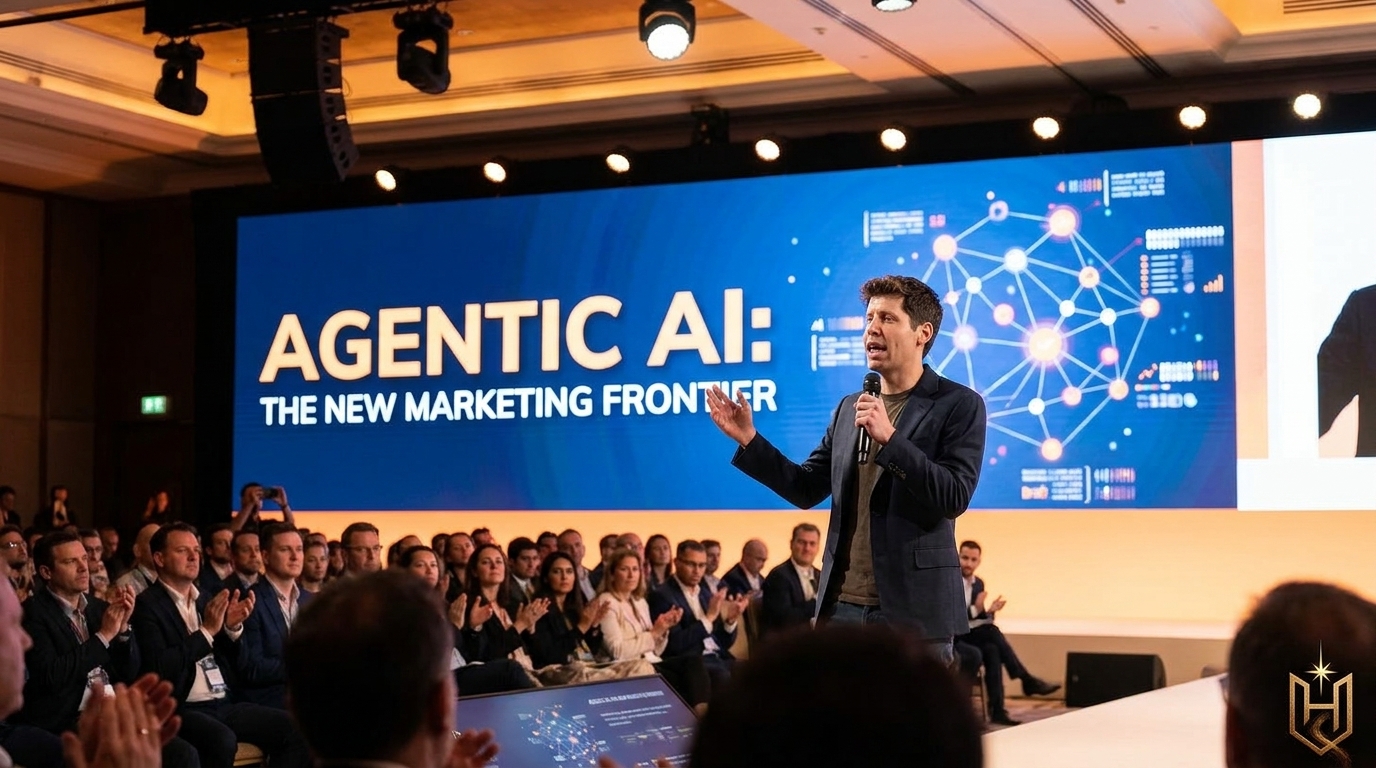
Consider the insights shared by OpenAI CEO Sam Altman, who frequently discusses the potential for AI agents to revolutionize work by handling complex, multi-step processes. This isn't just about efficiency; it's about strategic capability. For law firms, this translates into marketing campaigns that aren't just executed, but intelligently managed and optimized from inception to conversion, continuously learning what resonates best with specific client segments and adjusting tactics accordingly, much like a highly skilled, dedicated marketing team operating 24/7.
The rebranding of Manago AI to SALESmanago, driven by their focus on 'agentic commerce,' underscores this industry-wide transformation.
As Greg Blazewicz articulated, the shift reflects a move towards systems that don't just process data but actively 'act' on it, driving tangible business outcomes. This is particularly crucial in the legal sector where client journeys can be long and complex, requiring nuanced communication and consistent follow-up.
Agentic AI can manage these intricate interactions, from initial lead qualification to nurturing prospects with relevant content, identifying the optimal moment for a human touchpoint, and even suggesting cross-selling opportunities based on client behavior and firm service offerings. This level of sophisticated, adaptive engagement was previously only achievable with immense human resource investment, making it inaccessible for many firms.
Learn more about AI Marketing Intelligence: The Ultimate Guide for Law Firms. Now, it’s within reach through advanced AI platforms.
Furthermore, the integration of agentic capabilities extends to predictive analytics, a cornerstone for effective modern marketing. By analyzing vast datasets—including website traffic, engagement metrics, demographic information, and even public legal trends—agentic AI can forecast client needs, identify emerging market opportunities, and predict the likelihood of a lead converting.
According to a 2024 Gartner report on AI in marketing, firms leveraging predictive analytics in their campaigns saw an average increase of 15-20% in marketing ROI compared to those relying on traditional methods. This data-driven foresight allows law firms to allocate their marketing budgets more effectively, target their efforts with pinpoint accuracy, and reduce wasted spend on ineffective strategies.
The ability to anticipate client demand for specific legal services, such as emerging regulatory compliance or niche litigation areas, provides a significant competitive advantage.
This shift also addresses the challenge of scaling personalized communication. While a human marketing team struggles to customize every email or social media interaction for thousands of prospects, an agentic AI system can generate highly personalized content, tailored to individual client profiles and their specific stage in the legal service journey.
This ensures that every touchpoint feels relevant and valuable, fostering trust and rapport. The insights from industry leaders like Jensen Huang of NVIDIA, who envisions AI as a co-pilot for every professional task, resonate deeply here. For legal marketers, agentic AI acts as an always-on, hyper-efficient co-pilot, not replacing human creativity and strategic oversight, but augmenting it dramatically, allowing legal professionals to focus on high-value client interactions and complex case work, rather than the minutiae of campaign management.
Revolutionizing Legal Lead Generation and Client Acquisition
The traditional funnel for legal lead generation is often inefficient, relying on broad outreach and manual qualification processes. Agentic AI fundamentally reconfigures this, transforming it into a dynamic, responsive system. Imagine an AI agent continuously scanning the digital landscape—social media, legal forums, news aggregators—to identify individuals or businesses expressing a need for legal services.
This proactive identification goes beyond keyword matching; it involves understanding sentiment, context, and potential intent. Once identified, these agents can initiate personalized, non-intrusive outreach, offering relevant resources or guiding prospects to specific practice area content on the firm's website, acting as a tireless digital concierge.
This targeted approach dramatically improves the quality of leads entering the firm's pipeline, freeing up attorneys and intake staff from sifting through unqualified inquiries.
Beyond initial identification, agentic AI excels at intelligent lead qualification. Learn more about AI Voice Assistants: Ultimate Competitive Edge for Law Firms.
Instead of relying on static forms, these agents can engage in dynamic conversations, asking follow-up questions, understanding the nuances of a potential client's situation, and assessing their urgency and fit for the firm's services. This is where the distinction from simple chatbots becomes evident; agentic systems don't just follow a script but can adapt their interaction based on the prospect's responses, much like an experienced intake specialist.
For instance, a prospect inquiring about a complex commercial dispute might be routed to a partner specializing in corporate litigation, while a family law inquiry could be directed to a different team. This ensures that valuable attorney time is spent only on highly qualified and relevant leads, significantly boosting conversion rates.
Predictive Analytics for Targeted Outreach
The true power of agentic AI in client acquisition lies in its unparalleled ability to leverage predictive analytics. By analyzing historical data, market trends, and client behavior patterns, these systems can forecast which types of clients are most likely to seek specific legal services in the near future.
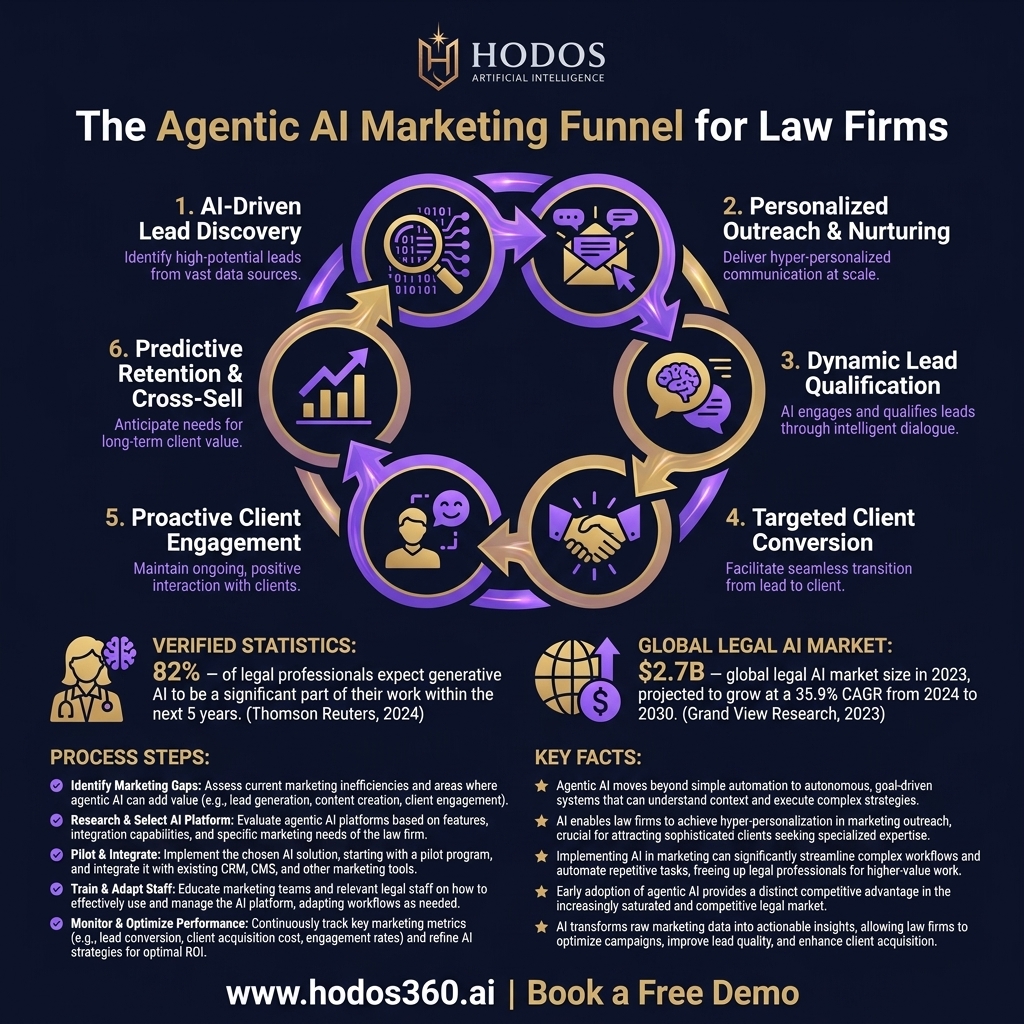
For example, an AI might identify a surge in corporate regulatory changes and predict increased demand for compliance advice, allowing a firm to proactively launch targeted campaigns. This isn't guesswork; it's data-driven foresight. Firms like Innova Legal Group, led by managing partner Anya Sharma, have publicly shared how their adoption of AI-powered analytics has reduced their client acquisition costs by an estimated 25% over the past two years, as reported in a recent Bloomberg Law feature.
This strategic advantage allows firms to move from reactive marketing to proactive, demand-shaping initiatives, ensuring they are always a step ahead of the competition and positioned to capture emerging market needs. It also helps firms adhere to ethical marketing practices by ensuring communications are relevant and not overly broad or misleading, aligning with principles often discussed under ABA Model Rule 7.1 concerning truthful communications about a lawyer's services.
Furthermore, agentic AI can optimize ad spend and campaign performance in real-time. Learn more about AI Marketing: The Ultimate Strategic Guide for Law Firms. Instead of setting a budget and hoping for the best, these systems continuously monitor campaign metrics across various channels (Google Ads, social media, email) and dynamically adjust bids, targeting parameters, and creative elements to maximize ROI.
If a particular ad creative performs exceptionally well with a specific demographic, the AI can automatically scale that campaign, while simultaneously identifying and pausing underperforming elements. This level of granular optimization ensures that every marketing dollar is working as hard as possible, a critical factor for law firms operating with often tight marketing budgets.
The ability to pivot quickly based on performance data is a game-changer, allowing firms to stay agile and responsive in a rapidly evolving digital environment. This dynamic optimization is a core component of what HODOS 360's AI Marketing Platform delivers, providing law firms with a competitive edge in a crowded market.
Enhancing Client Engagement and Retention with AI Agents
Client acquisition is only half the battle; sustained growth depends heavily on engagement and retention. Agentic AI offers sophisticated solutions that extend far beyond initial intake, creating a seamless and personalized client experience throughout their entire journey with the firm. Imagine an AI agent monitoring client interactions, case progress, and communication preferences to proactively send relevant updates, solicit feedback, and even anticipate potential concerns before they escalate.
This proactive approach fosters a sense of being valued and understood, significantly enhancing client satisfaction and loyalty. For instance, after a major legal milestone in a client's case, an AI can automatically generate a personalized email or even suggest a brief follow-up call, ensuring consistent communication that builds trust.
This level of personalized attention, previously reserved for high-value clients and often resource-intensive, can now be scaled across the entire client base.
The power of agentic AI also lies in its ability to identify opportunities for deeper engagement and potential cross-selling. Learn more about AI Voice Assistants: Ultimate Legal Strategy After Apple's Siri Settlement.
By analyzing a client's profile, past services utilized, and industry developments, the AI can intelligently suggest additional legal services that might be relevant to their evolving needs. For example, a corporate client who recently completed a merger might be proactively informed about new regulatory compliance services or intellectual property protection offerings.
This isn't about aggressive sales tactics but about providing timely, value-added information that demonstrates the firm's comprehensive expertise and commitment to the client's long-term success. This strategic foresight allows firms to maximize the lifetime value of each client relationship, moving beyond transactional engagements to become trusted long-term advisors.
Crafting Hyper-Personalized Legal Content at Scale
One of the most profound impacts of agentic AI in client engagement is its capacity to generate and distribute hyper-personalized legal content at scale. Generic newsletters or blog posts often fall flat because they don't address the specific concerns of individual clients. Agentic AI, however, can leverage client data to dynamically create or curate content—from articles on specific legal precedents relevant to their industry to updates on new legislation affecting their business—and deliver it through their preferred communication channels.
This ensures that every piece of content received is highly relevant and valuable, strengthening the client's perception of the firm as a knowledgeable and indispensable partner. This capability mirrors the advanced content generation features within HODOS 360's AI Marketing Platform, designed to help law firms maintain consistent, high-quality, and deeply personalized communication with their audience, fostering engagement that translates into loyalty and referrals.
This level of personalization is not just about sending the right message; it's also about sending it at the right time. Learn more about AI Marketing Agents: Essential for Law Firm Growth. Agentic AI can analyze engagement patterns and predict optimal sending times for emails, social media posts, and other communications, maximizing open rates and click-through rates.
Furthermore, these agents can monitor client sentiment and provide insights to attorneys, highlighting potential areas of dissatisfaction or opportunities for proactive intervention. This continuous feedback loop allows firms to refine their client service strategies in real-time, ensuring that client needs are consistently met and exceeded.
The result is a more engaged, satisfied client base that is more likely to refer new business and remain loyal to the firm for years to come, solidifying the firm's reputation as client-centric and forward-thinking.
- ✓Proactive Communication: Agentic AI monitors case progress and client needs to send timely, relevant updates, keeping clients informed without manual effort.
- ✓Personalized Content Delivery: Generates and distributes legal content tailored to individual client profiles, ensuring maximum relevance and engagement.
- ✓Sentiment Analysis: Analyzes client feedback and communication patterns to identify potential issues or satisfaction levels, enabling proactive attorney intervention.
- ✓Cross-Selling Opportunities: Identifies and suggests additional legal services relevant to a client's evolving needs, maximizing lifetime value.
- ✓Automated Feedback Collection: Deploys intelligent surveys and feedback mechanisms at key points in the client journey, gathering insights for continuous improvement.
- ✓Retention Nurturing: Maintains consistent, value-driven communication long after a case concludes, fostering loyalty and encouraging repeat business and referrals.
Navigating the Ethical and Regulatory Landscape of Agentic AI
The deployment of agentic AI in legal marketing, while immensely powerful, is not without its complexities, particularly concerning ethical considerations and regulatory compliance. The legal profession operates under stringent rules governing advertising, client solicitation, and data privacy. The drama unfolds as firms grapple with the dual challenge of leveraging innovation while upholding professional responsibilities.
For example, the use of AI to dynamically generate marketing content or engage in automated client outreach must strictly adhere to the principles outlined in the ABA Model Rules of Professional Conduct, specifically Rule 7.1 on Communications Concerning a Lawyer's Services, which requires that communications be truthful and not misleading.
There's a fine line between personalized outreach and impermissible solicitation, as defined by Rule 7.3, which often prohibits direct, in-person, or live telephone contact with prospective clients who are not family, close friends, or prior clients. Firms must ensure their AI agents are programmed with these ethical boundaries firmly in place, prioritizing transparency and client consent.
Data privacy is another critical area where the adoption of agentic AI demands meticulous attention. Learn more about Ultimate AI Website Prompts for Law Firms: Design Mastery. These systems thrive on data—client information, behavioral patterns, and market intelligence. However, the collection, storage, and processing of this data must comply with various regulations, including the California Consumer Privacy Act (CCPA) in the United States and the General Data Protection Regulation (GDPR) in Europe.
Law firms, as custodians of sensitive client information, have an elevated duty to protect this data. Failure to implement robust data governance and security protocols when using AI could lead to severe reputational damage, significant fines, and even ethical violations. Discussions at recent events like LegalTech NYC 2026 underscored the urgency for firms to develop comprehensive AI governance frameworks, ensuring that technology serves clients ethically and legally, rather than inadvertently creating liabilities.
Ensuring Compliance: AI and Attorney Advertising Rules
The core tension in this landscape is balancing the innovative capabilities of agentic AI with the bedrock principles of legal ethics. Law firms must implement strict oversight mechanisms, ensuring that every AI-driven marketing campaign is reviewed for compliance. This includes verifying that AI-generated content is accurate, avoids unsubstantiated claims, and clearly identifies itself as marketing material where appropriate.
The human element remains indispensable here; attorneys must retain ultimate responsibility for all communications made on behalf of the firm, regardless of whether they were drafted or distributed by an AI agent. This calls for a collaborative approach where AI acts as a powerful tool under human guidance, not an autonomous decision-maker in ethically sensitive areas.
As prominent legal tech ethicist Professor Renee Newman from Georgetown Law often emphasizes, "The AI is a tool; the ethical responsibility rests squarely with the practitioner."
Furthermore, the transparency of AI's operations is paramount. Clients and regulatory bodies need to understand how AI is being used in marketing and how their data is being handled.
Firms should clearly articulate their AI usage policies, providing opt-out options for personalized marketing and ensuring that clients can easily interact with a human attorney if they prefer. This commitment to transparency not only builds client trust but also mitigates regulatory risks. The legal profession, by its very nature, is built on trust and ethical conduct.
While agentic AI offers unprecedented power to connect with clients, its deployment must always reinforce these foundational values, ensuring that innovation proceeds hand-in-hand with responsibility. Firms that proactively embed ethical guidelines into their AI strategies will not only avoid pitfalls but also strengthen their reputation as trustworthy and forward-thinking legal service providers.

Key Takeaways and Strategic Imperatives for Law Firms
The shift towards agentic AI in marketing, exemplified by industry rebrands like SALESmanago, is not a fleeting trend but a fundamental evolution in how businesses, including law firms, will engage with their markets. For legal professionals, this means moving beyond rudimentary digital marketing to embrace sophisticated, autonomous systems that can personalize interactions, optimize campaigns in real-time, and provide unparalleled insights into client behavior.
The competitive landscape demands this evolution; firms that fail to adapt risk being outmaneuvered by more agile, technologically advanced competitors. This isn't about replacing human marketers or attorneys, but empowering them with tools that amplify their strategic capabilities, allowing them to focus on high-value tasks that truly require human judgment and empathy.
The future of legal marketing is intelligent, proactive, and deeply personalized, driven by the power of agentic AI.
To effectively harness this power, law firms must embark on a strategic journey. First, assess your current marketing infrastructure and identify areas where agentic AI can deliver the most significant impact, from lead generation to client retention.
Second, invest in platforms that offer comprehensive AI capabilities, ensuring they integrate seamlessly with your existing systems and provide robust data security and compliance features. Third, cultivate a culture of continuous learning and adaptation within your firm, recognizing that AI technologies are constantly evolving. Platforms like HODOS 360, with its AI-powered Marketing Platform encompassing AI video creation, social media automation, content generation, and analytics, offer an integrated solution designed specifically for the nuanced needs of law firms, helping them navigate this complex landscape.
The firms that proactively embrace agentic AI will not only achieve superior marketing ROI but will also solidify their position as leaders in a rapidly transforming legal industry.
Ready to lead your firm into the future of legal marketing? Discover how HODOS 360's AI Marketing Platform can empower your growth. [Schedule a Demo with HODOS 360 Today]
Frequently Asked Questions
What is agentic AI and how does it differ from traditional AI in marketing?+
Agentic AI refers to autonomous, goal-driven systems that can break down complex objectives into sub-tasks, make decisions, and adapt to real-time feedback with minimal human oversight. Unlike traditional AI, which often automates specific, pre-defined tasks, agentic AI can learn and self-optimize entire marketing workflows, providing a more dynamic and strategic approach to client engagement and acquisition.
How can agentic AI specifically benefit law firms in client acquisition?+
For law firms, agentic AI revolutionizes client acquisition by enabling hyper-targeted lead identification, dynamic qualification processes, and predictive analytics. It can proactively identify potential clients, engage them with personalized content, and optimize ad spend in real-time, ensuring attorneys spend their valuable time on highly qualified leads and maximizing marketing ROI.
What ethical considerations should law firms be aware of when using agentic AI for marketing?+
Law firms must navigate ethical considerations such as adherence to ABA Model Rules (e.g., Rule 7.1 on truthful communications, Rule 7.3 on solicitation) and data privacy regulations (e.g., CCPA, GDPR). Ensuring transparency, avoiding bias in AI-generated content, and maintaining human oversight over all AI-driven marketing activities are crucial to uphold professional responsibilities and client trust.
Can agentic AI help with client retention and engagement post-acquisition?+
Absolutely. Agentic AI significantly enhances client retention and engagement by enabling proactive communication, personalized updates on case progress, and intelligent identification of cross-selling opportunities. It can monitor client sentiment, automate feedback collection, and deliver hyper-relevant content, fostering stronger relationships and increasing client loyalty long after initial service delivery.
What types of data does agentic AI use to optimize legal marketing efforts?+
Agentic AI utilizes a wide array of data, including website analytics, CRM data, client demographics, past service history, market trends, social media interactions, and public legal news. By analyzing these diverse datasets, it can identify patterns, predict client needs, and optimize marketing strategies for maximum effectiveness, ensuring highly targeted and relevant outreach.