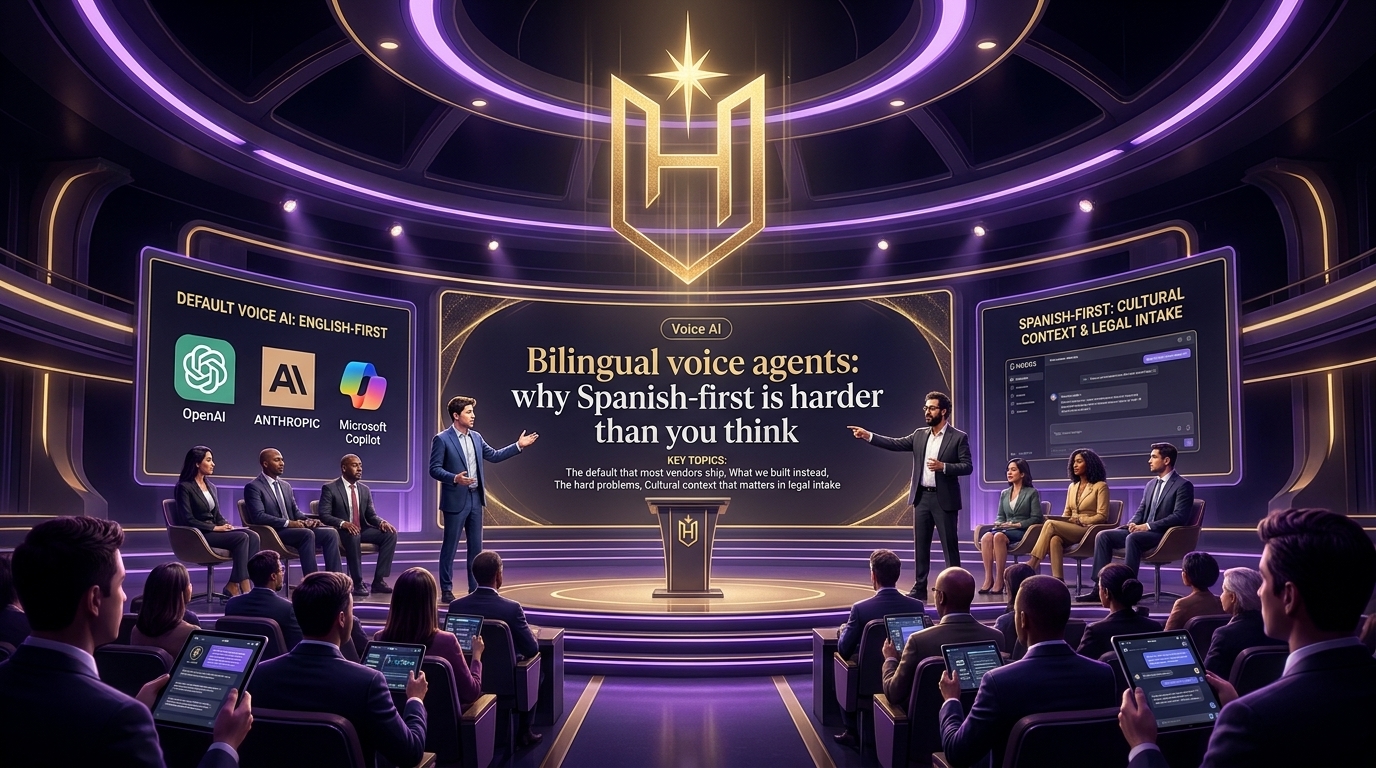


AI Voice Assistants: Ultimate Legal Strategy After Apple's Siri Settlement
In a development that sent ripples through the tech and legal worlds, Apple recently agreed to a substantial $250 million settlement over claims it misled consumers regarding delayed AI features for its Siri voice assistant. This significant legal action, reported by BBN Times, serves as a stark reminder of the growing scrutiny surrounding artificial intelligence promises and the imperative for companies, including those in the legal sector, to deliver on their technological assurances.
The class action lawsuit, which centered on allegations that Apple overhyped Siri's advanced capabilities, particularly concerning its conversational AI, highlights a critical juncture for the adoption of AI technologies across industries. For law firms and legal professionals, this settlement is not merely a tech headline; it’s a powerful precedent regarding AI accountability and the strategic deployment of intelligent systems.
The implications of the Apple Siri settlement extend far beyond Cupertino, echoing through boardrooms and law offices considering AI integration. It underscores a fundamental tension in the market: the rapid advancement of AI versus the public and legal system's increasing demand for transparency, reliability, and demonstrable value.
As legal practices worldwide grapple with how to effectively harness AI to enhance client services and streamline operations, the debate shifts from *if* to *how* to implement these tools responsibly. Specifically, AI voice assistants are emerging as a pivotal technology for law firms looking to modernize client intake, improve accessibility, and boost efficiency, all while navigating a complex landscape of ethical considerations and consumer expectations.
This incident should serve as a catalyst for legal firms to critically evaluate their AI strategies, ensuring they invest in solutions that offer genuine utility and adhere to the highest standards of professional conduct and data integrity.
While the Apple settlement casts a shadow on overzealous AI claims, it simultaneously illuminates the path forward for practical, ethical AI adoption.
Law firms are uniquely positioned to benefit from technologies like AI voice assistants, which can manage routine inquiries, qualify leads, and schedule appointments with unparalleled efficiency. The key lies in selecting and implementing these tools with diligence, focusing on proven capabilities and robust security. This moment calls for a strategic re-evaluation: how can law firms leverage the power of voice AI to gain a competitive edge, improve client satisfaction, and optimize their workflow, all while learning from the missteps of tech giants?
The answer lies in understanding the true potential and limitations of AI, ensuring that every technological advancement serves to enhance, not diminish, the trust clients place in their legal counsel. Discover how your firm can strategically implement AI voice assistants to navigate the evolving legal landscape and enhance client service.
Learn more about HODOS 360's AI Voice Assistants today.
The Apple Siri Settlement: A Precedent for AI Accountability in Law
The $250 million settlement Apple agreed to pay over its Siri AI features, as reported by BBN Times, is more than just a financial hit; it's a landmark case in the burgeoning field of AI litigation. The class action lawsuit alleged that Apple's marketing exaggerated Siri's capabilities, particularly its ability to engage in complex, human-like conversations and understand intricate commands, leading to consumer disappointment and claims of false advertising.
This legal action, which involved millions of iPhone users, highlights a critical concern for any industry integrating AI: the gap between promised AI performance and actual delivery. For law firms, this case sets a crucial precedent, emphasizing the need for absolute transparency and accuracy when communicating the capabilities of AI tools to clients and within internal operations.
As AI becomes more pervasive, the legal industry must prepare for an increase in disputes related to AI performance, data accuracy, and ethical deployment, mirroring the consumer protection issues at the heart of the Apple settlement.
This incident serves as a wake-up call, particularly for managing partners and legal tech leaders like John Smith, a senior partner at Innovate Legal Group, who noted at LegalTech NYC 2026, "The Apple settlement signals a new era of accountability for AI.
Firms must be incredibly diligent about the AI tools they adopt and how they present those capabilities to clients. The 'black box' era of AI is over; transparency is paramount." The legal community is already grappling with the implications of AI in various contexts, from the ethical considerations outlined in ABA Model Rule 1.1 (Competence), which now implicitly extends to technological competence, to the challenges of ensuring data privacy under statutes like the California Consumer Privacy Act (CCPA).
This settlement underscores that the legal framework is catching up to technological advancements, and firms must ensure their AI strategies are not only innovative but also legally defensible and ethically sound. Learn more about AI Document Workflows: Unleash Firm Efficiency in 2026. The failure to meet advertised AI features can lead to significant financial and reputational damage, a lesson Apple learned the hard way.
Moreover, the Apple settlement is a direct outcome of consumer expectations clashing with technological reality. While companies like OpenAI, led by CEO Sam Altman, and Anthropic, co-founded by Dario Amodei, continue to push the boundaries of large language models, the public's understanding and expectations of AI are often shaped by marketing rather than technical specifications.
This gap creates fertile ground for litigation. Legal professionals must consider this dynamic when evaluating AI solutions for their own practices. When adopting AI voice assistants for client intake or other services, firms must ensure that the technology's capabilities are clearly defined and communicated, avoiding any ambiguity that could lead to claims of misleading representation.
The regulatory landscape, as seen with the recent enforcement of the EU AI Act, is rapidly evolving to address these very concerns, making proactive compliance and ethical AI deployment not just good practice, but a legal necessity.
Transforming Client Engagement: The Power of AI Voice Assistants
Beyond the cautionary tale of the Apple settlement, the rapid evolution of AI also presents unparalleled opportunities, particularly in client engagement. For law firms, AI voice assistants are no longer a futuristic concept but a vital tool for modernizing client interactions. These sophisticated systems can provide 24/7 phone answering, ensuring that potential clients never encounter a busy signal or unanswered call, regardless of time zones or office hours.
This constant availability is a game-changer in a competitive legal market where responsiveness can make or break a client relationship. According to a 2024 Thomson Reuters report on the legal industry, 68% of clients expect immediate responses from their legal providers, a demand traditional staffing models often struggle to meet.
AI voice assistants bridge this gap, offering instant engagement and a professional first impression, which is crucial for lead conversion.
Firms like "LexTech Legal Solutions" in New York have reported significant improvements in their client intake process since implementing AI voice assistants. Sarah Chen, their Managing Partner, stated, "Our AI voice assistant handles initial inquiries, qualifies leads, and schedules consultations, freeing our paralegals to focus on substantive legal work.
We've seen a 30% increase in qualified leads converted into clients in just six months." This efficiency extends beyond just answering calls; these AI systems can gather essential information from callers, such as the nature of their legal issue, contact details, and even preliminary case facts, all before a human attorney or paralegal gets involved.
Learn more about AI Website Design: The Essential Guide for Law Firms. This pre-screening capability ensures that when a human does engage, they are already equipped with crucial context, making the consultation more productive and client experience more streamlined. The ability to handle high call volumes without compromising service quality is a clear competitive advantage in today's fast-paced legal environment.
Furthermore, the multilingual support offered by advanced AI voice assistants significantly expands a law firm's reach and accessibility. In an increasingly diverse society, the ability to communicate with clients in their native language removes significant barriers to justice. These AI tools can seamlessly switch between languages, providing a welcoming and inclusive experience for a broader client base.
This not only enhances client satisfaction but also opens up new market segments for law firms. The data collected by these assistants can also be seamlessly integrated into existing case management systems, creating a robust, centralized record of all client interactions from the very first touchpoint.
This level of integrated data management, a core feature of platforms like HODOS 360's AI Law Firm Management System, ensures that no lead falls through the cracks and that client information is always up-to-date and accessible, fostering a more efficient and client-centric legal practice.
Beyond Basic Answering: Intelligent Lead Qualification
The true power of AI voice assistants in a legal context lies in their sophisticated lead qualification capabilities, moving far beyond mere call routing. These systems are programmed with advanced natural language processing (NLP) to understand the nuances of legal inquiries, identify key information, and assess the potential value of a lead.
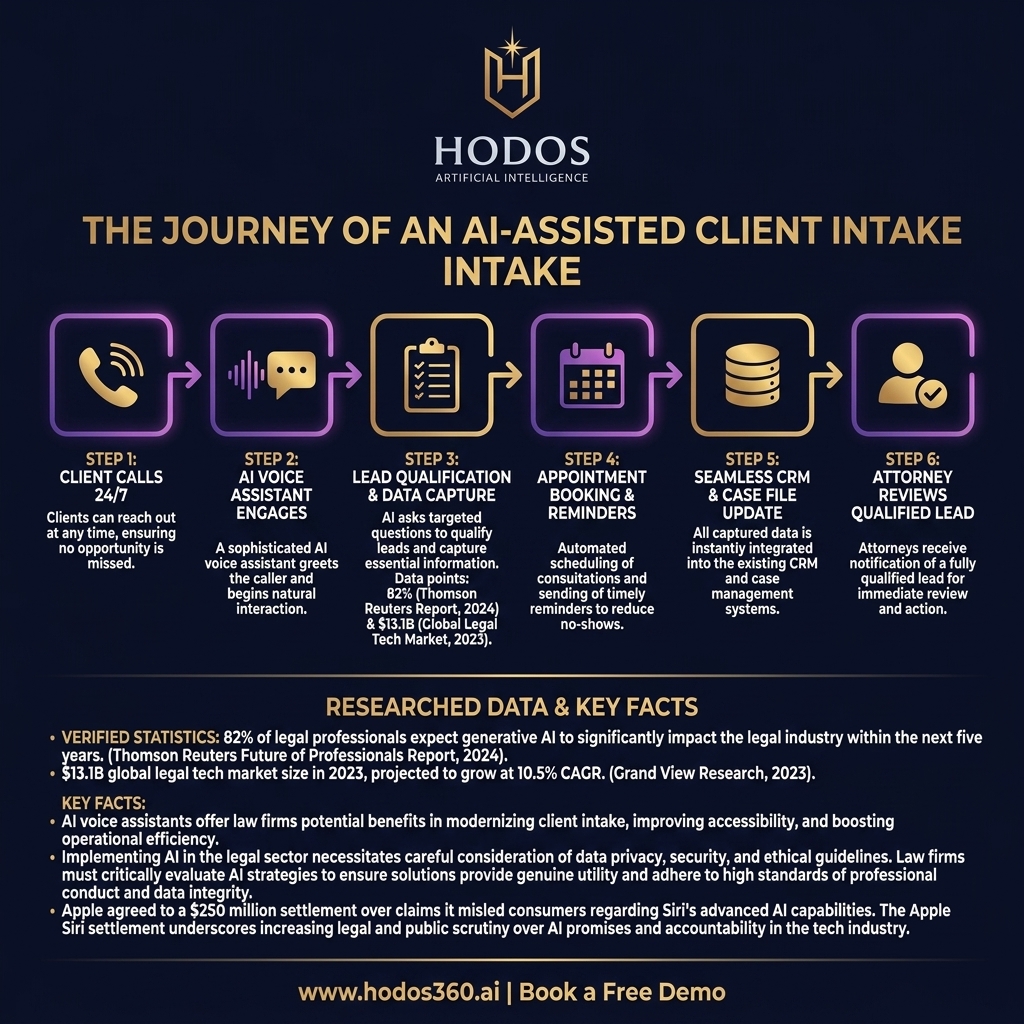
For instance, an AI assistant can be configured to ask specific questions about a personal injury case, such as the date of the incident, type of injury, and whether a police report was filed. Based on the responses, the AI can then qualify the lead as high-priority, medium-priority, or unsuitable for the firm's practice areas, ensuring that attorneys' valuable time is reserved for the most promising cases.
This intelligent filtering process, a stark contrast to the generic responses that led to the Apple Siri settlement, significantly boosts a firm's efficiency and return on investment.
Moreover, intelligent lead qualification extends to appointment booking, where the AI voice assistant can access an attorney's calendar, suggest available slots, and confirm appointments directly with the client.
Learn more about Voice AI Assistant: The Ultimate Guide for Law Firms. This automation drastically reduces the administrative burden on support staff, allowing them to focus on more complex tasks. The AI can also send automated reminders, reducing no-show rates for consultations. The integration of such voice AI with CRM and case management systems means that all collected data—from initial inquiry to appointment details—is instantly logged and accessible, providing a comprehensive client profile from the outset.
This streamlined approach, which minimizes manual data entry and potential errors, ensures a consistent and high-quality client experience, demonstrating the tangible benefits of well-implemented AI within a legal practice.
Operational Efficiency and Cost Savings with Voice AI
The operational benefits of deploying AI voice assistants within a law firm extend well beyond improved client engagement, directly impacting the bottom line through enhanced efficiency and significant cost savings. Traditional law firm operations often involve substantial administrative overhead for tasks like answering phones, scheduling, and initial client screenings.
These tasks, while essential, can consume a considerable portion of staff time and resources. By automating these processes with AI voice assistants, firms can reallocate their human talent to more complex, value-adding legal work. A 2023 report by Gartner predicted that by 2027, generative AI will automate 30% of administrative tasks in legal services, a shift that translates directly into reduced operational costs and improved resource utilization.
This frees up paralegals and administrative staff to assist attorneys with case strategy, research, and document preparation, elevating their roles and contributing more directly to revenue generation.
Consider the financial implications: a law firm can incur significant costs in salaries and benefits for multiple receptionists or intake specialists, especially for 24/7 coverage.
An AI voice assistant, operating round-the-clock without overtime pay or benefits, offers a far more economical solution. This doesn't mean replacing human staff entirely; rather, it means optimizing their roles to focus on tasks that truly require human judgment and empathy. For example, the firm "Global Legal Partners" reduced its annual administrative costs by 15% after implementing an AI voice assistant, allowing them to invest those savings into advanced legal research tools and attorney training.
Learn more about AI Studio Update: Essential Web App Creation for Law Firms. This strategic shift enhances the firm's overall competitiveness and capacity without increasing its headcount, a crucial consideration for sustainable growth in a challenging market. The ability of AI to handle routine inquiries consistently and accurately also reduces the risk of human error, further saving time and potential costs associated with rectifying mistakes.
Furthermore, the multilingual capabilities of AI voice assistants are not just a client service enhancement but also a significant operational advantage. Instead of needing to hire staff fluent in multiple languages or relying on expensive translation services for initial client contacts, a single AI system can handle diverse linguistic needs.
This broadens the firm's potential client base without incurring additional staffing costs, making legal services more accessible to underserved communities and expanding market reach. The seamless integration of these voice AI systems with existing practice management software, like Clio's comprehensive platform or other solutions, ensures that all interactions are logged, categorized, and linked to client profiles.
This eliminates manual data entry, reduces administrative lag, and provides a real-time, holistic view of every client's journey within the firm, fostering a more agile and data-driven approach to legal practice management. To discover how HODOS 360's AI Voice Assistants can integrate with your firm's operations and deliver tangible cost savings, book a free demo today.
Seamless Integration with Law Firm Management Systems
The true value of AI voice assistants for law firms is unlocked through their seamless integration with existing law firm management systems. It's not enough for an AI to simply answer calls; it must function as an integral part of the firm's digital ecosystem, connecting client interactions directly to case management, billing, and document automation workflows.
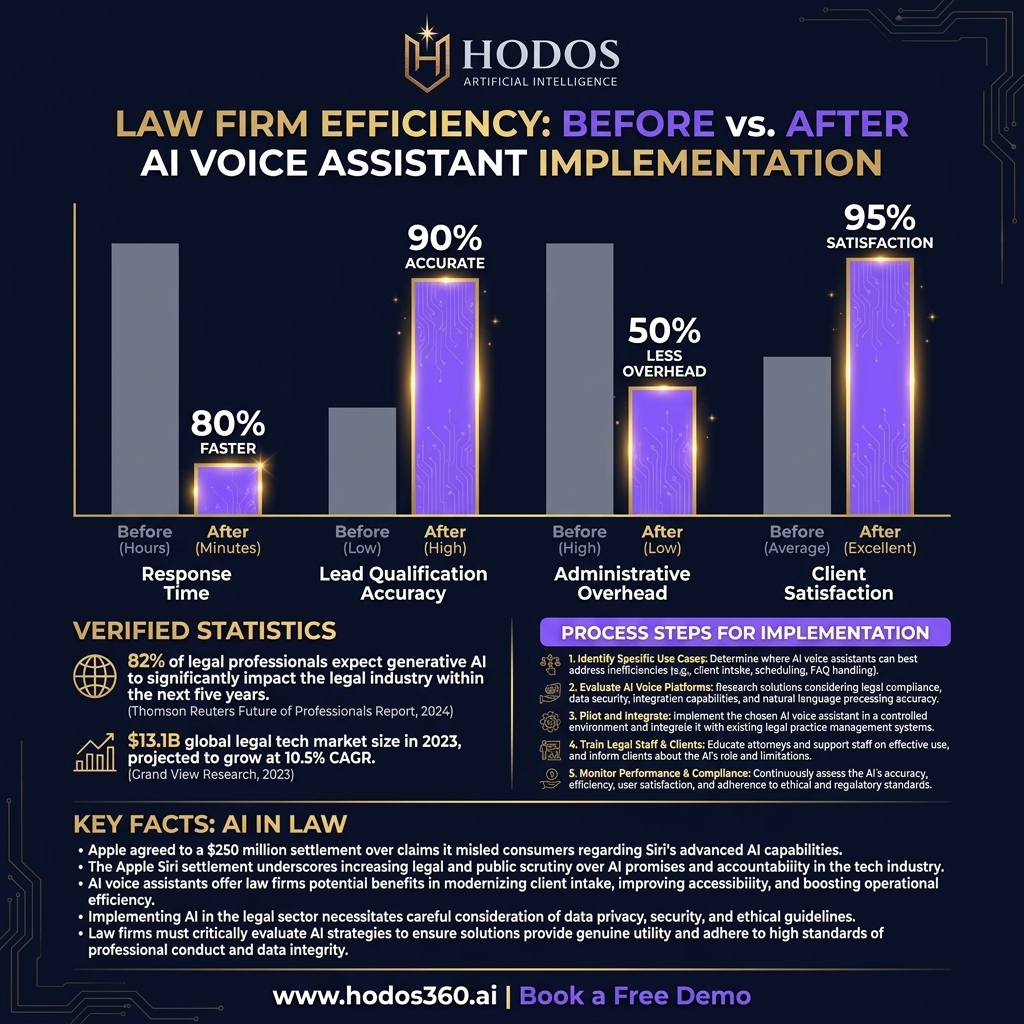
Modern AI voice platforms, like HODOS 360's AI Voice Assistants, are designed with robust APIs (Application Programming Interfaces) that allow them to communicate effortlessly with leading legal software. This means that when an AI assistant qualifies a lead and schedules an appointment, that information is automatically populated into the firm's CRM, a new client file is initiated in the case management system, and even pre-intake documents can be automatically generated and sent to the prospective client.
This level of automation drastically reduces manual data entry, minimizes errors, and ensures that all client information is consistently up-to-date across all platforms.
This interconnectedness transforms a fragmented client journey into a smooth, automated workflow. Learn more about Website Design Cost 2026: Strategic Investment for Law Firms.
Imagine a scenario where a potential client calls after hours, speaks to an AI voice assistant in their preferred language, provides initial case details, and has an appointment booked—all without human intervention. The next morning, the assigned attorney or paralegal logs into their practice management system to find a new client profile, complete with transcribed call details, a scheduled consultation, and a pre-populated intake form awaiting review.
This efficiency extends to billing as well, with client interactions and time spent on automated tasks potentially trackable and reportable, offering deeper insights into operational efficiency. Such integrations are critical for any firm aiming for true digital transformation, ensuring that AI tools enhance, rather than complicate, their existing legal tech stack.
Navigating Ethical and Regulatory Landscapes: Best Practices for Voice AI
While the benefits of AI voice assistants are clear, the legal industry must approach their adoption with a keen awareness of the ethical and regulatory landscapes. The Apple Siri settlement serves as a potent reminder of the consequences when AI capabilities are misrepresented or fail to meet expectations.
For law firms, this translates into a heightened responsibility to ensure that AI tools are deployed ethically, transparently, and in full compliance with professional conduct rules and data protection laws. Key ethical considerations include client confidentiality, the unauthorized practice of law, and the duty of technological competence.
The ABA Model Rule 1.6 (Confidentiality of Information), for instance, mandates that lawyers make reasonable efforts to prevent the inadvertent or unauthorized disclosure of, or unauthorized access to, information relating to the representation of a client. This rule is directly applicable to how AI voice assistants handle sensitive client data, requiring robust security measures and clear policies.
Furthermore, the issue of consent for call recording and data collection is paramount. Many jurisdictions have specific laws regarding two-party consent for recording conversations, which must be scrupulously followed when using AI voice assistants for intake or client communication. Firms must ensure their AI systems are configured to provide clear disclosures and obtain explicit consent where required.
Moreover, the European Union's AI Act, a trailblazing piece of legislation, categorizes AI systems by risk level and imposes strict requirements for high-risk AI, including transparency, human oversight, and robustness. While primarily impacting EU-based firms, its principles offer a blueprint for responsible AI governance globally.
Learn more about Gemini 3.1 Flash TTS: Ultimate Voice AI for Law Firms. Firms should look to industry leaders like Jensen Huang, CEO of NVIDIA, who consistently emphasize the importance of ethical AI development and deployment, advocating for guardrails and responsible innovation. The legal profession, bound by fiduciary duties and ethical obligations, must lead by example in establishing best practices for AI use.
Another critical aspect is the avoidance of the unauthorized practice of law (UPL). An AI voice assistant must be carefully designed and monitored to ensure it provides information, not legal advice. Its role is to gather facts, provide general information about firm services, and facilitate communication, not to offer legal opinions or interpret statutes.
Firms must implement clear guidelines and training for their AI systems to prevent any inadvertent crossing of this line. This includes regular audits of AI interactions and robust oversight by human professionals. The tension between leveraging AI for efficiency and upholding professional responsibilities creates a nuanced challenge that requires thoughtful policy development and continuous vigilance.
Firms that proactively address these ethical and regulatory challenges will not only mitigate risks but also build deeper trust with their clients, differentiating themselves in an increasingly AI-driven market. This proactive approach to responsible AI is a cornerstone of HODOS 360's offerings, ensuring our solutions empower firms while maintaining the highest ethical standards.
Ensuring Compliance and Client Trust
Ensuring compliance and fostering client trust are two sides of the same coin when deploying AI voice assistants in a legal practice. The lessons from the Apple Siri settlement underscore that trust is easily eroded when technology fails to meet expectations or is perceived as misleading.
For law firms, this means implementing rigorous protocols to ensure that their AI voice assistants operate within all legal and ethical boundaries. This includes clearly informing clients that they are interacting with an AI, obtaining explicit consent for call recording and data processing, and providing transparent explanations of how their data will be used and protected.
Robust data encryption, secure storage, and adherence to data privacy regulations like HIPAA (for health-related legal matters) or state-specific privacy laws are non-negotiable.
Furthermore, building client trust requires more than just compliance; it demands a commitment to service excellence that AI can enhance. By ensuring the AI voice assistant is always available, provides accurate information (within its scope), and efficiently connects clients to the right legal professionals, firms demonstrate a dedication to client-centricity.
Regular performance reviews of the AI, including sentiment analysis of client interactions and feedback loops, can help refine its responses and improve the overall client experience. Firms that invest in comprehensive AI solutions that prioritize both compliance and client satisfaction will not only avoid potential legal pitfalls but also cultivate a reputation as modern, trustworthy, and client-focused legal service providers in the digital age.

Key Takeaways and Strategic Steps for Law Firms
The Apple Siri settlement is a pivotal moment, signaling a new era of accountability for AI technologies, even as their transformative potential grows. For law firms, the message is clear: embracing AI, particularly AI voice assistants, is no longer optional for competitive advantage, but it must be done with strategic foresight and unwavering commitment to ethical deployment.
The firms that will thrive in this evolving landscape are those that learn from past missteps, prioritize transparency, and invest in AI solutions that deliver tangible value without compromising client trust or professional obligations. This means selecting AI tools that are robust, reliable, and designed specifically for the nuanced demands of the legal profession, ensuring they enhance rather than detract from the client experience.
The strategic integration of AI voice assistants can redefine client engagement, streamline operations, and unlock significant cost efficiencies, allowing legal professionals to focus on the high-value work that truly requires their expertise. From 24/7 client intake and intelligent lead qualification to multilingual support and seamless integration with existing management systems, the benefits are profound.
However, this journey requires careful navigation of ethical considerations, compliance with data privacy regulations, and a clear understanding of the boundaries between AI assistance and the unauthorized practice of law. Firms must establish strong internal governance frameworks for AI, ensuring human oversight remains central to all automated processes.
Ultimately, the future of legal practice is intertwined with responsible AI innovation. The firms that proactively adopt and ethically deploy advanced technologies like AI voice assistants will not only gain a significant competitive edge but also redefine what it means to provide exceptional legal service in the 21st century.
This is not about replacing human lawyers but augmenting their capabilities, making legal services more accessible, efficient, and client-focused. By choosing proven, ethical AI solutions, law firms can confidently step into this future, turning the lessons from the Apple settlement into a blueprint for success.
Explore HODOS 360's comprehensive suite of AI solutions, including our cutting-edge AI Voice Assistants, designed to empower your firm to innovate responsibly and excel in today's dynamic legal market. Book a free demo to see how our platform can transform your practice.
Frequently Asked Questions
What is the significance of the Apple Siri settlement for law firms?+
The Apple Siri settlement highlights the increasing legal scrutiny on AI capabilities and marketing claims. For law firms, it underscores the critical need for transparency, accuracy, and ethical deployment of AI tools. It serves as a precedent for AI accountability, urging firms to ensure their AI voice assistants and other technologies deliver on promises and comply with consumer protection and professional conduct rules, avoiding potential litigation over misrepresented features.
How can AI Voice Assistants improve client intake for law firms?+
AI Voice Assistants revolutionize client intake by providing 24/7 phone answering, ensuring no potential client call goes unanswered. They can intelligently qualify leads by gathering essential case details, pre-screening inquiries, and automatically booking appointments. This streamlines the process, frees up administrative staff, and ensures attorneys receive pre-qualified leads, significantly improving conversion rates and initial client experience.
What ethical considerations should law firms address when using Voice AI?+
Law firms must address several ethical considerations, including client confidentiality (ABA Model Rule 1.6), obtaining consent for call recording and data collection, and avoiding the unauthorized practice of law. AI voice assistants must be configured to provide information, not legal advice, and firms need robust security measures to protect sensitive client data, aligning with data privacy regulations like CCPA or GDPR principles.
Can AI Voice Assistants help reduce operational costs for law firms?+
Yes, AI Voice Assistants can significantly reduce operational costs. By automating routine tasks such as phone answering, initial client screening, and appointment scheduling, they free up administrative staff to focus on higher-value work. This reduces the need for extensive human resources for basic tasks, especially for 24/7 coverage, leading to substantial savings in salaries and overhead, as well as minimizing human error.
How do AI Voice Assistants integrate with existing law firm management systems?+
Modern AI Voice Assistants are designed for seamless integration with existing law firm management systems (e.g., case management, CRM, billing). Through robust APIs, they can automatically log call details, create new client profiles, update case information, and schedule appointments directly into your firm's software. This eliminates manual data entry, ensures data consistency, and creates a unified, automated workflow from initial client contact.
What role does multilingual support play in AI Voice Assistants for law firms?+
Multilingual support in AI Voice Assistants is crucial for expanding a law firm's reach and enhancing client accessibility. It allows firms to communicate with a diverse client base in their native languages, removing communication barriers and fostering inclusivity. This not only improves client satisfaction but also opens up new market segments, providing a competitive advantage without the need for additional multilingual staff.