
AI in Advertising: Essential Growth Strategies for Law Firms
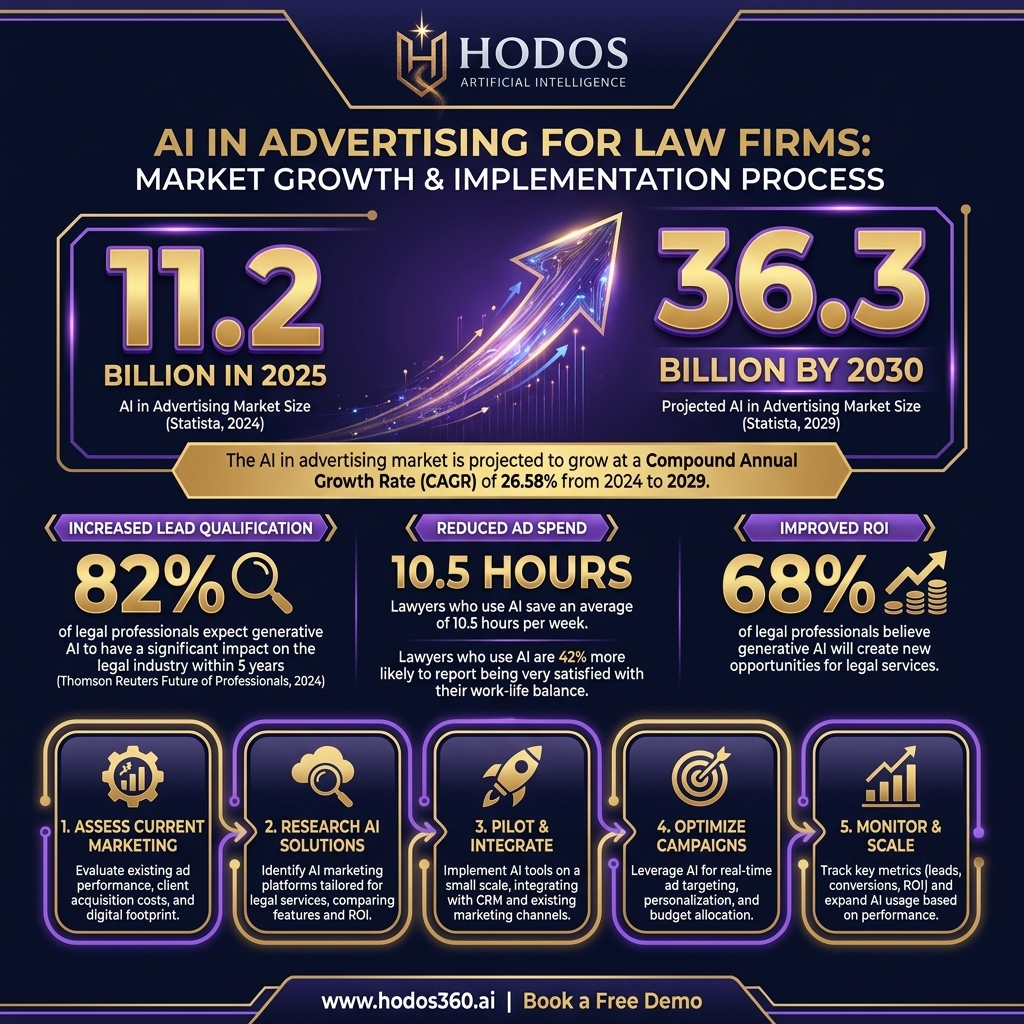
Just a few years ago, the notion of artificial intelligence crafting compelling ad copy or autonomously managing multi-channel campaigns for a law firm seemed like science fiction. Today, it's a rapidly unfolding reality, and the numbers speak volumes. According to bestmediainfo.com, the AI in advertising market is projected to soar from a substantial $11.2 billion in 2025 to an astounding $36.3 billion by 2030. This isn't just a tech trend; it's a seismic shift demanding immediate attention from legal professionals seeking to thrive in an increasingly competitive landscape.
For law firm owners and managing partners, ignoring this growth isn't an option; it's a strategic oversight.
Consider the story of 'LexPersona Legal,' a mid-sized firm in Austin, Texas, that found itself at a crossroads in late 2024. Despite a strong reputation, partner Sarah Chen observed their traditional advertising methods—local print ads, sponsored events—yielding diminishing returns.
Client acquisition costs were climbing, and their digital footprint felt stagnant. Chen's decision to invest in an AI marketing platform, a move initially met with skepticism by senior partners, transformed their outreach. Within months, their targeted digital campaigns, powered by AI, saw a 30% increase in qualified leads and a significant reduction in ad spend, demonstrating the tangible impact of embracing this new frontier.
The market is not waiting for the legal sector to catch up; it is actively reshaping how businesses, including law firms, connect with their clientele.
This explosive growth in artificial intelligence-powered advertising isn't merely about automation; it's about intelligence, precision, and unparalleled efficiency. For law firms, this translates into the ability to identify ideal clients with surgical accuracy, craft hyper-personalized messages, and optimize marketing spend in real-time.
Yet, the adoption of such powerful tools also brings a unique set of challenges, particularly concerning ethics, data privacy, and the professional responsibilities inherent in legal practice. Navigating this evolving ecosystem requires a clear understanding of both the opportunities and the guardrails. Discover how your firm can leverage cutting-edge AI marketing strategies to secure a competitive edge and drive sustainable growth.
The Exploding AI Advertising Market: What Law Firms Need to Know
The figures from bestmediainfo.com underscore a profound transformation. This market expansion is driven by several critical factors: the increasing sophistication of AI algorithms, the proliferation of digital channels, and an insatiable demand for personalized consumer experiences. For law firms, this means moving beyond generic billboards or broad online banner ads.
Instead, AI allows for granular targeting, reaching potential clients based on specific legal needs, demographics, and even behavioral patterns identified through vast datasets. Giants like Google and Meta are continually enhancing their AI advertising tools, offering businesses, including legal practices, unprecedented access to predictive analytics and automated campaign management.
Firms that fail to engage with these powerful platforms risk being outmaneuvered by competitors who embrace the future of marketing.
The competitive landscape is already heating up. Consider the aggressive push by legal tech companies like LegalZoom and Avvo, which leverage sophisticated digital marketing strategies, often AI-enhanced, to capture market share from traditional law firms.
While these companies operate differently, their success in client acquisition highlights the power of modern digital outreach. Even larger, more traditional firms are taking notice. For instance, Linklaters, through its 'NXT' innovation hub, has explored AI applications across various operations, including client relationship management (CRM) systems that feed into refined marketing strategies.
This demonstrates a growing recognition that AI, even when not directly in advertising, informs and enhances the entire client journey, from initial contact to ongoing engagement.
Jensen Huang, CEO of NVIDIA, has repeatedly emphasized the transformative power of AI across industries, stating that every company will eventually become an AI company.
Learn more about AI Litigation Technology: Essential Partnership for Scalable Legal AI. This sentiment resonates deeply within the advertising sector, where AI-powered ad buying is rapidly scaling. Reports indicate that AI-driven ad revenue is projected to command a significant portion of the global advertising market, with some estimates suggesting it could reach hundreds of billions by the end of the decade.
For law firms, this isn't just about placing ads; it's about intelligent placement, optimizing bids, and dynamically adjusting campaigns in real-time based on performance metrics. The sheer volume of data processed by AI allows for a level of precision and responsiveness that human-managed campaigns simply cannot match.
Law firms must recognize that the shift is not merely technological; it's strategic. It's about understanding that the traditional funnel for client acquisition has been irrevocably altered. Clients today conduct extensive online research before engaging legal counsel. AI in advertising allows firms to be present and persuasive at every touchpoint of this digital journey, from initial search queries to social media interactions.
The firms that are investing in platforms capable of AI-powered legal workflows and advanced analytics are not just buying into a trend; they are building a resilient, future-proof approach to growth. The opportunity to significantly enhance reach, improve conversion rates, and dramatically increase ROI is too substantial to ignore for any forward-thinking legal practice.
Strategic Imperatives: Leveraging AI for Client Acquisition in Legal Services
For law firms, the core imperative of AI in advertising is clear: smarter, more efficient client acquisition. AI can revolutionize how firms identify, attract, and convert prospective clients by automating and optimizing key marketing functions. From generating engaging content to managing complex social media campaigns, AI tools are becoming indispensable.
Consider the capabilities of an advanced AI Marketing Platform that can analyze market trends, predict client needs, and even craft targeted advertisements. This level of insight allows firms to allocate resources more effectively, focusing on practice areas and client segments with the highest potential. The days of 'spray and pray' marketing are over; precision is the new paradigm, and AI delivers it.
The impact of AI extends to every facet of the marketing funnel. Learn more about AI Voice Assistant: Essential Growth for Law Firms. For instance, AI Voice Assistants can provide 24/7 phone answering, qualify leads, and even book appointments, ensuring no potential client inquiry goes unanswered.
This immediate engagement is crucial in a competitive market where responsiveness is often a deciding factor for clients. Furthermore, AI-powered content generation tools can draft blog posts, social media updates, and website copy, freeing up attorneys' valuable time while ensuring a consistent and engaging online presence.
This automation, however, requires careful oversight to maintain accuracy and brand voice, often necessitating human attorney review, as emphasized by legal tech leaders like Sam Altman of OpenAI, who consistently advocate for human-in-the-loop approaches in AI deployment.
The Rise of Generative AI in Legal Content Creation
The emergence of generative AI models, such as OpenAI's GPT-4o and Anthropic's Claude 3, has profoundly impacted content creation. Law firms can now leverage these tools to rapidly produce high-quality, SEO-optimized articles, whitepapers, and social media posts tailored to specific legal topics and target audiences.
Firms like Allen & Overy, through their collaboration with Harvey AI, have demonstrated the potential of AI to assist with legal research and document drafting, which indirectly informs and elevates the quality of marketing content. This allows firms to maintain a robust online presence, educate potential clients, and establish thought leadership without dedicating excessive billable hours to content generation.
The key lies in using these tools as accelerators, with experienced legal professionals providing the essential oversight and final approval to ensure accuracy and compliance with legal ethics.
Beyond content, AI marketing platforms excel at social media automation, scheduling posts, analyzing engagement, and even predicting optimal posting times for maximum impact.
Learn more about Essential AI Marketing Tools: Supercharge Your Law Firm's Growth. This ensures that a firm's message reaches the right audience at the right moment, maximizing visibility and engagement. Furthermore, AI-driven analytics provide deep insights into campaign performance, allowing firms to track key metrics like client acquisition cost, conversion rates, and return on investment (ROI) in real-time.
This data-driven approach means marketing strategies can be dynamically adjusted, ensuring resources are always directed towards the most effective channels and messages. The ability to monitor and optimize campaigns with such precision offers a significant competitive advantage in the quest for new clients.
Navigating Ethical AI and Data Privacy in Legal Marketing
While the promise of AI in advertising is immense, the legal profession operates under stringent ethical obligations that demand careful consideration. The tension between aggressive, data-driven marketing and professional responsibility is a critical area for law firms to navigate. The American Bar Association (ABA) Model Rules of Professional Conduct, particularly Rule 7.1 (Communications Concerning a Lawyer’s Services) and Rule 7.2 (Advertising), mandate that all communications about a lawyer’s services must not be false or misleading.
This principle applies equally, if not more stringently, to AI-generated content and targeted advertisements. Firms must ensure that AI tools do not inadvertently create content that could be construed as deceptive, make unsubstantiated claims, or promise specific results, which is strictly prohibited.
The ethical landscape extends beyond truthfulness in advertising to the critical realm of data privacy.
Learn more about AI Marketing Tools: Essential Strategies for Law Firm Growth. AI advertising relies heavily on collecting and analyzing vast amounts of personal data to identify and target potential clients. Law firms must adhere to strict data privacy regulations such as the General Data Protection Regulation (GDPR) in Europe and the California Consumer Privacy Act (CCPA) in the United States, as well as evolving state-specific privacy laws.
Misuse or mishandling of data through AI platforms can lead to severe penalties, reputational damage, and a breach of client trust. Firms must implement robust data governance frameworks, ensure transparency in data collection practices, and secure explicit consent where required, a challenge that requires constant vigilance and legal expertise.
Compliance in the Age of AI-Driven Campaigns
The burgeoning regulatory environment, exemplified by the enforcement of the EU AI Act, signals a global move towards greater accountability for AI systems. While the Act primarily focuses on high-risk AI, its principles of transparency, human oversight, and robustness set a precedent for all AI applications, including those in advertising.
Law firms employing AI marketing solutions must ensure these tools are designed and operated in a manner that aligns with these emerging legal frameworks. This means scrutinizing the algorithms for potential biases that could lead to discriminatory targeting or unfair practices, which could not only violate ethical rules but also expose the firm to legal challenges.
Firms like 'Integrity Law Group' in Chicago have proactively established internal AI ethics committees, comprising partners and legal tech specialists, to vet all AI-powered marketing initiatives. Their approach involves regular audits of AI algorithms, review of generated content by senior attorneys, and strict adherence to data minimization principles.
Learn more about Gemini 3.1 Flash TTS: Ultimate Voice AI for Law Firms. This proactive stance contrasts sharply with firms that adopt AI without such safeguards, risking significant ethical breaches and regulatory fines. The message is clear: the integration of AI in legal marketing must be accompanied by a robust ethical framework, ensuring that technological advancement never compromises the profession’s core values of integrity and client trust.
This vigilance is paramount to harnessing AI's power responsibly.
The Future of Legal Marketing: Predictive Analytics and Hyper-Personalization
The true long-term value of AI in legal marketing lies in its ability to predict future trends and personalize client interactions to an unprecedented degree. Predictive analytics, powered by machine learning, can analyze historical data to forecast shifts in legal demand, identify emerging practice areas, and even anticipate individual client needs before they become explicit.
For example, by analyzing public records, economic indicators, and online behavior, an AI system could identify businesses likely to require M&A legal services in the coming quarter or individuals facing specific family law challenges. This foresight allows law firms to be proactive rather than reactive, positioning themselves strategically ahead of the curve.
Companies like Thomson Reuters are already integrating advanced analytics into their legal research platforms, providing powerful insights that can be leveraged for strategic marketing decisions.
Hyper-personalization takes this a step further, tailoring every marketing message, ad placement, and even website experience to the individual prospective client.
Learn more about AI Alliances Reshuffle: Essential Legal Tech Strategy for Firms. Imagine a potential client visiting a law firm's website and seeing content, case studies, and attorney profiles specifically relevant to their unique legal problem, dynamically generated by AI. This level of customization significantly increases engagement and conversion rates, fostering a sense of understanding and trust from the outset.
This isn't just about addressing a client by name; it's about understanding their nuanced situation and demonstrating how the firm's specific expertise can provide a solution. The AI-powered website building capabilities offered by platforms like HODOS 360 enable firms to deploy such dynamic, high-converting templates with ease, ensuring a seamless and personalized digital journey for every visitor.
Measuring ROI: Beyond Clicks and Impressions
One of the most significant advancements AI brings to legal marketing is the ability to move beyond superficial metrics like clicks and impressions to measure true return on investment (ROI). AI-powered analytics platforms can track the entire client journey, from initial ad interaction to conversion and even long-term client value.
This comprehensive view allows firms to precisely attribute leads to specific marketing efforts, optimize campaign spending in real-time, and understand which strategies yield the most profitable clients. This data-driven approach empowers law firm leaders, like managing partner Evelyn Reed of 'Apex Legal,' to make informed decisions about their marketing budget, ensuring every dollar spent contributes directly to the firm's bottom line.
Reed noted at LegalTech NYC 2026 that "AI has transformed our marketing from a cost center to a verifiable profit engine."
The integration of AI with CRM systems further enhances this capability, providing a holistic view of client relationships and marketing effectiveness. By analyzing client intake data, billing records, and client satisfaction scores, AI can refine targeting models, improve lead qualification processes, and even identify opportunities for upselling or cross-selling legal services.
This continuous feedback loop ensures that marketing efforts are not only efficient but also constantly evolving and improving. The ability to track and optimize ROI with such precision is a game-changer for firms seeking to maximize their marketing effectiveness and achieve sustainable growth in a competitive legal market.

Key Takeaways and Next Steps
The rapid expansion of the AI in advertising market from $11.2 billion to $36.3 billion by 2030 is not merely a forecast; it's a clear signal for law firms to strategically embrace artificial intelligence in their marketing efforts. Firms that proactively integrate AI-powered solutions stand to gain a significant competitive advantage through enhanced client acquisition, optimized spending, and unparalleled personalization.
However, this adoption must be tempered with a rigorous commitment to ethical guidelines and data privacy regulations, ensuring that innovation never compromises the legal profession’s foundational principles. The future of legal marketing is intelligent, precise, and deeply personalized, driven by the capabilities of advanced AI.
For law firms ready to navigate this transformative era, the next step is clear: evaluate and implement comprehensive AI solutions. Platforms like HODOS 360 offer an integrated suite of services, from AI Marketing Platform capabilities that include AI video creation and social media automation, to AI Voice Assistants for lead qualification, and Web & Mobile Development for high-converting online presences.
Embracing these tools strategically, with an unwavering focus on ethical compliance, will not only propel your firm's growth but also solidify its position as a forward-thinking leader in the legal industry. The opportunity to redefine your firm's client acquisition strategy is here.
Frequently Asked Questions
What is AI advertising for law firms?+
AI advertising for law firms involves using artificial intelligence technologies to automate, optimize, and personalize marketing campaigns. This includes AI-powered tools for content generation, social media automation, targeted ad placement, lead qualification, and performance analytics. Its goal is to reach ideal clients more efficiently and effectively, enhancing client acquisition and ROI while reducing manual effort.
How does AI improve client acquisition for law firms?+
AI improves client acquisition by enabling hyper-targeted advertising based on predictive analytics, identifying potential clients with specific legal needs. It automates lead nurturing through AI Voice Assistants, creates engaging content, and optimizes ad spend in real-time. This precision marketing ensures that law firms connect with high-quality leads, increasing conversion rates and overall client growth.
What are the ethical concerns with AI in legal marketing?+
Ethical concerns include ensuring AI-generated content and advertisements comply with ABA Model Rules (e.g., Rule 7.1, 7.2) regarding truthfulness and avoiding misleading claims. Data privacy is paramount, requiring strict adherence to regulations like GDPR and CCPA. Firms must also guard against algorithmic bias in targeting and ensure transparency in AI usage to maintain professional integrity and client trust.
Can AI help with SEO and content generation for law firms?+
Absolutely. Generative AI tools can significantly assist law firms with SEO by creating keyword-rich, high-quality blog posts, articles, and website copy. These tools help maintain a consistent online presence, improve search engine rankings, and establish thought leadership. While AI can draft content efficiently, human attorney review is crucial to ensure accuracy, legal compliance, and alignment with the firm's unique voice.
How can law firms get started with AI marketing?+
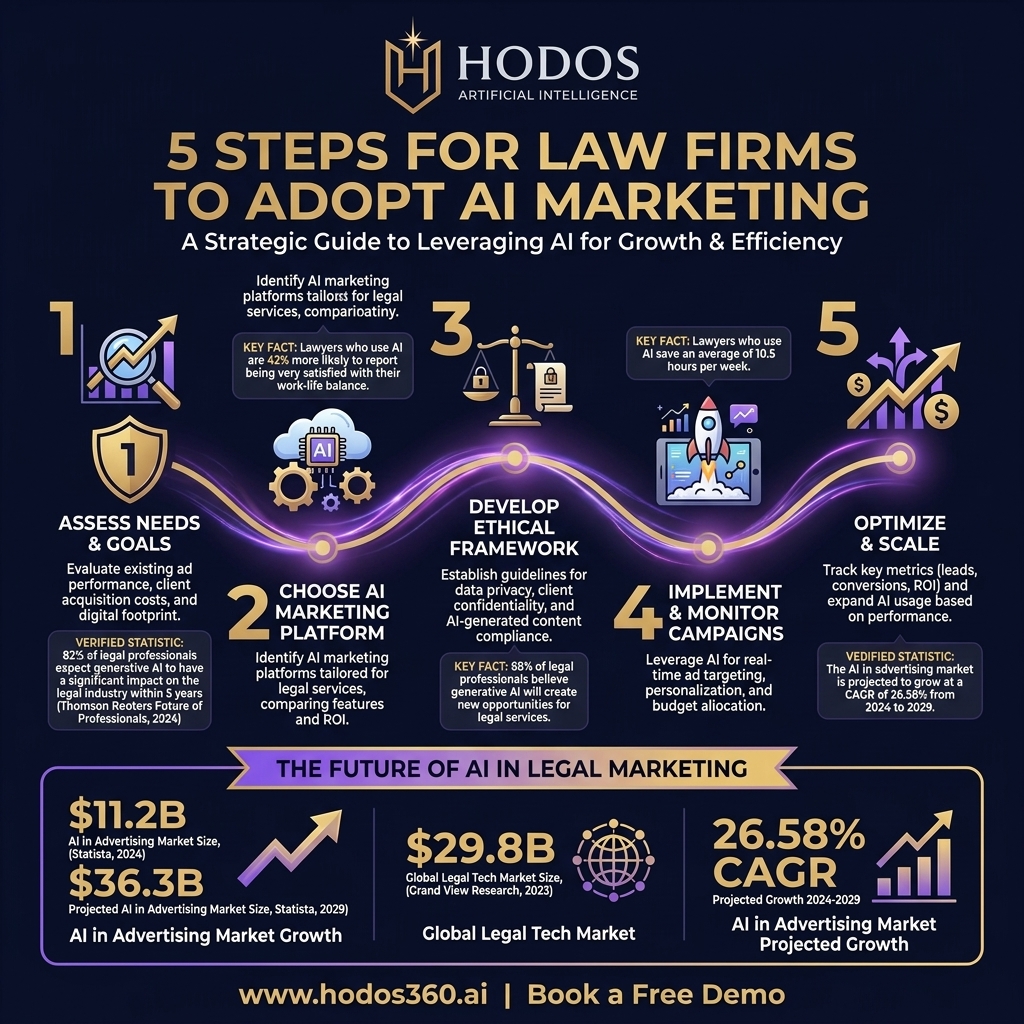
Law firms can begin by assessing their current marketing needs and identifying areas where AI can provide the most impact, such as lead generation, content creation, or analytics. Researching and partnering with reputable legal tech platforms that offer integrated AI marketing solutions is key. Starting with a pilot program in a specific practice area can help firms gradually integrate AI, ensuring ethical compliance and measurable results.