


AI Litigation Technology: Essential Partnership for Scalable Legal AI
In a legal world increasingly defined by digital deluge, the ability to harness data effectively is no longer a luxury but a strategic imperative. On June 1, 2026, the legal tech sphere buzzed with the announcement: Everlaw, the cloud-native investigation and litigation platform, and Morae Global Corporation, a leading provider of legal consulting and solutions, formally unveiled their partnership to deliver advanced AI litigation technology at scale.
This collaboration isn't merely another integration; it represents a significant step towards democratizing sophisticated AI capabilities for law firms grappling with an exponential increase in electronically stored information (ESI).
The implications of this strategic partnership are profound. For years, legal professionals have navigated a labyrinth of data, with e-discovery costs often spiraling out of control.
According to a 2024 report by the Blickstein Group, the average legal department's e-discovery spend increased by 15% over the previous year, highlighting the urgent need for more efficient solutions. Everlaw CEO, AJ Shankar, commented on the alliance, stating, "Our collaboration with Morae will empower legal teams to not only uncover critical insights faster but to do so with unparalleled precision and cost-effectiveness."
This sentiment was echoed by Shahzad Bashir, CEO of Morae, who emphasized the joint commitment to "redefining the future of legal services by making cutting-edge AI litigation technology accessible and actionable." This alliance aims to bridge the gap between powerful AI tools and their practical application in high-stakes litigation, promising to transform everything from early case assessment to trial preparation, making sophisticated capabilities more accessible across the legal market.
The Strategic Imperative of AI Litigation Technology
The modern legal landscape is characterized by an unprecedented volume of data. IDC projects that the global datasphere will reach 175 zettabytes by 2025, a significant portion of which is relevant to legal matters. For law firms, this means sifting through terabytes, often petabytes, of documents, emails, chat logs, and other digital artifacts.
Traditional manual review processes are no longer sustainable, leading to exorbitant costs, lengthy timelines, and increased risk of human error. This challenge has fueled the demand for advanced AI litigation technology that can automate, accelerate, and enhance every stage of the discovery process.
Firms that embrace this technology gain a significant competitive advantage.
Consider the case of a major antitrust investigation, where a team might need to review millions of documents in a matter of weeks. Without AI-powered tools, such a task is virtually impossible within reasonable budgetary and time constraints. Early adopters, like the partners at Quinn Emanuel Urquhart & Sullivan, have long championed sophisticated e-discovery platforms, recognizing that the ability to quickly and accurately identify key evidence can be the deciding factor in complex cases.
Learn more about AI Regulatory Monitoring: Essential for Law Firm Compliance. The shift isn't just about efficiency; it's about strategic insight, allowing legal teams to build stronger cases by uncovering patterns and connections that would remain hidden to human reviewers.
The evolution of AI litigation technology extends far beyond simple keyword searching.
Today's tools leverage machine learning, natural language processing (NLP), and even generative AI to perform tasks like concept clustering, predictive coding, sentiment analysis, and automated privilege review. These capabilities allow legal professionals to prioritize documents, identify relevant information with greater accuracy, and significantly reduce the volume of data requiring human attention.
This transformation isn't just incremental; it’s foundational, reshaping the very economics and efficacy of litigation.
However, the adoption curve has not been uniform. Smaller and mid-sized firms, in particular, have often struggled with the high upfront costs, technical complexity, and lack of specialized expertise required to implement and manage these advanced systems.
This creates a market tension: the clear benefits of AI litigation technology are undeniable, yet the barriers to entry remain significant for many. This is where strategic partnerships, like the one between Everlaw and Morae, become critical, aiming to lower these barriers and make advanced capabilities more broadly accessible, thereby leveling the playing field for all sizes of legal practices.
Everlaw and Morae: Forging a New Era in AI-Powered Litigation
The partnership between Everlaw and Morae is a testament to the legal industry's growing recognition that specialized technology and expert services must converge to truly deliver value. Everlaw, with its reputation as a leading cloud-native e-discovery platform, brings powerful AI capabilities directly to the data.
Its intuitive interface and robust analytical tools have been lauded by legal professionals for their ability to streamline document review and case strategy. Morae, on the other hand, boasts extensive experience in legal consulting, managed services, and technology implementation, working with hundreds of law firms and corporate legal departments globally to optimize their operations.
This collaboration is designed to create an end-to-end solution that addresses the entire e-discovery lifecycle. Morae's expertise will enable clients to fully leverage Everlaw's advanced AI litigation technology, from initial data ingestion and processing to sophisticated analytics and production. Shahzad Bashir, Morae's CEO, highlighted in a recent press release, "Our clients demand not just powerful technology, but also the strategic guidance and operational support to maximize its impact.
This partnership ensures they receive both, driving truly transformative outcomes in their litigation matters." The goal is to provide a seamless experience, ensuring that firms can access Everlaw’s capabilities with expert guidance, accelerating their path to insight and resolution.
Unlike other integrations that might simply connect two disparate systems, this strategic partnership focuses on a deeper synergy.
Learn more about AI Web Apps: Ultimate Legal Firms' Guide to Next-Gen Development. Morae's consultants will work closely with Everlaw's platform, helping clients design custom workflows, implement best practices for predictive coding, and develop sophisticated analytics strategies. This hands-on approach is crucial for realizing the full potential of AI litigation technology, especially for firms that may lack in-house AI specialists.
It’s about more than just providing the tools; it’s about providing the intelligence and support to use them effectively.
The alliance also sets a new benchmark for scalability. Morae's global footprint and extensive client base mean that Everlaw's AI litigation technology can now reach a much broader audience, including firms that previously considered such advanced tools beyond their reach.
This expansion is critical in an era where data challenges are universal, regardless of a firm's size or geographic location. By combining Everlaw’s platform with Morae’s managed services, firms can benefit from enterprise-grade AI-powered workflows without the burden of building and maintaining a complex internal infrastructure, directly addressing a key pain point for many legal practices.
Beyond Ediscovery: Comprehensive AI Application
While e-discovery remains the primary domain for Everlaw's powerful platform, the partnership with Morae extends the reach of AI litigation technology into broader legal applications. The insights gleaned from efficient document review can inform every stage of a case, from developing initial legal theories to drafting motions and preparing for trial.
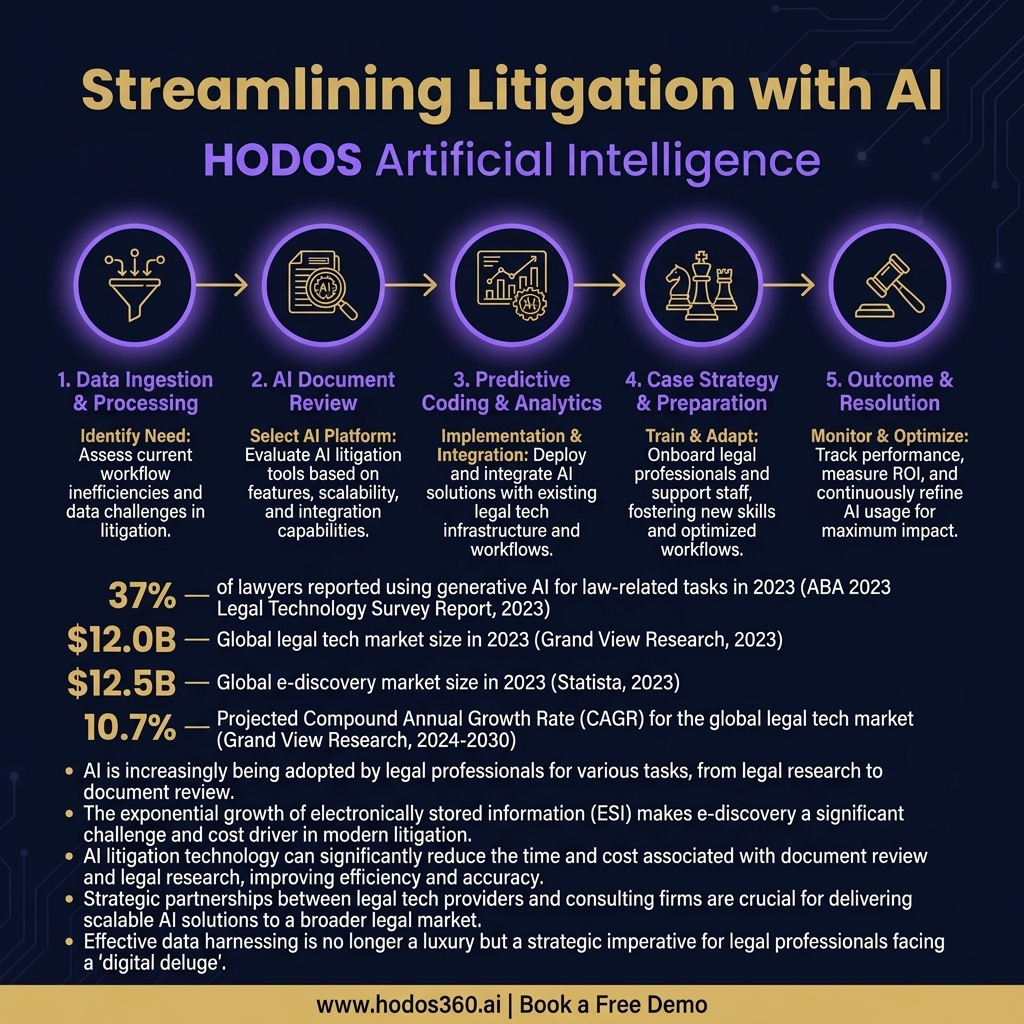
For instance, AI can quickly identify inconsistencies in witness statements or pinpoint crucial precedents within vast legal databases. This predictive capability allows lawyers to anticipate opposing counsel's arguments and proactively strengthen their own case strategies. Learn more about Voice AI: The Ultimate Shift in Legal Client Service.
The integration of AI-powered analytics means that legal teams can not only find information but understand its context and implications much faster than ever before. This comprehensive application ensures that the investment in AI tools yields benefits across the entire litigation lifecycle, not just in the initial discovery phase, fostering a truly AI-powered legal practice.
The Operational Impact of Scalable AI on Law Firms
The operational benefits of adopting scalable AI litigation technology are multifaceted and profound. For law firms, the most immediate impact is often seen in cost reduction. A 2025 report by Thomson Reuters found that firms leveraging AI for e-discovery can reduce review costs by up to 50-70% compared to traditional manual methods.
This isn't just about saving money; it’s about reallocating resources to higher-value tasks, allowing attorneys and paralegals to focus on strategic analysis, client counseling, and courtroom advocacy rather than mundane document review. The ability to process and analyze vast datasets rapidly also significantly reduces the time required to bring a case to resolution, benefiting both the firm and its clients.
Beyond cost savings, AI litigation technology enhances accuracy and consistency. Human reviewers, even the most diligent, are prone to fatigue and subjective bias, which can lead to missed documents or inconsistent coding. AI, conversely, can apply criteria uniformly across millions of documents, significantly improving the quality and defensibility of the review process.
This heightened accuracy is particularly crucial in areas governed by strict rules, such as Federal Rules of Civil Procedure 26(b)(1) regarding the scope of discovery, where precision is paramount. Firms that embrace these tools are not just working faster; they are working smarter and more reliably.
Another critical impact is improved client satisfaction. Learn more about AI Podcasts: Essential Voice Assistant Strategies for Law Firms. In an increasingly competitive legal market, clients expect transparency, efficiency, and predictable billing. By leveraging AI litigation technology, law firms can offer more competitive fee structures, provide quicker updates, and deliver faster results.
This translates into stronger client relationships and a reputation for innovation and effectiveness. Firms that are seen as forward-thinking and technologically adept are better positioned to attract and retain top-tier clients, especially those with complex, data-intensive legal needs. The ability to provide an enhanced client experience is a powerful differentiator in today's legal landscape.
Finally, the adoption of scalable AI empowers firms to take on cases that might have previously been too resource-intensive. Imagine a boutique firm gaining the capacity to handle a multi-jurisdictional class-action lawsuit, a domain traditionally reserved for large, well-resourced firms. AI litigation technology democratizes access to complex case management, allowing firms of all sizes to compete more effectively and expand their service offerings.
This shifts the competitive dynamics of the legal market, rewarding innovation and efficiency over sheer scale, directly contributing to the growth and resilience of a diverse range of legal practices.
- ✓Reduced Operational Costs: AI automates labor-intensive tasks like document review, saving significant expenses in billable hours and contract reviewer fees.
- ✓Accelerated Case Timelines: Machine learning algorithms can process millions of documents in a fraction of the time it would take human teams, speeding up discovery and case resolution.
- ✓Enhanced Accuracy and Consistency: AI-powered tools eliminate human error and apply review criteria uniformly, leading to more reliable and defensible outcomes.
- ✓Improved Strategic Insights: Advanced analytics identify patterns, themes, and key evidence that might be missed by manual review, strengthening legal arguments and case strategy.
- ✓Greater Scalability: Firms can handle larger, more complex datasets without proportional increases in staffing, enabling growth and new business opportunities.
- ✓Increased Client Satisfaction: Faster, more cost-effective, and transparent processes lead to better client experiences and stronger relationships.
- ✓Empowered Legal Professionals: Attorneys and paralegals are freed from tedious tasks to focus on high-value analytical work, professional development, and client engagement.
Navigating the Future: AI Adoption Challenges and Opportunities
Despite the undeniable advantages, the widespread adoption of AI litigation technology is not without its challenges. One significant hurdle is the initial investment in technology and training. Many firms, especially those with established traditional practices, may be hesitant to disrupt existing workflows or commit capital to unfamiliar tools.
There's also a pervasive concern regarding data privacy and security, particularly when client-sensitive information is processed by third-party AI platforms. Law firms must ensure compliance with stringent regulations and uphold their ethical obligations under rules like ABA Model Rule 1.6 on Confidentiality of Information, which mandates protecting client data.
The responsibility to ensure competence, as outlined in ABA Model Rule 1.1, also extends to understanding and effectively utilizing new technologies.
Another challenge lies in change management. Introducing AI requires more than just installing software; it necessitates a cultural shift within the firm. Attorneys and staff must be trained not only on how to use the tools but also on how to integrate them into their daily practice and trust the AI's output.
Resistance to change, fear of job displacement, and a general skepticism towards new technologies can impede successful implementation. Learn more about Web Application Development: Essential AI Workflows Emerge. Firms like Allen & Overy, which famously partnered with Harvey AI to deploy generative AI for legal work, have invested heavily in internal training and adoption programs, demonstrating that successful integration requires significant institutional commitment beyond simply acquiring the technology.
However, these challenges also present significant opportunities. Firms that proactively address these issues, investing in robust cybersecurity measures, comprehensive training programs, and transparent communication, will emerge as leaders in the legal tech revolution. The competitive landscape is increasingly defined by technological prowess; firms that fail to adapt risk being outmaneuvered by more agile, AI-powered competitors.
The EU AI Act, with its focus on responsible AI development and deployment, underscores the global trend towards regulated AI, creating an opportunity for firms to differentiate themselves by demonstrating ethical and compliant AI practices.
For forward-thinking law firms, the current environment is ripe for strategic growth.
The demand for efficient, data-driven legal services continues to climb, and clients are increasingly sophisticated in their expectations. By embracing AI litigation technology through partnerships like Everlaw and Morae, firms can not only meet these demands but also redefine what’s possible in legal practice. This isn't about replacing lawyers but augmenting their capabilities, allowing them to deliver superior outcomes and focus on the uniquely human aspects of legal advocacy.
The opportunity lies in leveraging AI to enhance, not diminish, the role of the legal professional, creating a more effective and rewarding practice for all.
Integrating AI: A Phased Approach to Transformation
Successfully integrating AI litigation technology requires a thoughtful, phased approach rather than an abrupt overhaul. Firms should start with pilot programs focused on specific pain points, such as initial document review in a particular case type. This allows for controlled testing, iterative refinement of workflows, and gradual acclimatization of staff.
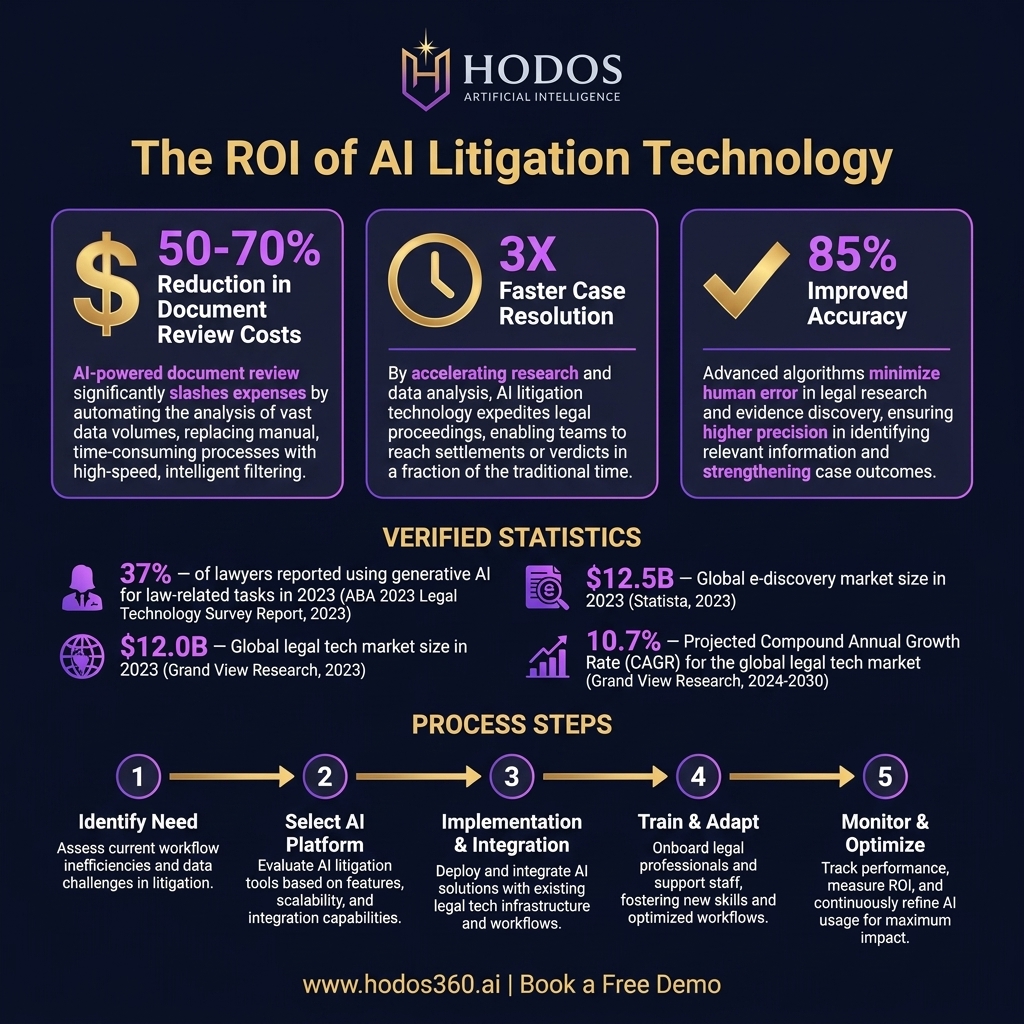
Identifying internal champions who are enthusiastic about technology can significantly aid adoption. Learn more about Alexa Voice Assistant: Essential Evolution for Law Firm Efficiency. As positive results emerge, firms can then scale up, integrating AI into more complex processes and across different practice areas. This incremental strategy minimizes disruption, manages risk, and builds internal confidence in the transformative potential of AI.
It’s about building a solid foundation, ensuring that each step in the AI integration journey is well-supported and aligned with the firm's strategic objectives.
Measuring ROI: The Tangible Benefits of AI in Legal Practice
Quantifying the return on investment (ROI) for AI litigation technology is crucial for securing buy-in and demonstrating value. Beyond direct cost savings in e-discovery, firms should track metrics such as reduced case cycle times, improved win rates, enhanced client satisfaction scores, and the capacity to take on more matters without increasing headcount.
For instance, if an AI tool helps reduce the time spent on document review by 60%, calculate the equivalent billable hours saved and the potential for new revenue generation from reallocated attorney time. A clear understanding of these tangible benefits, supported by data, will solidify the business case for continued AI investment and foster a culture of data-driven decision-making within the firm, proving that AI is not just an expense but a strategic asset.
HODOS 360 and the Evolution of AI Law Firm Management
While specialized AI litigation technology like Everlaw's platform is vital for specific aspects of legal practice, a holistic approach to AI integration across a law firm's entire operations is equally essential for sustained success. This is where comprehensive platforms like HODOS 360 come into play.
HODOS 360 offers an AI Law Firm Management system designed to streamline every facet of a legal practice, from client intake and case management to billing, document automation, and AI-powered legal workflows. It provides the foundational infrastructure that allows firms to not only manage their daily operations with unprecedented efficiency but also to seamlessly integrate specialized tools and services, creating a cohesive and intelligent ecosystem.
Imagine a scenario where a new client's information is automatically onboarded, relevant documents are generated with AI assistance, and case progress is tracked in real-time, all within a single, intuitive platform. This level of integration reduces administrative burden, minimizes errors, and frees up valuable attorney time, allowing legal professionals to focus on strategic legal work.
HODOS 360's AI capabilities extend beyond mere automation, offering predictive analytics for workload management, intelligent scheduling, and even proactive compliance checks, thereby enhancing the firm's overall operational resilience and responsiveness. This comprehensive approach ensures that firms are not just adopting point solutions but are building a future-proof, AI-powered practice.
By leveraging an integrated platform like HODOS 360, law firms can create a robust technological backbone that supports and amplifies the benefits of specialized tools, such as those offered through the Everlaw-Morae partnership. It’s about creating an environment where data flows seamlessly, AI insights are actionable, and administrative tasks are minimized.
This synergy allows firms to maximize their investment in AI litigation technology by ensuring that the benefits of specialized tools are not siloed but contribute to a more efficient, profitable, and client-centric legal practice overall. The future of legal practice demands not just AI, but intelligent, integrated AI Law Firm Management.

Key Takeaways and Next Steps
The partnership between Everlaw and Morae signals a maturation of the AI litigation technology market, emphasizing scalability and expert-driven implementation. For law firms, this trend underscores the critical need to embrace AI not as a distant future, but as a present-day necessity for competitive advantage and operational excellence.
Firms must move beyond contemplating AI to strategically integrating it into their workflows. Evaluate your current processes, identify pain points ripe for AI intervention, and explore partnerships that offer both cutting-edge technology and the expertise to implement it effectively. The legal landscape is being redefined by those who dare to innovate; ensure your firm is at the forefront of this transformation, leveraging AI to deliver superior client outcomes and build a more resilient, efficient practice.
Frequently Asked Questions
What is the significance of the Everlaw and Morae partnership for law firms?+
This strategic partnership combines Everlaw's powerful AI litigation technology with Morae's expert legal consulting and managed services. It signifies a move towards making advanced AI-powered e-discovery and litigation support more accessible and scalable for law firms of all sizes, helping them manage vast data volumes more efficiently and cost-effectively, thereby enhancing their competitive edge.
How does AI litigation technology improve e-discovery processes?+
AI litigation technology drastically improves e-discovery by automating document review, using machine learning for predictive coding, and employing natural language processing to identify key concepts and patterns. This reduces manual effort, accelerates review times, lowers costs, and increases the accuracy and consistency of identifying relevant evidence, ensuring compliance with rules like FRCP 26(b)(1).
What are the main operational benefits for law firms adopting AI in litigation?+
Operational benefits include significant cost reductions (up to 70% in review costs), faster case resolution, and improved accuracy in document analysis. AI frees legal professionals from mundane tasks, allowing them to focus on higher-value strategic work. It also enhances client satisfaction through more efficient and predictable services, enabling firms to take on more complex cases.
Are there ethical considerations for law firms using AI litigation technology?+
Yes, ethical considerations are crucial. Firms must ensure competence (ABA Model Rule 1.1) in using AI tools and uphold client confidentiality (ABA Model Rule 1.6) by selecting secure, compliant platforms. Transparency with clients about AI usage and proper oversight of AI-generated work are also essential to maintain professional responsibility and trust in the legal process.
How can HODOS 360 complement specialized AI litigation tools like Everlaw?+
HODOS 360 provides a comprehensive AI Law Firm Management system that streamlines overall firm operations, including case management, client intake, billing, and document automation. By creating an efficient, AI-powered administrative backbone, HODOS 360 allows firms to maximize the benefits of specialized AI litigation technology like Everlaw, ensuring seamless integration and a holistic approach to AI-driven legal practice.