


AI Implementation: Essential Guide for Law Firms
Just a few years ago, the notion of artificial intelligence deeply embedded in daily legal operations seemed like a distant future for many law firms. Partners like Sarah Chen, a litigation specialist at a prominent AmLaw 100 firm, initially viewed AI with a mix of skepticism and curiosity.
"We heard the buzz, but the practical application felt abstract, almost threatening," Chen recounted in a recent industry panel. Yet, as detailed in the recent citybiz article, "Legal Use of AI and Its Implementation in Law Firms," the abstract has rapidly become an imperative. The industry is now witnessing a profound shift, with firms recognizing that AI isn't merely a technological upgrade but a fundamental component of sustainable growth and competitive advantage.
The decision to integrate AI is no longer a question of 'if,' but 'how' and 'when,' driven by client demands for efficiency, cost-effectiveness, and innovative solutions.
This rapid acceleration is fueled by advancements from titans like OpenAI, whose generative AI models have reshaped expectations for automated content and analysis, and NVIDIA, whose powerful GPUs are the backbone of these complex computations.
The landscape of legal technology is evolving so quickly that staying abreast of new developments, from advanced case management systems to sophisticated predictive analytics, has become a full-time endeavor. Firms that delay risk being outmaneuvered by agile competitors who are leveraging AI to streamline everything from client intake to complex litigation strategy.
The challenge, then, lies not just in adopting technology, but in strategically implementing it to augment human expertise, enhance ethical practice, and ultimately deliver superior legal services in an increasingly data-driven world. The goal is to empower lawyers, not replace them, by freeing them from the mundane and enabling a focus on high-value, strategic work.
The Imperative of AI in Modern Legal Practice
The legal profession, long rooted in tradition, is experiencing an unprecedented technological upheaval. According to the 2024 ABA Legal Technology Report, adoption of AI tools by law firms has more than doubled in the past two years, moving from experimental phases to essential operational components.
This surge is not merely a trend; it's a response to shifting market dynamics. Clients, increasingly accustomed to AI-driven efficiency in other sectors, expect similar innovation from their legal counsel. Firms that can offer faster document review, more accurate legal research, and predictive insights into case outcomes gain a significant edge.
This competitive pressure is particularly evident among AmLaw 100 firms, many of whom, like Allen & Overy, have publicly embraced AI partnerships, such as their collaboration with Harvey AI, a generative AI platform for legal work. This kind of integration demonstrates a commitment to leveraging artificial intelligence to enhance, rather than disrupt, core legal practice.
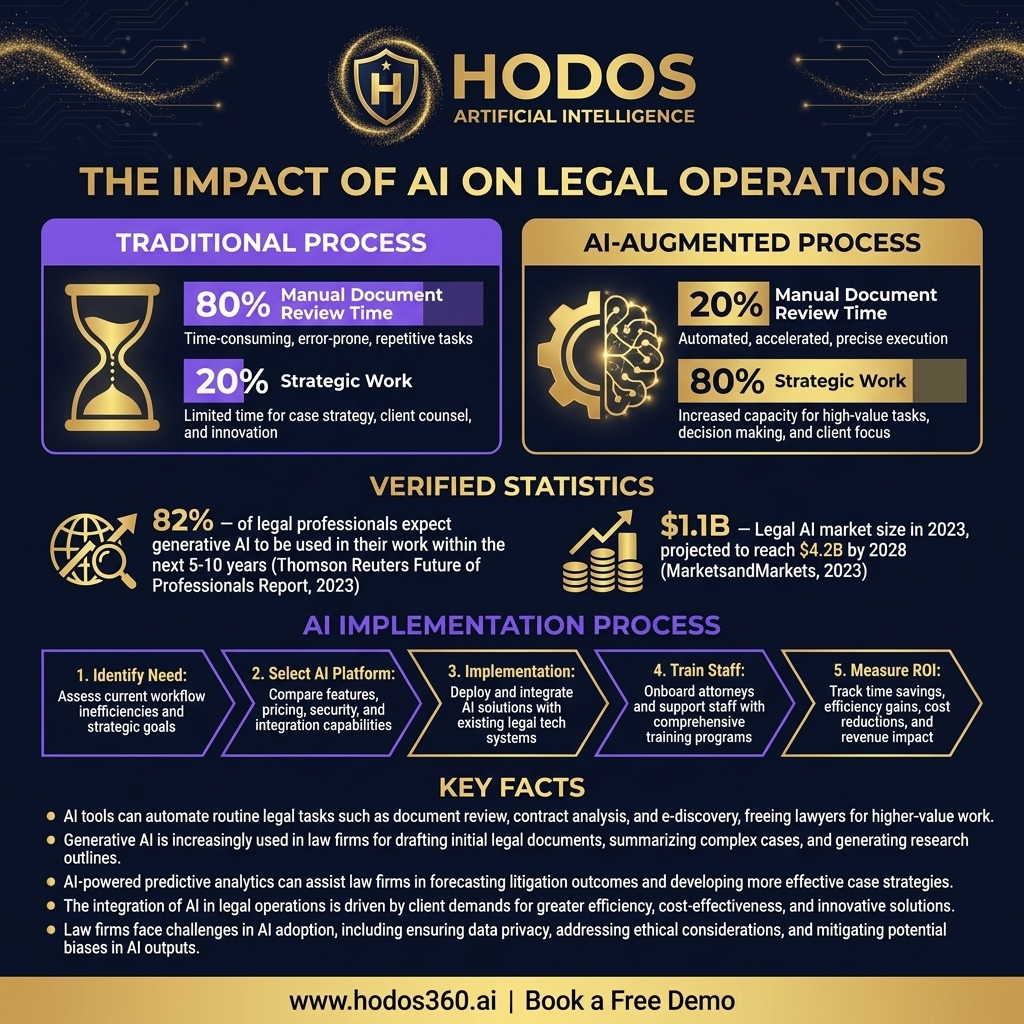
The impact of AI extends beyond mere efficiency gains; it redefines the very nature of legal work. Consider the meticulous task of e-discovery, traditionally a labor-intensive and costly endeavor. AI-powered platforms can now review millions of documents in a fraction of the time it would take human paralegals, identifying relevant information and patterns with remarkable accuracy.
Learn more about AI Web Development: Revolutionizing Law Firm Websites in 2026. This not only reduces client costs but also allows legal teams to focus on strategic analysis rather than data sifting. Furthermore, the rise of generative AI, championed by figures like OpenAI CEO Sam Altman, has opened new avenues for drafting legal documents, summarizing complex cases, and even generating initial legal arguments.
While human oversight remains paramount, these tools significantly accelerate the initial stages of legal creation, transforming the daily operations of lawyers across various practice areas.
However, the imperative to adopt AI also brings with it significant ethical considerations. The ABA Model Rules of Professional Conduct, particularly Rule 1.1 (Competence) and Rule 1.6 (Confidentiality of Information), are increasingly being interpreted to include technological competence and the secure handling of client data within AI systems.
Firms must navigate issues of data privacy, algorithmic bias, and the responsible use of AI to avoid malpractice. As Dario Amodei, CEO of Anthropic, another leading AI research company, frequently emphasizes, the development and deployment of AI must be guided by robust ethical frameworks. This dual challenge of leveraging innovation while upholding professional duties underscores the complexity and urgency of strategic AI implementation.
The firms that succeed will be those that integrate AI not as a standalone tool, but as a seamlessly woven thread within their ethical and operational fabric, enhancing their legal services while maintaining the highest standards of client trust and professional integrity.
Navigating the AI Landscape: Challenges and Opportunities
The journey into AI integration for law firms is fraught with both exhilarating opportunities and formidable challenges. One of the primary hurdles is the initial investment and the perceived complexity of the technology. Many smaller and mid-sized firms, while recognizing the benefits, struggle with allocating resources for AI tools and the necessary training for their staff.
There's also a pervasive fear of job displacement, a narrative often amplified in technology news today. However, industry leaders like Richard Susskind, a prominent legal futurist, consistently argue that AI will augment lawyers, not replace them, by automating routine tasks and freeing up human intellect for higher-value, strategic work.
The real challenge lies in re-skilling the workforce and fostering a culture of continuous learning, ensuring that lawyers become adept at collaborating with AI tools rather than competing against them.
Data security and privacy concerns represent another significant challenge. Legal data is inherently sensitive, and integrating AI systems requires robust safeguards against breaches and misuse.
The enforcement of regulations like the EU AI Act, which came into effect recently, highlights the global push for responsible AI governance, particularly concerning data integrity and algorithmic transparency. Firms must conduct thorough due diligence on AI vendors, ensuring compliance with data protection laws such as GDPR and CCPA.
Learn more about AI Marketing Automation: Essential Lead Flow for Law Firms. Failure to do so can lead to severe reputational damage and legal penalties, as demonstrated by several high-profile data incidents involving cloud services in recent years. This creates a critical need for secure, reliable platforms that prioritize data governance.
Despite these challenges, the opportunities presented by AI are transformative. AI-powered legal research platforms, for instance, can quickly analyze vast legal databases, identifying precedents and relevant statutes with unparalleled speed, offering insights that would be impossible for human researchers alone. Predictive analytics can forecast litigation outcomes, assess case value, and even identify optimal jury selection strategies, providing lawyers with a data-driven edge.
Companies like Clio, a leader in cloud-based legal practice management, continue to innovate, incorporating AI features that simplify client intake, automate billing, and enhance overall firm management. This evolution allows legal professionals to focus more on client relationships and complex problem-solving, moving away from administrative burdens.
The strategic adoption of AI, therefore, isn't about simply buying software; it's about reimagining legal service delivery.
Overcoming Adoption Barriers
Overcoming the inherent barriers to AI adoption requires a multi-faceted approach, starting with firm leadership buy-in. A top-down commitment to innovation can alleviate skepticism and provide the necessary resources for successful integration. Firms should initiate pilot programs, starting with low-risk, high-impact areas like contract review or legal research, to demonstrate tangible benefits and build internal confidence.
Training programs are crucial, not just on how to use the tools, but on understanding the underlying principles of AI and its ethical implications. This empowers lawyers and staff to leverage the technology effectively and responsibly. Learn more about AI Deposition Prep: The Ultimate Guide to Winning Strategies.
Furthermore, fostering an open culture that encourages experimentation and feedback is vital. Firms that view AI implementation as an ongoing process of learning and adaptation, rather than a one-time deployment, are more likely to achieve long-term success. This strategic shift requires a change management approach that prioritizes clear communication, addresses concerns transparently, and celebrates early wins to build momentum for broader adoption.
Strategic AI Implementation: A Phased Approach
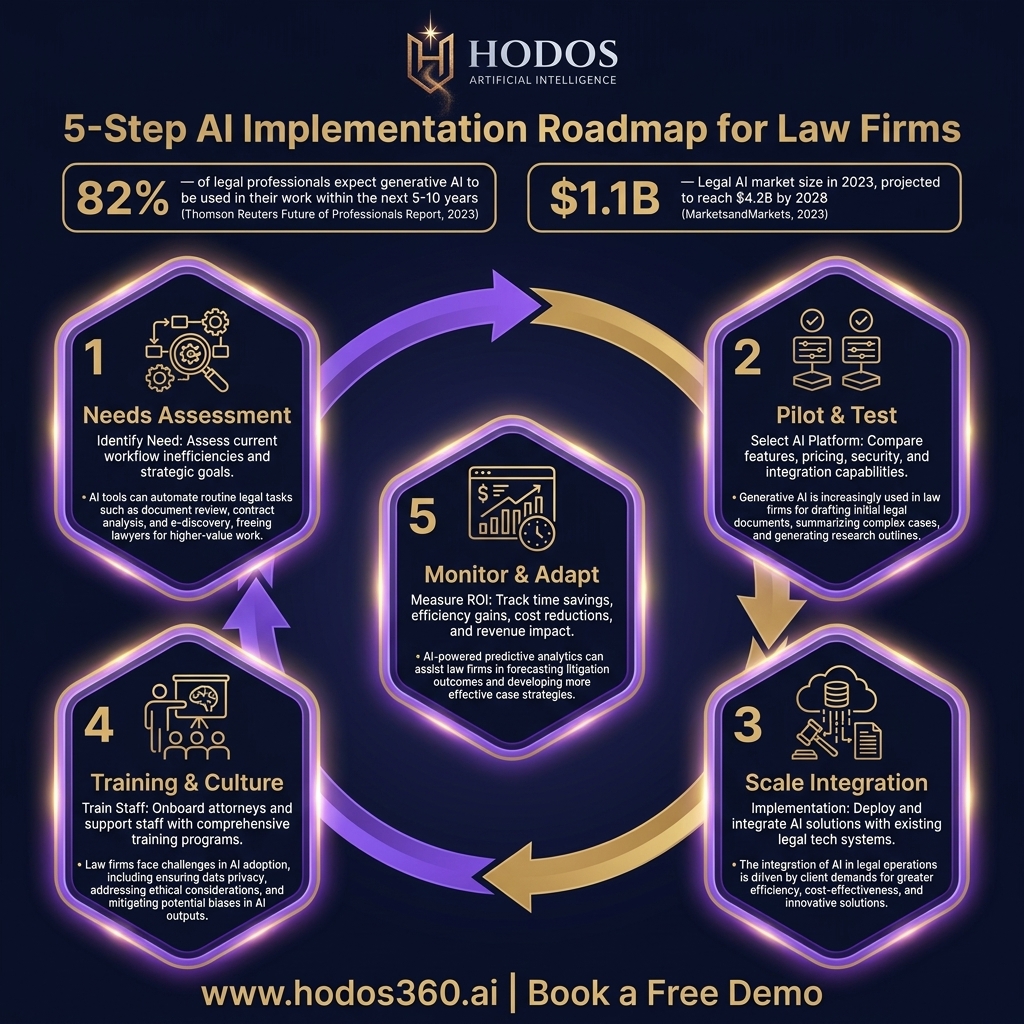
Successful AI implementation in law firms is not a single event but a strategic, phased journey. Rushing into widespread adoption without a clear roadmap can lead to wasted resources and disillusionment. A structured approach ensures that firms can integrate AI tools effectively, maximize ROI, and minimize disruption to their existing operations.
This process begins with a thorough internal assessment, identifying specific pain points and areas where AI can deliver the most significant impact, whether it's automating document generation, enhancing client intake, or optimizing case management. Firms should analyze their current workflows, data infrastructure, and workforce capabilities to determine readiness for AI integration.
This initial audit creates a baseline for measuring future success and helps prioritize which AI solutions will yield the greatest benefits.
The next crucial phase involves piloting specific AI solutions in controlled environments. Instead of a firm-wide rollout, select a small team or a particular practice group to test a new AI tool.
This allows for real-world evaluation of the technology's effectiveness, identification of unforeseen challenges, and collection of valuable user feedback. For example, a corporate law department might pilot an AI contract review tool on a batch of routine agreements to assess its accuracy and speed. This iterative process of testing, learning, and refining is essential for fine-tuning the AI's application to the firm's unique needs.
It also helps build internal champions who can advocate for broader adoption based on their positive experiences. Learn more about Low-Code No-Code AI: Transformative Tools for Law Firms. This measured approach minimizes risk and builds confidence among staff, paving the way for wider integration.
Scaling AI integration across the entire firm requires careful planning and robust infrastructure.
This involves ensuring seamless compatibility between new AI tools and existing practice management systems, document management systems, and communication platforms. Data migration and integration strategies are critical to avoid data silos and ensure that AI has access to the information it needs to function optimally.
Furthermore, comprehensive training programs are indispensable. These programs should not only cover the technical aspects of using the AI tools but also address the strategic implications, ethical guidelines, and best practices for human-AI collaboration. Continuous monitoring and evaluation are also vital to track performance, measure ROI, and make necessary adjustments.
Firms must establish metrics for success, such as reduced administrative time, improved accuracy rates, or enhanced client satisfaction, to justify ongoing investment and demonstrate the value of AI.
Ultimately, a phased approach to AI implementation fosters a culture of innovation and adaptability. It allows firms to learn from each stage, mitigate risks, and progressively build a robust AI-powered legal ecosystem.
This methodical strategy ensures that AI becomes a powerful enabler, enhancing legal service delivery, improving operational efficiency, and positioning the firm for long-term success in a rapidly evolving legal landscape. It moves beyond the initial hype around artificial intelligence news and focuses on sustainable, practical integration.
Selecting the Right AI Tools
- ✓Identify Core Needs: Pinpoint specific pain points (e.g., document review, client intake, billing) where AI can offer immediate relief and measurable improvement.
- ✓Evaluate Vendor Reputation & Security: Research potential vendors thoroughly, focusing on their track record, data security protocols (e.g., encryption, compliance with legal privacy standards), and customer support. Look for transparent policies.
- ✓Assess Integration Capabilities: Ensure the AI solution can seamlessly integrate with your existing legal tech stack, such as practice management software or document management systems, to avoid data silos and workflow disruptions.
- ✓Prioritize User Experience: Opt for intuitive, user-friendly interfaces that minimize the learning curve for your legal team, maximizing adoption rates and efficiency.
- ✓Consider Scalability & Future-Proofing: Choose solutions that can grow with your firm, handling increasing data volumes and evolving legal demands, while also offering updates and new features.
- ✓Review ROI & Cost-Effectiveness: Conduct a thorough cost-benefit analysis, considering not just the subscription fees but also potential savings in time and resources, and the value of improved service quality.
- ✓Seek Pilot Programs & Demos: Leverage free trials, pilot programs, or comprehensive demos to test the tool's efficacy in your firm's specific context before making a long-term commitment. This is where a comprehensive platform like HODOS 360, with its integrated AI Law Firm Management System, can offer a unified solution for many of these needs.
Transforming Operations with AI-Powered Legal Tools
The true power of artificial intelligence lies in its capacity to fundamentally transform legal operations, moving beyond incremental improvements to create entirely new efficiencies and capabilities. From the moment a potential client first interacts with a firm to the final resolution of a complex case, AI can streamline, enhance, and optimize every touchpoint.
Consider client intake, traditionally a manual and often slow process. AI Voice Assistants can now provide 24/7 phone answering, qualify leads based on predefined criteria, and even book appointments directly into a firm's calendar, all with multilingual support. This not only improves client experience by offering immediate responses but also frees up valuable administrative staff to focus on more complex tasks, significantly enhancing the firm's capacity for new business.
Beyond initial client interactions, AI revolutionizes core legal workflows. Document automation, a cornerstone of efficiency, uses AI to generate contracts, briefs, and other legal documents with unprecedented speed and accuracy, reducing errors and ensuring consistency across all firm outputs. Case management systems, augmented with AI, can predict case durations, identify relevant legal precedents, and suggest optimal strategies based on vast datasets of past cases.
This predictive power allows lawyers to make more informed decisions, manage client expectations better, and allocate resources more effectively. For instance, a study by McKinsey & Company found that AI could automate up to 23% of lawyers' tasks, translating into significant time savings and allowing attorneys to dedicate more time to strategic thinking and client advocacy, rather than repetitive administrative burdens.
Marketing and business development also undergo a radical transformation with AI. Learn more about Voice AI Unleashed: Essential Innovation for Modern Law Firms. An AI Marketing Platform can analyze market trends, generate targeted content for social media and blogs, create AI-powered videos, and track ROI, providing firms with actionable insights to optimize their outreach.
This level of data-driven marketing was previously only accessible to large corporations, but AI democratizes these capabilities for law firms of all sizes. Furthermore, AI-powered website building and SEO optimization ensure that a firm's online presence is not only professional and responsive but also highly visible to potential clients.
As Jensen Huang, CEO of NVIDIA, often states regarding AI's impact across industries, "The more you automate, the more you can innovate." This rings true for legal firms embracing AI, as it allows them to move from reactive administrative tasks to proactive, strategic growth initiatives.
Ultimately, AI-powered tools empower legal professionals to deliver superior outcomes. By automating routine tasks, providing deeper insights, and enhancing client communication, AI enables lawyers to focus on the nuanced legal analysis and persuasive advocacy that truly define their profession. It's not about replacing human judgment but about augmenting it with unparalleled processing power and data analysis capabilities.
Firms that integrate these tools effectively will not only boost their internal efficiency but also elevate their service offerings, attracting and retaining clients in an increasingly competitive market. This synergy between human expertise and artificial intelligence is the cornerstone of the modern, forward-thinking legal practice.
The Synergy of AI and Human Expertise
The most effective AI implementation strategies recognize that artificial intelligence is a powerful co-pilot, not a replacement for human legal expertise. The nuanced interpretation of laws, the empathetic understanding of client needs, and the persuasive art of advocacy remain uniquely human domains. AI excels at pattern recognition, data processing, and automation of repetitive tasks, freeing lawyers to dedicate their invaluable time to strategic thinking, complex problem-solving, and client relationship building.
For example, while generative AI can draft a preliminary contract, a skilled attorney is indispensable for ensuring it aligns with specific client objectives, anticipates unforeseen legal challenges, and complies with evolving regulatory frameworks like the Federal Rules of Civil Procedure concerning e-discovery protocols. Learn more about AI Voice Assistants: Essential for Modern Law Firms.
This collaborative model, where AI handles the heavy lifting of data and initial drafting, allows legal professionals to elevate their practice, focusing on the intricate legal arguments and human-centric aspects that truly differentiate their services. It is this synergy that unlocks the full potential of AI in law firms, transforming them into more agile, efficient, and client-focused entities.

Key Takeaways and Next Steps
The integration of artificial intelligence into law firms is no longer a futuristic concept but a present-day necessity. From streamlining operations to enhancing client engagement and competitive advantage, AI offers unparalleled opportunities for transformation. Firms that proactively embrace this technology, guided by a strategic and ethical framework, are better positioned to thrive in the evolving legal landscape.
The key lies in understanding that AI is a tool designed to augment human capabilities, allowing lawyers to focus on the high-value, strategic work that truly impacts clients and shapes legal outcomes. This involves a commitment to continuous learning, careful selection of AI partners, and a phased approach to implementation that prioritizes both efficiency and ethical responsibility.
The firms that champion this evolution will not only secure their own future but also redefine the standards of legal excellence.
For law firms ready to embark on this transformative journey, the next step is clear: assess your current needs, explore the vast array of AI solutions available, and commit to a strategic implementation plan.
Platforms like HODOS 360 offer an integrated suite of AI-powered services—from comprehensive law firm management and AI marketing to intelligent voice assistants and web development—designed to support every aspect of your firm's AI adoption. By strategically leveraging these tools, you can ensure your practice remains at the forefront of legal innovation, delivering exceptional service and sustained growth.
The future of legal practice is intelligent, efficient, and deeply human, empowered by the judicious application of AI.
Frequently Asked Questions
What are the primary benefits of AI implementation for law firms?+
AI implementation offers significant benefits, including enhanced operational efficiency through automation of routine tasks like document review and case management. It improves accuracy in legal research, provides predictive analytics for litigation outcomes, and boosts client engagement with 24/7 AI voice assistants. Ultimately, AI frees lawyers to focus on complex legal strategy and client relationships, leading to better outcomes and increased profitability for the firm.
How can law firms overcome initial resistance to AI adoption?+
Overcoming resistance requires a multi-pronged approach. Firm leadership must champion AI, demonstrating its value through pilot programs in low-risk areas. Comprehensive training that focuses on AI as an augmentative tool, not a replacement, is crucial. Fostering an open culture that encourages feedback and addresses concerns transparently can build trust and enthusiasm, turning skeptics into advocates for broader AI integration.
What ethical considerations should law firms prioritize when using AI?+
Ethical considerations are paramount. Firms must prioritize data privacy and security, ensuring AI systems comply with regulations like GDPR and the EU AI Act. Addressing algorithmic bias is crucial to maintain fairness and avoid discriminatory outcomes. Lawyers must retain ultimate oversight and responsibility for AI-generated work, adhering to ABA Model Rules of Professional Conduct, particularly regarding competence and client confidentiality.
How does AI impact client intake and marketing for law firms?+
AI significantly enhances client intake and marketing. AI Voice Assistants can handle initial inquiries, qualify leads, and schedule appointments around the clock, improving client responsiveness. AI Marketing Platforms automate content generation, social media management, and provide data analytics for targeted campaigns, optimizing lead generation and client acquisition strategies. This leads to a more efficient and personalized client journey.
What is the expected ROI for law firms investing in AI?+
While ROI varies, law firms investing in AI typically see returns through reduced operational costs, increased billable hours due to automation, and improved service quality leading to higher client retention and acquisition. Early adopters report significant time savings in document review and research, translating directly into financial benefits. Strategic AI implementation contributes to long-term growth and a stronger competitive position in the legal market.