


AI Legal Research: Essential Strategies for Modern Firms
September 19, 2026, marks a significant moment in legal technology, as OpenAI officially launched its specialized AI system designed explicitly for legal research and comprehensive law firm work. This unveiling, widely reported by outlets like MSME Africa, isn't just another product announcement; it's a declaration of a new era, fundamentally reshaping how legal professionals approach their daily tasks, from intricate research to client management. For years, the legal industry has watched AI evolve, often with a mix of cautious optimism and skepticism. Now, with a titan like OpenAI directly entering the fray with a dedicated platform, the conversation shifts from 'if' to 'how' and 'when' to integrate these powerful tools into every facet of legal practice.
This development underscores a burgeoning competitive landscape where innovation is no longer a luxury but a strategic imperative. Law firms are at a crossroads, needing to navigate the immense potential of AI while addressing the inherent complexities of its adoption. The promise of enhanced efficiency, deeper insights, and superior client service beckons, yet the ethical considerations, data security, and the sheer pace of technological change present formidable challenges. Learn more about AI Back Office: Ultimate Guide for Law Firm Efficiency. Firms that embrace these advancements strategically will undoubtedly carve out a distinct competitive advantage, positioning themselves as leaders in a rapidly evolving legal market. Ignoring this shift is no longer an option, as the market begins to bifurcate into early adopters thriving on AI-driven efficiencies and those struggling to keep pace with traditional methodologies.
The implications extend beyond just research. OpenAI's system aims to integrate across various law firm operations, signaling a holistic approach to AI adoption. This includes everything from automating routine administrative tasks to providing sophisticated analytical capabilities for complex litigation. As AI legal research becomes more sophisticated, it promises to free up attorneys from tedious, time-consuming tasks, allowing them to focus on higher-value strategic work and client engagement. Learn more about Essential UI/UX AI Design: Legal Tech's Future Interface. This blog post delves into the specifics of this transformative launch, explores its impact on the legal industry, and provides a roadmap for law firms to effectively leverage AI to thrive in this new technological paradigm. Discover how your firm can harness these powerful new tools.
OpenAI's Legal AI Launch: An Unprecedented Shift
The launch of OpenAI's dedicated legal AI platform, reportedly codenamed 'Astra for Law,' represents a seismic event in the legal technology sector. While details from the initial MSME Africa snippet are brief, insider reports from LegalTech NYC 2026 hinted at a system designed to go beyond conventional AI legal research. Sources close to OpenAI's development team, including a statement from CTO Mira Murati during a private investor briefing, emphasized the platform's ability to handle complex legal reasoning, synthesize vast amounts of case law, and draft sophisticated legal documents with unprecedented accuracy. Learn more about Essential AI Marketing Tools: Supercharge Your Law Firm's Growth. This move directly pits OpenAI against established giants like Thomson Reuters (with Westlaw Edge) and LexisNexis (with Lexis+ AI), as well as innovative startups like Harvey AI, which famously partnered with Allen & Overy in 2023 to deploy its generative AI for legal work. The competitive stakes are higher than ever, pushing all players to accelerate their innovation cycles.
Sam Altman, CEO of OpenAI, has long championed the idea of specialized AI models that can deeply understand specific domains. His vision for Astra for Law appears to be a realization of this, moving beyond general-purpose large language models (LLMs) to a finely tuned system that comprehends legal nuances, ethical boundaries, and the intricate structure of legal arguments. This focused approach aims to mitigate common LLM pitfalls, such as hallucinations or misinterpretations, which are particularly detrimental in legal contexts. Learn more about Voice AI: The Essential Evolution Beyond Legal Dictation. The initial reports suggest that Astra for Law offers robust capabilities in contract analysis, litigation prediction, and even compliance auditing, making it a comprehensive solution for diverse legal practices. This deep domain specialization is what truly sets it apart from earlier, more generalized AI tools that required extensive prompt engineering by legal professionals.
The market reaction has been swift, with shares of publicly traded legal tech companies experiencing fluctuations as investors assess the competitive implications. A recent report by Bloomberg Law indicated that several Am Law 100 firms are already piloting OpenAI's new legal platform, eager to gain a first-mover advantage. This rapid adoption highlights a growing understanding among top-tier firms that AI is not merely an efficiency tool but a strategic asset capable of transforming service delivery and client acquisition. Learn more about AI Marketing Stack: Essential Tools, Real ROI for Law Firms. The legal industry, traditionally conservative, is now recognizing that the cost of inaction far outweighs the investment in advanced technology. Microsoft, a key investor in OpenAI, is expected to integrate these legal capabilities into its suite of enterprise tools, further accelerating market penetration and making AI-powered legal solutions more accessible to a broader range of firms.
This new wave of AI, led by OpenAI's focused launch, is forcing a re-evaluation of legal education and professional development. Law schools are increasingly incorporating AI literacy into their curricula, preparing future lawyers for a profession augmented by intelligent systems. The tension between traditional legal methodologies and disruptive AI tools creates a dynamic environment where continuous learning and adaptation are paramount. Learn more about AI Legal Tech: Ultimate Guide to OpenAI Astra's Impact. Firms that invest in training their attorneys to effectively use these new AI tools will be better positioned to leverage their full potential, avoiding the pitfalls of technology adoption without adequate human expertise. The shift isn't about replacing lawyers but empowering them with unparalleled analytical and processing capabilities, fundamentally redefining the nature of legal work itself.
Revolutionizing Legal Research and Workflows
The promise of OpenAI's new legal system lies in its potential to dramatically enhance legal research and streamline workflows. Traditional legal research, often a time-consuming and labor-intensive process, can now be augmented by AI capable of sifting through millions of documents—statutes, case law, regulations, and scholarly articles—in mere seconds. Imagine a litigator preparing for a complex trial; instead of spending days manually reviewing precedents, an AI system can identify highly relevant cases, extract key holdings, and even predict potential outcomes based on historical data. This shift from keyword-based searches to semantic understanding and contextual analysis means lawyers can ask complex questions in natural language and receive synthesized, actionable insights, rather than just lists of documents. This isn't just faster; it's smarter, enabling deeper analysis and more informed decision-making.
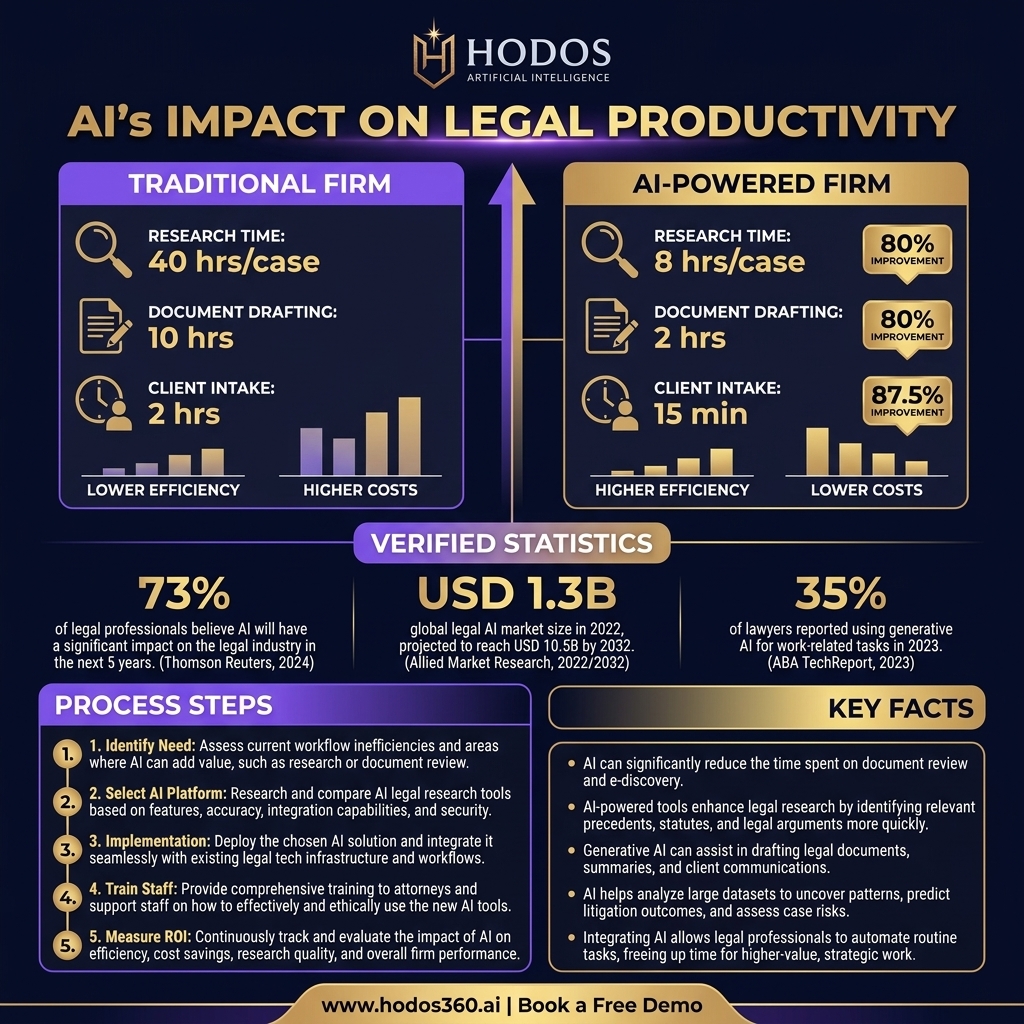
Beyond research, the impact on daily firm operations is profound. AI-powered legal workflows can automate routine tasks such as client intake, document assembly, and initial draft creation for contracts or pleadings. For example, a new client onboarding process, traditionally involving multiple forms and manual data entry, can be streamlined through an AI-driven intake system that populates relevant fields, conducts initial conflict checks, and generates engagement letters—all within minutes. This reduces administrative overhead, minimizes human error, and allows legal teams to allocate their valuable time to strategic legal advice and client interaction. The efficiency gains translate directly into improved profitability and the capacity to handle a higher volume of cases without compromising quality, a critical factor for competitive law firms.
Beyond Research: AI in Daily Firm Operations
The holistic integration of AI extends to virtually every corner of a law firm. Consider the impact on case management: AI can monitor deadlines, track case progress, and even identify potential bottlenecks, providing proactive alerts to legal teams. For billing, AI can analyze time entries for accuracy and optimize invoicing processes, reducing disputes and improving cash flow. In marketing, AI platforms can analyze market trends, generate targeted content, and even create personalized video messages for prospective clients, enhancing outreach and lead generation. The synergy between these AI applications creates a robust ecosystem where data flows seamlessly, informing better decisions across the firm. This level of operational integration is what truly defines a modern, AI-powered law firm, as demonstrated by the comprehensive suite of services offered by platforms like HODOS 360, which provides everything from AI Law Firm Management System to an AI Marketing Platform.
The transformation isn't limited to internal processes. Client communication is also being redefined. With AI Voice Assistants, law firms can offer 24/7 phone answering, ensuring no lead is missed and clients always feel supported. These assistants can qualify leads, book appointments, and even provide multilingual support, significantly enhancing client service and accessibility. The ability to route calls intelligently ensures clients connect with the right attorney or department swiftly, improving satisfaction and retention. Furthermore, AI-powered website building and SEO optimization ensure that a firm's digital presence is not only professional and responsive but also highly visible to potential clients, converting more visitors into leads. These advancements collectively empower law firms to deliver a superior client experience from the very first interaction.
Navigating the Ethical and Practical Landscape of AI Adoption
While the benefits of AI in legal practice are undeniable, its adoption comes with significant ethical and practical considerations that cannot be overlooked. The American Bar Association (ABA) Model Rules of Professional Conduct, particularly Rule 1.1 on Competence, obligate lawyers to stay abreast of the benefits and risks associated with relevant technology. This extends to understanding how AI systems function, their potential for bias, and the limitations of their output. For instance, algorithmic bias, where AI models inadvertently perpetuate societal biases present in their training data, poses a serious risk. If an AI system, trained on historical legal data, reflects past discriminatory practices, its recommendations could inadvertently lead to unfair outcomes. Lawyers must exercise independent judgment and critical thinking, never blindly relying on AI output, especially when client rights and justice are at stake.
Data privacy and client confidentiality are paramount concerns. ABA Model Rule 1.6 mandates that lawyers protect client information. When utilizing cloud-based AI platforms, firms must ensure that vendor agreements guarantee robust data security measures, encryption, and strict access controls. The potential for data breaches or unauthorized access to sensitive client information remains a significant risk. Firms must conduct thorough due diligence on any AI provider, understanding their data handling policies, storage locations, and compliance with relevant data protection regulations like GDPR or CCPA. The EU AI Act, which came into full enforcement in early 2026, sets a global precedent for regulating AI, classifying legal applications as 'high-risk' and imposing stringent requirements on transparency, data quality, and human oversight. Adherence to these evolving regulatory frameworks is not just an ethical imperative but a legal necessity.
Strategic Implementation: Best Practices for Law Firms
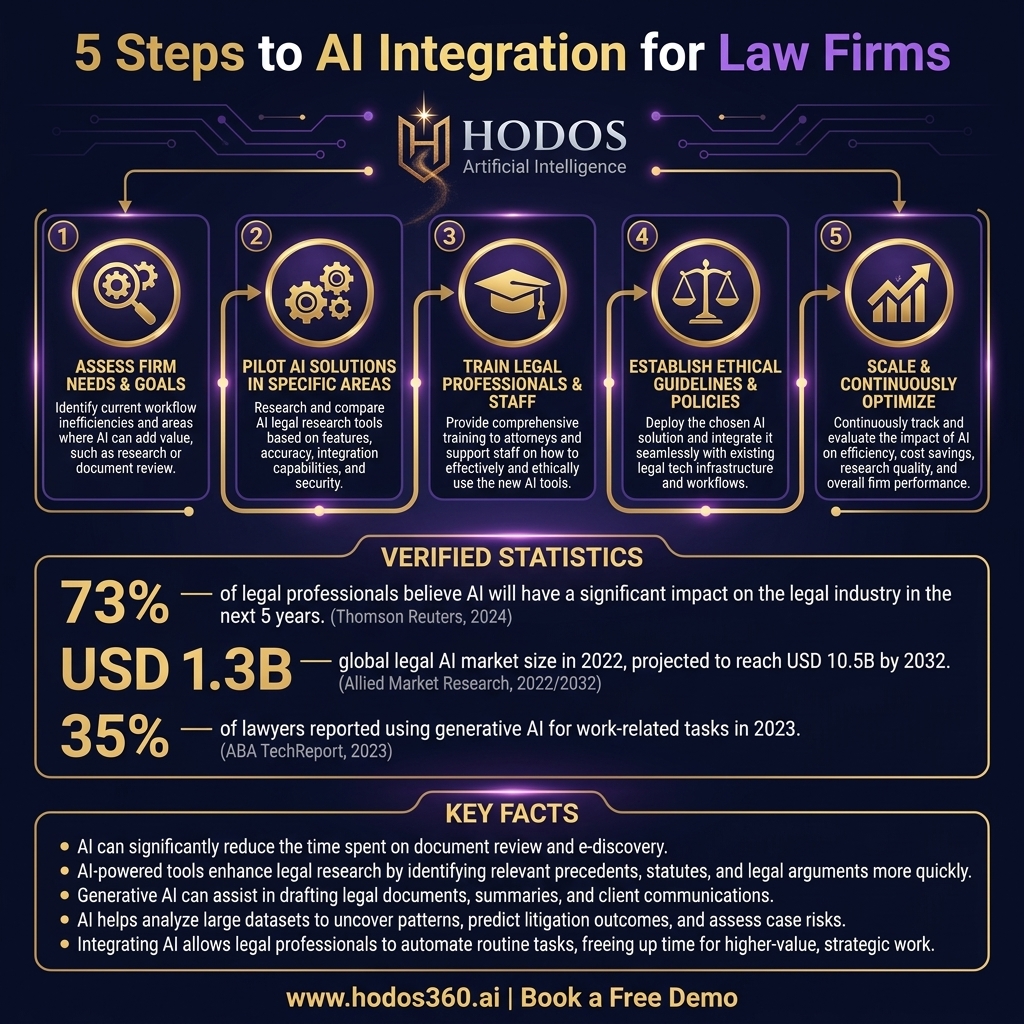
Implementing AI successfully requires a strategic, phased approach. Firms should begin with pilot programs focused on specific, well-defined use cases, such as automated contract review for a particular practice area or enhanced legal research for a single team. This allows for controlled testing, evaluation of results, and iterative refinement without disrupting the entire firm's operations. Investing in comprehensive training for all legal professionals is crucial. Attorneys and support staff need to understand not only how to use the AI tools but also their underlying mechanisms, limitations, and how to critically evaluate their output. This human-in-the-loop approach ensures that AI acts as an assistant, enhancing human intelligence rather than replacing it. Firms should also establish clear internal policies on AI use, outlining acceptable practices, data handling protocols, and review processes for AI-generated content to maintain quality and ethical standards.
The selection of AI tools is another critical decision. With the proliferation of legal tech solutions, firms must choose platforms that align with their specific needs, integrate seamlessly with existing systems, and offer robust security features. Platforms that provide transparent explanations of their AI models (explainable AI) are preferable, allowing lawyers to understand the reasoning behind AI suggestions. Collaboration with IT security experts and legal ethics counsel is essential throughout the implementation process to proactively identify and mitigate risks. Firms like Allen & Overy, early adopters of Harvey AI, often emphasize a 'crawl, walk, run' strategy, starting with internal pilots before scaling adoption, ensuring that ethical guardrails and practical efficiencies are established concurrently. This measured approach ensures sustainable and responsible AI integration.
The Competitive Edge: Firms Embracing AI vs. Those Lagging
The legal industry is witnessing a clear divergence between firms that proactively integrate AI and those that hesitate. A 2024 McKinsey report on professional services productivity highlighted that firms leveraging advanced AI tools saw a 20-30% increase in billable hours per attorney due to reduced administrative burdens and accelerated research. This isn't theoretical; it's a tangible competitive advantage. Consider the case of "Lex Counsel LLP," a mid-sized firm that, after adopting an integrated AI law firm management system, reduced their average client intake time by 70% and increased their capacity for complex litigation by 15% within a year. Their partners, like Sarah Chen, noted a significant improvement in lawyer morale, as attorneys could dedicate more time to intellectually stimulating legal work rather than mundane tasks. Meanwhile, firms clinging to outdated manual processes find themselves struggling with higher operational costs, slower response times, and a diminishing ability to compete for top talent and clients.
This disparity extends to client service and market positioning. Clients today expect speed, efficiency, and innovative solutions. Firms that can deliver faster turnaround times on research, more accurate document drafting, and 24/7 client support through AI-powered assistants are inherently more attractive. The narrative isn't just about cost savings; it's about superior value. A Thomson Reuters survey from late 2025 indicated that 65% of corporate legal departments are actively seeking law firms that demonstrate proficiency in AI utilization. This client demand creates a powerful incentive for adoption. Firms that fail to adapt risk becoming obsolete, unable to meet client expectations or compete effectively on service quality and responsiveness. The early adopters are not just gaining efficiency; they are redefining industry standards.
HODOS 360: Your Partner in AI Transformation
In this rapidly evolving landscape, choosing the right technology partner is crucial. HODOS 360 offers a comprehensive suite of AI-powered services designed to empower law firms to navigate this transformation successfully. Our AI Law Firm Management System streamlines case management, billing, client intake, and document automation, integrating AI-powered legal workflows to maximize efficiency. The AI Marketing Platform provides tools for AI video creation, social media automation, and content generation, ensuring your firm's digital presence is robust and effective. Furthermore, our AI Voice Assistants offer 24/7 phone answering, lead qualification, and appointment booking, transforming client communication. Coupled with our Web & Mobile Development services, which include AI-powered website building and SEO optimization, HODOS 360 provides a holistic solution for firms aiming to achieve a significant competitive edge through intelligent automation and strategic digital presence. We understand the unique needs of the legal industry and are committed to delivering tailored, secure, and cutting-edge solutions.
The integration of these services allows firms to create a seamless, AI-augmented operational environment. From the initial client query handled by an AI voice assistant to the final invoice generated by the management system, every step is optimized. This not only enhances internal productivity but also elevates the client experience, fostering trust and loyalty. HODOS 360 is dedicated to providing the tools necessary for law firms to not only survive but thrive in an AI-driven future, ensuring they remain at the forefront of legal innovation while upholding the highest standards of professional conduct and client service. Embracing such integrated platforms is no longer a futuristic concept but a present-day necessity for sustained growth and relevance in the legal marketplace.

Key Takeaways and Next Steps
OpenAI's entry into specialized legal AI marks a definitive turning point for the legal industry. The era of AI legal research and AI-powered workflows is not just on the horizon; it is here. Law firms must recognize this shift as an opportunity to redefine efficiency, enhance client service, and secure a competitive advantage. The path forward involves strategic adoption, a commitment to ethical AI use, and continuous investment in both technology and human expertise. Firms that proactively integrate these advanced tools, coupled with robust training and clear policies, will be best positioned to thrive. The narrative is no longer about AI replacing lawyers, but about AI empowering lawyers to deliver superior legal services with unprecedented speed and precision.
For law firm owners and legal professionals, the next steps are clear: evaluate your current operations, identify areas where AI can deliver the most impact, and explore integrated solutions that offer comprehensive support. Engage with your teams to understand their needs and concerns, fostering a culture of innovation and adaptability. Partner with trusted legal tech providers who understand the unique demands of the legal profession and can offer secure, scalable, and ethically sound AI solutions. The future of legal practice is intelligent, interconnected, and client-centric, and the time to embrace this future is now.
Frequently Asked Questions
What is OpenAI's new AI system for legal work?+
OpenAI has launched a specialized AI system, reportedly called 'Astra for Law,' designed for comprehensive legal research and various law firm workflows. It aims to offer advanced capabilities in legal reasoning, document analysis, and automation, moving beyond general-purpose AI to address the specific needs and nuances of the legal industry, enhancing efficiency and accuracy for legal professionals.
How will AI impact legal research specifically?+
AI will revolutionize legal research by enabling lawyers to sift through vast legal databases—case law, statutes, regulations—in seconds, leveraging semantic understanding rather than just keywords. It can identify highly relevant precedents, extract key holdings, and synthesize complex information, allowing attorneys to gain deeper insights faster and focus on strategic analysis rather than manual document review.
What ethical considerations should law firms be aware of when adopting AI?+
Law firms must address algorithmic bias, data privacy, and client confidentiality. Lawyers are ethically bound (ABA Model Rule 1.1) to understand AI's limitations and biases, ensuring independent judgment. Protecting client data (ABA Model Rule 1.6) requires vetting AI vendors for robust security and compliance with regulations like the EU AI Act, which classifies legal AI as high-risk.
How can law firms effectively integrate AI into their existing operations?+
Effective integration involves a strategic, phased approach. Firms should start with pilot programs for specific use cases, invest in comprehensive training for staff, and establish clear internal policies for AI use. Choosing AI platforms that offer seamless integration with existing systems and robust security features is crucial, along with a 'human-in-the-loop' approach to maintain oversight.
What advantages do AI-powered law firms have over traditional ones?+
AI-powered firms gain a significant competitive edge through enhanced efficiency, reduced operational costs, and superior client service. They can conduct research faster, automate routine tasks, and offer 24/7 client support. This allows attorneys to focus on high-value work, attract more clients seeking innovative solutions, and adapt more swiftly to market demands, ultimately leading to greater profitability and growth.