

AI Marketing Automation: Essential Skills for Legal Growth
The legal profession, often perceived as a bastion of tradition, is currently experiencing a seismic shift in how it approaches client acquisition and firm management. Just last year, at LegalTech NYC 2026, Sarah Chen, Managing Partner at Veritas Legal, shared a candid anecdote that resonated deeply with the audience.
Her firm, like many others, had been grappling with stagnant lead generation and escalating marketing costs, pouring resources into conventional advertising with diminishing returns. Chen described the turning point: witnessing a smaller, agile competitor, 'LexInnovate,' rapidly scale its client base by nearly 30% in a single quarter, attributing its success almost entirely to a sophisticated, AI-driven marketing strategy.
This wasn't merely about automating email blasts; it was about a complete paradigm shift, leveraging artificial intelligence to understand client needs with unprecedented precision, personalize outreach at scale, and optimize every facet of their marketing funnel. The MarTech article, "AI skills: The next layer of marketing automation," aptly captures this evolving landscape, emphasizing that the future of marketing, especially in specialized sectors like law, hinges on mastering these advanced AI capabilities.
This dramatic transformation isn't an isolated incident but a clear indicator of a broader trend. Firms like Allen & Overy, known for their early adoption of legal AI tools, have been publicly investing in advanced technologies, including AI for client engagement and business development, for years.
Their partnership with platforms like Harvey AI underscores a commitment to integrating AI into core operations, not just as a back-office efficiency tool but as a front-facing engine for growth. The challenge for many law firms now is not *if* they should adopt AI in marketing, but *how* to do so effectively, building the internal skills and infrastructure to compete in this new era.
The competitive pressure is palpable: firms that fail to embrace this next layer of marketing automation risk being outmaneuvered by those who strategically leverage AI to identify, engage, and convert clients more efficiently and effectively. This shift demands a proactive approach, moving beyond basic digital presence to sophisticated, data-driven AI strategies that redefine legal business growth.
The Emergence of AI Marketing Automation in Legal Practice
The legal sector's journey into advanced marketing automation is fundamentally reshaping how law firms attract and retain clients. Historically, legal marketing relied heavily on networking, referrals, and traditional advertising—methods that are effective but often lack scalability, precise targeting, and measurable ROI in today's digital-first world.
The advent of AI has provided a powerful antidote to these limitations, offering tools that can analyze vast datasets of client behavior, market trends, and competitive intelligence to craft highly effective, personalized campaigns. According to the 2023 ABA TechReport, while general AI adoption in law firms hovered around 15%, the specific application of AI in marketing and business development saw a significant uptick, with firms reporting improved lead quality and conversion rates.
This isn't just about efficiency; it's about strategic advantage, allowing firms to identify high-value prospects, understand their legal needs even before they articulate them, and engage them with tailored content that resonates deeply.
The competitive landscape for legal services is fiercer than ever. Mid-sized firms, in particular, are finding themselves squeezed between large, established players with deep pockets and nimble, tech-savvy startups.
Learn more about AI Web Development: The Ultimate Advantage for Law Firms. This tension creates a compelling narrative of disruption versus tradition. Firms that have hesitated to invest in AI are now scrambling to catch up, recognizing that the cost of inaction far outweighs the investment in innovation.
For instance, a recent report by the Thomson Reuters Institute indicated that firms prioritizing innovation, including AI adoption, consistently outperformed their peers in revenue growth and client satisfaction. This data underscores the urgent need for law firms to not only understand but actively implement AI marketing automation strategies.
It's no longer a futuristic concept but a present-day imperative for sustained business growth and market relevance in a rapidly evolving legal ecosystem.
Ready to transform your firm's marketing? Explore HODOS 360's AI Marketing Platform today and gain a competitive edge.
Essential AI Skills for Legal Marketers and Law Firms
As AI marketing automation becomes indispensable, the focus shifts to the critical skills legal professionals and their marketing teams must cultivate. It's no longer enough to simply understand traditional marketing principles; a new layer of expertise is required to effectively leverage AI. One paramount skill is prompt engineering, the ability to craft precise and effective instructions for generative AI tools to produce high-quality legal content, marketing copy, and social media posts.
This skill, championed by AI pioneers like Sam Altman of OpenAI, is fundamental to unlocking the full potential of large language models for content generation. Without it, AI tools might produce generic or even inaccurate outputs, undermining a firm's brand and credibility. Firms must invest in training their marketing teams to master this nuanced art, ensuring that AI-generated content aligns perfectly with their brand voice, legal accuracy standards, and target audience needs.
Beyond prompt engineering, data interpretation and analytics are crucial. AI marketing platforms generate vast amounts of data on campaign performance, client engagement, and market trends. Learn more about AI Voice Revolution: Essential Legal Firm Automation. Legal marketers must possess the analytical skills to not just view dashboards but to derive actionable insights from this data.
This includes understanding metrics like lead conversion rates, client lifetime value, and marketing ROI, and using these insights to refine strategies continuously. David Lee, Head of Innovation at Sterling & Partners, recently highlighted at a legal tech summit the critical gap many firms face: collecting data versus truly understanding it.
He emphasized that "the real power of AI isn't just in automating tasks, but in providing the intelligence to make smarter, faster decisions." This ability to translate data into strategic adjustments is what differentiates truly effective AI marketing efforts from mere technological adoption. Furthermore, tool integration and workflow optimization are vital.
Marketers need to understand how to seamlessly integrate various AI tools—from CRMs with AI capabilities to social media automation platforms—into a cohesive workflow that maximizes efficiency and impact.
Mastering AI-Powered Content Generation and Social Media
The landscape of legal content creation and social media engagement has been dramatically transformed by AI. Law firms can now leverage AI to generate blog posts, articles, social media updates, and even video scripts at an unprecedented pace, maintaining consistency in brand voice and legal accuracy.
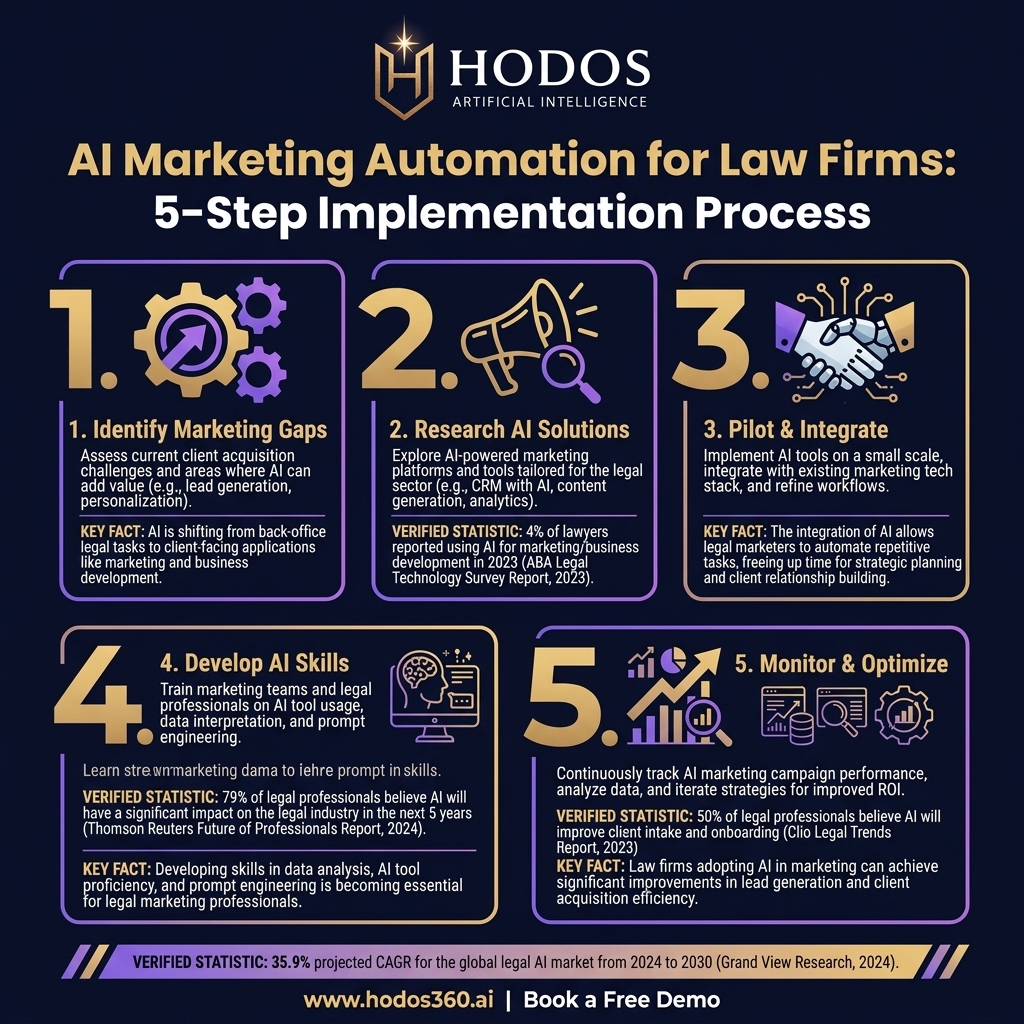
This frees up attorneys and marketing staff to focus on higher-value tasks, such as strategic planning and direct client engagement. For example, AI can analyze popular legal queries and trending topics to suggest relevant content ideas, ensuring that a firm's output is always timely and addresses the immediate concerns of potential clients.
Learn more about AI Website Builders: Ultimate Growth for Law Firms. Platforms are emerging that use AI to predict which types of content will perform best on specific social media channels, optimizing distribution for maximum reach and engagement. This capability is not about replacing human creativity but augmenting it, allowing legal marketers to produce a greater volume of high-quality, targeted content than ever before, thereby enhancing their firm's digital footprint and thought leadership.
The critical skill here is knowing how to guide the AI, edit its output for nuance and legal precision, and strategically deploy the content across various platforms to build a robust online presence.
Beyond Automation: AI Agents and Personalized Client Journeys
The evolution of AI in marketing extends far beyond simple automation; it's now moving into the realm of intelligent AI agents capable of managing complex, personalized client journeys. These AI agents, sometimes referred to as 'AI workers' or 'digital employees,' can handle a spectrum of tasks previously requiring human intervention, from 24/7 phone answering and initial lead qualification to appointment booking and even basic information dissemination.
Unlike static chatbots, these agents possess a degree of contextual understanding and learning capabilities, allowing them to adapt interactions based on client responses and historical data. This level of sophistication enables law firms to provide immediate, consistent, and highly personalized experiences, significantly improving client intake and satisfaction.
For example, an AI voice assistant can qualify a lead by asking pertinent questions, identify their specific legal need, and then route them to the most appropriate attorney, all while maintaining a professional and empathetic tone. This not only streamlines operations but also enhances the firm's reputation for responsiveness and client-centricity.
The deployment of AI agents creates a competitive advantage by enabling hyper-personalization at scale, a feat nearly impossible with traditional human-led processes. Imagine a potential client searching for 'family law attorney near me' at 2 AM. Learn more about AI Web Development: Ultimate Guide to Law Firm Lead Generation.
An AI voice assistant can immediately engage, understand their urgency, collect initial case details, and schedule a consultation for the morning, ensuring that no lead is lost due to after-hours availability. This capacity for continuous engagement ensures that law firms are always 'on,' capturing leads and building relationships around the clock.
Moreover, these agents can learn from every interaction, continually refining their scripts and responses to optimize the client experience further. This continuous learning loop, a hallmark of advanced AI, means that the system gets smarter over time, providing increasingly effective and nuanced client support. The human element shifts from rote task execution to strategic oversight, ensuring that the AI agents operate within ethical guidelines and provide the highest quality service.
Curious how AI agents can revolutionize your client interactions? Discover the HODOS 360 difference.
- ✓24/7 Availability: AI agents ensure no potential client inquiry goes unanswered, day or night, maximizing lead capture.
- ✓Instant Lead Qualification: Automatically assess the urgency and fit of new leads, filtering out unqualified inquiries and prioritizing high-value prospects.
- ✓Personalized Initial Engagement: Deliver tailored responses and information based on specific client needs and historical data, fostering a stronger initial connection.
- ✓Seamless Appointment Booking: AI can directly schedule consultations, integrating with firm calendars and sending automated reminders to reduce no-shows.
- ✓Multilingual Support: Break down language barriers, allowing firms to serve a broader, more diverse client base without additional staffing.
- ✓Efficient Call Routing: Direct clients to the most appropriate department or attorney based on their specific legal issue, improving first-contact resolution.
- ✓Reduced Administrative Burden: Free up legal staff from repetitive tasks, allowing them to focus on core legal work and complex client matters.
Measuring Success: Analytics, ROI, and Continuous Optimization
The true power of AI marketing automation lies not just in its ability to execute tasks, but in its unparalleled capacity for measurement and optimization. For law firms, understanding the return on investment (ROI) of marketing efforts has traditionally been a challenge, often relying on anecdotal evidence or broad assumptions.
AI platforms, however, transform this by providing granular, real-time analytics that track every touchpoint of the client journey. From initial website visits and content engagement to lead conversion and client retention, AI offers a comprehensive view of campaign performance. This data-driven approach allows firms to identify exactly which strategies are yielding the best results, where resources are being effectively utilized, and where adjustments are needed.
According to a recent McKinsey report on AI in professional services, companies leveraging AI for marketing analytics saw an average of 15-20% improvement in marketing efficiency and a significant boost in customer acquisition rates. This isn't just about 'busy work'; it's about making informed, strategic decisions that directly impact the firm's bottom line and long-term business growth.
Continuous optimization is a cornerstone of successful AI marketing. The data collected by these platforms isn't static; it fuels an ongoing cycle of analysis, adaptation, and improvement. Learn more about Legal AI ROI: Maximizing Law Firm Value in 2026. AI can perform A/B testing on different ad creatives, email subject lines, or website layouts at scale, quickly identifying the most effective variations.
It can also predict future trends and client behaviors, allowing firms to proactively adjust their strategies to capitalize on emerging opportunities or mitigate potential risks. This agility is a game-changer in the fast-paced legal market. For example, if data indicates a surge in demand for intellectual property services in a particular region, an AI marketing platform can automatically reallocate budget, create targeted campaigns, and distribute relevant content to capture that emerging market.
This dynamic responsiveness ensures that a law firm's marketing efforts are always aligned with current market conditions and client needs, maximizing efficiency and driving sustained growth. It moves marketing from a reactive cost center to a proactive, revenue-generating engine.
The Data Advantage: Converting Insights into Actionable Strategies
Converting raw data into actionable strategies is where AI truly shines for law firms. It's not enough to simply have data; the ability to interpret it and translate it into practical steps is critical for business growth. AI marketing platforms excel at identifying patterns and correlations that human analysts might miss, such as the subtle impact of specific content types on lead quality or the optimal time for outreach to a particular client segment.
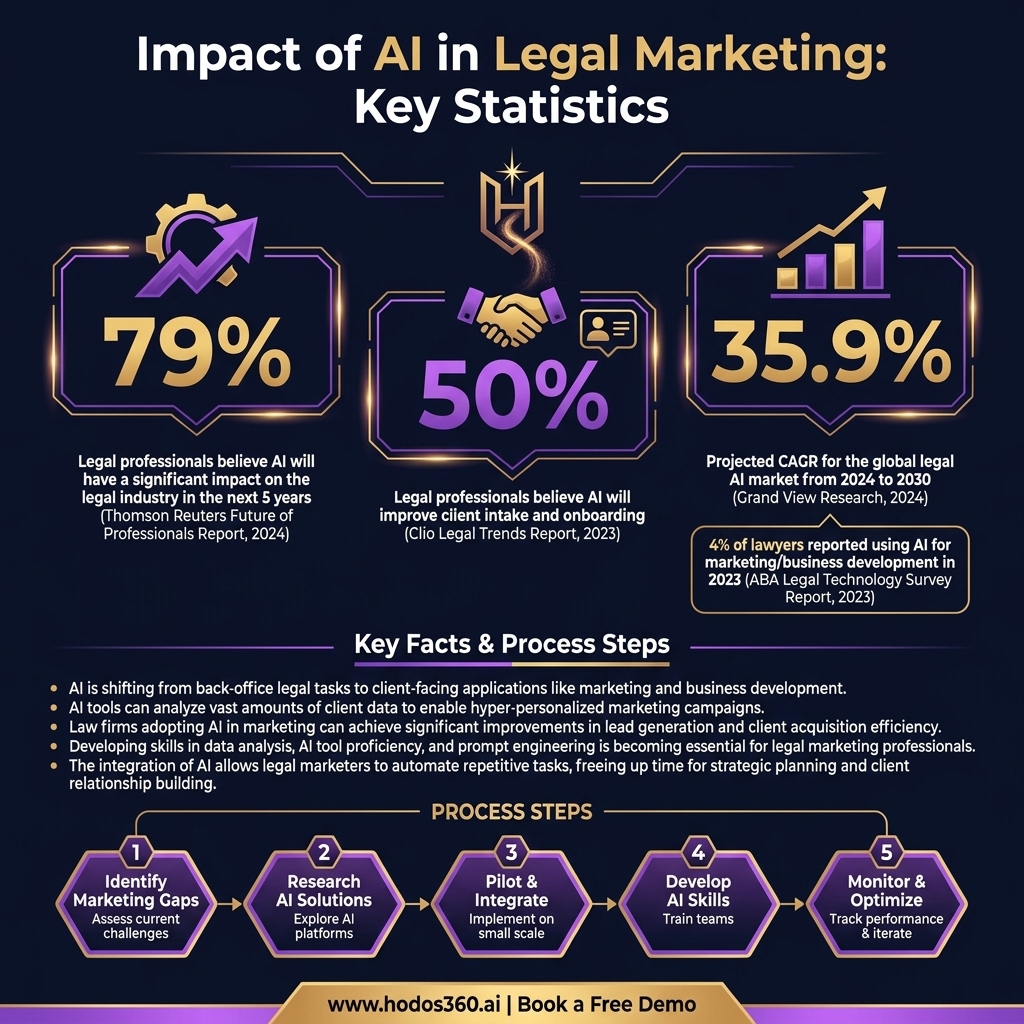
This deep insight allows firms to move beyond guesswork, implementing strategies backed by empirical evidence. Learn more about AI Marketing Transforms Legal Web: Webflow's Vidoso Acquisition 2026. For instance, if analytics show that webinars on 'Estate Planning for High-Net-Worth Individuals' consistently attract qualified leads, the firm can double down on producing similar content and promoting it through channels that have proven most effective.
This iterative process of data-driven refinement ensures that marketing spend is optimized, client acquisition costs are lowered, and the overall effectiveness of campaigns is continuously enhanced. The data advantage provided by AI allows law firms to build a predictable and scalable client acquisition machine, transforming their marketing from an expense into a strategic investment with clear, measurable returns.
Navigating Ethical Considerations and the Future of Legal Marketing
While the benefits of AI marketing automation are profound, law firms must also navigate the complex ethical landscape that accompanies these advanced technologies. The legal profession is bound by strict rules of professional conduct, particularly concerning advertising and client solicitation. ABA Model Rule 7.1, "Communications Concerning a Lawyer's Services," mandates that lawyers' communications must not be false or misleading.
This principle extends to AI-generated marketing content, requiring firms to ensure accuracy, transparency, and a clear understanding that the content originates from the firm, even if drafted by AI. The potential for algorithmic bias, where AI systems inadvertently perpetuate or amplify existing societal biases, is another critical concern.
For example, if an AI is trained on historical data that disproportionately favors certain demographics for legal services, it might inadvertently target or exclude specific groups in its marketing efforts. Firms must implement robust oversight mechanisms, regularly audit AI outputs, and ensure that their AI systems are developed and deployed with an explicit commitment to fairness and equity.
This proactive ethical engagement is not just about compliance; it's about maintaining public trust and upholding the integrity of the legal profession.
Furthermore, data privacy and security are paramount. The use of AI in marketing often involves collecting and processing vast amounts of client data, which must be handled in strict accordance with regulations like GDPR, CCPA, and evolving state privacy laws.
Law firms, as custodians of sensitive client information, have a heightened responsibility to protect this data from breaches and misuse. ABA Formal Opinion 498, addressing lawyers' use of technology and the internet, emphasizes the lawyer's duty of technological competence, which includes understanding the risks and benefits of technology used in practice.
This extends to AI marketing platforms, requiring firms to conduct due diligence on vendor security practices and ensure that client data is anonymized or de-identified where appropriate. The EU AI Act, expected to be fully enforced in the coming years, will further introduce stringent requirements for high-risk AI systems, which could include certain marketing applications.
Law firms engaging with AI must stay abreast of these legislative developments and proactively adapt their policies and practices to ensure full compliance and ethical deployment, safeguarding both client interests and their professional reputation.
Ensuring Ethical AI Deployment in Client Engagement
Ensuring ethical AI deployment in client engagement requires a multi-faceted approach. Firms must establish clear internal guidelines for the use of AI in marketing, including review processes for AI-generated content and strict protocols for data handling. Transparency with potential clients about the use of AI in initial interactions, such as disclosing that a voice assistant is AI-powered, can build trust and manage expectations.
Moreover, human oversight remains indispensable. While AI can automate many tasks, critical decisions and sensitive client communications should always involve a human attorney. This ensures that the nuanced ethical considerations inherent in legal practice are properly addressed and that clients receive the personalized, empathetic counsel they expect.
Law firms that proactively address these ethical challenges will not only comply with regulatory requirements but also strengthen their reputation as responsible and trustworthy providers of legal services in the AI era.

Key Takeaways and Next Steps
The imperative for law firms to embrace AI marketing automation is no longer debatable; it's a strategic necessity for survival and growth in a hyper-competitive legal market. The insights gleaned from the MarTech article and the experiences of pioneering firms underscore that mastering AI skills—from prompt engineering and data analytics to the ethical deployment of AI agents—is the next frontier for legal business development.
Firms that strategically integrate these technologies will not only streamline their operations and reduce costs but also cultivate deeper client relationships through hyper-personalized engagement and superior responsiveness. The future belongs to those who view AI not as a threat, but as a powerful co-pilot in their journey to attract and serve clients more effectively.
Empower your law firm with the next generation of marketing. Schedule a personalized demo of HODOS 360's AI Marketing Platform to see how our comprehensive AI-powered services can revolutionize your client acquisition and firm management, driving unparalleled growth and efficiency.
Frequently Asked Questions
What is AI marketing automation for law firms?+
AI marketing automation for law firms involves using artificial intelligence technologies to streamline, personalize, and optimize various marketing tasks. This includes AI-powered content creation, social media management, lead qualification, client intake, and data analytics to improve campaign effectiveness and client acquisition, ultimately driving business growth for legal practices.
How does AI help law firms acquire new clients?+
AI helps law firms acquire new clients by enabling hyper-targeted campaigns, personalizing communication, and optimizing lead generation. It analyzes vast datasets to identify ideal client profiles, predicts legal needs, automates initial client interactions (e.g., via AI voice assistants), and ensures 24/7 responsiveness, significantly enhancing the efficiency and effectiveness of client acquisition efforts.
What essential AI skills do legal marketers need today?+
Legal marketers today need essential AI skills such as prompt engineering for effective content generation, data interpretation for actionable insights from AI analytics, and the ability to integrate and optimize various AI marketing tools. Ethical considerations, including understanding algorithmic bias and data privacy, are also crucial for responsible AI deployment in legal marketing.
Is AI marketing ethical for law firms to use?+
Yes, AI marketing can be ethical for law firms, provided it adheres to professional conduct rules like ABA Model Rule 7.1 concerning truthful advertising. Firms must ensure transparency, avoid algorithmic bias, protect client data privacy, and maintain human oversight for critical decisions. Proactive ethical guidelines and regular audits are essential for responsible and compliant AI use.
How can HODOS 360's AI Marketing Platform assist my law firm?+
HODOS 360's AI Marketing Platform offers a comprehensive suite of services designed for law firms, including AI video creation, social media automation, content generation, and robust analytics with ROI tracking. It helps firms create compelling campaigns, manage their online presence efficiently, attract qualified leads, and measure marketing performance, empowering them to achieve significant business growth.