
AI Voice Revolution: Essential Legal Firm Automation
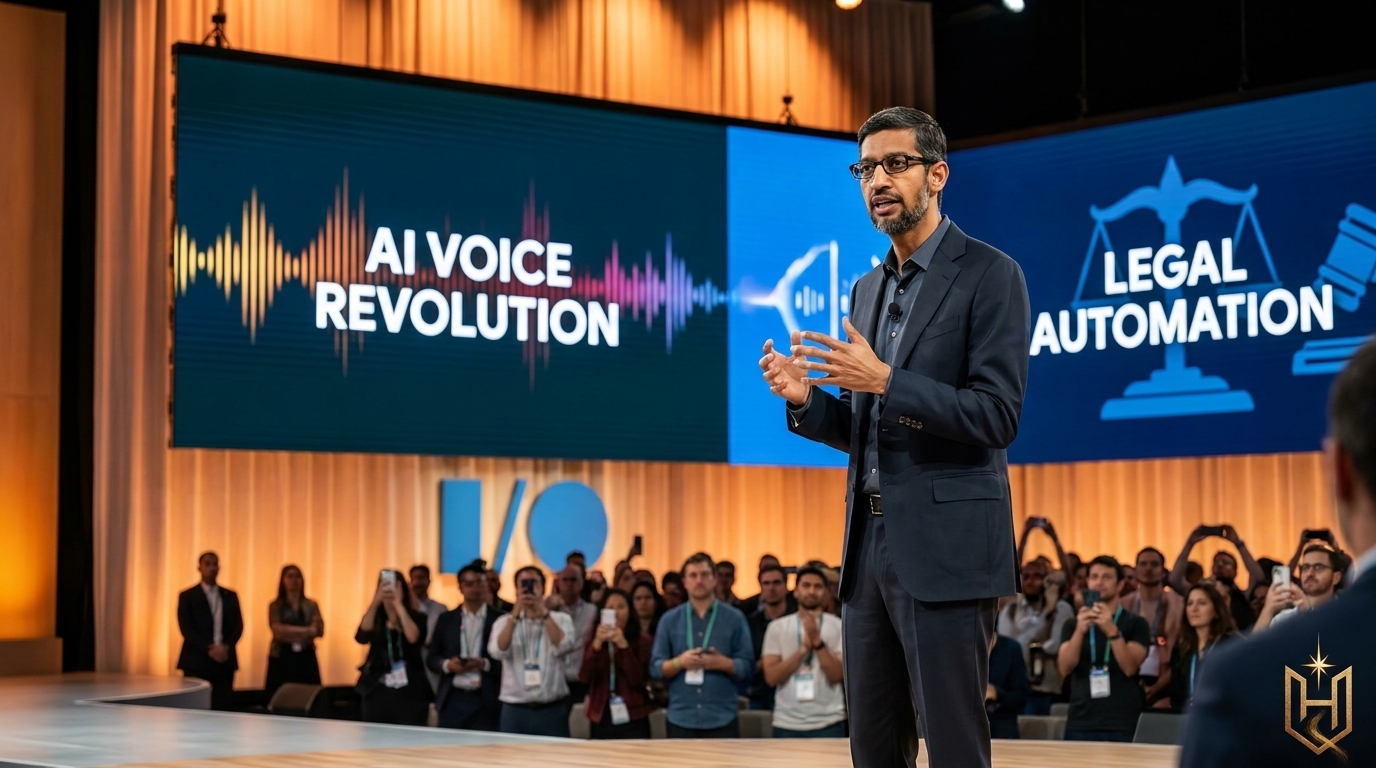
The legal world, often perceived as a bastion of tradition, is currently experiencing a seismic shift, propelled by the relentless march of artificial intelligence. Nowhere was this more evident than at Google I/O 2026, where CEO Sundar Pichai unveiled a suite of groundbreaking AI voice features poised to fundamentally alter how we interact with digital platforms.
While the broader implications for consumer tech are vast, the legal sector stands at a unique inflection point. Firms that embrace these advanced AI voice assistants are not just adopting new tools; they are redefining their operational paradigms, enhancing client engagement, and carving out a distinct competitive advantage in an increasingly crowded market.
This isn't merely about dictation software; it's about intelligent, responsive interfaces that anticipate needs, automate complex tasks, and free up legal professionals for higher-value work. The era of the truly conversational legal assistant is no longer a distant futuristic vision but an imminent reality, as evidenced by Google's latest innovations in Workspace and beyond.
For years, the promise of truly intuitive voice AI in professional settings remained largely aspirational, limited by accuracy issues and contextual understanding. However, the advancements showcased at Google I/O 2026, particularly with the integration of enhanced voice capabilities across Google Workspace, Google Pics, and the new Gemini Spark, signal a maturation of this technology.
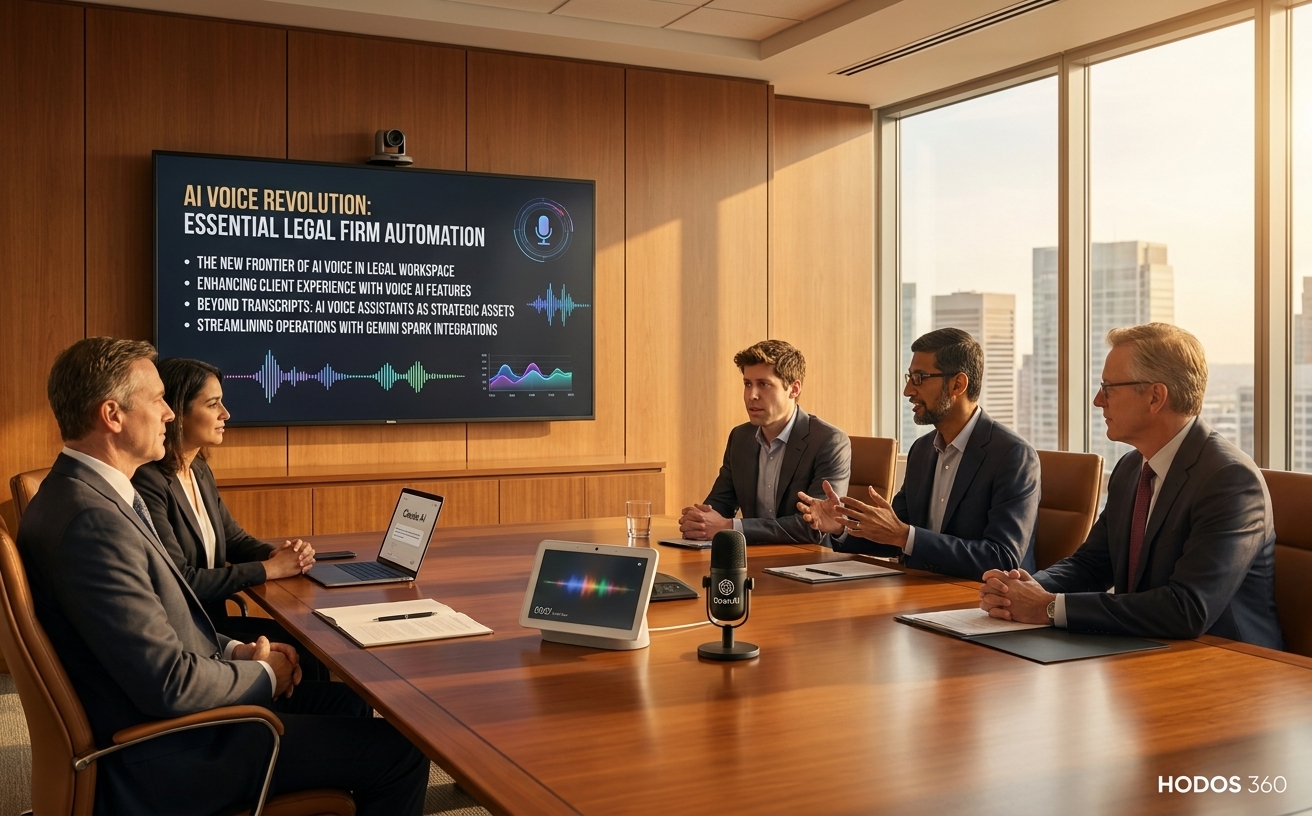
Imagine a scenario where a solo practitioner, Emily Thorne of Thorne & Associates, can verbally instruct her case management system to generate a conflict check, draft an initial client intake form based on a phone conversation, or schedule follow-up appointments, all without touching a keyboard.
This level of seamless integration and proactive support transforms the mundane into the manageable, directly addressing the efficiency challenges that have long plagued law firms. The legal industry has witnessed prior waves of technological disruption, but the current wave of AI voice innovations represents a profound shift towards a more natural, intuitive, and remarkably powerful human-computer interaction.
The integration of advanced AI voice features into core productivity suites like Google Workspace means that the tools attorneys already use daily will become exponentially smarter and more responsive. This extends beyond simple commands; it encompasses sophisticated natural language understanding, contextual awareness, and the ability to execute multi-step legal workflows based on verbal prompts.
For law firms, this translates into unprecedented opportunities for automation, client service enhancement, and operational streamlining. Early adopters, like those partnering with platforms suchas HODOS 360, are already seeing tangible benefits, from reducing administrative overhead to improving client satisfaction scores through faster, more responsive interactions.
The legal landscape is evolving, and AI voice assistants are emerging as indispensable allies in this transformation. Ready to transform your firm with cutting-edge AI? Discover how HODOS 360’s AI Voice Assistants can revolutionize your operations and client engagement. Learn more today!
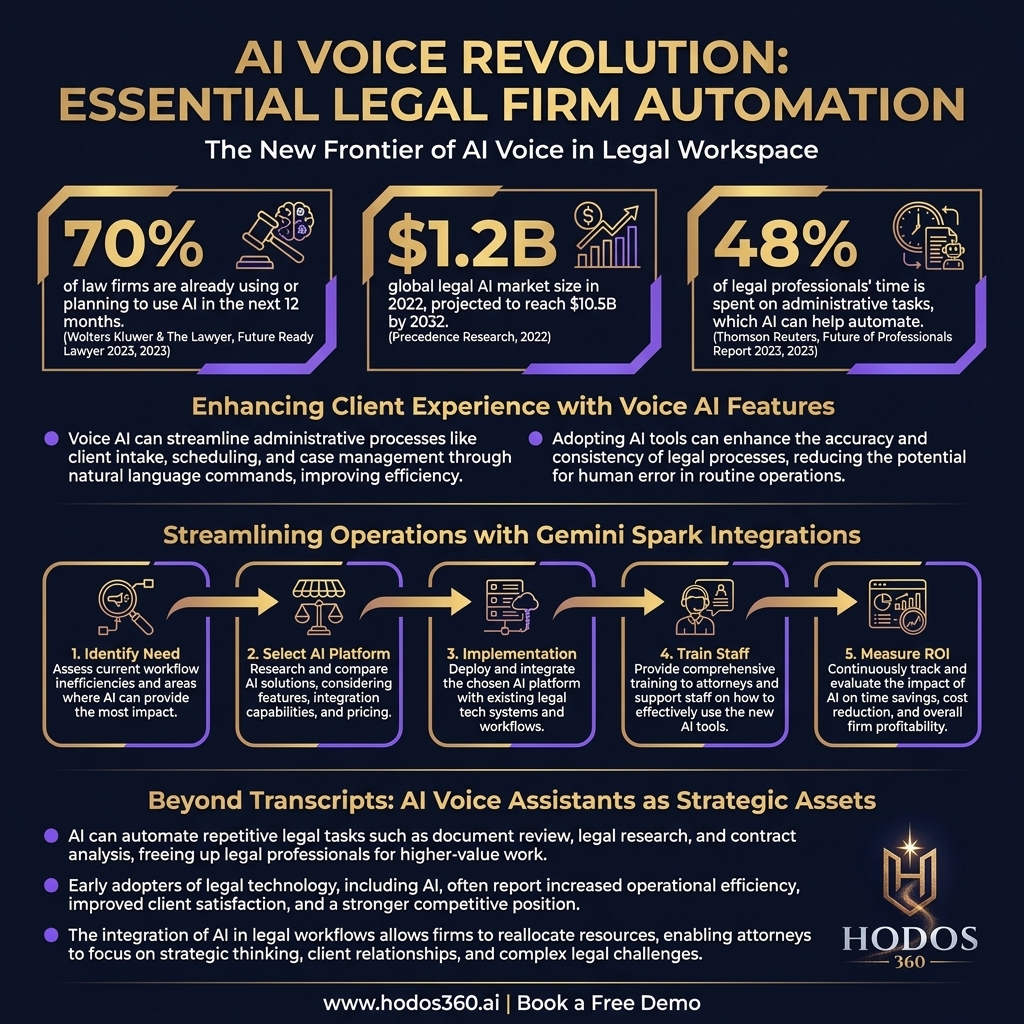
The New Frontier of AI Voice in Legal Workspace
Google I/O 2026 marked a pivotal moment, showcasing how AI voice features are no longer confined to smart speakers but are deeply embedded within critical productivity environments like Google Workspace. This evolution is particularly resonant for the legal sector, where document creation, communication, and scheduling form the bedrock of daily operations.
The enhancements, including advanced voice capabilities in Gmail, Docs, and Keep, alongside the unveiling of Google Pics for AI-driven image generation and Gemini Spark for agentic AI interactions, paint a vivid picture of a future where legal professionals can dictate complex legal briefs, summarize lengthy email threads, and even generate visual aids for presentations, all through natural language commands.
This level of integration promises to significantly reduce the cognitive load associated with navigating multiple applications, allowing attorneys to focus more intently on substantive legal analysis and client strategy.
Consider the practical implications for a busy law firm. A partner, preparing for a court appearance, could verbally instruct their Google Docs environment to pull relevant case precedents, synthesize key arguments from existing legal documents, and format them into a concise memorandum.
Simultaneously, their Gmail inbox, powered by new AI voice features, could prioritize urgent client communications, draft responses, and even schedule follow-up calls based on the content of incoming messages. This isn't just about speed; it's about intelligent assistance that understands context, anticipates needs, and proactively manages information flows.
Learn more about AI Software Development's **Revolutionary** 2026 Shift. According to a 2025 report by Thomson Reuters, legal professionals spend nearly 40% of their time on administrative tasks that could be automated. The new voice innovations from Google directly target this inefficiency, offering a pathway to reclaim valuable time.
The integration of such sophisticated AI voice features into widely adopted platforms like Google Workspace also lowers the barrier to entry for many law firms. Instead of investing in bespoke, expensive legal-specific AI solutions, firms can leverage tools already familiar to their staff, albeit with dramatically enhanced capabilities.
This democratizes access to advanced AI-powered workflows, enabling even smaller firms to compete effectively with larger counterparts that historically had greater resources for technology adoption. The shift towards a voice-first interaction model also caters to the increasing demand for accessibility and flexibility within the legal profession.
This is a significant leap from the rudimentary voice-to-text functionalities of the past, offering a truly intelligent and interactive experience that adapts to the user's preferred mode of engagement.
Enhancing Client Experience with Voice AI Features
Beyond internal efficiencies, the new AI voice features hold immense promise for revolutionizing the client experience. Imagine a prospective client calling a law firm after hours. Instead of an impersonal voicemail, they are greeted by an AI voice assistant capable of engaging in a natural, empathetic conversation.
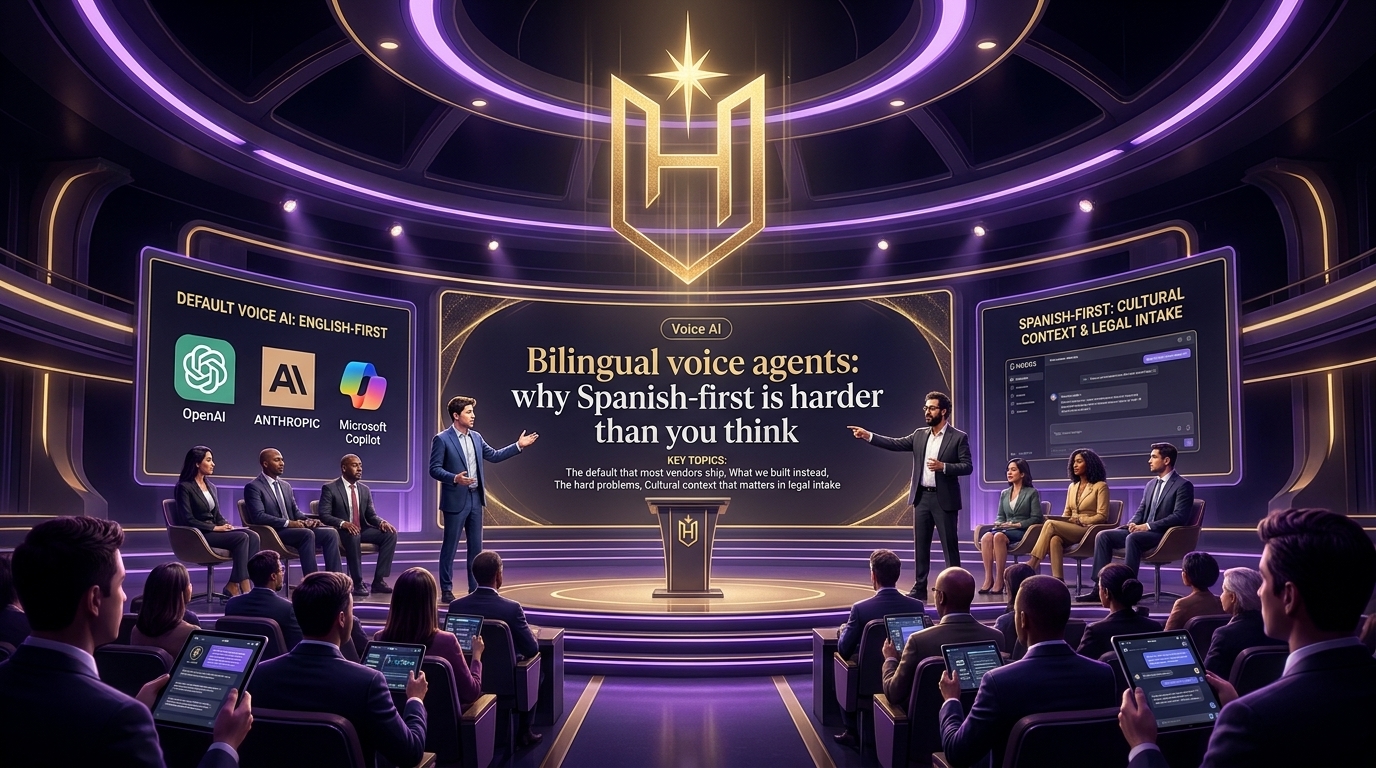
This assistant can qualify the lead, gather essential case details, answer common questions about legal processes, and even book an appointment directly into an attorney's calendar, all in multiple languages if required. This seamless, 24/7 availability significantly improves responsiveness, a critical factor in client satisfaction and retention.
Learn more about Essential AI Website Optimization for Law Firms: Beyond WordPress Basics. A 2024 survey by Clio found that firms with faster initial client contact reported a 15% higher client conversion rate. Firms leveraging advanced AI voice assistants can ensure no potential client is left waiting, offering immediate, intelligent interaction that reflects positively on the firm's modernity and client-centric approach.
This proactive engagement not only captures leads but also sets a professional and technologically advanced tone from the very first interaction.
Beyond Transcripts: AI Voice Assistants as Strategic Assets
The notion of AI voice assistants in legal practice has historically been associated primarily with transcription services – converting spoken words into text. While this remains a valuable function, the advancements highlighted at Google I/O 2026, particularly with Gemini Spark and the deeper integration of voice features into Workspace, push these tools far beyond mere dictation.
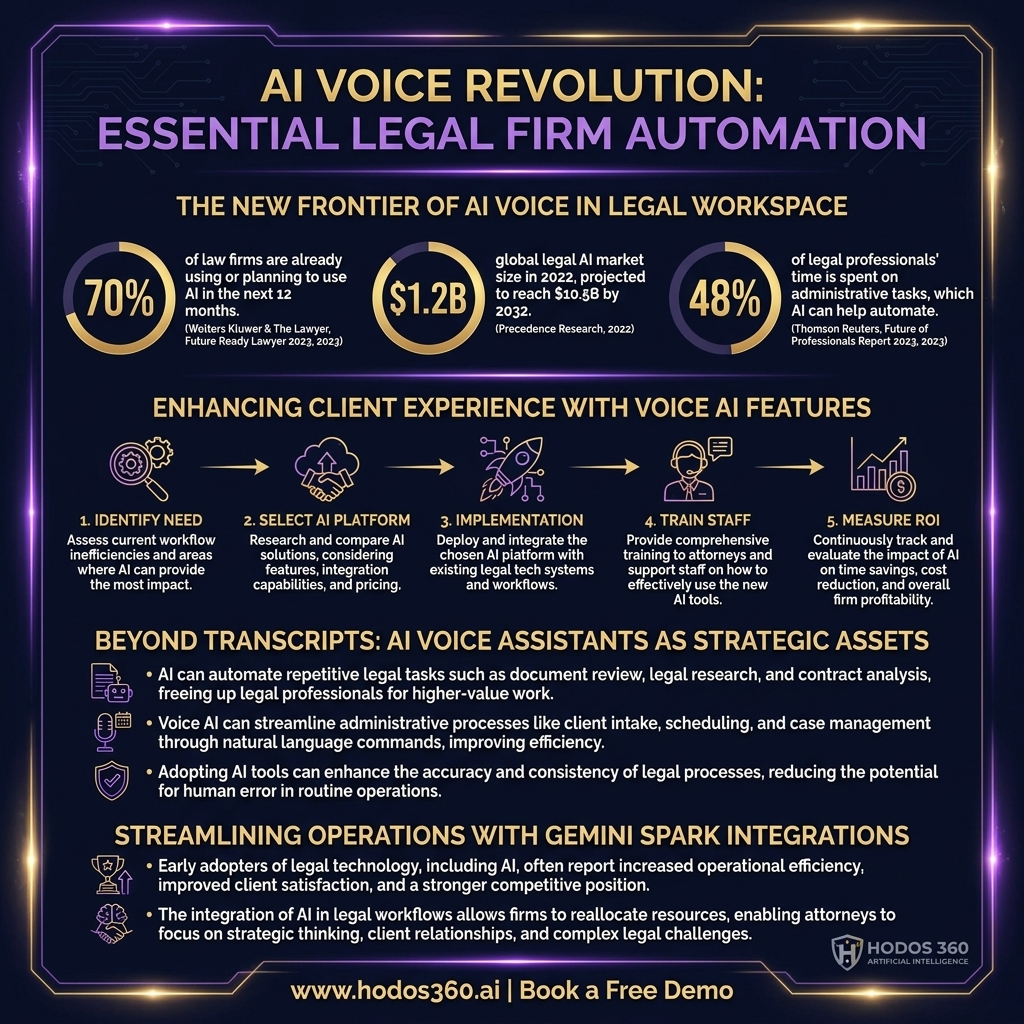
We are entering an era where AI voice assistants are evolving into strategic assets, capable of executing complex, multi-step AI-powered workflows, providing real-time legal research assistance, and even serving as virtual paralegals for routine tasks. For instance, a firm could deploy an AI voice assistant to monitor court dockets, verbally alert attorneys to new filings in their cases, and automatically update case management systems.
This proactive, intelligent assistance transforms the role of technology from a passive tool to an active, contributing member of the legal team, significantly enhancing operational efficiency and reducing human error.
The true power of these next-generation AI voice assistants lies in their ability to understand intent and context, not just individual words.
This is where Google's investment in large language models and agentic AI, as demonstrated by Gemini Spark, becomes a game-changer. Consider a scenario where an attorney, Daniel Lee, CTO of LegalTech Solutions, is reviewing a contract. Learn more about Ultimate AI in MarTech: Predictive Power for Law Firms.
He could verbally ask the AI voice assistant to "Find all clauses related to indemnification and compare them to our standard template," or "Summarize the key obligations of both parties in this agreement." The assistant, leveraging its understanding of legal terminology and document structure, could then execute these complex queries, highlighting discrepancies, generating summaries, and even suggesting revisions, all through verbal interaction.
This level of sophisticated support not only accelerates contract review but also ensures greater accuracy and compliance, freeing up attorneys to focus on high-level negotiation and strategic decision-making.
Furthermore, AI voice assistants are becoming critical for data synthesis and knowledge management within law firms. Imagine an attorney needing to quickly grasp the nuances of a new regulatory change.
They could simply ask their AI voice assistant to "Explain the recent amendments to the EU AI Act and their implications for data privacy in commercial contracts." The assistant, drawing upon vast legal databases and up-to-date information, could then provide a concise, accurate, and verbally delivered summary, potentially saving hours of research.
This on-demand access to curated legal intelligence empowers attorneys to stay abreast of complex legal developments with unprecedented efficiency. This capability is particularly vital in fast-evolving fields like intellectual property, cybersecurity law, or international trade, where staying current is paramount.
Streamlining Operations with Gemini Spark Integrations
The introduction of Gemini Spark at Google I/O 2026 signifies a leap towards truly "agentic" AI, where systems can perform multi-step tasks and make informed decisions, often proactively. For law firms, this translates into unprecedented opportunities for streamlining operations. Imagine a scenario where an attorney finishes a client call and simply states, "Gemini, please update the client's file with our discussion points, draft a follow-up email summarizing the next steps, and schedule a reminder for me to review the draft tomorrow."
Gemini Spark, understanding the context and intent, could then autonomously execute these actions across various Workspace applications – updating the CRM, drafting the email in Gmail, and adding a task to Google Calendar. Learn more about Wordsmith AI's $100M Valuation: An Essential LegalTech Milestone. This level of intelligent automation reduces administrative burdens dramatically, allowing legal professionals to dedicate more time to billable work and strategic thinking.
It moves beyond simple command-and-control to a partnership with an AI that anticipates and acts.
- ✓24/7 Client Engagement: Provide immediate, intelligent responses to client inquiries and lead qualification, ensuring no potential client is missed, even outside business hours.
- ✓Automated Appointment Booking: Seamlessly schedule consultations and meetings directly into attorney calendars based on client availability and firm parameters, reducing administrative overhead.
- ✓Multilingual Support: Cater to a diverse client base by offering real-time assistance and communication in multiple languages, expanding market reach and improving client satisfaction.
- ✓Intelligent Call Routing: Efficiently direct incoming calls to the most appropriate department or individual based on the caller's needs, improving first-call resolution and internal efficiency.
- ✓Lead Qualification and Nurturing: Automatically pre-qualify potential clients by gathering critical information and guiding them through initial intake processes, ensuring attorneys focus on high-value leads.
- ✓Enhanced Data Capture: Accurately record and transcribe call details, client information, and key discussion points directly into case management systems, improving data integrity and accessibility.
- ✓Reduced Administrative Costs: Significantly cut down on staffing needs for front-office tasks, reception, and initial client interactions, leading to substantial cost savings for the firm.
Ready to harness the full power of AI Voice Assistants for your law firm? Explore HODOS 360’s innovative solutions and schedule a personalized demo today!
Navigating Ethical and Security Implications of Voice Innovations
While the transformative potential of AI voice features is undeniable, the legal industry must approach their adoption with a clear understanding of the accompanying ethical and security implications. The very nature of legal work—dealing with highly sensitive, confidential, and privileged information—demands a rigorous framework for how voice AI is implemented.
Concerns around data privacy, client confidentiality (ABA Model Rule 1.6), and the potential for bias in AI algorithms are paramount. For instance, voice data, if not properly anonymized and secured, could inadvertently expose client identities or case details. Law firms must ensure that any AI voice assistant used complies with stringent data protection regulations such as GDPR, CCPA, and industry-specific standards, as emphasized by legal tech experts like Katie Atkinson, a cybersecurity lawyer at PrivacyTech Partners.
Furthermore, the ethical considerations extend to the "agentic" capabilities of new AI, like Google's Gemini Spark. As AI voice assistants become more autonomous in drafting communications or summarizing legal documents, the question of accountability becomes critical. Who is responsible if an AI generates an inaccurate summary or drafts a misleading client email?
Attorneys retain the ultimate responsibility for the work produced under their supervision, as outlined in ABA Model Rule 1.1 (Competence) which requires lawyers to understand the risks and benefits of relevant technology. This necessitates robust oversight mechanisms, clear guidelines for AI usage, and mandatory human review of all AI-generated content before it is shared or acted upon.
Learn more about AI Legal Startup Sandstone: Unlocking 2026's Legal Tech Future. The tension here lies in balancing the efficiency gains of automation with the unwavering imperative of ethical practice and professional responsibility.
Security is another non-negotiable aspect. Voice data, especially when processed and stored in cloud environments, presents unique vulnerabilities.
Firms must partner with technology providers that employ state-of-the-art encryption, multi-factor authentication, and regular security audits. The recent high-profile data breaches, such as the one impacting a major financial institution in late 2025, serve as stark reminders of the constant threat landscape. Legal firms, being repositories of invaluable data, are prime targets.
Therefore, when evaluating AI voice assistants, it is crucial to scrutinize the vendor's security protocols, data residency policies, and compliance certifications. This due diligence is not merely a technical exercise but a fundamental aspect of risk management in the digital age, ensuring that the benefits of voice innovations do not come at the cost of client trust or regulatory compliance.
The Future of Legal Tech and AI Voice Adoption
The trajectory of legal tech is unequivocally pointing towards deeper integration of AI voice features and agentic AI. As natural language processing continues to advance, the interaction between legal professionals and their digital tools will become increasingly conversational and intuitive. The future will see AI voice assistants not just executing commands but anticipating needs, offering proactive advice, and seamlessly managing complex legal workflows with minimal human intervention.
Firms that recognize this trend and invest in platforms that integrate these cutting-edge capabilities, like HODOS 360, will be best positioned to thrive. Learn more about Legal AI Divide: Bridge the Gap, Thrive in 2026's Digital Era. The competitive landscape will increasingly favor those who can deliver faster, more personalized, and more efficient legal services, driven by intelligent automation.
This isn't just about efficiency; it's about reimagining the very essence of legal service delivery in the digital age.
Real-World Impact: Law Firms Embracing AI-Powered Workflows
The theoretical potential of AI voice features transforms into tangible benefits when observed in real-world legal practice. Across the globe, forward-thinking law firms are already leveraging advanced AI-powered workflows to redefine their operations, drawing inspiration from innovations like those showcased at Google I/O 2026. Take, for example, the mid-sized litigation firm of Sterling & Partners.
Prior to implementing AI voice assistants for client intake and preliminary case assessment, their reception staff spent nearly 30% of their time on repetitive qualifying questions and appointment scheduling. After integrating an AI voice assistant similar to HODOS 360's offering, equipped with multilingual support and lead qualification capabilities, Sterling & Partners reported a 40% reduction in administrative time spent on initial client contact and a 20% increase in qualified leads converted into paying clients within six months.
This directly translates into higher revenue potential and improved resource allocation, allowing paralegals and junior attorneys to focus on substantive legal research rather than administrative overhead.
Another compelling example comes from Chen & Associates, a fast-growing corporate law firm specializing in M&A. Managing Partner Sarah Chen recognized the bottleneck in contract review and compliance checks.
They piloted an AI voice assistant integrated with their document management system, allowing attorneys to verbally query contracts for specific clauses, identify inconsistencies, and even initiate redlining processes. This hands-free, intelligent interaction cut down the average contract review time by 25% for standard agreements, significantly accelerating deal closures.
Sarah Chen noted at a recent LegalTech NYC conference, "The ability to simply talk to our documents and have the AI instantly pull relevant data or flag risks has been a game-changer. It’s not replacing our lawyers; it's empowering them to be faster, more accurate, and more strategic."
This showcases the shift from AI as a mere tool to an integral part of the decision-making and operational core, driving both efficiency and competitive advantage in high-stakes legal transactions.
These real-world applications underscore a crucial point: the value of AI voice assistants in legal firms is not purely theoretical.
It's measurable in terms of time saved, costs reduced, client satisfaction improved, and revenue generated. The firms that are proactively adopting these AI-powered workflows are demonstrating a clear path forward for the entire industry. By integrating solutions that leverage cutting-edge voice features and agentic AI, they are not just adapting to change; they are leading it.
The lessons from these early adopters provide a compelling blueprint for how other legal professionals can strategically implement voice innovations to achieve similar transformative outcomes, ensuring that their practice remains competitive and future-proof.