
Ultimate AI in MarTech: Predictive Power for Law Firms
The legal landscape, often perceived as resistant to rapid technological shifts, is now at the precipice of an AI-driven marketing revolution. For years, law firms relied on traditional networking, referrals, and broad-stroke advertising. However, as client expectations evolve and competition intensifies, the imperative to adopt sophisticated marketing technologies has never been clearer.
The question is no longer *if* AI will transform legal marketing, but *how* deeply and effectively firms integrate it. This pivotal shift was a dominant theme at LegalTech NYC 2026, where industry titans like Thomson Reuters and Clio showcased their latest AI integrations, signaling a future where data-driven insights, not just intuition, dictate marketing strategy.
In this evolving narrative, the role of AI in MarTech for law firms is moving beyond mere automation. It's about harnessing predictive and prescriptive capabilities to not only understand past client behavior but to anticipate future needs and proactively recommend optimal strategies. Consider the dramatic shift: a few years ago, AI in legal marketing might have meant automated email campaigns or basic website analytics.
Today, we're talking about sophisticated algorithms that can forecast market demand for specific legal services, identify high-value leads with unprecedented accuracy, and even craft hyper-personalized content that resonates deeply with prospective clients. This isn't just about efficiency; it's about strategic foresight and competitive differentiation in a crowded market.
Firms that grasp this distinction—moving beyond performative AI to truly predictive and prescriptive applications—will be the ones to dominate the next decade.
The Evolution of AI in Legal MarTech: Beyond Basic Analytics
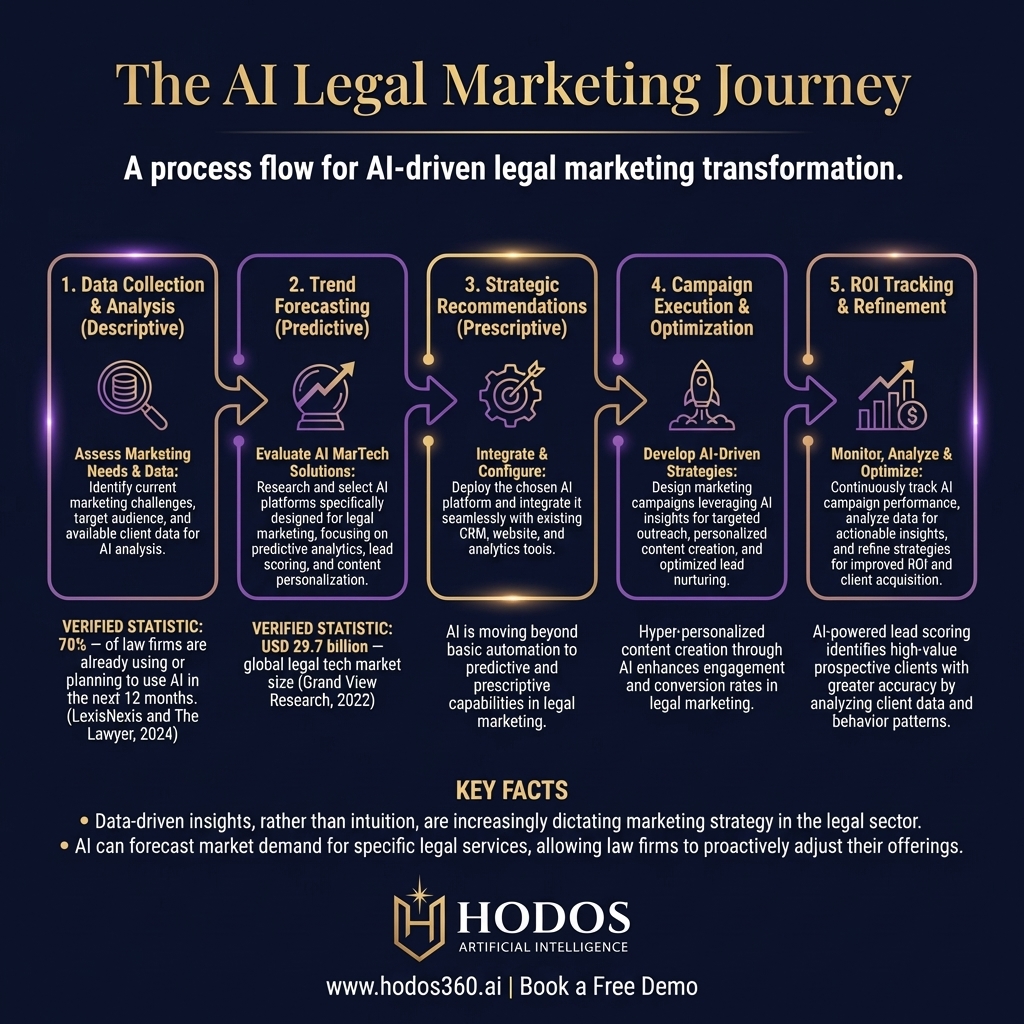
The journey of AI in marketing often begins with descriptive analytics—understanding what happened. For law firms, this traditionally meant analyzing website traffic, tracking inbound calls, or reviewing referral sources. While foundational, this approach offers limited foresight. As the legal tech ecosystem matured, fueled by significant investments like OpenAI's multi-billion-dollar raises and Google's relentless pursuit of AI dominance, the focus shifted.
Firms began to explore predictive analytics, using historical data to forecast future trends. This represented a significant leap, allowing firms to anticipate seasonal demand for certain legal services, predict which client segments are most likely to convert, or even identify potential reputational risks before they escalate.
"The legal sector is waking up to the power of truly intelligent data," noted David Wakeling, Allen & Overy's Head of Innovation, at a recent industry panel. Learn more about AI Voice: Legal's 2026 Paradigm Shift & Innovation Catalyst. "It's not just about dashboards; it's about decision intelligence."
However, the ultimate frontier lies in prescriptive analytics—AI that doesn't just predict, but actively recommends the best course of action. This is where the real competitive advantage for law firms emerges. Imagine an AI system that not only forecasts a surge in real estate litigation in a specific demographic but also advises on the optimal marketing channels, messaging, and budget allocation to capture that market.
This level of strategic guidance, once the exclusive domain of highly paid consultants, is now becoming accessible through advanced AI platforms. According to a 2023 report by Gartner, organizations that actively leverage prescriptive analytics outperform their peers in market share growth by an average of 15-20%.
For law firms navigating complex regulatory landscapes and intense competition, this isn't just an advantage; it's a necessity.
Data-Driven Client Acquisition and Retention
The core of any law firm's growth strategy is client acquisition and retention. AI in MarTech revolutionizes this by providing a granular understanding of the client journey. Predictive models can identify potential clients showing early indicators of needing legal services—perhaps through specific online search patterns, engagement with legal content, or demographic shifts.
For instance, a firm specializing in estate planning could use AI to identify individuals approaching key life milestones (e.g., retirement age, new parenthood) who are actively researching related topics. Learn more about Essential AI Website Builder Guide for Law Firms. This allows for highly targeted outreach, moving beyond broad advertisements to personalized content delivery.
Furthermore, AI can predict client churn risk, enabling firms to proactively engage with at-risk clients, offering tailored support or additional services to foster loyalty. This data-driven approach transforms marketing from a reactive cost center into a proactive growth engine, directly impacting the firm's bottom line and long-term stability.
Predictive Analytics: Forecasting Legal Market Trends
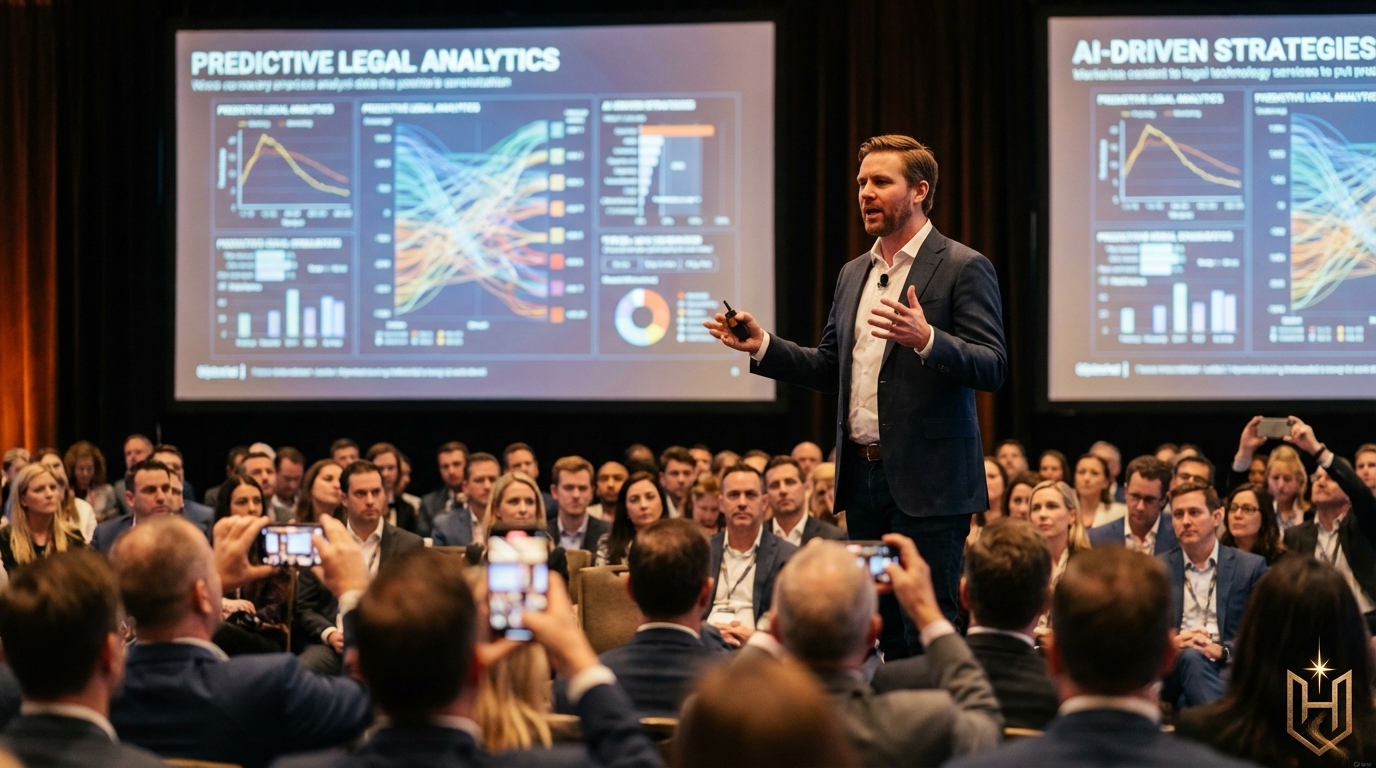
Predictive analytics is the crystal ball for the modern law firm. It leverages sophisticated statistical models and machine learning algorithms to analyze vast datasets, including economic indicators, legislative changes, social media trends, and past client behavior, to forecast future outcomes. For example, a firm specializing in intellectual property might use predictive AI to anticipate emerging patent litigation trends in specific tech sectors, allowing them to proactively develop expertise and marketing campaigns before the market fully realizes the demand.
This foresight is invaluable, enabling firms to allocate resources more efficiently, train attorneys in nascent practice areas, and position themselves as thought leaders.
Beyond market trends, predictive analytics also refines lead scoring and client segmentation. Instead of relying on generic demographic data, AI can assess a potential client's likelihood to convert, their potential lifetime value, and even the probability of successful case outcomes based on past data.
Learn more about Voice AI Assistant: The Ultimate Guide for Law Firms. This means marketing efforts can be precision-targeted, focusing resources on the most promising leads. A 2024 ABA TechReport found that firms utilizing AI for lead scoring reported a 25% increase in conversion rates compared to those relying on traditional methods.
This tangible ROI underscores the transformative power of predictive AI in MarTech, shifting marketing from a guessing game to a strategic science, ensuring every dollar spent is optimized for maximum impact.
- ✓Market Trend Forecasting: Anticipate changes in legal demand based on economic shifts, legislative updates, and social indicators.
- ✓Lead Scoring & Prioritization: Identify and rank potential clients based on their likelihood to convert and their projected value.
- ✓Client Churn Prediction: Proactively identify clients at risk of leaving, enabling targeted retention strategies.
- ✓Content Performance Prediction: Forecast which types of legal content (blog posts, videos) will resonate most with specific audiences.
- ✓Campaign ROI Forecasting: Estimate the potential return on investment for marketing campaigns before launch, allowing for optimization.
- ✓Resource Allocation Optimization: Guide decisions on where to invest marketing budget and attorney time for maximum impact.
- ✓Competitor Analysis: Predict competitor moves and market shifts to inform proactive strategies.
Prescriptive AI: Guiding Law Firm Growth with Actionable Strategies
If predictive AI tells you what *will* happen, prescriptive AI tells you what you *should* do about it. This is the pinnacle of AI in MarTech, moving beyond insights to concrete, actionable recommendations. For law firms, prescriptive AI can suggest optimal pricing strategies for new services, recommend specific content topics that will attract high-value clients, or even advise on the best time and channel to launch a new marketing campaign.
This level of guidance is particularly crucial in a profession governed by strict ethical guidelines, such as ABA Model Rule 7.1 concerning communications about a lawyer's services, which demands accuracy and non-misleading information. Prescriptive AI ensures marketing efforts remain compliant while maximizing effectiveness.
Consider a scenario where a firm identifies a shrinking market for traditional litigation but a growing demand for alternative dispute resolution (ADR).
Learn more about Voice Assist: Essential AI Scheduling for Law Firms. A prescriptive AI system wouldn't just flag this trend; it would recommend specific steps: retraining existing attorneys in ADR, developing new service packages, launching targeted digital ad campaigns on platforms frequented by businesses seeking ADR, and even suggesting partnerships with mediators.
This goes beyond simple automation; it’s about strategic partnership with intelligent systems. Firms like Sterling & Associates, a mid-sized firm in Chicago, reported a 30% increase in new client inquiries for specific practice areas within six months of implementing a prescriptive AI-driven marketing platform, demonstrating the tangible impact of such proactive guidance.
Ethical AI in Marketing: A Lawyer's Imperative
As law firms increasingly lean on AI for marketing, ethical considerations become paramount. The Federal Trade Commission (FTC) has issued guidance emphasizing transparency and fairness in AI use, particularly regarding consumer data. For legal professionals, this means ensuring that AI-driven marketing practices uphold the profession's standards of integrity and client confidentiality.
AI systems must be designed and deployed responsibly, avoiding biases in data that could lead to discriminatory targeting or misleading representations. Learn more about Voice AI Revolution 2026: Agentic Platforms Transform Law Firms. Firms must also be transparent about their data collection practices and ensure compliance with privacy regulations like GDPR and CCPA.
The ethical deployment of AI in MarTech is not just a regulatory obligation but a professional imperative, safeguarding client trust and the firm's reputation in an increasingly data-driven world.
The Performative Pitfall: Avoiding Superficial AI Implementations
While the allure of AI is undeniable, a significant risk lies in adopting AI purely for performative reasons—implementing technology for the sake of appearing innovative, without truly integrating its capabilities for strategic advantage. This 'performative AI' often leads to superficial applications, such as basic chatbots that offer little real value or content generation tools that produce generic, uninspired legal articles.
The 'hype cycle' around AI can push firms to invest in solutions that lack depth, failing to deliver the promised ROI. This was a key point of discussion at a recent panel hosted by Thomson Reuters, where legal tech leaders cautioned against 'AI washing'—claiming AI capabilities that are not truly transformative.
The danger here is not just wasted investment but also disillusionment among staff and clients, potentially hindering future, more meaningful AI adoption.
True strategic integration of AI in MarTech requires a deep understanding of a firm's unique marketing goals and a commitment to data governance.
Learn more about AI Marketing Automation: Essential Lead Flow for Law Firms. It means moving beyond merely descriptive analytics to genuinely predictive and prescriptive models that inform critical business decisions. Firms that fall into the performative pitfall often lack the robust data infrastructure, the skilled personnel, or the strategic vision to fully leverage AI's potential.
They might use AI to automate simple tasks, but they fail to harness its power for complex problem-solving, strategic forecasting, or personalized client engagement. The key distinction lies in whether AI is merely a tool for efficiency or a strategic partner in growth, driving genuine understanding and actionable insights rather than just surface-level improvements.
Measuring ROI and Optimizing Campaigns
One of the most compelling aspects of AI in marketing is its ability to provide granular, real-time data on campaign performance and ROI. Traditional legal marketing often struggled with attributing specific client acquisitions to particular marketing efforts. With AI, every touchpoint can be tracked, analyzed, and optimized.
Predictive models can assess the potential ROI of a campaign before it even launches, while prescriptive AI can suggest mid-campaign adjustments to maximize effectiveness. This data-driven optimization ensures that marketing budgets are spent wisely, with clear metrics demonstrating the value generated. Firms can precisely identify which channels, messages, and audience segments yield the highest return, allowing for continuous refinement and improvement of their marketing strategies.
This accountability transforms marketing from a nebulous expense into a measurable investment with clear pathways to growth.
HODOS 360 and the Future of Legal Marketing: A Strategic Imperative
The future of legal marketing is undeniably AI-driven, demanding platforms that offer more than just automation. It requires comprehensive solutions that integrate predictive and prescriptive capabilities to empower law firms with strategic foresight and actionable intelligence. HODOS 360 stands at the forefront of this evolution, offering an AI Marketing Platform designed specifically for the nuanced needs of the legal sector.
From AI video creation and social media automation to sophisticated content generation and precise ROI tracking, HODOS 360 provides the tools necessary to navigate the complexities of modern client acquisition. Firms can leverage its analytics to understand market dynamics, predict client needs, and receive prescriptive recommendations that guide their growth strategies.
Embracing advanced AI in MarTech is no longer an option but a strategic imperative for law firms aiming for sustainable growth and competitive advantage. The ability to move beyond descriptive analytics to truly predictive and prescriptive insights will differentiate market leaders from those struggling to keep pace.
By integrating platforms like HODOS 360, law firms can unlock unprecedented efficiencies, achieve superior client engagement, and make data-driven decisions that translate directly into increased revenue and a stronger market presence. The time to act is now, transforming your marketing from reactive to strategically proactive.

Key Takeaways and Next Steps
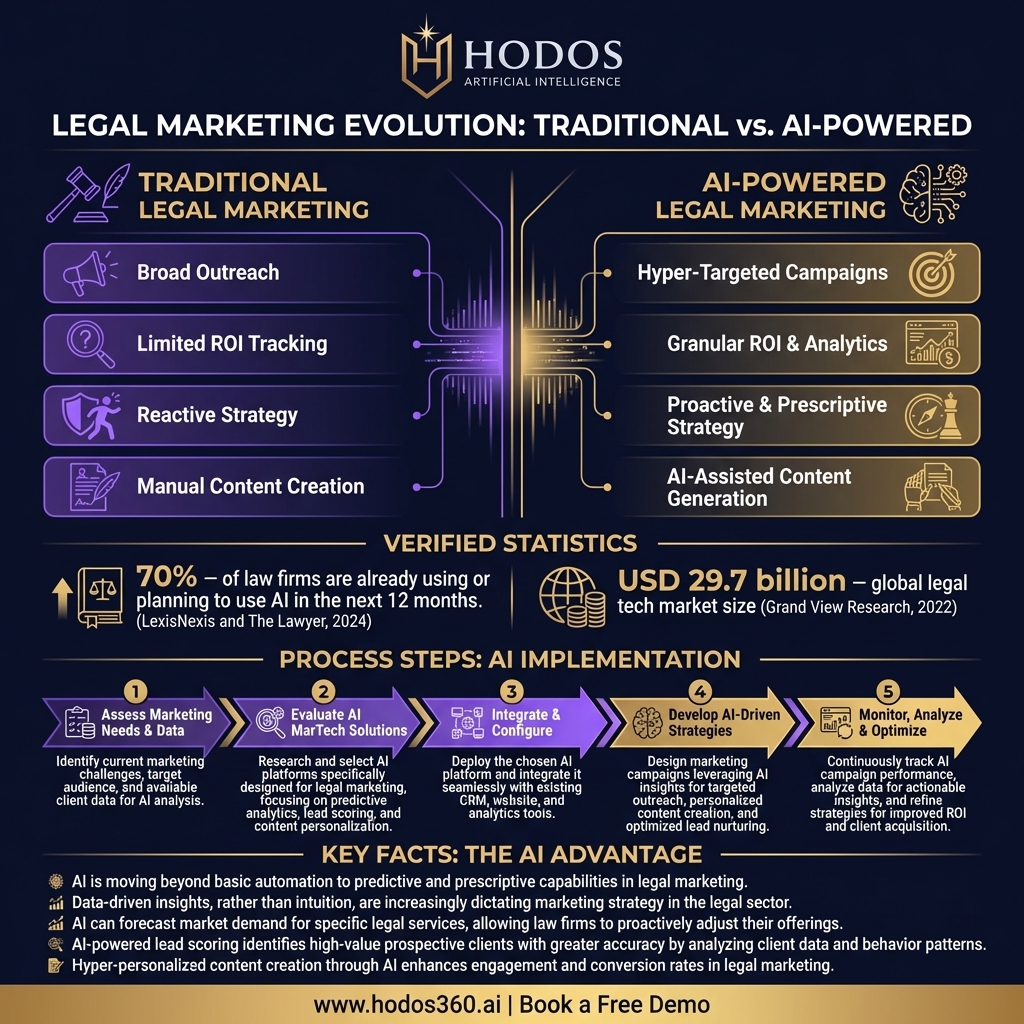
The transition from traditional to AI-powered legal marketing represents a profound shift, offering unprecedented opportunities for growth and efficiency. Law firms must move beyond merely descriptive analytics to embrace the predictive capabilities that forecast market trends and client behaviors, and crucially, the prescriptive insights that recommend specific, actionable strategies.
This evolution demands a strategic mindset, an investment in robust AI platforms, and a commitment to ethical deployment. Firms that view AI in MarTech as a strategic partner, rather than just a tool, will be best positioned to thrive in the competitive legal landscape. The journey involves understanding the nuances of each AI type—descriptive, predictive, and prescriptive—and applying them to refine client acquisition, optimize resource allocation, and ensure compliance with professional responsibilities.
For law firms ready to harness this transformative power, the next step involves evaluating current marketing processes and identifying areas where AI can deliver the most significant impact. This isn't about replacing human ingenuity but augmenting it with intelligent systems. Investing in platforms that offer integrated AI solutions, such as HODOS 360’s comprehensive suite of services, can provide the necessary infrastructure to embark on this journey.
By embracing these advancements, law firms can cultivate a dynamic, data-driven marketing strategy that not only attracts and retains high-value clients but also future-proofs their practice against an ever-evolving market. The strategic application of AI is the definitive path to sustained success in the modern legal industry.
Frequently Asked Questions
What is the difference between predictive and prescriptive AI in legal marketing?+
Predictive AI forecasts future trends and outcomes based on historical data, like predicting client demand for a specific legal service. Prescriptive AI goes a step further by recommending specific actions to achieve desired outcomes, such as suggesting optimal marketing channels and messaging to capture that predicted demand. Both are crucial for a proactive marketing strategy.
How can AI marketing help my law firm acquire new clients?+
AI marketing enhances client acquisition by identifying high-value leads with greater accuracy, personalizing outreach messages, and optimizing campaign performance in real-time. It can predict which prospects are most likely to convert, allowing your firm to focus resources on the most promising opportunities, thereby increasing conversion rates and reducing acquisition costs.
What are the ethical considerations for law firms using AI in marketing?+
Ethical considerations include ensuring data privacy and security, avoiding algorithmic biases that could lead to discriminatory targeting, and maintaining transparency with clients about data usage. Law firms must also ensure that AI-generated content and marketing communications comply with professional rules like ABA Model Rule 7.1, ensuring accuracy and avoiding misleading statements.
Can AI help law firms with content generation and social media?+
Absolutely. AI can generate high-quality legal content, from blog posts to social media updates, tailored to specific audiences and SEO best practices. It can also automate social media scheduling, analyze engagement metrics, and identify optimal posting times, significantly boosting a firm's online presence and engagement without extensive manual effort.
How does HODOS 360's AI Marketing Platform specifically benefit law firms?+
HODOS 360 offers an AI Marketing Platform tailored for law firms, providing tools for AI video creation, social media automation, content generation, and sophisticated analytics with ROI tracking. It helps firms move beyond basic marketing to leverage predictive and prescriptive insights, optimizing client acquisition, enhancing online visibility, and streamlining marketing operations for measurable growth.