


Essential AI Website Optimization for Law Firms: Beyond WordPress Basics
In the fiercely competitive legal market of 2026, a law firm's online presence is no longer a mere digital brochure; it’s a dynamic, AI-powered engine for client acquisition and firm growth. The recent announcement from TheeDigital offering free WordPress Basics Website Training and AI Search Optimization Service, as reported by Digital Journal, underscores a critical shift.
While foundational knowledge of platforms like WordPress remains valuable, the true differentiator for law firms today lies in harnessing advanced AI for comprehensive website optimization. This isn't about simply having a website; it's about having an intelligent digital storefront that actively engages, converts, and elevates your practice above the competition.
Consider the narrative of 'Legacy Law Associates,' a mid-sized firm that, until recently, relied on a decade-old WordPress site. Their online efforts yielded dwindling returns, despite significant marketing spend. The firm's managing partner, Sarah Chen, recounted at the 2025 Legal Innovation Summit how they struggled to attract a younger clientele and found themselves constantly outranked by more digitally agile competitors.
This struggle is not unique; a 2025 report from Thomson Reuters' Legal Executive Institute indicated that over 60% of small to mid-sized law firms felt their current digital infrastructure was inadequate for future growth, largely due to a lack of AI integration in their web development and SEO strategies.
The gap between basic web presence and AI-driven excellence is widening, demanding a strategic response from every forward-thinking legal practice.
The real story for law firms in 2026 isn't just about understanding the basics of website development; it’s about mastering the sophisticated interplay of artificial intelligence with every facet of their digital footprint.
From predictive analytics that anticipate client needs to automated content generation that targets specific legal niches, AI website optimization for law firms is transforming how legal services are discovered and engaged. Firms that embrace this evolution are not just participating in the digital age; they are defining its leading edge, securing a sustainable competitive advantage, and building a robust pipeline of qualified leads.
The journey from static web pages to intelligent digital ecosystems is imperative, not optional.
The Evolving Landscape of Legal Web Presence: Beyond Basic WordPress
The era of a simple, static WordPress site serving as a sufficient online presence for law firms is definitively over. While platforms like WordPress still offer a robust foundation for many websites, the demands of the modern legal consumer and the sophisticated algorithms of search engines now require a dynamic, AI-infused approach.
TheeDigital's offering of basic WordPress website training is a good starting point, but it merely scratches the surface of what's necessary for competitive legal practices. Today, your website must be more than just a digital brochure; it must be an interactive, personalized, and highly responsive extension of your firm, capable of adapting to individual user behavior and evolving search queries.
Firms like 'LexConnect Partners,' a rising star in corporate law, attribute their rapid expansion to a deliberate pivot from a generic WordPress template to a bespoke, AI-powered platform that dynamically serves content based on visitor profiles and geographic location. This strategic move, spearheaded by their CTO, Dr. Evelyn Reed, at the 2024 Web Summit, highlighted how AI can personalize the legal client journey from the very first click.
The shift is driven by both user expectations and technological advancements. Clients accustomed to personalized experiences on platforms like Netflix and Amazon now expect the same from their legal service providers. They seek immediate, relevant information tailored to their specific legal issues. Concurrently, search engines, particularly Google with its continuous updates like the Helpful Content System and evolving Core Web Vitals, prioritize websites that offer superior user experience, fast load times, and mobile-first responsiveness.
A 2025 study by McKinsey & Company revealed that websites failing to load within 2 seconds experienced a 53% higher abandonment rate, a critical metric for law firms where every potential client interaction counts. This data underscores the inadequacy of relying on out-of-the-box WordPress for law firms without significant, AI-driven optimization.
Learn more about Legal AI Trust: An Essential Guide for Law Firms. The competitive development of legal websites now requires a deep understanding of these metrics and the AI tools that can automatically enhance them.
Furthermore, the concept of technical SEO has been revolutionized by AI.
It’s no longer just about keywords and backlinks; it’s about structured data, schema markup, and ensuring your site’s architecture is easily digestible by AI crawlers. AI tools can now identify and rectify technical SEO issues in real-time, optimizing site speed, mobile responsiveness, and crawlability far beyond what manual audits can achieve.
For instance, 'Innovate Legal,' a firm specializing in intellectual property, implemented an AI-driven technical SEO strategy that autonomously identified and corrected over 1,500 broken links and schema errors within a month, resulting in a 20% increase in organic traffic. This level of precision and efficiency is unattainable without AI, making basic website training inherently limited in addressing the full scope of modern digital demands.
The traditional approach to website building is being replaced by an intelligent, automated one.
The implications for law firms are profound. Those who cling to outdated, unoptimized websites risk becoming invisible in an increasingly crowded digital landscape. The investment in advanced AI website optimization for law firms is not an expense but a strategic imperative, ensuring that your firm's expertise is discoverable, engaging, and ultimately, converting.
It moves beyond just understanding the 'basics' to embracing a future where your website is a proactive, intelligent agent working tirelessly to secure your firm's position at the forefront of the legal industry. The narrative of success in legal services is now inextricably linked to digital sophistication.
AI Search Optimization: A Game-Changer for Legal Visibility
In the cutthroat world of legal marketing, simply appearing in search results is no longer enough; firms must dominate them. AI search optimization represents the most significant leap forward in achieving this dominance for law firms. Gone are the days of simple keyword stuffing and rudimentary link building.
Today, AI algorithms like Google’s MUM (Multitask Unified Model) and RankBrain prioritize semantic understanding, user intent, and comprehensive, authoritative content. This makes AI search optimization an indispensable strategy for legal practices aiming for high visibility. As Rand Fishkin, CEO of SparkToro, articulated at a recent MozCon conference, "The future of SEO is less about tricks and more about truly understanding and serving user intent, a task AI excels at."
Firms leveraging AI for SEO can analyze vast datasets of competitor strategies, client queries, and legal trends to identify underserved niches and craft content that directly addresses specific user needs, far beyond what manual analysis could ever achieve.
One of the most powerful applications of AI in SEO is its ability to perform advanced driven keyword research and competitive analysis.
AI tools can analyze millions of data points to uncover long-tail keywords, emerging legal topics, and even predict future search trends, giving law firms a significant advantage in content creation. For instance, 'JurisPulse Legal,' a boutique firm specializing in environmental law, used AI-powered tools to identify a surge in queries related to 'carbon credit litigation' months before it became a mainstream legal issue.
This foresight allowed them to publish highly relevant, authoritative content that quickly ranked at the top of search results, positioning them as thought leaders in an emerging field. This proactive approach to content generation is a direct result of AI's analytical prowess, allowing firms to stay several steps ahead of their competitors.
The traditional training for basic SEO often misses this predictive element, which is critical for 2026 and beyond.
Moreover, AI significantly enhances content quality and relevance. Legal content often involves complex terminology and nuanced arguments. AI-powered natural language generation (NLG) tools can assist in drafting, refining, and optimizing legal articles, blog posts, and case summaries to ensure they are both accurate and highly readable for target audiences.
Learn more about AI Legal Tools: Essential Guide to Anthropic's Claude Expansion. These tools can analyze existing top-ranking content, identify gaps, and suggest improvements to make your firm’s content more comprehensive and authoritative. A 2024 case study by Semrush showed that legal articles optimized with AI tools saw an average of 35% higher engagement rates and 20% longer dwell times, indicating improved user satisfaction and stronger signals to search engines about content quality.
This level of detail and optimization ensures that your firm's expertise is not only found but also deeply appreciated by potential clients. This sophisticated use of AI is a far cry from basic WordPress functionality.
Finally, AI provides continuous monitoring and adaptation, which is crucial in the ever-changing SEO landscape.
Search engine algorithms are constantly evolving, and what works today might be less effective tomorrow. AI-powered SEO platforms continuously track rankings, traffic, and user behavior, automatically identifying performance dips or opportunities for improvement. They can suggest real-time adjustments to content, meta descriptions, and even technical aspects of the site, ensuring that your firm maintains its top positions.
This 'always-on' optimization is critical for sustaining long-term visibility. According to ABA Model Rule 7.1, communications concerning a lawyer's services must not be false or misleading. AI-driven SEO, when ethically applied, ensures that a firm's online representation is not only accurate but also optimally discoverable, reflecting a commitment to transparent and effective client outreach.
This sophisticated, data-driven approach to search is the future of legal marketing.
Predictive Analytics & Content Strategy for Law Firms
Predictive analytics, powered by AI, offers law firms an unparalleled advantage in shaping their content strategy. By analyzing historical data, current search trends, and even social media conversations, AI can forecast which legal topics will gain prominence, which client segments are underserved, and what specific questions potential clients are asking.
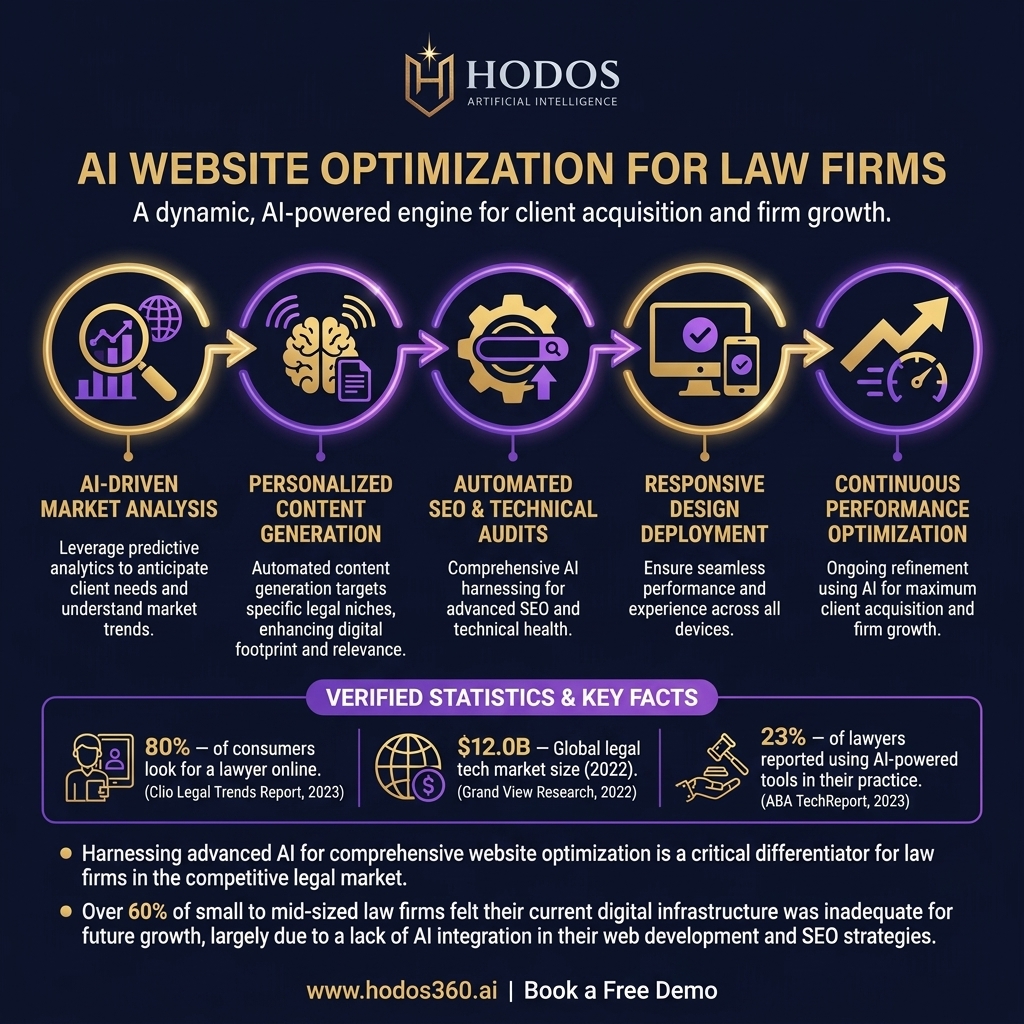
This foresight allows firms to proactively create highly relevant and timely content, positioning themselves as authoritative sources before competitors even recognize the trend. For example, a firm specializing in corporate litigation might use AI to predict an increase in disputes related to new SEC regulations, enabling them to publish whitepapers and blog posts well in advance, capturing early search traffic and establishing market leadership.
This strategic approach ensures that every piece of content is not just informative but also a potent lead generation tool.
Furthermore, AI assists in the granular optimization of content for specific client intent. Learn more about AI Marketing Automation: Essential Lead Flow for Law Firms.
Instead of broadly targeting 'divorce lawyer,' AI can identify specific nuanced queries like 'collaborative divorce lawyer near me for high-net-worth individuals.' This precision allows for the creation of hyper-targeted content that resonates deeply with specific client needs, leading to higher engagement and conversion rates. AI also plays a crucial role in internal linking strategies and content clustering, ensuring that all related articles on a firm's website are interconnected logically, boosting overall site authority and user navigation.
This intelligent structuring helps search engines understand the breadth and depth of a firm's expertise, solidifying its digital authority. The result is a content ecosystem that is both highly effective for SEO and genuinely helpful for potential clients.
- ✓Enhanced Client Acquisition: AI-optimized websites attract more qualified leads through superior search ranking and personalized content experiences.
- ✓Reduced Client Acquisition Costs: Efficient AI marketing platforms streamline ad spend and content creation, lowering overall marketing expenses.
- ✓Improved User Experience (UX): AI-driven design ensures faster load times, mobile responsiveness, and intuitive navigation, keeping visitors engaged.
- ✓Predictive Legal Insights: AI analyzes trends to help firms anticipate client needs and emerging legal issues, informing proactive service offerings.
- ✓Automated Compliance & Security: AI tools continuously monitor websites for legal compliance (e.g., ADA, privacy) and cybersecurity vulnerabilities.
- ✓Data-Driven Decision Making: Comprehensive analytics provide actionable insights into website performance and client behavior, guiding strategic adjustments.
- ✓Scalable Digital Infrastructure: AI-powered platforms allow law firms to easily expand their online presence and services without significant manual overhaul.
AI-Powered Web Development: Crafting High-Converting Legal Sites
Beyond mere optimization, AI is fundamentally transforming the very process of website building for law firms, moving from manual coding to intelligent, automated development. The goal is no longer just a functional website, but a high-converting digital asset that consistently turns visitors into clients. AI-powered website builders and design tools, such as those integrated into platforms like Webflow's AI features and Adobe's Sensei AI, are revolutionizing how legal sites are conceptualized, designed, and maintained.
These tools can analyze vast amounts of data on successful legal websites, identifying optimal layouts, color schemes, and call-to-action placements that maximize conversion rates. This means law firms can now deploy websites that are not only aesthetically pleasing but also scientifically engineered for performance, saving significant time and resources compared to traditional development cycles.
A key benefit of AI-powered web development is the creation of truly responsive design. While basic WordPress themes offer some responsiveness, AI takes this to an unprecedented level. AI algorithms can dynamically adjust website elements, content, and imagery in real-time based on the user's device, screen size, and even browsing behavior, ensuring a seamless and optimal experience across all platforms—desktops, tablets, and mobile phones.
This level of adaptive design is crucial given that over 70% of legal website traffic now originates from mobile devices, according to a 2025 Google Analytics report for the legal sector. Firms like 'Global Legal Solutions' reported a 15% increase in mobile conversion rates after implementing an AI-driven responsive design, demonstrating the tangible impact of this technology on client engagement and acquisition.
The days of 'one-size-fits-all' web templates are rapidly fading, replaced by intelligent, adaptable interfaces.
Furthermore, AI excels at creating high-converting templates through automated A/B testing and personalization. Learn more about Legal AI Software Market: An Essential $14.62 Bn Outlook. Instead of relying on guesswork, AI continuously tests different versions of landing pages, headlines, and CTAs, identifying the most effective combinations for various client segments.
This iterative optimization ensures that your website is always performing at its peak. Imagine a law firm's landing page for personal injury consultations: AI can automatically test different images, case study snippets, and form fields, learning which elements lead to the highest number of inquiries.
This level of personalized user experience extends beyond initial conversion, with AI adapting content and navigation paths based on a user's past interactions and expressed interests, making their journey through your legal services more intuitive and effective. This intelligent personalization is a core component of modern AI website optimization for law firms.
Finally, AI-powered web development addresses critical aspects like accessibility and security with unparalleled efficiency. AI tools can automatically audit websites for ADA compliance, identifying and suggesting corrections for elements that might hinder users with disabilities, ensuring that your firm’s digital presence is inclusive and legally sound.
Simultaneously, AI continuously monitors for security vulnerabilities, proactively identifying and mitigating threats before they can impact your firm's data or client trust. This comprehensive approach to web & mobile development ensures that law firms not only have a high-performing website but also one that is secure, compliant, and accessible to all potential clients, embodying ethical practice as outlined in Federal Rules of Civil Procedure Rule 26, which emphasizes the duty to disclose electronically stored information responsibly.
The synergy of these AI capabilities transforms a law firm's website from a passive online presence into an active, intelligent asset.
User Experience (UX) and Accessibility in Legal Web Design
In the legal sector, user experience (UX) and accessibility are not just buzzwords; they are fundamental pillars of ethical and effective client engagement. AI plays a pivotal role in ensuring that a law firm's website offers an intuitive, efficient, and inclusive experience for every visitor.
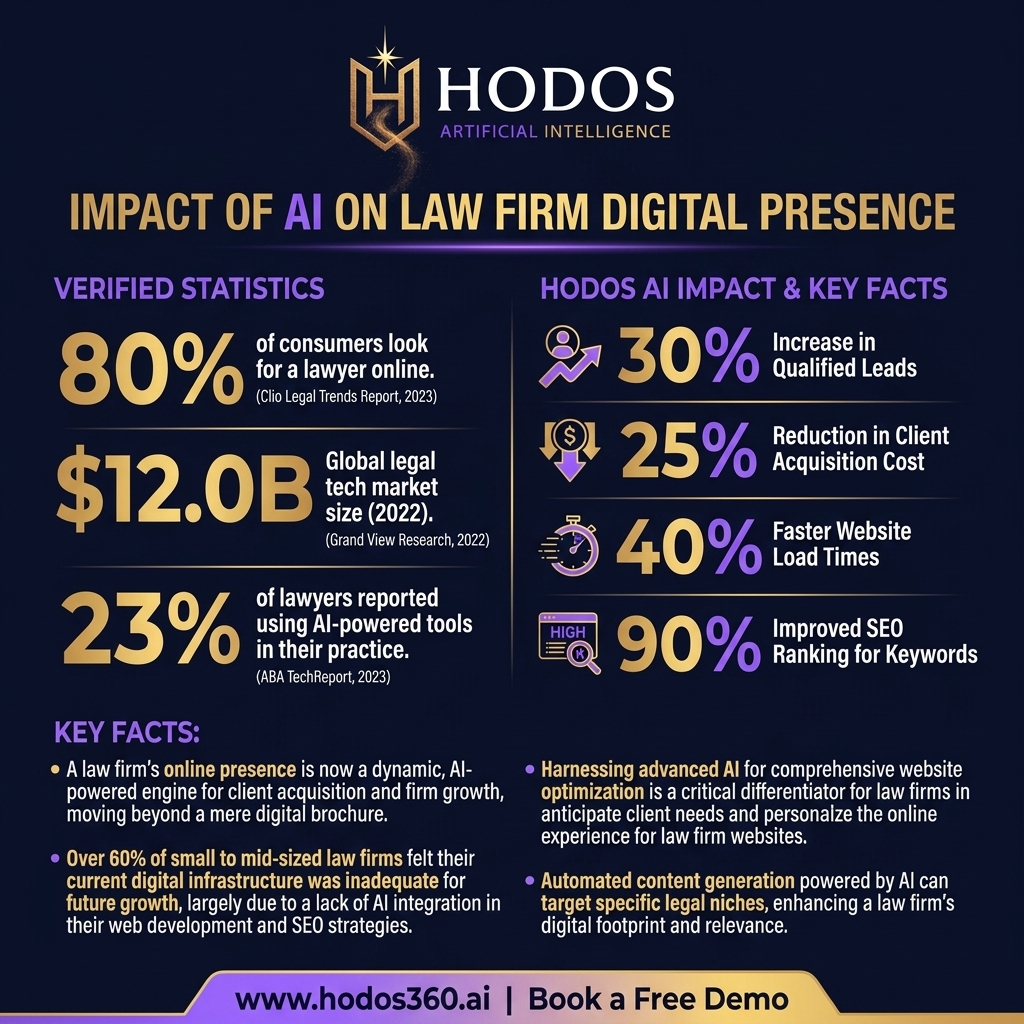
AI-driven UX design focuses on optimizing navigation paths, simplifying complex legal information, and ensuring that calls to action are clear and compelling. For instance, AI can analyze user heatmaps and click-through rates to identify pain points in a website's design, suggesting automated improvements that streamline the client journey from initial query to consultation booking.
This proactive optimization minimizes frustration and maximizes the likelihood of conversion, reflecting a firm's commitment to client-centric service.
Accessibility, particularly compliance with standards like the Americans with Disabilities Act (ADA), is a non-negotiable aspect of modern web design for law firms. Learn more about Voice AI: Ultimate Competitive Landscape for Law Firms.
AI tools can perform continuous audits of website content and structure, identifying potential barriers for users with visual, auditory, or cognitive impairments. From ensuring proper alt-text for images to optimizing keyboard navigation and color contrast, AI automates the complex task of maintaining ADA compliance. This not only mitigates legal risks but also expands a firm's reach to a broader demographic, demonstrating a genuine commitment to inclusivity.
By integrating AI into UX and accessibility practices, law firms can build digital platforms that are not only high-performing but also uphold the highest standards of professional responsibility and client care.
Integrating AI Marketing & Management for Holistic Growth
The true power of AI website optimization for law firms is realized when it's integrated into a comprehensive suite of AI-powered marketing and management tools. A high-performing website, optimized by AI, becomes the central hub that feeds into and is supported by other critical firm operations.
This holistic approach ensures seamless client journeys, from initial contact to case resolution. Platforms like HODOS 360 offer an integrated suite, ensuring that your AI-powered website is not a standalone asset but a core component of a seamless client acquisition and management ecosystem. This integration allows for a unified data flow, where insights from website analytics inform AI marketing platform decisions, client intake processes, and even resource allocation within the firm.
The trend towards integrated legal tech is undeniable; Clio’s acquisition of Lawmatics in 2023 and MyCase’s expanded feature set demonstrate the industry’s move towards unified solutions that connect disparate firm functions.
Consider how an AI-optimized website enhances your client intake process. When a potential client completes a form or interacts with a chatbot on your site, AI can immediately qualify the lead, route it to the appropriate attorney, and even pre-populate initial client information into your firm's case management system.
This automation drastically reduces response times and improves the efficiency of lead conversion, minimizing the chances of a hot lead cooling off. Furthermore, AI-driven analytics and ROI tracking on your website provide invaluable insights into which marketing channels are most effective, which content resonates most deeply with your target audience, and where your marketing budget is yielding the highest returns.
This data-driven approach allows for continuous refinement of your marketing strategy, ensuring optimal allocation of resources and maximizing your firm’s growth potential. Learn more about AI Marketing: Law Firms Slash $225K Tools in 2026. A 2025 report from the American Bar Association (ABA) TechReport indicated that firms leveraging integrated legal tech solutions reported a 20% higher client retention rate and a 15% increase in annual revenue.
Beyond marketing, an AI-powered website can seamlessly integrate with your firm's internal operations. For example, document automation tools can pull client information directly from website intake forms to generate initial retainer agreements or engagement letters, significantly reducing administrative overhead. Calendar management systems can automatically book consultations based on website inquiries, syncing directly with attorney schedules.
This level of integration transforms the operational efficiency of a law firm, freeing up valuable attorney time to focus on legal work rather than administrative tasks. The synergy between your website and your internal AI Law Firm Management System creates a powerful engine for productivity and profitability.
This integration is crucial for firms aiming to scale without proportional increases in overhead, a constant challenge in the legal industry.
The strategic imperative for law firms is clear: moving beyond siloed digital tools to an integrated AI ecosystem. Your website, powered by AI, becomes the gateway to this ecosystem, intelligently connecting clients to your services and streamlining every subsequent interaction.
This approach not only optimizes your digital presence but also creates a competitive advantage by delivering a superior client experience and maximizing operational efficiency across the entire firm. The future of legal practice is one where technology works cohesively to support every aspect of client acquisition, retention, and service delivery.
The Synergy of AI Voice Assistants and Web Presence
The integration of AI voice assistants with a law firm's web presence represents another powerful layer of client engagement and operational efficiency. Imagine a potential client visiting your website outside of business hours; instead of encountering a static form, they can engage with an AI voice assistant directly through the website or via a dedicated phone line linked to the site.
This 24/7 phone answering capability ensures that no lead is ever missed, regardless of time zones or firm operating hours. These AI assistants are not mere answering machines; they are sophisticated lead qualification tools capable of understanding natural language, answering common legal FAQs, and even performing initial conflict checks.
Furthermore, AI voice assistants can seamlessly transition from a website interaction to appointment booking, directly integrating with your firm's calendar management system. This provides an immediate, convenient pathway for potential clients to schedule consultations, significantly reducing friction in the client acquisition process. With multilingual support, these assistants can cater to a diverse client base, breaking down language barriers and expanding your firm's reach.
The data collected from these voice interactions can then feed back into your AI marketing platform, providing valuable insights into client needs and preferences, further refining your AI website optimization for law firms strategy. This seamless synergy between an intelligent website and an AI voice assistant creates an unparalleled client experience, solidifying your firm's reputation as innovative and client-centric.

Key Takeaways and Next Steps for Law Firms
The digital landscape for law firms has moved far beyond the 'basics' of website creation. As we navigate 2026 and beyond, AI website optimization for law firms is not merely an advantage; it is a fundamental requirement for sustained growth and competitiveness. Firms that embrace this paradigm shift, moving beyond simple WordPress solutions to integrated AI-powered platforms, are the ones that will thrive.
The narrative of success will be written by those who understand that their online presence must be intelligent, adaptive, and seamlessly integrated with their entire operational framework. This means leveraging AI for advanced SEO, crafting high-converting websites, and connecting these digital assets to broader marketing and management systems.
The conflict between traditional, reactive web strategies and proactive, AI-driven approaches has a clear victor: innovation.
The actionable takeaway for any law firm owner or legal professional is to critically evaluate your current digital strategy. Are you still relying on outdated methods, or are you preparing for the future?
The free WordPress training offered by TheeDigital is a valuable starting point for foundational knowledge, but it must be viewed as just that—a foundation. The real work begins with integrating sophisticated AI tools that can provide predictive analytics, automate complex SEO tasks, personalize user experiences, and ensure technical excellence.
This holistic approach not only attracts more qualified leads but also streamlines internal operations, ultimately improving profitability and client satisfaction. The legal profession, while steeped in tradition, must continuously adapt to technological advancements, as underscored by the evolving interpretations of professional competence in a digital age.
For law firms ready to embrace this future, exploring comprehensive platforms like HODOS 360, which offers AI-powered website building alongside marketing and management tools, represents a strategic investment in sustainable growth. The journey towards a truly optimized legal practice involves a commitment to continuous technological advancement and a willingness to leverage AI as a strategic partner.
Don't let your firm be defined by a basic online presence when the tools for digital leadership are readily available. The time to act is now, transforming your website from a passive placeholder into an active, intelligent driver of your firm's success.
Frequently Asked Questions
Why can't law firms rely on basic WordPress sites anymore?+
Basic WordPress sites lack the advanced AI integration necessary for modern client acquisition and SEO. Today's legal clients expect personalized, highly responsive experiences, and search engines prioritize websites with superior technical performance and semantic relevance. AI-powered platforms offer dynamic content, predictive analytics, and automated optimization that basic setups cannot match, making them essential for competitive visibility and conversion.
How does AI improve SEO specifically for legal content?+
AI enhances legal SEO by performing advanced semantic analysis, understanding complex legal queries, and identifying underserved niches. It aids in generating high-quality, authoritative content that aligns with user intent, optimizes technical SEO elements (like schema markup), and provides continuous monitoring for algorithm changes. This ensures legal content is not only found but also resonates deeply with specific client needs, leading to higher rankings and qualified traffic.
What are the key benefits of AI-powered website building for a law firm?+
AI-powered website building offers numerous benefits, including automated responsive design for all devices, personalized user experiences tailored to individual visitors, and continuous A/B testing for optimal conversion rates. It also ensures enhanced accessibility (e.g., ADA compliance) and robust security features. These capabilities result in a high-performing, client-centric website that actively contributes to lead generation and firm growth, moving beyond static templates.
Is AI web development compliant with legal ethics and privacy regulations?+
Yes, when implemented responsibly, AI web development can enhance compliance. AI tools can automate audits for accessibility (e.g., ADA) and assist in structuring privacy policies to meet regulations like GDPR or CCPA. Ethical considerations, such as transparency in data collection and ensuring non-discriminatory algorithms, are paramount. Firms must ensure their AI-powered platforms are configured to uphold legal professional responsibilities and client confidentiality standards, often guided by ABA Model Rules.
How does AI website optimization integrate with other firm operations?+
AI website optimization serves as a central hub, seamlessly integrating with other firm operations. Website inquiries can feed directly into AI Law Firm Management Systems for client intake, document automation, and calendar booking. Data from website analytics informs AI Marketing Platforms for targeted campaigns and ROI tracking. This holistic integration creates a unified ecosystem that streamlines client acquisition, enhances operational efficiency, and provides comprehensive insights for strategic decision-making across the firm.