

AI Marketing: The Ultimate Guide to Loyalty & Growth
In a legal landscape increasingly defined by fierce competition and evolving client expectations, the traditional marketing playbook is no longer sufficient. Consider the dilemma faced by Eleanor Vance, Managing Partner at Vance & Associates, a respected mid-sized firm specializing in corporate law. Despite a strong track record, Eleanor observed a subtle but concerning dip in client retention and referral rates.
Her firm's outreach felt generic, struggling to resonate with a new generation of clients who expected personalized experiences. This isn't an isolated incident; it mirrors a broader industry challenge highlighted by recent analyses, including Kalkine Media's inquiry into how AI marketing trends and lingering loyalty data gaps might influence market interest and firm valuations.
The tension between established practices and disruptive technologies is palpable, creating both anxiety and immense opportunity for those willing to adapt.
The promise of artificial intelligence in marketing is not merely about automation; it's about intelligent engagement, predictive insights, and hyper-personalization that can redefine client relationships.
Leading figures like Sam Altman of OpenAI and Jensen Huang of NVIDIA have consistently underscored AI's transformative potential across all sectors, and the legal industry is no exception. However, for law firms, unlocking this potential often means confronting significant data challenges. Many firms possess a wealth of client interaction data, yet it remains siloed, unstructured, and largely unanalyzed—a loyalty data gap that prevents truly effective AI marketing strategies from taking root.
This oversight can be costly, as firms miss opportunities to anticipate client needs, proactively address concerns, and foster deeper, more enduring loyalty in a market where client experience is paramount. The imperative for legal professionals is clear: understand how to harness AI not just for efficiency, but for profound, measurable growth.
The Evolving Landscape of Legal Marketing with AI
The advent of AI has fundamentally reshaped the legal marketing paradigm, moving beyond rudimentary email blasts to sophisticated, data-driven campaigns. Law firms are now able to leverage AI to automate content generation, optimize social media presence, and even create compelling video content with unprecedented ease.
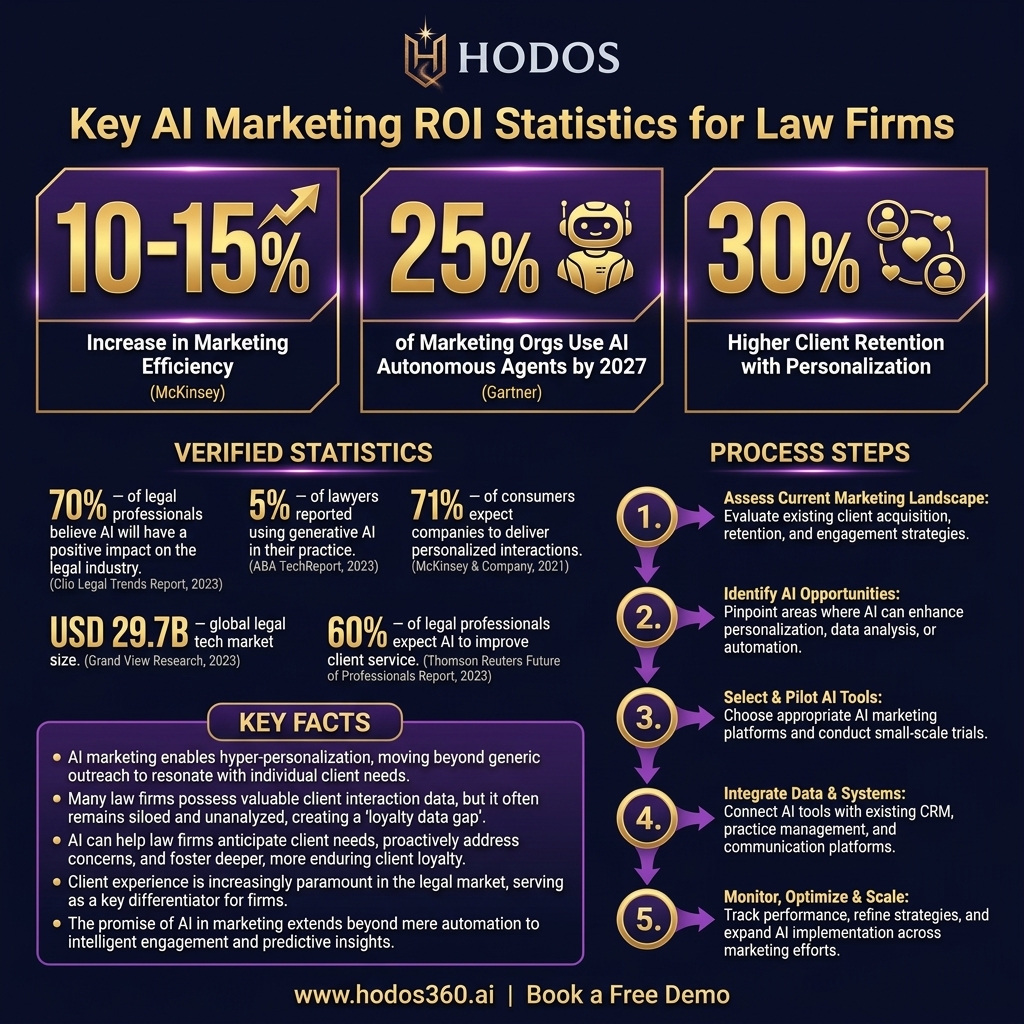
For instance, platforms are emerging that allow legal marketers to generate tailored articles and social media posts in minutes, freeing up valuable time for strategic oversight. This shift is not merely about doing things faster; it's about doing them smarter. A recent McKinsey report on AI adoption indicated that organizations leveraging AI for marketing saw, on average, a 10-15% increase in marketing efficiency and a 5-10% uplift in revenue.
This underscores the competitive advantage firms can gain by integrating AI into their marketing operations, allowing them to engage potential clients more effectively and nurture existing relationships with greater precision. The era of generic outreach is rapidly fading, replaced by a demand for relevance and value.
This transformation extends to how law firms identify and attract new leads. Learn more about Ultimate AI Video Marketing: Legal Firms Master Content Creation. AI-powered analytics can analyze vast datasets—including industry trends, competitor activities, and online behavior—to pinpoint ideal client profiles and predict their legal needs before they even articulate them.
For example, a firm specializing in intellectual property might use AI to monitor emerging patent filings or startup funding rounds, identifying companies likely to require IP counsel. This proactive approach to lead generation is a stark contrast to traditional methods, which often rely on broad advertising or networking that may not yield targeted results.
Moreover, AI's ability to automate repetitive tasks, such as scheduling appointments or answering preliminary inquiries through chatbots, ensures that human legal professionals can focus on high-value interactions. This fusion of automation and intelligence forms the bedrock of modern AI marketing, ensuring that every outreach is strategic and every interaction is optimized for conversion and client satisfaction.
Bridging the Loyalty Data Gap for Sustainable Growth
The central challenge for many law firms, as highlighted by numerous industry analyses including the recent Kalkine Media article, is the pervasive loyalty data gap. While firms collect extensive client information—from case histories and billing records to communication logs—this data often remains fragmented and underutilized.
This fragmentation prevents a holistic view of the client journey, making it difficult to understand true client loyalty drivers or predict future needs. Without a cohesive strategy for aggregating and analyzing this data, firms struggle to personalize their services, anticipate client churn, or identify cross-selling opportunities effectively.
The ABA Legal Technology Survey Report consistently shows that while firms are adopting more practice management software, the integration and analytical capabilities for client relationship management often lag, contributing directly to this data chasm. To truly leverage AI marketing, firms must first address the foundational issue of data organization and accessibility, transforming raw information into actionable intelligence.
Overcoming this loyalty data gap requires a strategic shift towards integrated data management systems. Platforms that unify client intake, case management, billing, and communication records provide the essential foundation for AI-driven insights. Learn more about AI Lead Flow: Essential Strategies for Law Firm Growth. By consolidating this information, law firms can create comprehensive client profiles that encompass their legal history, preferences, communication patterns, and satisfaction levels.
This rich, structured data then becomes the fuel for AI algorithms to identify trends, segment client groups, and forecast future legal needs. For instance, if AI analyzes billing data and notes a client consistently uses a particular service, it can proactively suggest related services or educational content.
Managing Partner Eleanor Vance, after recognizing her firm's data fragmentation, initiated a project to integrate their disparate systems, moving towards a unified client data platform. This strategic investment in data infrastructure is not just about efficiency; it's about building a robust framework for long-term client loyalty and sustainable growth, turning raw data into a competitive asset in the legal market.
Implementing Advanced Customer Relationship Management (CRM)
Implementing an advanced CRM system specifically designed for the legal sector is paramount to bridging the loyalty data gap. These systems go beyond basic contact management, offering sophisticated tools for tracking every client interaction, managing communication preferences, and automating follow-up processes. For example, a robust legal CRM can flag clients nearing the completion of a specific legal matter, prompting the firm to send tailored information about related services or offer a post-case review meeting.
This proactive engagement, driven by intelligent data analysis, significantly enhances the client experience and reinforces loyalty. The success of firms like Allen & Overy, in their partnership with Harvey AI for internal legal research, demonstrates a broader industry trend towards leveraging advanced technology to optimize operations and client service.
A well-implemented CRM acts as the central nervous system for a firm's client relationships, ensuring no interaction is missed and every touchpoint is optimized.
Furthermore, these advanced CRMs, when integrated with AI marketing platforms, can provide predictive analytics on client behavior. Learn more about AI Legal Assistant 2026: Revolutionizing Law Firm Efficiency.
They can identify clients at risk of churn based on declining engagement or changes in their business activities, allowing the firm to intervene with targeted retention strategies. Conversely, they can highlight 'super-promoters'—highly satisfied clients who are excellent candidates for referral programs. This level of insight transforms client relationship management from a reactive task into a proactive, strategic advantage.
The investment in such systems, though initially substantial, yields significant returns in improved client retention, increased referrals, and a stronger brand reputation. The ability to understand and predict customer trends is no longer a luxury but a necessity for law firms aiming for sustained success in a competitive market.
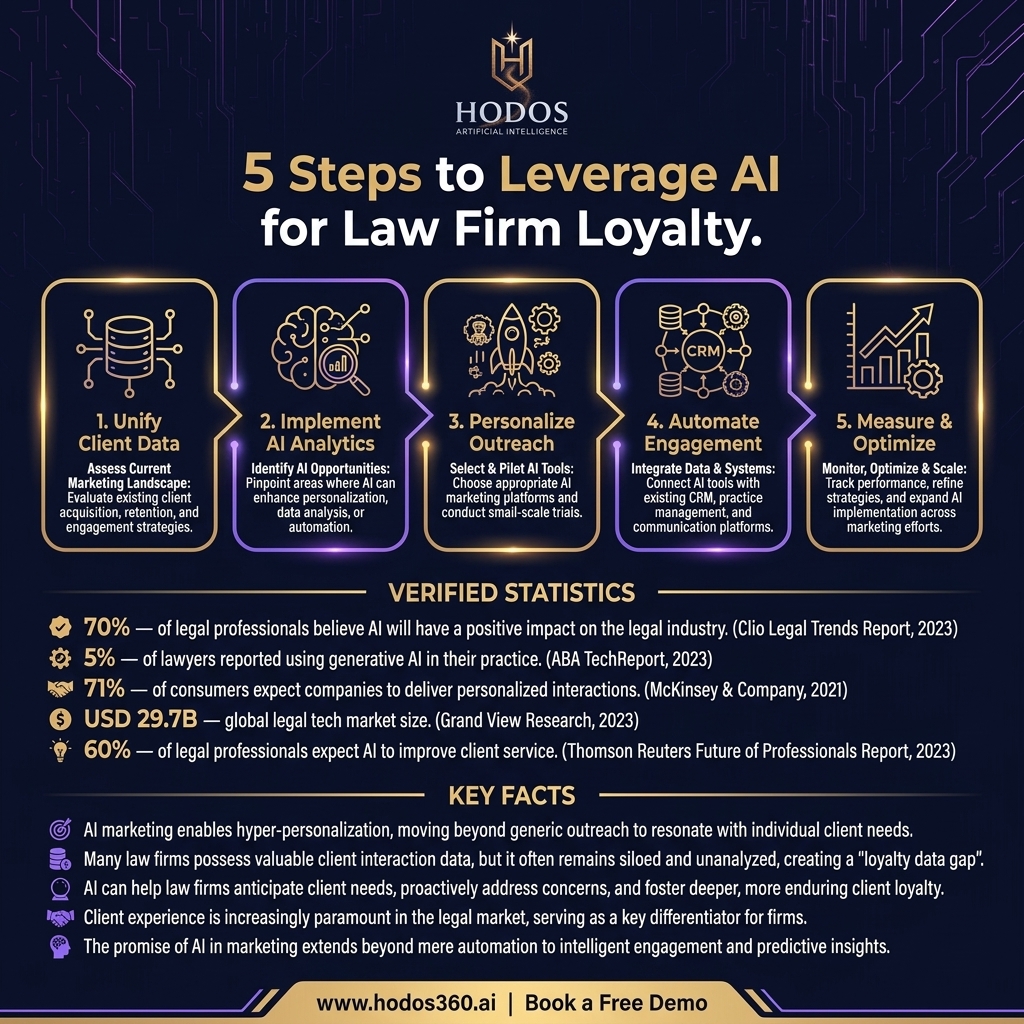
- ✓Consolidate Data Sources: Integrate all client-related data from case management, billing, communication, and marketing platforms into a single, unified system.
- ✓Implement AI-Powered Analytics: Utilize tools that can analyze client history, behavior patterns, and engagement metrics to identify trends and predict future needs.
- ✓Personalize Client Communications: Leverage AI to segment clients and tailor marketing messages, legal updates, and service recommendations based on individual profiles.
- ✓Automate Feedback Collection: Deploy AI-driven surveys and sentiment analysis tools to gather real-time client feedback and identify areas for improvement.
- ✓Proactive Outreach: Use AI to flag potential client churn risks or identify opportunities for cross-selling and upselling based on predictive insights.
- ✓Measure and Refine: Continuously track the impact of AI marketing initiatives on client loyalty, retention, and revenue, using data to refine strategies.
AI-Powered Personalization: Beyond Generic Outreach
The era of one-size-fits-all marketing in the legal sector is unequivocally over. Clients, whether individuals or corporations, expect and demand personalized interactions that acknowledge their unique situations and preferences. AI-powered personalization moves beyond simply addressing a client by name; it involves understanding their specific legal history, their industry, their communication style, and even their preferred channels for receiving information.
For example, an AI system can analyze a corporate client's recent mergers and acquisitions activity and proactively send them a curated article on relevant regulatory changes, or invite them to a webinar hosted by the firm's M&A team. This level of tailored content and outreach fosters a sense of being truly understood and valued, which is critical for building enduring client loyalty.
Gartner predicts that by 2027, 25% of marketing organizations will use AI-powered autonomous agents to launch campaigns, a testament to the growing reliance on intelligent systems for hyper-targeted engagement.
This sophisticated personalization is made possible by AI's ability to process and interpret vast amounts of data at speeds and scales impossible for human marketers.
Learn more about AI Legal Website Optimization: Essential Guide for Law Firms. It can identify subtle patterns in client behavior, predict their next likely legal need, and even determine the optimal time and medium for communication. Consider a scenario where an AI analyzes a client's engagement with previous legal advice and identifies a growing interest in data privacy.
The AI marketing platform can then automatically enroll them in a drip campaign featuring articles, webinars, and case studies on data protection, positioning the firm as a thought leader in that space. This is not just about convenience; it's about delivering relevant value at precisely the right moment, transforming transactional relationships into strategic partnerships.
Firms that fail to adopt such personalized approaches risk being perceived as out-of-touch, losing clients to competitors who are leveraging AI to deliver superior, individualized experiences.
Measuring ROI and Proving Value in Legal Marketing
For law firm managing partners and CFOs, the question of return on investment (ROI) for marketing spend has always been critical, and with the increasing investment in AI technologies, it becomes even more pertinent. AI marketing platforms are designed to provide granular data and analytics, enabling firms to track every aspect of their campaigns, from initial lead generation to client conversion and retention.
This means moving beyond vague metrics like website traffic to concrete indicators such as cost per qualified lead, client acquisition cost, and lifetime client value. For instance, a firm can use AI to A/B test different ad creatives or landing page designs, determining precisely which elements yield the highest conversion rates.
The ability to attribute specific revenue gains to marketing efforts provides unparalleled transparency and accountability, a crucial factor for firms operating with tight budgets and demanding stakeholders. The Bloomberg Law survey consistently highlights that legal professionals demand clear, quantifiable results from their technology investments, making robust ROI tracking an essential component of any AI marketing strategy.
Furthermore, AI's analytical capabilities extend to predicting future performance and optimizing budget allocation. Learn more about Voice Search Growth: Essential Legal Firm Strategies. By analyzing historical campaign data and market trends, AI can recommend the most effective channels and strategies for future marketing efforts, ensuring that every dollar spent is maximized for impact.
This predictive power allows firms to make data-driven decisions, reducing guesswork and increasing the likelihood of successful outcomes. For example, if AI identifies that a particular social media platform consistently generates high-quality leads for a specific practice area, the firm can reallocate resources to capitalize on that insight.
This continuous feedback loop of data collection, analysis, and optimization is a hallmark of effective AI marketing, ensuring that legal firms not only invest wisely but also continuously improve their marketing efficacy. The ability to prove value with concrete data is no longer a luxury but a strategic imperative in the competitive legal market.
Navigating AI Regulation and Ethical Marketing
As AI becomes more integral to marketing, legal firms must also navigate the complex landscape of AI regulation and ethical considerations. The enforcement of the EU AI Act, for example, sets a global precedent for how AI systems must be designed, deployed, and governed, particularly concerning data privacy and algorithmic bias.
For law firms, this means ensuring that their AI marketing tools comply with stringent data protection laws like GDPR and CCPA, especially when handling sensitive client information. Microsoft President Brad Smith has been a vocal proponent of responsible AI development, emphasizing the need for legal and ethical frameworks to keep pace with technological advancements.
Firms must conduct thorough due diligence on their AI vendors, ensuring their platforms are transparent, explainable, and free from biases that could lead to discriminatory targeting or unfair practices. Adherence to ethical guidelines is not just a matter of compliance; it's fundamental to maintaining client trust and upholding the profession's integrity.
Moreover, the ABA Model Rules of Professional Conduct (Rule 7.1 regarding communications concerning a lawyer's services and Rule 1.6 on confidentiality of information) provide essential ethical guardrails for legal marketing. Learn more about AI Podcasts: Essential Voice Assistant Strategies for Law Firms. AI-driven personalization, while powerful, must never cross into manipulative or misleading territory.
Firms must be transparent about their use of AI in marketing, ensuring that clients understand how their data is used and that communications remain truthful and non-deceptive. This includes carefully reviewing AI-generated content for accuracy and avoiding any impression of guaranteed outcomes. The ethical imperative extends to data security, ensuring that client loyalty data, which fuels AI marketing, is protected against breaches and unauthorized access.
Firms that prioritize ethical AI adoption will not only mitigate legal risks but also strengthen their reputation as trustworthy and client-centric organizations in a rapidly evolving digital world.
The Future of Legal Marketing: Agentic AI and Predictive Analytics
The horizon of legal marketing is rapidly expanding with the emergence of agentic AI and increasingly sophisticated predictive analytics. Agentic AI refers to systems capable of not just processing information, but also taking autonomous actions to achieve specific goals, learning and adapting along the way.
Imagine an AI agent that can autonomously manage a firm's social media strategy, from identifying trending topics in legal news to drafting and scheduling posts, and even engaging with comments, all while adhering to the firm's brand voice and ethical guidelines. This level of autonomy promises to revolutionize marketing automation, allowing firms to maintain a dynamic and responsive online presence with minimal human intervention.
Research from Deloitte suggests that agentic AI will reshape numerous business functions, including marketing, by offering unprecedented levels of efficiency and strategic execution. This is a significant leap beyond current AI capabilities, moving from assistive tools to truly autonomous strategic partners in the marketing domain.
Predictive analytics, already a powerful tool, will become even more precise and pervasive. Future AI systems will not only identify patterns in existing client data but also integrate real-time external market signals, legislative changes, and even macroeconomic indicators to forecast legal demand with remarkable accuracy.
This could mean an AI system predicting a surge in demand for corporate restructuring services months in advance due to economic shifts, allowing a firm to proactively launch targeted campaigns and allocate resources. The competition among legal tech providers to develop these cutting-edge AI marketing solutions is intense, with significant funding rounds and acquisitions shaping the landscape.
The ultimate goal is to empower law firms with the foresight to anticipate market needs and client demands, enabling them to position themselves strategically for future growth. Firms that embrace these advanced capabilities will not merely react to market changes but actively shape their future, securing a significant competitive advantage.
Strategic Adoption: A Path to Competitive Advantage
For law firms looking to thrive in this evolving environment, strategic adoption of AI is not merely an option but a necessity for competitive advantage. The journey begins with a clear understanding of current marketing inefficiencies and client loyalty gaps. Firms must then invest in the right legal technology infrastructure, prioritizing platforms that offer integrated data management, AI-powered analytics, and robust marketing automation capabilities.
This isn't just about purchasing software; it's about fostering a culture of data-driven decision-making and continuous learning within the firm. Managing Partner Eleanor Vance, having seen initial success with her firm's data integration efforts, is now exploring AI-driven content generation and social media automation to further enhance their digital footprint.
Her experience underscores that a phased, strategic approach to AI adoption, coupled with proper training and change management, is key to realizing its full potential.
Ultimately, the firms that will lead the legal industry in the coming years will be those that master the art and science of AI marketing.
They will leverage loyalty data not just to retain existing clients but to cultivate genuine advocacy and attract a steady stream of new, high-value engagements. This requires a commitment to innovation, a willingness to adapt, and a focus on delivering unparalleled client experiences at every touchpoint.
The competitive landscape demands nothing less than a proactive, intelligent approach to marketing, one that harnesses the power of AI to build stronger client relationships and secure a prosperous future for the firm.

Key Takeaways and Next Steps
The imperative for law firms to embrace AI marketing is clear. From addressing loyalty data gaps to implementing hyper-personalized outreach and proving ROI, AI offers an unparalleled toolkit for sustained growth and enhanced client relationships. The future of legal marketing is intelligent, data-driven, and client-centric, demanding a strategic shift from traditional approaches.
Firms that prioritize integrated data systems, invest in AI-powered personalization, and commit to ethical AI adoption will not only thrive but set new benchmarks for client engagement and business development. The opportunity to transform your firm's marketing efforts is here, allowing you to move beyond reactive strategies to proactive, predictive growth.
For law firms ready to navigate this transformation, platforms like HODOS 360 provide comprehensive AI-powered solutions, from robust AI Law Firm Management Systems that consolidate client data to sophisticated AI Marketing Platforms designed for lead generation, content creation, and ROI tracking. By leveraging such integrated technologies, legal professionals can unlock their full potential, ensuring their marketing efforts are not just efficient but strategically aligned with their growth objectives.
Take the first step towards a smarter, more successful future by exploring how AI can redefine your firm's client engagement strategy.
Frequently Asked Questions
What is AI marketing for law firms?+
AI marketing for law firms involves using artificial intelligence tools to automate, optimize, and personalize marketing efforts. This includes AI-powered content generation, social media automation, targeted advertising, lead qualification, and predictive analytics to understand client behavior and optimize campaigns for better ROI. It aims to enhance client acquisition, retention, and overall engagement efficiently.
How can AI help bridge the loyalty data gap?+
AI helps bridge the loyalty data gap by integrating and analyzing disparate client data sources (case management, billing, communications). It identifies patterns, segments clients, and predicts needs, creating a holistic view of each client. This unified data allows for hyper-personalized outreach and proactive engagement strategies that foster deeper loyalty and prevent churn.
Is AI marketing ethical for legal professionals?+
Yes, AI marketing can be ethical if implemented responsibly. Law firms must ensure compliance with data privacy regulations (e.g., GDPR, CCPA) and adhere to ABA Model Rules of Professional Conduct regarding truthful and non-deceptive communications. Transparency, data security, and avoiding algorithmic bias are crucial to maintaining client trust and professional integrity when using AI in marketing.
What are 'agentic AI' and 'predictive analytics' in legal marketing?+
Agentic AI refers to AI systems capable of autonomous action and learning to achieve specific marketing goals, like managing social media strategy independently. Predictive analytics uses AI to forecast future client needs, market trends, and legal demand by analyzing historical data and external signals. Both empower firms with proactive, strategic marketing capabilities.
How can law firms measure the ROI of AI marketing?+
Law firms can measure AI marketing ROI by tracking specific metrics like cost per qualified lead, client acquisition cost, client lifetime value, and conversion rates. AI platforms provide granular analytics for A/B testing campaigns, optimizing budget allocation, and attributing revenue directly to marketing efforts. This data-driven approach ensures accountability and continuous improvement.