

AI Marketing Systems: The Essential Guide for Law Firms
The legal industry, often perceived as a bastion of tradition, is currently experiencing a seismic shift, propelled by the relentless march of artificial intelligence. Just a few years ago, the idea of AI drafting legal briefs or managing complex case workflows seemed like science fiction. Today, firms are not only embracing these innovations but are increasingly turning to sophisticated AI marketing systems to transform their client acquisition strategies and solidify their market position. The recent "AI-Powered Marketing Systems" article by Trend Hunter underscores a critical truth: the future of legal business development is inextricably linked to intelligent automation, moving beyond conventional outreach to a data-driven, hyper-personalized approach that redefines engagement.
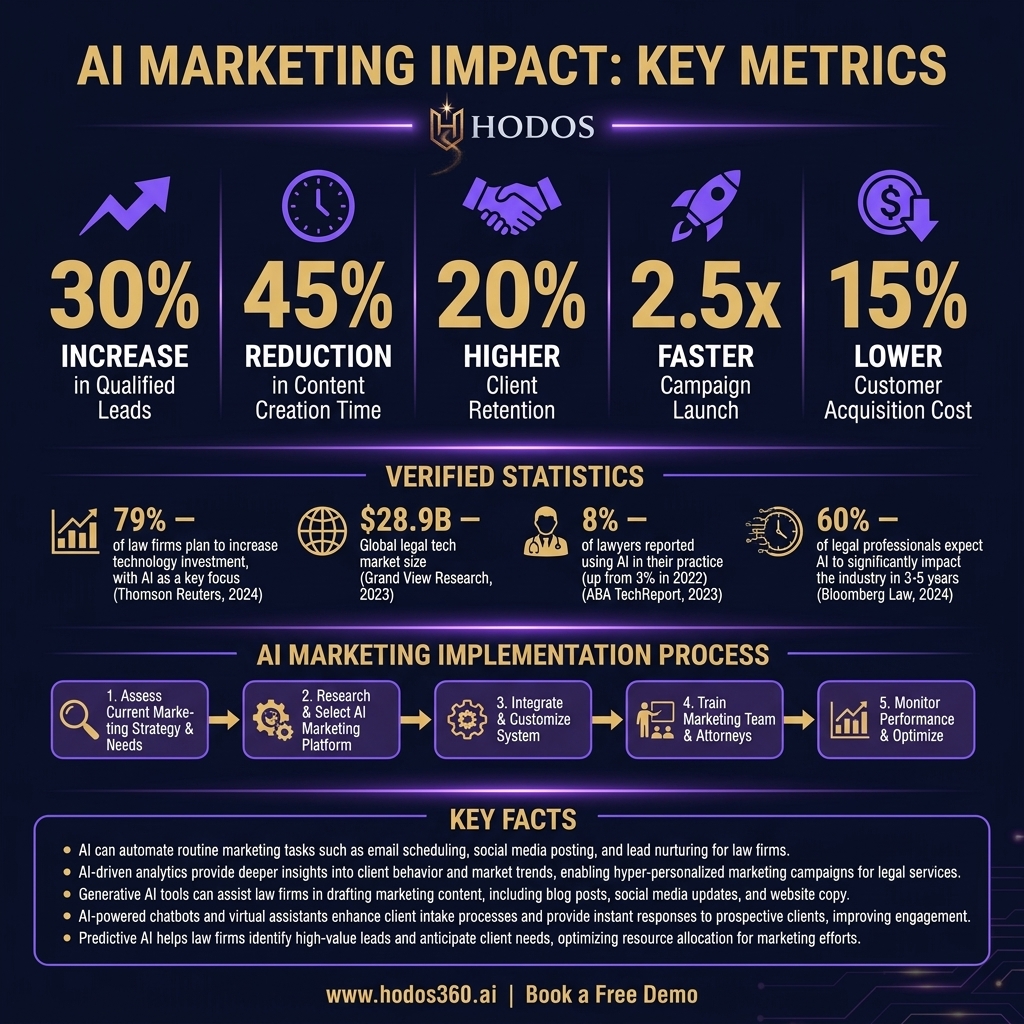
This isn't merely about adopting new tools; it's about a fundamental rethinking of how law firms connect with prospective clients in a digital-first world. Consider the story of "Lexpert Law Group," a mid-sized firm that, until recently, relied heavily on referrals and traditional advertising. Facing stagnating growth and a younger demographic of clients demanding instant, personalized interaction, managing partner Evelyn Reed made a bold decision. Inspired by discussions at LegalTech NYC 2025 and the growing buzz around generative AI, she spearheaded the integration of advanced AI marketing systems. Within months, Lexpert saw a 30% increase in qualified leads, their website traffic soared, and their social media presence became a vibrant hub for legal insights. This transformation wasn't magic; it was the strategic application of AI, enabling them to analyze market trends, predict client needs, and automate outreach with unprecedented precision.
The competitive landscape for law firms has never been more intense. With every passing quarter, new legal tech startups emerge, promising efficiencies and competitive advantages. Firms that hesitate risk being outmaneuvered by agile competitors leveraging AI to identify niche markets, create compelling content, and optimize their digital footprint. From solo practitioners to large corporate entities, the imperative is clear: embrace intelligent marketing solutions or contend with diminishing returns. This comprehensive guide delves into how modern law firms can harness the power of AI marketing systems to not only survive but thrive, setting new benchmarks for client engagement and sustainable growth.
The Strategic Imperative: Why Law Firms Need AI Marketing Systems Now
The legal profession operates within an increasingly crowded and dynamic marketplace, where traditional marketing tactics are rapidly losing their efficacy. Clients, empowered by digital access to information, expect immediate answers, personalized experiences, and transparent communication. This shift in client behavior necessitates a pivot towards more sophisticated, data-driven strategies that only AI marketing systems can truly deliver. According to the ABA TechReport 2024, law firms that actively invest in technology report higher client satisfaction and increased revenue per attorney, a clear indicator that digital transformation is no longer optional but essential for competitive advantage. Firms like Hogan Lovells and Baker McKenzie have publicly discussed their extensive digital initiatives, demonstrating a commitment to innovation that extends beyond internal operations to client-facing interactions.
Historically, legal marketing has often been a resource-intensive endeavor, requiring significant manual effort in lead generation, content creation, and campaign management. This often led to inefficiencies, inconsistent branding, and a reactive approach to market changes. However, the advent of AI has fundamentally altered this paradigm. AI marketing systems allow firms to automate repetitive tasks, freeing up valuable human capital to focus on high-value activities like client relationship building and strategic planning. This isn't about replacing human marketers but augmenting their capabilities, providing them with predictive insights and automation tools that were previously unimaginable. Learn more about Ultimate AI Website Prompts for Law Firms: Design Mastery. The ability to forecast market shifts, identify emerging legal needs, and proactively engage potential clients with highly relevant information is a game-changer.
Furthermore, the ethical considerations surrounding legal advertising, as outlined in rules such as ABA Model Rule 7.1 (Communications Concerning a Lawyer's Services), demand accuracy, clarity, and non-misleading representations. AI, when properly implemented and overseen, can help ensure compliance by standardizing messaging, reviewing content for potential issues, and tracking campaign performance against regulatory benchmarks. This creates a powerful synergy: AI drives efficiency and personalization, while human oversight ensures ethical adherence and strategic alignment. The challenge lies in integrating these powerful tools without compromising the human element that remains central to the attorney-client relationship.
The move towards AI marketing systems is also driven by the sheer volume of data available today. Every client interaction, website visit, social media engagement, and search query generates data points that, when analyzed by AI, reveal invaluable patterns and preferences. Firms that can leverage this data to understand their target audience at a granular level will be able to craft more effective campaigns, allocate resources more efficiently, and ultimately, secure a greater share of the market. This proactive, data-informed approach is what sets leading firms apart and positions them for sustained growth in a rapidly evolving legal landscape. The future is about leveraging these powerful tools to stay ahead, not just keep pace.
Beyond Basics: Advanced AI Marketing Tools for Law Firms
The sophistication of AI marketing systems available to law firms today extends far beyond simple automation. These advanced tools integrate machine learning, natural language processing (NLP), and predictive analytics to create a comprehensive ecosystem for client acquisition and retention. For instance, platforms like HODOS 360's AI Marketing Platform offer a suite of services designed specifically for the legal sector, from AI video creation that can explain complex legal concepts in engaging ways to social media automation that ensures consistent brand presence across all relevant channels. Firms are no longer just posting; they are engaging in strategic, data-driven conversations with their audience, ensuring their messages resonate and convert.
One of the most impactful applications of these advanced tools is in lead qualification and client intake. Imagine an AI powered customer service assistant that can answer common legal questions 24/7, pre-qualify potential clients based on their specific needs, and even book initial consultations directly into an attorney's calendar. This level of efficiency not only improves the client experience by providing immediate support but also significantly reduces the administrative burden on law firm staff. Companies like Clio, through strategic acquisitions and continuous innovation, have shown how integrated practice management solutions are evolving to include more robust marketing and client engagement features, demonstrating the industry's move towards holistic AI-powered platforms.
The power of these systems also lies in their ability to analyze vast amounts of data to identify emerging trends and opportunities. For example, an AI could detect a sudden increase in queries related to a specific type of litigation following a new legislative development or a major court ruling. This allows firms to be agile, creating targeted campaigns and content to address these emerging needs almost instantaneously. Learn more about Voice AI: Essential Strategies for Law Firms' Future. This proactive approach ensures that firms are always a step ahead, positioning themselves as authorities and trusted advisors in real-time, capitalizing on "AI news today" to inform their strategies.
### Crafting Compelling Narratives with AI Content Generation
Content remains king in digital marketing, and AI is revolutionizing its creation. AI marketing systems can generate high-quality blog posts, articles, social media captions, email newsletters, and even website copy, all tailored to a firm's specific practice areas and target audience. Tools powered by large language models, similar to those developed by OpenAI and Anthropic, can draft compelling narratives that adhere to legal accuracy and brand voice. However, it's crucial to emphasize that human oversight remains paramount. While AI can draft, attorneys must review and refine content to ensure factual accuracy, legal precision, and compliance with ethical advertising standards. The goal is to enhance, not replace, the human touch.
These capabilities extend to AI video creation, enabling law firms to produce professional-grade explainer videos, client testimonials, and firm introductions without the need for extensive budgets or production teams. Such videos are critical for capturing attention on platforms like YouTube and LinkedIn, offering a dynamic way to communicate expertise and build trust. By automating much of the content production process, firms can maintain a consistent flow of valuable information, positioning themselves as thought leaders and significantly boosting their online visibility and engagement across various platforms.
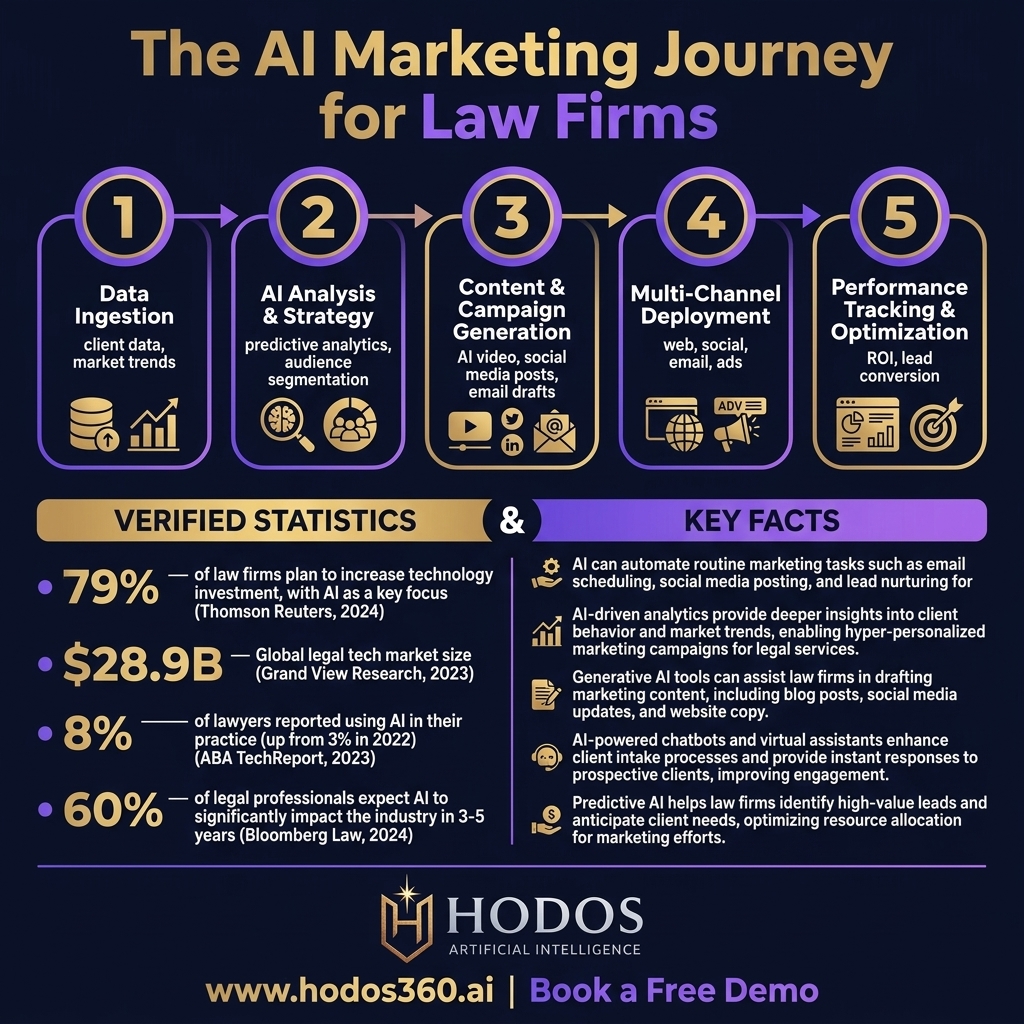
- ✓AI-Powered Content Generation: Automatically drafts blog posts, articles, social media updates, and email campaigns, ensuring consistent messaging and freeing up attorney time.
- ✓Intelligent Lead Qualification & Nurturing: Uses machine learning to identify and score potential clients, routing high-value leads to the right attorneys and automating follow-up sequences.
- ✓Social Media Automation & Engagement: Schedules posts, analyzes audience sentiment, and suggests optimal engagement strategies across platforms like LinkedIn, Facebook, and X (formerly Twitter).
- ✓Predictive Analytics & ROI Tracking: Monitors campaign performance in real-time, attributes conversions, and provides insights to optimize future marketing spend for maximum return on investment.
- ✓Personalized Client Journey Mapping: Creates tailored experiences for potential and existing clients based on their interactions, preferences, and legal needs, fostering stronger relationships.
- ✓AI Voice Assistants for Intake: Provides 24/7 multilingual support for initial inquiries, answers FAQs, pre-qualifies leads, and schedules appointments, enhancing client service and efficiency.
- ✓AI-Driven SEO & Web Optimization: Analyzes search trends, optimizes website content for AI powered search engine rankings, and ensures mobile responsiveness for better visibility and conversion.
Maximizing ROI: Analytics, Personalization, and Predictive Insights
The true power of AI marketing systems for law firms lies not just in automation, but in their unparalleled ability to deliver measurable return on investment (ROI) through sophisticated analytics, hyper-personalization, and predictive insights. Unlike traditional marketing efforts where tracking efficacy could be vague, AI platforms provide granular data on every aspect of a campaign. Firms can now precisely attribute leads, conversions, and client acquisitions to specific marketing channels and initiatives, allowing for data-driven allocation of budgets and optimization of strategies. A 2023 report by McKinsey & Company highlighted that companies leveraging AI in marketing experience a 10-15% increase in marketing efficiency and a significant boost in customer engagement, a trend directly applicable to the legal sector.
Personalization, once a labor-intensive luxury, is now standard practice with AI. Imagine a prospective client searching for information on estate planning. An AI marketing system can identify this interest, dynamically adjust the firm's website content to highlight relevant articles and attorney profiles, and then trigger a personalized email sequence offering a free consultation or a downloadable guide. This level of tailored interaction makes the client feel understood and valued, significantly increasing the likelihood of conversion. This goes far beyond generic email blasts, creating a genuine connection that resonates deeply with individuals seeking legal guidance.
Furthermore, AI's predictive capabilities are transforming strategic planning for law firms. By analyzing historical data, market trends, and even external factors like economic indicators or legislative changes, AI can forecast future demand for specific legal services. For example, an AI might predict an upcoming surge in real estate litigation in a particular region, allowing a firm to proactively deploy targeted marketing campaigns and allocate resources to capture that demand. Learn more about AI Agents Marketing: Your Essential Guide for Law Firms. This foresight enables firms to move from reactive marketing to a proactive, opportunity-seizing strategy, ensuring they are always ahead of the curve in a competitive environment.
### Hyper-Targeted Ad Campaigns and SEO Optimization
AI revolutionizes how law firms approach advertising and search engine optimization. Gone are the days of broad, untargeted ad spends. AI marketing systems can analyze demographic data, online behavior, and legal intent signals to create hyper-targeted ad campaigns on platforms like Google Ads, LinkedIn, and even specialized legal directories. This ensures that marketing messages reach the most relevant audience at the precise moment they are seeking legal assistance, dramatically improving click-through rates and reducing wasted ad spend. This precision is essential for maximizing ROI in a cost-conscious industry.
In the realm of SEO, AI is indispensable for maintaining high visibility. An AI powered search engine optimization tool can analyze competitor strategies, identify high-value keywords, and optimize website content for maximum organic reach. It constantly monitors algorithm changes, ensuring that a firm's online presence remains robust and easily discoverable. This includes optimizing for local SEO—critical for many law firms—by ensuring accurate and consistent business listings across all online platforms. The continuous, intelligent optimization provided by AI ensures that firms remain at the top of search results, attracting a steady stream of organic traffic and qualified leads without constant manual intervention.
Implementing AI Marketing: Challenges, Ethics, and Best Practices
While the benefits of AI marketing systems are compelling, their implementation within a law firm is not without its challenges. Data privacy and security remain paramount concerns, especially given the sensitive nature of client information. Firms must ensure that any AI platform they utilize complies with stringent data protection regulations such as the California Consumer Privacy Act (CCPA) or the General Data Protection Regulation (GDPR) for international clients. This requires due diligence in selecting vendors and establishing robust internal protocols for data handling and anonymization. The ethical obligation to protect client confidentiality extends to every tool and system a firm employs, making careful vendor vetting a critical first step.
Another significant challenge lies in the integration of new AI systems with existing legacy infrastructure. Many law firms operate with disparate systems for case management, billing, and client communication, which can create data silos and hinder the seamless flow of information required for effective AI deployment. Overcoming these integration hurdles often requires a strategic, phased approach, beginning with pilot programs and gradually scaling up. This is where comprehensive platforms like HODOS 360, which offer integrated solutions for everything from AI law firm management system to marketing, become invaluable, providing a unified ecosystem that minimizes integration complexities and maximizes operational synergy.
The ethical implications of AI in legal marketing demand careful consideration. While AI can generate content and personalize outreach, the ultimate responsibility for the accuracy and non-misleading nature of communications rests with the attorney, as stipulated by professional conduct rules. There is also the potential for algorithmic bias, where AI systems, trained on historical data, might inadvertently perpetuate or amplify existing biases in society. Learn more about AI Legal Guidance: Your Essential Compass for Regulatory Complexity. Firms must actively monitor their AI systems for such biases and implement safeguards to ensure fair and equitable treatment of all prospective clients. Transparency with clients about the use of AI in marketing is also a growing best practice.
### Navigating the Ethical Landscape of AI in Legal Marketing
Navigating the ethical landscape of AI marketing systems requires a proactive and informed approach. The Federal Trade Commission (FTC) has issued guidance on AI, emphasizing transparency, fairness, and accountability, principles that directly apply to legal advertising. Firms must ensure that their use of AI does not create a false or misleading impression, nor does it generate content that could be construed as legal advice without appropriate disclaimers. The human element, therefore, remains crucial: AI is a powerful assistant, but the attorney's professional judgment and ethical compass must always guide its application.
Best practices for implementation include starting small, identifying specific marketing pain points that AI can address, and investing in continuous training for staff. It's not enough to simply acquire the technology; firms must also cultivate a culture of innovation and continuous learning. Regular audits of AI-generated content and campaign performance, coupled with feedback loops, are essential for refining strategies and ensuring compliance. By embracing these best practices, law firms can harness the immense power of AI marketing responsibly, transforming their outreach while upholding the highest ethical standards of the profession.

Key Takeaways and The Path Forward for Legal Marketers
The legal marketing landscape is undergoing an irreversible transformation, driven by the capabilities of AI marketing systems. What was once a competitive advantage is rapidly becoming a baseline necessity for law firms aiming to attract and retain clients in the digital age. From automating content creation and social media management to delivering hyper-personalized client experiences and providing unprecedented ROI tracking, AI offers a suite of tools that empower legal marketers to work smarter, not just harder. The firms that embrace these technologies now are not merely adapting; they are actively shaping the future of legal client acquisition, setting new standards for efficiency, engagement, and ethical practice.
The path forward for law firms is clear: strategic integration of AI is paramount. Learn more about AI Customer Support: Essential for Law Firm Growth. This involves not just adopting individual tools but building a cohesive, AI-powered ecosystem that streamlines every aspect of client outreach and management. Platforms offering comprehensive solutions, such as HODOS 360's integrated suite of AI services—from its AI Marketing Platform to its AI Law Firm Management System and AI Voice Assistants—provide an invaluable framework for firms to navigate this complex transition. By leveraging these advanced AI marketing systems, legal professionals can unlock new avenues for growth, enhance their brand's visibility, and build stronger, more meaningful relationships with the clients they serve, ensuring their firm's resilience and prosperity in the years to come.
Frequently Asked Questions
What are AI marketing systems for law firms?+
AI marketing systems for law firms are integrated software solutions that leverage artificial intelligence, machine learning, and natural language processing to automate, optimize, and personalize marketing activities. This includes content generation, social media management, lead qualification, targeted advertising, and performance analytics, designed to enhance client acquisition and firm visibility efficiently and ethically.
How can AI marketing improve lead generation for my law firm?+
AI marketing significantly improves lead generation by identifying high-potential clients through predictive analytics, personalizing outreach messages, and automating initial client interactions. AI can analyze vast datasets to pinpoint individuals actively seeking legal services, ensuring that your firm's marketing efforts are directed towards the most qualified leads, thereby increasing conversion rates and reducing acquisition costs.
Are there ethical concerns when using AI for legal marketing?+
Yes, ethical concerns exist and must be addressed. Law firms must ensure AI-generated content is accurate, not misleading, and complies with professional conduct rules like ABA Model Rule 7.1. Concerns include potential algorithmic bias, data privacy, and the need for human oversight to maintain ethical standards and ensure the attorney's ultimate responsibility for all communications.
Can AI marketing systems help with social media for lawyers?+
Absolutely. AI marketing systems can automate social media posting, optimize content for different platforms, analyze engagement metrics, and even suggest optimal times for posts to maximize reach. They help lawyers maintain a consistent and professional online presence, engage with their audience effectively, and build their brand authority without consuming excessive time from busy schedules.
What kind of ROI can I expect from AI marketing investments?+
Firms can expect substantial ROI from AI marketing investments through increased marketing efficiency, higher lead conversion rates, and optimized ad spend. AI provides granular data to track performance, allowing for continuous refinement of strategies. Studies suggest firms using AI in marketing see significant increases in marketing effectiveness and client engagement, leading to measurable revenue growth.