


AI SEO Automation: Essential Growth for Modern Law Firms
Just last year, Sarah Chen, a managing partner at the boutique corporate law firm 'Lex Advisors' in Palo Alto, found herself at a crossroads. Despite a stellar reputation and decades of experience, her firm's online visibility was stagnating. Younger, digitally native firms were siphoning off potential clients, not necessarily due to superior legal acumen, but through a more sophisticated online presence. Sarah's firm, like many established practices, relied heavily on referrals, but the digital tide was turning. The traditional methods, while still valuable, were no longer sufficient to compete in a market where 70% of potential clients begin their legal search online, a figure cited by a 2025 Thomson Reuters report on legal consumer behavior.
This isn't an isolated incident; it's a narrative playing out across the legal industry. The digital realm has become the primary battleground for client acquisition, and Search Engine Optimization (SEO) is the strategic weapon. However, traditional SEO is a labor-intensive, often arcane process, demanding continuous keyword research, content creation, technical audits, and performance tracking. For lean law firms, already stretched thin by case management and client demands, dedicating significant resources to manual SEO efforts is often an insurmountable challenge. This is where AI SEO automation emerges not just as an advantage, but as an essential component for survival and growth.
The advent of artificial intelligence has revolutionized marketing, offering unprecedented capabilities to streamline, optimize, and personalize digital outreach. For law firms, this means moving beyond generic web pages to intelligent systems that predict client needs, generate highly relevant content, and ensure that their expertise is discovered by the right audience at the right time. The question is no longer *if* AI will transform legal marketing, but *how quickly* firms will adapt to leverage its power. As industry leaders like Clio's Jack Newton have consistently emphasized, legal tech adoption is no longer optional; it's fundamental to modern practice. It's time for law firms to embrace smart organic growth workflows.
Ready to transform your firm's online presence? Discover how AI SEO automation can elevate your legal marketing strategy.
The Shifting Sands of Legal Marketing: Why AI SEO is Non-Negotiable
The legal industry, historically slow to adopt technological change, is now confronting a seismic shift driven by client expectations and digital transformation. A 2025 ABA Legal Technology Survey Report revealed that while basic internet presence is common, sophisticated digital marketing techniques, particularly those leveraging AI, remain underutilized by a significant majority of firms. This creates a substantial competitive gap. Firms that continue to rely solely on word-of-mouth and outdated online tactics risk becoming invisible in an increasingly crowded marketplace. The digital footprint of a law firm is now as crucial as its physical address, influencing initial perceptions and client trust long before a consultation.
Moreover, the nature of search itself has evolved. Google's algorithms, powered by advanced AI like RankBrain and BERT, are no longer just matching keywords; they are interpreting user intent and context with remarkable accuracy. Learn more about AI Lead Flow: Essential Strategies for Law Firm Growth. This means that simply stuffing keywords into a blog post is not only ineffective but can be detrimental. Modern SEO demands high-quality, authoritative, and contextually relevant content that genuinely answers user queries. Crafting such content at scale, while also managing technical SEO, link building, and local SEO, is a monumental task for any marketing team, let alone a lean law firm. This complexity underscores why AI SEO automation is becoming a non-negotiable asset.
Deconstructing AI SEO Automation: Tools and Techniques for Law Firms
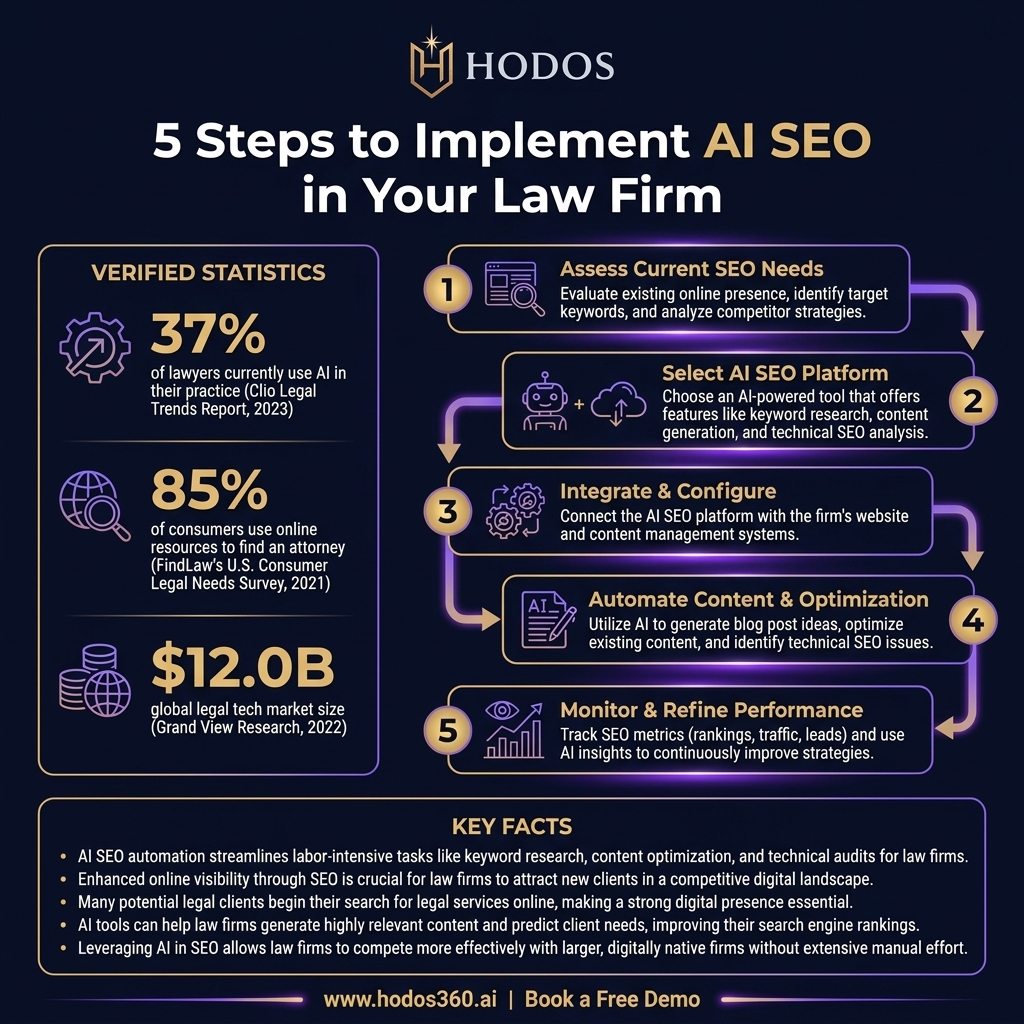
At its core, AI SEO automation leverages artificial intelligence to perform and optimize tasks traditionally executed manually by SEO specialists. This includes everything from deep keyword research and competitive analysis to content generation, on-page optimization, and performance monitoring. Take, for instance, keyword research: instead of sifting through spreadsheets, AI tools can analyze vast datasets of search queries, trending topics, and competitor strategies to identify high-value, low-competition keywords specific to niche legal practices—be it intellectual property, family law, or corporate litigation. This precision ensures that content is tailored to what potential clients are actively searching for, enhancing the probability of conversion.
Furthermore, AI-powered platforms can automate technical SEO audits, identifying issues like broken links, slow page load times, or mobile unfriendliness that hinder search rankings. These tools can then suggest specific fixes, often integrating directly with website platforms for seamless implementation. Learn more about Essential AI Marketing Automation for Law Firms: Boost Growth. For content creation, generative AI models, like those developed by OpenAI and Anthropic, can assist in drafting blog posts, articles, and website copy, ensuring they are optimized for search engines while maintaining a professional, authoritative tone. While human oversight remains crucial to ensure legal accuracy and brand voice, AI significantly accelerates the content pipeline, allowing firms to publish more frequently and consistently, which is vital for sustained organic growth. This is where platforms like HODOS 360's AI Marketing Platform shine, offering integrated AI SEO automation capabilities designed specifically for the nuanced needs of legal professionals.
Leveraging AI for Comprehensive Keyword and Content Strategy
The strategic use of AI extends far beyond simple keyword identification; it enables a holistic approach to content strategy. AI can analyze existing content, identifying gaps and opportunities based on competitor performance and evolving search trends. For example, if a firm specializes in M&A law, an AI system can pinpoint specific sub-topics or long-tail keywords—such as 'tech startup acquisition due diligence'—where the firm might lack comprehensive content, and then assist in generating articles or FAQs around those themes. This ensures a rich, diverse content library that addresses a wide spectrum of client needs and search intents.
Moreover, AI can help tailor content for different stages of the client journey, from initial awareness (e.g., 'what is probate law?') to consideration ('best probate lawyer near me') and decision ('schedule consultation probate lawyer'). Learn more about AI Voice Assistants: The Ultimate Evolution for Law Firms. By understanding these nuances, AI ensures that the right content reaches the right audience at the right time, significantly improving lead qualification and conversion rates. This level of personalized content delivery, once the exclusive domain of large marketing agencies, is now accessible to even small businesses and lean law firms through sophisticated AI marketing platforms.
Beyond Keywords: AI's Role in Client Engagement and Brand Authority
While keywords are foundational, modern SEO and client acquisition extend far beyond them. AI plays a pivotal role in enhancing overall client engagement and building brand authority. For instance, AI-powered tools can analyze user behavior on a firm's website—identifying popular pages, drop-off points, and conversion pathways. These insights allow firms to optimize website design and user experience, ensuring a seamless and intuitive journey for potential clients. This is crucial because Google increasingly prioritizes user experience (UX) signals in its ranking algorithms, recognizing that a positive UX translates to higher engagement and trust. Firms that fail to provide an excellent online experience, even with great content, risk losing out.
Furthermore, AI facilitates the creation of diverse content formats that resonate with different client preferences. Learn more about AI Marketing Automation: Law Firms' 2026 Growth Catalyst. Beyond written articles, AI can assist in generating scripts for explainer videos, social media posts, and even interactive tools that answer common legal questions. For example, an AI could help a personal injury firm create short, informative videos explaining common accident scenarios and legal rights, which can then be optimized for YouTube SEO and shared across social media platforms. This multi-channel approach, driven by AI insights into audience preferences, builds comprehensive brand authority and extends a firm's reach far beyond traditional search results. It helps small businesses compete on a much larger scale.
- ✓Automated Content Generation: AI tools can draft blog posts, FAQs, social media updates, and even email newsletters, significantly reducing the time and cost associated with content creation while ensuring SEO best practices.
- ✓Predictive Analytics for Trends: AI analyzes vast amounts of data to predict emerging legal trends and client needs, allowing firms to create proactive content strategies that capture new search demand.
- ✓Personalized User Experiences: AI optimizes website layouts, content recommendations, and call-to-action placements based on individual user behavior, leading to higher engagement and conversion rates.
- ✓Enhanced Local SEO: AI tools can manage and optimize local business listings, generate geo-targeted content, and monitor online reviews, crucial for attracting clients in specific geographic areas.
- ✓Competitive Intelligence: AI provides deep insights into competitor SEO strategies, identifying their top-performing keywords, content, and backlink profiles, enabling firms to develop superior tactics.
- ✓Multi-lingual Content Optimization: For firms serving diverse communities, AI can translate and localize content, ensuring SEO effectiveness across different languages and cultural contexts, expanding market reach.
AI Voice Assistants: The Next Frontier in Client Interaction
Beyond passive content consumption, AI is also transforming active client interaction through voice assistants. With the proliferation of smart speakers and voice search, optimizing for conversational queries is increasingly important. An AI voice assistant can handle initial client inquiries 24/7, providing instant answers to common questions, qualifying leads, and even booking appointments. Imagine a potential client asking their smart device, 'Find a reputable divorce lawyer in Miami.' An AI-optimized firm would not only appear in search results but could also be the first point of contact through an AI voice assistant, guiding the user to relevant information or directly scheduling a consultation.
This immediate, intelligent response mechanism significantly improves the client experience and captures leads that might otherwise be lost. Learn more about Voice AI Revolution 2026: Agentic Platforms Transform Law Firms. Firms that integrate AI voice assistants into their marketing and client intake workflows are demonstrating a commitment to accessibility and modern service delivery, setting themselves apart in a competitive market. This blend of proactive SEO and responsive AI interaction creates a powerful, always-on marketing and support system that directly contributes to a firm's organic growth and client satisfaction.
Measuring Impact: ROI and Performance Tracking with AI
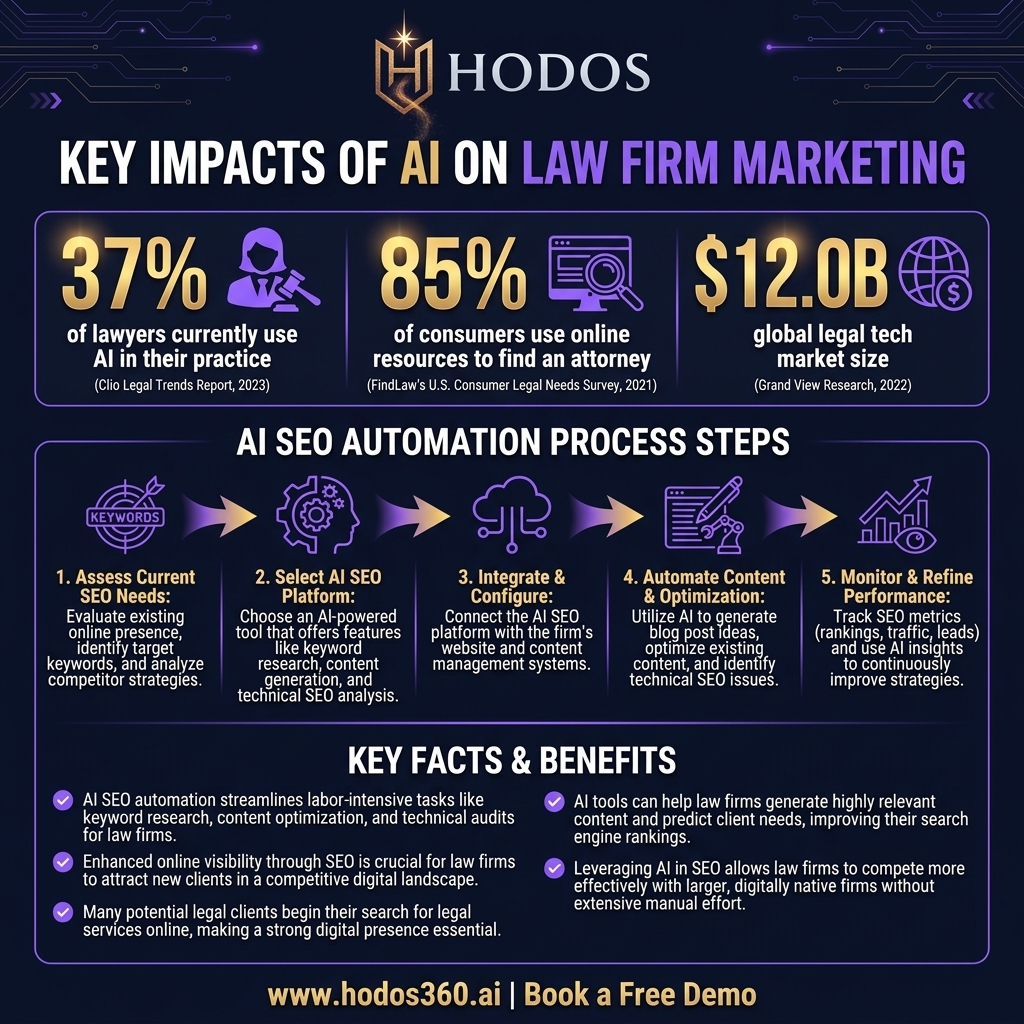
One of the perennial challenges in marketing has been accurately measuring return on investment (ROI). Traditional SEO often involves lengthy cycles and opaque metrics, making it difficult for law firms to justify marketing spend. AI changes this paradigm by providing robust, real-time analytics and attribution models. AI-powered analytics platforms can track every touchpoint a potential client has with a firm's online presence, from initial search query to website visit, content consumption, and eventual conversion. This granular data allows firms to understand precisely which marketing efforts are most effective, optimizing budgets and strategies for maximum impact.
For example, an AI system can identify that blog posts on 'estate planning for small business owners' consistently lead to high-value client inquiries, while content on another topic yields lower quality leads. Learn more about Ethical AI in Legal Tech: An Essential Guide for Law Firms. With these insights, firms can reallocate resources to focus on high-performing content types and channels. This level of data-driven decision-making, once the purview of large corporations with dedicated analytics teams, is now accessible to law firms through integrated AI marketing platforms. It removes the guesswork from marketing, allowing firms to build a smarter, more efficient organic growth workflow based on quantifiable results. This focused approach ensures that every marketing dollar contributes directly to the firm's bottom line and helps to build business effectively.
Ethical AI Implementation in Legal Marketing
As law firms embrace AI in marketing, ethical considerations are paramount. The ABA Model Rules of Professional Conduct, particularly Rule 7.1 concerning communications about a lawyer's services, apply equally to AI-generated content and automated marketing. Firms must ensure that all AI-produced content is accurate, not misleading, and clearly represents the lawyer's services. Transparency about the use of AI, especially in client interactions via chatbots or voice assistants, is also crucial to maintain trust and comply with ethical obligations. For instance, a firm using an AI voice assistant for lead qualification should ensure the AI identifies itself as such, rather than masquerading as a human.
Furthermore, data privacy and security, as outlined in regulations like GDPR and CCPA, must be rigorously upheld when collecting and analyzing client data for marketing purposes. Law firms handle sensitive information, and any AI system used must adhere to the highest standards of data protection. The responsible implementation of AI, guided by legal ethics and data privacy principles, is not just a regulatory necessity but a cornerstone of building enduring client relationships in the digital age. This ensures that the benefits of AI SEO automation are realized without compromising professional integrity.

Key Takeaways and Next Steps for Sustainable Growth
The narrative of Sarah Chen's firm, Lex Advisors, eventually took a positive turn. After integrating an AI-powered marketing platform, they saw a 40% increase in organic traffic and a 25% boost in qualified leads within six months. This transformation was not magic; it was the result of a strategic embrace of AI SEO automation, allowing them to compete effectively with larger firms and attract a new generation of clients. Their success story is a testament to the power of technology when applied thoughtfully to the unique challenges of the legal profession. The future of legal marketing is undeniably intertwined with AI.
For law firms looking to build a smarter organic growth workflow, the path forward involves a clear-eyed assessment of current marketing strategies and a willingness to invest in innovative AI tools. Begin by identifying areas where manual efforts consume excessive time—keyword research, content drafting, or analytics reporting. Explore integrated platforms that offer comprehensive AI solutions, ensuring they align with your firm's specific practice areas and client acquisition goals. The goal is not to replace human expertise, but to augment it, freeing up valuable attorney time to focus on legal work while AI handles the heavy lifting of digital marketing. The smart application of artificial intelligence will define the winners in the competitive legal landscape.
Frequently Asked Questions
What exactly is AI SEO automation for law firms?+
AI SEO automation for law firms involves using artificial intelligence tools to streamline and optimize various aspects of search engine optimization. This includes automated keyword research, AI-powered content generation, technical SEO audits, competitive analysis, and performance tracking. Its purpose is to enhance online visibility, attract more qualified leads, and free up attorneys' time from manual marketing tasks by creating smarter, data-driven workflows.
How does AI content generation maintain legal accuracy and firm voice?+
AI content generation tools act as powerful assistants, not replacements. They can draft initial content, optimize for keywords, and ensure structural integrity. However, human lawyers and marketing professionals must review and edit all AI-generated content to guarantee legal accuracy, ethical compliance, and alignment with the firm's unique brand voice. This collaborative approach ensures quality and authenticity while boosting efficiency for content creation.
Is AI SEO ethical for legal marketing?+
Yes, AI SEO can be ethical when implemented responsibly. Law firms must adhere to ABA Model Rules of Professional Conduct, ensuring AI-generated content is truthful, not misleading, and accurately represents legal services. Transparency with clients about AI usage (e.g., in chatbots) and rigorous data privacy practices are crucial. Ethical AI implementation enhances efficiency without compromising professional integrity or client trust.
What are the key benefits of AI SEO for small law firms?+
For small and lean law firms, AI SEO offers immense benefits by leveling the playing field. It provides access to sophisticated marketing tools previously available only to larger firms, automates time-consuming tasks, reduces marketing costs, and delivers data-driven insights. This allows small businesses to build a smarter organic growth workflow, attract more clients, and compete effectively without needing a large in-house marketing team.
How can HODOS 360's AI Marketing Platform help my law firm with SEO?+
HODOS 360's AI Marketing Platform provides comprehensive AI SEO automation features tailored for law firms. It includes AI video creation, social media automation, advanced content generation, and robust analytics with ROI tracking. This integrated suite helps firms streamline their marketing efforts, optimize for search engines, attract ideal clients, and measure the direct impact of their digital strategies on business growth and performance.