

AI Voice Agents: Essential for Modern Legal Networking
The legal landscape, often perceived as a bastion of tradition, is undergoing a rapid technological metamorphosis, particularly in areas once considered sacrosanct: human connection and professional networking. The recent buzz around 'Bordy,' an AI voice agent designed to automate professional networking introductions, as highlighted by Geeky Gadgets, signals a pivotal moment. This isn't merely about replacing a receptionist; it's about fundamentally rethinking how law firms initiate and cultivate relationships in an increasingly digital, yet still deeply personal, industry. Imagine Sarah Chen, a seasoned M&A partner at a prominent corporate law firm, who, despite her exceptional legal acumen, often finds herself constrained by the sheer time commitment required for consistent, high-impact networking. She knows that new client acquisition and maintaining a robust professional network are critical, but the traditional methods—conferences, one-on-one coffees, and follow-up emails—are immensely time-consuming, pulling her away from her core legal work.
For years, the legal profession grappled with this dilemma: the undeniable value of personal connections versus the finite hours in a day. Firms that embrace innovation, however, are now finding a powerful ally in AI Voice Agents. These aren't the simplistic chatbots of yesteryear; they are sophisticated, context-aware digital assistants capable of engaging in natural, intelligent conversations. The tension between the old guard's reliance on purely human interaction and the new wave of AI-driven efficiency creates a compelling narrative within the legal industry. Firms that strategically adopt these AI Voice Agents are not just saving time; they are proactively expanding their reach, qualifying leads with unprecedented speed, and ensuring no valuable professional connection slips through the cracks. This shift is less about automation for automation's sake and more about intelligently augmenting human capability, allowing legal professionals to focus on the high-value, nuanced interactions that truly define their practice.
The implications of technologies like Bordy extend far beyond mere convenience. They represent a paradigm shift in how law firms approach business development and client acquisition. By leveraging AI Voice Agents, firms can automate the initial, often repetitive, stages of networking, from qualifying potential clients to scheduling introductory meetings. This frees up partners and associates, like Sarah Chen, to dedicate their expertise to complex legal matters and deeper client relationships, rather than administrative overhead. As we delve into the capabilities and strategic implementation of these intelligent agents, it becomes clear that for law firms aiming for sustained growth and competitive advantage in a demanding market, integrating advanced voice automation is not just an option—it's an essential strategic imperative. These tools are transforming the very fabric of professional engagement, ensuring that firms can connect more effectively, more efficiently, and more intelligently than ever before.
The Dawn of Intelligent Voice Automation in Legal Networking
The legal sector has traditionally relied heavily on personal referrals and face-to-face interactions for business development, a practice deeply ingrained in the profession's culture. However, the demands of modern practice—increased caseloads, client expectations for immediate responsiveness, and the relentless pace of legal innovation—have strained these traditional models. According to a 2024 report by the ABA Law Practice Division, attorneys spend an average of 15-20% of their working hours on non-billable administrative tasks and business development activities, a significant portion of which involves networking. This statistic underscores the urgent need for solutions that can streamline and optimize these critical, yet time-consuming, efforts. The emergence of AI Voice Agents offers a compelling answer, promising to revolutionize how law firms manage their professional outreach and client intake processes.
Consider the operational challenges faced by firms like *Roberts & Associates*, a mid-sized litigation firm in New York. Their partners often attend multiple industry events, collect hundreds of business cards, and then struggle to follow up effectively due to demanding court schedules. This leads to missed opportunities and a diluted return on their networking investments. AI Voice Agents, exemplified by the concept behind 'Bordy,' address this directly by providing a persistent, intelligent presence that can initiate contact, qualify interest, and even schedule follow-up appointments. These agents are programmed with advanced natural language processing (NLP) capabilities, allowing them to understand context, discern intent, and engage in meaningful, human-like conversations, far surpassing the limitations of basic interactive voice response (IVR) systems. Learn more about AI Marketing: Essential Strategies for Law Firm Growth. This capability is not just about automation; it's about intelligent augmentation of the firm's business development efforts.
The strategic adoption of these intelligent agents is rapidly becoming a competitive differentiator. Firms that integrate voice automation into their networking strategy can achieve a level of outreach and responsiveness that traditional methods simply cannot match. For instance, an AI Voice Agent can proactively reach out to a list of event attendees, identify those with specific legal needs, and filter out irrelevant contacts, presenting partners with pre-qualified leads. This dramatically reduces the time and effort spent on initial screening, allowing attorneys to engage only with prospects who have a high likelihood of conversion. *Jack Newton, CEO of Clio*, has often spoken at events like LegalTech NYC 2026 about the importance of leveraging AI to enhance, not replace, the human element in legal practice, stressing that tools like voice agents empower lawyers to focus on the strategic, empathic aspects of their work.
Furthermore, the ability of AI Voice Agents to operate 24/7 means that law firms can capture leads and engage with potential clients irrespective of time zones or office hours. This continuous availability ensures that inquiries received after hours or during peak attorney workload periods are promptly addressed, preventing potential clients from seeking assistance elsewhere. This always-on capability is particularly crucial in competitive legal markets where responsiveness can be the deciding factor in securing new business. By embracing this technology, law firms are not just modernizing their operations; they are strategically positioning themselves at the forefront of client acquisition and professional relationship management, ensuring that their networking efforts are not only efficient but also highly effective and scalable.
How AI Voice Agents Reshape Client Acquisition and Professional Connections
The true transformative power of AI Voice Agents lies in their ability to fundamentally reshape the entire client acquisition funnel, from initial lead generation to securing the first consultation. Traditional client acquisition in law firms is often a labor-intensive, linear process characterized by manual follow-ups, inconsistent lead qualification, and significant human resource allocation. AI Voice Agents introduce a dynamic, scalable, and highly efficient alternative. These intelligent systems can perform initial outreach, qualify leads based on predefined criteria (e.g., legal need, budget, urgency), and even schedule appointments directly into an attorney's calendar, all through natural, conversational interactions. This automation drastically reduces the sales cycle and allows legal professionals to dedicate their time to high-value, complex tasks that require human judgment and empathy.
Consider the scenario of a personal injury firm, *LexForce Legal*. Previously, their intake team would manually call through lists of potential clients generated from marketing campaigns. This was time-consuming and often resulted in low conversion rates due to inconsistent messaging or delayed responses. By deploying an AI Voice Agent, LexForce Legal can now have an automated system engage with every lead instantaneously. The agent can ask qualifying questions about the nature of the injury, details of the incident, and insurance information, all while maintaining a professional and empathetic tone. If a lead meets the firm's criteria, the agent can then seamlessly transfer the call to a human intake specialist or book a consultation directly, ensuring that no qualified lead is lost due to response delays.
Beyond lead qualification, AI Voice Agents excel in cultivating and maintaining professional connections. Imagine a firm that regularly attends industry events or hosts webinars. Instead of a partner spending hours on follow-up calls, an intelligent agent can reach out to attendees, offer additional resources, gauge interest in specific services, and even facilitate introductions to relevant partners within the firm. Learn more about AI Voice Assistants: The Ultimate Guide for Law Firms. This proactive engagement ensures that the momentum gained from initial interactions is not lost, fostering stronger relationships over time. The agent can also gather valuable feedback, identifying specific pain points or emerging legal needs within the network, providing actionable intelligence that can inform future business development strategies. This is a level of continuous engagement that is practically impossible to achieve with human resources alone, especially for busy legal professionals.
### Automating First Impressions: Beyond the Cold Call
The concept of a 'cold call' in legal networking is often met with dread, both by the caller and the recipient. It's inefficient, often intrusive, and rarely yields high-quality leads. AI Voice Agents transcend the limitations of the cold call by enabling 'warm' first impressions. Instead of a generic script, these agents can be programmed with sophisticated conversational flows tailored to specific legal practice areas and potential client profiles. They can leverage public data or CRM information to personalize the initial interaction, making it feel less like an automated call and more like a targeted, helpful inquiry. This capability is crucial for law firms looking to maintain a high standard of client experience from the very first touchpoint, even when that touchpoint is automated. It allows firms to make a strong, positive first impression at scale, ensuring that every potential client feels valued and understood. This strategic deployment of voice AI transforms what was once a daunting task into a refined, data-driven process, significantly improving the quality and quantity of qualified leads for attorneys.
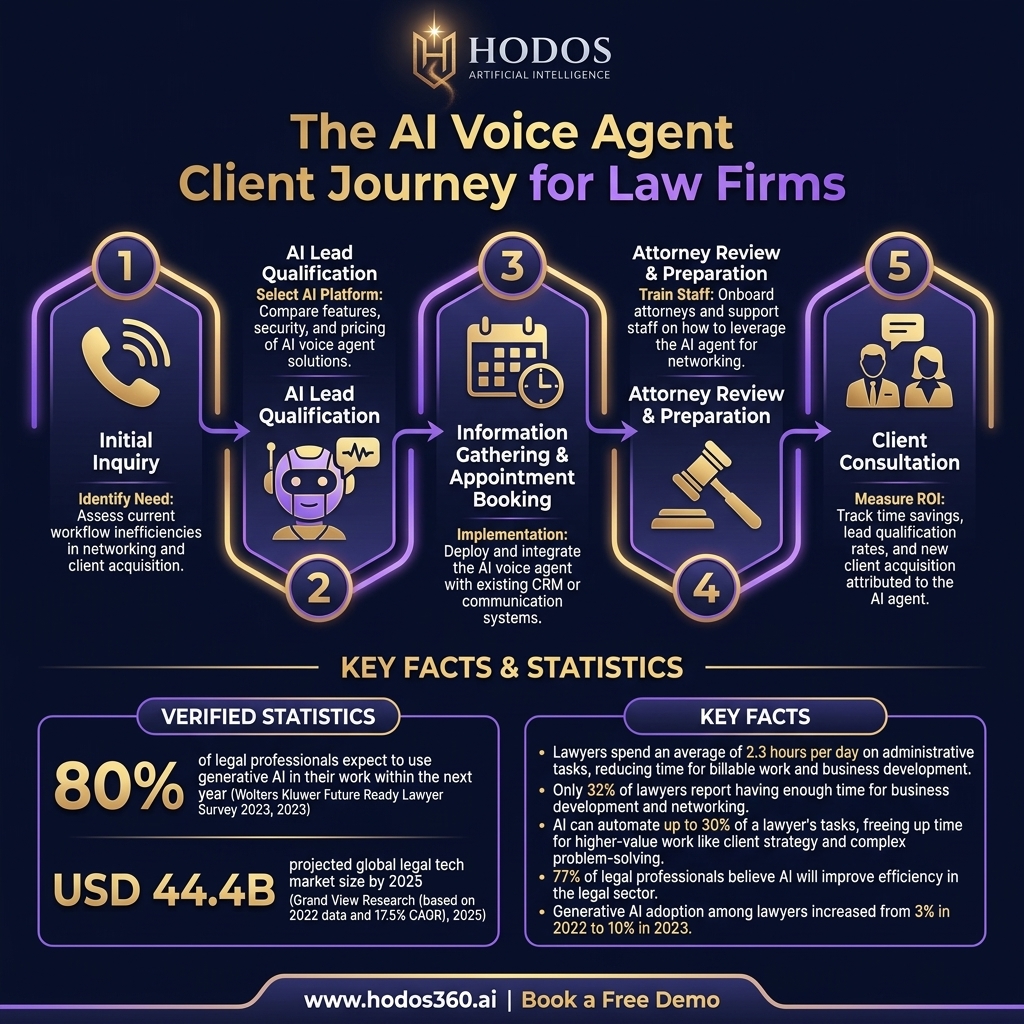
- ✓24/7 Lead Capture: AI Voice Agents ensure that no potential client inquiry is ever missed, regardless of time zones or office hours, providing immediate responses and capturing vital information around the clock.
- ✓Automated Lead Qualification: Agents can intelligently screen incoming calls and queries, identifying genuine legal needs and filtering out unqualified leads based on predefined criteria, saving valuable attorney time.
- ✓Seamless Appointment Booking: Integrating directly with calendars, AI Voice Agents can efficiently schedule consultations, client meetings, and follow-ups, reducing administrative burden and minimizing scheduling conflicts.
- ✓Multilingual Support: For firms operating in diverse markets, these agents offer support in multiple languages, broadening reach and ensuring effective communication with a wider client base.
- ✓Personalized Initial Outreach: Programmed with advanced NLP, agents can engage in natural, empathetic conversations, making a positive first impression and gathering necessary case details before a human attorney intervenes.
- ✓Efficient Call Routing: Complex inquiries can be intelligently routed to the most appropriate department or attorney, ensuring that clients receive specialized assistance promptly.
- ✓Data-Driven Insights: Every interaction provides valuable data, offering insights into client needs, common queries, and lead conversion patterns, enabling continuous optimization of outreach strategies.
Implementing AI Voice Agents: A Strategic Imperative for Law Firms
The decision to implement AI Voice Agents within a law firm is a strategic one, requiring careful planning, ethical consideration, and a clear understanding of integration challenges. It's not simply about purchasing a tool; it's about embedding intelligent automation into the firm's operational DNA. The initial step involves identifying specific pain points in client acquisition and professional networking that AI can most effectively address. For instance, a firm struggling with high call volumes for initial inquiries or with inconsistent follow-ups after marketing events would find immediate value. The implementation process typically begins with customizing the AI agent's scripts and conversational flows to reflect the firm's brand voice, legal terminology, and specific service offerings. This customization is crucial for ensuring that the agent sounds authentic and provides accurate, relevant information to potential clients.
Integration with existing practice management systems is another critical aspect. A truly effective AI Voice Agent should not operate in a silo. It needs to seamlessly connect with the firm's CRM, calendaring software, and document automation tools to maximize its utility. For example, once an agent qualifies a lead and schedules an appointment, that information should automatically populate the firm's client intake system and an attorney's calendar, triggering subsequent workflows. This interconnectedness ensures a smooth transition from automated interaction to human engagement, preventing data silos and improving overall operational efficiency. Firms must also consider the technical infrastructure required, including reliable internet connectivity and secure data storage solutions, to support the AI's operations and protect sensitive client information.
### Navigating Ethical AI in Client Engagement
The ethical implications of using AI Voice Agents in legal practice are paramount. Learn more about Full-Stack AI Marketing: The Ultimate Strategy for Law Firms. The ABA Model Rules of Professional Conduct, particularly Rule 1.6 (Confidentiality of Information) and Rule 5.3 (Responsibilities Regarding Nonlawyer Assistance), provide a framework for navigating these considerations. Law firms must ensure that any AI system handling client inquiries or confidential information is compliant with these rules, guaranteeing data security and maintaining client privilege. This includes robust encryption, secure servers, and clear policies on how AI processes and stores sensitive data. Furthermore, transparency with potential clients about the use of AI is essential; while an agent should sound natural, firms should consider disclosing that interaction is with an AI, especially when discussing sensitive matters, to maintain trust and ethical integrity. *Bradford Newman, a partner at Paul Hastings* and a prominent voice in AI law, frequently emphasizes the need for a 'human in the loop' approach, ensuring that AI tools augment, rather than replace, attorney oversight and ethical judgment.
Another ethical consideration revolves around the potential for bias in AI algorithms. If an AI Voice Agent is trained on biased data, it could inadvertently lead to discriminatory outcomes in lead qualification or client engagement. Law firms must proactively audit their AI systems for fairness and equity, continuously refining the training data and algorithms to mitigate bias. This commitment to ethical AI is not just a regulatory requirement but a fundamental pillar of maintaining public trust in the legal profession. By prioritizing transparency, data security, and bias mitigation, law firms can leverage the power of AI Voice Agents responsibly, enhancing their practice while upholding the highest standards of professional conduct. This meticulous approach to implementation ensures that AI serves as a beneficial tool, rather than a potential liability, in the firm's quest for modernization and efficiency.
HODOS 360's AI Voice Assistants: Elevating Your Firm's Outreach
In the rapidly evolving landscape of legal technology, HODOS 360 stands at the forefront, offering a suite of AI-powered solutions specifically designed to empower law firms. Our AI Voice Assistants are a prime example, built to address the exact challenges of modern legal networking and client acquisition discussed throughout this article. Unlike generic voice bots, HODOS 360's AI Voice Assistants are tailored for the nuances of legal practice, understanding complex inquiries, maintaining professionalism, and seamlessly integrating with your firm's existing workflows. We recognize that the legal profession demands precision, confidentiality, and an unwavering commitment to client service, and our technology is engineered to meet these exacting standards. These assistants are not just answering machines; they are intelligent, proactive extensions of your firm, ensuring that every potential client interaction is handled with expertise and efficiency.
Our AI Voice Assistants offer 24/7 phone answering, ensuring that your firm never misses a critical call, whether it's a new lead from a different time zone or an urgent inquiry after hours. This continuous availability is a game-changer for client responsiveness, a factor that, according to a recent Thomson Reuters Legal Executive Institute report, is a top priority for clients when choosing legal counsel. Beyond simply answering, our assistants excel at lead qualification, engaging callers in natural conversations to gather essential information about their legal needs, urgency, and potential case details. This intelligent pre-screening means that when a call is routed to an attorney or intake specialist, they receive a pre-qualified lead with all necessary background information, dramatically shortening the intake process and improving conversion rates.
### Seamless Integration with Practice Management
One of the most significant advantages of HODOS 360's AI Voice Assistants is their seamless integration capabilities within our broader AI Law Firm Management System. This isn't a standalone tool; it's a critical component of a comprehensive legal tech ecosystem. Learn more about AI Voice Assistants Legal Firms Client Engagement. Imagine an AI Voice Assistant qualifying a lead, booking an appointment, and then automatically populating that client's information into your case management system, initiating a new client intake workflow. This level of interconnectedness eliminates manual data entry, reduces errors, and ensures that every step of the client journey, from initial contact to case closure, is streamlined and efficient. This integration extends to document automation, ensuring that necessary forms are prepared even before the first consultation, and to calendar management, preventing scheduling conflicts and optimizing attorney availability.
Furthermore, HODOS 360's AI Voice Assistants offer multilingual support, a crucial feature for firms serving diverse communities or international clients. They can intelligently route calls to the appropriate department or attorney based on the caller's needs, ensuring that inquiries are handled by the most qualified individual. This sophisticated call routing capability, combined with our AI Marketing Platform’s ability to generate targeted content and track ROI, creates a powerful synergy that elevates your firm’s entire outreach strategy. By leveraging HODOS 360, law firms are not just adopting a single AI tool; they are embracing a holistic, AI-powered platform that transforms every aspect of their operations, from client acquisition and management to marketing and development. This comprehensive approach ensures that your firm is not just keeping pace with technological advancements but is actively shaping the future of legal practice, providing unparalleled service and achieving sustainable growth.
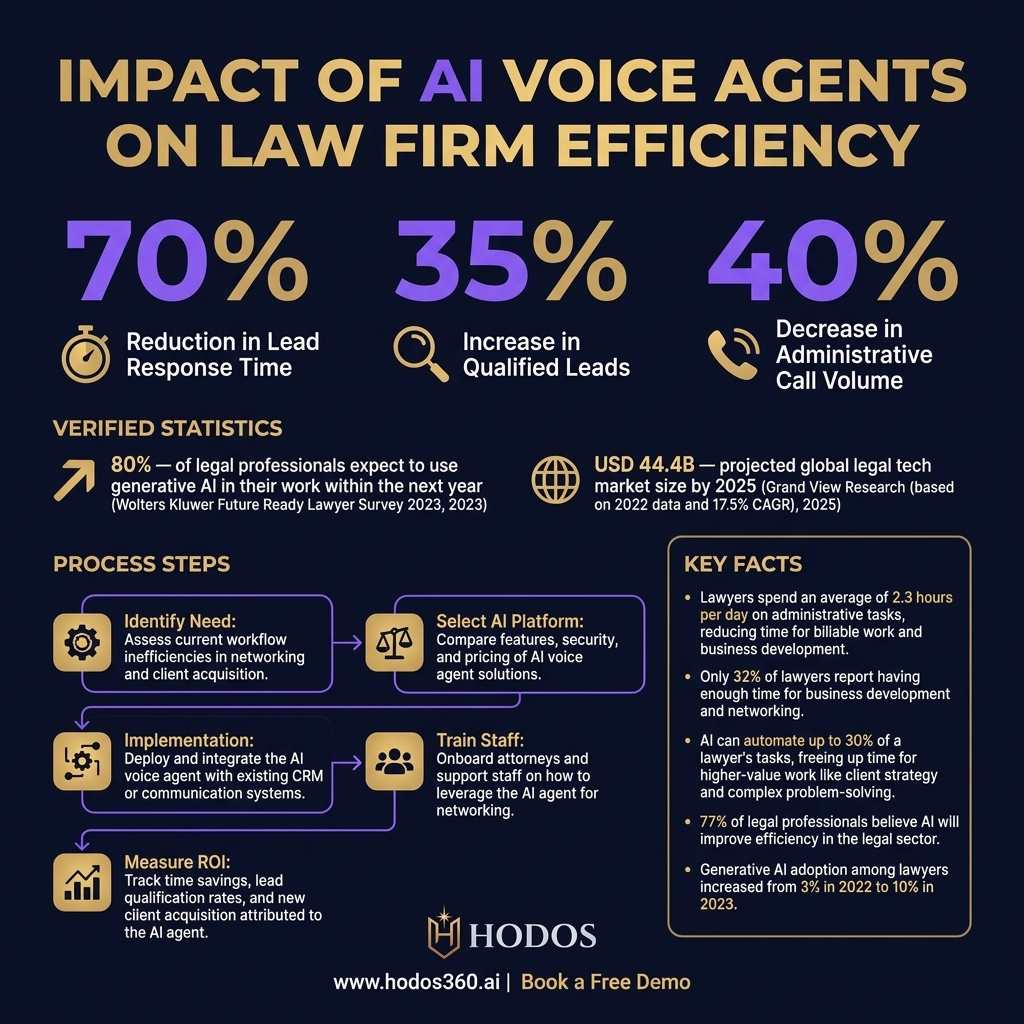

The Future of Legal Networking: From Digital Handshakes to AI-Powered Introductions
The journey from traditional, labor-intensive legal networking to the sophisticated, AI-powered interactions of today marks a profound shift in the legal industry. The initial apprehension surrounding AI's role in client-facing interactions is steadily giving way to an understanding of its immense potential to enhance, rather than diminish, human connections. As firms increasingly recognize the strategic value of AI Voice Agents, the focus is shifting from merely automating tasks to intelligently augmenting the entire spectrum of professional engagement. The future of legal networking won't be about replacing the handshake, but about making every handshake, whether digital or physical, more meaningful and productive. It’s about leveraging technology to ensure that attorneys can spend less time on repetitive administrative tasks and more time on high-value, empathetic client interactions and strategic relationship building.
Firms that embrace this future, utilizing tools like HODOS 360's AI Voice Assistants, are not just adapting; they are leading. Learn more about Essential AI Website Building: Avoiding Costly Law Firm Mistakes. They are demonstrating a commitment to efficiency, client responsiveness, and innovation that will distinguish them in a competitive market. The narrative of legal tech is no longer about disruption versus tradition, but about intelligent integration that preserves the core values of the profession while propelling it forward. By adopting AI Voice Agents for lead qualification, appointment booking, and initial outreach, law firms are empowering their legal professionals to elevate their practice, cultivate stronger relationships, and ultimately, achieve greater success in a dynamically evolving legal landscape. The era of digital handshakes and AI-powered introductions is here, and those who embrace it will define the next generation of legal excellence.
Frequently Asked Questions
What exactly are AI Voice Agents in a legal context?+
AI Voice Agents are sophisticated software programs capable of engaging in natural, human-like voice conversations. In law firms, they automate tasks like answering calls, qualifying leads, booking appointments, and providing initial information, acting as a virtual assistant to streamline client acquisition and professional outreach efforts.
How do AI Voice Agents help with client acquisition?+
They significantly enhance client acquisition by providing 24/7 availability, instantly responding to inquiries, and pre-qualifying leads based on predefined criteria. This ensures prompt follow-up, filters out non-viable prospects, and allows attorneys to focus only on high-potential clients, improving conversion rates and efficiency.
Are AI Voice Agents ethical for handling sensitive legal information?+
Ethical implementation is crucial. Firms must ensure AI Voice Agents comply with ABA Model Rules on confidentiality (Rule 1.6) and nonlawyer assistance (Rule 5.3). This involves robust data security, transparent disclosure to clients about AI interaction, and continuous oversight by attorneys to maintain privilege and ethical standards.
Can AI Voice Agents integrate with existing law firm software?+
Yes, effective AI Voice Agents are designed for seamless integration. They can connect with existing practice management systems, CRM software, calendaring tools, and document automation platforms. This ensures data consistency, automates workflows, and provides a holistic view of client interactions, enhancing overall operational efficiency.
What kind of ROI can a law firm expect from using AI Voice Agents?+
Law firms can expect substantial ROI through improved lead conversion rates, reduced administrative costs, increased client satisfaction due to faster response times, and enhanced attorney productivity. By automating repetitive tasks, AI Voice Agents free up valuable human resources for high-value legal work and deeper client engagement.