

Full-Stack AI Marketing: The Ultimate Strategy for Law Firms
The digital landscape for legal services is changing at an unprecedented pace, forcing law firms to reconsider their approach to client acquisition and brand visibility. A recent article in Malay Mail highlighted a critical insight from digital agencies: businesses no longer need scattered AI tools, but rather a full-stack AI marketing strategy.
This sentiment echoes a growing consensus across industries, emphasizing integration over isolated solutions. For law firms, this isn't merely a trend; it's an existential necessity in an increasingly competitive environment where digital presence and efficiency dictate success.
Consider the trajectory of firms like Allen & Overy, which famously partnered with Harvey AI to streamline legal research and document drafting.
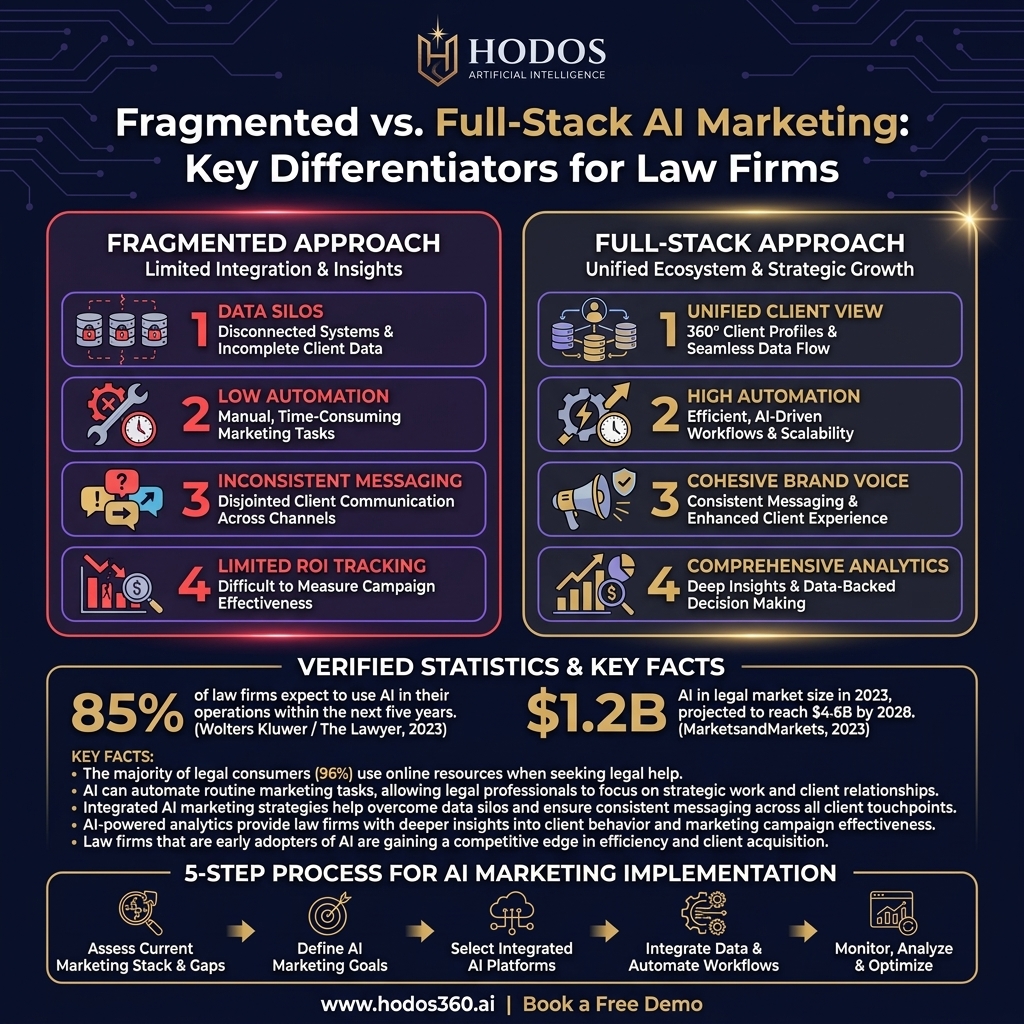
While this showcased the power of specialized AI, the real transformation for business development comes from applying similar integrated thinking to marketing. Many firms today dabble with an AI content generator here, a social media scheduler there, or an isolated chatbot for client inquiries. This piecemeal approach, however, often leads to data silos, inconsistent messaging, and a fractured client journey.
The true value of AI in marketing emerges when these disparate functions converge into a cohesive, intelligent system, allowing firms to build robust client relationships and optimize their outreach with unprecedented precision. The challenge lies in moving from this fragmented reality to a unified, powerful strategy that leverages AI across every touchpoint.
Historically, legal marketing relied on word-of-mouth, referrals, and traditional advertising. While these channels remain relevant, the modern legal consumer's journey begins online. From initial search queries to evaluating firm credentials, digital touchpoints are paramount. Firms that fail to adapt risk falling behind competitors who are already harnessing advanced technologies.
For instance, the AI marketing stack allows for predictive analytics in lead generation, hyper-personalized communication, and automated content distribution, fundamentally altering how law firms connect with potential clients. This integrated approach not only enhances efficiency but also ensures a consistent, high-quality experience for every prospective client, from their first interaction to retention.
Embracing a full-stack strategy means transforming your firm's digital footprint into a powerful, self-optimizing engine for growth. Ready to transform your firm's growth strategy? [Discover how HODOS 360's AI Marketing Platform can unify your efforts.]
The Imperative for a Full-Stack AI Marketing Strategy in Legal
The legal industry, often perceived as traditional, is currently undergoing a profound digital transformation. Law firms face escalating competition, not just from rival firms but also from alternative legal service providers and increasingly sophisticated in-house legal departments. Clients, accustomed to hyper-personalized experiences in other sectors, now expect the same from their legal counsel.
This shift in client expectations, coupled with the sheer volume of digital noise, makes traditional, ad-hoc marketing efforts largely ineffective. A full-stack AI marketing strategy becomes imperative, offering a cohesive framework to cut through the clutter and deliver targeted, impactful messaging. Firms must move beyond merely having a website or a social media presence; they need a dynamic, AI-driven ecosystem that intelligently engages, nurtures, and converts prospective clients.
According to the 2024 Thomson Reuters State of the Legal Market Report, client expectations for technology use by law firms continue to rise, with a direct correlation between tech adoption and client satisfaction. This data underscores that technology is no longer a luxury but a fundamental component of client service and acquisition.
Firms that rely on fragmented marketing tools often find themselves struggling with disjointed data, repetitive tasks, and a lack of clear ROI. Imagine a scenario where your firm uses one tool for email marketing, another for social media scheduling, and a third for website analytics, none of which communicate seamlessly.
This creates operational inefficiencies and a significant blind spot regarding the overall client journey. The core problem is that such an approach fails to build a coherent AI marketing stack capable of delivering a unified message and tracking comprehensive performance metrics.
Sam Altman, CEO of OpenAI, frequently emphasizes the transformative power of integrated AI systems over isolated applications.
Learn more about Legal AI Training: Essential Skills for Modern Law Firms. In the legal context, this means moving beyond simple AI-powered content generation or basic chatbots. It's about orchestrating AI agents across the entire marketing funnel – from initial lead identification and qualification to content personalization and performance analytics.
Firms that embrace this integrated vision can achieve a competitive advantage by creating highly efficient, responsive, and adaptive marketing operations. This strategic shift allows partners like Sarah Miller at "LexCorp Legal" to focus on high-value legal work, knowing their marketing engine is running optimally, driven by data and intelligent automation.
The alternative is a continued drain on resources with suboptimal returns, a conflict between traditional practice and modern business development.
Moreover, the increasing complexity of data privacy regulations, such as the EU AI Act and evolving state-level data protection laws, necessitates a centralized and intelligent approach to client data management within marketing.
A fragmented system makes compliance a nightmare, increasing legal and reputational risks. A full-stack AI marketing solution, by design, integrates data governance and compliance frameworks, ensuring that all marketing activities adhere to the highest ethical and legal standards. This proactive stance not only protects the firm but also builds trust with clients, a paramount factor in the legal profession.
It's about building, not just buying, a comprehensive strategy that prioritizes both growth and responsibility.
Beyond Point Solutions: Why Integration Matters
The allure of point solutions is understandable: they often promise quick fixes for specific pain points. However, this fragmented approach inevitably leads to a labyrinth of data silos, where critical client insights are trapped within individual applications. Without a unified view, law firms struggle to understand the complete client journey, identify bottlenecks, or accurately attribute ROI to specific marketing efforts.
Imagine a potential client interacting with your firm's social media, then visiting your website, and later calling your office. Learn more about AI Marketing: The Ultimate Guide for Law Firms. If these touchpoints are managed by separate, non-integrated tools, the firm loses the ability to piece together a coherent narrative, leading to missed opportunities for personalized follow-up and optimized engagement.
This lack of integration creates a significant competitive disadvantage in a market where agility and data-driven decisions are paramount.
Deconstructing the AI Marketing Stack: Core Components for Law Firms
A truly effective full-stack AI marketing platform for law firms is built upon several interconnected pillars, each leveraging AI to enhance efficiency and impact. The first critical component is AI-powered content generation and marketing automation. This goes beyond simple article spinning; sophisticated AI models, akin to those developed by Anthropic or Google DeepMind, can analyze vast legal datasets, understand legal nuances, and generate high-quality, SEO-optimized blog posts, social media updates, and even email campaign copy tailored to specific practice areas.
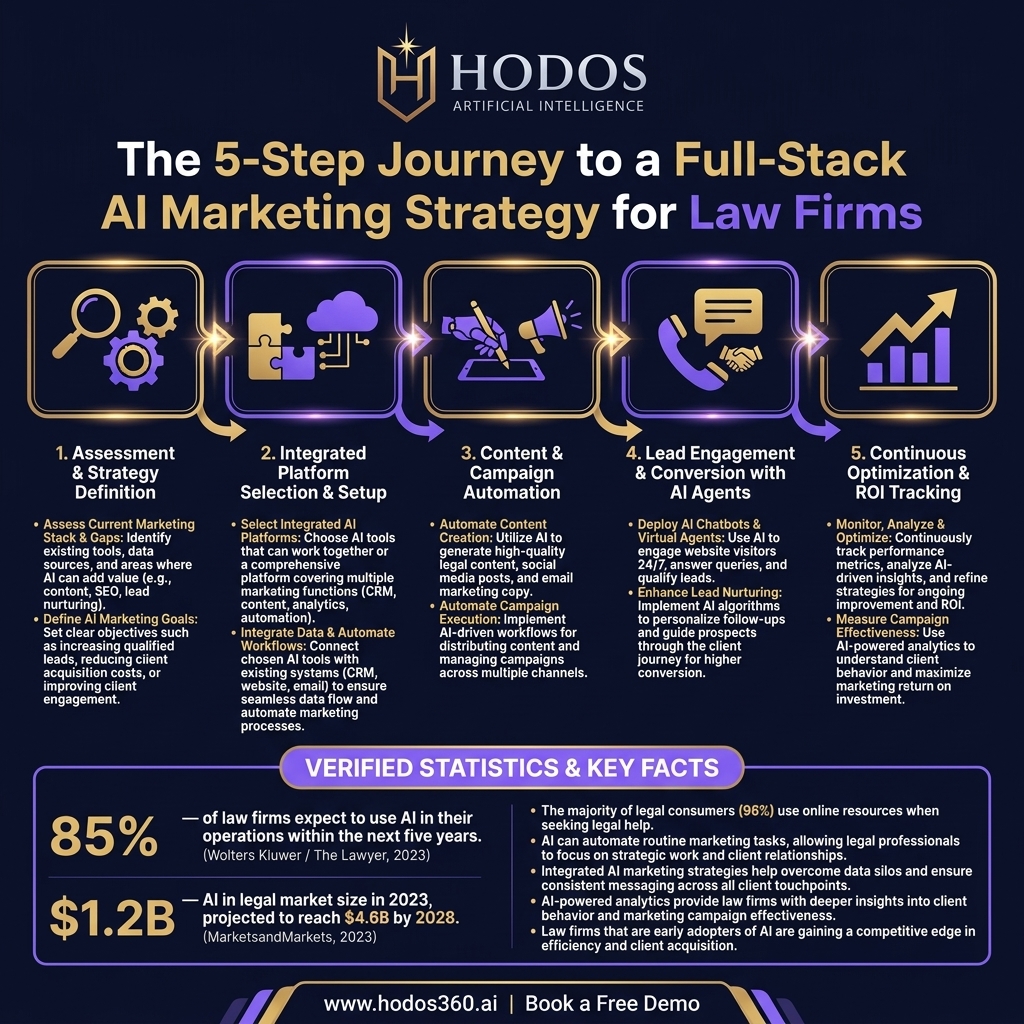
This frees up valuable attorney time, allowing them to focus on legal work while the AI ensures a consistent flow of engaging content. Automation extends to scheduling and distributing this content across various platforms, ensuring maximum reach and timely engagement. Firms can build a robust content strategy that continually feeds their digital presence.
Secondly, AI video creation and social media automation are becoming indispensable. Short-form video content, for instance, has exploded in popularity, and AI tools can now assist in scripting, generating voiceovers, and even editing professional-looking videos for firm profiles, client testimonials, or quick legal explainers. Paired with social media automation, these tools ensure that your firm maintains an active, engaging presence across platforms like LinkedIn, Facebook, and even TikTok (for certain practice areas), without requiring constant manual oversight.
AI-driven analytics then track engagement, identify trending topics, and optimize posting schedules, allowing firms to build a dynamic social media marketing strategy that resonates with their target audience. This proactive approach helps firms stay relevant and visible in a crowded digital space.
Thirdly, AI Voice Assistants and intelligent lead qualification transform the crucial initial client contact.
Imagine a prospective client calling your firm at 2 AM with an urgent legal query. Learn more about Essential AI Legal Adoption: Akin's Firmwide Success Blueprint. Instead of an answering machine, an AI voice assistant, powered by advanced natural language processing, can answer common questions, qualify the lead based on specific criteria, and even book an appointment directly into an attorney's calendar.
This 24/7 capability, often multilingual, ensures no lead is ever missed due to office hours or language barriers. This is a game-changer for client intake, significantly improving responsiveness and conversion rates. Firms are using these AI agents to create seamless client experiences, building loyalty from the very first interaction.
This level of responsiveness is a key differentiator in today's client-centric legal market.
Finally, AI-powered website and mobile development provides the foundational infrastructure. A firm's website is its digital storefront, and AI can optimize its design for user experience (UX), search engine optimization (SEO), and conversion.
AI-driven tools can analyze user behavior to suggest improvements, personalize content delivery for repeat visitors, and ensure responsiveness across all devices. High-converting templates, predictive analytics for visitor engagement, and robust SEO optimization ensure that potential clients easily find your firm and are guided towards conversion.
This comprehensive approach, exemplified by platforms like HODOS 360, ensures that every aspect of a firm's digital presence works synergistically to attract, engage, and convert clients, creating an unparalleled business development engine. This holistic view is essential for firms looking to build a sustainable competitive edge.
Here are some key benefits of implementing a comprehensive AI marketing stack: * Streamlined Client Acquisition: Automates lead generation, qualification, and nurturing, reducing manual effort. * Enhanced Brand Visibility: Consistent, high-quality content across all channels, amplified by AI-driven distribution. * Personalized Client Journeys: AI analyzes client data to deliver highly relevant content and communication.
* Improved Operational Efficiency: Automates repetitive marketing tasks, freeing up attorney and staff time. * Data-Driven Decision Making: Centralized analytics provide actionable insights for continuous optimization and ROI tracking. * 24/7 Client Engagement: AI voice assistants and chatbots ensure continuous availability and immediate responses. * Competitive Differentiation: Positions the firm as innovative and client-centric in a rapidly evolving market.
Implementing an AI Marketing Stack: Navigating the Path to Digital Transformation
Implementing a full-stack AI marketing solution within a law firm is not merely a technical upgrade; it's a strategic organizational transformation. The journey typically begins with a thorough audit of existing marketing efforts, identifying pain points, inefficiencies, and areas ripe for AI intervention. This initial assessment, often conducted with external legal tech consultants, helps define clear objectives and a roadmap for integration.
Firms like "Sterling & Partners" initially piloted AI content generation in a single practice area, meticulously tracking performance metrics before scaling across the entire firm. This phased approach minimizes disruption and allows for iterative adjustments, ensuring that the new AI marketing stack aligns perfectly with the firm's unique culture and business goals.
A crucial aspect of this phase is securing buy-in from senior partners, who may harbor skepticism towards new technologies. Showcasing tangible ROI from early pilot programs is key to overcoming this resistance and fostering a culture of innovation.
One of the most significant challenges in this transformation is managing the cultural shift.
Legal professionals, by nature, are often risk-averse and accustomed to established methodologies. Introducing AI that automates tasks traditionally performed by humans can evoke concerns about job displacement or loss of control. Firms must invest heavily in training and change management, demonstrating how AI augments, rather than replaces, human expertise.
For instance, instead of writing a full blog post, attorneys might focus on refining AI-generated drafts, adding their unique legal insights and voice. This collaboration between human and AI elevates the quality of output while enhancing efficiency. Brad Smith, Vice Chair and President of Microsoft, frequently speaks about the importance of 'co-piloting' with AI, a philosophy that resonates deeply within the legal context.
Learn more about AI Marketing Automation: The Ultimate Guide for Law Firms. This approach helps to build, not just a system, but a culture that embraces technological advancement.
Furthermore, the legal and ethical implications of using AI in marketing are paramount. The EU AI Act, for example, imposes strict requirements on transparency, data governance, and human oversight for AI systems, particularly those dealing with personal data or making critical decisions.
While the Act's direct impact on marketing AI is still evolving, law firms must proactively ensure their AI marketing stack adheres to principles of fairness, accountability, and data privacy. This includes robust data anonymization, clear disclosure of AI interaction (e.g., when a client is speaking to an AI voice assistant), and strict adherence to professional conduct rules like ABA Model Rule 7.1 (Communications Concerning a Lawyer's Services) and ABA Model Rule 7.2 (Advertising).
Firms must build their AI strategies with compliance baked in, ensuring that every automated interaction upholds the profession's ethical standards. Neglecting these considerations can lead to severe reputational damage and regulatory penalties, undermining the very purpose of the marketing investment.
Finally, successful implementation requires continuous monitoring and adaptation.
The AI landscape is rapidly evolving, with new models and capabilities emerging constantly. A full-stack AI marketing solution should be designed for flexibility, allowing firms to integrate new tools and update algorithms as they become available. This iterative process, guided by real-time analytics, ensures that the firm's marketing efforts remain cutting-edge and responsive to market dynamics.
Firms that view AI implementation as a one-time project will quickly find their systems outdated. Instead, it must be seen as an ongoing commitment to digital excellence, fostering a continuous feedback loop between AI performance, client response, and strategic adjustments. This agile approach is key to harnessing the long-term benefits of an advanced AI marketing stack.
Ethical Considerations and Compliance in AI Marketing
The integration of AI into legal marketing introduces a new layer of ethical and compliance considerations. Law firms must navigate regulations regarding attorney advertising, data privacy, and the responsible use of technology. For instance, when using AI to generate marketing content or interact with potential clients, firms must ensure that communications are not misleading or deceptive, as mandated by ABA Model Rule 7.1.
Learn more about AI Design Tools: Ultimate Guide to Web & Mobile Transformation. Furthermore, the collection and processing of client data through AI systems must comply with evolving privacy laws like GDPR, CCPA, and emerging state-specific statutes. Firms should also consider the ethical implications of AI's potential biases in targeting or content creation, maintaining human oversight to prevent discriminatory practices and ensure all marketing efforts uphold the legal profession's high standards of integrity and fairness.
Measuring Success: ROI and Analytics in AI-Powered Legal Marketing
One of the most compelling advantages of a full-stack AI marketing approach is its inherent ability to provide granular, actionable insights into performance and ROI. Unlike traditional marketing, which often relies on anecdotal evidence or broad metrics, an AI-powered system offers comprehensive analytics dashboards that track every aspect of the client journey.
Firms can precisely measure lead generation, conversion rates, client acquisition costs, and even the lifetime value of clients acquired through specific campaigns. For instance, a firm can track how many leads were generated by an AI-created blog post, how many of those leads interacted with an AI voice assistant, and ultimately, how many converted into paying clients.
This level of detail allows firms to optimize their marketing strategy continuously, reallocating resources to the most effective channels and content types. Data from Gartner suggests that organizations leveraging AI for marketing see an average increase of 15-20% in marketing efficiency and a 10-15% uplift in conversion rates, figures that are highly attractive to law firms operating on tight margins.
Moreover, AI's predictive analytics capabilities extend beyond historical performance. An advanced AI marketing stack can forecast future trends, identify potential client segments based on emerging legal needs, and even predict which leads are most likely to convert. This foresight allows law firms to be proactive rather than reactive, positioning themselves strategically in niche markets or anticipating shifts in client demand.
Firms can use these insights to tailor their services, refine their messaging, and launch highly targeted campaigns that resonate deeply with specific client demographics. This shift from reactive marketing to predictive business development represents a significant competitive advantage, allowing firms to stay ahead of the curve and capture market share more effectively.
The ability to forecast demand for, say, intellectual property litigation or cybersecurity compliance, can fundamentally alter a firm's growth trajectory.
However, measuring ROI in AI marketing isn't just about raw numbers; it's also about qualitative improvements. Learn more about AI Litigation: Essential Guide for Navigating Pro Se AI Use.
Enhanced client satisfaction, improved brand perception, and increased attorney efficiency are invaluable, albeit harder to quantify, benefits. For example, the 24/7 availability of an AI voice assistant significantly improves client responsiveness, which directly impacts client satisfaction and retention. Firms that invest in a robust full-stack AI marketing solution often report higher client engagement scores and a stronger online reputation, both of which contribute to long-term growth and profitability.
The integration of various AI tools, from content generation to lead nurturing, ensures a consistent and high-quality brand experience across all touchpoints, which is crucial for building trust in the legal sector. This integrated approach allows firms to build a holistic view of their marketing effectiveness.
Consider the experience of "Global Law Group," a mid-sized firm that, in 2025, decided to centralize its marketing efforts into a single AI marketing stack. Led by Managing Partner Elena Rodriguez, the firm leveraged AI to automate social media posting, personalize email campaigns based on client interaction data, and deploy AI voice assistants for after-hours lead qualification.
Within 12 months, they reported a 30% reduction in client acquisition costs and a 25% increase in qualified leads. Their success was not just in adopting AI, but in how they structured their efforts to build a truly integrated strategy, rather than just buying disparate tools.
This narrative of transformation highlights the human conflict of embracing disruption against traditional methods, proving that strategic adoption of AI can lead to dramatic improvements in legal business development and client engagement. Their journey underscores the power of a unified approach to AI in marketing, delivering measurable results and a stronger market position.
The Competitive Edge: Firms That Built, Not Bought, a Strategy
The true competitive edge in the era of AI marketing doesn't come from simply purchasing the latest AI tool; it stems from strategically building an integrated, full-stack approach. Firms that treat AI as a foundational element of their marketing framework, rather than an add-on, are the ones that see transformative results.
This involves not only selecting the right technologies but also meticulously designing workflows, training staff, and continuously optimizing the entire system. This strategic construction ensures seamless data flow, consistent brand messaging, and a truly unified client experience, allowing these firms to outpace competitors who are still navigating a patchwork of disconnected solutions.
It's about proactive development, not passive consumption.

Key Takeaways and Next Steps for Law Firm Growth
The legal industry stands at a critical juncture. The days of fragmented, ad-hoc marketing are rapidly fading, replaced by an urgent need for cohesive, data-driven strategies. As highlighted by industry experts and the trajectory of leading firms, a full-stack AI marketing approach is no longer a luxury but a strategic imperative for law firms seeking sustainable growth and a competitive edge.
This integrated framework, encompassing everything from AI-powered content creation and social media automation to intelligent lead qualification and responsive web development, offers a holistic solution to modern client acquisition challenges. By unifying these critical functions, firms can achieve unprecedented efficiency, personalize client journeys, and unlock significant ROI, fundamentally transforming their business development capabilities.
The conflict between adopting cutting-edge technology and clinging to traditional methods is resolved by demonstrating clear, measurable benefits.
The journey to implement a robust AI marketing stack requires foresight, commitment, and a willingness to embrace digital transformation. It means moving beyond individual tools and towards a comprehensive ecosystem where AI agents work synergistically to attract, engage, and convert clients.
For law firms ready to build this future, platforms like HODOS 360 offer the integrated services needed to make this vision a reality. From AI Law Firm Management Systems that streamline operations to AI Marketing Platforms that drive growth, and AI Voice Assistants that enhance client communication, HODOS 360 provides the complete stack for legal excellence.
The time to act is now; firms that strategically invest in an integrated AI marketing stack will be the ones that thrive in the decades to come, shaping the future of legal services.
Frequently Asked Questions
What is 'full-stack AI marketing' for law firms?+
Full-stack AI marketing refers to an integrated approach where artificial intelligence powers every stage of a law firm's marketing and client acquisition efforts. Instead of using disparate tools for content, social media, or lead generation, a full-stack strategy unifies these functions into a cohesive, intelligent system. This ensures seamless data flow, consistent messaging, and optimized performance across all digital touchpoints, driving more efficient and effective client growth.
How does an integrated AI marketing stack differ from using individual tools?+
Using individual AI tools (e.g., one for content, another for social media) often leads to data silos, inefficiencies, and a fragmented client experience. An integrated AI marketing stack, conversely, connects all these tools and functions into a single, synergistic platform. This allows for comprehensive data analysis, automated workflows across the entire marketing funnel, and a unified view of client interactions, leading to superior optimization and ROI compared to a piecemeal approach.
What are the primary benefits of implementing a full-stack AI marketing strategy?+
Implementing a full-stack AI marketing strategy offers numerous benefits, including significantly improved client acquisition efficiency, enhanced brand visibility through consistent and personalized content, and higher conversion rates. It also leads to operational cost reductions by automating repetitive tasks, provides deeper insights through centralized analytics, and ensures 24/7 client engagement. Ultimately, it positions the law firm as a modern, client-centric leader in the legal market.
Are there ethical concerns or compliance issues with AI in legal marketing?+
Yes, ethical considerations and compliance are crucial. Law firms must ensure AI-generated content and client interactions adhere to professional rules like ABA Model Rules 7.1 and 7.2 regarding attorney advertising, ensuring communications are not misleading. Data privacy laws (e.g., GDPR, CCPA, EU AI Act) also mandate responsible data collection and processing. Human oversight is essential to prevent biases in AI outputs and maintain transparency with clients about AI interactions, upholding the profession's integrity.
How can law firms measure the ROI of their AI marketing investments?+
Law firms can measure ROI by tracking key performance indicators such as client acquisition cost, lead conversion rates, website traffic, engagement metrics, and client lifetime value. A full-stack AI marketing platform provides centralized analytics dashboards that offer granular data on these metrics, allowing firms to attribute success to specific AI-driven campaigns. This data-driven approach enables continuous optimization, ensuring marketing investments yield tangible and measurable returns, justifying the initial outlay.