


Essential AI Website Building: Avoiding Costly Law Firm Mistakes
In early 2026, Sarah Chen, a managing partner at the mid-sized litigation firm LexCorp Legal, found herself at a crossroads. Their venerable but outdated website was struggling to attract new clients, while competitors like JurisPrime, a firm known for its tech-forward approach, were reportedly leveraging AI to overhaul their digital presence, seeing a surge in qualified leads. Sarah, initially skeptical of AI's ability to truly capture LexCorp's unique brand and intricate service offerings, wrestled with the tension between tradition and the disruptive promise of artificial intelligence in *website building*. Her apprehension was not unfounded; many law firms, eager to embrace innovation, were discovering that the rapid deployment offered by *AI website builder* tools often led to generic, underperforming sites if critical strategic oversights were made. The initial allure of speed could quickly give way to the frustration of an online presence that failed to connect with clients or convert prospects. The legal landscape, as highlighted by a 2025 Thomson Reuters report, unequivocally demands a robust, dynamic digital footprint, with 70% of potential clients beginning their search for legal services online.
The narrative of LexCorp Legal mirrors a broader conflict playing out across the legal industry: the challenge of integrating cutting-edge technology like AI without sacrificing the bespoke quality and ethical integrity essential to legal practice. While AI can automate vast swaths of the *website building* process, from layout generation to initial content drafts, its output is only as effective as the human intelligence guiding it. Firms *using* *AI website builder* platforms often fall into *common mistakes*, such as *ignoring* the nuanced needs of their target audience or over-relying on the *first draft* without rigorous human refinement. This isn't just about aesthetics; it's about functionality, client trust, and ultimately, the firm's bottom line. The difference between a thriving online portal and a digital ghost town often lies in understanding these subtleties. As Sam Altman, CEO of OpenAI, frequently emphasizes, AI serves as an incredibly powerful co-pilot, not an autonomous driver, underscoring the indispensable role of human expertise in shaping its applications to achieve specific, high-stakes goals.
This article delves into the *essential* strategies law firms must adopt to effectively leverage *AI website building*, transforming a mere digital presence into a high-converting client acquisition engine. We will dissect the *common mistakes* that can derail even the most well-intentioned *AI website* projects, from neglecting strategic *planning* to overlooking critical SEO and compliance imperatives. By understanding these pitfalls and implementing proactive solutions, legal professionals can ensure their *AI website building* efforts yield a bespoke, secure, and impactful online platform that genuinely reflects their firm's excellence and attracts the right clients. Ready to transform your law firm's online presence? Discover how to leverage *AI website building* effectively and *avoid* pitfalls.
Beyond the First Draft: Strategic Planning in AI Website Building
One of the most pervasive *common mistakes* law firms make when embarking on *AI website building* is the assumption that the AI's *first draft* is a near-final product. This oversight stems from a misapprehension of AI's current capabilities, viewing it as an autonomous creator rather than a sophisticated *tool* for rapid prototyping. In reality, an *AI website builder* excels at assembling components and generating initial content based on prompts, but it lacks the contextual understanding, brand intuition, and nuanced legal industry knowledge to produce a truly optimized and differentiated site from the outset. As Sarah Chen learned at LexCorp Legal, simply feeding general information into an *AI website builder* yielded a site that was functional but utterly generic, failing to convey the firm's specialized expertise in complex litigation or its client-centric philosophy. This experience highlights a crucial point: AI is a powerful accelerator, but it cannot replace the meticulous *strategic planning* that defines a law firm's unique value proposition and target audience.
Effective *strategic planning* must precede any engagement with *AI website building* tools. This involves a comprehensive analysis of the firm's goals, its ideal client profiles, the specific legal services it offers, and a thorough competitive landscape review. A 2024 report by McKinsey & Company on AI adoption across professional services emphasized that organizations achieving the highest ROI from AI initiatives are those that invest significantly in pre-implementation strategy and human-led design. For law firms, this means clearly defining the website's purpose—whether it’s lead generation, client education, thought leadership, or a combination—and mapping out the user journey. *Ignoring* these foundational steps often leads to a *website* that, while technically sound, fails to resonate with potential clients or guide them towards conversion. Without a clear strategic roadmap, even the most advanced *AI website builder* will produce a site that misses the mark, demonstrating why a human-centric approach to goal setting is paramount before any code is written or content is generated.
Furthermore, a critical aspect often *ignored* in the initial excitement of *AI website building* is the importance of user experience (UX) and conversion funnels. While AI can suggest layouts and content, the subtle psychology of a legal client's journey—from initial search to booking a consultation—requires deep human insight. Learn more about AI Marketing: The Ultimate Klaviyo Claude Integration Guide. For instance, a *website* for a personal injury firm needs clear, empathetic calls to action and easily accessible contact information, while a corporate law firm's site might prioritize thought leadership and attorney bios. The *common mistake* here is allowing the *AI website builder* to dictate the UX without rigorous human review and testing against specific client personas. Firms like LegalZoom, while not an *AI website builder* in the traditional sense, have set a high bar for online legal service accessibility and intuitive user journeys through extensive research and iterative design, a standard that AI-generated sites must strive to meet with human oversight. This human touch ensures that the *website* not only looks good but also functions as an effective client acquisition *tool*, seamlessly guiding visitors through their decision-making process.
The emphasis on robust *strategic planning* extends to the technical and content aspects as well. Before *using* an *AI website builder* for content, firms should develop a comprehensive content strategy that outlines key legal topics, target keywords, desired tone of voice, and compliance requirements. This blueprint serves as the guardrails for AI-generated content, preventing the creation of generic or legally imprecise text. Similarly, a clear understanding of the firm's brand identity and visual guidelines must be established to ensure the *AI website builder* produces designs that are consistent and professional. Without this pre-defined framework, the *AI website building* process risks devolving into a series of reactive edits rather than proactive creation, ultimately diminishing the quality and effectiveness of the final product. The power of AI lies in its ability to execute, but the vision, the strategy, and the critical refinement remain firmly in human hands.
Defining Your Digital Blueprint: More Than Just Aesthetics
Defining your digital blueprint goes far beyond simply choosing a template or a color scheme; it’s about meticulously mapping out every facet of your law firm's online presence to ensure it aligns perfectly with your strategic objectives. This intensive pre-AI *website building* phase is where firms truly differentiate themselves. It begins with in-depth audience research to understand potential clients' pain points, search behaviors, and preferred communication channels. For example, a firm specializing in elder law might find that its audience values clear, reassuring language and easy access to phone consultations, while a tech-focused IP law firm might prioritize in-depth articles and case studies. This understanding then informs the content strategy, identifying the specific legal topics that will attract and engage these clients, moving beyond surface-level information to provide genuine value.
Furthermore, a robust digital blueprint necessitates a detailed competitor analysis to identify gaps in the market and opportunities for differentiation. What are other successful law firms *using* *AI website builder* for? What unique offerings can your *website* highlight? This analysis also feeds into SEO keyword mapping, ensuring that the *AI website building* process is guided by a data-driven approach to visibility. Learn more about Legal AI ROI: Maximizing Law Firm Value in 2026. Identifying high-intent legal keywords relevant to your practice areas is crucial for attracting organic traffic. Finally, designing the conversion path is paramount. This involves carefully planning how visitors will navigate your *website*, from landing on a specific service page to initiating contact. Whether it's a clear call-to-action button, an embedded contact form, or a direct link to a scheduling *tool*, every element must be strategically placed to facilitate client acquisition. Without this comprehensive blueprint, *AI website building* risks creating a beautiful but ultimately ineffective online brochure, rather than a powerful business development asset.
The Peril of Genericism: Customization Over Convenience in AI Website Building
The allure of convenience in *AI website building* can often lead law firms down the perilous path of genericism. While an *AI website builder* can rapidly generate a *website* using pre-defined templates and initial content, the *common mistake* is to accept this output without significant customization. The legal industry thrives on trust, reputation, and a distinct professional identity, none of which can be fully captured by a generic, off-the-shelf *AI website*. A 2023 survey by the ABA's Law Practice Division revealed that clients increasingly seek law firms with a clear brand voice and a personalized online experience, indicating a growing intolerance for digital anonymity. When every *AI website* starts to look and feel the same, firms lose a critical opportunity to convey their unique expertise, firm culture, and the individual personalities of their attorneys.
This *mistake* is particularly evident in content generation. While AI can quickly produce articles and blog posts, the challenge lies in infusing them with the firm's specific legal perspective, historical cases (where appropriate), and a voice that resonates with its target clientele. For example, a boutique intellectual property firm needs content that reflects its deep understanding of complex patent law and its specific approach to client representation, not just general information about IP. Over-reliance on *AI website builder* for content without human editing and personalization results in bland, indistinguishable text that fails to build authority or trust. Dario Amodei, CEO of Anthropic, has often spoken about the need for AI to be guided by human values and specific domain expertise to produce truly valuable output, a sentiment that strongly applies to the legal sector where precision and distinctiveness are paramount.
Furthermore, the visual design generated by an *AI website builder* needs careful human intervention. While AI can create aesthetically pleasing layouts, it may not instinctively understand the subtle cues that convey professionalism, trustworthiness, and approachability in the legal field. Learn more about AI-Powered Web Development: Essential SaaS Optimization for Law Firms. For instance, the choice of imagery, color palette, and font styles must align with the firm's brand guidelines and the psychological impact it wishes to have on its audience. A family law practice might opt for warmer, more empathetic visuals, whereas a corporate mergers and acquisitions firm would lean towards sleek, authoritative designs. The *common mistake* is to let the *AI website builder* dictate these crucial elements, thereby diluting the firm’s unique identity and making it harder for potential clients to connect with its specific values and services. This is where the synthesis of AI's efficiency and human design acumen becomes indispensable.
Ultimately, the goal of *AI website building* for law firms should be to leverage AI's speed for initial creation, but then meticulously apply human expertise to customize and refine every element. This includes bespoke graphic design, tailored content that reflects the firm's thought leadership, and interactive features that enhance the user experience. Firms that treat the *AI website builder* as a starting point, rather than a finishing line, are the ones that successfully build a distinctive and high-performing online presence. Don't let your law firm's website blend in. Explore how HODOS 360's Web & Mobile Development services integrate AI with bespoke design to create a truly unique online presence.
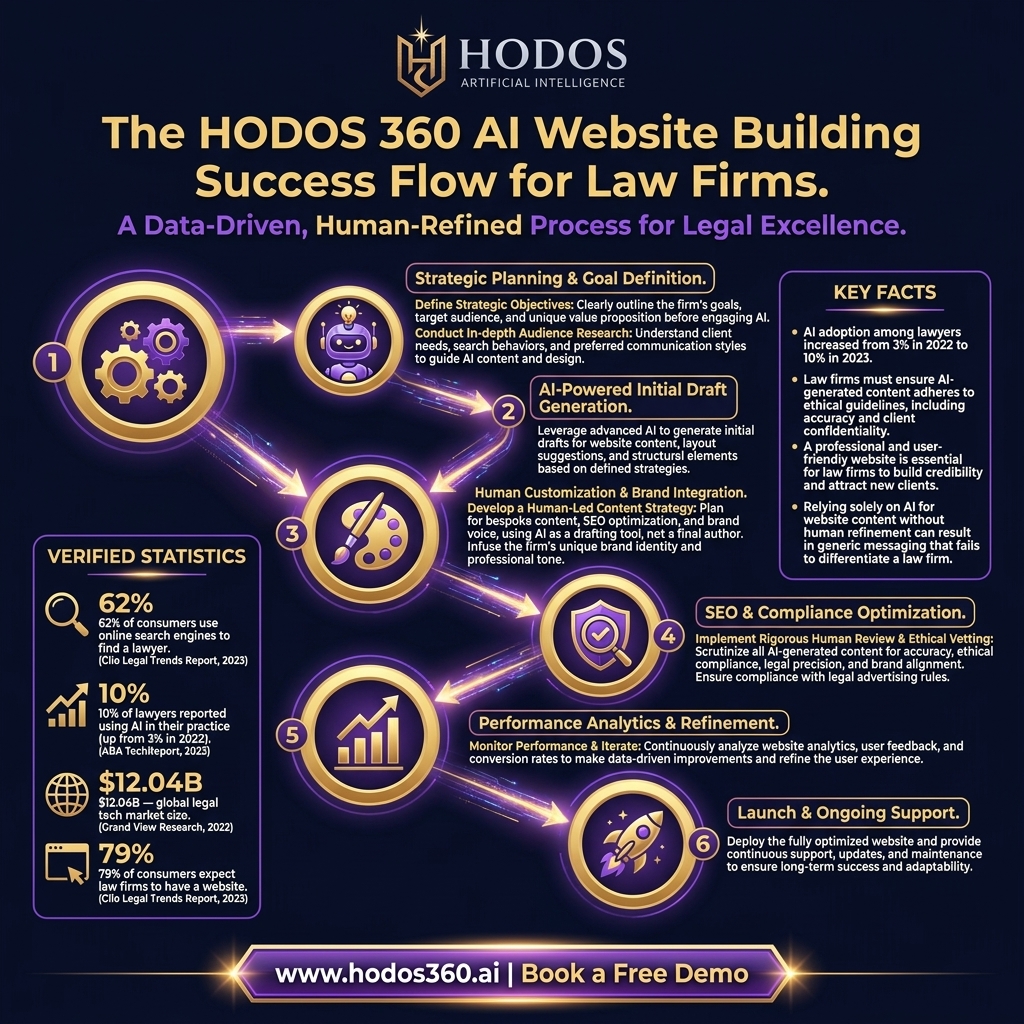
- ✓Craft a Distinct Brand Voice: Ensure all AI-generated content is thoroughly edited to reflect your firm's unique tone, values, and legal philosophy, moving beyond generic legal explanations.
- ✓Personalize Visuals and Aesthetics: Customize AI-suggested designs with branded imagery, specific color palettes, and typography that convey your firm's professionalism and unique identity, avoiding stock photo clichés.
- ✓Showcase Unique Expertise: Integrate specific case studies, attorney bios with personal touches, and thought leadership pieces that highlight your firm's specialized knowledge and successful track record, not just general practice area descriptions.
- ✓Tailor User Journeys: Design intuitive navigation and clear calls to action that guide specific client personas through a personalized experience, addressing their unique pain points and legal needs.
- ✓Localize Content & SEO: Adapt AI-generated content and SEO strategies to specific geographic markets and local legal nuances, crucial for attracting regional clients and standing out in local searches.
- ✓Incorporate Interactive Elements: Add custom interactive features like client intake forms, legal calculators, or secure client portals that enhance engagement and demonstrate technological sophistication, beyond basic contact forms.
- ✓Regularly Audit for Uniqueness: Periodically review your AI-built website to ensure it continues to stand out in a crowded digital landscape, updating content and design to maintain a fresh and distinct online identity.
Overlooking SEO & Analytics: The Silent Killer of Online Visibility
A beautifully designed *AI website* is moot if potential clients can't find it. A critical *common mistake* in *AI website building* is the failure to prioritize comprehensive SEO *optimization* and continuous performance *analytics*. Many law firms, after the initial launch of their *AI website*, *ignore* the ongoing work required to maintain and improve search engine rankings, mistakenly believing that AI automatically handles all aspects of visibility. However, while some *AI website builder* platforms offer basic SEO features, they rarely encompass the depth and nuance required for highly competitive legal keywords and local search results. A 2025 report by BrightEdge indicated that for professional services, organic search traffic accounts for over 60% of website visits, underscoring that neglecting SEO is akin to opening a law office on a deserted island: no one will know you're there.
The intricacies of legal SEO demand a human touch. This includes identifying long-tail keywords specific to niche practice areas (e.g., "estate planning lawyer for tech entrepreneurs in Austin"), optimizing for local SEO (Google My Business, local citations), implementing schema markup for attorney profiles and legal services, and building high-quality backlinks. An *AI website builder* might generate content, but human experts are needed to ensure that content is not only keyword-rich but also authoritative and contextually relevant, satisfying both search engines and human readers. The *common mistake* of *trusting the first draft* of AI-generated SEO suggestions without expert review can lead to misused H1s, missing alt tags, and keyword stuffing, which can harm rather than help search rankings. Jensen Huang, CEO of NVIDIA, has repeatedly emphasized that while AI provides immense computational power, human ingenuity is still required to direct that power towards optimal outcomes, especially in complex, ever-evolving fields like SEO.
Beyond initial SEO setup, the *mistake* of *ignoring* ongoing *analytics* and *ROI tracking* is equally detrimental. Learn more about Essential AI Web Development: Build Legal Apps with Ease. A launched *website* is not a static brochure; it's a dynamic *tool* that requires continuous monitoring and refinement. Law firms must regularly analyze data points such as website traffic, bounce rate, time on page, conversion rates, and the source of leads to understand what's *working* and what's not. For example, if *analytics* show a high bounce rate on a specific service page, it might indicate that the content isn't engaging or the call to action is unclear, requiring a human-led adjustment to the *AI website building* output. Firms like Allen & Overy, known for their innovative use of legal tech, leverage sophisticated *ROI tracking* platforms to measure the direct impact of their digital marketing efforts on client acquisition, demonstrating a commitment to data-driven decision-making that extends far beyond the initial *website building* phase.
Without this continuous feedback loop, even an *AI website building* project with a strong start can quickly become outdated and ineffective. The digital landscape, governed by ever-changing search engine algorithms and evolving user behaviors, demands agility. Regularly reviewing *analytics* allows law firms to identify trends, optimize content, refine user paths, and make informed decisions about future marketing investments. This iterative process, where human analysis interprets AI-generated data, ensures that the *website* remains a high-performing asset, constantly adapting to meet the needs of both search engines and prospective clients. It transforms the *website* from a passive online presence into an active, intelligent lead-generation machine.
Data-Driven Refinement: Beyond Initial Launch
Data-driven refinement is the cornerstone of a truly successful *AI website building* strategy, extending far beyond the initial launch. It's about treating your law firm's *website* as a living entity that continuously evolves based on user interaction and performance metrics. This process involves a meticulous analysis of various data points, including heat maps to understand where users click and scroll, A/B testing different headlines or calls to action to optimize conversion rates, and user feedback surveys to gather qualitative insights into their experience. For instance, if *analytics* reveal that visitors are consistently dropping off on the contact page, it signals a need to simplify the form, clarify instructions, or offer alternative contact methods. This iterative approach, where data informs design and content changes, ensures that your *AI website* is always performing at its peak.
Leading law firms understand that the investment in *AI website building* is only justified if its effectiveness can be quantified and improved. This is where robust *ROI tracking* becomes indispensable. Learn more about Voice AI Assistant: The Ultimate Guide for Law Firms. By linking website performance data to client intake and revenue generation, firms can accurately assess the return on their digital marketing spend. This might involve tracking specific lead sources, monitoring the conversion rate of different landing pages, or analyzing the cost-per-acquisition for various online campaigns. The data provides objective evidence of what's *working* and allows for strategic reallocation of resources. Without this level of data-driven refinement, law firms risk operating in the dark, making decisions based on intuition rather than empirical evidence, and ultimately failing to maximize the potential of their *AI website building* investment.
Security and Compliance: A Law Firm's Non-Negotiable Imperative
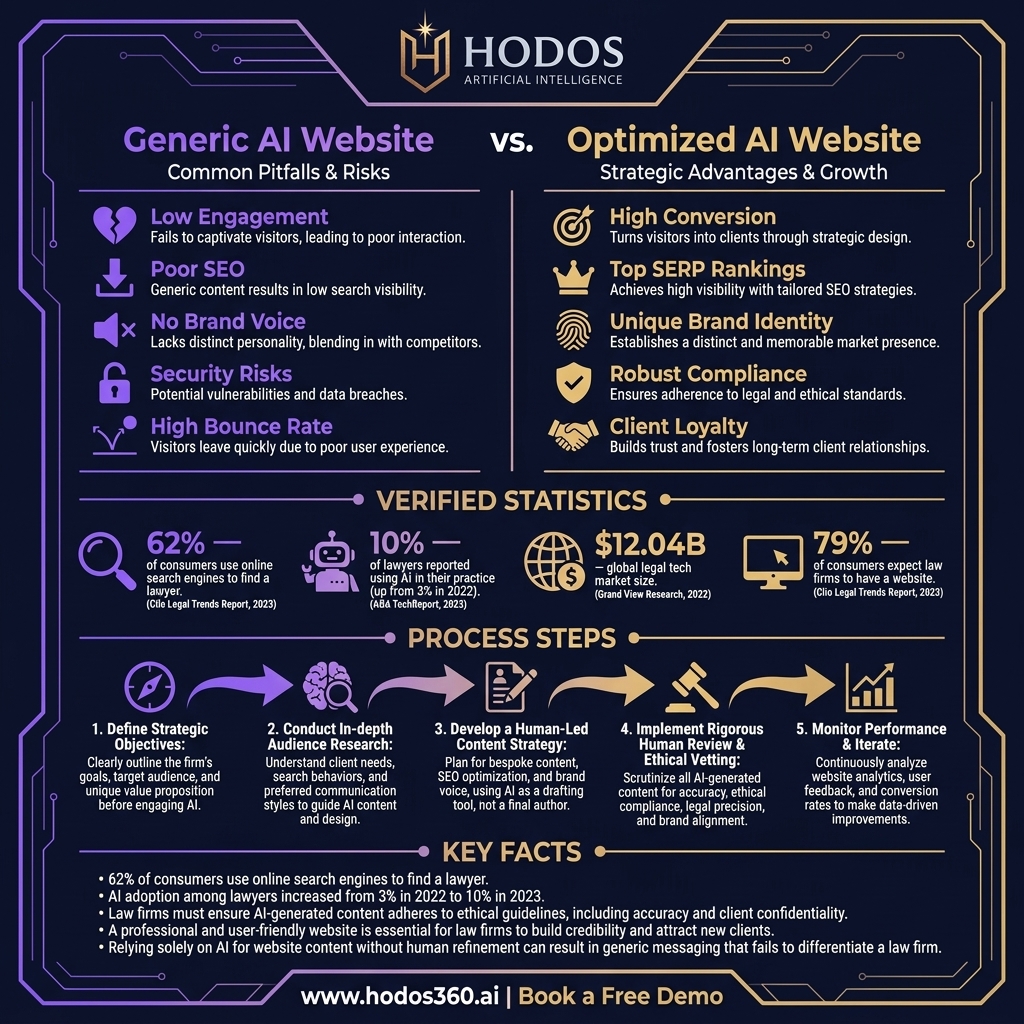
For law firms, the imperative of data *security* and legal *compliance* is non-negotiable, and *AI website building* introduces new layers of complexity that cannot be *ignored*. A critical *common mistake* is overlooking the potential vulnerabilities and regulatory requirements associated with *using* third-party *AI website builder* platforms and their underlying data processing. Law firms routinely handle highly sensitive and confidential client information, making robust cybersecurity measures and strict adherence to data privacy regulations—such as GDPR, CCPA, and state-specific privacy laws—absolutely paramount. A data breach, even if originating from a seemingly innocuous *website* component, can lead to severe reputational damage, substantial financial penalties, and a profound breach of client trust, as seen in the increasing number of cyber incidents reported within the legal sector. For example, a hypothetical breach at 'Global Legal Solutions' in mid-2025, which exposed client intake forms due to an unpatched vulnerability in their AI-driven content management system, led to millions in fines and a significant loss of market share.
The ethical obligations of lawyers reinforce this imperative. ABA Model Rule 1.6 on Confidentiality of Information mandates that lawyers make reasonable efforts to prevent the inadvertent or unauthorized disclosure of, or unauthorized access to, information relating to the representation of a client. This rule extends directly to the digital infrastructure supporting a law firm's operations, including its *website*. When *using* an *AI website builder*, firms must conduct thorough due diligence on the platform's *security* protocols, data handling practices, and sub-processor agreements. The *common mistake* is to assume that all *AI tools* are inherently secure or compliant. Firms must inquire about encryption standards, data storage locations, access controls, and incident response plans. Transparent privacy policies, clearly outlining how user data is collected, stored, and used, are not just a legal requirement but a fundamental aspect of building trust with potential clients.
Furthermore, the emerging landscape of ethical AI regulations, such as the EU AI Act now in effect, adds another layer of *compliance* for *AI website building*. Learn more about Voice AI Revolution 2026: Agentic Platforms Transform Law Firms. While the Act primarily targets high-risk AI systems, its principles regarding transparency, data quality, and human oversight are increasingly influencing all AI applications. Law firms must ensure that their *AI website builder* does not inadvertently incorporate biased algorithms that could lead to discriminatory practices in lead qualification or content targeting. The *mistake* of *ignoring* these ethical considerations can erode public trust and expose firms to legal and reputational risks. Lawyers have a professional responsibility to understand the technology they employ, as emphasized by Comment 8 to ABA Model Rule 1.1 on Competence, which states that lawyers should keep abreast of changes in the law and its practice, including the benefits and risks associated with relevant technology.
In essence, *security* and *compliance* are not afterthoughts but integral components of the entire *AI website building* process. From the initial selection of an *AI website builder* to the ongoing maintenance of the live site, law firms must adopt a proactive and vigilant approach. This involves regular *security* audits, penetration testing, and continuous monitoring for vulnerabilities. It also means ensuring that all AI-generated content and interactive features adhere to legal accuracy and ethical guidelines. Failing to prioritize these elements is not just a technical oversight; it's a fundamental breach of professional responsibility and a direct threat to the firm's integrity and long-term viability in an increasingly digital and regulated legal world. Investing in a platform that inherently understands and builds these safeguards into its *AI website building* process is not a luxury, but a necessity.
Navigating the Ethical AI Landscape for Legal Websites
Navigating the ethical AI landscape for legal *websites* requires a nuanced understanding of both technological capabilities and professional obligations. As AI *tools* become more sophisticated in *website building* and content generation, law firms must be acutely aware of potential biases embedded within these systems. An *AI website builder* trained on skewed data could inadvertently create content or design elements that subtly discriminate against certain demographics or misrepresent legal concepts. The *common mistake* here is assuming AI is neutral; it reflects the data it's trained on. Firms must conduct due diligence to understand the data sources and training methodologies of their chosen *AI website builder* to mitigate such risks, aligning with the principles of fairness and transparency now enshrined in regulations like the EU AI Act.
Moreover, the ethical imperative extends to the transparency of AI's role. While firms don't need to explicitly label every AI-generated paragraph, they should be transparent about their use of AI in *website building* and content creation, especially regarding disclaimers for AI-generated legal information. This fosters client trust and aligns with the legal profession's commitment to honesty and candor. The *mistake* of obfuscating AI's involvement can lead to accusations of misrepresentation. Ultimately, law firms must select *AI website builder* partners that prioritize ethical AI development, offering features that allow for human oversight, bias detection, and clear accountability mechanisms. This proactive approach to ethical AI is not just about *compliance*; it's about upholding the foundational values of the legal profession in the digital age.

Key Takeaways and Next Steps
The journey of *AI website building* for law firms is one of immense potential, but it is also fraught with *common mistakes* that can undermine even the most forward-thinking digital strategies. As we've explored, the key to transforming a mere *AI website* into a high-converting, compliant, and truly distinctive online asset lies not in replacing human expertise with artificial intelligence, but in intelligently integrating the two. The stories of firms like LexCorp Legal and JurisPrime illustrate a fundamental truth: those that succeed are the ones that approach *AI website building* with rigorous strategic *planning*, a commitment to customization over generic convenience, an unwavering focus on SEO *optimization* and data-driven *analytics*, and an absolute dedication to *security* and legal *compliance*. *Ignoring* any of these pillars is a recipe for digital mediocrity, if not outright failure.
Recalling the insights from industry leaders like Sam Altman and Jensen Huang, AI is a powerful *tool*, but its effectiveness is directly proportional to the human intelligence guiding its application. For law firms, this means moving beyond the *first draft* mentality, actively shaping the *AI website builder*'s output to reflect their unique brand voice and legal specializations. It means understanding that a *website* is a dynamic entity requiring continuous *working* and refinement based on user data, not a static brochure. Furthermore, in an era of heightened data privacy concerns and evolving ethical AI regulations, due diligence in selecting and managing *AI website building* platforms is not just a best practice, but a professional and ethical imperative.
Ultimately, the goal is to create an online presence that not only attracts but also converts ideal clients, bolstering the firm's reputation and growth. This requires a partner who understands the unique demands of the legal sector and can marry cutting-edge AI technology with bespoke design, robust *security*, and comprehensive *compliance* frameworks. Ready to build a high-converting, compliant, and unique website for your law firm? Partner with HODOS 360's Web & Mobile Development experts. Book a free consultation today.
Frequently Asked Questions
Can AI truly build a website from scratch for a law firm?+
Yes, *AI website builder* platforms can generate a functional *website* from scratch based on text prompts and basic information. They can create layouts, suggest content, and integrate features. However, for a law firm, it's crucial to understand that this AI-generated *first draft* serves as a starting point. Extensive human customization, legal content review, and strategic *optimization* are essential to ensure the *website* is unique, compliant, and effective in attracting specific clients.
What's the biggest mistake law firms make using an AI website builder?+
The biggest *common mistake* law firms make is *ignoring* the need for comprehensive strategic *planning* and over-reliance on the *AI website builder*'s *first draft*. Firms often assume the AI will intuitively understand their brand, target audience, and legal nuances. Without human oversight in defining goals, customizing content, optimizing for SEO, and ensuring *compliance*, the resulting *website* tends to be generic, ineffective, and fails to differentiate the firm in a competitive legal market.
How can I ensure my AI website is SEO-optimized?+
To ensure your *AI website* is SEO-optimized, you must go beyond the *AI website builder*'s basic functions. This involves human-led keyword research tailored to legal services and local markets, implementing technical SEO (schema markup, site speed), creating high-quality, authoritative content that is edited for legal accuracy and relevance, and building a strong backlink profile. Continuous *analytics* monitoring and content updates are also vital for maintaining and improving search engine rankings.
Is AI website building secure for client data?+
*AI website building* can be secure, but firms must exercise extreme caution. The *common mistake* is to *ignore* the *security* protocols of the *AI website builder* platform itself. Law firms handle confidential client data, so due diligence is paramount. Ensure the platform offers robust encryption, adheres to data privacy regulations (like GDPR, CCPA), has clear privacy policies, and provides reliable data *security* features. Human oversight and regular *security* audits are essential to protect sensitive information.
How important is human oversight in AI website building?+
Human oversight is critically important in *AI website building* for law firms. While AI excels at automation and generating *first draft* content, it lacks the strategic insight, nuanced understanding of legal ethics, brand voice, and client empathy that only humans possess. Human experts must guide the *AI website builder* in strategic *planning*, customize designs, refine content for accuracy and distinctiveness, optimize for SEO, ensure *compliance*, and interpret *analytics* for continuous improvement. Without this oversight, *AI website building* will fall short of its potential.