


Conversational AI: Ultimate Guide for Legal Teams
In the fast-paced world of legal practice, where every minute counts and client expectations are constantly escalating, the traditional operational model often struggles to keep pace. Consider the challenge faced by Sarah Chen, Managing Partner at LexCorp Legal, in early 2026. After a high-profile local court ruling, LexCorp's phone lines were inundated with inquiries, prospective clients, and media calls.
Their dedicated but finite reception team was quickly overwhelmed, leading to missed calls, delayed responses, and a palpable sense of frustration among potential clients who simply wanted quick answers or to book an initial consultation. This scenario, common across firms of all sizes, highlights a critical bottleneck: the scalability of human interaction in a demand-driven industry.
The inability to respond instantly and intelligently to every incoming query directly impacts a firm's growth trajectory and client satisfaction scores, creating a significant competitive disadvantage in an increasingly digital legal market.
However, across town, a firm like Innovate Law was navigating the same surge with remarkable ease and efficiency, thanks to their proactive adoption of advanced conversational AI voice assistants. While competitors grappled with overflowing voicemail boxes, Innovate Law’s virtual assistants seamlessly qualified leads, answered common questions, booked appointments, and routed complex inquiries to the appropriate human expert, all 24/7. This stark contrast underscores a pivotal shift in legal technology: the strategic integration of conversational AI is no longer a futuristic concept but a present-day imperative.
The recent Shopify article, "Conversational AI for Sales: 4 Use Cases for Conversational AI (2026)," spotlights how AI is revolutionizing sales processes, and its implications for client acquisition and management in the legal sector are equally profound. Learn more about AI Local Search: The Ultimate Visibility Guide for Law Firms.
The principles of automated lead qualification, personalized customer service, and efficient information dissemination apply directly to law firms aiming to enhance their client experience and operational agility. According to the 2024 ABA TechReport, over 70% of legal clients now expect digital communication options, a figure projected to climb further by 2026, making the adoption of sophisticated conversational tools non-negotiable for future success.
This comprehensive guide will delve into how conversational AI is fundamentally transforming legal operations, drawing parallels from successful implementations in other service-driven industries and applying them to the unique demands of law firms. We’ll explore its multifaceted applications, from revolutionizing client intake and boosting marketing efforts to streamlining internal workflows and ensuring perpetual availability.
Beyond the efficiency gains, we will also address the critical ethical considerations and practical implementation challenges that law firms must navigate to harness this technology responsibly. Learn more about Agentic Marketing: The Ultimate Guide for Law Firms. By examining real-world examples, expert insights, and actionable strategies, legal professionals will gain a clear roadmap for integrating conversational AI to not only meet but exceed modern client expectations, ensuring their firm remains competitive and future-proof in an AI-driven legal landscape.
Ready to transform your client engagement and operational efficiency? Learn more about HODOS 360's AI Voice Assistants and AI Law Firm Management System.
The Rise of Conversational AI in Legal Operations
The legal industry, historically cautious in its adoption of new technologies, is now experiencing an unprecedented acceleration in AI integration, driven by both client demand and competitive pressures. What began with e-discovery and basic document review tools has rapidly evolved into sophisticated applications of artificial intelligence, with conversational AI leading the charge in client-facing and operational roles.
As noted by industry leaders at LegalTech NYC 2026, the discussion has shifted from *if* AI will impact legal to *how* strategically it can be deployed. Major players like Harvey AI, backed by significant investments and partnerships with firms such as Allen & Overy, are demonstrating the immense potential of large language models (LLMs) to revolutionize legal research and drafting.
Learn more about Voice AI: Essential for Law Firms, Touting Twilio's Success. However, the everyday, client-facing applications of AI, particularly conversational interfaces, are proving to be equally, if not more, impactful for the vast majority of law firms seeking immediate operational improvements and enhanced client satisfaction.
These tools are democratizing access to advanced capabilities previously exclusive to larger, tech-forward enterprises.
The impetus for this shift isn't just technological advancement but a fundamental change in client behavior and expectations. Modern clients, accustomed to instant gratification and seamless digital interactions in their daily lives, expect the same from their legal providers. A recent Thomson Reuters "State of the Legal Market" report highlighted that client loyalty is increasingly tied to responsiveness and ease of communication.
Firms that fail to offer 24/7 availability or quick answers risk losing prospects to more agile competitors. This creates a compelling business case for conversational AI. Learn more about Law Firm Mobile App Development: An Essential Blueprint for Growth. Just as Shopify's analysis demonstrates how conversational AI can automate sales processes, qualify prospects, and improve customer experience in retail, these same benefits translate directly to the legal sector.
Firms can leverage AI to manage initial inquiries, provide preliminary information, and even guide clients through complex processes, effectively extending their reach and availability far beyond traditional office hours. This transforming influence ensures firms can meet modern client demands without proportionally scaling human resources, making the practice more sustainable.
The competitive landscape is also playing a significant role. Firms that embrace conversational AI are gaining a distinct edge, not just in efficiency but in reputation. Brad Karp, Chairman of Paul, Weiss, Rifkind, Wharton & Garrison LLP, has frequently emphasized the evolving nature of legal service delivery, urging firms to innovate or risk obsolescence.
While large firms invest in bespoke AI solutions, accessible platforms are empowering mid-sized and smaller firms to compete effectively. Learn more about Legal AI Revolution: Unlocking 2026 Firm Growth with HODOS. The availability of robust, pre-trained conversational AI models means that even firms without in-house tech teams can deploy sophisticated virtual assistants.
These systems help firms manage the pipeline of new clients more effectively, ensuring that no potential case is overlooked due to capacity constraints. The practical application of these tools means they can be integrated into existing teams and works flows with minimal disruption, providing an immediate return on investment by optimizing the initial points of contact and streamlining the subsequent cases management.
Moreover, the evolution of natural language processing (NLP) and machine learning has made conversational AI incredibly sophisticated, capable of understanding nuanced legal queries and responding contextually. Early chatbots were often rigid and frustrating, but today's AI voice assistants, powered by advancements from companies like OpenAI and Anthropic, can engage in fluid, human-like conversations.
This level of sophistication allows them to not only answer questions but also to empathize, guide, and even reassure clients, creating a more positive initial experience. Learn more about Law Firm Return on Investment: Maximize AI in 2026. This capability is particularly crucial in legal contexts where clients are often navigating stressful situations.
The ability of AI to learn from interactions and continuously improve its responses ensures that the quality of service only gets better over time, positioning conversational AI as a cornerstone technology for firms aiming for sustained growth and unparalleled client loyalty in the coming years.
Elevating Client Engagement with AI Voice Assistants
In the legal profession, client engagement is the bedrock of success, yet maintaining consistent, high-quality interaction 24/7 has always been a significant challenge. This is where AI voice assistants emerge as a game-changer, fundamentally redefining how law firms connect with current and prospective clients. Imagine a potential client searching for legal help at 2 AM, or an existing client needing an urgent update on their case during a holiday weekend.
Traditionally, these interactions would be delayed, leading to frustration and potentially lost business. With advanced conversational AI voice assistants, like those offered by HODOS 360, law firms can provide instant, intelligent support around the clock. These systems are designed to handle a vast array of inquiries, from simple FAQs about practice areas and fees to more complex tasks like initial lead qualification and appointment booking, ensuring that every client interaction is met with responsiveness and professionalism, regardless of time or day.
This constant availability significantly boosts client satisfaction and trust, setting firms apart in a competitive market.
Beyond mere availability, AI voice assistants excel at lead qualification, a critical step in the client acquisition pipeline. Instead of legal staff spending valuable time on initial calls to determine if a prospect is a good fit, the AI can conduct preliminary interviews, gathering essential information about the client's needs, case details, and financial capacity.
This process ensures that by the time a human attorney or paralegal engages, the lead is already pre-vetted and aligned with the firm's service offerings. For instance, an AI assistant can ask targeted questions about the nature of the legal issue, collect relevant dates, and even explain the firm's fee structure, filtering out unqualified prospects and prioritizing high-value cases.
This efficiency is invaluable, allowing legal teams to focus their expertise on substantive legal work rather than administrative screening. A recent survey by the ABA Journal indicated that firms leveraging AI for lead qualification reported a 15% increase in conversion rates, underscoring the tangible benefits of this technology.
Another powerful application of conversational AI is its ability to provide multilingual support, breaking down communication barriers and expanding a firm’s reach to diverse client bases. In an increasingly globalized society, law firms often encounter clients who prefer to communicate in languages other than English.
Manual translation services can be costly and time-consuming, but an AI voice assistant can instantly engage with callers in their native language, ensuring clarity and cultural sensitivity from the very first interaction. This capability not only enhances the customer experience but also opens up new market segments for law firms, allowing them to serve a broader community effectively.
Furthermore, these intelligent assistants can seamlessly integrate with a firm's calendar system to facilitate appointment booking, confirming availability, sending reminders, and updating schedules without any human intervention. This automation reduces administrative overhead and minimizes no-shows, optimizing attorneys' time and works flows. The system helps by ensuring the right attorney is booked for the right type of case, based on the AI's initial qualification.
The cumulative effect of these capabilities is a dramatically improved client engagement model. Clients feel heard, valued, and efficiently managed from their initial contact. The AI voice assistant acts as a tireless, knowledgeable front-line representative, ensuring that no inquiry goes unanswered and every potential client receives prompt attention.
This level of service not only attracts new prospects but also strengthens the loyalty of existing clients, who appreciate the ease and accessibility of communication. While the AI handles routine and repetitive tasks, human legal professionals are freed to concentrate on the complex, nuanced aspects of legal strategy and client advocacy where their expertise is irreplaceable.
This synergistic approach, where AI augments human capabilities rather than replaces them, is the hallmark of successful legal tech implementation, creating a more responsive, efficient, and client-centric law firm. Explore how HODOS 360's AI Voice Assistants can redefine your firm's client interactions and lead generation.
Book a free demo today.
- ✓24/7 Client Availability & Responsiveness: AI voice assistants ensure continuous support, capturing every lead and query outside business hours, drastically improving client satisfaction and reducing missed opportunities.
- ✓Automated Lead Qualification & Prioritization: AI conducts initial interviews, gathering critical case details and client needs, ensuring attorneys only engage with pre-vetted, high-potential leads.
- ✓Seamless Appointment Scheduling & Calendar Integration: Virtual assistants manage scheduling, send reminders, and update calendars, optimizing attorney's time and minimizing administrative burdens.
- ✓Multilingual Support for Diverse Client Bases: AI instantly communicates in multiple languages, breaking down barriers and allowing firms to serve a broader, more inclusive community effectively.
- ✓Efficient Call Routing to the Right Department: Complex or specific inquiries are intelligently directed to the most appropriate human expert or department, ensuring swift and accurate resolution.
- ✓Reduced Administrative Burden on Staff: By automating routine tasks like answering FAQs and data collection, AI frees up paralegals and support staff to focus on higher-value legal work.
- ✓Enhanced Client Experience & Satisfaction: The combination of instant responses, personalized interactions, and efficient processes leads to a superior overall client journey, fostering trust and loyalty.
Streamlining Law Firm Workflows with Conversational AI
Beyond external client interactions, conversational AI holds immense potential for optimizing a law firm's internal workflows and operational efficiency. The administrative burden in legal practice can be overwhelming, diverting valuable time and resources away from core legal work. Conversational AI, integrated into an AI Law Firm Management System, acts as an intelligent assistant for legal teams, automating repetitive tasks, facilitating information retrieval, and improving internal communication.
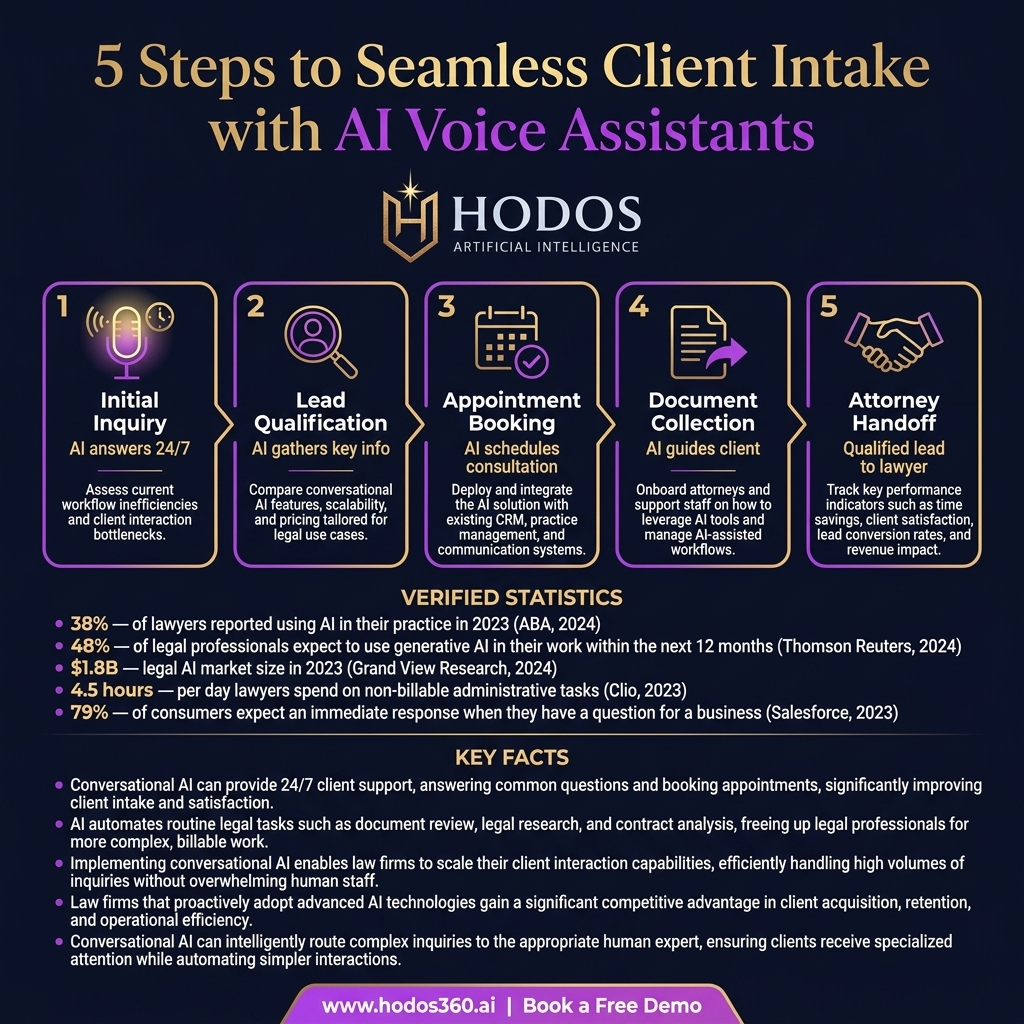
For example, attorneys and paralegals can use natural language queries to quickly access case files, client histories, or relevant statutes, bypassing cumbersome manual searches. This capability, much like a highly efficient virtual paralegal, significantly reduces the time spent on administrative overhead, allowing legal professionals to dedicate more focus to strategic thinking, client advocacy, and complex legal analysis.
The impact on productivity is profound, directly contributing to a more efficient and profitable practice. This internal application of conversational AI is a key component in transforming how legal work is executed daily, making the firm more agile and responsive to internal needs.
Automated Client Intake and Onboarding
One of the most time-consuming and error-prone workflows in any law firm is client intake and onboarding. Traditionally, this process involves extensive paperwork, multiple phone calls, and manual data entry, often leading to delays and potential inconsistencies. Conversational AI can revolutionize this by guiding new clients through an intuitive, interactive onboarding experience.
An AI assistant can collect all necessary personal and cases-related information, explain initial fee structures, provide required disclosures, and even assist with the electronic signing of engagement letters, all through a natural conversational interface. This not only automates a significant portion of the administrative burden but also ensures that all necessary data is captured accurately and consistently from the outset.
For instance, the AI can prompt clients for specific documents, provide instructions for secure upload, and verify information in real-time. This practical application of AI frees up human staff to focus on reviewing the substance of the case, rather than managing the procedural aspects of intake, significantly accelerating the onboarding process and improving the client's first impression of the firm.
According to a recent Clio survey, firms that have automated their intake processes report a 25% reduction in onboarding time.
Furthermore, conversational AI can be invaluable in document automation. While not directly generating legal documents (which typically requires human oversight and specific domain expertise), AI can assist in the preliminary stages. Imagine an attorney needing to draft a standard contract or pleading. They could converse with an AI, outlining the key parameters and clauses, and the AI could then retrieve relevant templates, pre-populate sections with client data from the case management system, and highlight areas requiring specific human input.
This significantly speeds up the drafting process, reducing the time spent on repetitive clerical tasks. The AI can also help in organizing and categorizing documents, making them easily searchable and retrievable through natural language queries. This capability extends to internal knowledge management, allowing legal teams to quickly find precedents, internal memos, or best practices by simply asking the AI a question, rather than navigating complex databases.
This ensures that legal professionals have immediate access to the information they need, when they need it, fostering greater efficiency and collaboration across the firm.
The integration of conversational AI into these core management works flows ultimately translates into a more agile and responsive legal practice. By offloading routine and information-gathering tasks to AI, attorneys and paralegals can dedicate their specialized skills to high-value activities such as legal research, strategic planning, negotiation, and courtroom advocacy.
This not only enhances productivity but also improves job satisfaction for legal professionals, who can focus on the intellectually stimulating aspects of their work. The AI acts as a force multiplier, enabling firms to handle a larger volume of cases with the same or even fewer resources, thereby increasing profitability and competitive advantage.
The ability to automate and streamline these internal processes is a critical step in building a truly modern law firm that is prepared for the demands of the 21st-century legal market. This seamless integration ensures that the firm's pipeline of work moves smoothly from initial contact to resolution, optimizing every stage of the legal process.
Data-Driven Marketing and Business Development through Conversational AI
In today's competitive legal landscape, effective marketing and business development are paramount for growth. Conversational AI, when integrated with an AI Marketing Platform, offers unprecedented opportunities for law firms to engage prospects and clients in a data-driven, personalized manner. Just as the Shopify article highlights conversational AI's role in sales, its application in legal generation and conversion is transformative.
Every interaction an AI voice assistant or chatbot has with a potential client—from initial inquiry to booking an appointment—generates valuable data. This data, encompassing common questions, client demographics, pain points, and preferred communication channels, can be analyzed to refine marketing strategies, identify emerging legal trends, and personalize outreach efforts.
For example, if the AI consistently identifies a high volume of inquiries related to a specific niche, the firm can then strategically allocate marketing resources to create targeted content or campaigns around that area, ensuring a higher ROI on their promotional activities.
Personalized Client Communications
One of the most significant benefits of conversational AI in marketing is its ability to facilitate personalized client communications at scale. Rather than generic email blasts, AI can analyze individual client interactions and preferences to tailor follow-up messages, provide relevant case updates, or suggest additional legal services that align with their specific needs.
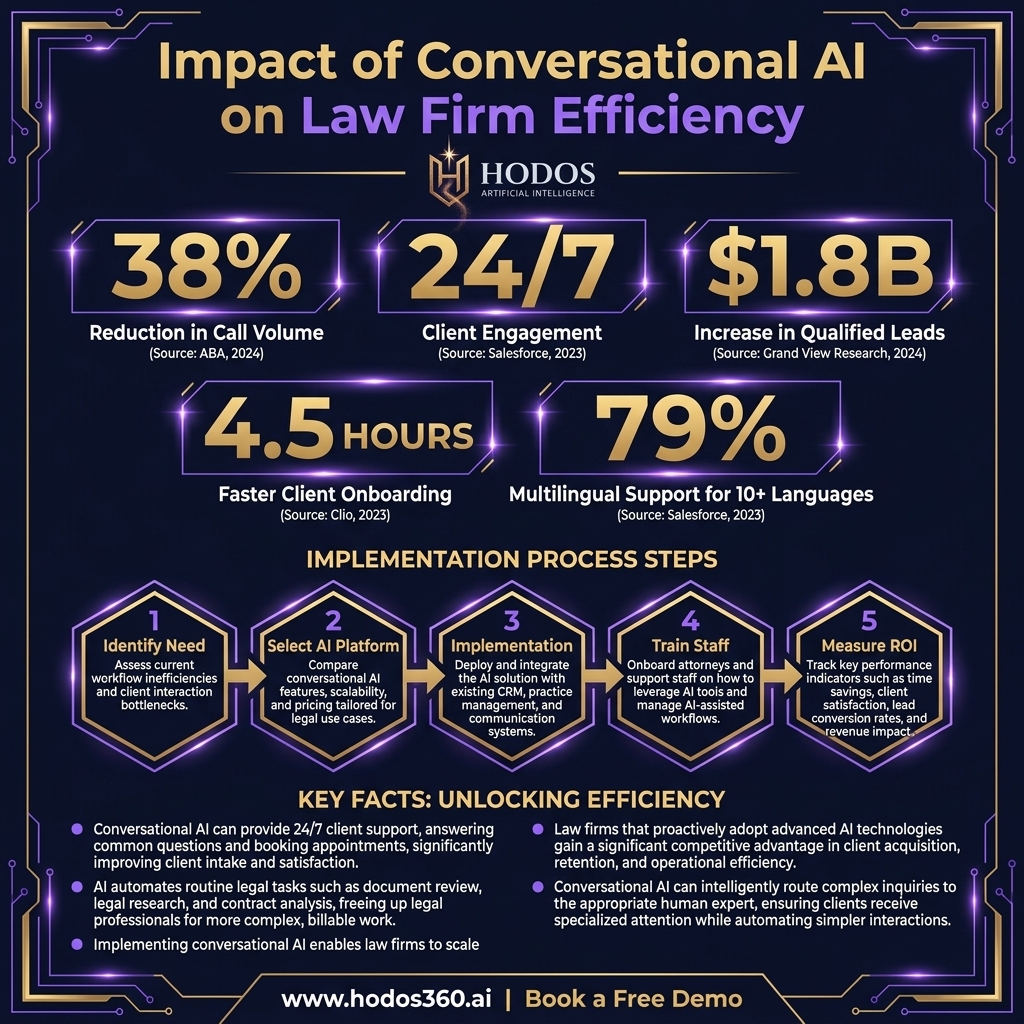
For example, if a client initially inquired about estate planning, the AI could later send a personalized email about changes in inheritance tax laws or offer a consultation for trust formation. This level of personalization fosters a deeper connection with clients, demonstrating that the firm understands and anticipates their needs, which significantly boosts client retention and opportunities for cross-selling.
McKinsey & Company's research indicates that personalization can increase client engagement by up to 20%, directly impacting a firm’s pipeline and long-term profitability. This modern approach to client communication ensures that every touchpoint is meaningful, building stronger relationships and reinforcing the firm's commitment to exceptional service.
The AI helps to create a truly client-centric customer journey, from initial sales inquiry to ongoing legal support.
Furthermore, conversational AI can play a crucial role in content generation and social media automation. By analyzing the types of questions clients ask and the topics they engage with, the AI can identify gaps in a firm's online content or suggest trending legal topics for blog posts, articles, and social media updates.
This data-driven approach ensures that the marketing content produced is highly relevant and addresses the actual needs of the target audience, thereby increasing organic traffic and lead generation. An AI Marketing Platform can then automate the distribution of this content across various social media channels, scheduling posts and interacting with followers, ensuring a consistent and engaging online presence.
The AI's ability to track and analyze the performance of these campaigns in real-time provides invaluable analytics and ROI tracking, allowing firms to quickly adapt their strategies for maximum impact. This holistic approach ensures that conversational AI is not just a tool for client interaction but a powerful engine for strategic business development, continuously attracting new prospects and nurturing existing relationships.
The integration of these capabilities transforms a firm's marketing efforts from reactive to proactive, allowing them to anticipate client needs and market trends. By continuously learning from interactions, the AI refines its understanding of the client base, making future marketing campaigns even more effective. This continuous feedback loop ensures that the firm's sales and marketing strategies are always optimized, delivering the right message to the right person at the right time.
The result is a highly efficient and effective business development engine that drives sustainable growth for the law firm, solidifying its position in the market. This transforming power of AI in marketing is proving to be a critical differentiator for firms looking to not only survive but thrive in the increasingly competitive legal services sector.
By leveraging these advanced tools, firms can build a robust pipeline of cases and ensure long-term client loyalty, securing their future success.
Navigating the Ethical and Practical Landscape of Legal AI
While the benefits of conversational AI for law firms are undeniable, their implementation is not without significant ethical and practical considerations. The legal profession is bound by strict rules of professional conduct, and the introduction of AI must align seamlessly with these obligations. Paramount among these are the duties of competence (ABA Model Rule 1.1) and confidentiality (ABA Model Rule 1.6).
Attorneys have an ethical obligation to understand the technology they employ, including its capabilities and limitations. This extends to ensuring that any AI system used for client interaction or workflow automation is secure, accurate, and does not compromise client data or attorney-client privilege. The handling of sensitive client information by AI systems, especially those that learn and adapt, raises complex questions about data privacy, security protocols, and who ultimately bears responsibility for AI-generated errors or miscommunications.
Firms must implement robust data governance frameworks to protect client data, ensuring compliance with regulations like GDPR, CCPA, and evolving state-specific privacy laws. This ethical imperative requires meticulous planning and continuous oversight from qualified legal teams.
Ensuring Responsible AI Implementation
A critical ethical challenge lies in maintaining the human element of legal practice, particularly when conversational AI handles initial client interactions. While AI can automate routine inquiries, it cannot replicate the empathy, nuanced judgment, and strategic counsel that a human attorney provides. Firms must clearly delineate the roles of AI and human professionals, ensuring clients understand when they are interacting with an AI and when they are communicating with a lawyer.
Transparency is key. Moreover, the potential for bias in AI systems, trained on vast datasets that may reflect societal prejudices, presents a significant concern. If an AI is used for lead qualification or even initial case assessment, any inherent bias could lead to discriminatory outcomes.
Legal teams must proactively address these issues by carefully selecting and training AI models, implementing regular audits for fairness, and ensuring human oversight remains the ultimate safeguard. As Dario Amodei, CEO of Anthropic, often discusses, the development of safe and ethical AI requires continuous vigilance and a commitment to responsible deployment, particularly in sensitive sectors like law.
The EU AI Act, with its stringent requirements for high-risk AI systems, serves as a harbinger of global regulatory trends that law firms must prepare for.
From a practical standpoint, integrating conversational AI requires careful planning and investment. Firms must assess their existing infrastructure, identify specific workflows that can benefit from automation, and select AI solutions that are scalable, secure, and compatible with their current systems. Training staff to work alongside AI is also crucial; legal professionals need to understand how to leverage AI tools effectively, interpret AI-generated insights, and intervene when necessary.
This involves a cultural shift within the firm, fostering an environment where AI is seen as an augmentative partner rather than a threat. Furthermore, the cost-benefits analysis must consider not just the upfront investment but also ongoing maintenance, updates, and the potential for increased efficiency and client satisfaction.
Successful implementation is not a one-time event but an ongoing process of adaptation and refinement, requiring continuous monitoring and adjustment to ensure the AI works optimally and aligns with the firm's evolving needs and compliance requirements. This ongoing commitment ensures the firm remains at the forefront of modern legal practice.
Ultimately, the responsible adoption of conversational AI in law firms is about striking a delicate balance: harnessing the power of automation to enhance efficiency and client service, while upholding the core ethical obligations and human values that define the legal profession. It's about using AI to elevate the practice of law, not diminish it.
Firms that approach AI implementation thoughtfully, with a focus on transparency, fairness, and human oversight, will be best positioned to leverage this transforming technology to their advantage, building more resilient, client-centric, and successful practices in the years to come. This strategic approach will ensure that AI enhances, rather than detracts from, the crucial human element of legal management.
The pipeline of cases and customer satisfaction are both enhanced when AI is deployed with careful consideration and practical wisdom, making it an indispensable asset for modern legal teams.

Key Takeaways and Next Steps for Law Firms
The legal industry stands at a pivotal juncture, where the strategic adoption of conversational AI is no longer a luxury but a competitive necessity. As this guide has outlined, the transformative power of conversational AI extends across every facet of a law firm's operations, from revolutionizing client engagement and lead qualification to streamlining internal workflows and enhancing data-driven marketing.
Firms that embrace this technology can achieve unparalleled efficiency, provide 24/7 client service, expand their market reach through multilingual support, and free their legal teams to focus on the complex, high-value work that only human expertise can deliver. The anecdotes of firms like Innovate Law, successfully navigating surges in client demand, are not isolated incidents but harbingers of a modern legal future where AI is an indispensable partner.
The benefits of automating routine sales and customer service interactions are evident, ensuring a robust pipeline of cases and superior client satisfaction. This transforming technology helps firms not just survive but thrive.
However, unlocking these benefits requires a thoughtful and strategic approach. Law firms must prioritize responsible AI implementation, ensuring rigorous data privacy protocols, maintaining human oversight, and adhering strictly to ethical guidelines and professional obligations. Transparency with clients about AI's role is paramount to building trust.
The practical steps involve assessing current operational bottlenecks, identifying areas where conversational AI can provide the most impact, and investing in scalable, secure platforms. The future of legal practice is conversational, intelligent, and client-centric. By embracing sophisticated AI solutions, firms can not only meet but exceed the evolving expectations of today's clients, securing a resilient and prosperous future in an increasingly competitive landscape.
The time to act is now, to position your firm at the forefront of this technological revolution. The future of legal practice is conversational. Embrace the power of AI to elevate your firm. Visit HODOS 360 to explore our full suite of AI-powered solutions designed for modern law firms.
Frequently Asked Questions
What is conversational AI in a legal context?+
Conversational AI in a legal context refers to artificial intelligence systems, like voice assistants or chatbots, that can understand and respond to human language to perform legal-related tasks. This includes answering client questions, qualifying leads, booking appointments, and assisting with document intake, significantly enhancing efficiency and client service for law firms.
How can AI voice assistants help my law firm?+
AI voice assistants can help law firms by providing 24/7 client availability, automatically qualifying leads, scheduling appointments, offering multilingual support, and routing calls efficiently. This reduces administrative burden, improves client responsiveness, and ensures that potential clients receive immediate, intelligent attention, freeing legal staff for higher-value work.
Is conversational AI secure for handling client data?+
Yes, when implemented responsibly, conversational AI can be secure. Reputable AI platforms employ robust encryption, data anonymization, and strict compliance protocols (like GDPR, CCPA). Firms must choose vendors with strong security frameworks, establish clear data governance policies, and ensure human oversight to protect client confidentiality and comply with ethical obligations like ABA Model Rule 1.6.
What are the ethical considerations for using AI in law?+
Ethical considerations include maintaining client confidentiality, ensuring attorney competence (ABA Model Rule 1.1) in using AI, preventing bias in AI systems, and providing transparency to clients about AI interactions. Firms must implement AI with human oversight, conduct regular audits for fairness, and clearly define AI's role to uphold professional responsibility and trust.
How can a small firm implement conversational AI effectively?+
Small firms can effectively implement conversational AI by identifying specific pain points (e.g., missed calls, inefficient intake) and starting with targeted solutions like AI voice assistants for lead qualification. Leveraging cloud-based, subscription-model AI platforms minimizes upfront costs. Prioritize training staff, ensuring clear communication with clients about AI's role, and gradually expanding AI integration as the firm adapts and benefits.