


Legal AI Assistant: The Ultimate Guide for Modern Law Firms
The legal technology landscape is buzzing, and recent headlines confirm a powerful trend: investors are pouring capital into AI solutions designed to streamline legal operations. Just this month, Vikk AI, a Long Beach-based startup, made waves by announcing a significant $4.2 million raise across pre-seed and seed funding rounds, as reported by Law360. This substantial investment, led by key venture capitalists recognizing the burgeoning market need, highlights the rapid acceleration of AI integration within the legal sector. Vikk AI's dual focus on a consumer-facing AI legal assistant and an attorney advertising platform perfectly encapsulates the two-pronged approach many innovators are taking: empowering both legal professionals with advanced tools and connecting them more effectively with clients. This move isn't just about Vikk AI; it's a clear signal to every law firm, from boutique practices to AmLaw 100 giants, that the era of the Legal AI Assistant is not just arriving, it's already reshaping the foundations of legal practice and client engagement.
This influx of capital isn't an isolated incident but rather a continuation of a broader movement. We’ve seen similar surges with companies like Harvey AI, which secured a reported $21 million in funding and formed strategic partnerships with global firms like Allen & Overy, demonstrating the profound trust and investment in generative AI for complex legal tasks. The competitive tension in the market is palpable, with startups vying for market share against established players like Thomson Reuters and Clio, which itself has expanded its ecosystem through strategic acquisitions. Law firm leaders, like Sarah Jones, managing partner at a mid-sized litigation firm in New York, often voice concerns about keeping pace. "The sheer volume of new tech is overwhelming," Jones noted at a recent LegalTech NYC panel, "but the risk of being left behind is far greater. We have to strategically invest in tools that truly deliver ROI."
The promise of a sophisticated Legal AI Assistant extends far beyond simple document review. It envisions an integrated ecosystem capable of transforming every facet of a law firm's daily operations, from the initial client intake to complex case management and even marketing outreach. The $4.2 million secured by Vikk AI underscores the market's belief in platforms that offer multifaceted value, marrying internal efficiency with external growth. For law firms, this means moving past rudimentary digital tools to embrace AI-powered legal workflows that automate repetitive tasks, provide data-driven insights, and free up attorneys to focus on high-value legal work. The implications are profound, promising not just cost savings but also enhanced client satisfaction and a significant competitive edge in a rapidly evolving legal landscape. Discover how a truly integrated AI legal assistant can revolutionize your firm's future.
The Evolution of Law Firm Management with AI
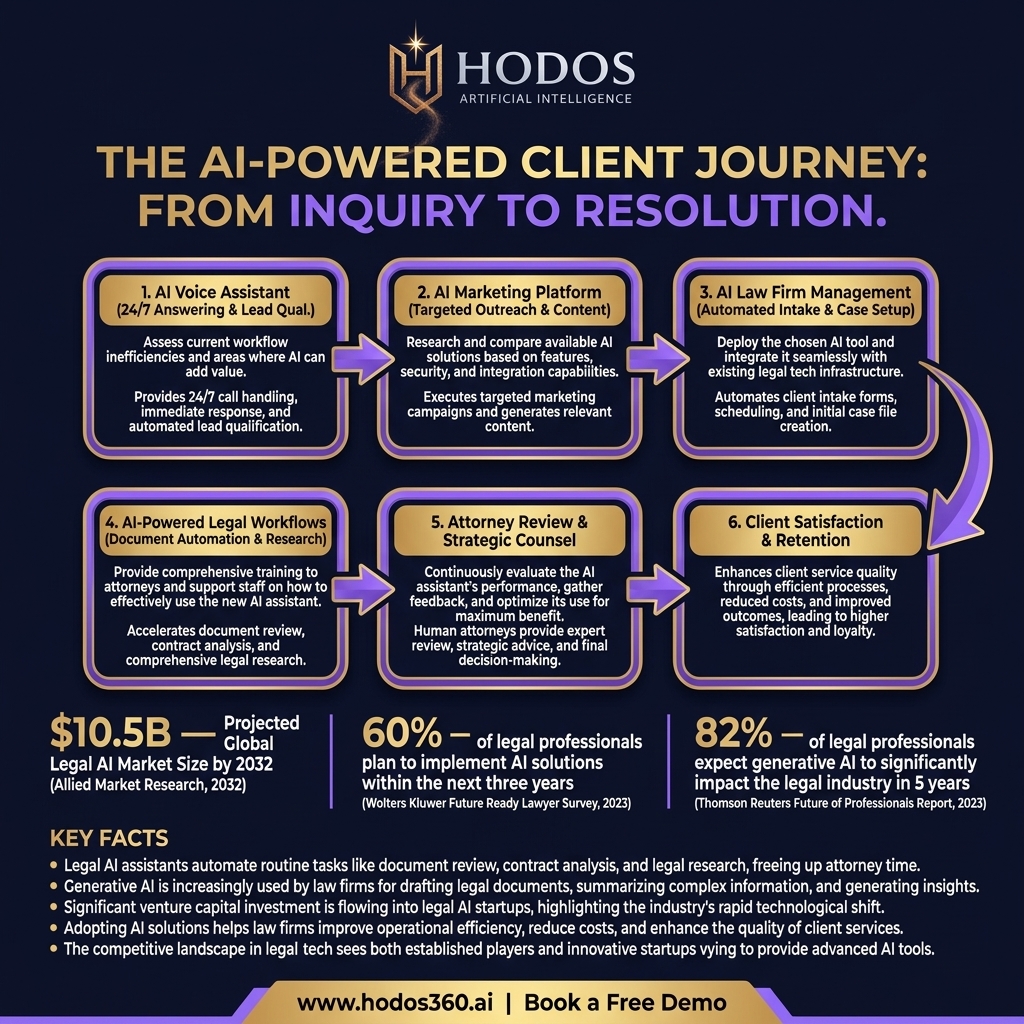
The traditional model of law firm management, often characterized by manual processes and disparate software solutions, is rapidly becoming obsolete in the face of advanced AI. A Legal AI Assistant at its core represents a paradigm shift, moving beyond basic practice management software to an intelligent system that learns and adapts. Consider the experience of Michael Chen, a partner at a corporate law firm in San Francisco, who recently spearheaded the integration of an AI-powered case management system. "Before," Chen explained in a recent interview with Bloomberg Law, "our team spent countless hours on data entry, cross-referencing documents, and scheduling. Now, the AI handles the bulk of that, flagging potential conflicts, automating document generation, and even suggesting next steps based on case precedents."
The impact on client intake and document automation is particularly transformative. Learn more about AI Hallucinations: Essential Lessons for Legal Practice. A sophisticated Legal AI Assistant can now manage the entire client onboarding process, from initial inquiry to conflict checks and retainer agreements, all with minimal human intervention. This not only accelerates the process but also reduces the potential for human error, ensuring compliance with standards like the ABA Model Rules of Professional Conduct concerning client identification and conflicts of interest. For example, AI can automatically populate client information across various forms, generate initial drafts of engagement letters, and even analyze incoming queries to qualify leads based on predefined criteria. This level of automation allows legal professionals to focus on relationship building and substantive legal strategy from day one.
AI-Powered Marketing: Driving Growth and Client Acquisition
The investment in Vikk AI's attorney ad platform underscores a critical realization in the legal sector: effective client acquisition in the digital age demands sophisticated, data-driven marketing. A powerful Legal AI Assistant extends its capabilities beyond internal firm management to external outreach, transforming how law firms attract and retain clients. Traditional legal marketing often relies on referrals and outdated advertising models, but the modern client journey begins online. Firms must now compete for visibility and engagement across multiple digital channels. AI-powered marketing platforms address this challenge by automating content creation, optimizing social media presence, and delivering targeted advertising campaigns with unprecedented precision.
One of the most innovative applications of AI in legal marketing is in video content creation and social media automation. Studies show that video content significantly boosts engagement, yet producing professional legal videos can be time-consuming and expensive. Learn more about AI Litigation: Essential Guide for Navigating Pro Se AI Use. An AI marketing platform can generate high-quality video snippets, client testimonials, or explanatory legal content using text-to-video technology, complete with AI-generated voices and visuals. This allows firms to maintain a dynamic and engaging online presence without the need for extensive in-house production teams. Concurrently, social media automation tools powered by AI can schedule posts, analyze engagement metrics, and even identify trending legal topics to ensure content remains relevant and timely. Explore how an AI marketing platform can elevate your firm's client acquisition strategy.
The Power of AI Voice Assistants in Client Engagement
In the competitive legal market, client engagement often begins with the first point of contact. Missed calls, delayed responses, or inefficient lead qualification can mean losing a potential client to a competitor. This is where the Legal AI Assistant truly shines as an AI Voice Assistant, offering a transformative solution to inbound communication challenges. Imagine a law firm where every call is answered promptly, professionally, and intelligently, regardless of time or day. This isn't a futuristic fantasy but a present-day reality powered by advanced conversational AI.
The 24/7 availability of AI Voice Assistants is a game-changer for client intake and lead qualification. While traditional receptionists are limited by business hours, an AI assistant can operate around the clock, capturing leads from individuals who work late, are in different time zones, or face urgent legal issues outside of standard office hours. Learn more about AI's Profound Impact: Essential Lessons for Legal Firms. This continuous availability ensures that no potential client query goes unanswered, significantly expanding a firm's reach and responsiveness. Furthermore, these assistants are adept at lead qualification, asking a series of predefined questions to gather essential information, assess the nature of the inquiry, and determine if the caller meets the firm's client criteria. This pre-screening process saves attorneys valuable time, ensuring they only engage with genuinely qualified prospects, thereby streamlining the entire client acquisition funnel. The ethical considerations around AI in client communication are paramount, of course, requiring transparency about AI interaction and clear protocols for escalation to human attorneys when necessary, aligning with principles of competent client communication under ABA Model Rule 1.4.
Elevating Your Firm's Digital Presence with Web & Mobile Development
In today's digital-first world, a law firm's website is often the first impression a potential client has, and increasingly, it's a critical touchpoint for lead generation. While Vikk AI focuses on an ad platform, the foundation of any successful digital marketing strategy lies in a robust, high-performing website. A comprehensive Legal AI Assistant ecosystem often includes AI-powered web and mobile development services that ensure a firm’s online presence is not just aesthetically pleasing but also strategically optimized for client conversion. Gone are the days of static, brochure-ware websites; modern legal websites must be dynamic, interactive, and designed to engage visitors from the moment they land on the page.
Responsive design and SEO optimization are non-negotiable elements for any contemporary legal website. With a significant portion of internet traffic originating from mobile devices, a website must render perfectly across all screen sizes and platforms. Learn more about AI Voice Assistants: Essential for Modern Law Firm Growth. AI-powered development tools ensure responsive design by automatically adjusting layouts, images, and text for optimal viewing on smartphones, tablets, and desktops. Simultaneously, robust SEO optimization is crucial for visibility. An AI system can analyze search trends, competitor websites, and keyword performance to integrate the most effective SEO strategies directly into the website's structure and content. This includes optimizing meta descriptions, image alt tags, site speed, and mobile-friendliness – all critical factors that search engines like Google use to rank websites.
Navigating the Complexities of AI Implementation
While the benefits of a comprehensive Legal AI Assistant are clear, implementing such advanced technology is not without its challenges. Law firms must navigate issues of data privacy, ethical AI use, and the significant undertaking of change management within their organizations. The European Union's AI Act, for instance, sets a precedent for stringent regulatory frameworks that firms operating globally will need to consider, particularly concerning high-risk AI systems. Furthermore, integrating new AI platforms with existing legacy systems can be complex, requiring careful planning and often significant IT resources. Learn more about AI Website Security: Essential Defenses for Law Firms. Firms like Gibson Dunn & Crutcher have publicly shared their cautious yet deliberate approach to AI adoption, emphasizing the importance of pilot programs and thorough vetting of vendors to ensure data security and compliance. The "human in the loop" principle remains critical, ensuring that AI tools augment, rather than replace, human judgment and oversight, especially in sensitive legal contexts.
Ethical Considerations and the Future of Legal Practice
The rapid advancement of Legal AI Assistant technology brings with it profound ethical considerations that legal professionals must actively address. Questions surrounding client confidentiality, the unauthorized practice of law by AI systems, and potential biases in AI algorithms are at the forefront. The ABA's Standing Committee on Ethics and Professional Responsibility has issued guidance on the ethical use of technology, emphasizing a lawyer’s duty of competence and confidentiality (ABA Model Rule 1.1 and 1.6) when employing AI tools. Learn more about AI Voice Assistants: The Ultimate Evolution for Law Firms. Firms must ensure that any AI system used for legal research, document drafting, or client communication maintains the highest standards of accuracy, transparency, and data security.
The future of legal practice will undoubtedly involve a symbiotic relationship between human expertise and AI efficiency, where attorneys leverage AI to enhance their capabilities while upholding their professional and ethical obligations. This forward-looking perspective, combined with adherence to strict deadlines often imposed by Federal Rules of Civil Procedure, ensures that innovation serves justice effectively.
Synergizing AI Services for Holistic Growth
The true transformative power of AI in legal practice emerges when individual AI services are synergized into a cohesive, integrated platform. Rather than implementing disparate tools for case management, marketing, or client communication, a unified Legal AI Assistant ecosystem ensures that all components work in harmony. This holistic approach prevents data silos, streamlines workflows across departments, and provides a single source of truth for all firm data. Imagine a client's initial inquiry via an AI Voice Assistant automatically populating their details into the case management system, triggering a personalized marketing follow-up, and informing the attorney of relevant precedents through an AI-powered legal workflow. This seamless integration maximizes efficiency and creates a superior client experience.
The key to unlocking this synergy lies in choosing a platform that offers comprehensive, interconnected AI services. This ensures that every investment in technology contributes to a greater whole, fostering an environment where efficiency gains in one area amplify growth in another. The result is a more agile, responsive, and ultimately more profitable law firm, equipped to navigate the complexities of the modern legal landscape and consistently exceed client expectations. This integrated strategy is not just about technology; it's about building a future-proof foundation for legal excellence.
- ✓Case & Practice Management: Automated workflows for case tracking, deadlines, and resource allocation, ensuring seamless operation from intake to resolution.
- ✓Intelligent Client Intake: Streamlined onboarding, conflict checks, and automated document generation for new clients, significantly reducing administrative burden.
- ✓Advanced Document Automation: AI-powered drafting, review, and customization of legal documents, enhancing accuracy and speeding up delivery.
- ✓Data-Driven Marketing & Analytics: AI-generated content, social media automation, and detailed ROI tracking for targeted client acquisition strategies.
- ✓24/7 AI Voice Assistants: Multilingual phone answering, lead qualification, and appointment booking, ensuring constant client engagement.
- ✓SEO-Optimized Web & Mobile Development: AI-powered website building with responsive design and high-converting templates to maximize online presence.
- ✓Robust Security & Compliance: Enterprise-grade data protection, ethical AI governance, and adherence to legal industry regulations, safeguarding sensitive information.

Key Takeaways and Next Steps for Law Firms
The narrative surrounding Legal AI Assistant platforms, exemplified by the significant funding secured by Vikk AI, paints a clear picture: the future of legal practice is inextricably linked with intelligent automation. Firms that embrace this transformation are not merely adopting new tools; they are fundamentally re-architecting their operational models for efficiency, growth, and enhanced client service. The key takeaway for law firm owners and managing partners is that a fragmented approach to AI will yield fragmented results. The true power lies in an integrated ecosystem where AI seamlessly manages cases, drives marketing, handles client communications, and builds a robust digital presence. This holistic strategy allows firms to not only keep pace with the evolving market but to lead it, setting new benchmarks for productivity and client satisfaction.
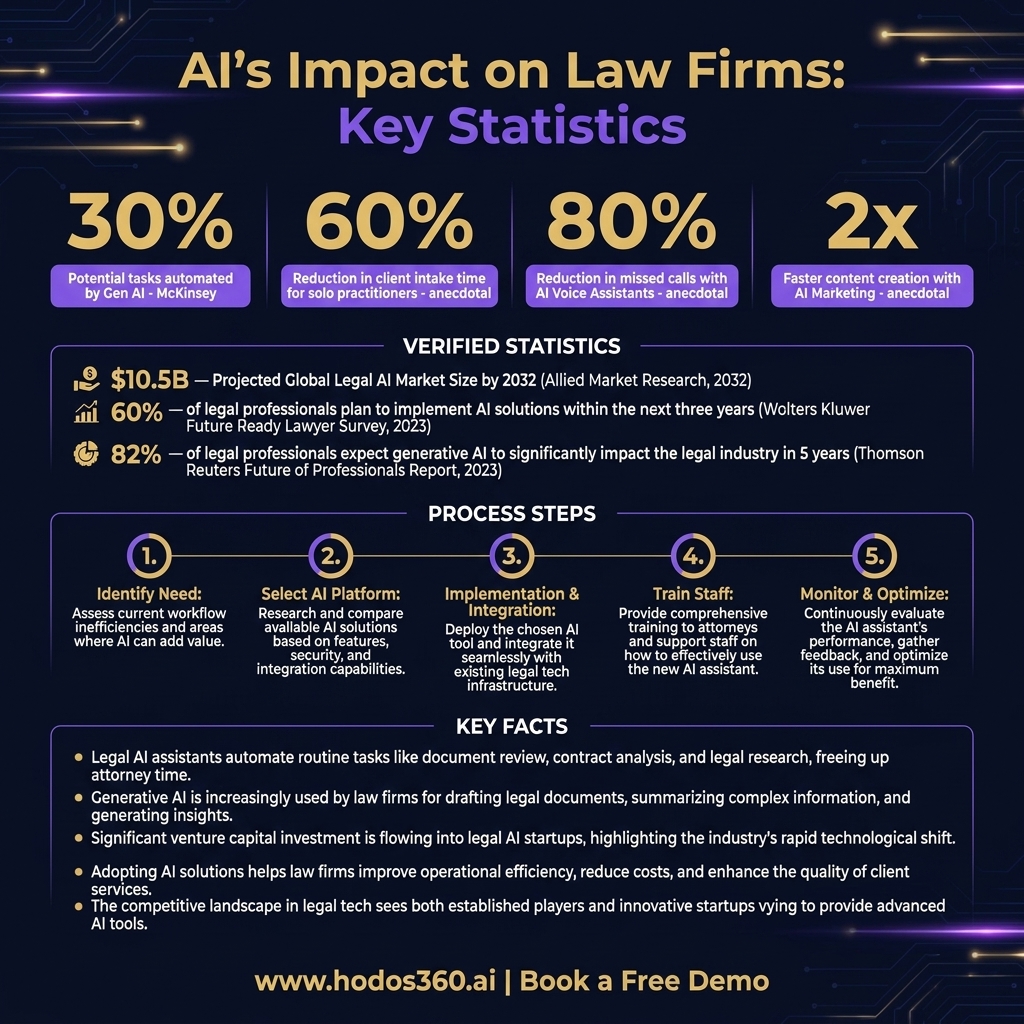
For firms looking to embark on this journey, the first step is a comprehensive assessment of current operational inefficiencies and growth bottlenecks. Identify areas where repetitive tasks consume valuable attorney time, where client acquisition is lagging, or where communication breakdowns occur. This internal audit will illuminate the most impactful areas for AI intervention. Subsequently, research and evaluate comprehensive Legal AI Assistant platforms that offer an integrated suite of services, rather than opting for disparate point solutions. Look for systems that provide robust AI Law Firm Management, powerful AI Marketing, responsive AI Voice Assistants, and expert Web & Mobile Development. Platforms like HODOS 360 are designed precisely to offer this kind of unified, AI-powered ecosystem, ensuring that all aspects of your firm's operations and growth strategies are seamlessly supported.
The transition to an AI-powered firm is an investment not just in technology, but in the future resilience and competitiveness of your practice. It requires a willingness to adapt, to train staff on new workflows, and to continuously monitor and refine AI implementations. As Dr. Anya Sharma, a legal tech ethicist at Stanford Law, often states, "The firms that will thrive are those that view AI not as a replacement for human intellect, but as a powerful co-pilot, augmenting judgment and expanding capacity." By strategically adopting a comprehensive Legal AI Assistant, law firms can unlock unprecedented levels of efficiency, attract and retain more clients, and ultimately deliver superior legal services in an increasingly complex and demanding world. The opportunity to redefine your firm's potential is here – seize it.
Frequently Asked Questions
What is a Legal AI Assistant?+
A Legal AI Assistant is an integrated software platform leveraging artificial intelligence to automate and optimize various aspects of law firm operations. This includes case management, client intake, document automation, marketing, and client communication, providing a holistic solution for efficiency and growth.
How can AI improve law firm management?+
AI significantly improves law firm management by automating routine tasks like billing, scheduling, and document generation. It enhances case management through AI-powered legal workflows, flags potential conflicts, and offers data-driven insights, freeing attorneys to focus on high-value legal work and strategic decision-making.
What role does AI play in legal marketing?+
AI revolutionizes legal marketing by enabling automated content generation (blogs, social media), AI video creation, and precise ROI tracking. It allows firms to target specific client demographics, optimize ad campaigns, and maintain a consistent, engaging online presence, leading to more qualified leads and client acquisition.
Are AI Voice Assistants reliable for client communication?+
Yes, advanced AI Voice Assistants are highly reliable. They offer 24/7 multilingual phone answering, accurately qualify leads, and seamlessly book appointments. While transparent about AI interaction, they significantly enhance client responsiveness, reduce missed calls, and improve the initial client experience, routing complex queries to human attorneys when needed.
How does AI-powered web development benefit law firms?+
AI-powered web development creates high-performing, SEO-optimized, and responsive websites faster and more efficiently. It ensures a strong digital presence, enhances user experience, and utilizes high-converting templates to turn visitors into clients. This foundational digital infrastructure is crucial for modern client acquisition and firm growth.