


Legal AI: Ultimate Guide to Implementation for Law Firms
The legal profession, traditionally resistant to rapid change, finds itself at an undeniable inflection point. The recent "Legal Use of AI and Its Implementation in Law Firms" article by citybiz highlights a reality many firm leaders are grappling with: artificial intelligence is no longer an abstract concept but a strategic imperative reshaping legal practice.
This isn't just about incremental efficiency gains; it's about fundamentally transforming how legal services are delivered, from client intake to litigation strategy. Firms that embrace AI in law firms are not just adapting; they are redefining their competitive landscape, often characterized by early adopters gaining significant market share while hesitant firms face increasing operational pressures.
The impact on business models is profound, pushing firms to consider not just their immediate needs but the long-term strategic implications of AI integration.
Consider the dramatic shifts already underway. In 2023, Allen & Overy's pioneering partnership with Harvey AI, a generative AI platform designed to assist with legal research and drafting, sent ripples across the global legal community.
This move, championed by partners like David Wakeling, the firm's Head of Innovation, signaled a clear intent to leverage cutting-edge technology at scale. Similarly, Clio's aggressive expansion, including strategic acquisitions in the legal tech space, demonstrates a broader market trend towards integrated, AI-powered solutions that streamline everything from client intake to billing.
These developments underscore a crucial narrative: the legal industry is in the midst of a technological arms race, where expertise in AI implementation is becoming as critical as legal acumen itself. This guide serves as an ultimate guide for legal firms looking to navigate this complex yet rewarding journey.
The Strategic Imperative of AI in Modern Legal Operations
The integration of artificial intelligence into legal operations transcends simple automation, evolving into a strategic imperative for firms aiming for sustained growth and competitive advantage. Historically, labor-intensive tasks such as document review, due diligence, and contract analysis consumed hundreds of billable hours, leading to associate burnout and inflated client costs.
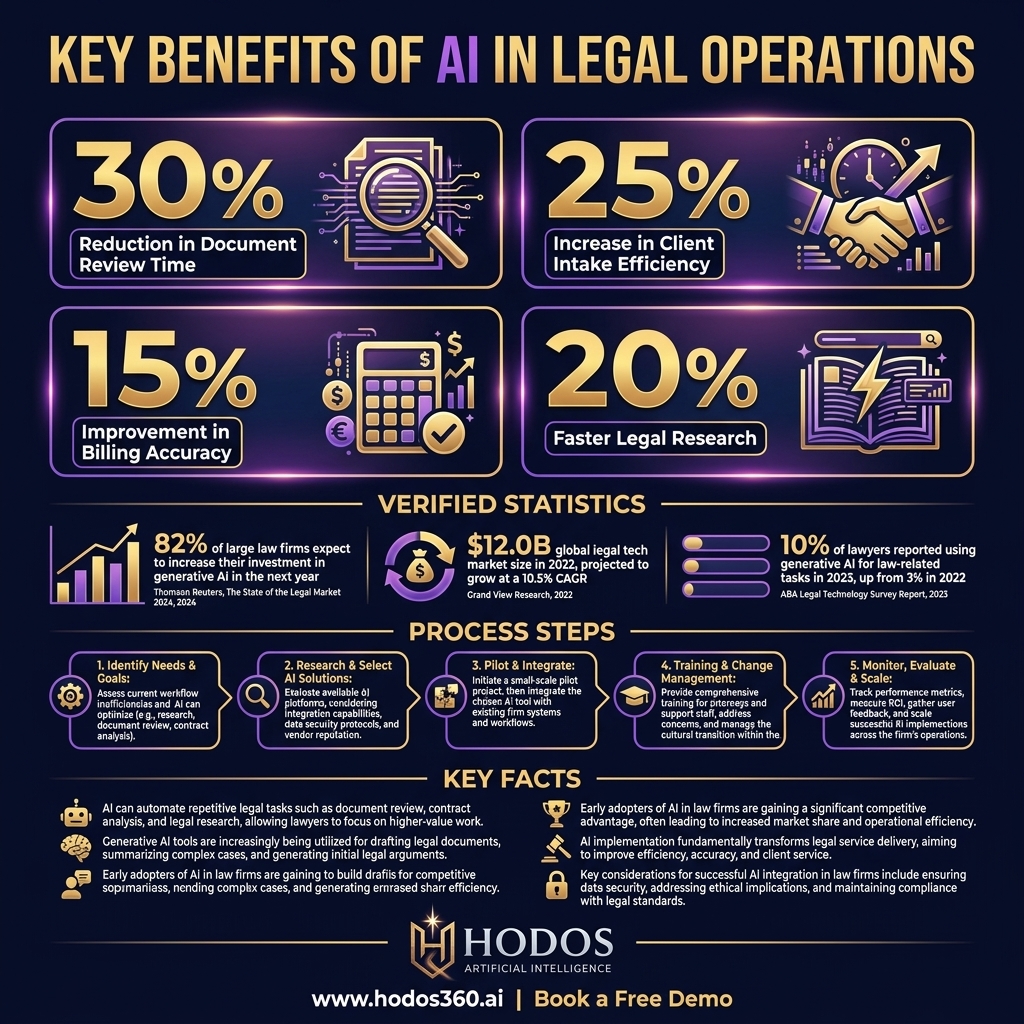
Today, AI in law firms is mitigating these challenges. A 2024 report by McKinsey & Company projected that generative AI could unlock an additional $200-$340 billion in value for the legal sector annually, primarily through efficiency gains in tasks like legal research and drafting. This isn't merely about accelerating processes; it's about elevating the precision and strategic depth of legal services, allowing attorneys to dedicate more time to complex problem-solving and client advisory.
One compelling illustration of this strategic shift comes from the e-discovery sector, where platforms like Relativity have become indispensable. Learn more about AI Legal Research: The Ultimate Evolution of Legal Analysis. Their AI-powered analytics, employing advanced machine learning to identify relevant documents and patterns within vast datasets, drastically reduce the time and expense associated with large-scale litigation.
This technological leap enables legal teams to shift focus from data sifting to developing robust legal strategies and enhancing client advocacy. Firms that have successfully integrated these tools, such as the litigation practice at Quinn Emanuel Urquhart & Sullivan, frequently report improved case outcomes and heightened client satisfaction, demonstrating AI's power to augment legal judgment.
Revolutionizing Case Management and Client Intake with AI
Beyond high-volume tasks, AI is fundamentally reshaping core firm functions: case management and client intake. Traditional onboarding is cumbersome, with extensive paperwork and manual data entry. AI-powered systems automate information gathering, perform instantaneous conflict analyses, and pre-populate forms, drastically reducing administrative overhead. Learn more about AI Voice Assistants: Essential Lessons from Chatbot Failures.
The 2023 ABA Legal Technology Survey Report found firms utilizing automated intake experienced a 35% reduction in onboarding time and a 10% increase in lead conversion. For case management, AI offers unparalleled organizational precision, from automated document categorization to proactive deadline alerts, minimizing human error and freeing up paralegals for strategic input.
Navigating the Ethical and Regulatory Complexities of Legal AI
While the transformative benefits of artificial intelligence in legal practice are undeniable, its implementation necessitates rigorous attention to ethical and regulatory frameworks. The legal profession, governed by stringent rules of professional conduct, must meticulously consider how AI tools impact client confidentiality, attorney-client privilege, competence, and supervision.
The ABA Model Rules of Professional Conduct, specifically Rule 1.1 (Competence) and Rule 1.6 (Confidentiality of Information), form the bedrock. Lawyers bear an ethical obligation to comprehend the technology they employ, ensuring it never compromises client data or the integrity of legal advice. This mandates comprehensive due diligence on AI vendors, continuous professional development, and robust internal governance.
A significant ethical dilemma arises with generative AI models from developers like OpenAI and Anthropic. Learn more about Voice AI: Essential Strategies for Law Firms' Future. While powerful for drafting and research, they are prone to "hallucinations"—producing plausible but entirely fabricated legal citations or factual assertions.
The widely publicized case of a lawyer who submitted a brief containing non-existent case law generated by ChatGPT served as a stark, industry-wide cautionary tale. This incident, a central topic at LegalTech NYC, underscores the critical necessity for vigilant human oversight and meticulous verification of AI-generated content.
As Dario Amodei, CEO of Anthropic, has emphasized, these tools are powerful augmentations, not replacements, for human judgment.
Ensuring Ethical AI Use and Data Privacy in Legal Practice
Beyond AI output accuracy, data privacy and security are paramount. Handling highly sensitive client information, cloud-based AI solutions raise critical questions regarding data storage, protection, and access. Compliance with GDPR, CCPA, and evolving state-specific data privacy laws becomes complex. Learn more about Legal AI Gap: Bridging the Divide for Law Firms in 2026.
Firms must rigorously vet AI tools and vendors for adherence to highest security standards, robust data encryption, and transparent data governance policies, aligning with ethical duties under ABA Model Rule 1.6. The EU AI Act, expected by 2026, will mandate greater transparency and accountability for high-risk legal AI, further emphasizing proactive ethical frameworks and comprehensive risk assessments.
Practical Strategies for Seamless AI Implementation
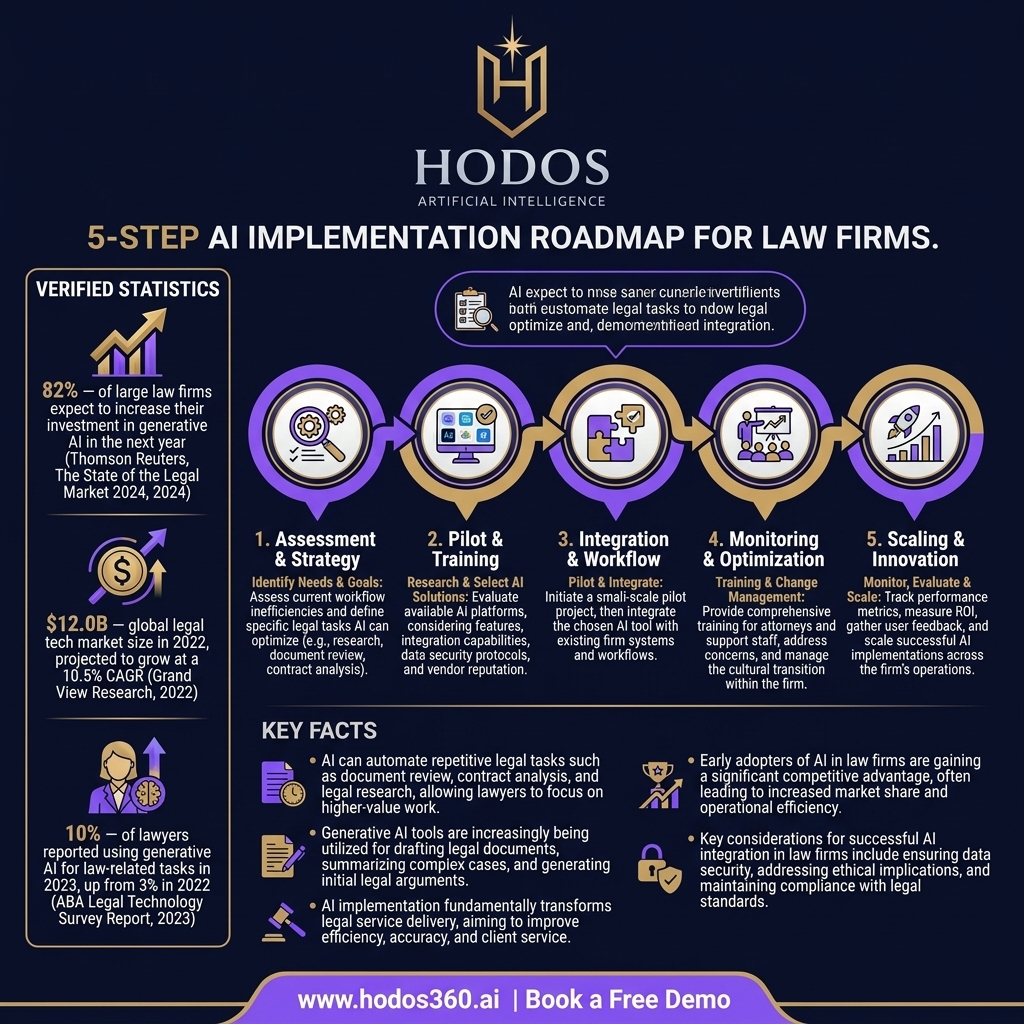
Successful AI implementation in a law firm demands a strategic, phased approach, moving beyond reactive adoption to a structured integration roadmap. The initial step involves a comprehensive assessment of current operations to pinpoint areas where AI can yield the most impactful benefits. This entails meticulously mapping existing workflows in key functions like document review, client communication, and billing, then identifying specific bottlenecks that consume excessive time or resources.
For example, a firm experiencing high associate churn due to repetitive e-discovery tasks might prioritize an AI-powered e-discovery solution. A firm struggling with lead conversion could strategically deploy AI voice assistants for initial client qualification and appointment booking.
Following this assessment, firms should initiate pilot projects.
Learn more about AI Agents: Essential Guide for Law Firms to Master Marketing. Rather than a disruptive firm-wide overhaul, select a focused department or practice group to test a specific AI tool. This controlled environment facilitates iterative learning, enables the collection of valuable user feedback, and allows for process refinement without broader operational disruption.
A litigation department, for instance, might pilot a contract analysis tool for a specific category of cases, while a corporate transactional team could test an AI-powered document generation system. This iterative approach, advocated by legal tech thought leaders like Mark Cohen, allows firms to cultivate internal expertise and demonstrate tangible return on investment (ROI) before scaling.
Data Governance and Customization: Fueling AI's Potential
The efficacy of any AI model is intrinsically linked to the quality and specificity of the data it processes. For law firms, this means leveraging their vast repositories of proprietary data—past case files, contracts, research memos—to train and fine-tune AI algorithms. While generic AI tools provide foundational capabilities, customized AI, meticulously trained on a firm's unique practice areas and client historical data, delivers exponentially superior results.
Learn more about Ultimate AI in MarTech: Predictive Power for Law Firms. This bespoke approach is where a true competitive advantage is forged. Firms creating their own "private" LLMs or deeply integrating off-the-shelf solutions with internal knowledge bases require robust data governance, ensuring data is clean, organized, and secure for AI training, adhering to confidentiality.
Optimizing Client Engagement with AI Voice Assistants and Marketing
In an increasingly competitive legal market, client engagement and acquisition are paramount. Artificial intelligence is revolutionizing these fronts through advanced AI voice assistants and sophisticated marketing platforms. AI voice assistants, such as those offered by HODOS 360, provide 24/7 phone answering, ensuring no potential client call goes unanswered.
These intelligent assistants qualify leads, book appointments, offer multilingual support, and route calls, acting as a seamless extension of the firm's front office. This always-on availability significantly enhances client experience and ensures valuable leads are captured and nurtured, a critical factor for firms seeking to expand their client base and improve their legal business models.
Beyond initial contact, AI is also transforming legal marketing. An AI Marketing Platform can automate social media posting, generate compelling legal content tailored to specific practice areas, and provide granular analytics on campaign performance and ROI tracking. For instance, an AI tool can analyze website traffic and client demographics to identify optimal content strategies, then automatically create blog posts or video scripts.
This data-driven approach allows firms to optimize marketing spend, reach a wider audience, and convert more prospects into clients, moving beyond traditional, often inefficient, marketing tactics. Furthermore, AI-powered website building with responsive design and SEO optimization ensures a strong digital foundation.
The Future Landscape: AI as the Cornerstone of Legal Innovation
Looking forward, the role of AI in legal practice will deepen from an optional enhancement to an indispensable cornerstone of innovation and competitive advantage. The trajectory is clear: law firms that strategically embrace AI in law firms early are securing significant leads in efficiency, client acquisition, and talent retention.
This isn't merely about incremental improvements; it's about a fundamental redefinition of legal service delivery and the very structure of the legal profession. The future competitive landscape will increasingly be shaped by a firm's technological sophistication and its adeptness in leveraging advanced AI tools. This era envisions an industry where AI-powered insights drive strategic decision-making, automate an ever-wider array of routine tasks, and liberate human lawyers to focus on the inherently human elements of law: empathy, complex reasoning, and strategic advocacy.
The next wave of legal tech innovation will undoubtedly center on even more deeply integrated and intuitively intelligent AI systems. Imagine an AI voice assistant that not only handles initial client inquiries but also qualifies leads, books appointments, and seamlessly integrates client data directly into your case management system, all while offering sophisticated multilingual support.
Envision an AI-powered website builder that generates high-converting, SEO-optimized templates, dynamically pulling and updating content based on your firm's latest practice area insights and marketing analytics. These are not futuristic concepts but capabilities that platforms like HODOS 360 are actively developing and bringing to market, offering holistic solutions that encompass firm management, marketing, client communication, and digital presence.

Key Takeaways and Next Steps
The journey of integrating AI in law firms is complex but offers unparalleled opportunities for transformation and growth. We've explored how AI is not merely a technological trend but a fundamental shift, impacting every facet from daily operational efficiencies to strategic decision-making and client engagement.
Successful adoption hinges on a clear, phased strategy, meticulous pilot programs, and a continuous investment in both technology and human capital. Firms must prioritize robust data governance, adhere strictly to ethical guidelines (such as those outlined in ABA Model Rule 1.6 on Confidentiality and Rule 1.1 on Competence), and foster a human-centric approach to change management.
The future of legal practice belongs to those who embrace AI as an indispensable partner in delivering superior client outcomes and cultivating a more efficient, innovative, and accessible legal environment.
For law firms poised to seize this future, the logical next step is to explore integrated AI solutions tailored to their specific needs.
Platforms like HODOS 360 offer a comprehensive suite of AI-powered services designed to empower legal professionals. From advanced AI Law Firm Management Systems that streamline case management, billing, and document automation, to sophisticated AI Marketing Platforms that drive client acquisition and brand visibility, and intelligent AI Voice Assistants that enhance client communication and lead qualification—HODOS 360 provides the tools necessary to navigate and lead in this new legal frontier.
By strategically leveraging these cutting-edge solutions, firms can unlock unprecedented efficiencies, elevate client service, and secure their position at the forefront of the evolving legal landscape.
Frequently Asked Questions
What is the primary impact of AI on law firm operations?+
AI primarily impacts law firm operations by automating repetitive, high-volume tasks like document review, e-discovery, and contract analysis. This automation significantly boosts efficiency, reduces costs, and minimizes human error, freeing up legal professionals for more strategic, client-facing work. It also enhances data analysis capabilities, leading to more informed decision-making and improved case outcomes.
How can law firms ensure ethical AI implementation?+
Ethical AI implementation requires adherence to professional conduct rules, especially regarding competence and confidentiality. Firms must conduct due diligence on AI tools, verify AI-generated content (to avoid "hallucinations"), and establish robust data privacy and security protocols. Continuous training for lawyers and staff, alongside clear internal governance policies, is crucial to ensure responsible and compliant AI use.
What are the initial steps for a law firm to adopt AI?+
The initial steps for AI adoption include a comprehensive assessment of current operations to identify pain points where AI can provide the most value. Following this, firms should start with pilot projects in specific departments to test tools, gather feedback, and demonstrate ROI. Investing in training and change management is vital to ensure successful integration and adoption across the firm.
How does AI improve client engagement and marketing for law firms?+
AI improves client engagement through 24/7 AI voice assistants that handle inquiries, qualify leads, and book appointments, ensuring no client call is missed. For marketing, AI platforms automate social media, generate targeted content, and track ROI, optimizing outreach and converting prospects more effectively. AI-powered website development further enhances online presence and lead generation.
Will AI replace lawyers in the future?+
No, AI is not expected to replace lawyers but rather augment their capabilities. AI automates routine, data-intensive tasks, allowing lawyers to focus on complex legal reasoning, strategic advocacy, client relationships, and empathetic counsel—areas where human intelligence remains indispensable. Lawyers who effectively leverage AI will likely outperform those who do not, reshaping the profession rather than eliminating it.