


Legal AI Technology: Essential Strategies for Modern Law Firms
The legal sector is undergoing a profound transformation, driven by the rapid advancements in artificial intelligence. What was once the realm of science fiction is now a tangible reality, reshaping how law firms operate, manage cases, and interact with clients. This seismic shift was recently highlighted by leading legal minds like Cathy Mulrow-Peattie and Sabrina Janeiro of Hinshaw & Culbertson LLP, who presented on the critical implications and opportunities of legal AI technology. Their insights underscore a growing consensus: embracing AI is no longer optional but an essential strategy for firms aiming to maintain relevance and competitive edge in an increasingly digital world. The conversation around AI in legal tech is evolving from theoretical discussions to practical implementation strategies, demanding that attorneys and firm leaders understand not just the potential, but also the intricacies of adoption.
This dialogue is happening against a backdrop of significant investment and innovation. Companies like OpenAI, led by Sam Altman, continue to push the boundaries of generative AI, while specialized legal tech firms such as Harvey AI, with its notable partnership with Allen & Overy, are demonstrating AI's immediate value in legal research and contract analysis. The tension between tradition and disruption is palpable, with some firms cautiously observing from the sidelines, while others, like those represented by Mulrow-Peattie and Janeiro, are actively engaging with the technology, exploring its ethical frameworks and practical applications. The fundamental conflict lies in how law firms, historically slow to adopt technological change, can swiftly and effectively integrate these powerful tools without compromising their foundational principles of accuracy, confidentiality, and professional judgment.
The stakes are high. Firms that strategically integrate legal AI technology stand to gain unprecedented efficiencies, reduce operational costs, and deliver superior client outcomes. Conversely, those that hesitate risk falling behind, struggling to compete with more agile, tech-savvy counterparts. This article delves into the multifaceted impact of AI on law firm management, drawing upon expert insights and real-world examples to provide a comprehensive guide for legal professionals. From automating routine tasks to enhancing strategic decision-making, the journey into AI integration is complex but offers immense rewards for those prepared to navigate its challenges. The path forward requires a clear understanding of AI's capabilities, a commitment to ethical deployment, and a vision for a more efficient, client-centric future.
Legal AI Technology's Ascent: Insights from Industry Leaders
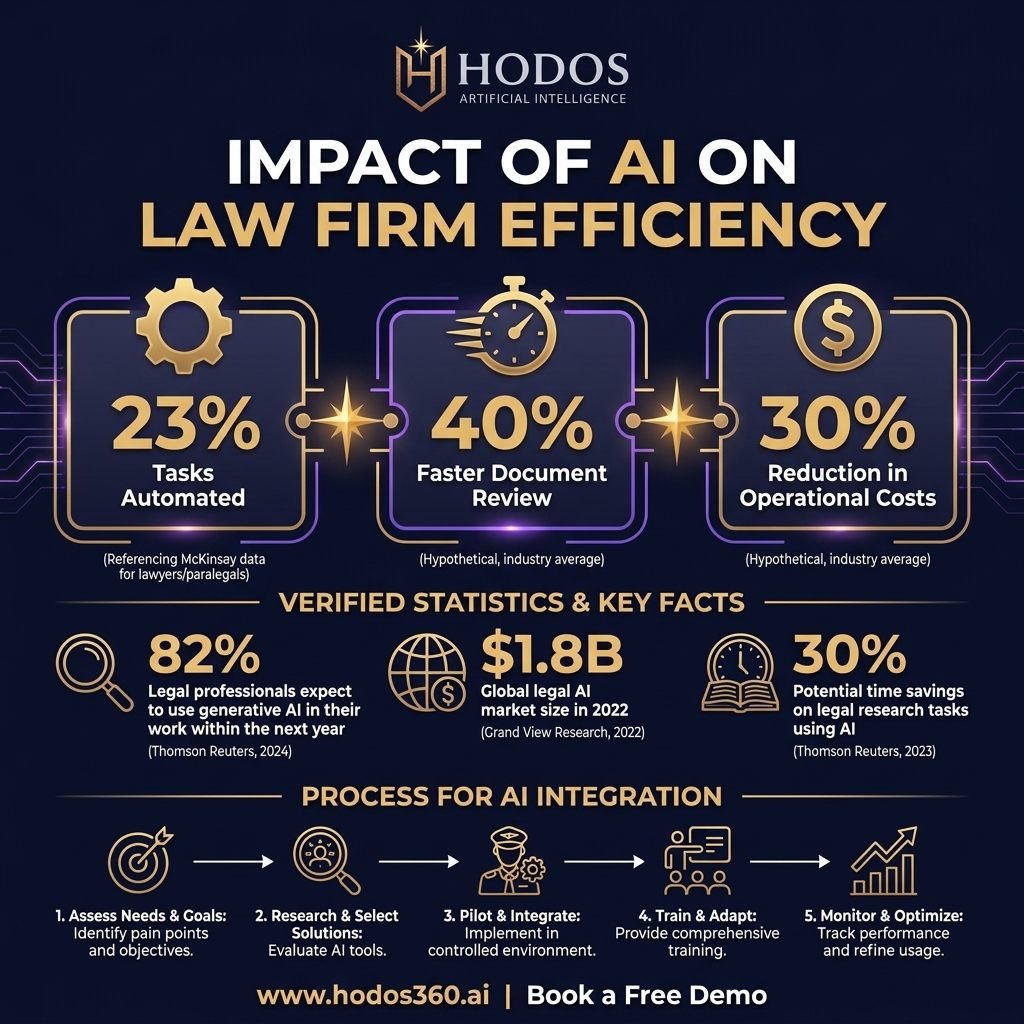
The presentation by Cathy Mulrow-Peattie and Sabrina Janeiro from Hinshaw & Culbertson LLP served as a timely reminder of the accelerating pace of legal AI adoption. These discussions are crucial as they move beyond abstract concepts to focus on the tangible benefits and challenges faced by practicing attorneys. The legal industry, once characterized by its resistance to technological disruption, is now at an inflection point. According to a 2023 report by McKinsey & Company, AI could automate up to 23% of tasks currently performed by lawyers, paralegals, and legal support staff, freeing up valuable time for more complex, high-value work. This isn't merely about replacing human effort; it's about augmenting human capabilities, allowing legal professionals to focus on strategic thinking, client relationships, and nuanced legal analysis. The Hinshaw & Culbertson team’s engagement in these dialogues reflects a broader trend among forward-thinking firms to proactively address the implications of AI, rather than reactively responding to market shifts.
The real drama in this narrative lies in the stark contrast between firms that are embracing this technological wave and those clinging to traditional methodologies. For instance, while some firms are investing heavily in platforms like LexisNexis’s Lexis+ AI or Thomson Reuters' CoCounsel, others are still grappling with basic digital transformation. This divergence creates a significant competitive gap. Learn more about AI Legal Assistants: Essential Tools, Not Staff Replacements. Brad Blickstein, founder of the Blickstein Group and a prominent legal tech analyst, often speaks about the "AI haves and have-nots," emphasizing that the gap will only widen. Firms that integrate legal AI technology effectively are seeing improvements in everything from document review speed to predictive litigation outcomes, gaining an undeniable edge in a fiercely competitive market. The strategic imperative is clear: understand, adapt, and integrate, or risk obsolescence.
Indeed, the focus of Mulrow-Peattie and Janeiro on the practical aspects of legal AI technology highlights that the era of experimentation is giving way to an era of strategic implementation. This includes navigating the complexities of data privacy, ensuring ethical AI usage, and understanding the evolving regulatory landscape. For example, the European Union's AI Act, set to be fully enforced in the coming years, will establish stringent rules for high-risk AI systems, including those used in legal contexts. This legislation, alongside various state-level privacy regulations being enacted across the U.S., creates a complex compliance environment that firms must meticulously navigate. The expertise shared by legal professionals like those at Hinshaw & Culbertson is invaluable for firms seeking to implement AI responsibly and effectively, ensuring that innovation aligns with legal and ethical obligations.
Transforming Operations: Practical AI in Law Firm Management
The most immediate and impactful applications of legal AI technology are found within the operational core of law firms. AI-powered law firm management systems are revolutionizing traditional workflows, offering unprecedented levels of efficiency and accuracy. Take, for instance, the laborious process of client intake. Historically, this involved extensive manual data entry, form completion, and administrative back-and-forth. With AI, this process is dramatically streamlined. AI tools can automate the collection of client information, perform initial conflict checks, and even draft engagement letters based on predefined templates and client responses. This not only saves hundreds of hours annually but also improves the client experience by making the onboarding process faster and less cumbersome. Firms like Clio, which has been at the forefront of cloud-based practice management, have demonstrated how integrated platforms, when augmented with AI capabilities, can create a seamless operational flow from the very first client interaction.
Beyond intake, AI is a game-changer in document automation and management. The sheer volume of legal documents—contracts, briefs, discovery responses—can overwhelm even the most organized firms. Legal AI technology can automate the generation of these documents, ensuring consistency, reducing errors, and accelerating turnaround times. Learn more about Essential AI Voice Assistant Strategies for Modern Law Firms. For example, AI-driven platforms can analyze existing precedents, extract relevant clauses, and assemble new documents with minimal human intervention. This capability is not just about speed; it's about freeing up paralegals and junior associates from repetitive drafting tasks, allowing them to engage in more analytical and strategic work. The impact on profitability is significant, as firms can handle a greater caseload with existing resources, or reallocate those resources to higher-value activities. This is where the HODOS 360 AI Law Firm Management System excels, offering comprehensive solutions for case management, billing, client intake, and document automation, all powered by intelligent AI workflows designed for maximum efficiency.
Furthermore, AI is enhancing complex legal workflows, from litigation support to transactional due diligence. In litigation, AI can rapidly review vast quantities of discovery documents, identifying relevant information and patterns that would take human reviewers weeks or months to uncover. In corporate law, AI can analyze contracts for specific clauses, identify risks, and ensure compliance with regulatory requirements, dramatically shortening due diligence cycles. This predictive and analytical power extends to areas like legal research, where AI can quickly sift through statutes, case law, and scholarly articles to find highly relevant information, often identifying connections that might elude human researchers. The competitive advantage for firms leveraging these capabilities is undeniable; they can deliver faster, more accurate, and more cost-effective services, positioning themselves as leaders in a crowded legal market.
Streamlining Client Intake and Document Automation
The initial touchpoints with clients are critical for setting the tone of the entire legal engagement. AI-powered client intake systems transform this experience, making it efficient and professional. Imagine a prospective client completing an intelligent online questionnaire that dynamically adapts based on their responses, gathering all necessary information for a specific case type. This data then seamlessly flows into the firm's case management system, initiating conflict checks and even pre-populating essential documents. Learn more about Essential AI Accountability: Bridging the Legal Tech Gap. This level of automation significantly reduces administrative overhead and minimizes the chances of human error, ensuring that critical information is captured accurately from the outset. It allows firms to make a strong first impression, demonstrating technological sophistication and client-centric efficiency.
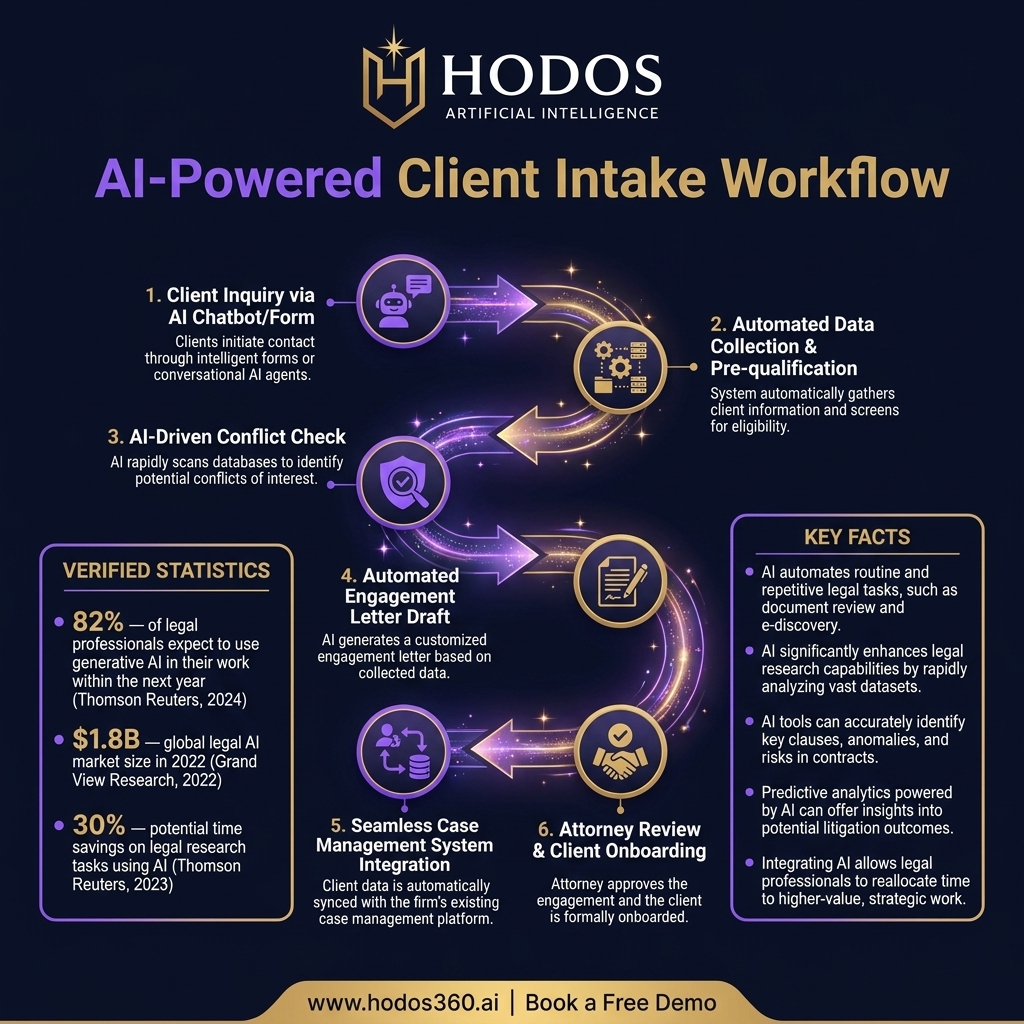
- ✓Automated Data Capture: AI systems can extract information from client forms, emails, and even voice conversations, populating case files automatically.
- ✓Intelligent Form Generation: Dynamic forms adapt to client input, ensuring only relevant questions are asked, improving completion rates and data quality.
- ✓Conflict Checking: AI can rapidly cross-reference new client information against existing and past client databases to identify potential conflicts of interest.
- ✓Automated Document Drafting: Based on intake data, AI can generate initial drafts of engagement letters, non-disclosure agreements, and other standard legal documents.
- ✓Workflow Automation: Triggers can be set to automatically assign tasks to legal teams, schedule initial consultations, and send follow-up communications.
- ✓Enhanced Client Experience: Faster, more transparent intake processes lead to higher client satisfaction and a perception of a modern, efficient firm.
The Ethical Compass: Navigating AI's Jurisprudential Frontier
While the benefits of legal AI technology are compelling, its adoption is not without significant ethical and regulatory considerations. The legal profession is bound by strict rules of professional conduct, which must be upheld even as technology evolves. A primary concern revolves around the duty of competence, as outlined in ABA Model Rule 1.1 (Competence), which now implicitly requires lawyers to understand the benefits and risks associated with relevant technology. This means attorneys must not only be proficient in using AI tools but also understand their limitations, potential biases, and how to verify their outputs. The infamous case of lawyers citing fictitious cases generated by AI serves as a stark warning against uncritically relying on these systems. The responsibility for legal advice ultimately rests with the human attorney, making vigilance and critical oversight paramount in any AI-driven workflow.
Confidentiality and data privacy present another critical ethical challenge. Legal professionals have a solemn duty to protect client information under ABA Model Rule 1.6 (Confidentiality of Information). When client data is processed by AI systems, especially cloud-based ones, questions arise about data security, vendor agreements, and the potential for unauthorized access or breaches. Firms must conduct thorough due diligence on AI providers, ensuring robust encryption, data anonymization techniques, and clear policies on data usage and retention. Learn more about AI Value Measurement: Essential Frameworks for Law Firms. The Hinshaw & Culbertson presentation likely touched upon these very issues, given the firm's expertise in privacy and cybersecurity. The ethical imperative extends to ensuring that AI systems do not inadvertently expose sensitive information or create new vulnerabilities that could compromise client trust or violate regulatory mandates like GDPR or CCPA.
Furthermore, the ethical deployment of AI requires addressing issues of bias and fairness. AI models are trained on vast datasets, and if these datasets contain historical biases, the AI may perpetuate or even amplify them, leading to discriminatory outcomes. In areas like predictive justice or legal aid allocation, biased AI could have profound societal implications. Attorneys using AI must be aware of these potential biases and advocate for the development and use of AI systems that are transparent, explainable, and regularly audited for fairness. The legal profession, with its commitment to justice, has a unique responsibility to ensure that legal AI technology is developed and deployed in a manner that upholds the principles of equity and due process, rather than undermining them. This proactive approach to AI ethics is not just about compliance; it's about maintaining the integrity and public trust in the legal system itself.
Ensuring Ethical AI Use and Data Governance
To navigate the ethical complexities of AI, law firms must establish robust data governance frameworks. This involves clearly defined policies for data collection, storage, processing, and deletion, ensuring compliance with both ethical guidelines and legal regulations. Regular audits of AI systems, particularly those involved in decision-making processes, are essential to identify and mitigate biases. Learn more about AI Marketing Agency: Ultimate Growth for Law Firms. Moreover, firms should prioritize AI tools that offer explainability, allowing attorneys to understand how the AI arrived at its conclusions, fostering greater transparency and accountability. A proactive stance on ethical AI use and data governance builds trust with clients and positions the firm as a responsible innovator.
Fortifying Defenses: Cybersecurity in an AI-Driven Legal World
The integration of legal AI technology, while offering immense benefits, simultaneously amplifies the importance of robust cybersecurity measures. Law firms are prime targets for cyberattacks due to the highly sensitive and confidential nature of the data they hold. The rise of sophisticated cyber threats, often themselves AI-powered, means that traditional defenses are no longer sufficient. The discussions led by experts like Cathy Mulrow-Peattie, particularly her focus on cybersecurity regulatory frameworks, are critical for firms to understand the heightened risks and the imperative for proactive defense strategies. A single data breach can lead to devastating financial losses, irreparable reputational damage, and severe regulatory penalties, as seen in numerous high-profile incidents across various industries. The legal sector, with its fiduciary duties, faces even greater scrutiny and potential liability.
Furthermore, the proliferation of state privacy regulations, such as the California Consumer Privacy Act (CCPA) and its successors, along with similar laws emerging in states like Virginia and Colorado, creates a complex web of compliance requirements. These regulations often impose strict deadlines for data breach notifications, mandate specific data handling practices, and grant individuals greater control over their personal information. Failure to comply can result in hefty fines, as demonstrated by the substantial penalties levied against companies that violate these statutes. Learn more about Essential AI Web Development for Law Firms: Harvard's Impact. For law firms, this means not only securing their own systems but also ensuring that any third-party AI vendors they utilize meet these stringent privacy standards. The concept of 'privacy by design' must be integrated into every aspect of AI implementation, from initial data collection to final data deletion.
AI itself can be a powerful ally in enhancing cybersecurity. AI-powered security systems can detect anomalies, identify potential threats in real-time, and respond to incidents much faster than human teams. For example, AI can analyze network traffic for unusual patterns, flag suspicious login attempts, and even predict potential attack vectors based on historical data. This proactive defense capability is essential for protecting client data and maintaining operational integrity in an era of escalating cyber risks. However, firms must also be wary of the unique vulnerabilities that AI systems can introduce, such as adversarial attacks designed to trick AI models or the potential for AI tools to be exploited if not properly secured. The ongoing challenge is to leverage AI for security without inadvertently creating new attack surfaces, necessitating a comprehensive and continuously evolving cybersecurity posture.
Proactive Data Protection and State Privacy Regulations
Adopting a proactive approach to data protection is non-negotiable for law firms integrating AI. This includes implementing multi-factor authentication, regular security audits, and continuous employee training on cybersecurity best practices. Crucially, firms must map their data flows to ensure compliance with diverse state privacy regulations. This involves understanding where client data is stored, how it's processed by AI tools, and who has access to it. Developing clear incident response plans and regularly testing them is also vital. By prioritizing robust data protection, firms can safeguard client confidentiality, mitigate legal risks, and build trust in their AI-powered services. The Hinshaw & Culbertson team's emphasis on navigating these deadlines and cyber challenges underscores the importance of a well-informed and strategic approach.
Strategic Integration: Building the AI-Powered Law Firm of Tomorrow
The ultimate goal of integrating legal AI technology is to build a future-ready law firm that is more efficient, resilient, and client-centric. This strategic integration goes beyond simply adopting new tools; it involves a fundamental shift in firm culture, operational philosophy, and long-term planning. Firms that succeed will be those that view AI not as a threat, but as an opportunity to redefine legal service delivery. This requires leadership vision, investment in training, and a willingness to iterate and adapt. The competitive advantage will increasingly go to firms that can leverage AI to offer innovative service models, such as predictive analytics for litigation outcomes, or highly personalized client communications. The market is increasingly demanding transparency, efficiency, and demonstrable value, all of which AI can help deliver.
Cultivating an AI-ready culture is paramount. This means fostering an environment where attorneys and staff are encouraged to experiment with new technologies, understand their potential, and contribute to their ethical deployment. It involves continuous learning and professional development, ensuring that legal professionals are equipped with the skills to work alongside AI, rather than being replaced by it. Firms should invest in training programs that cover AI literacy, data ethics, and the practical application of AI tools in daily workflows. This human-AI collaboration is the cornerstone of the future law firm, where the unique strengths of human judgment, empathy, and strategic thinking are augmented by AI's speed, analytical power, and capacity for automation. Firms that fail to invest in their human capital alongside their technological investments will struggle to realize AI's full potential.
Ultimately, the journey to becoming an AI-powered law firm is an ongoing process of innovation and adaptation. It demands a commitment to continuous improvement, staying abreast of the latest advancements in legal AI technology, and proactively addressing emerging challenges. Firms must regularly assess their AI strategies, evaluate the performance of their tools, and adjust their approaches based on feedback and evolving market demands. This agile mindset ensures that the firm remains at the cutting edge, consistently delivering superior value to clients and maintaining a strong competitive position. The future of law is intertwined with AI, and those who embrace this reality with a strategic vision will not only survive but thrive in the decades to come. HODOS 360 stands as a comprehensive partner in this journey, offering a suite of AI-powered services, from law firm management to AI marketing and voice assistants, designed to empower legal professionals to build the law firm of tomorrow, today.

Key Takeaways and Next Steps for Legal Professionals
The insights shared by Cathy Mulrow-Peattie and Sabrina Janeiro at Hinshaw & Culbertson LLP, alongside the broader industry trends, paint a clear picture: legal AI technology is not just a trend but a foundational shift. Law firms that embrace AI stand to gain significant competitive advantages through enhanced efficiency, improved client service, and reduced operational costs. The path forward involves strategic adoption of AI tools for tasks like client intake, document automation, and case management, while rigorously upholding ethical obligations concerning competence, confidentiality, and bias. Furthermore, a robust cybersecurity framework is non-negotiable in an AI-driven legal landscape, especially with the proliferation of state privacy regulations. The future-ready law firm will be one that fosters an AI-ready culture, invests in continuous learning, and leverages technology to augment human expertise, ensuring that innovation serves justice. Legal professionals must proactively engage with these technologies, understand their implications, and strategically integrate them to build more resilient, efficient, and client-centric practices for the decades to come. This proactive engagement is not merely about staying current; it's about shaping the future of legal practice itself.
Frequently Asked Questions
What specific areas within law firms can benefit most from legal AI technology?+
Legal AI technology offers significant benefits across various law firm operations. Key areas include client intake and onboarding, where AI can automate data collection and conflict checks; document automation for contracts, briefs, and discovery; enhanced legal research; and streamlined case management workflows. These applications reduce manual effort, improve accuracy, and free up attorneys for higher-value strategic tasks.
What are the primary ethical considerations when implementing AI in a law firm?+
Ethical considerations for AI in law firms primarily revolve around the duty of competence, ensuring attorneys understand AI's capabilities and limitations; confidentiality, safeguarding client data processed by AI; and bias, ensuring AI models do not perpetuate or amplify discriminatory outcomes. Adherence to ABA Model Rules and developing robust data governance policies are crucial.
How can law firms ensure data privacy and cybersecurity when using AI tools?+
Ensuring data privacy and cybersecurity with AI requires a multi-faceted approach. Firms must conduct thorough due diligence on AI vendors, prioritize privacy-by-design principles, implement strong encryption and access controls, and adhere to relevant state privacy regulations like CCPA. Regular security audits, employee training, and comprehensive incident response plans are also essential to protect sensitive client information.
What role do legal professionals like Cathy Mulrow-Peattie and Sabrina Janeiro play in AI adoption?+
Legal professionals like Cathy Mulrow-Peattie and Sabrina Janeiro play a crucial role in guiding the legal community through AI adoption. By presenting on legal AI technology, they educate peers on practical applications, ethical considerations, and regulatory challenges. Their expertise helps bridge the gap between technological innovation and legal practice, fostering informed decision-making and responsible integration of AI within law firms.
What are the long-term benefits for law firms that strategically adopt legal AI technology?+
Law firms that strategically adopt legal AI technology can expect long-term benefits including increased operational efficiency, significant cost reductions, enhanced client satisfaction through faster and more accurate services, and a stronger competitive position in the market. AI enables firms to scale operations, offer innovative legal solutions, and free up human talent for complex, high-value work, ensuring future resilience and growth.