
Legal Technology Awards: Essential Insights for Innovators
The air in Boston is already buzzing with anticipation, a vibrant current of excitement that only the American Legal Technology Awards (ALTA) can generate. As LawSites recently announced, the prestigious gala returns to the historic city in 2026, promising to once again shine a spotlight on the architects of change in the legal industry.
This isn't merely an evening of accolades; it's a critical barometer, measuring the pulse of innovation and signaling the direction in which legal practice is rapidly evolving. From the breakthrough applications of generative AI to sophisticated practice management platforms, the ALTA stage is where the future of law is not just envisioned, but celebrated.
For law firm leaders and legal professionals, understanding the trends and recognizing the innovators honored at events like ALTA is no longer optional—it's essential. The past year alone has witnessed an unprecedented acceleration in AI adoption, fundamentally reshaping how firms operate, serve clients, and compete.
As we look towards the 2026 annual ceremony, the narratives emerging from the nominations will undoubtedly tell a compelling story of disruption, adaptation, and the relentless pursuit of efficiency and justice. These awards highlight the firms and developers truly making a difference, pushing boundaries, and leveraging technology to redefine legal excellence.
Ready to transform your firm with cutting-edge AI? Discover how HODOS 360 can elevate your practice.
The American Legal Technology Awards: A Bellwether for Innovation
The American Legal Technology Awards stand as a crucial institution, a veritable 'Oscars of Legal Tech' as some have dubbed it, for celebrating innovators and setting benchmarks within the industry. Established to recognize excellence across various categories—from case management and e-discovery to legal research and marketing—ALTA has consistently reflected the evolving technological landscape.
Each year, the awards illuminate the most impactful advancements, showcasing companies and law firms that are not just adopting technology but are actively shaping its future. For instance, past winners like Clio, under the leadership of CEO Jack Newton, have demonstrated how integrated practice management solutions can revolutionize firm operations, influencing countless other providers and legal practices.
The rigorous selection process and the caliber of judges, often comprising leading legal tech analysts like Brad Blickstein of the Blickstein Group or prominent law firm CTOs, underscore the immense value of a prestigious award from ALTA. Learn more about AI Legal Research: The Ultimate Evolution of Legal Analysis.
Winning can be a game-changer, providing invaluable validation and visibility for a legal tech startup or cementing a law firm’s reputation for forward-thinking leadership. Consider the impact on firms like Allen & Overy, whose partnership with Harvey AI garnered significant attention, demonstrating a proactive approach to leveraging generative AI in legal services.
Such collaborations, when recognized, inspire others to explore similar innovative pathways, driving a virtuous cycle of technological advancement across the legal sector.
The AI Revolution: A New Era for Legal Practice
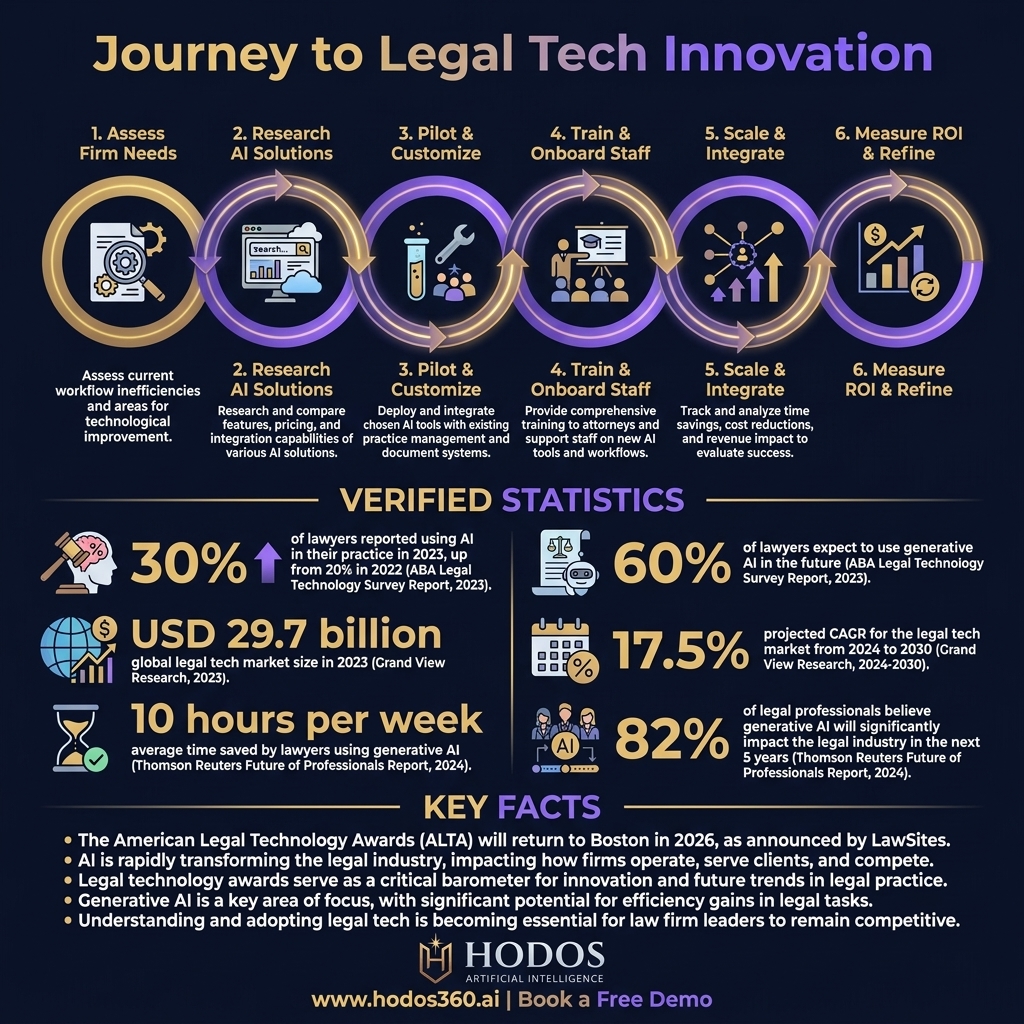
The current era of the legal technology awards is undeniably defined by the AI revolution. The 2023 ABA Legal Technology Survey Report highlighted a significant uptick in AI adoption, with generative AI tools leading the charge. Companies like Evisort, co-founded by Jerry Ting, have moved beyond basic contract review to sophisticated AI-powered contract lifecycle management, drastically reducing review times and improving accuracy.
This shift represents a profound re-imagination of legal work, where AI augments human capabilities, freeing lawyers from mundane tasks to focus on strategic, high-value activities. The tension between traditionalists and early adopters is palpable; firms that embrace these tools are gaining a clear competitive advantage, while those hesitant to integrate AI risk falling behind in efficiency and client service delivery.
This new era, profoundly influenced by breakthroughs from giants like OpenAI and Anthropic, has pushed legal AI into a realm of practical utility previously unimaginable. Learn more about AI Design Tools: Ultimate Guide to Web & Mobile Transformation. The debate is no longer *if* AI will impact law, but *how deeply* and *how quickly*.
Firms recognized at ALTA are often those that have successfully navigated this transition, demonstrating not just technical prowess but also a strategic vision for integrating AI ethically and effectively into their daily operations. Their successes serve as blueprints for the broader legal community, illustrating the tangible benefits—from enhanced legal research with tools like CoCounsel to predictive analytics that inform litigation strategy—that are now within reach for forward-thinking practices.
Beyond the Hype: Practical AI Applications Transforming Law Firms
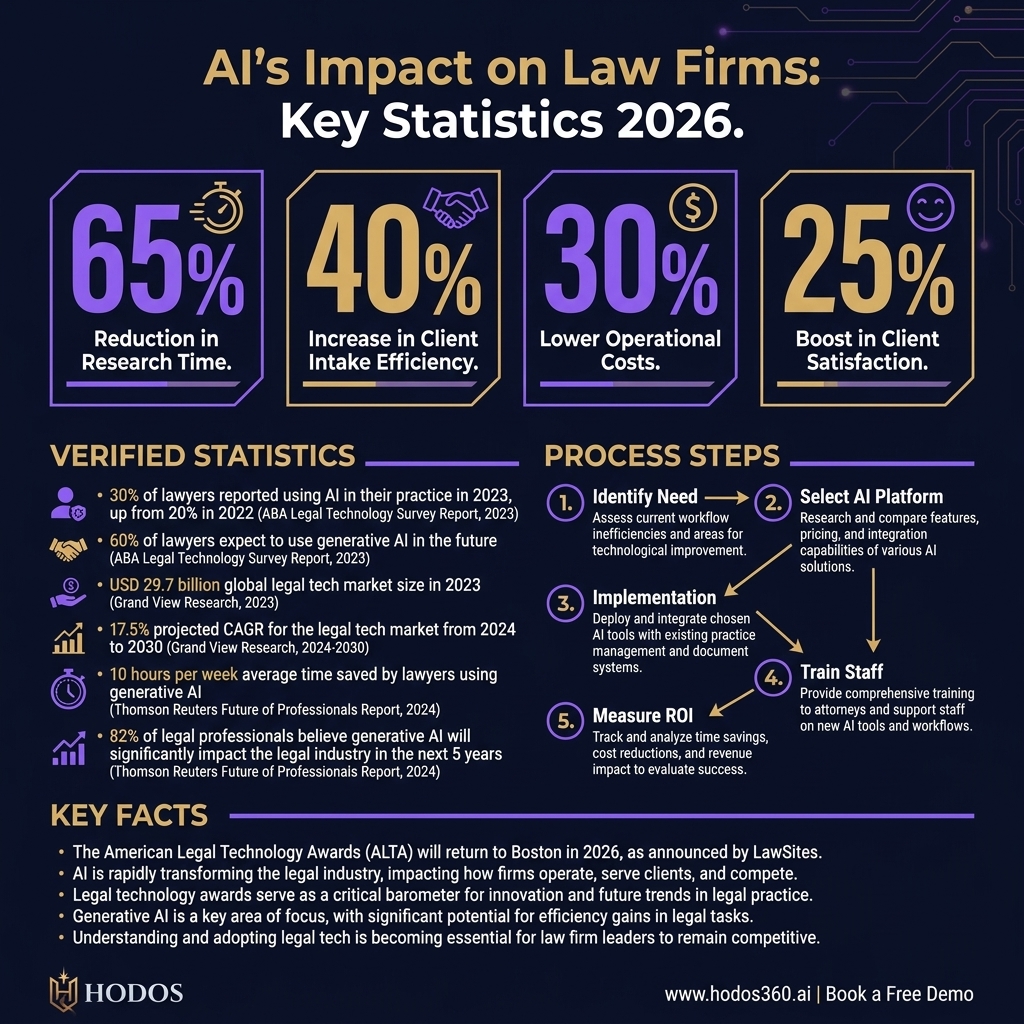
While the buzz around AI is undeniable, the true impact of legal technology awards lies in showcasing practical, tangible applications that are genuinely transforming law firms. Take legal research, for instance. AI-powered platforms like Casetext's CoCounsel or the AI features embedded in Thomson Reuters' Westlaw Edge have dramatically reduced research time, often by 50% or more, allowing attorneys to uncover relevant precedents and statutes far more efficiently.
This isn't just about speed; it's about depth and accuracy, ensuring comprehensive legal analysis that would be prohibitively time-consuming with traditional methods. Similarly, in document automation and contract analysis, AI algorithms can now redline contracts, identify missing clauses, and ensure compliance with regulatory standards at scale, significantly mitigating risk and reducing manual labor.
McKinsey's 2024 report on AI in professional services highlighted that these automations alone could save firms upwards of 30% in operational costs for specific tasks.
Beyond core legal tasks, AI is also revolutionizing law firm management and client engagement. Learn more about Voice Assistant Market: An Essential Guide for Law Firms.
AI-powered legal workflows, for example, can automate routine administrative tasks, from initial client intake to billing and document generation, freeing up valuable staff time. Platforms offering these capabilities, such as the HODOS 360 AI Law Firm Management System, integrate case management, document automation, and intelligent workflows to streamline operations.
Furthermore, AI voice assistants are transforming client communication, offering 24/7 phone answering, lead qualification, and appointment booking, ensuring no potential client is missed and improving responsiveness significantly. This level of automation and intelligent support is making a difference in how firms attract, serve, and retain clients, directly impacting their bottom line and competitive standing in the market.
The success stories celebrated at the ALTA often feature firms that have masterfully implemented these integrated AI solutions.
- ✓Enhanced Legal Research: AI tools like Casetext's CoCounsel now reduce research time by 50%+ by rapidly synthesizing vast legal databases and precedents.
- ✓Automated Document Review: Expediting contract analysis, due diligence, and e-discovery, identifying critical clauses and anomalies with high accuracy.
- ✓Predictive Analytics: Forecasting case outcomes, litigation costs, and settlement probabilities based on historical data, informing strategic decisions.
- ✓Streamlined Client Intake: AI-powered chatbots and voice assistants offer 24/7 client engagement, qualifying leads and scheduling appointments efficiently.
- ✓Optimized Case Management: AI-driven workflows automate administrative tasks, improve resource allocation, and ensure compliance across projects.
- ✓Personalized Legal Marketing: AI generates targeted content, manages social media campaigns, and analyzes ROI, enhancing client acquisition efforts.
- ✓Ethical Compliance Monitoring: AI identifies potential regulatory breaches and conflicts of interest in real-time, bolstering firm integrity.
Are you ready to innovate and lead? Explore HODOS 360's AI solutions designed for modern law firms.
Navigating the Ethical and Regulatory Landscape of Legal AI
The rapid advancement of AI in legal practice is not without its complexities, particularly concerning the ethical and regulatory landscape. As firms increasingly rely on AI, adherence to professional responsibilities becomes paramount. ABA Model Rule 1.1 (Competence) dictates that lawyers must maintain the requisite legal knowledge and skill, which now implicitly includes understanding the benefits and risks associated with relevant technology.
This means attorneys must not only comprehend how AI tools function but also recognize their limitations, potential biases, and the critical need for human oversight. The ethical implications extend to data privacy and client confidentiality, governed by ABA Model Rule 1.6, demanding robust security protocols and transparent communication regarding how client data is handled by AI systems.
Furthermore, the global regulatory environment for AI is rapidly evolving. The European Union's AI Act, enacted in 2024, sets a precedent for comprehensive AI governance, categorizing AI systems by risk level and imposing strict requirements for high-risk applications, which often include legal tech. Learn more about AI Document Workflows: Unleash Efficiency & ROI in 2026.
While the U.S. has yet to implement a federal AI law, state-level initiatives and industry best practices are emerging, emphasizing transparency, fairness, and accountability. Firms must conduct thorough due diligence when selecting AI vendors, ensuring that chosen platforms comply with data protection regulations like GDPR and CCPA, and that their algorithms are free from discriminatory biases.
The legal profession's duty to uphold justice necessitates careful navigation of these ethical and regulatory challenges, ensuring that AI serves as a force for good rather than a source of new liabilities.
Data Privacy and AI: A Critical Nexus
The nexus of data privacy and AI presents one of the most critical challenges for law firms. Legal data is inherently sensitive, encompassing privileged communications, confidential client information, and personal identifying data. Integrating AI systems, particularly cloud-based solutions, necessitates stringent security measures to prevent data breaches.
Firms must prioritize end-to-end encryption, secure data storage, and robust access controls. The consequences of a data breach, both reputational and legal, can be severe, leading to hefty fines and loss of client trust. Therefore, understanding the data handling practices of any AI tool, from its data ingestion to its output generation, is non-negotiable for compliance with ethical obligations and statutory requirements.
Law firms must also be acutely aware of the 'black box' problem in some AI models, where the decision-making process is opaque. Learn more about AI Legal Startup Sandstone: Unlocking 2026's Legal Tech Future. This lack of transparency can complicate compliance with explainability requirements and make it difficult to identify and rectify biases.
As such, choosing AI solutions that prioritize explainable AI (XAI) and provide clear audit trails becomes crucial. Firms should engage in continuous risk assessments and ensure their internal policies explicitly address AI data governance, outlining responsibilities, incident response plans, and client consent procedures for AI-driven processes.
This proactive approach is vital for maintaining the sanctity of client data in an increasingly AI-driven legal landscape.
The Future is Now: Preparing Your Firm for the Next Wave of Innovation
As the American Legal Technology Awards continue to highlight groundbreaking advancements, the message is clear: the future of legal practice is deeply intertwined with technological innovation. Firms must move beyond reactive adoption to proactive strategic planning. Gartner's 2025 predictions for legal tech emphasize the rise of hyper-automation and the integration of AI across all firm operations, from back-office administration to client-facing services.
This necessitates a culture of continuous learning and experimentation, encouraging legal professionals to embrace new tools and methodologies. Law firm leaders should invest in comprehensive training programs to upskill their teams, fostering a technologically proficient workforce capable of leveraging AI effectively and ethically. The firms that are truly making a difference are those that see technology not as a cost center, but as a strategic enabler for growth and competitive advantage.
Preparing for the next wave of innovation also means fostering interdisciplinary collaboration. Learn more about Voice AI Assistant: The Ultimate Guide for Law Firms. Successful AI implementation often requires bridging the gap between legal expertise, IT infrastructure, and data science. Firms should consider forming innovation committees or hiring legal technologists who can act as liaisons, identifying needs and evaluating solutions.
The lessons from ALTA winners reveal a common thread: a willingness to challenge the status quo and invest in smart, scalable technology. Whether it's optimizing client intake processes with AI voice assistants or streamlining complex litigation with AI-powered legal workflows, the goal is to enhance efficiency, improve client satisfaction, and ultimately, deliver better legal outcomes.
The firms that embrace this forward-thinking approach will not only thrive but will also be the ones celebrating their own technological triumphs in the years to come.
Strategic Adoption: A Phased Approach to AI Integration
For law firms looking to integrate AI strategically, a phased approach is often the most effective. Rather than a wholesale overhaul, firms should identify specific, high-impact areas for pilot projects. This could start with low-risk tasks like internal document review, legal research for non-client-facing matters, or automating basic client intake forms.
By starting small, firms can gather valuable feedback, measure tangible ROI, and refine their processes before scaling up. This iterative approach minimizes disruption, manages costs, and builds internal confidence in the new technology. It also allows for adaptation to the firm's unique culture and specific practice area needs.
Crucially, firms don't need to develop every AI solution in-house. Partnering with specialized legal tech providers offers a faster, more cost-effective path to adoption. Platforms like HODOS 360 offer an integrated suite of services—from AI Law Firm Management to AI Marketing and Web & Mobile Development—providing a holistic solution that can be implemented modularly.
This allows firms to leverage best-in-class technology without the prohibitive expense and complexity of custom development. By strategically adopting proven AI solutions, firms can accelerate their journey towards becoming an innovator, ensuring they remain competitive and ready for the future challenges and opportunities within the legal sector.

Key Takeaways and Next Steps
The American Legal Technology Awards serve as a powerful annual reminder that the legal landscape is in constant flux, driven by relentless innovation. The firms and individuals celebrating their achievements in Boston in 2026 will represent the pinnacle of this transformation, particularly in the realm of AI.
Their stories underscore a critical truth: embracing legal technology is no longer a competitive advantage; it's a fundamental requirement for sustainability and growth. From optimizing intricate legal workflows to enhancing client engagement and marketing, AI is reshaping every facet of legal practice, making a difference that cannot be ignored.
The future belongs to those who are proactive, adaptable, and committed to leveraging technology to serve their clients more effectively and efficiently.
For law firm leaders, the next step is clear: assess your current technological capabilities and identify areas where AI can deliver immediate, measurable impact.
Explore comprehensive AI platforms that offer integrated solutions, allowing you to streamline operations, amplify your marketing efforts, and provide superior client service. HODOS 360 stands at the forefront of this evolution, offering an AI-powered ecosystem designed to empower modern law firms with the tools they need to thrive.
By investing in smart technology and fostering a culture of innovation, your firm can not only keep pace with the rapid changes but also position itself as a leader, ready to face the challenges and seize the opportunities of the evolving legal world, perhaps even earning its own place among the legal technology awards laureates.
Frequently Asked Questions
What are the American Legal Technology Awards?+
The American Legal Technology Awards (ALTA) are prestigious annual accolades that celebrate and recognize outstanding innovation and achievement in the legal technology sector. They highlight companies, products, and individuals making a difference in how legal services are delivered and managed, serving as a key indicator of emerging trends and successful technological integration within the legal industry.
How is AI transforming law firm operations?+
AI is fundamentally transforming law firm operations by automating routine tasks like legal research, document review, and client intake. It enhances efficiency, reduces costs, and improves accuracy. AI-powered tools provide predictive analytics for case outcomes, streamline case management, and personalize legal marketing efforts, allowing attorneys to focus on strategic work and deliver superior client service. This innovation is creating a more competitive landscape.
What ethical considerations should firms keep in mind when adopting AI?+
Firms adopting AI must prioritize ethical considerations such as competence (ABA Model Rule 1.1), client confidentiality (ABA Model Rule 1.6), and avoiding bias. It's crucial to understand AI's limitations, ensure human oversight, and maintain transparency with clients about AI usage. Data privacy, robust security measures, and compliance with evolving regulations like the EU AI Act are also paramount to responsible AI integration.
How can small and mid-sized firms leverage legal tech?+
Small and mid-sized firms can leverage legal tech by adopting accessible, scalable AI-powered solutions. Integrated platforms offering AI-driven case management, document automation, and marketing tools can significantly boost efficiency without requiring large IT investments. Focusing on specific pain points, like client intake or billing, and starting with pilot projects can yield measurable ROI, enabling them to compete effectively with larger firms and become innovators.
What are the future trends in legal AI?+
Future trends in legal AI include greater adoption of explainable AI (XAI) for transparency, deeper integration of AI across all firm functions (hyper-automation), and advancements in predictive analytics. We'll also see more sophisticated AI for contract lifecycle management, enhanced cybersecurity, and personalized legal education platforms. These developments will continue to drive efficiency and reshape the role of legal professionals, influencing future legal technology awards.