

Ultimate Legal Writing AI: Transforming Clarity & Efficiency
The clock was ticking for Sarah Chen, a senior partner at LexCorp LLP, as she meticulously reviewed a complex appellate brief. The pressure was immense; every comma, every citation, every nuanced phrase had to be perfect. In the high-stakes world of litigation, clarity isn't just a preference—it's a requirement that can sway judicial outcomes. This scenario, common in law firms globally, highlights the enduring challenge of legal writing: it's time-consuming, detail-intensive, and demands an almost superhuman level of precision. Yet, the tools available to attorneys often felt stuck in a bygone era, leaving many to rely on sheer willpower and exhaustive manual review.
This landscape, however, is being dramatically reshaped by the burgeoning field of artificial intelligence. According to the ABA TechReport 2025, over 60% of law firms surveyed reported exploring or actively implementing AI solutions, a significant jump from just two years prior. This surge isn't merely about automating mundane tasks; it's about fundamentally enhancing the core competencies of legal practice. From predictive analytics in discovery to AI-powered legal workflows that streamline case management, the legal industry is witnessing a profound transformation. The focus is shifting towards intelligent tools that augment human capabilities, allowing legal professionals to achieve greater accuracy, speed, and strategic depth in their work.
It is within this context of rapid evolution that the legal tech world buzzed with the recent announcement from LawSites: "BriefCatch Launches Unified Legal Writing Suite for the AI Era." This news isn't just another product launch; it signifies a critical milestone in the application of legal writing AI. Founded by renowned legal writing expert Ross Guberman, BriefCatch has long been a trusted name for editing clarity. Its new unified suite promises to integrate advanced AI capabilities to not only refine prose but also to verify critical information, addressing head-on the need for both stylistic excellence and factual accuracy in the age of generative AI. This development underscores a broader trend: the future of legal practice hinges on intelligent augmentation, where AI acts as a sophisticated co-pilot, enhancing the lawyer's craft.
The Evolution of Legal Writing in the AI Era
For centuries, legal writing has been an art form demanding rigorous training, extensive experience, and an almost intuitive grasp of language and logic. From the meticulously crafted arguments of Cicero to the seminal opinions of Justice Oliver Wendell Holmes Jr., the power of the written word has been the bedrock of legal advocacy. Yet, this tradition, while venerable, has also been characterized by its inherent inefficiencies. Drafting a complex brief, a transactional agreement, or a compelling motion often involves countless hours of iterative review, proofreading, and stylistic refinement—a process that drains valuable billable hours and can introduce human error under pressure. The initial forays into legal tech primarily focused on automating research through platforms like Westlaw and LexisNexis, providing access to vast databases, but the act of writing itself remained largely untouched by significant technological disruption.
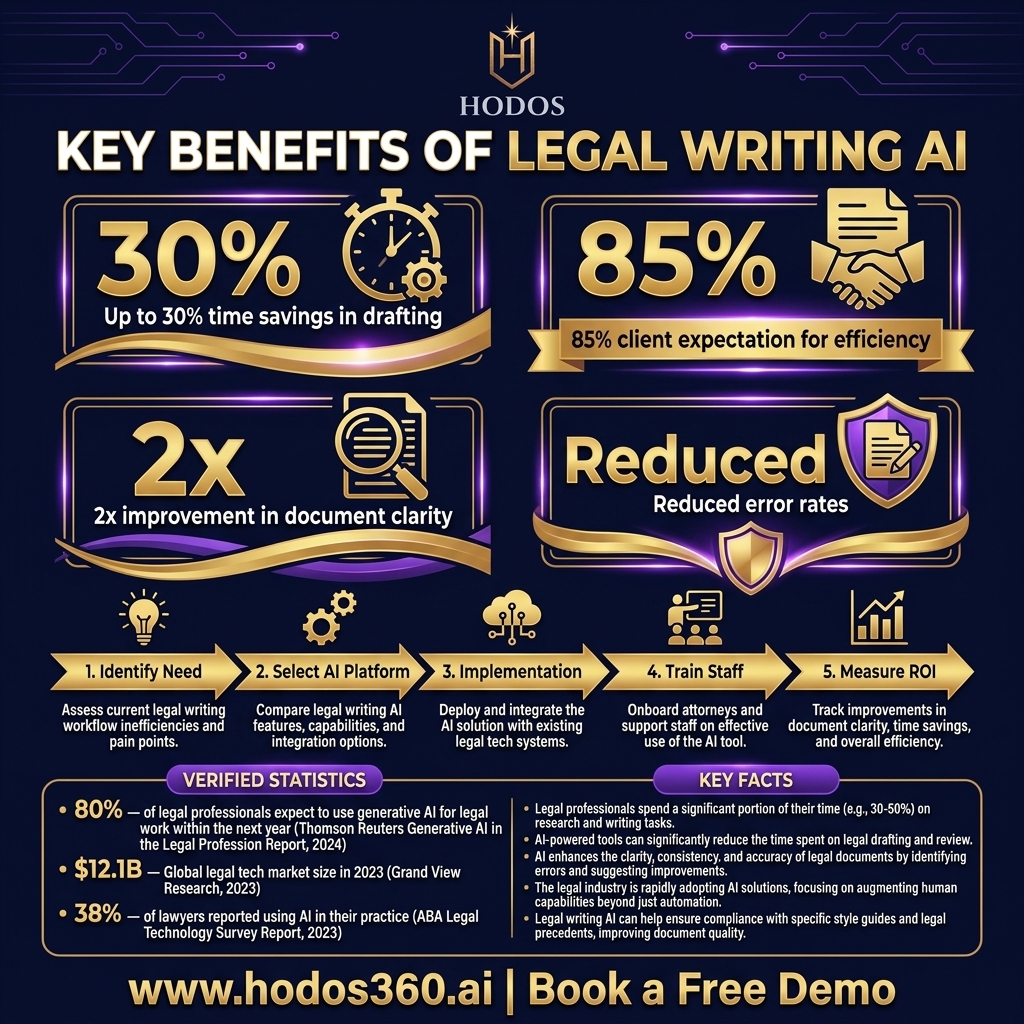
However, the advent of sophisticated large language models (LLMs) and generative AI has ushered in a new paradigm. We've moved beyond mere information retrieval to intelligent content generation and refinement. Learn more about Automate Content Creation: The Essential Guide for Law Firms. Companies like OpenAI, with their GPT series, have demonstrated the potential for AI to produce coherent, contextually relevant text, and specialized applications like Harvey AI, which famously partnered with Allen & Overy, have shown how these general models can be fine-tuned for the unique demands of legal practice. This shift is not just about speed; it's about elevating the quality of legal output. A recent survey by Thomson Reuters found that 85% of clients expect greater efficiency from their legal service providers, and 70% believe technology plays a crucial role in achieving this. This growing client expectation for lean, precise, and cost-effective legal services is a powerful driver for the adoption of legal writing AI solutions.
BriefCatch's Unified Suite: A Deep Dive into its Capabilities
The launch of BriefCatch's unified suite represents a significant leap forward in addressing the evolving demands of legal writing. Ross Guberman, the visionary founder and a widely respected authority on legal writing, has spent decades dissecting the nuances of persuasive and precise legal prose. His expertise is now deeply embedded in this new legal software. The updated writing engine goes beyond mere grammar checks, offering sophisticated recommendations across five critical dimensions: engagement, concision, flow, punch, and, most importantly, clarity. Imagine a tool that not only flags passive voice but also suggests more impactful phrasing, clarifies convoluted sentences, and ensures your arguments resonate with maximum force. This level of granular, context-aware feedback is what sets advanced legal writing AI apart from generic spell-checkers.
For lawyers and judges alike, the benefits are immediate and tangible. Learn more about Voice AI: The Ultimate Shift in Legal Client Service. Attorneys can draft documents with greater confidence, knowing that an intelligent assistant is scrutinizing their work for weaknesses and opportunities for improvement. Judges, who often face a deluge of verbose and unclear filings, stand to benefit from more concise and comprehensible submissions. The suite’s applicability extends across the legal spectrum, from private practice to government agencies, where the need for precise communication is paramount in everything from legislation to regulatory guidance. This comprehensive approach aims to elevate the standard of legal communication across the entire justice system, making legal documents more accessible and impactful for all stakeholders.
Beyond Editing: The Power of Verification
One of the most compelling aspects of BriefCatch's new offering is its emphasis on verification, directly addressing a critical concern in the era of generative AI: accuracy, often referred to as the 'hallucination problem.' While AI can generate text with remarkable fluency, ensuring the factual and legal accuracy of that text remains a human responsibility. BriefCatch’s unified suite is designed to act as an intelligent safeguard, providing tools that help legal professionals verify the underlying information, ensuring that every claim, citation, and legal principle is sound. This feature is a game-changer, especially for busy litigators like Michael Davies, a partner at "Justice & Associates," who recently noted at a LegalTech NYC 2026 panel, "In court, a single inaccurate statement can unravel an entire argument. AI must enhance, not compromise, our duty of candor. Verification tools are no longer a luxury; they are essential."
This focus on verification underscores a fundamental principle of legal ethics: the duty of candor to the tribunal, as outlined in ABA Model Rule 3.3 Candor Toward the Tribunal. Learn more about AI Use in Legal: An Essential Guide to General Counsel Oversight. By providing robust verification capabilities, BriefCatch empowers lawyers to leverage the speed of AI without sacrificing the meticulous accuracy demanded by their professional obligations. It acknowledges that while AI can draft, the ultimate responsibility for truth and precision rests with the human attorney. This dual focus on stylistic excellence and factual integrity positions BriefCatch as a truly comprehensive solution for modern legal writing AI, bridging the gap between efficiency and ethical responsibility.
The Broader Impact: AI on Law Firm Management and Efficiency
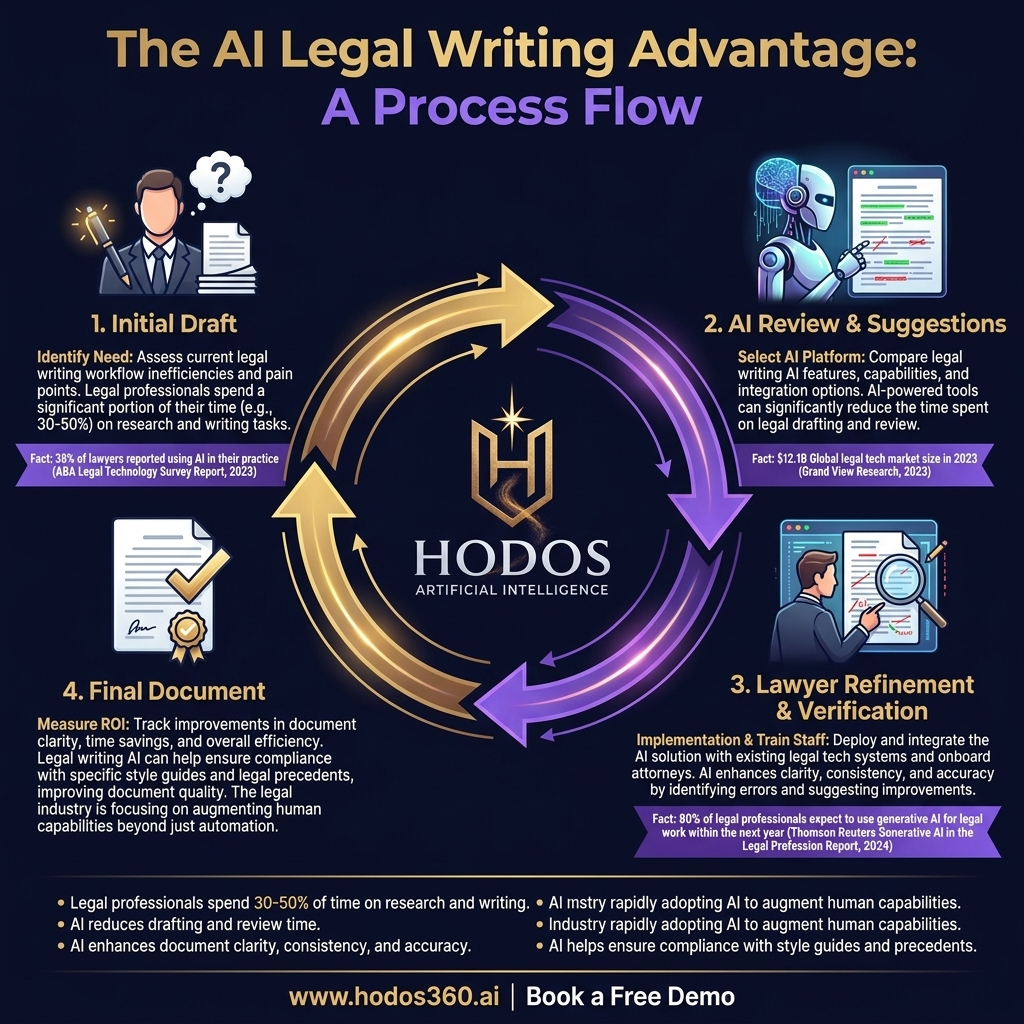
The implications of advanced legal writing AI extend far beyond individual document drafting; they resonate throughout the entire structure of law firm management. When attorneys can produce high-quality legal documents more efficiently, it frees up invaluable time that can be redirected to higher-value tasks such as strategic client counseling, complex problem-solving, and business development. A recent study by McKinsey & Company on AI's impact on professional services projected that AI could automate up to 30% of tasks currently performed by legal professionals, leading to significant productivity gains and allowing firms to handle a larger volume of cases or dedicate more resources to intricate matters. This directly translates to improved profitability and a stronger competitive position in the market.
This drive for comprehensive efficiency is precisely why platforms like HODOS 360's AI Law Firm Management System are gaining traction, integrating document automation, case management, and AI-powered legal workflows to synergize with tools like BriefCatch. Learn more about Agentic AI: The Ultimate Marketing Edge for Law Firms. Imagine a seamless environment where client intake information automatically populates a brief template, which is then refined by AI for editing clarity, and finally reviewed by an attorney, all within an integrated system. This holistic approach to law firm efficiency is transforming how legal services are delivered, moving away from fragmented tools towards unified, intelligent platforms that empower firms to optimize every aspect of their operations.
Integrating AI with Existing Workflows
Navigating Ethical Considerations and Future Trends
While the benefits of legal writing AI are substantial, its rapid adoption also necessitates careful consideration of ethical boundaries. The legal profession is governed by stringent rules designed to protect clients and uphold the integrity of the justice system. ABA Model Rule 1.1 Competence requires lawyers to provide competent representation, which now implicitly includes understanding the benefits and risks associated with relevant technology. Similarly, ABA Model Rule 1.6 Confidentiality of Information mandates that lawyers protect client information, raising questions about data security when utilizing third-party AI tools that process sensitive legal documents. Firms must conduct thorough due diligence on vendors, ensure robust data encryption, and understand how AI models are trained and what data they retain.
Beyond these core rules, the legal community is actively grappling with questions of attribution, intellectual property, and the potential for AI to perpetuate biases embedded in its training data. Learn more about AI Voice Assistant: Essential Growth for Law Firms. State bar associations, such as the New York State Bar Association, have begun issuing guidance on the ethical use of AI, emphasizing the lawyer's non-delegable duty of supervision and ultimate responsibility for all work product. The ongoing debate surrounding legislation like the EU AI Act also underscores the global effort to regulate AI responsibly, recognizing its transformative power while mitigating its potential pitfalls. This dynamic regulatory and ethical landscape demands vigilance and proactive engagement from all legal professionals embracing AI.
The Human Element in AI-Powered Legal Writing

Key Takeaways and Next Steps
The launch of BriefCatch's unified legal writing suite marks a pivotal moment in the legal tech landscape, showcasing the profound potential of legal writing AI to transform how law firms operate. From enhancing editing clarity and concision to providing critical verification capabilities, these tools are no longer futuristic concepts but essential components of a modern, efficient, and ethically sound legal practice. Firms that embrace these innovations stand to gain a significant competitive advantage, improving client satisfaction, boosting internal efficiency, and empowering their attorneys to focus on the intellectual challenges that truly require human expertise. The era of manual, labor-intensive legal writing is rapidly giving way to a new paradigm of intelligent augmentation, where technology and human ingenuity converge to deliver superior legal outcomes.
For law firms looking to navigate this evolving landscape, the path forward is clear: explore and strategically adopt legal software that integrates seamlessly into your operations. Invest in comprehensive training for your team to ensure maximum utilization and proficiency. Learn more about Legal Website Builder: Essential Strategies for Law Firm Digital Growth. Critically, establish robust ethical guidelines for AI use, safeguarding client confidentiality and maintaining professional responsibility. Platforms like HODOS 360 offer a holistic approach to this transformation, providing not just AI Law Firm Management solutions but a full suite of services, including AI Marketing Platform, AI Voice Assistants, and Web & Mobile Development, all designed to empower law firms to thrive in the AI era. The future of legal practice is here, and it's intelligent, efficient, and deeply human-centric.
Frequently Asked Questions
What is legal writing AI and why is it important for law firms?+
Legal writing AI refers to artificial intelligence tools designed to assist legal professionals in drafting, editing, and refining legal documents. It's crucial for law firms because it enhances efficiency, improves document clarity, reduces errors, and frees up attorneys' time for higher-value tasks, ultimately leading to better client outcomes and increased profitability in a competitive market.
How does BriefCatch's new unified suite differ from generic AI writing tools?+
BriefCatch's unified suite, developed by legal writing expert Ross Guberman, is specifically tailored for legal professionals. Unlike generic AI, it offers nuanced recommendations across legal-specific dimensions like concision, flow, and punch, and critically, includes verification features to ensure factual and legal accuracy, directly addressing the 'hallucination' risk of general AI models.
What are the main benefits of using AI for legal document drafting?+
The primary benefits include significant time savings in drafting and editing, improved clarity and conciseness in legal documents, reduced risk of errors, and enhanced overall quality of legal prose. This allows lawyers to focus on strategic thinking and client advocacy, leading to more impactful and persuasive legal arguments and better utilization of billable hours.
Are there ethical concerns when using legal writing AI in legal practice?+
Yes, ethical concerns exist, primarily around client confidentiality, data security, and the lawyer's duty of competence and candor. Firms must ensure AI tools protect sensitive client information, avoid unauthorized practice of law, and that attorneys maintain ultimate responsibility for the accuracy and ethical implications of AI-generated or assisted content, as per ABA Model Rules.
How can law firms effectively integrate legal writing AI into their existing operations?+
Effective integration involves a strategic approach: starting with pilot programs, providing comprehensive training for staff, and ensuring the AI tools are compatible with existing case management and document automation systems. Prioritizing solutions that offer seamless integration and robust security features, like those within a comprehensive AI Law Firm Management System, is key to maximizing benefits and minimizing disruption.