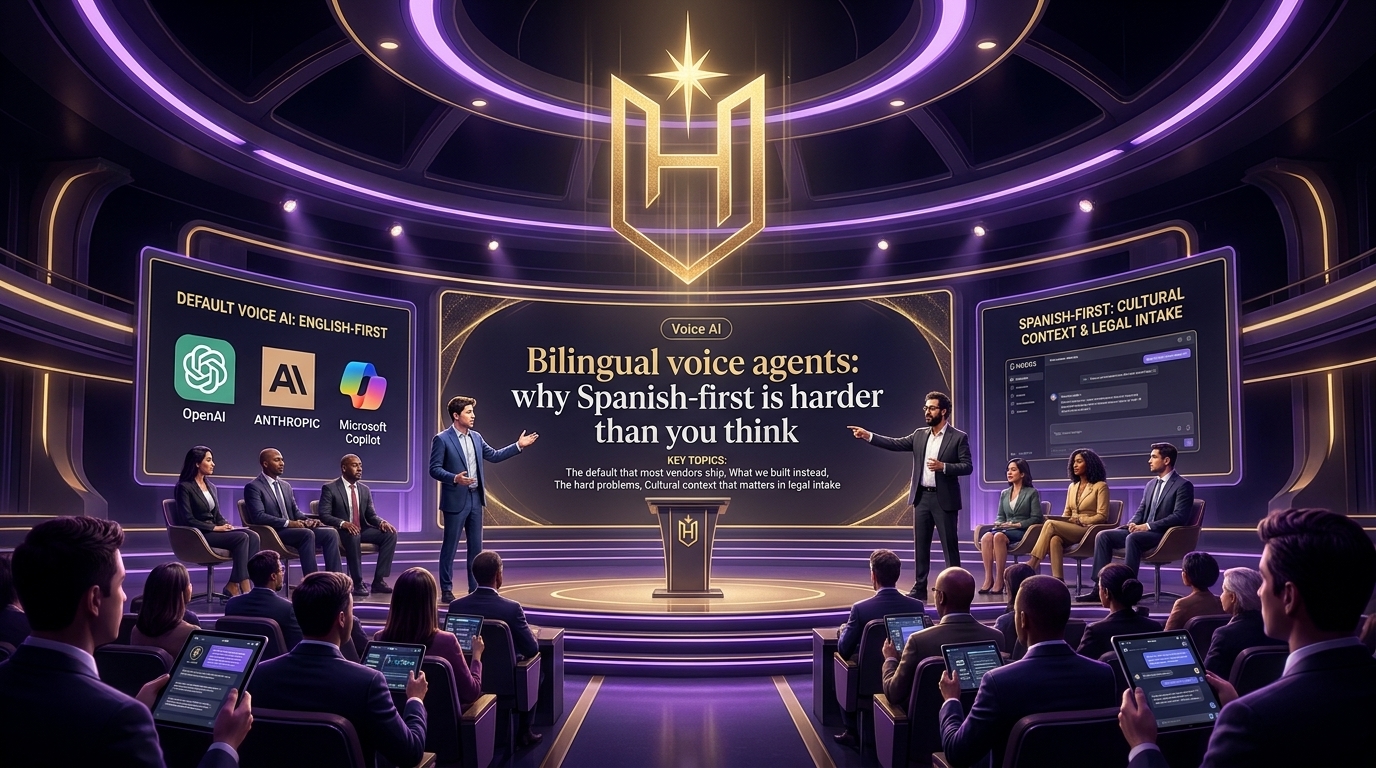


Voice AI: Essential Guide to Transforming Legal Operations
The legal landscape of 2026 demands constant innovation, a truth reinforced by "The AI Journal's" recent highlight on Voice AI as a standout technology for real-world utility. This isn't about futuristic concepts but tangible solutions addressing core challenges for law firms: managing high client intake volumes, ensuring 24/7 accessibility, and optimizing operational efficiency. Consider Sarah Chen, managing partner at Veritas Legal, who revealed at LegalTech NYC 2026 her firm's struggle with missed calls and inconsistent lead qualification. "We were losing potential clients simply because our human capacity couldn't match the inbound inquiry volume," Chen shared, illustrating a common industry pain point. The promise of Voice AI offers intelligent augmentation, enabling firms like Veritas Legal to scale client service and streamline workflows effectively.
This burgeoning field of artificial intelligence provides a grounded perspective on how technology genuinely transforms decision-making and operational paradigms across legal industries. From automating initial client screenings to managing complex scheduling, Voice AI applications are proving game-changers. The shift is palpable: what was once speculative is now an indispensable tool for competitive legal practices. Firms embracing these intelligent assistants are fundamentally rethinking their operational models, aiming to minimize administrative burdens and allow attorneys more time for high-value legal work. The strategic deployment of Voice AI is becoming a hallmark of forward-thinking firms, signaling a clear path towards enhanced productivity and client satisfaction in a dynamic market.
Ready to transform your practice? Discover how Voice AI can revolutionize your client engagement and operational efficiency. [Learn More About HODOS 360 AI Voice Assistants]
The Emergence of Voice AI in Legal Practice: Beyond Simple Automation
The evolution of Voice AI from basic speech recognition to sophisticated conversational agents marks a significant leap, especially for professional industries like law. Early voice technology was often limited and prone to misinterpretation. However, deep learning and large language models (LLMs), pioneered by entities like OpenAI and Google AI, have dramatically refined these capabilities. Dario Amodei, CEO of Anthropic, recently underscored the critical role of these foundational models in enabling AI to grasp nuanced human language, directly translating to more effective Voice AI for complex legal environments. Today's Voice AI solutions are not merely transcribing words; they understand context, identify intent, and perform complex tasks based on verbal instructions.
The integration of advanced artificial intelligence has elevated Voice AI from a convenience to a strategic asset. Firms previously overwhelmed by inbound inquiries or inconsistent client screenings now find relief in AI-powered voice assistants. Take "Lexi," an AI assistant deployed by Sterling & Associates, a mid-sized real estate firm. Learn more about AI Lead Flow: Essential Strategies for Law Firm Growth. Lexi, leveraging technology similar to HODOS 360's offerings, manages all after-hours calls, pre-qualifies leads based on customizable criteria, and schedules consultations directly. Managing partner Eleanor Vance noted, "Lexi has reduced our missed lead rate by 40% and freed up administrative staff for more complex tasks." This real-world application demonstrates how Voice AI is transforming client interaction.
This impact extends beyond pioneering firms. A recent Thomson Reuters report on legal technology adoption indicates over 30% of law firms are exploring or have implemented Voice AI for client-facing roles, projected to reach 60% by 2028. This rapid adoption is driven by concrete benefits: enhanced client satisfaction via immediate responses, improved lead conversion, and substantial cost savings from reduced administrative overhead. The narrative is one of disruption versus tradition, with innovators gaining a competitive edge. The rise of specialized legal Voice AI platforms, often drawing from OpenAI news today regarding their latest GPT models, ensures these tools are tailored to the unique legal lexicon and procedures, critical for accurate and relevant interaction.
Redefining Client Intake and Engagement with AI Voice Assistants
The initial point of contact for potential clients is critical, yet often inefficient for law firms. Traditional models involve receptionists juggling calls or unanswered inquiries outside business hours, leading to lost opportunities. Voice AI provides a compelling 24/7, multilingual solution, ensuring every inquiry receives a professional, consistent response. An AI voice assistant can immediately greet callers, conduct initial screenings based on predefined legal areas, gather essential contact information, and even explain fee structures, all before human intervention. This optimizes intake and elevates the client experience through immediate assistance and clarity.
Voice AI's power in client intake extends to sophisticated lead qualification. Learn more about Legal AI Problem: Mastering Ethical Tech in Law Firms 2026. Instead of simple data collection, these intelligent assistants ask targeted questions to assess case viability, identify urgent matters, and determine the best course of action. This precision minimizes wasted attorney time, ensuring valuable human resources are allocated to qualified leads. According to a 2025 ABA Legal Technology Survey Report, firms using advanced intake systems, including Voice AI, reported an average 15% increase in lead conversion rates. This data underscores the tangible benefits of adopting these useful AI applications, ensuring clients feel heard and valued from the outset, fostering trust and confidence.
Strategic Applications of Voice AI Across Law Firm Operations
Voice AI's utility in law firms reaches beyond initial client contact, permeating various daily operations for unprecedented efficiency and strategic advantage. A significant application is in calendaring and appointment management. Instead of administrative staff coordinating schedules for hours, Voice AI assistants directly interface with attorneys' calendars, identifying available slots, sending automated reminders, and handling rescheduling with minimal human intervention. This is transformative for busy litigation practices or multi-office firms, streamlining logistical nightmares. Seamless integration with existing case management systems ensures appointments are automatically linked to client files, enhancing data accuracy and reducing errors.
Furthermore, Voice AI proves useful in streamlining internal communications and workflows. An attorney can dictate notes directly into a case file, with the AI transcribing, categorizing, and flagging follow-up actions. This hands-free interaction captures critical information in real-time, reducing reliance on manual data entry and transcription. Firms also leverage Voice AI for internal knowledge retrieval, allowing attorneys to verbally query vast internal databases for precedents, statutes, or firm policies, receiving instant, accurate answers. This significantly cuts research time, freeing lawyers for analytical and strategic tasks. Learn more about AI Marketing Agents: The Ultimate Guide for Law Firms. These common operational cases illustrate the breadth of Voice AI's transforming potential within the legal world.
A practical example of this operational synergy is Voice AI's role in document automation. While dedicated platforms handle the heavy lifting, Voice AI acts as an intelligent front-end. An attorney might verbally request, "Draft a standard NDA for 'Project Phoenix' with client 'Innovate Corp'," and the AI assistant, integrated with the firm's document automation system, retrieves the correct template, populates details, and initiates the review. This reduces time on repetitive document creation, allowing legal teams to focus on substantive analysis. HODOS 360's AI Law Firm Management System complements Voice AI by providing robust back-end support for case management, billing, and document automation, creating a unified, intelligent ecosystem.
Unlock unparalleled efficiency. See HODOS 360's AI Voice Assistants in action. [Book a Free Demo Today]
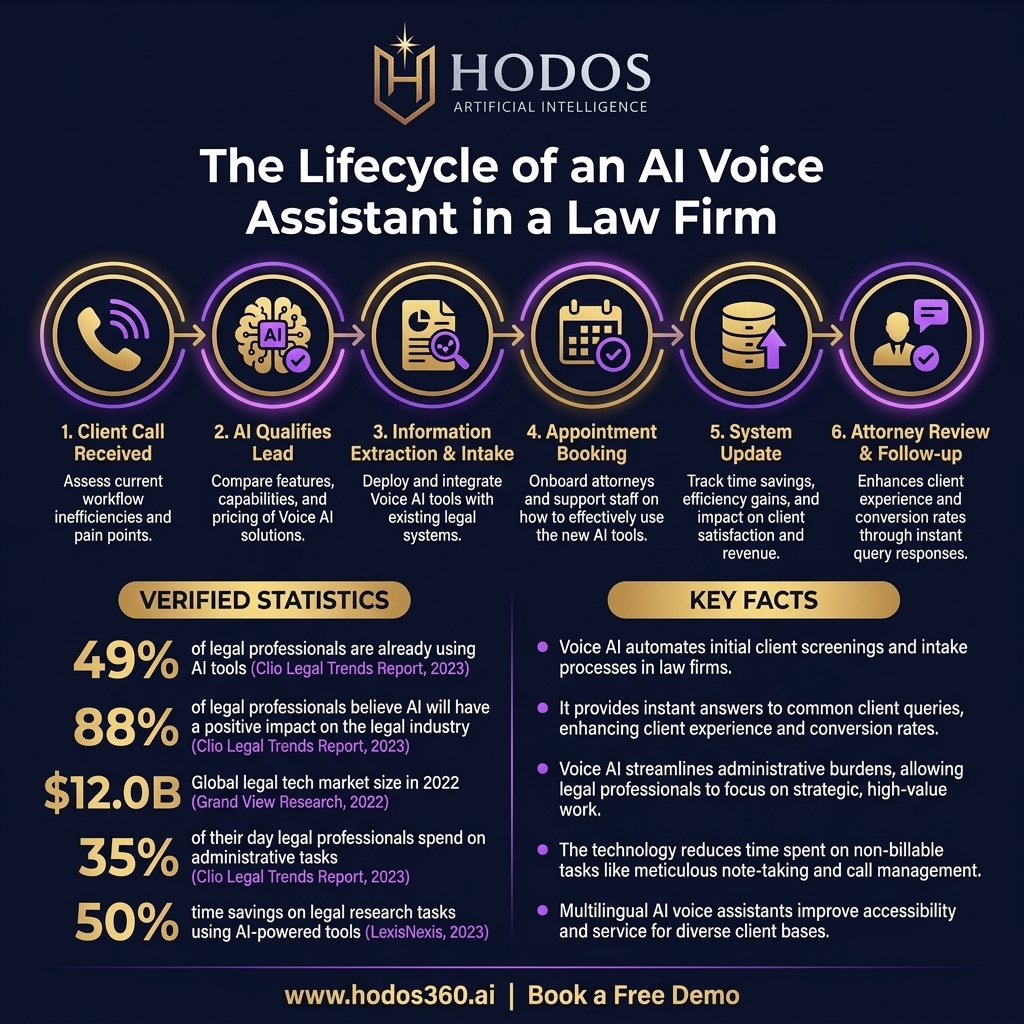
- ✓Enhanced Client Experience: 24/7 multilingual support ensures no inquiry goes unanswered, providing immediate assistance and a professional first impression.
- ✓Streamlined Intake & Qualification: Automated pre-screening and lead qualification reduce administrative burden and ensure attorneys focus on high-value prospects.
- ✓Operational Efficiency & Cost Savings: Significant reduction in manual tasks for scheduling, data entry, and internal communications, leading to lower overheads.
- ✓Improved Data Accuracy & Compliance: Automated logging and summarization of interactions ensure meticulous record-keeping, crucial for regulatory adherence and audits.
- ✓Strategic Resource Allocation: Freeing up human staff from repetitive tasks allows them to concentrate on complex legal analysis, client relationship building, and strategic growth initiatives.
- ✓Scalability & Adaptability: Firms can easily scale their client service capabilities during peak times without proportional increases in staffing, adapting quickly to market demands.
- ✓Competitive Advantage: Early adopters gain a significant edge by demonstrating technological prowess, superior client service, and optimized internal processes.
Navigating Ethical and Regulatory Landscapes of Voice AI
The rapid proliferation of Voice AI and other artificial intelligence applications in the legal world brings complex ethical and regulatory considerations. The core tension lies between leveraging AI for efficiency and upholding fundamental legal principles: client confidentiality, data privacy, and the duty of competence. ABA Model Rules of Professional Conduct 1.6 (Confidentiality) and 1.1 (Competence) are critical guideposts. When a Voice AI assistant records client conversations, firms must ensure robust encryption and data anonymization to protect sensitive information from unauthorized access, a concern amplified by recent high-profile data breaches.
Algorithmic bias is another significant concern. If Voice AI models are trained on biased datasets, they could inadvertently lead to discriminatory outcomes in lead qualification or case assessment. This highlights the importance of transparent AI development and rigorous testing, a sentiment echoed by Dr. Kate Crawford, an AI ethics scholar, who advocates for "auditable AI." As AI regulation news evolves, with EU AI Act enforcement setting a global precedent, law firms must be acutely aware of their responsibilities. The Act classifies certain AI systems as "high-risk," imposing strict requirements on data quality, human oversight, and accountability, directly impacting Voice AI deployment in legal settings.
Legal implications extend to federal and state privacy statutes, such as the Electronic Communications Privacy Act (ECPA) in the U.S. and GDPR/CCPA. Learn more about AI Voice Assistants: Essential Practical Features for Law Firms. Firms deploying Voice AI must obtain explicit consent for recording and processing conversations, clearly inform callers they are interacting with AI, and provide opt-out mechanisms. Non-compliance risks severe penalties and reputational damage. The challenge is balancing Voice AI's transformative potential with an unwavering commitment to legal and ethical compliance, ensuring technology never compromises client trust. This requires a grounded perspective on AI's capabilities and limitations.
Accountability for decisions or information from Voice AI remains with the supervising attorney. "Human in the loop" is paramount, ensuring AI-generated responses are reviewed and validated by a human legal professional, especially for substantive advice. This mitigates errors and upholds the attorney's ethical duty. The ongoing debate around AI regulation news underscores the need for clear liability guidelines; firms must proactively develop internal policies delineating human and AI responsibilities, safeguarding both firm and clients. Prudent Voice AI integration demands not just technological savvy but a deep understanding of legal ethics and regulatory frameworks.
Ensuring Compliance and Data Security in Voice AI Deployments
Responsible Voice AI deployment requires a multi-faceted approach to compliance and data security. Law firms must prioritize vendor due diligence, selecting AI providers like HODOS 360 that demonstrate robust security protocols, including end-to-end encryption for voice data, secure data storage, and adherence to certifications (e.g., ISO 27001, SOC 2). Implementing clear internal policies on AI usage, with mandatory staff training on data privacy and AI limitations, is crucial. Learn more about AI Legal Tech Boom 2026: Unlocking Billions in Valuation. This proactive stance cultivates a culture of compliance, protecting sensitive client information and maintaining professional integrity.
The Future of Legal Practice: Integrating Voice AI with Broader AI Platforms
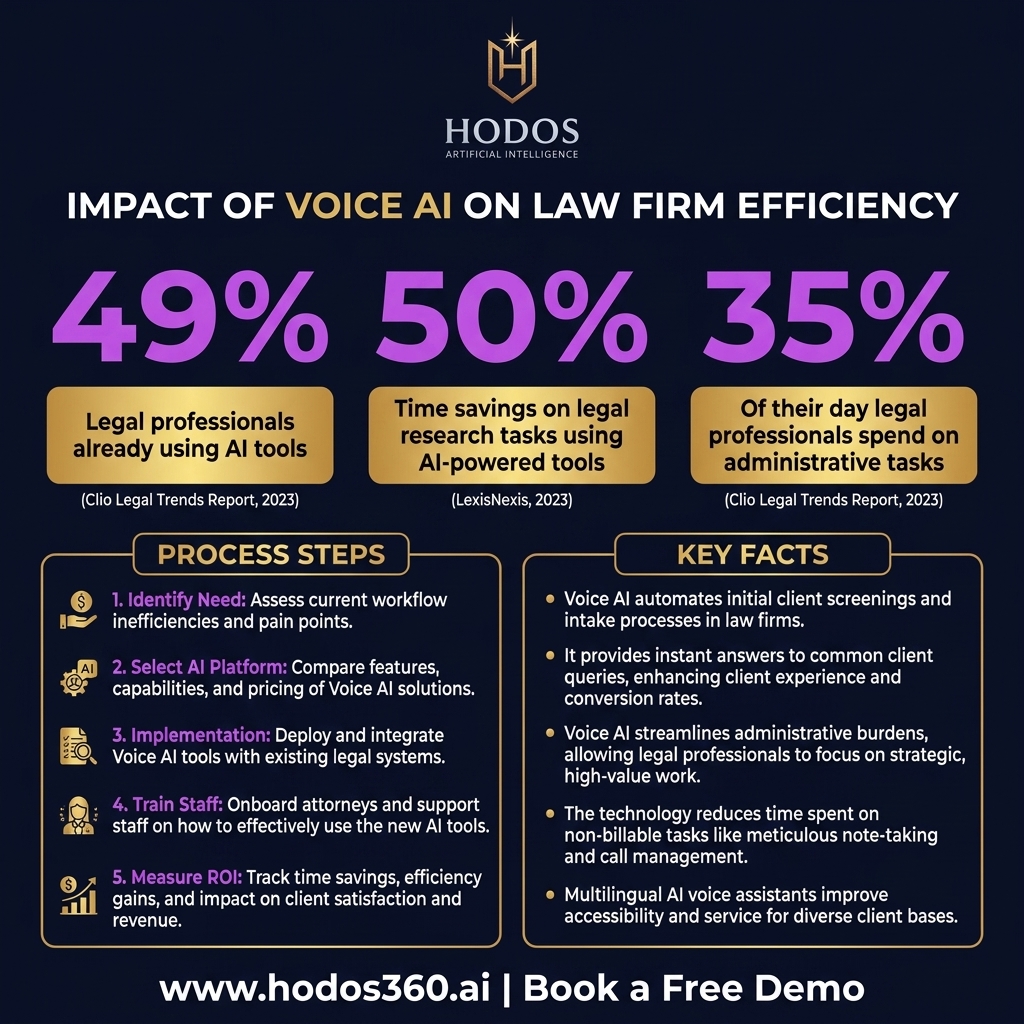
The true horizon for Voice AI in the legal world lies in its seamless integration into a comprehensive, synergistic AI ecosystem that transforms every aspect of law firm management and client service. Imagine Voice AI as the intuitive interface to an entire suite of artificial intelligence tools. A client calls, the Voice AI assistant handles the initial inquiry, and then, without human intervention, the information feeds into an AI-powered case management system. This system automatically generates initial legal documents, flags relevant precedents from a legal research database, and even suggests marketing campaigns based on client needs. This vision represents a complete paradigm shift from fragmented software to a truly intelligent, interconnected legal practice.
This holistic approach is rapidly taking shape, driven by advancements in underlying technologies, as highlighted in semiconductor news today and by companies like Nvidia, pushing AI processing boundaries. The ability to process vast data and execute complex AI models in real-time enables these integrated systems. Firms embracing this broader vision gain unparalleled competitive advantage, optimizing entire operational flows. For example, HODOS 360's platform offers this integrated ecosystem: AI Voice Assistants handle client calls, feeding into the AI Law Firm Management System for case and document automation, while the AI Marketing Platform leverages client data (with consent) to generate targeted content. This creates a virtuous cycle of efficiency, client acquisition, and growth.
The future also promises predictive analytics driven by Voice AI interactions. Learn more about AI-Powered Legal Tech: The Essential Guide for Modern Firms. By analyzing patterns in client inquiries, sentiment, and common legal needs, Voice AI can provide invaluable insights into market trends, emerging legal issues, and client expectations. This data can inform strategic business decisions, allowing firms to proactively adapt services, refine marketing efforts, and anticipate future legal challenges. If Voice AI detects a surge in inquiries about a specific contract dispute, the firm can allocate resources, develop specialized services, and launch targeted campaigns using its AI Marketing Platform. This proactive, data-driven approach moves law firms beyond reactive problem-solving to strategic foresight, fundamentally transforming industries.
Ultimately, integrating Voice AI with other AI applications like AI-powered website building and responsive design, offered by HODOS 360's Web & Mobile Development service, creates a cohesive digital front door. From a potential client's online search to their first call and throughout their legal journey, a consistent, intelligent, and efficient experience can be delivered. This comprehensive AI framework ensures law firms not only keep pace but actively shape the future of legal service delivery, offering superior client experiences and achieving sustainable growth in a competitive world. The transition from individual AI tools to a unified AI platform is the next frontier in legal tech, offering unparalleled opportunities for innovation.
Beyond Voice: A Synergistic AI Ecosystem for Law Firms
While Voice AI offers profound benefits on its own, its true power is unleashed when integrated into a broader, synergistic AI ecosystem. Imagine a scenario where a client's initial inquiry, handled by a Voice AI assistant, seamlessly flows into an AI-powered client intake system that automatically creates a new client file, initiates conflict checks, and assigns the case to the appropriate attorney. This data then populates the firm's AI Law Firm Management System, updating case progress, tracking billable hours, and even suggesting optimal legal workflows based on historical data. This interconnectedness transforms disparate tools into a cohesive, intelligent operational backbone.

Key Takeaways and Next Steps
The journey through the evolving landscape of Voice AI in the legal sector reveals a clear mandate: embrace intelligent automation as a powerful augmentation to human expertise, not a replacement. From revolutionizing client intake and engagement to streamlining complex operational workflows, Voice AI offers essential applications that directly address the core challenges of modern legal practice. Firms like Veritas Legal and Sterling & Associates are demonstrating tangible benefits, from increased lead conversion to significant administrative cost savings, by strategically deploying these useful AI tools. The future belongs to those who view Voice AI as an integral component of a broader, synergistic artificial intelligence ecosystem, capable of transforming their entire practice.
Navigating this transformation requires a grounded perspective on both immense potential and critical ethical and regulatory considerations. Upholding client confidentiality, ensuring data privacy, and mitigating algorithmic bias are fundamental responsibilities. By selecting reputable AI partners and developing robust internal compliance frameworks, law firms can confidently harness Voice AI while safeguarding professional integrity and client trust. The common thread across successful implementations is a commitment to continuous learning and adaptation, ensuring technology serves the highest ideals of legal service. For firms contemplating next steps, evaluate current inefficiencies where Voice AI can offer immediate impact. Platforms like HODOS 360 provide a comprehensive suite of AI-powered services designed to integrate seamlessly. The time to act is now to optimize operations and define the competitive landscape.
Ready to redefine your firm's future? Explore the full capabilities of HODOS 360's AI-powered solutions. [Request a Personalized Consultation]
Frequently Asked Questions
What exactly is Voice AI in the context of a law firm?+
Voice AI for law firms refers to artificial intelligence systems designed to understand, process, and respond to human speech. These intelligent assistants can automate tasks like answering client calls, qualifying leads, booking appointments, and providing basic information, significantly enhancing efficiency and client service by offering 24/7 availability and multilingual support.
How does Voice AI improve client intake for law firms?+
Voice AI revolutionizes client intake by providing immediate, consistent responses to inquiries at any time. It can pre-screen potential clients, gather essential case details, and determine lead viability, routing qualified prospects to the appropriate legal professional. This reduces missed opportunities, streamlines administrative tasks, and ensures a professional first impression, converting more leads effectively.
Are there ethical concerns about using Voice AI in legal practice?+
Yes, ethical considerations are paramount. Firms must address client confidentiality, data privacy, and the potential for algorithmic bias. It's crucial to obtain explicit consent for recording, ensure robust data security, and maintain human oversight, especially for substantive legal advice. Adherence to ABA Model Rules and data protection regulations like GDPR/CCPA is essential for responsible deployment.
Can Voice AI integrate with existing legal tech systems?+
Absolutely. Modern Voice AI platforms are designed for seamless integration with existing legal tech infrastructure, including case management systems, calendaring tools, and document automation platforms. This interoperability ensures that data flows smoothly across different systems, creating a unified and efficient operational ecosystem for law firms, maximizing the value of current investments.
What are the key benefits for law firms adopting Voice AI?+
Key benefits include enhanced client satisfaction through immediate 24/7 support, increased operational efficiency by automating routine tasks, improved lead conversion rates, and substantial cost savings from reduced administrative overhead. It also allows legal professionals to focus on high-value legal work, offering a significant competitive advantage in the evolving legal market.