
Voice AI: The Proven 391% ROI for Law Firms
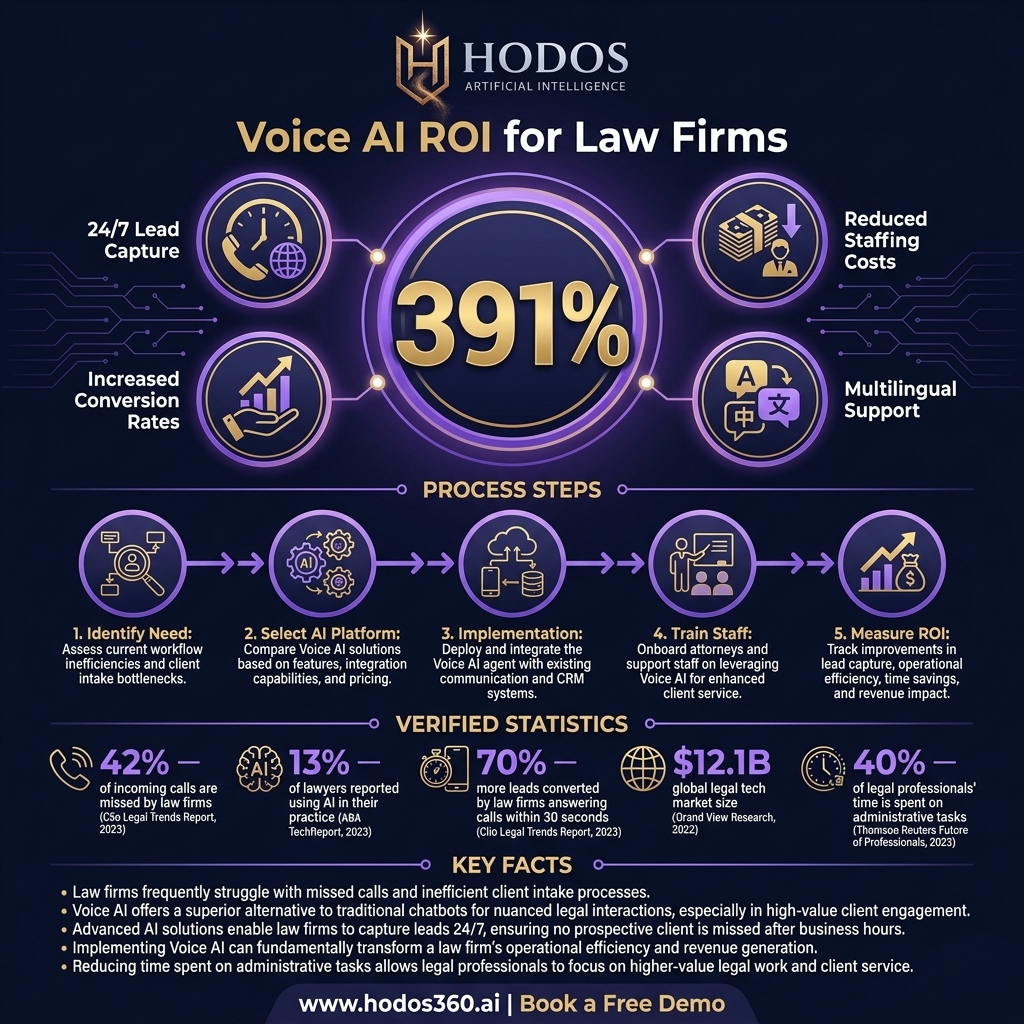
Just last week, Sarah Chen, a managing partner at a mid-sized personal injury firm in Phoenix, recounted her team's perennial struggle: missed calls, frustrated prospective clients hanging up, and valuable leads slipping through the cracks after business hours. Her firm, like countless others, grappled with the labor-intensive, often inconsistent process of initial client intake, a bottleneck that directly impacted their bottom line. Then came the news that resonated deeply: a recent Xpert.Digital report, penned by Konrad Wolfenstein, highlighted an astonishing 391% ROI for Voice AI agents, labeling it an "underrated multi-million dollar potential." This isn't just about answering phones; it's about fundamentally transforming a law firm's operational efficiency and revenue generation.
This dramatic figure isn't an anomaly; it's a testament to the maturation of conversational AI, particularly Voice AI, which is now proving to be a superior alternative to traditional chatbots for high-value legal interactions. While text-based chatbots have their place for routine queries, the dynamic, nuanced world of legal client engagement demands more. The report underscores a critical shift: firms that embrace sophisticated AI voice agents are not just keeping pace; they're creating a significant competitive difference, capturing leads 24/7, and streamlining operations in ways once unimaginable. The challenge for many legal professionals now is understanding *which* AI solution is better suited for their specific business needs and how to leverage this technology for maximum impact. The narrative arc here is clear: move beyond basic automation to truly intelligent client service.
The promise of a 391% ROI, as detailed in the Xpert.Digital analysis, isn't merely hypothetical; it's rooted in the tangible operational savings and revenue uplift that advanced Voice AI solutions provide. Unlike rudimentary chatbots that often frustrate users with rigid scripts and limited understanding, modern AI voice agents leverage sophisticated natural language processing (NLP) and machine learning to conduct genuinely conversational interactions. Consider the traditional pain points: a potential client calls after hours, eager to discuss a time-sensitive matter, only to be met with an answering machine. Each missed call represents a lost opportunity, a potential client who might turn to a competitor. With Voice AI, that call is answered instantly, questions are addressed, and crucial information is gathered, often leading to immediate appointment booking or lead qualification.
The financial implications are profound. Firms can significantly reduce the need for round-the-clock human receptionists, especially for initial screening and basic query handling. Learn more about AI Adoption: The Ultimate Guide for Law Firm Growth. Thomson Reuters' 2023 State of the Legal Market Report highlighted that staffing costs remain a top concern for law firm leaders. By deploying virtual assistants powered by Voice AI, firms can reallocate human talent to higher-value legal work, improving job satisfaction and firm output. This isn't just about cost-cutting; it's about strategic resource optimization. For example, a small firm might save tens of thousands annually on administrative overhead, while larger firms could see savings in the millions, directly contributing to that impressive ROI. The key difference lies in the agent's ability to handle complex, often emotionally charged voice interactions with empathy and accuracy, something a simple chatbot struggles with.
The Strategic Advantage: Integrating Voice AI into Firm Management
Integrating Voice AI into a firm's overarching management system offers a strategic advantage that extends far beyond simple call answering. Imagine a scenario where every incoming call handled by an AI voice agent automatically populates a new client profile within your case management system, logs call details, and even initiates workflows based on the nature of the inquiry. This level of seamless integration is what platforms like HODOS 360 deliver, connecting AI Voice Assistants directly with AI Law Firm Management System capabilities. This isn't just about automating one task; it's about creating an intelligent, interconnected ecosystem where data flows effortlessly, reducing manual entry errors and ensuring no critical information is lost. Jack Newton, CEO of Clio, has consistently emphasized the importance of integrated legal tech solutions for fostering firm growth and efficiency, and Voice AI represents a powerful new layer in that integration strategy.
Furthermore, the data collected by Voice AI agents provides invaluable insights for business development and client service. Learn more about Legal AI Coordination: An Essential Shift for Law Firms. Call transcripts, lead qualification scores, and appointment booking rates can be analyzed to identify trends, optimize marketing spend, and refine service offerings. This contrasts sharply with the often-anecdotal feedback derived from human interactions, which can be subjective and incomplete. Firms can gain a clear, data-based understanding of their prospective client base, allowing for more targeted outreach and improved conversion rates. This granular data empowers partners like Sarah Chen to make informed decisions, moving away from reactive problem-solving to proactive, strategic planning, ultimately reinforcing the argument that Voice AI offers a better, more intelligent approach to firm management.
Beyond Text: Why Voice AI Outperforms Traditional Chatbots
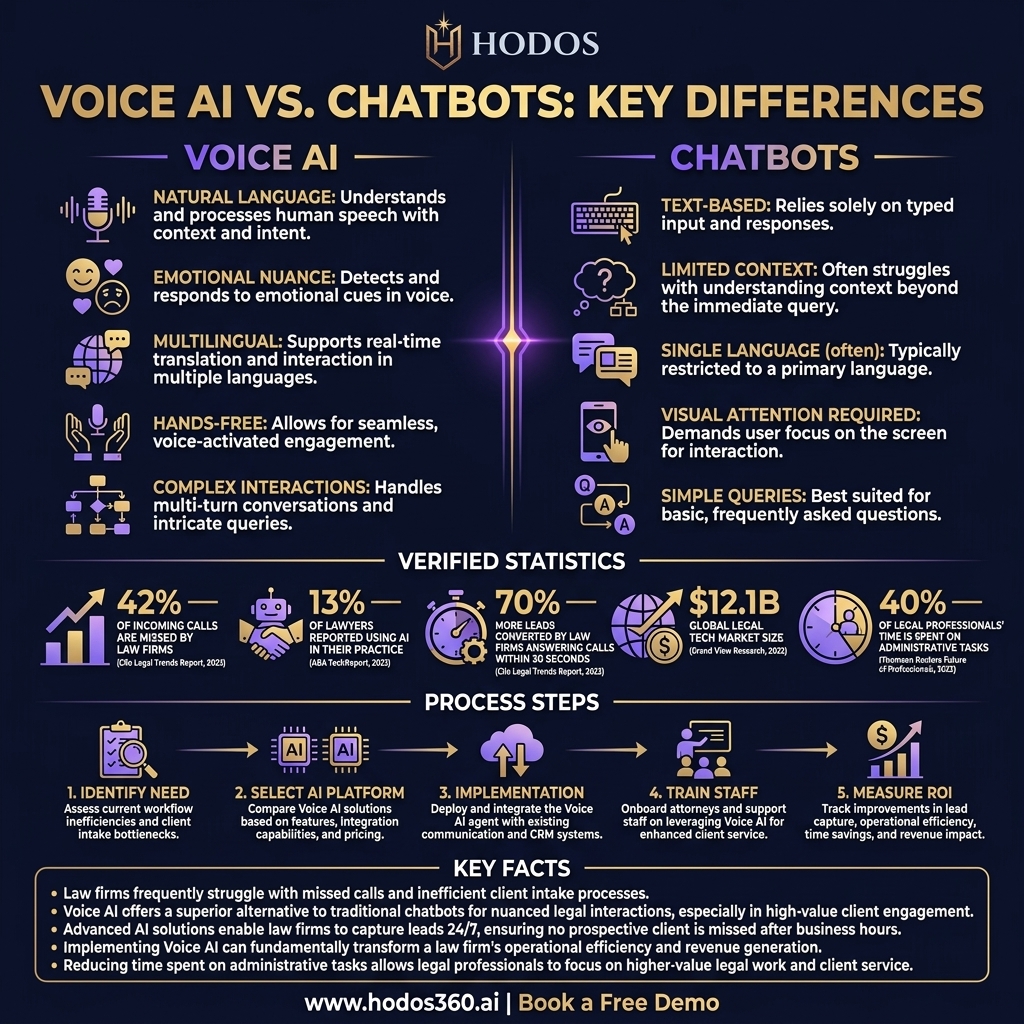
The fundamental difference between Voice AI and traditional chatbots lies in their medium and, consequently, their capacity for nuanced interaction. While chatbots rely on text input, demanding visual attention and typing ability, Voice AI agents engage through spoken language, allowing for a more natural, hands-free, and often more empathetic interaction. This is particularly crucial in legal contexts where clients may be distressed, elderly, or simply unable to type. The ability of Voice AI to understand intent, recognize emotion through tone (though subtle and ethically handled), and adapt its responses in real-time creates a far superior user experience. For instance, a client calling about a personal injury claim might struggle to articulate complex details via text, but can convey their story more fully and naturally through voice.
Research from institutions like the Stanford University AI Lab has consistently shown that natural language interaction builds greater user trust and satisfaction. Learn more about AI Legal Management: The Essential Build vs. Buy Strategy. Voice AI agents can handle interruptions, ask clarifying questions, and provide immediate, relevant information in a way that feels genuinely helpful. They can also offer multilingual support, seamlessly switching between languages to accommodate diverse client demographics – a feature that few text-based chatbots can replicate with the same fluidity. This capability not only expands a firm's reach but also demonstrates a commitment to inclusivity, enhancing client loyalty. The superior conversational capabilities of Voice AI make it the unequivocal better choice for complex, sensitive, and high-stakes legal client interactions, reinforcing its value as a sophisticated virtual assistant.
Transforming Client Intake and Lead Qualification with AI Voice Assistants
The primary battleground where Voice AI is delivering immediate, measurable impact for law firms is in client intake and lead qualification. The 2023 ABA Legal Technology Survey Report highlighted that client acquisition remains a top challenge for firms. Traditional methods, reliant on human staff during business hours, often lead to significant lead leakage. A 24/7 AI Voice Assistant acts as an unblinking, tireless first point of contact, ensuring every call is answered promptly, professionally, and in multiple languages if required. This immediate responsiveness is critical; studies consistently show that leads contacted within five minutes are significantly more likely to convert. An AI voice agent doesn't just answer; it engages, qualifies, and schedules, all while capturing essential data.
Consider the scenario of a potential client calling at 10 PM with an urgent legal query. Learn more about AI Marketing Agents: The Ultimate Guide for Law Firms. A human receptionist is unavailable, but an AI Voice Assistant can assess the urgency, gather initial facts, verify conflicts of interest, and even book an appointment directly into a lawyer's calendar for the next morning. This process is not only efficient but also highly effective in filtering out unqualified leads, saving valuable attorney time. The difference here is the ability to maintain a consistent, high-quality client experience around the clock, converting what would have been a lost lead into a scheduled consultation. This proactive support system, powered by Voice AI, fundamentally changes the calculus of client acquisition, making it more predictable and scalable. The precise data capture also helps refine marketing strategies, making future client acquisition efforts even better.
- ✓24/7 Availability: Ensures no lead is ever missed, regardless of time zone or operational hours, providing continuous support.
- ✓Instant Lead Qualification: AI agents can ask targeted questions to pre-qualify leads, identifying high-potential clients and filtering out unsuitable inquiries, making the process better.
- ✓Automated Appointment Booking: Seamlessly schedules consultations directly into attorneys' calendars, reducing administrative overhead and increasing conversion rates.
- ✓Multilingual Support: Offers assistance in various languages, broadening a firm's reach and inclusivity, addressing the language difference.
- ✓Accurate Data Capture: Records call details, client information, and inquiry specifics directly into CRM systems, ensuring data integrity and follow-up efficiency.
- ✓Enhanced Client Experience: Provides immediate, professional, and empathetic responses, improving prospective clients' initial impression and satisfaction.
- ✓Reduced Operational Costs: Minimizes the need for extensive human reception staff, allowing firms to reallocate resources to higher-value legal work.
Future-Proofing Your Practice: The Evolution of Conversational AI
The trajectory of conversational AI suggests that Voice AI is not just a transient trend but a foundational shift in how legal services are delivered and managed. We are witnessing an era of unprecedented innovation, driven by giants like OpenAI with their advanced large language models and Anthropic's focus on constitutional AI. These developments are rapidly enhancing the capabilities of AI voice agents, making them more sophisticated, context-aware, and capable of handling increasingly complex interactions. Firms that embrace this technology now are not just adopting a tool; they are investing in a future-proof strategy that positions them ahead of the curve. The market competition is fierce, and the difference between thriving and merely surviving will increasingly depend on technological adoption.
This isn't to say the journey is without its challenges. The legal industry, often cautious by nature, must navigate the ethical considerations surrounding AI, particularly regarding data privacy and client confidentiality. Learn more about AI Marketing: Revolutionizing Law Firm Growth in 2026. The European Union's AI Act, for instance, sets a precedent for regulatory oversight, demanding transparency and accountability from AI systems. However, industry leaders like Dario Amodei (Anthropic CEO) and Sam Altman (OpenAI CEO) are actively involved in shaping responsible AI development, ensuring these powerful tools are deployed ethically. Law firms must engage with vendors, such as HODOS 360, who prioritize these ethical frameworks, ensuring their Voice AI solutions comply with standards like ABA Model Rule 1.6 on client confidentiality. The future of legal support is undeniably based on intelligent automation, and Voice AI is at its forefront.
Navigating Ethical and Regulatory Landscapes in AI Adoption
The adoption of Voice AI in legal practice necessitates a careful consideration of ethical and regulatory landscapes. Attorneys have a fundamental duty to protect client confidentiality, as outlined in ABA Model Rule 1.6, which applies equally to information processed by AI systems. Firms must ensure that any AI voice agent used is designed with robust data encryption, secure storage, and clear protocols for data access and retention. Furthermore, transparency with clients about the use of AI in their support and communications is paramount. The State Bar of California's Formal Opinion 2023-1 advises lawyers to understand the risks and benefits of generative AI, emphasizing the need for supervision and verification of AI-generated content. These principles extend to Voice AI, where the 'AI' component must be clearly communicated to callers, and their consent for recording or AI interaction obtained where necessary.
Beyond confidentiality, other ethical considerations include bias in AI algorithms and the potential for misinterpretation. Learn more about Voice AI: Essential Legal Assistant Revolutionizing Law Practice. While advanced Voice AI models are continuously refined, firms must remain vigilant, regularly reviewing interactions to ensure fairness and accuracy. The responsible implementation of AI is not merely a legal obligation but a professional imperative. Firms should partner with vendors who offer customizable AI solutions, allowing for firm-specific ethical guidelines to be embedded into the AI voice agent's operational parameters. This proactive approach ensures that the pursuit of efficiency and ROI does not compromise the core tenets of legal practice, providing a better and more secure experience for both firm and client. This delicate balance is which defines successful AI integration.

Key Takeaways and Next Steps
The evidence is compelling: Voice AI agents offer a transformative path for law firms to achieve unprecedented operational efficiency and a staggering ROI, as highlighted by the 391% figure from Xpert.Digital. Far surpassing the capabilities of basic chatbots, these intelligent virtual assistants are redefining client intake, lead qualification, and overall firm management. By embracing conversational AI, law firms can ensure 24/7 client support, reduce administrative burdens, and reallocate human talent to high-value legal work, ultimately boosting profitability and client satisfaction. The strategic integration of Voice AI into a comprehensive legal tech ecosystem, such as the one offered by HODOS 360, is not just an upgrade; it's a fundamental shift towards a more intelligent, responsive, and profitable future for legal practice.
For law firm owners and legal professionals looking to stay competitive and future-proof their practice, the time to evaluate and implement Voice AI is now. Begin by assessing your current client intake processes and identifying bottlenecks. Explore how a dedicated AI voice agent can address these challenges, offering a better and more efficient solution. Engage with reputable legal tech providers who prioritize ethical AI development and seamless integration. The potential to unlock millions in revenue, improve client experience, and streamline operations is within reach for firms willing to embrace this powerful technology. Don't let your firm be left behind in this critical evolution of legal support.
Frequently Asked Questions
What is the primary difference between Voice AI and chatbots for law firms?+
The primary difference is the interaction medium and complexity. Voice AI agents use spoken language, allowing for natural, empathetic, and often multilingual conversational interactions. Chatbots, on the other hand, are text-based and typically suited for simpler, more structured queries. Voice AI offers a better experience for complex legal client engagement, handling nuances that chatbots cannot.
How does Voice AI achieve a 391% ROI for law firms?+
Voice AI achieves a high ROI by significantly reducing operational costs related to client intake and administrative tasks, while simultaneously increasing lead conversion rates. It ensures 24/7 support, eliminates missed calls, pre-qualifies leads efficiently, and automates appointment booking. These efficiencies free up human resources for higher-value work, directly contributing to substantial savings and revenue growth for the business.
Can Voice AI handle complex legal queries and sensitive client information?+
Modern Voice AI agents are designed with advanced NLP to understand complex queries and context. While they don't provide legal advice, they excel at gathering detailed information, qualifying leads, and routing sensitive calls to the appropriate human expert. Ethical AI voice agents from providers like HODOS 360 adhere to strict data security and confidentiality protocols, aligning with ABA Model Rule 1.6 to protect client information.
What are the key benefits of integrating AI Voice Assistants with existing law firm systems?+
Integrating AI Voice Assistants with existing systems (like case management or CRM) offers seamless data flow. This means call details, client information, and lead qualifications are automatically logged, reducing manual entry errors and improving workflow efficiency. It also provides valuable data analytics for business insights, allowing firms to optimize marketing and client support strategies, making the overall operation better.
How can law firms ensure ethical AI adoption when using Voice AI?+
Ethical AI adoption requires transparency with clients about AI use, ensuring data privacy and confidentiality (e.g., adhering to ABA Model Rule 1.6), and regular monitoring for bias or inaccuracies. Firms should partner with vendors committed to responsible AI development, offering customizable solutions that allow for firm-specific ethical guidelines. Understanding the capabilities and limitations of which AI solution is chosen is also crucial for responsible deployment.