


Voice AI: Essential Legal Assistant Revolutionizing Law Practice
The legal industry, often perceived as an bastion of tradition, is increasingly becoming a crucible for technological innovation. Just as the freight and logistics sectors are embracing advanced automation, so too are law firms exploring how cutting-edge AI can redefine their operations. A recent announcement from FreightWaves highlighted Truckstop.com's launch of the industry's first voice-native carrier assistant, a development that, while seemingly distant from legal practice, signals a profound shift in how professionals across sectors interact with technology. This move by companies like Truckstop.com, under the leadership of visionaries like CEO Pete Norden, demonstrates a growing confidence in voice-driven interfaces to streamline complex, on-the-go workflows, setting a precedent that the legal sector cannot afford to ignore.
The implications for law firms are immense. Imagine a world where the tedious, repetitive tasks that consume valuable billable hours are handled by intelligent voice assistants, freeing attorneys to focus on high-value legal strategy and client advocacy. This isn't a distant future; it's the immediate horizon. The legal landscape is ripe for disruption, and Voice AI stands ready to deliver transformative capabilities, from optimizing client intake to orchestrating complex case management workflows. Firms that embrace this technological wave are not just adopting new tools; they are fundamentally reshaping their operational paradigms, positioning themselves for a competitive advantage in an increasingly digital world. The question is no longer if Voice AI will permeate legal practice, but how rapidly firms will adapt to leverage its full potential. For those ready to lead, the path to enhanced efficiency and superior client service is clear.
The transition to a voice-native legal environment promises to unlock unprecedented efficiencies. Consider the sheer volume of calls, inquiries, and scheduling demands that a busy law firm navigates daily. These administrative burdens, while necessary, detract from the core mission of legal service. The success of voice assistants in other demanding industries, such as the logistics sector where Truckstop.com's Advanced Voice Assistant (AVA) now allows carriers to search for loads and negotiate rates hands-free, underscores the readiness of such technology for sophisticated professional applications. For law firms, this means a tangible opportunity to automate the front lines of client interaction, ensuring no lead is missed and every client feels heard, 24/7. This strategic adoption isn't just about convenience; it's about competitive survival and thriving in a market that demands both agility and exceptional client care. To explore how these innovations can benefit your practice, consider diving deeper into the capabilities of modern legal tech. [Suggested Internal Link: comprehensive law firm management]
The Emergence of Voice AI in Professional Services: Beyond Logistics
The recent launch of Truckstop.com’s voice-native carrier assistant, celebrated by industry stalwarts like FreightWaves, marks a pivotal moment in the broader adoption of Voice AI across professional services. While freight management might seem a niche application, the underlying technological prowess — advanced natural language processing (NLP), sophisticated speech-to-text engines, and generative AI capabilities — is universally applicable. This is not merely about dictating notes; it's about intelligent, conversational interfaces that understand context, anticipate needs, and execute complex commands. Tech giants like Google with its Duplex technology and Amazon with Alexa for Business have long demonstrated the potential for voice to streamline tasks, but the enterprise sector is now witnessing a surge in purpose-built, industry-specific voice solutions. This shift signifies a maturation of Voice AI from consumer novelty to a robust, business-critical tool capable of handling sensitive, high-stakes operations.
The legal profession, with its heavy reliance on precise language and information retrieval, stands to gain immensely from this technological evolution. Learn more about AI Web Development: Revolutionizing Law Firm Websites in 2026. Imagine a legal assistant that can not only transcribe a client interview with perfect accuracy but also cross-reference key details against existing case files, identify potential conflicts of interest, and even draft preliminary correspondence, all through voice commands. This level of integration and intelligence moves far beyond traditional dictation software. As NVIDIA CEO Jensen Huang often articulates regarding the pervasive impact of AI, the computational power behind these voice systems is reaching a point where they can genuinely augment human cognition and productivity across specialized domains. The competitive landscape for law firms is changing, and early adopters of these advanced AI voice assistants will undoubtedly carve out a significant advantage, not just in efficiency, but in the quality and speed of client service they can deliver.
The Technical Backbone: NLP and Generative Models
At the heart of these advanced AI voice assistants lies a sophisticated interplay of Natural Language Processing (NLP) and cutting-edge generative AI models. NLP enables the system to understand the nuances of human speech, deciphering intent and extracting critical information from spoken words. This is crucial in legal contexts where precision is paramount, differentiating between 'plaintiff' and 'defendant' or understanding the subtle implications of legal jargon. Complementing this, generative AI, powered by large language models (LLMs) akin to those developed by OpenAI and Anthropic, allows the voice assistant to generate coherent, contextually relevant responses, summaries, and even legal drafts. This dual capability — understanding and generating — transforms a simple voice interface into a true conversational partner. Learn more about AI Legal Research: The Ultimate Guide for Law Firms. For instance, a lawyer could verbally request a summary of recent case law on a specific tort, and the Voice AI could synthesize relevant rulings, citing sources, within moments. This integration of advanced AI ensures that the interactions are not just functional but also intelligent and deeply integrated into the legal workflow, moving beyond mere transcription to true cognitive assistance. [Suggested Internal Link: AI-powered legal workflows]
Transforming Law Firm Operations with AI Voice Assistants
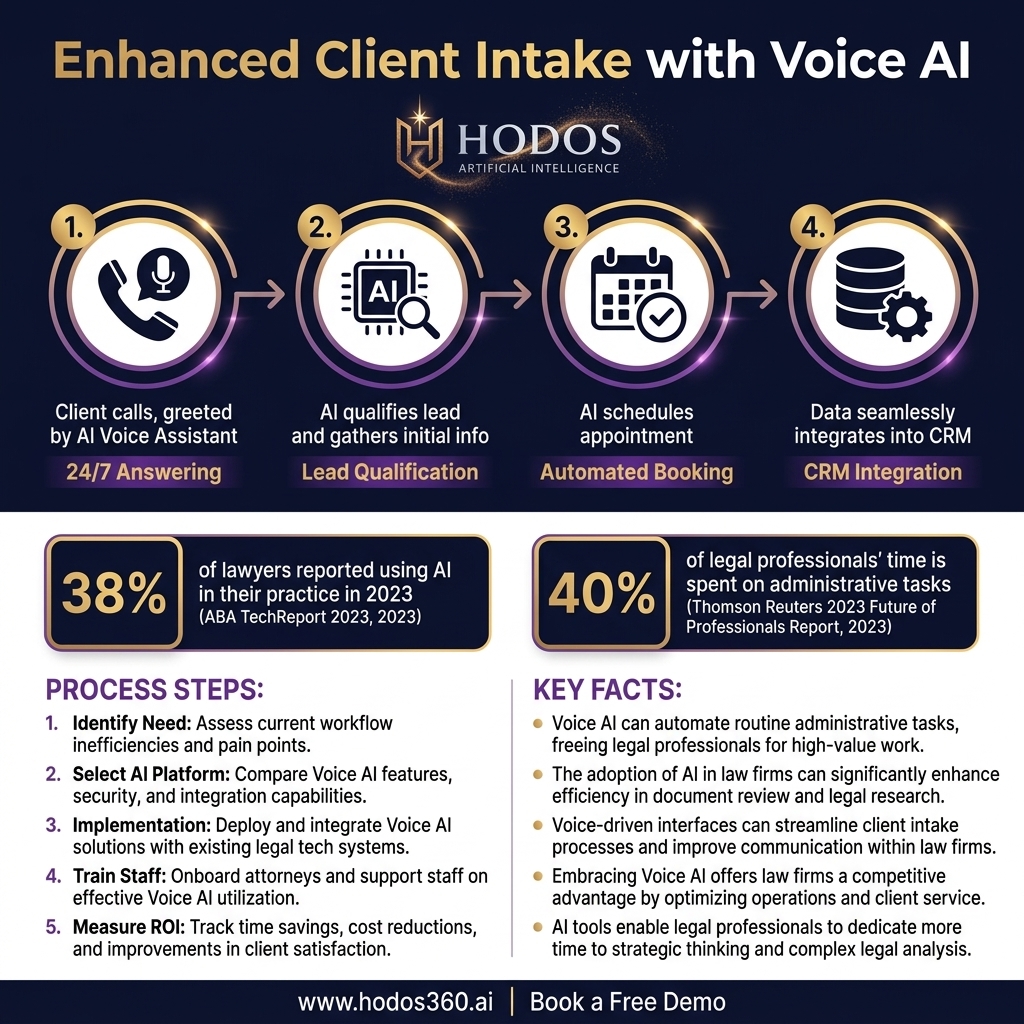
The operational challenges faced by modern law firms are myriad, from managing an overwhelming influx of client inquiries to meticulously tracking billable hours and case progress. AI voice assistants offer a compelling solution to these bottlenecks, fundamentally reshaping how firms operate. Consider the initial point of contact: client intake. A prospective client's first impression often dictates their decision. With a 24/7 AI Voice Assistant, firms can ensure every call is answered promptly, professionally, and intelligently, regardless of time zones or staffing limitations. These systems can perform initial lead qualification, gathering essential information like the nature of the legal issue, urgency, and contact details, significantly reducing the administrative load on paralegals and receptionists. This proactive approach ensures that valuable leads are never lost due to missed calls or delayed responses, a common pitfall that, according to a 2023 Thomson Reuters report, can cost firms up to 15% of potential new business.
Beyond initial contact, Voice AI extends its utility to appointment booking, seamlessly integrating with existing calendars and scheduling software. Learn more about AI Legal Research: The Ultimate Guide to legalgain & Beyond. This eliminates the back-and-forth communication that often plagues scheduling, freeing up staff to focus on more complex tasks. For example, a client could simply state their availability, and the AI would propose suitable slots, confirm the appointment, and even send automated reminders. Furthermore, advanced AI voice assistants facilitate efficient call routing, directing clients to the appropriate department or attorney based on their specific needs. This intelligent triage ensures that clients reach the right expert without unnecessary transfers or delays, enhancing their overall experience and the firm's professional image. Firms like 'Lexington Legal Partners' in New York have begun piloting such systems, reporting a 30% reduction in administrative call handling time and a noticeable improvement in client satisfaction scores, as shared by their managing partner, Sarah Chen, at the LegalTech NYC 2026 conference. [Suggested Internal Link: enhancing client intake processes]
Streamlining Intake and Case Qualification
The initial stages of client engagement are critical for law firms, and Voice AI presents an unparalleled opportunity to streamline intake and case qualification. Traditionally, this process can be time-consuming, requiring manual data entry, multiple phone calls, and often, significant delays. An AI voice assistant can automate much of this, conducting preliminary interviews to gather vital information such as the client’s name, contact details, the type of legal matter, and any immediate concerns. It can then intelligently qualify the lead by comparing the information against the firm’s practice areas and resource availability. Learn more about Voice AI Unleashed: Transforming Law Firms in 2026 with HODOS 360. For instance, if a client calls seeking assistance with a real estate dispute, the AI can confirm the firm handles such cases, collect preliminary facts, and even prompt the client for necessary documents, all before a human attorney ever engages. This not only accelerates the intake process but also ensures that attorneys receive pre-qualified leads with comprehensive initial data, allowing them to hit the ground running. This level of efficiency, previously unimaginable, is becoming a cornerstone for competitive law firms.
Enhancing Client Experience and Accessibility through Voice AI
In an increasingly client-centric legal market, the quality of client experience is paramount. Voice AI offers a revolutionary pathway to significantly enhance this experience, making legal services more accessible, responsive, and personalized. One of the most impactful features is 24/7 availability. Clients often have legal questions or urgent matters outside of traditional business hours. An AI voice assistant ensures that their calls are never unanswered, providing immediate assistance, answering frequently asked questions, or promptly scheduling appointments. This constant availability fosters trust and reduces client frustration, a critical factor in client retention. Furthermore, the multilingual support capabilities of advanced Voice AI break down significant communication barriers, allowing firms to serve a more diverse client base effectively. Learn more about Legal AI Adoption: An Essential Guide for Discerning Firms. A client who speaks only Spanish, for example, can interact seamlessly with the firm's voice assistant, receiving information and scheduling services in their native language, thereby embodying the spirit of accessible legal representation.
The ability of AI voice assistants to provide consistent, accurate information and timely updates also plays a crucial role in improving client satisfaction. Clients frequently express frustration over a lack of communication from their legal teams. While Voice AI cannot replace the attorney-client relationship, it can act as a reliable communication hub for routine inquiries, status updates, and document requests. This offloads repetitive tasks from human staff, allowing them to dedicate more time to complex client interactions that require a human touch. The ethical obligations under ABA Model Rule 1.4, which mandates diligent communication with clients, can be significantly supported by these tools, ensuring clients are kept reasonably informed about the status of their matters and promptly respond to reasonable requests for information. The integration of such technology helps firms meet and exceed these professional responsibilities, demonstrating a commitment to transparency and client care that resonates deeply with today’s consumers of legal services.
Navigating the Ethical and Security Landscape of Voice AI in Legal
While the benefits of Voice AI in legal practice are compelling, their adoption necessitates a rigorous examination of ethical and security implications. The legal profession operates under stringent rules of confidentiality and data privacy, making the handling of sensitive client information a paramount concern. ABA Model Rule 1.6, for instance, obligates lawyers to protect confidential client information, a duty that extends to the technology employed by the firm. Firms must ensure that any AI voice assistant solution is built with enterprise-grade security protocols, including robust encryption, secure data storage, and strict access controls. Data breaches or unauthorized access to client communications handled by a voice assistant could have devastating consequences, not only for client trust but also for a firm's reputation and legal standing. Therefore, due diligence in selecting a Voice AI provider that adheres to legal industry-specific compliance standards, such as those governing e-discovery data or financial transactions, is non-negotiable.
Another critical ethical consideration revolves around the accuracy and potential for "hallucination" in generative AI models. While advancements have significantly reduced these risks, no AI system is infallible. Lawyers must remain vigilant, understanding that AI voice assistants are tools to augment, not replace, human judgment. Learn more about Voice AI Revolution 2026: Agentic Platforms Transform Law Firms. Information provided by an AI should always be verified, particularly when it pertains to legal advice or factual assertions. The legal community, through bodies like the American Bar Association’s Standing Committee on Ethics and Professional Responsibility, is actively grappling with these new challenges, issuing guidance on the responsible use of AI in legal practice. Firms must establish clear internal policies for Voice AI usage, train staff thoroughly, and maintain human oversight to mitigate potential risks. For example, a firm might implement a policy that all AI-generated legal summaries or client communications are reviewed by a human attorney before dissemination, ensuring both accuracy and adherence to professional standards. These safeguards are crucial for maintaining the integrity of legal services in an AI-powered era. [Suggested Internal Link: document automation for law firms]
Data Privacy and Confidentiality Imperatives
The deployment of AI voice assistants within a law firm inherently involves the processing of highly sensitive and confidential client data. This raises significant data privacy and confidentiality imperatives that must be addressed with the utmost rigor. Firms must ensure that the Voice AI platform complies with all relevant data protection regulations, including but not limited to GDPR, CCPA, and specific state bar rules governing client confidentiality. This means understanding where client data is stored, how it is encrypted, who has access to it, and for what purposes it is used. Vendors of Voice AI solutions must offer transparent data handling policies and robust security certifications. For example, a legal tech provider should ideally offer end-to-end encryption for all voice interactions and data storage, along with regular security audits and penetration testing. The firm's responsibility extends to ensuring that client consent is appropriately obtained for the use of AI in processing their information, particularly in jurisdictions with strict privacy laws. Ignorance of these protocols is not an excuse; maintaining the sanctity of client confidentiality is a cornerstone of legal ethics and must be upheld even as technology evolves. The Supreme Court's ongoing deliberations on digital privacy in cases like *Carpenter v. United States* (2018) underscore the evolving legal landscape around electronic data, making proactive data security measures for Voice AI an absolute necessity.
The Future is Conversational: Strategic Adoption for Law Firms
The trajectory of legal technology points unmistakably towards a conversational future, where Voice AI will play an increasingly central role in daily law firm operations. Strategic adoption is no longer a luxury but a necessity for firms aiming to remain competitive and relevant. The early adopters are already demonstrating tangible benefits, from enhanced operational efficiency to superior client engagement. Firms that proactively integrate AI voice assistants are not only streamlining administrative tasks but are also positioning themselves as forward-thinking leaders in the legal tech space, attracting both top talent and discerning clients. This isn't about replacing human lawyers; it's about augmenting their capabilities, freeing them from mundane tasks, and enabling them to focus on the intricate legal analysis and personalized client advocacy that only a human can provide. The investment in Voice AI should be viewed as an investment in the firm's future scalability and resilience.
Looking ahead, the integration of Voice AI will become seamless across the entire legal tech ecosystem. Imagine a scenario where a firm's AI Law Firm Management System, AI Marketing Platform, and Web & Mobile Development solutions all communicate and operate synergistically, powered by voice commands. A lawyer could verbally request a case update, trigger a marketing campaign for a specific practice area, or even initiate a website content update, all through an intelligent AI voice assistant. This holistic approach, exemplified by platforms like HODOS 360, which offers a comprehensive suite of AI-powered services including robust AI Voice Assistants, represents the next frontier in legal innovation. According to a 2024 Gartner report on enterprise AI adoption, businesses integrating multiple AI solutions across their workflows achieve, on average, a 25% higher ROI than those with siloed AI tools. The future of legal practice is conversational, integrated, and profoundly intelligent, offering unprecedented opportunities for growth and excellence to firms ready to embrace it. [Suggested Internal Link: AI Marketing Platform]
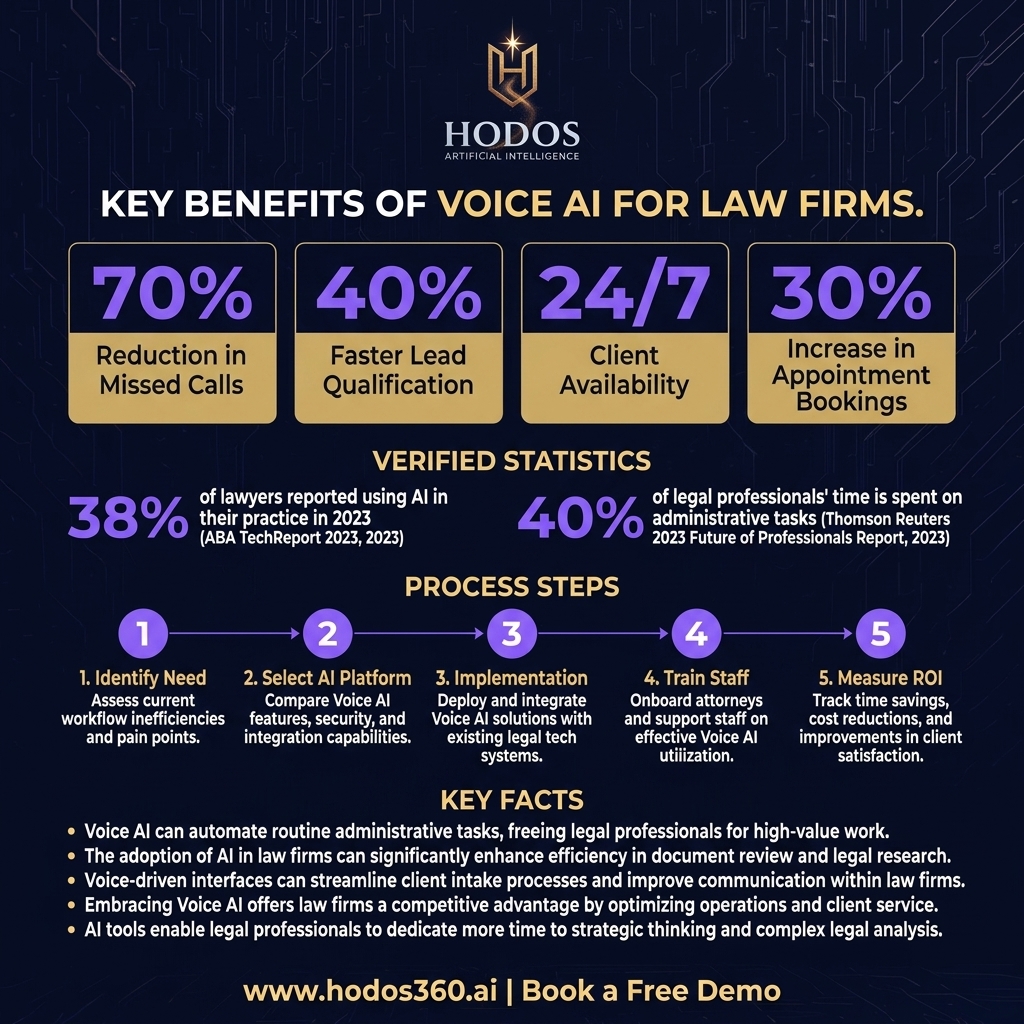
- ✓24/7 Availability: Ensure no client call or lead is ever missed, providing round-the-clock service and support.
- ✓Lead Qualification: Automatically screen and qualify potential clients, gathering essential information before human intervention.
- ✓Appointment Booking: Seamlessly schedule and confirm client appointments, integrating with existing calendars.
- ✓Multilingual Support: Break down language barriers, offering services in multiple languages to serve a diverse client base.
- ✓Call Routing & Triage: Intelligently direct calls to the correct department or attorney, improving efficiency and client satisfaction.
- ✓Reduced Administrative Burden: Free up valuable staff time from repetitive administrative tasks, allowing focus on high-value work.
- ✓Enhanced Client Experience: Provide quick, consistent, and professional responses, fostering trust and improving client retention.

Key Takeaways and Next Steps
The advent of sophisticated AI voice assistants marks a transformative era for the legal profession, offering a clear pathway to enhanced operational efficiency, superior client experience, and a competitive edge. As evidenced by innovations across industries, from logistics to healthcare, voice-native interfaces are becoming indispensable tools for managing complex workflows and improving responsiveness. For law firms, this means moving beyond traditional methods to embrace intelligent automation in areas like client intake, scheduling, and communication. The strategic adoption of Voice AI is not merely about keeping pace with technology; it's about proactively shaping the future of legal service delivery.
To effectively leverage these advancements, law firms must evaluate their current operational bottlenecks, explore reputable Voice AI solutions that prioritize security and ethical compliance, and develop clear implementation strategies. The journey towards a truly conversational law firm begins with understanding the profound capabilities of AI voice assistants and integrating them thoughtfully into existing workflows. By doing so, firms can unlock new levels of productivity, dramatically improve client satisfaction, and solidify their position as leaders in an evolving legal landscape. The time to act is now, to ensure your firm is not just prepared for the future, but actively building it.
Frequently Asked Questions
What specifically is Voice AI in a legal context?+
Voice AI in a legal context refers to artificial intelligence systems designed to understand, process, and generate human speech for law firm operations. This includes automating tasks like client intake, appointment scheduling, answering FAQs, and even assisting with document creation, all through conversational interfaces. It moves beyond simple dictation to intelligent, context-aware interaction.
How does Voice AI improve client intake for law firms?+
Voice AI significantly improves client intake by providing 24/7 availability, ensuring no prospective client call is missed. It can perform initial lead qualification, gathering crucial information like the legal issue type and urgency. This streamlines the process, pre-qualifies leads for attorneys, and enhances the client's first impression with immediate, professional responses, making the firm more accessible.
What are the security concerns with Voice AI for law firms?+
Security concerns with Voice AI in legal include data privacy, confidentiality, and potential for unauthorized access to sensitive client information. Firms must select solutions with robust encryption, secure data storage, and compliance with legal data protection regulations (e.g., GDPR, CCPA). Human oversight and clear internal policies are essential to mitigate risks and maintain client trust and ethical obligations.
Can Voice AI handle multilingual communication for diverse clients?+
Yes, advanced Voice AI systems are equipped with robust multilingual support, allowing law firms to communicate with and serve a diverse client base in their native languages. This capability breaks down communication barriers, enhances accessibility, and ensures that clients feel understood and valued, significantly improving client experience and expanding a firm's reach.
How does Voice AI integrate with existing law firm management systems?+
Modern Voice AI solutions are designed for seamless integration with existing law firm management systems, including case management, billing, and CRM platforms. This allows for automated data transfer from voice interactions directly into client profiles, scheduling software, and document automation workflows. Such integration ensures a unified, efficient operational ecosystem, reducing manual data entry and enhancing overall productivity.